
In the world of early 911s, the Porsche 911L is often overlooked. It didn’t have the stripped-down charm of the entry-level 911T or the punchy excitement of the 911S. Instead, it quietly slotted in as a midrange model, a new mid-tier offering that bridged the gap between the two. It was also only for one model year.
That year was 1968, and that makes all the difference.
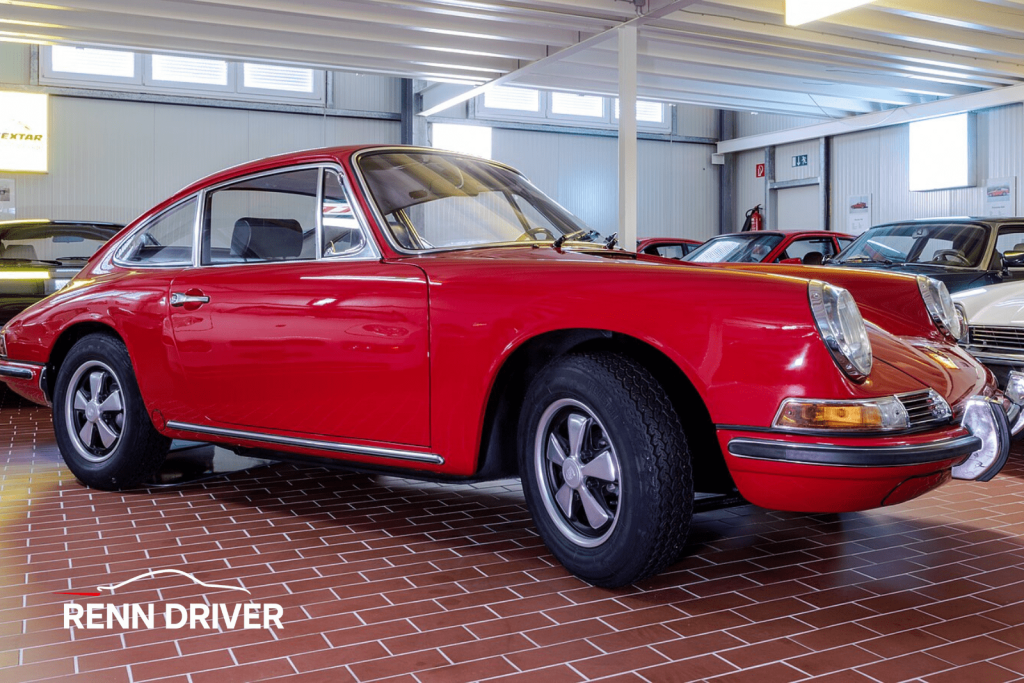
Tighter emissions rules, a shakeup in Porsche’s U.S. lineup, and very low production numbers, especially for the American market, have turned this middle child into one of the rarest and most collectible early cars today. For those who appreciate subtlety over flash, the 911 L delivers a uniquely balanced vintage driving experience.
Quick Summary
- Production Year: 1968 only
- Engine: 2.0L air-cooled flat-six with an engine capacity of 1,991 cc
- Power: 130 hp @ 6,100 rpm
- Transmission: 5-speed manual
- Top Speed: 131 mph
- Layout: Rear-engine, rear-wheel drive
- Notable Features: Four-wheel disc brakes, Targa option, unique trim
- Legacy: Rare one-year-only model with approximately 1,610 produced (1,169 coupes and 441 Targas)
Contents
- 1 Quick Summary
- 2 A Brief History: Why the 911L Exists
- 3 Design and Features: Subtle, But Special
- 4 Engine and Performance: Right in the Middle
- 5 Driving Experience: The Original Porsche Drama
- 6 Collectibility: Rising From Relative Obscurity
- 7 Restoration & Ownership: A Passion Project
- 8 Fun Facts
- 9 Frequently Asked Questions
- 10 Final Thoughts
A Brief History: Why the 911L Exists
The Porsche 911 L (for “Lux”) was introduced in 1968, when Porsche decided the high-performance 911S couldn’t meet new U.S. emission standards. So, they replaced it in the USA lineup with a slightly detuned version of the European 911S rebadged as the 911L. Unlike later models with mechanical fuel injection, the 911L retained carburetion, partly explaining its lower output.
Though it inherited many of the performance features of the S (like disc brakes, gearbox, and suspension), under the body, it kept the tamer 130-hp engine from the base model. Fewer than 1,610 were produced, and only a fraction were sold in the U.S., which makes legit survivors, especially barn find examples, extremely desirable.
Design and Features: Subtle, But Special
From the outside, the 911L doesn’t scream. But the details, such as rear fenders, chrome exterior trim, and polished dash accents, mark it as something different. Optional front fog lights could also be specified, enhancing both safety and style.
- Badging – Gold “911L” script adds understated style
- Targa – Early cars could be ordered with a removable roof panel
- Interior – Simple leatherette seats, clear gauges, and a cleaner dash design with improved safety switches
- Air vents – Updated ventilation design first seen on this car

Engine and Performance: Right in the Middle
The engine is a 2.0-liter flat-six making 130 hp and 128 lb-ft of torque. It’s paired with a five-speed manual transmission. Despite modest specs, it was capable of a top speed of 131 mph. That’s plenty exciting in such a light chassis.
The 911L is about balance and finesse. It doesn’t have modern turbo shove, but it does offer sharp response and mechanical feel.
Driving Experience: The Original Porsche Drama
Behind the wheel, the 911L feels alive, like an original Porsche should.
- Suspension – Classic torsion bar setup keeps handling playful
- Steering/Brakes – Direct, mechanical, and confidence-boosting
- Soundtrack – That flat-six delivers a clean growl and rewards the confident driver
It’s a wonderful project car for someone who values pure interaction over outright speed.

Collectibility: Rising From Relative Obscurity
Once ignored, the 911L is now prized among air-cooled Porsche enthusiasts.
- US market cars are especially rare
- Coupe versions generally bring a higher sale price than Targas
- Collectors look for matching-numbers chassis, original exterior and interior, and low mileage examples. As prices climb, the 911L is fast becoming one of the more expensive Porsche options from the late 1960s.
Well-optioned survivors are climbing fast in value, especially when listed on a major website, complete with high-quality pictures and photos. The 911L has become a staple on many collectors’ watch lists, often spotted at auctions and enthusiast forums.
Restoration & Ownership: A Passion Project
Early 911s are simple to work on but expensive to perfect. L-specific parts like trim and badging can be a challenge to source. Most owners keep their cars in long-term restoration, use them for weekend drives, or show them on air-cooled Porsche Club tours across Europe and North America.
Fun Facts
- The 911L was the first U.S. 911 equipped with four-wheel disc brakes
- “L” stands for Lux, not lightweight
- The soft-window Targa was limited to very early production
- Built alongside the legendary lightweight 911R.
- While the 911S was considered the flagship model in Europe, U.S. buyers only had access to the 911T and 911L.
- For the 1968 model year, the U.S. lineup consisted of the 911T and 911L, while the European lineup included the 911T, 911L, and 911S.

Frequently Asked Questions
Is the Porsche 911L rare?
Yes, the Porsche 911L is rare. With just over 1,600 produced, the 911L is one of the rarest early 911s.
What does the “L” in 911L stand for?
The “L” in 911L stands for “Lux,” short for “Luxury.”
Was the 911L available in the U.S.?
Yes, the 911L replaced the 911S in the U.S. for 1968, due to emissions regulations.
How does the 911L compare to the 911T and 911S?
The 911L blends features of both the 911T and the 911S. It has the same power as the T and trim and four-wheel disc brakes similar to the S.
Is the 911L a good investment?
Yes, the 911L is a good investment. Its rarity, one-year production, and increasing collector interest make it a solid choice for long-term value.
Final Thoughts
The 911L may have been a mid tier offering, but today it stands tall among early air-cooled icons thanks to its rarity, mechanical purity, and vintage charm. Whether you’re eyeing a restore-ready find or a pristine example, this model offers that unmistakable blend of Porsche heritage, subtle style, and analog engagement. A classic that’s finally getting its due.
Among Porsche car names, “911L” may not be as famous as RS or Turbo, but it carries unique weight for collectors.
Photo credit: Dietmar Rabich / Wikimedia Commons / “Nottuln, Oldtimermuseum, Porsche 911L — 2021 — 4493” / CC BY-SA 4.0, Mr.choppers, CC BY-SA 3.0, via Wikimedia Commons