
When the Porsche 991 Turbo arrived in 2013, it didn’t just replace the outgoing 997. It redefined what a 911 could be in the digital era. The all-wheel-drive system was smarter, the aerodynamics were active, and the 0–60 times dipped into territory once reserved for hypercars.
For many enthusiasts, this was the moment the Porsche 911 Turbo evolved from a brutal street weapon into something closer to a physics-defying supercomputer on wheels.
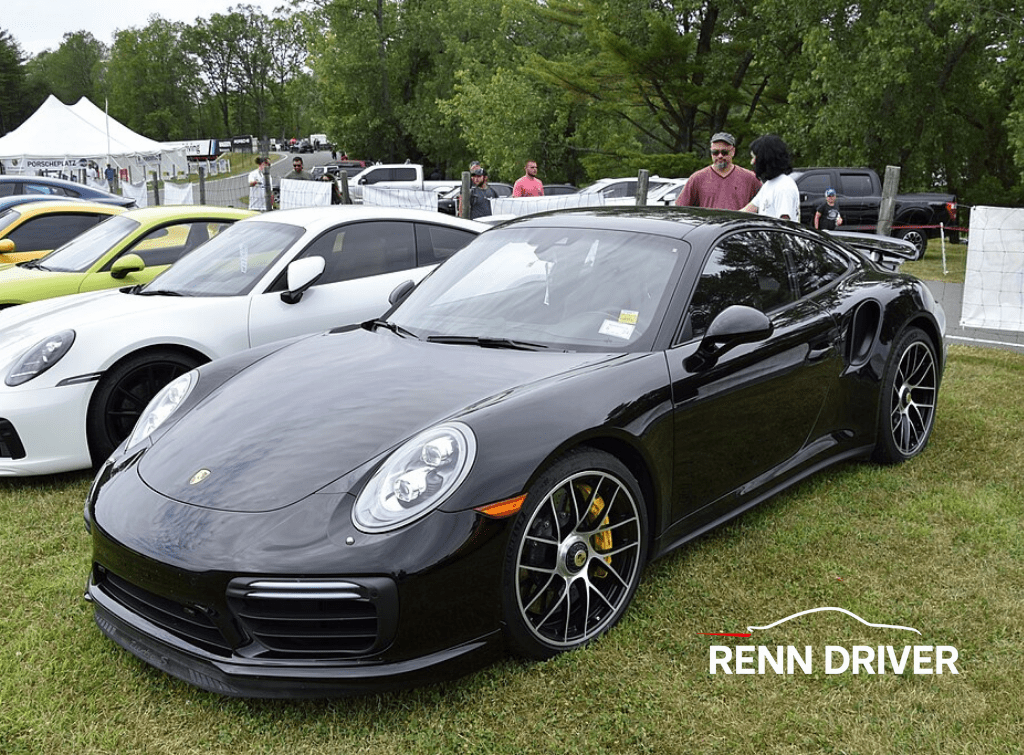
The 991-generation model came in two waves: the 991.1 (2013–2016) and the refreshed 991.2 (2016–2019), each bringing updates to styling, technology, and power.
Though purists grumbled about water cooling and electronic intervention, Porsche proved it could marry tradition with technology in a way no rival could. The result? One of the most complete performance cars of its time.
Contents
- 1 Quick Summary
- 2 History and Evolution: The Turbo Grows Up
- 3 Design and Aerodynamics: Form Follows Speed
- 4 Engine and Transmission: Twin-Turbo Brilliance
- 5 Performance and Driving Experience: Almost Too Fast for the Street
- 6 Exclusive Series: The Collectible Outlier
- 7 Variants Overview
- 8 Legacy: The Turbo That Changed the Game
- 9 Fun Facts
- 10 Frequently Asked Questions (FAQs)
- 11 Final Thoughts
Quick Summary
- Production Years: 2013–2019
- Generations: 991.1 (2013–2016), 991.2 (2016–2019)
- Engine: 3.8L twin-turbocharged flat-six
- Power: 520–607 hp
- Transmission: 7-speed PDK dual-clutch
- Top Speed: Up to 205 mph
- Drivetrain Layout: Rear-engine, all-wheel drive
- Notable Features: Active aero, rear-axle steering, launch control
- Legacy: One of the fastest-accelerating road cars ever made
History and Evolution: The Turbo Grows Up
When Porsche introduced the 991 Turbo in 2013, it marked a technological leap forward in performance and design. In classic Porsche fashion, the 991 Turbo built on the strengths of its predecessors: rear-engine layout, turbocharged flat-six, and relentless grip. But it also brought quantum leaps forward.
The 991.1 Turbo and Turbo S launched with 520 and 560 hp, respectively, paired exclusively to Porsche’s PDK dual-clutch transmission and all-wheel drive. Porsche Active Aerodynamics (PAA) used a deployable front lip and multi-stage rear wing, allowing the car to shape air in real time. Rear-axle steering enhanced agility at low speeds and stability at high speeds.
The 991.2 update in 2016 sharpened the styling, changed the interior interface, and bumped output to 540 hp (Turbo) and 580 hp (Turbo S). A 205-mph Turbo S Exclusive Series capped production in 2017–2018 with 607 hp and gold-accented carbon fiber everything.
By the time the 991 bowed out in 2019, it had cemented itself as a turning point. It’s the Turbo that fully embraced modern performance tech without forgetting its bloodline.

Design and Aerodynamics: Form Follows Speed
The 991 Turbo’s design reflected its mission as a high-speed, high-tech GT. The body was wider than the Carrera’s, stretched over muscular haunches housing fat rear tires and intercooler vents. The front bumper featured gaping intakes, while the rear wing constantly morphed in height and angle depending on speed and drive mode.
Underneath, Porsche Active Aerodynamics worked with a deployable chin spoiler and adaptive aero surfaces to balance drag and downforce. Cabriolet models preserved most of the performance while adding electric fabric roofs. Special Exclusive Series cars introduced exposed carbon-fiber stripes in the hood and roof paired with “Golden Yellow Metallic” paint, giving the outgoing 991.2 a dramatic sendoff.
Inside, the cabin mixed everyday comfort with tech-heavy luxury: deeply bolstered seats, high-resolution infotainment, and customizable digital displays. Sport Chrono trim added a stopwatch atop the dash as a nod to vintage rally heritage, balancing old Porsche character within a modern cockpit.
Engine and Transmission: Twin-Turbo Brilliance
Every 991 Turbo model is powered by a 3.8-liter twin-turbocharged flat-six. This is an evolution of Porsche’s celebrated Mezger architecture optimized for everyday drivability and durability. Power output varied across versions, with each update bringing sharper throttle response and higher boost levels.
| Model | Horsepower | Torque |
|---|---|---|
| 991.1 Turbo | 520 hp | 487 lb-ft |
| 991.1 Turbo S | 560 hp | 553 lb-ft |
| 991.2 Turbo | 540 hp | 523 lb-ft |
| 991.2 Turbo S | 580 hp | 553 lb-ft |
| Turbo S Exclusive Series | 607 hp | 553 lb-ft |
Power was sent through Porsche’s 7-speed PDK dual-clutch gearbox, the only transmission offered. Lightning-fast shifts and launch control meant standing-start acceleration bordered on violent. The official 0–60 mph time of 2.9 seconds was often obliterated in independent testing, with real-world figures dipping as low as 2.5 seconds.
Thanks to active center and rear differentials, torque vectoring, and adaptive engine mounts (Sport Chrono Package), the drivetrain produced relentless forward thrust while keeping the chassis rock-steady under full boost.
Performance and Driving Experience: Almost Too Fast for the Street
On paper, the 991 Turbo sounds clinical, full of algorithms and actuators. Behind the wheel, it is anything but.
Acceleration is brutal yet controlled. The turbos spool low in the rev range, launching the car forward with tidal-wave torque. The AWD system sends power rear-biased in dry conditions but shuffles torque instantly in corners or changing terrain, making the 991 almost immune to wheelspin.
With rear-axle steering, the Turbo turns in like a car half its size. PASM adaptive suspension keeps the ride composed over rough city streets yet firms up during high-speed runs. Carbon-ceramic brakes on the Turbo S models deliver fade-free stopping power and confidence to match the thrust. Optional sports exhaust systems add character, bringing back some of the raw turbo hiss that enthusiasts love.
Cabriolet versions retain 95 percent of the coupe’s stiffness and performance, serving as open-top missiles when conditions allow. The everyday usability remains astounding, from daily commutes to cross-country tours, further blurring the lines between GT car and exotic.
Exclusive Series: The Collectible Outlier
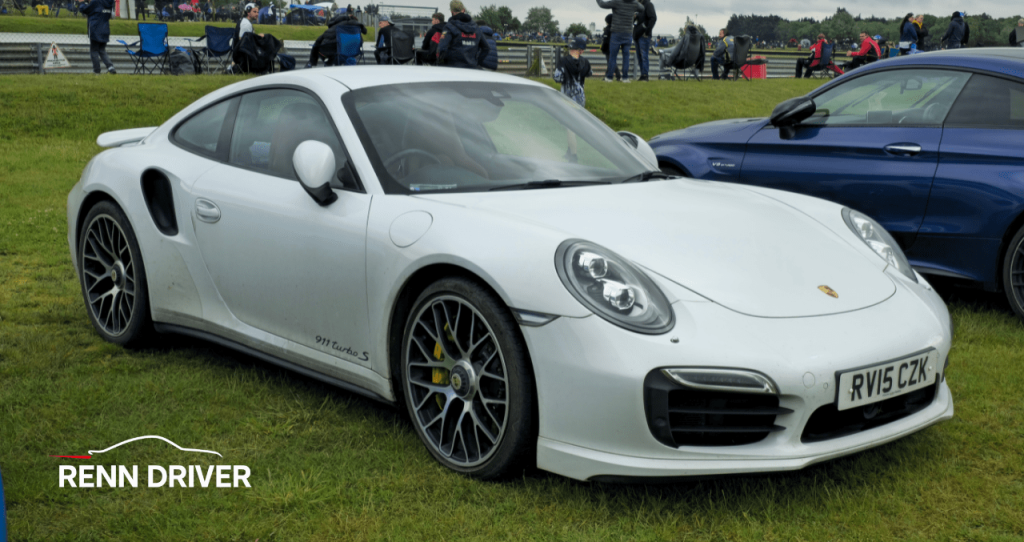
In 2017, Porsche produced just 500 examples of the Turbo S Exclusive Series, crowning the 991.2 lineup. These cars packed 607 hp, hand-crafted interiors with carbon fiber accents, and exclusive design touches throughout. They were paired with matching Rolex watches and luggage sets for good measure.
With all available options, unique aerodynamics, and numbered plaques, the Exclusive Series has already become a high-demand collectible with prices climbing well over the original MSRP.
Variants Overview
| Variant | Body Style | Power | Notable Features |
|---|---|---|---|
| Turbo (991.1) | Coupe/Cab | 520 hp | Active aero, rear-axle steering |
| Turbo S (991.1) | Coupe/Cab | 560 hp | Carbon brakes, dynamic engine mounts |
| Turbo (991.2) | Coupe/Cab | 540 hp | Updated styling and electronics |
| Turbo S (991.2) | Coupe/Cab | 580 hp | 205-mph top speed, chassis refinements |
| Exclusive Series | Coupe | 607 hp | Limited edition bespoke flagship |
Legacy: The Turbo That Changed the Game
The Porsche 991 Turbo did more than just carry the badge into the modern era. It proved that technology, when done right, could amplify driver engagement rather than diminish it. It became a benchmark among usable supercars, as happy doing school runs as it is humiliating supercars twice the price on a drag strip.
Values of standard Turbo and Turbo S models remain steady thanks to robust reliability and timeless looks. Exclusive Series and low-mile examples are already appreciating as collectors recognize the significance of this final pre-hybrid Turbo generation.
As electrification creeps into the 911 lineup, the 991 Turbo stands tall as the last purely internal-combustion all-wheel-drive Turbo king from Porsche’s modern golden age. It is brutally fast, endlessly capable, and deeply Porsche in character.
Fun Facts
- Porsche claimed 0–60 mph in 2.9 seconds, but multiple tests recorded as low as 2.5 seconds.
- Porsche Active Aerodynamics was originally developed for the 918 Spyder hypercar before being adapted to the 991 Turbo.
- The rear-axle steering system actually turns the rear wheels opposite the fronts at low speeds, shrinking the turning circle.
- Early prototypes of the 991 Turbo were clocked lapping the Nürburgring faster than the Carrera GT.
- The Turbo S Exclusive Series included a matching $85,000 “Chronograph” by Porsche Design.
Frequently Asked Questions (FAQs)
How fast is the Porsche 991 Turbo?
Top speed ranges from 198 mph (base models) to 205 mph in the Turbo S.
Is the 991 Turbo all-wheel drive only?
Yes. All Porsche 991 Turbo models come standard with fully variable all-wheel drive.
What is the main difference between the 991.1 and 991.2 Turbo?
The 991.2 features updated electronics, revised styling, more power, and tweaks to the AWD and steering systems.
Is the Turbo faster than the GT3?
In a straight line, absolutely. Around a racetrack, the GT3 chassis is sharper, but the Turbo often surprises.
Will the 991 Turbo become a collectible?
Special variants like the Turbo S Exclusive Series already are. Clean, low-mile Turbo S models are starting to climb as well.
Was the Porsche 991 Turbo available with a manual transmission?
No. All factory 991 Turbo models were PDK-only. However, aftermarket manual transmission swaps are possible and increasingly popular among collectors.
Final Thoughts
The Porsche 991 Turbo didn’t just push the 911 forward; it catapulted it into the future. It mixed relentless acceleration with real-world usability, creating a car that could outperform exotics on Sunday and tackle a rainy commute on Monday.
For many, it represents the high-water mark of the internal-combustion Turbo, before hybrids and electrics began to trickle in. The 991 Turbo remains a dream car for many Porsche fans, representing the last fully mechanical expression of its kind. Technologically brilliant, brutally quick, and unmistakably Porsche at heart, the 991 Turbo has already carved out a legacy as one of the most complete supercars of its era.
Which Turbocharged Porsche legend should we cover next?
Photo credit: Calreyn88, CC BY-SA 4.0, via Wikimedia Commons