
When Porsche launched the 996 GT3 in 1999, it wasn’t trying to build a special edition or launch a marketing campaign. It was creating something new: A road-legal expression of Porsche’s endurance-racing soul.
The GT3 name had never existed before. Once it arrived, that car set the blueprint for one of Porsche’s most celebrated lineages.
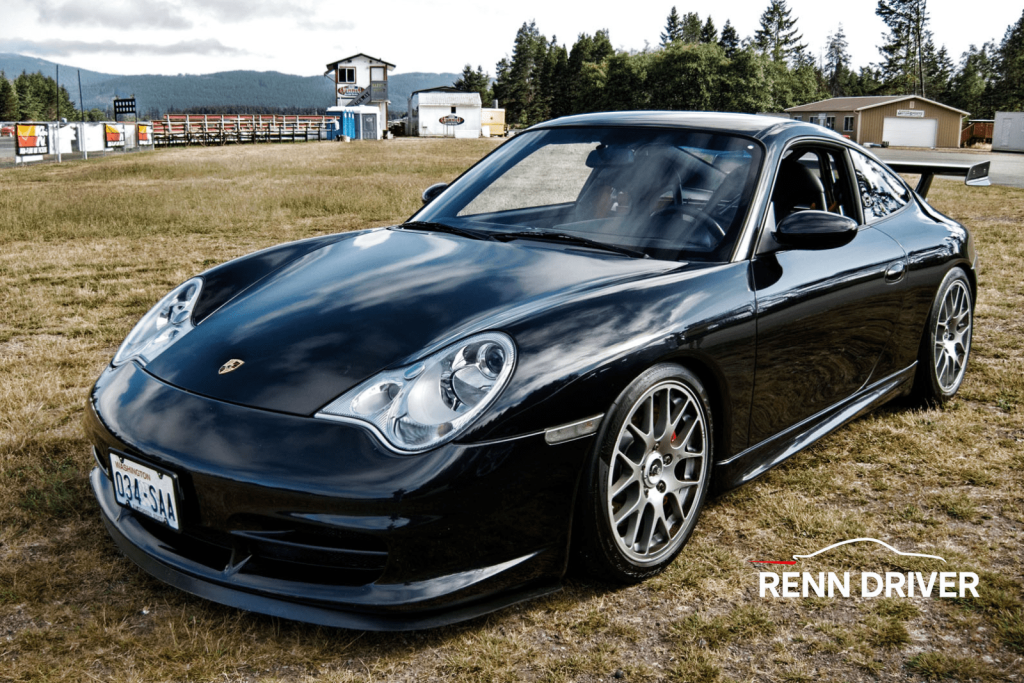
Built from 1999 to 2005, the 996 GT3 took everything Porsche knew from racing and wrapped it in a narrow-body 911 shell. It didn’t use gimmicks or turbochargers. Instead, it used a naturally aspirated flat-six bred to work hard, stay cool, and take lap after lap without complaint.
It became the first modern GT3. And it still feels like the purest.
Contents
- 1 Quick Summary
- 2 Background and History
- 3 Design and Features
- 4 Performance and Handling
- 5 Why We Love the 996 GT3
- 6 Special Editions
- 7 Collectibility and Market Value
- 8 Weight and Performance
- 9 End of Production and Legacy
- 10 Competition History
- 11 Buying and Selling
- 12 Maintenance and Repair
- 13 Upgrades and Modifications
- 14 Community and Events
- 15 Frequently Asked Questions (FAQs)
- 16 Final Thoughts
Quick Summary
- Production/model years: 1999–2001 (996.1), 2003–2005 (996.2)
- Powertrain: 3.6-liter naturally aspirated Mezger flat-six; six-speed manual transmission; mechanical limited-slip differential
- Hardware highlights: Rigid engine block, dry-sump oiling, dual mass flywheel, firm anti-roll bars, big brakes with six-piston calipers
- Weight saving from factory: Deleted rear seats and reduced sound deadening; air conditioning and electric windows commonly optioned back in
- Performance: ~4.8 s 0–62 mph (996.1), ~4.5 s (996.2); top speed ~188–190 mph depending on tires and spec
- Why It Stands Out: The first GT3 in the model range to carry endurance engineering into a street shell; lighter, durable, repeatable
Background and History
The 996 GT3 replaced the Carrera RS lineage as Porsche’s focused track-capable road car. Instead of chasing luxury or broader appeal, Porsche aimed to deliver a car that captured the precision and stamina of its Cup race cars.
Produced in two phases, 996.1 (1999–2001) and 996.2 (2003–2005), the GT3 evolved through improvements to power, cooling, brakes, and refinement. Throughout its run, it maintained a consistent design philosophy: Keep the car light, responsive, and durable under track conditions.
Today, the 996 GT3 is recognized as the starting point for one of Porsche’s most iconic model lines.
Design and Features
Nothing about the 996 GT3 is accidental. Every part reflects a purpose.
- Bodywork/aero: deeper bumper, functional spoiler lip, specific body panels, purposeful front lid and inlets; factory ride height set low for stability at high speeds.
- Cabin: bucket seats, clean dash; many cars equipped with leather. Air conditioning and electric windows are often optioned back in despite factory weight saving.
- Clubsport (market-dependent): club sport package / clubsport package with full roll cage, harness prep, battery cut-off, fire extinguisher in the passenger footwell.
- Chassis bits: firm anti-roll bars, rigid engine block, dual mass flywheel, big brakes with six-piston calipers.
Performance and Handling
Here’s how the 996 GT3 behaves when you stitch a lap together and what helps it do so repeatedly.
- Entry: brake straight, turn once; front axle takes a set as you bleed off pressure, and the chassis stays composed.
- Mid/exit: neutral balance; diff + geometry let the rear track the arc as you add throttle, fewer corrections, more speed.
- Stamina: steel rotors with proper pads work; 996.2 hardware lasts longer in hot sessions.
- Setup tips: sticky tyres, tidy alignment, pick the right gear for the pull you want.
Why We Love the 996 GT3
The 996 GT3 focuses on purity: clean braking, a single decisive turn, a measured throttle. When you respect that rhythm, the car responds with clarity few modern cars can replicate.
Compared with a Carrera, the GT3 gives up polish for purpose. Compared with period Ferraris, it offered durability, parts availability, and trackside fixability. All of that made it practical to own, something you can drive to work without worry.
More importantly, it created a new identity for the 911. The GT3 became the car for people who didn’t just want to go fast. They also wanted a machine that would help them grow as drivers.
Special Editions
The 996 GT3 also offered special factory versions for enthusiasts seeking an even more focused driving experience. Here are a few of them:
Clubsport (CS)
The factory track specification included a full roll cage, harness preparation, and a fire extinguisher. It also removed all non-essential items.
GT3 RS (996.2)
The GT3 RS is the collector’s favorite in the 996 family. This version is a lighter and sharper version of the regular GT3. It used select lightweight materials, including polycarbonate rear glass and thinner body panels. This reduced mass is high in the body.
Porsche also improved the geometry and alignment settings. The car was often presented in Carrera White with contrasting graphics.
Collectibility and Market Value
Values have risen because of the raw, analogue feel of the Mezger engine and the hydraulic power steering. These features are missing from later 911 GT3 generations.
The mix of classic mechanical character and modern performance has made the 996 GT3 a blue-chip collectible. Each year, the price gap grows between pristine, documented cars and high-mileage versions.
Weight and Performance
The factory reduced weight by removing the rear seats and cutting down on sound insulation. Even when buyers added options like electric windows or air conditioning, the car stayed light enough to feel sharp and responsive.
Its official top speed is around 190 mph. Thanks to the low ride height, functional aerodynamics, and narrow body, it stays stable even at very high speeds. On a dark, empty road with the headlights slicing through the night, that stability feels natural and mechanical rather than electronic.
End of Production and Legacy
Production of the GT3 ran from 1999 to 2005. There were a total of ~4,863 units across all GT3 and GT3 RS variants. This car set the winning template with Mezger strength, manual control, and road-legal racing stamina.
This combination carried straight into the 997 and later 991 GT3 models. Later models took this formula and continued to make it better.
Competition History
The GT3 was born on the racetrack, and the road car evolved alongside it.
The 996 GT3 not only won races but also proved reliable. What Porsche learned about durability, cooling, and aerodynamics from racing was used to improve the street version.
That ongoing feedback is why the road car still looks completely at home in a pit lane today.
Buying and Selling
If you’re shopping or listing one, a few checks make the difference between a good car and a great outcome.
- Provenance: Continuous records, recent major service, correct manual history, original bodywork and panels.
- Use history: Track time is fine if maintenance matches: fluids, pads, inspections, warm-up discipline.
- Wear points: Dampers, control-arm bushes, coil packs, radiator faces behind the front bumper, and undertray/lip.
- Major Service: Check the history of the clutch and dual-mass flywheel replacement, as this is the most significant scheduled driveline expense.
- Spec desirables: Verified Clubsport package, correct RS pieces, original finish; region matters (best cars in UK/Europe move fast).
- Market reality: The right venue affects the sale outcome and price; cars sold with a clear history bring proper money.
Maintenance and Repair
Think in terms of repeatability and hours, not just miles.
- Fluids/consumables: high-temp brake fluid; pad compound for pace; frequent oil changes if you track by hours.
- Cooling/airflow: mesh to protect radiators; keep inlets clear; inspect after off-track excursions.
- Driveline: monitor engine mounts and exhaust hardware; keep dual mass flywheel noise in check.
- Alignment: reversible track-day settings if you daily the car; document changes for the next owner.
Upgrades and Modifications
Protect first, then focus on consistency. Start with radiator grille mesh, proper brake cooling, and a mild, reversible alignment before upgrading hard parts. Tire choice has a far greater impact on performance than flashy components. Keep every original part; top modified cars store them with invoices for future value.
For owners serious about track consistency, the focus shifts to suspension and safety. Upgrading to adjustable coilovers (like Bilstein or Öhlins) and adjustable sway bars is a common path to fine-tune the chassis balance and reduce body roll.
Power upgrades are often limited to exhaust systems (like a center muffler bypass) for sound and minor weight reduction, as the naturally aspirated Mezger engine provides limited gains from ECU tuning alone.
Community and Events
The 996 crowd is active and generous. PCA chapters, independent HPDE groups, and local meets all have a GT3 contingent. Advice travels fast: pad compounds, alignment targets, ducting and grille solutions, and tire pressures for your climate. You learn, adjust, and your laps get cleaner.
The Mezger engine is renowned for its durability and over-engineering. This makes the 996 GT3 a staple not just for casual track days, but also for long-format track events and club racing series.
Online forums like Rennlist and regional Porsche club groups are crucial knowledge bases. They provide detailed technical advice and shared setup data, helping owners confidently maintain their cars for demanding use.
Frequently Asked Questions (FAQs)
Is the Porsche 996 GT3 manual only?
Yes, the Porsche 996 GT3 is manual only. Every Porsche 996 GT3 came with a six-speed manual transmission and rear-wheel drive, paired with a mechanical, limited-slip differential.
What comfort items did the Porsche 996 GT3 keep or delete?
Porsche deleted the rear seats and reduced sound insulation in the 996 GT3 to save weight. Air conditioning and electric windows were optional and commonly added back by buyers.
What makes the Porsche 996 GT3 engine special?
What makes the Porsche 996 GT3 special is that it uses a Mezger-based 3.6-liter engine with a rigid block, dry-sump lubrication, and forged internals. The 996.1 engine notably featured titanium connecting rods. These were later changed to steel for the 996.2/RS models to maintain durability and serviceability.
What is the difference between the Porsche 996.1 GT3 and the Porsche 996.2 GT3?
Both the 996.1 and 996.2 GT3 use the Mezger 3.6 engine. However, the 996.2 gained power from better airflow and ECU tuning, along with a refined chassis and brakes. The 996.2 was a polished evolution rather than a redesign.
What distinguishes the Porsche 996 GT3 RS from the standard GT3?
The Porsche 996 GT3 RS uses lighter materials, sharper suspension geometry, and reduced mass high in the body. It is traditionally finished in Carrera White with contrasting graphics. This is the most track-focused 996 version.
Did Porsche offer a factory Clubsport version of the 996 GT3?
Yes, Porsche offered a 996 GT3 Clubsport package. It included a full roll cage, harness preparation, and a fire extinguisher in certain markets.
Is the Porsche 996 GT3 still competitive on track today?
Yes. With appropriate tires and pads, the Porsche 996 GT3 remains predictable, durable, and highly capable. It continues to function as a true street-legal race car.
What are Porsche 996 GT3 prices today?
Clean Porsche 996.2 GT3 examples typically sell from $100,000-$150,000 in the US, with 996 GT3 RS models commanding even higher prices. Condition, originality, and documentation affect the valuation.
How much is a Porsche 996 GT3 worth?
In the U.S., well-conditioned Porsche 996 GT3 (996.2) models commonly list in the $100,000-$150,000 range, with low-mileage, original examples fetching toward the high end.
At the lower end, higher-mileage or less original cars can still be found in the $90,000-$100,000 range.
What year is the Porsche 996 GT3?
The Porsche 996 GT3 was produced from 1999 to 2005.
- 996.1 GT3: 1999–2001
- 996.2 GT3: 2003–2005
What is the rarest Porsche 996?
The rarest Porsche 996 is the 996 GT3 RS, with roughly 682 units produced worldwide.
How many Porsche 996 GT3 models were made?
The total production across all Porsche 996 GT3 variants is ~4,863 units.
Approximate production totals for the GT3 family (1999–2005):
- 996.1 GT3: ~1,868 units
- 996.2 GT3: ~2,313 units
- 996.2 GT3 RS: 682 units
Final Thoughts
From the driver’s seat, the 996 GT3 feels simple to read and easy to work with. The front end goes where you point it, the gearbox keeps you involved, and the car reacts well when you’re smooth with it.
If you want to see where the modern GT3 started, this is the one. It’s quick, it tells you what it’s doing, and it’s built to last.
It’s still one of the most direct-feeling 911s you can drive. Even newer and more powerful models don’t fully match the clear, mechanical feel this car gives you.
Find a good one, take care of it, and actually drive it. You’ll be glad you did.