
The Porsche 997 GT3 isn’t the quickest 911 on paper; it’s the one that talks back. The steering builds real weight, the Mezger climbs cleanly to redline, and the six-speed keeps you in the conversation. No turbo, no paddles, just response.
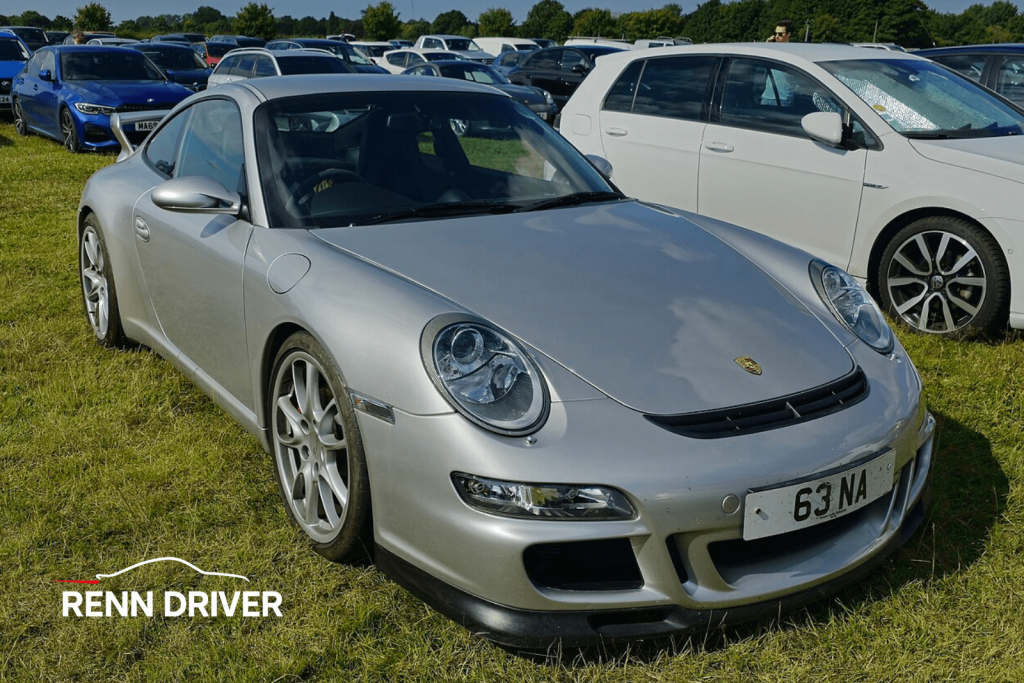
If you want a GT3 that blends race-bred hardware with manners you can live with, start here. The numbers are strong, but the feel is the point.
Contents
- 1 Quick Summary
- 2 Why the Porsche 997 GT3 Matters
- 3 History and Lineage
- 4 997.1 vs 997.2: What Changed?
- 5 Design and Interior: Purpose First
- 6 Engineering: The Mezger Heart
- 7 Driving Feel, Performance, and Handling
- 8 Variants and Heroes
- 9 Specs Snapshot
- 10 Maintenance and Running Costs
- 11 Ownership and Market: 2025 Snapshot (U.S.)
- 12 Community and Culture
- 13 Frequently Asked Questions (FAQs)
- 14 Final Thoughts
Quick Summary
- Production Years: 2006–2009 (997.1), 2010–2011 (997.2)
- Engines: Mezger flat-six, 3.6 L → 3.8 L increased displacement with more power in the update
- Drivetrain: Rear wheel drive, six-speed manual transmission only
- Key Hardware: Porsche Active Suspension Management (PASM) standard; optional Porsche Ceramic Composite Brakes (PCCB); functional front spoiler, front bumper, and rear wing
- Performance: 0–60 ~4.0 s; top speed ~194 mph (spec and tires matter)
- Why It Matters: Analog Porsche 911 GT3 with real motorsport roots and proven track work durability
Why the Porsche 997 GT3 Matters
This car focuses on inputs and feedback. Turn the steering wheel, and the front wheels gain grip immediately. As you add throttle, the rear wheels load up and follow the line you set. The car’s handling is stable and consistent, so the driver spends less time correcting and more time going quickly. On a back road, it feels alert; at the track, it behaves like a race car you can drive home.
History and Lineage
- 997.1 (2006): 3.6-liter Mezger with quick acceleration, linear pull, and 415 horsepower.
- 997.2 (2010): 3.8 liters, detail aero and damper updates for better control at high speeds.
- GT3 RS / 911 GT3 RS 4.0: Lighter parts, sharper alignment, long-stroke 4.0 closing the era.
Road-car development ran alongside Cup and RSR programs, so much learning came from racing. It’s the same engine family, tuned for real roads.
997.1 vs 997.2: What Changed?
997.1 GT3 (2006–2009)
- 3.6 L, 415 horsepower
- Direct steering, strong brakes, and cooling
- Purposeful air intakes and a planted rear wing
997.2 GT3 (2010–2011)
- 3.8 L, 435 horsepower
- Subtle suspension polish, optional front-axle lift, center-lock wheels
- Same manual transmission, stronger mid-range torque, steadier at speed
Design and Interior: Purpose First
From the outside, you see the intent: a lower front bumper with larger air intakes, a working front spoiler, and a pedestal rear wing that adds real downforce. The stance reads wider body than a standard Carrera.
The exterior is clean; curb weight stays reasonable with lightweight alloy wheels. PASM is the right system here: leave it normal on the street and use sport mode for firmer control.
Inside, the interior is simple and focused. Sports seats hold you in place; the steering wheel has the right thickness; the controls are clear. Many cars are equipped with buckets. Clubsport versions (market-dependent) add a roll cage and fire extinguisher from the factory. RS models reduce mass with thinner glass, carbon fiber panels, and a plastic rear window.
Engineering: The Mezger Heart
This engine is built for sustained use. A dry sump engine design keeps oil pressure stable in long corners. Internals include forged pistons, a healthy compression ratio, and, in some versions, titanium connecting rods.
Mapping is clean, so engine power builds smoothly, and peak torque is easy to access. The architecture shares DNA with projects that also produced the Carrera GT, which explains its durability under heat and time.
What you notice day to day: the Porsche 997 GT3 loves to rev; the 997.2 adds a stronger push in the middle; both let you place the car precisely with small pedal inputs.
Driving Feel, Performance, and Handling
Here is what happens in a corner. Brake in a straight line, turn in, and feel the nose set. As you release the brake, the chassis stays settled.
Add throttle and the rear loads without a sudden step. Stability control stays out of the way when your inputs are smooth and helps gently when needed.
Standard steel rotors handle heat with the right pads; PCCB cuts weight at the wheels and keeps pedal travel consistent in long sessions. Keep inputs tidy, and you carry more speed from corner to corner.
Variants and Heroes
- GT3 (997.1): Raw, very clear steering messages
- GT3 (997.2): More power, calmer at speed, easier to learn and repeat laps
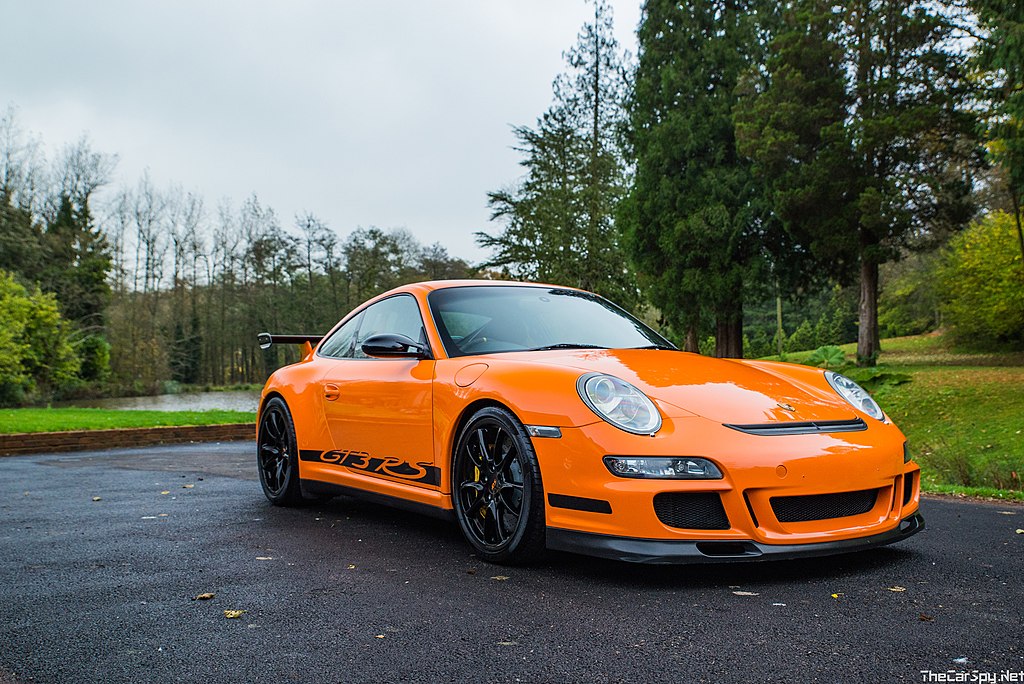
- GT3 RS: Lighter trim, sharper alignment, unmistakable stance
- 911 GT3 RS 4.0: Four liters, race-derived internals, modern-icon status
Specs Snapshot
| Model | Displacement | Power | 0–60 mph | Top Speed |
|---|---|---|---|---|
| 997.1 GT3 | 3.6 L | 415 hp | ~4.0 s | ~193 mph |
| 997.2 GT3 | 3.8 L | 435 hp | ~4.0 s | ~194 mph |
| 997.2 GT3 RS | 3.8 L | 450 hp | ~3.9–4.0 s | ~193 mph |
| RS 4.0 | 4.0 L | 500 hp | ~3.8–3.9 s | ~193 mph |
Figures vary with tires, conditions, gearing, aero drag, and air density.
Maintenance and Running Costs
Treat it like a tool. Track hours matter as much as miles. Use high-temp fluid, match pads to your pace, and keep the radiators clean. Fuel economy on the highway can be reasonable, but it isn’t the headline. Stability control helps on wet days. If you do regular track work, plan for consumables. Steel rotors are cheaper; PCCB lasts well on the street but costs more to repair.
Ownership and Market: 2025 Snapshot (U.S.)
Clean Porsche 997 GT3 examples sit firmly in six figures. GT3 RS cars bring more money, and the RS 4.0 lives in collector territory. Focus on the car, not just the badge: records, paint readings, underside condition, and fresh tires tell the real story.
The best cars sell quickly because they save the next owner time. In current sale listings, you’ll see price swings with suspension spec, colors, and transmission history.
Community and Culture
Seat time improves results. The community—from PCA to independent HPDE—shares setup notes that help you repeat laps with fewer mistakes. You learn, adjust, and build pace.
Frequently Asked Questions (FAQs)
Is the Porsche 997 GT3 manual only?
Yes. Every Porsche 997 GT3 uses a six-speed manual transmission with rear wheel drive. That purity is a big part of the feel.
Does the 997 GT3 have PASM?
Yes. Porsche Active Suspension Management is standard. It’s firm, controlled, and calibrated for track days and real roads.
Does the 997 GT3 have a front-axle lift?
Yes, but only on 997.2 as an option. It adds clearance to protect the splitter and front bumper.
What’s the difference between 997.1 and 997.2 GT3?
The 997.2 has increased displacement to 3.8 liters with more power and a broader torque curve. It also brings center-lock wheels and small aero tweaks that calm the car at high speeds.
Is the 997 GT3 a good daily driver?
Yes, if you accept a firmer ride and higher consumables. Visibility is good, the interior is simple, and PASM plus stability control make weather days easier.
How quick is the 997 GT3?
About four seconds to 60, with top speed around 193–194 mph depending on model, tires, and air.
PCCB or steel brakes—what should I choose?
Choose by use. Porsche Ceramic Composite Brakes save weight and resist fade. Steel is cheaper to run and offers great bite with the right pads.
Is a tracked 997 GT3 a bad idea?
No. Track use is fine when maintenance matches use. Look for fluid discipline, careful warm-ups, and a clean DME.
How many RS 4.0 were built?
About 600 worldwide. Limited numbers and the four-liter’s aura explain current price behavior.
997.1 or 997.2—which should I buy?
Buy the best example you can find: If you want raw steering texture, 997.1. If you want stronger midrange torque and calmer aero at speed, 997.2.
Is the Porsche 997 GT3 appreciating?
Generally yes. Demand for analog GT cars remains strong, especially for documented cars with clean history.
Final Thoughts
From the driver’s seat, the Porsche 997 GT3 is clear and honest. The front wheels gain grip as you turn, the engine pulls cleanly, and the transmission keeps you involved.
If you want a Porsche 911 GT3 that mixes modern pace with straightforward feedback, this is the car. Buy well, confirm the known fixes, and drive it often. That’s how a Porsche pays you back.
Photo credit: Calreyn88, CC BY-SA 4.0, via Wikimedia Commons