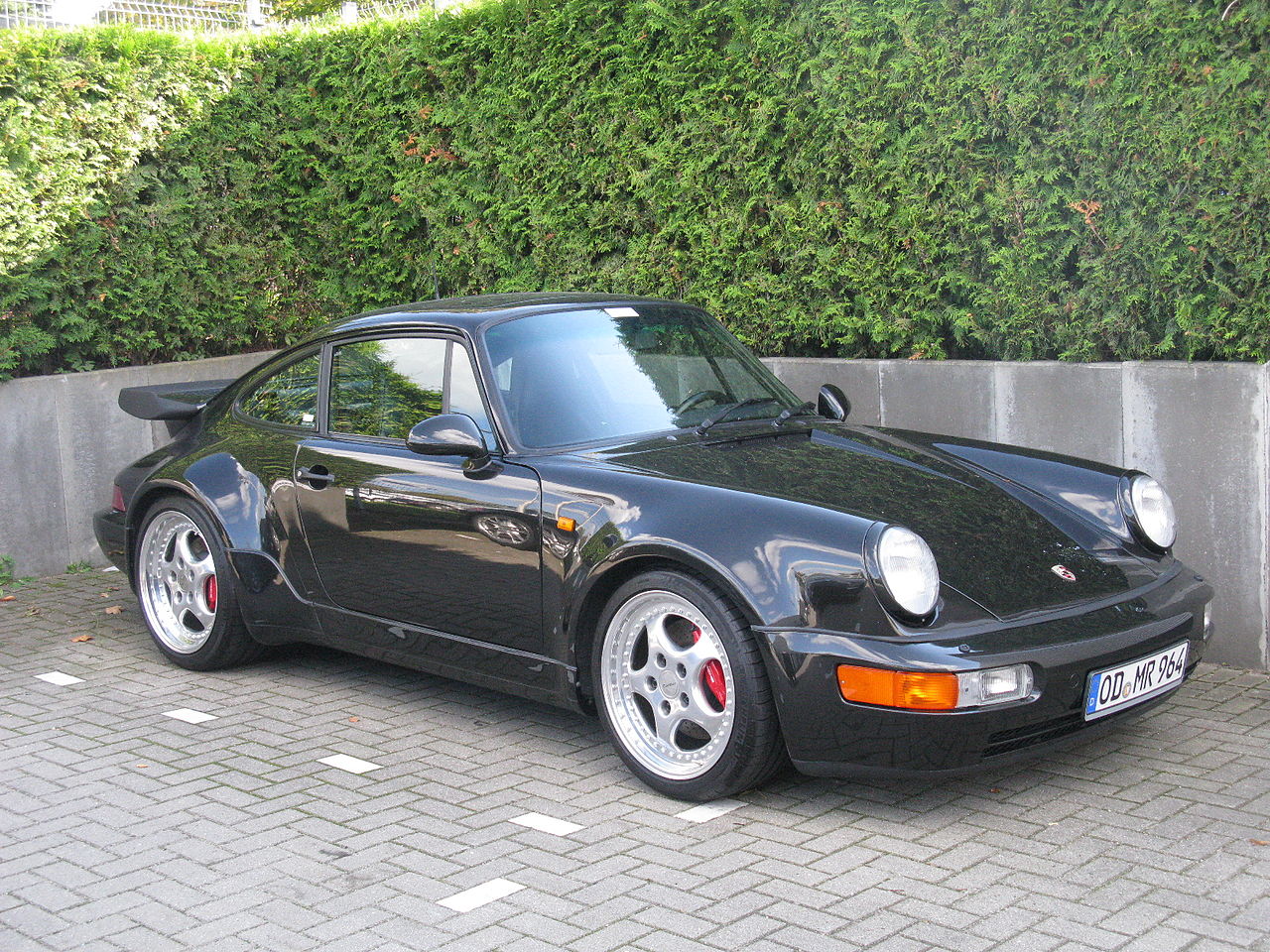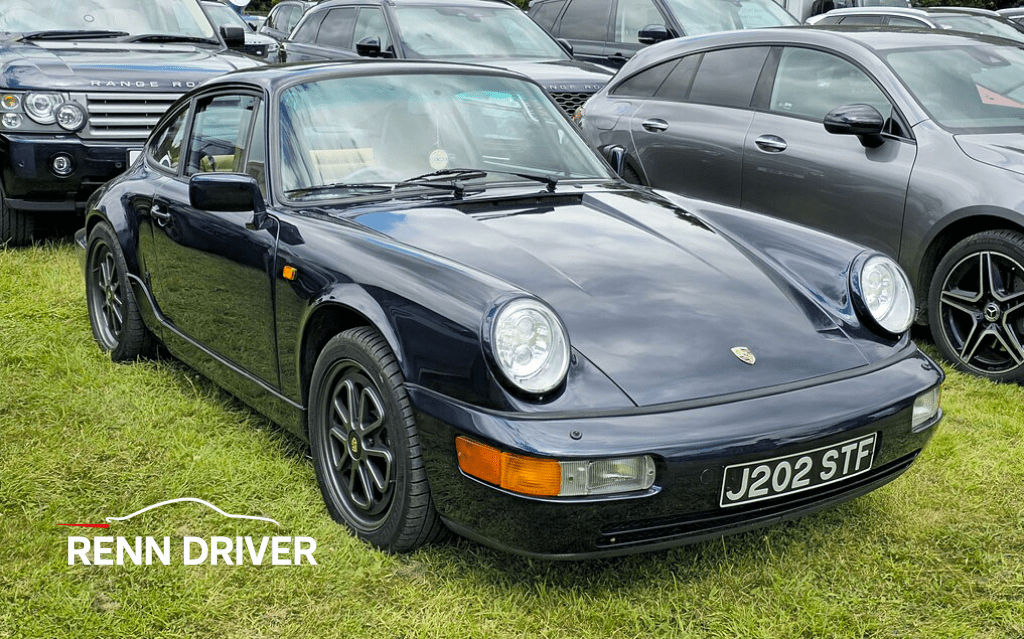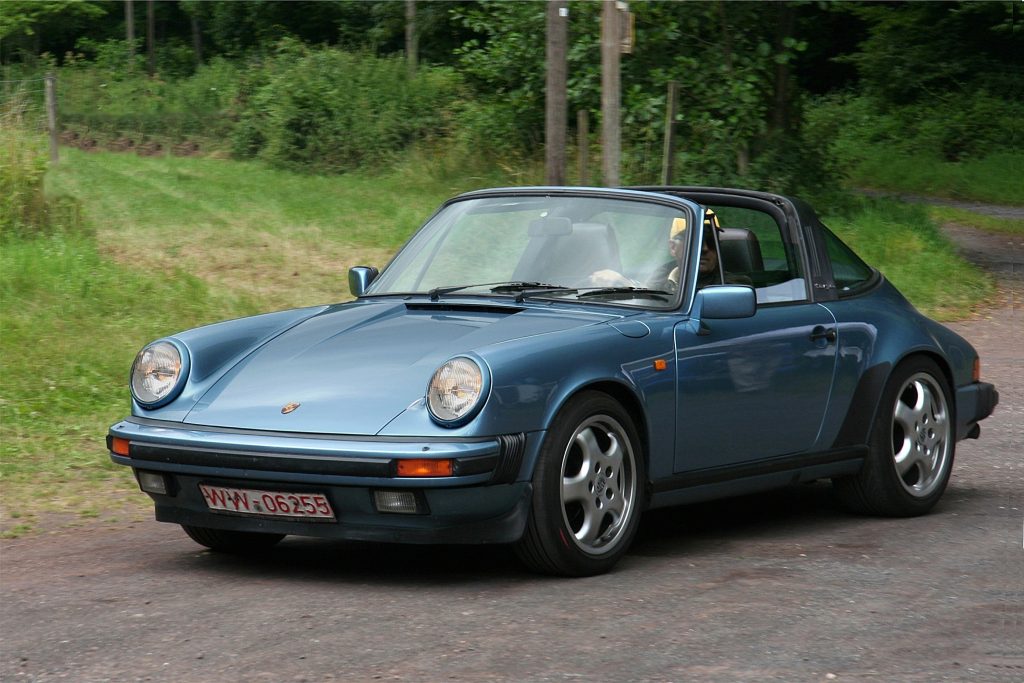
The best sounding Porsche engines are the 997 GT3 RS 4.0 (the Mezger flat-six at its absolute peak), the 991 GT3 (a 4.0L naturally aspirated screamer), and the 993 Carrera RS (air-cooled perfection). The Carrera GT's V10 is technically not a flat-six, but it produces the greatest sound Porsche has ever engineered. These engines share one thing: they are all naturally aspirated, and they all reward the driver who chases the redline.
Contents
Why Flat-Six Engines Sound Different
A flat-six (also called a horizontally opposed six-cylinder) has three cylinders on each side of the crankshaft, firing in an alternating pattern. This layout produces a distinctive sound that is unmistakably Porsche: a mechanical bark at low revs that builds into a howl at the top of the rev range.
The flat-six does not sound like a V8's rumble or an inline-six's smooth wail. It has its own character. At idle, there is a slight asymmetry to the firing order that gives it a raspy, off-beat quality. Under load, the sound becomes denser and more urgent. At full throttle near redline, the best flat-sixes produce a shriek that sits somewhere between a race car and a musical instrument.
Air-cooled flat-sixes sound different from water-cooled ones. Without a water jacket dampening vibrations, the air-cooled engine is mechanically louder and has a rawer, more exposed quality. You hear the valvetrain, the air intake, the cooling fan. It is a more complex, textured sound.
The naturally aspirated examples always sound better than turbocharged ones. Turbos muffle the exhaust note and add a whooshing quality that replaces the mechanical scream with something smoother but less exciting.
Honorable Mention: Porsche Carrera GT V10
The Carrera GT does not have a flat-six. It has a 5.7L V10 derived from a cancelled Formula 1 project. But any list of the best sounding Porsche engines that does not include the Carrera GT is incomplete.
The V10 revs to 8,400 rpm and produces 612 hp. It is naturally aspirated, with individual throttle bodies and a flat-plane crankshaft. The result is one of the most extraordinary exhaust notes ever produced by a road car. At full throttle, it screams with an intensity that pins your ears back and makes the hair on your arms stand up.
The sound at start-up is violent. The mid-range is a deep, cultured howl. The top end is a banshee wail that echoes off canyon walls and parking garage ceilings with equal drama. Chris Harris called it "the greatest noise a car has ever made," and few people who have heard one in person would argue.
The Carrera GT is not a flat-six, but it is the best sounding Porsche ever built. That fact deserves acknowledgment before we move to the six-cylinder stars.

997 GT3 RS 4.0
The final evolution of the 997 GT3 RS is the peak of the Mezger engine. The 4.0L naturally aspirated flat-six produces 500 hp and revs to 8,250 rpm. Only 600 units were built, and every one of them sounds like a race car that somehow received license plates.
The Mezger engine (named after Hans Mezger, the legendary Porsche engineer) has a different architecture from the standard 911 engine. It uses a dry sump, separate cylinder barrels, and a more robust bottom end derived from the 962 race car. These design choices not only make it more durable at sustained high revs but also contribute to its sound.
At idle, the GT3 RS 4.0 has a nervous, chattery quality. The lightweight flywheel and solid engine mounts transmit every combustion event through the cabin. Blip the throttle and the engine responds instantly, barking through the center-exit exhaust.
The magic happens above 6,000 rpm. The sound transitions from a bark to a scream as the intake resonance changes and the exhaust harmonics align. At 8,000 rpm, the flat-six is producing a continuous, metallic shriek that has been compared to a Formula 1 car from the early 2000s. It is one of the most visceral experiences available in a road legal car.
991 GT3
The 991-generation GT3 proved that Porsche could build a naturally aspirated flat-six that sounds extraordinary even in the water-cooled, modern era. The 4.0L engine (in the 991.2 GT3) produces 500 hp and revs to 9,000 rpm.
Nine thousand RPM. In a production car. With a naturally aspirated engine. That redline alone makes the 991 GT3 special.
The sound character is different from the Mezger. The 991 GT3 uses the newer engine architecture with a more integrated block design, and the exhaust note is slightly smoother and more refined at lower revs. But past 7,000 rpm, all refinement disappears. The engine transitions into a flat-out scream that builds in intensity until the rev limiter steps in at 9,000.
The intake noise is a major part of the experience. Porsche tuned the 991 GT3's intake plenum to produce a resonance at high RPM that amplifies the induction roar inside the cabin. With the windows down on a mountain road, the combined intake and exhaust note is intoxicating.
YouTube videos cannot capture this engine properly. The sound is felt as much as heard. It is a physical sensation in your chest and through the seat.

993 Carrera RS
The 993 Carrera RS is the last air-cooled RS. Its 3.8L naturally aspirated flat-six produces 300 hp, which sounds modest by today's numbers. But the sound this engine makes is anything but modest.
Air-cooled engines have a rawness that no water-cooled engine can replicate. You hear the mechanical components working: the valve train clicking, the cooling fan whirring, the intake gasping for air. The exhaust note is secondary to the mechanical symphony happening behind your head.
At full throttle, the 993 RS produces a hard-edged bark that builds into a rasping howl. There is no sound deadening, no turbo muffling, no electronic trickery. Just metal, air, and combustion. The sound echoes off tunnel walls with a quality that is both violent and beautiful.
The 993 RS also benefits from reduced weight (stripped interior, thinner glass, lighter body panels), which means less insulation between the driver and the engine. You are closer to the sound source, and that proximity makes the experience more intimate and more intense.
For many Porsche enthusiasts, the air-cooled flat-six sound is the defining Porsche sound. The 993 RS is the best example of it.
996 GT3 Cup
The 996 GT3 Cup is a purpose-built race car, not a road car, so it plays by different rules. But its sound earns it a place on this list.
The Cup car uses a 3.6L Mezger flat-six with race headers, a straight-pipe exhaust, and no catalytic converters. The result is an unfiltered, maximum volume version of the flat-six sound. At full song, it produces a penetrating, high-frequency wail that can be heard from a kilometer away.
Porsche Carrera Cup races and the Porsche Supercup series feature grids of 30 or more Cup cars, and the sound of 30 Mezger engines screaming in unison at a race start is one of motorsport's great audio experiences. The individual cars sound incredible. A full grid sounds apocalyptic.
The Cup car's unfiltered exhaust also lets you hear the individual cylinder firings more clearly, giving the engine a rawer, more staccato quality than any road-legal 911.
Singer DLS
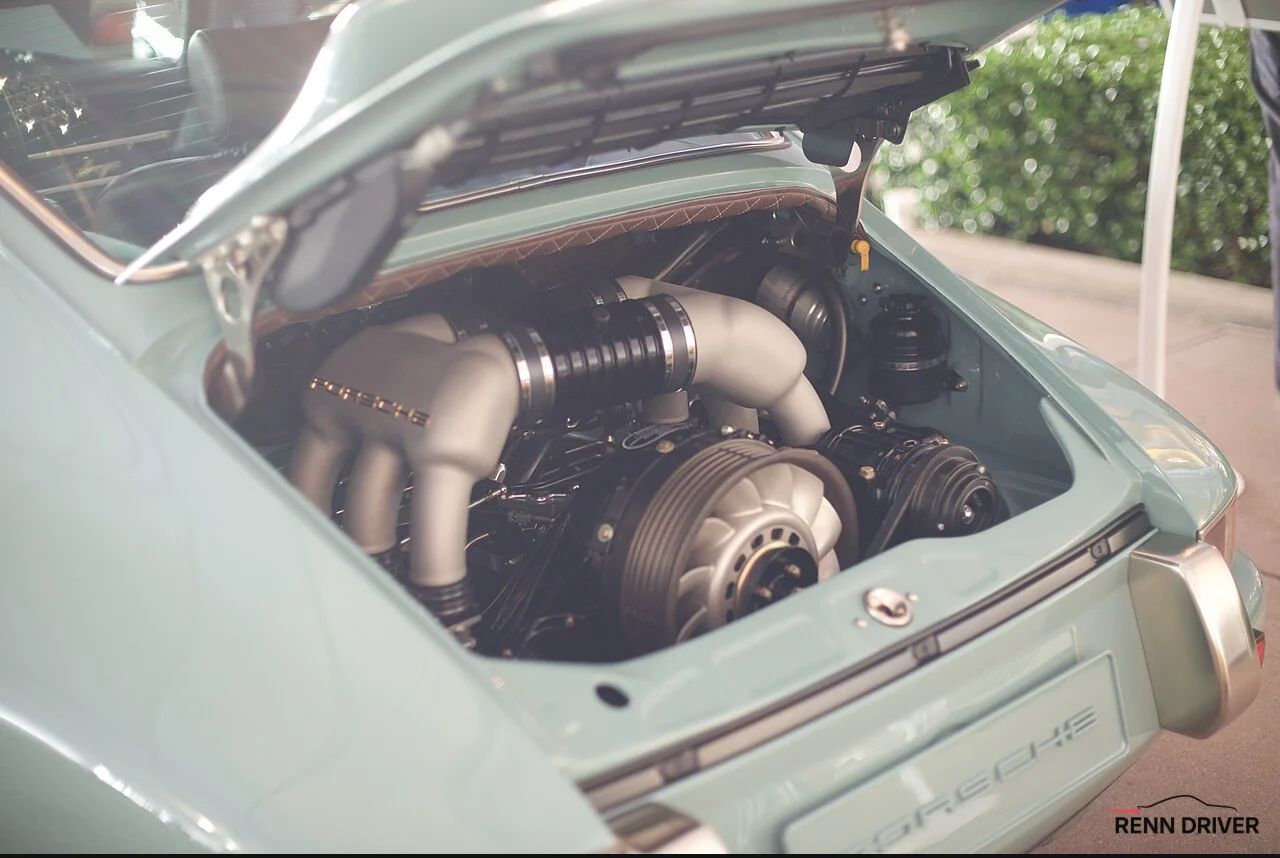
The Singer DLS (Dynamics and Lightweighting Study) uses a 4.0L naturally aspirated air-cooled flat-six developed with Williams Advanced Engineering. It produces over 500 hp and revs to 9,000 rpm.
Let those numbers sink in. A naturally aspirated, air-cooled flat-six making 500 hp and revving to 9,000 rpm. The engineering required to achieve this is extraordinary, and the sound matches the ambition.
The DLS engine has been described as the intersection of a vintage race car and a modern Formula 1 engine. At low revs, it has the mechanical chatter of an air-cooled engine. At high revs, it produces a scream that is more intense than any production Porsche flat-six has ever achieved. The combination of air-cooled texture and 9,000 rpm redline creates something genuinely unprecedented.
Few people have heard a Singer DLS in person (only a handful exist), but the recordings suggest it may be the single greatest sounding flat-six engine ever built.

The Ranking
| Rank | Engine | Power | Redline | Why It Sounds Great |
|---|---|---|---|---|
| HM | Carrera GT V10 | 612 hp | 8,400 rpm | The greatest exhaust note Porsche ever produced |
| 1 | 997 GT3 RS 4.0 | 500 hp | 8,250 rpm | The Mezger at its peak, metallic shriek above 6,000 rpm |
| 2 | Singer DLS | 500+ hp | 9,000 rpm | Air-cooled texture meets 9,000 rpm redline |
| 3 | 991 GT3 (4.0L) | 500 hp | 9,000 rpm | Modern NA screamer, the intake resonance is addictive |
| 4 | 993 Carrera RS | 300 hp | 6,900 rpm | Raw air-cooled perfection, mechanical symphony |
| 5 | 996 GT3 Cup | ~380 hp | 8,000+ rpm | Unfiltered Mezger with race exhaust, pure volume |
Renn Driver's Take
I will do some more research on this and give my updated thoughts soon.
Frequently Asked Questions
What is the best sounding Porsche flat-six?
The best sounding Porsche flat-six is the 997 GT3 RS 4.0. Its 4.0L Mezger engine produces a metallic, race-car scream above 6,000 rpm that no other production flat-six can match. The Singer DLS may surpass it, but so few exist that the 997 GT3 RS 4.0 holds the crown for production cars.
What is the best sounding Porsche ever made?
The best sounding Porsche ever made is the Carrera GT. Its 5.7L V10 produces an exhaust note that is widely considered one of the greatest sounds in automotive history. Among flat-six Porsches specifically, the 997 GT3 RS 4.0 holds the top spot.
Do air-cooled Porsches sound better than water-cooled?
Yes, most enthusiasts agree that air-cooled Porsches have a rawer, more mechanical sound than water-cooled models. The absence of a water jacket means less dampening of engine noise, which makes the valvetrain, intake, and exhaust more audible. Whether this sounds "better" is subjective, but most enthusiasts agree that air-cooled engines have a more characterful, textured quality.
Why do turbocharged Porsches not sound as good?
Turbocharged Porsche engines do not sound as good as naturally aspirated ones because the turbochargers act as mufflers in the exhaust path. The exhaust gases pass through the turbine housing before reaching the tailpipe, which dampens the high-frequency components of the exhaust note and replaces them with a smoother, whooshing quality.
What is a Mezger engine?
The Mezger engine is a flat-six engine designed by Porsche engineer Hans Mezger. It has a different architecture from the standard 911 engine, with separate cylinder barrels, a dry sump oil system, and a more robust bottom end derived from the Porsche 962 race car. It was used in the 996 and 997 GT3, GT3 RS, and Turbo models.
What RPM does the 991 GT3 rev to?
The 991.2 GT3 revs to 9,000 rpm. This is the highest redline of any production Porsche flat-six engine. The 991.1 GT3 revs to 8,750 rpm. Both use a 4.0L (991.2) or 3.8L (991.1) naturally aspirated flat-six.
Final Thoughts
Sound is one of the main reasons people buy Porsches over other sports cars. The flat-six has a voice that is entirely its own, distinct from every other engine layout. And the naturally aspirated versions, the ones that need to be revved to deliver their full potential, are the ones that create lasting emotional memories.
The industry is moving toward turbocharging and electrification, which means these naturally aspirated engines are not coming back. The GT3 lineup is likely the last naturally aspirated 911 in production. When it ends, these sounds end with it.
If you get the chance to hear a 997 GT3 RS 4.0 at full throttle, take it. Stand next to the track. Feel the sound in your chest. That is what a flat-six was always meant to be.
Photo credits: Brian Snelson, CC BY 2.0, via Wikimedia Commons. Keithmaguire, CC BY-SA 4.0, via Wikimedia Commons. Rudolf Stricker, CC BY-SA 3.0, via Wikimedia Commons.