
Before the Porsche 911 became an icon, there was the Porsche 901.
This was the specific vehicle that nearly didn’t exist, a short-lived experiment that laid the foundation for everything to come. Only 82 examples were ever built before a naming dispute forced Porsche to pivot. Today, the 901 is one of the rarest cars in Porsche’s entire history.
Contents
- 1 Quick Summary: Porsche 901
- 2 Production Year: 1964 (brief run)
- 3 The Birth of the 901
- 4 The Naming Controversy
- 5 From 356 to 901: A Shift in Philosophy
- 6 Design and Development
- 7 The 901 vs. Early 911
- 8 Sports Car Performance Specs
- 9 The Blue Wonder: 901 #57
- 10 The Ruf 901: Prototype #6
- 11 Restoration and Preservation at the Porsche Museum
- 12 Historical Significance
- 13 Cultural Impact
- 14 Collectibility and Value
- 15 Legacy in the Porsche Line
- 16 Final Thoughts
Quick Summary: Porsche 901
Production Year: 1964 (brief run)
Total Units Built: 82
Engine: 2.0L air-cooled flat-six
Power: 130 hp
Transmission: 5-speed manual
Nickname: The car that became the 911
The Birth of the 901
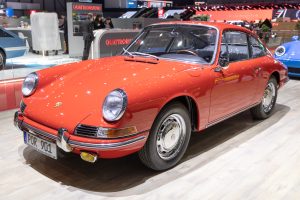
In the early 1960s, the 356 was at the end of its run. Porsche needed something modern, faster, and more refined. On September 12, 1963, at the Frankfurt Motor Show, Porsche introduced the 901. It was aimed primarily at the German market before global rollout.
Longer, sleeker, and more muscular than the 356, it still used a rear-engine platform but featured a brand-new 2.0L air-cooled flat-six producing 130 hp. Period press described it as the company’s boldest step forward, the company car that would carry Porsche into the future.
The Naming Controversy
Peugeot had a long-standing trademark in France: any three-digit car name with a zero in the middle was theirs. Peugeot objected to Porsche’s use of three-digit numbers with a zero in the middle, citing their prior patents.
Porsche, already well into production, got the memo too late. 82 cars had been built, but to avoid legal complications, Porsche simply changed the name: from 901 to 911. Peugeot claimed that Porsche had ‘stolen’ their naming convention, leading to the dispute.
Nothing else about the car changed. But that name change would end up rewriting automotive history.
The 901 faded into the background, a footnote at first, until enthusiasts started digging deeper.
From 356 to 901: A Shift in Philosophy
To understand how radical the 901 was, you have to look at what came before. The 356 was small, nimble, and light, a rear-engine sports car that felt more like a souped-up Beetle than a full-fledged performance machine. It had charm, but it wasn’t intimidating.
Porsche recognized that the evolution of its automobile lineup was essential to remain competitive in the broader automotive industry. The development of the 901 marked a significant step in the history of automobile models, reflecting both technological progress and a shift in brand identity.
The 901, on the other hand, was bolder in every direction. Longer wheelbase. New suspension design. More power. It felt like Porsche was signaling they were done playing small.
Where the 356 was modest, the 901 was ambitious. It was Porsche’s transition from boutique to global performance brand.
Design and Development
The 901 was the cleanest break yet from the 356, but it didn’t ditch tradition completely. It kept the air-cooled flat-six setup, rear-engine balance, and lightweight feel.
Key Differences from the 911:
- Unique door handles
- Slimmer bumper over-riders
- Hub mounts inspired by the 904 race car
- Distinctive gear shift pattern and gear ratios among early 901 components
Some prototypes even wore early versions of Fuchs wheels, though production cars used simpler steel rims.
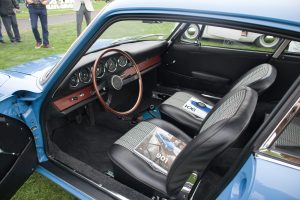
Inside, the cabin was minimalist. No screens. No distractions. Just a thin steering wheel, analog gauges, and seats that reminded you you’re here to drive, not recline. The dashboard featured a distinctive, minimalist layout that set the tone for the car’s original design.
The original design extended to the smallest components, including the gear shift and other interior details, ensuring authenticity throughout the interior.
It was light (around 2,300 lbs) and on the road, it felt alive: quick steering, snappy throttle, and a suspension tuned for agility.
The front trunk was roomier than the 356’s, and Porsche experimented with better weight distribution and crash safety. The glasshouse design improved visibility. These weren’t just aesthetic upgrades; they were functional enhancements aimed at real-world use.
The 901 vs. Early 911
Mechanically, they were nearly identical. Most early model 911s you see from the 1964 model year were originally designed as 901s. Collectors also pay close attention to the engine number and the middle number in the chassis sequence to confirm a true 901. The drivetrain, brakes, chassis, and interior were all carried over.
The biggest difference? The badge.
But for collectors, that tiny difference matters a lot. And that’s why 901s are so rare and valuable today.
Sports Car Performance Specs
Here’s what the 901 brought to the table:
- Engine: 2.0L air-cooled flat-six
- Power: 130 hp @ 6,100 rpm
- Torque: 128 lb-ft @ 4,200 rpm
- Transmission: 5-speed manual
- Top Speed: ~131 mph
- 0-60 mph: ~8.7 seconds
- Weight: ~2,300 lbs
- Brakes: Four-wheel discs
In the 1960s, these were serious numbers. And even today, the 901 holds its own in how connected and raw it feels on the road.
Period reviews praised its balance and poise. Road & Track called it “a car with race car reflexes but grand touring manners.” The 901’s performance was directly influenced by Porsche’s deep racing heritage, which set it apart from many contemporaries.
The flat-six wasn’t the most powerful engine on the market, but its sound and throttle response won hearts. For many drivers, experiencing the 901’s flat-six engine for the first time was a memorable milestone.
The Blue Wonder: 901 #57
In 2014, Porsche stumbled across a forgotten 901 in a barn garage in Brandenburg, Germany. It was rusted and neglected, but it turned out to be chassis number 300.057, one of the original 82.
Rather than toss it in a museum unrestored, Porsche went all-in.
They stripped the paint with chemical baths to preserve the metal body. Donor panels were matched using original molds, and over half of the original body panels were salvageable. Many missing parts had to be sourced or recreated, with a focus on using original or period-correct spare parts throughout the restoration.
Extensive repair work was required to restore the car’s body and front end, including the front wings, ensuring all period-specific details were retained. The interior was rebuilt to 1963 factory specs, right down to the fabric. Every welding point was carefully restored to maintain authenticity and structural integrity.
The restoration took nearly three years and involved collaboration with longtime Porsche suppliers, historians, and craftsmen.
The result: a rolling time capsule. This car stands as a notable instance of a successful 901 restoration. The car now lives in the Porsche Museum in Stuttgart. They call it “The Blue Wonder.”
The Ruf 901: Prototype #6
No deep dive into the 901 is complete without mentioning one of the most important survivors: Prototype #6, now owned by Alois Ruf Jr.
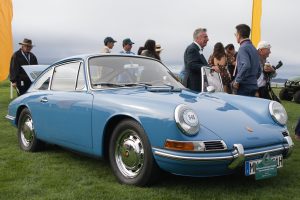
Yes, that Ruf, the one behind some of the fastest and wildest Porsche builds ever made. Long before the CTR Yellowbird or Nürburgring records, Ruf’s connection to Porsche started with this car. And it wasn’t just any 901. This one had serious history.
Originally used by Ferdinand Piëch as a test car, then passed to Hans Mezger, Prototype #6 was one of the earliest 901s ever built. It even debuted with a dummy wooden engine during early showings before receiving its flat-six.
Over the years, it changed hands, took damage, and lost its engine. Until Ruf Jr. inherited it as a teenager and unknowingly drove it around with a 912 motor installed by his father.
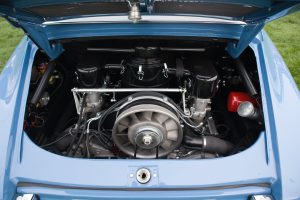
It wasn’t until much later that the car’s full story came to light. After a painstaking restoration, Quickblau, as it’s now called, returned to the spotlight at Villa d’Este, where it won Best in Class and Most Iconic Vehicle. It’s still driven today.
Restoration and Preservation at the Porsche Museum
Restoring a 901 isn’t like fixing up a used Boxster. The original 901s were manufactured with meticulous attention to detail, making restoration a surgical operation.
- Bodywork: Restorers often use chemical treatments rather than sandblasting to preserve original lines.
- Panels: Parts are either fabricated from original molds or salvaged from period-correct donor cars.
- Interior: Materials like leather, carpet, and vinyl are matched by hand to original samples.
- Components: Authentic components are crucial. Restorers prioritize sourcing or restoring original or accurately reproduced parts to maintain historical integrity.
Only a small number of 901s were produced before series production shifted to the 911. During the brief series production run, just 82 examples were produced, underscoring their rarity and significance.
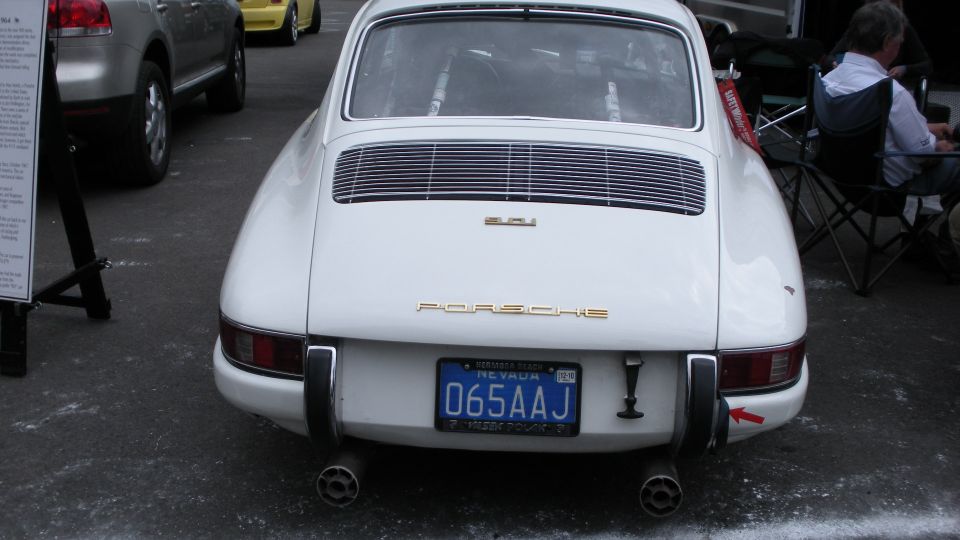
Every restoration choice has weight. One wrong stitch, one off-color bolt, and the car’s historical value takes a hit.
Some owners go as far as re-creating period-correct toolkits, dealer stickers, and documentation. With so few 901s in existence, provenance and accuracy are everything.
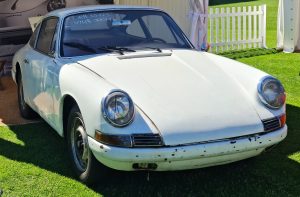
The Porsche Museum: Showcasing the 901
Visiting the Porsche Museum in Stuttgart feels less like a museum trip and more like stepping into Porsche’s family album. It’s all there. Decades of design, engineering, and evolution, curated by Alexander Klein with a real eye for the details that matter to enthusiasts.
One of the stars of the show is the Porsche 901. It’s proudly on display, and it’s not just there for show. You get to see what makes it special up close.
Things like the original door handles, that clean front bumper, and the rare three-digit engine code that separates it from the 911s that came after. It’s a quiet reminder of how Porsche started something big, even if they had to change the name.
One cool part of the museum is the restoration area. You can actually watch old Porsches being brought back to life. They even use a chemical bath to strip down the bodywork, painstaking, but necessary to keep things original. It’s not just for show; it’s Porsche staying true to its roots while passing the torch to the next generation of fans.
Community and Events: The 901’s Enthusiast Legacy
The Porsche 901 isn’t just a museum piece. It’s the heart of a tight-knit community that genuinely cares about where Porsche came from. The museum in Stuttgart plays a big role in keeping that energy alive. It’s not just a place to look at cars; it’s a gathering point. Every year, the Porsche Festival brings in fans from all over, with rare models like the 901 taking center stage.
But the 901’s story doesn’t stop there. It sparks everything from restoration workshops to guided tours that dive into the nitty-gritty of how these cars are brought back to life. Online, the conversation keeps going. Forums, Instagram pages, even YouTube channels where people trade tips, swap stories, and geek out over every little detail.
Whether it’s parked under bright lights at the museum or tearing down a back road, the 901 still turns heads. It’s a reminder of what Porsche got right early on: building cars that not only drive well but connect people. That’s why it still matters.
Historical Significance
The 901 isn’t just a rare Porsche. It’s a turning point.
It sits right between the 356 and the 911. Between old-school sports cars and the modern machines we know today. Between hand-built quirks and the start of real production consistency.
If the 356 was Porsche figuring out who it was, the 901 was puberty. Brief, a little awkward, but completely necessary.
It first showed up at the Paris Motor Show in October 1964. Less than a year later, Porsche had already made tweaks to performance and gearing in the early 911s.
Then came the name change. Rather than fight Peugeot over the “901” trademark, Porsche just pivoted. They called it the 911 and ran with it. That one decision helped crack the U.S. market wide open. The new name sounded familiar, thanks to 911 emergency services, and it stuck.
More than anything, the 901 showed that Porsche could adapt. Fast. And that mindset to evolve instead of getting stuck became a core part of who they are.
Cultural Impact
The 901 is more than a car. It’s Porsche’s origin story.
In car culture, it stands for something deeper:
- Heritage over hype
- Persistence over perfection
- The moment Porsche stopped following and started leading
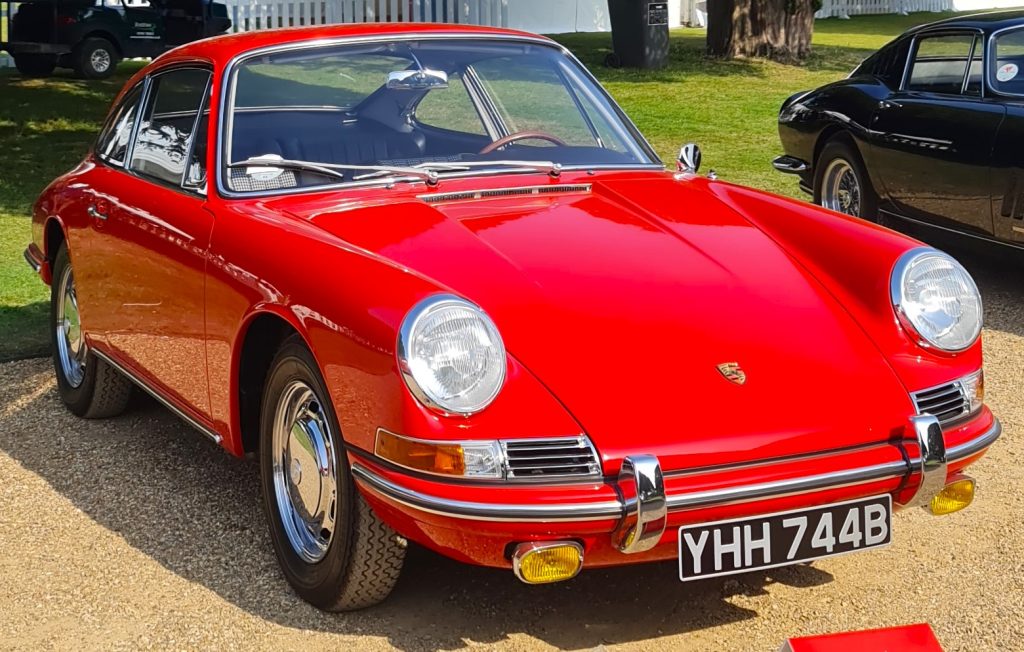
Its influence in the U.S. runs deep. The 901 helped shape American car culture and sparked a new generation of enthusiasts. One red 901 in particular has become iconic, featured in top collections and media as a symbol of how rare and collectible this model really is.
You’ll see the 901 pop up in documentaries, coffee table books, collector posters, and even artwork. It’s not just respected. It’s legendary.
Even the smallest nods, like a quick shot in a film or a museum restoration clip, add to its mystique.
Collectibility and Value
Because only 82 were made, the 901 is one of the rarest production Porsches in existence. And prices reflect that.
Notable Sales:
- 2017: $1.76M at RM Sotheby’s
- 2020: $1.3M at Bonhams
- 2023: $2.1M private sale
Early 901s were originally sold to select customers, and who those buyers were plays a big role in what the car is worth today.
But for serious collectors, the value isn’t just about money. It’s about the story, the scarcity, and the historical weight.
A well-documented, original 901 with matching numbers is nearly priceless. Even rough examples go for serious money because there are so few left to restore.
Legacy in the Porsche Line
The 901 didn’t just turn into the 911. It defined it.
Every 911 that followed, from the 930 Turbo to the 992 GT3, owes something to the DNA built into the 901. Rear-engine balance. Driver-first design. Purpose over polish.
Even today, Porsche engineers talk about the 901 with a kind of reverence. The car set the blueprint: light, fast, responsive, and emotionally engaging.
Without the 901, Porsche might still be building good cars. But it probably wouldn’t be building legends.
Final Thoughts
The 901 wasn’t around long. But it didn’t have to be.
It was the spark. The moment Porsche found its voice. You can see it in every curve of a 911, hear it in every growl of an air-cooled flat-six.
And if you ever spot one in the wild? Stop and take it in.
You’re not just looking at a rare car.
You’re looking at the beginning of a legend.
Images by: MrWalkr, MrWalkr, Theodulf, Prova MO, Prova MO, Prova MO, Matti Blume, all licensed under CC BY-SA 4.0, via Wikimedia Commons.