
The late 1960s were a golden period for Porsche. The 911 lineup was expanding, and the Porsche 911E emerged as the middle ground between the entry-level 911T and the more aggressive 911S. It was built for drivers who wanted strong performance, modern technology, and a touch of luxury.
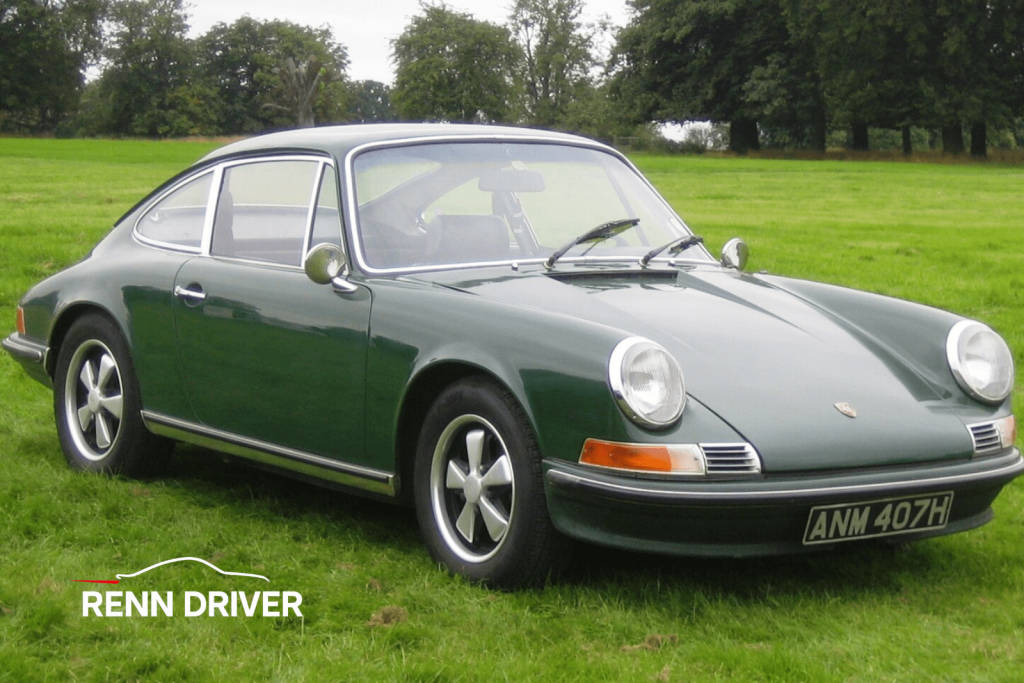
The “E” stood for Einspritzung, German for fuel injection, highlighting its advanced Bosch mechanical fuel injection system. This gave it crisp throttle response and a broader torque curve than its carbureted siblings.
In this article, we’ll explore the 911E’s history, engineering, and enduring appeal, and see why it remains one of the most balanced and collectible early 911 models. Among classic Porsche cars, the 911E stands out for its mix of refinement and performance. Its introduction cemented Porsche’s reputation in the wider automotive world as a leader in engineering innovation.
Contents
Quick Summary
- Production Years: 1969–1973
- Engine: 2.0L, 2.2L, and 2.4L air-cooled flat-six with mechanical fuel injection
- Power: 140–165 bhp, 129–151 lb-ft (depending on the production year)
- Transmission: 5-speed manual
- Layout: Rear-engine, rear-wheel drive
- Legacy: Positioned between the 911T and 911S, combining balanced performance with refined comfort
History and Position in the 911 Lineup
Porsche introduced the 911 in 1964, and by 1969, the range had split into three versions: the 911T, 911E, and 911S. The 911E was intended to deliver the best of both worlds: performance close to the 911S model with greater refinement and drivability.
It was produced from 1969 to 1973, with just 2,826 units built, making it far rarer than many other early 911 variants. Available in coupe and Targa form, the 911E offered buyers a versatile choice for both spirited driving and comfortable touring.
The 911E’s engineering reflected Porsche’s racing experience, with advanced suspension technology and a focus on predictable handling.
Mechanical Features
At its heart was an air-cooled flat-six engine. The 1969 models featured a 2.0L unit producing 140 bhp and 129 lb-ft of torque. For the 1970–1971 model years, the engine was enlarged to 2.2L, increasing power to 155 bhp and 141 lb-ft.
The final 911 E models from 1972–1973 were equipped with a 2.4L engine, making 165 bhp and 151 lb-ft of torque. Upgraded cylinder heads helped improve breathing and efficiency across the E’s production run. The Bosch mechanical fuel injection system gave it smooth power delivery and improved efficiency for the era. These incremental increases in power outputs highlight the evolution of the early 911 lineup.

A 5-speed manual gearbox delivered power with precision, and the car’s chassis balance made it a joy to drive on twisty roads.
The 911E’s hydro-pneumatic front suspension, which was used from 1969 to 1971, provided a comfortable ride without sacrificing cornering precision. Ventilated brake discs at all four corners offered strong and consistent stopping power. Careful attention to weight distribution gave the 911E its characteristic balance and poise.
Design and Style
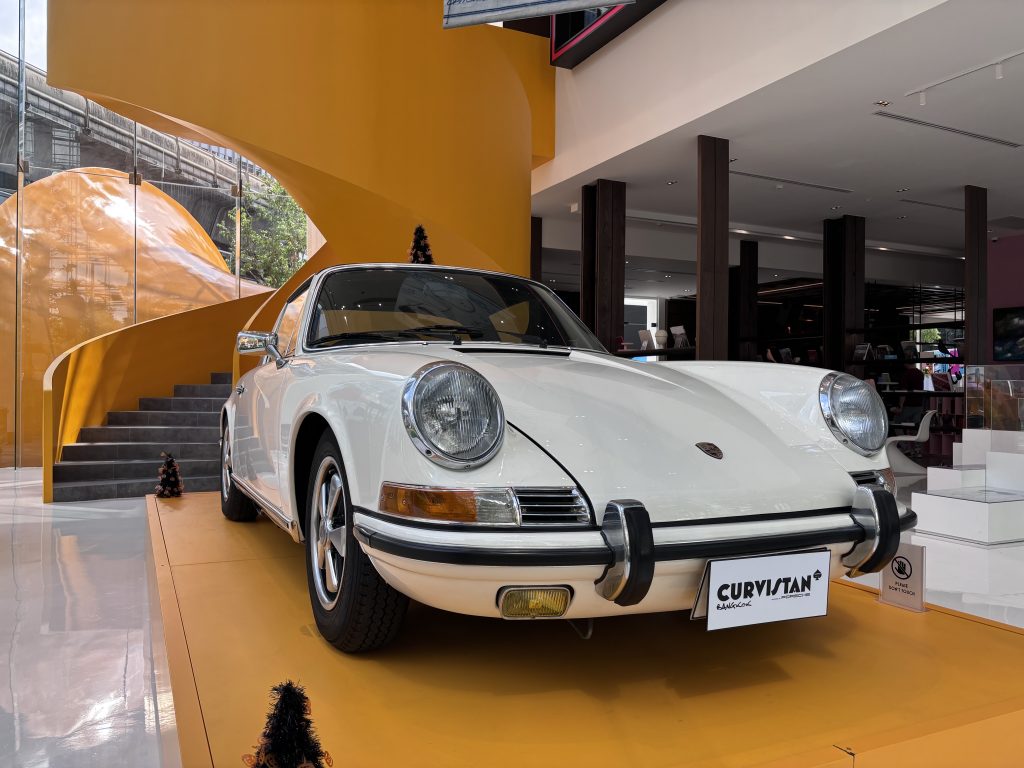
The 911E carried the timeless early 911 silhouette with its flowing roofline, upright headlights, and compact proportions. Chrome accents highlighted the bumpers, window trim, and door handles. Fuchs wheels and rubber bumper guards became standard equipment, reinforcing its identity as both stylish and functional.
Inside, it leaned toward luxury. Leather seats, velour carpets, and a leather-covered steering wheel gave it an upscale feel. The Targa version featured a removable roof panel for open-air motoring, along with a fixed glass rear window for better visibility.
Small details, like rubber bumper guards and period-correct badging, added to its charm.
Performance Capabilities
With a top speed ranging from 134 to 137 mph, the 911E was quick for its time. Its acceleration and handling benefitted from the lightweight chassis, well-sorted suspension, and rear-engine traction.
On the road, it delivered a mix of agility and comfort that made it suitable for both weekend drives and long-distance touring. Though not a pure race car, its engineering clearly benefited from Porsche’s motorsport programs. Many of its components were developed with racing in mind, which gave it a solid edge over other cars in its class.
Comparison to Other Early 911 Models
- Versus the 911T: The 911E had more power, better suspension, and higher-quality interior finishes.
- Versus the 911S: The S was faster and sportier, but the E offered a smoother ride and was easier to live with daily.
- Shared DNA: All three variants shared the same classic body and racing-influenced engineering, but the E struck a rare balance between performance and comfort.

Legacy and Collectibility
The 911E’s rarity, mechanical sophistication, and balanced character have made it increasingly collectible. It represents a sweet spot in the early 911 range, especially for drivers who want classic looks with a slightly more forgiving ride than the 911S.
Well-preserved examples are prized by collectors, and original cars with matching numbers command strong prices. Its combination of advanced engineering and timeless styling ensures its place as a standout in Porsche’s history. It also reinforced Porsche AG’s commitment to the continuous development of the 911 platform. In period road tests, the 911E was often compared with rivals like Alfa Romeo’s sports coupes, highlighting its refined balance.
Fun Facts About the Porsche 911E
- The 911E also contributed to Porsche’s long tradition of memorable car names. “E” stands for Einspritzung, meaning fuel injection in German.
- It used the same Bosch mechanical fuel injection system developed for the 911S.
- The hydro-pneumatic front suspension was unique to the 911E and was used on 1969-1971 models, which improved ride quality.
- The total production numbers were much higher than the stated 2,826. This figure represents the 1969 model year alone.
- Many 911E buyers chose the Targa top, making it one of the most desirable variants today.

Frequently Asked Questions (FAQs)
What years was the Porsche 911 E made?
The production dates for the Porsche 911 E were from 1969 to 1973.
How much horsepower does a 911E have?
The horsepower varied by production year, from 140 bhp (2.0L) to 165 bhp (2.4L).
Is the Porsche 911 E rare?
While not as rare as the article stated, it is a less common early 911 model compared to the 911T and 911S.
What makes the 911E different from the 911S?
The 911E offers smoother ride quality and slightly less aggressive performance, with more comfort-focused features.
Is the 911E a good investment?
Yes, values have been climbing as collectors seek out rare and well-preserved examples.
Conclusion
The Porsche 911 E was designed to offer the best balance between performance and comfort in the early 911 lineup. With its refined suspension and luxurious interior, it delivered a unique driving experience that appealed to enthusiasts then and now.
Its rarity, historical significance, and unmistakable style make it a standout among classic Porsches. For those who want a piece of early 911 history that can still be enjoyed on the open road, the 911E is hard to beat.
Which Porsche model should we explore next?
Photo credit: Charles01, CC BY-SA 3.0, via Wikimedia Commons, andreboeni, CC BY 2.0, via Wikimedia Commons, Andrew Bone from Weymouth, England, CC BY 2.0, via Wikimedia Commons, stephenhanafin / Stephen Hanafin, CC BY-SA 2.0, via Wikimedia Commons