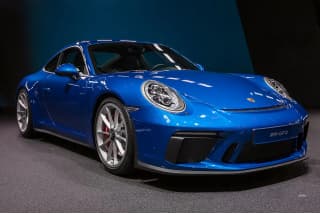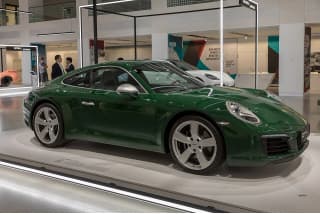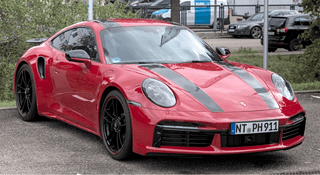
The Porsche 911 Carrera is the base model of the 911 lineup and has been in production since 1964. The current 992-generation Porsche 911 Carrera uses a 3.0-liter twin-turbo flat-six making 379 to 473 hp depending on trim. It is available as a coupe, cabriolet, or Targa, with rear-wheel drive or all-wheel drive, and starts at approximately $114,000. The Carrera is the most-sold 911 variant and the entry point to Porsche sports car ownership.
In this article, we’ll explain the Porsche 911 Carrera, the base model at the center of the 911 range. We’ll cover every generation, current trims, body styles, and running costs.

Contents
- 1 Quick Summary
- 2 What Is the 911 Carrera
- 3 Every 911 Carrera Generation
- 4 Current Trims: Carrera vs S vs 4S vs GTS
- 5 911 Carrera GTS
- 6 Body Styles: Coupe, Cabriolet, and Targa
- 7 Engine and Performance
- 8 Transmission: PDK vs Manual
- 9 Chassis and Handling
- 10 Interior and Technology
- 11 Pricing and Options
- 12 Ownership and Maintenance
- 13 Motorsport Heritage
- 14 Frequently Asked Questions
- 15 Final Thoughts
Quick Summary
- Production years: 1964 to present (eight generations)
- Current generation: 992 (2019 to present)
- Engine: 3.0L twin-turbo flat-six (379 to 473 hp depending on trim)
- Transmission: 8-speed PDK or 7-speed manual
- Body styles: Coupe, Cabriolet, Targa
- Drivetrain: Rear-wheel drive or all-wheel drive (Carrera 4 models)
- 0 to 60 mph: 4.0 seconds (Carrera) to 3.1 seconds (911 Carrera GTS with PDK)
- Starting MSRP: ~$114,000 (Carrera coupe)
- What defines it: The Porsche 911 Carrera is the most balanced 911, blending daily usability with the flat-six engine and rear-engine layout that defines the entire model line
The full guide below covers all the details.
What Is the 911 Carrera
The Porsche 911 Carrera is the core variant of the Porsche 911. It sits below the Turbo and GT3 in the lineup but accounts for the majority of 911 sales worldwide. Every model year, the Porsche 911 Carrera is available in multiple trims, body styles, and drivetrain configurations, making it one of the most versatile sports cars any manufacturer offers.
The Carrera name comes from the Carrera Panamericana, an open-road race across Mexico that Porsche won in the early 1950s. "Carrera" means "race" in Spanish, and Porsche first used it on the 356 Carrera in 1955. On the 911, the Carrera badge has been standard since the 1970s and now denotes the base and mid-range models in the lineup.
The vehicle is offered as a coupe, cabriolet, and Targa. Owners can choose between rear-wheel drive and all-wheel drive, between PDK and manual transmission, and between four trim levels that span from comfortable daily driver to near-GT3 performance. That flexibility is what has kept the 911 Carrera at the center of Porsche's sports car range for over 60 years.
Every 911 Carrera Generation
Original 911 (1964 to 1973)
The original 911 launched with an air-cooled 2.0-liter flat-six producing 130 hp. The Carrera badge did not appear until 1973 with the Carrera RS 2.7, the first production vehicle with a rear spoiler. Those early model years established the rear-engine layout and flat-six engine that every 911 Carrera has retained since.
G-Series (1974 to 1989)
The G-Series introduced impact bumpers to meet North American crash standards and expanded the engine range from 2.7 to 3.2 liters. The 1984 to 1989 Carrera 3.2 is the definitive G-Series model, producing 231 hp from a naturally aspirated flat-six with improved reliability. For many owners and enthusiasts, the Carrera 3.2 represents the purest analog 911 before electronic systems arrived. These cars are widely sold through both Porsche Cars North America dealers and the independent market.
964 (1989 to 1994)
The 964 was the first 911 Carrera with ABS, power steering, and coil-spring suspension replacing torsion bars. It introduced the Carrera 4, the first all-wheel drive 911. The 964 Carrera came as a coupe, cabriolet, and Targa, establishing the three body style options that continue today. The 3.6-liter flat-six made 247 hp.
993 (1995 to 1998)
The 993 is the last air-cooled 911. Its multi-link rear suspension transformed the handling, making the Porsche 911 Carrera more stable and predictable than any previous generation. The 993 Carrera produced 272 hp, and the Carrera S and Carrera 4S coupe models with their widebody look are among the most collectible 911 Carrera variants ever built.
996 (1999 to 2004)
The 996 moved to water cooling and introduced a new body that shared its headlight design with the Boxster. The 996 Carrera used a 3.4-liter flat-six (later 3.6L) and offered both coupe and cabriolet body styles. Early model years had IMS bearing concerns that are now well-documented. Despite the controversy, the 996 made the 911 Carrera faster and more refined than any previous generation, and the Carrera 4S coupe remains a popular choice among owners who want widebody looks with all-wheel drive traction.
997 (2005 to 2012)
The 997 brought back round headlights and dramatically improved interior quality. The 997 Carrera started with a 3.6-liter naturally aspirated flat-six (325 hp) before the 997.2 facelift introduced direct fuel injection. The 911 Carrera GTS debuted in this generation as the top non-Turbo, non-GT Carrera trim, a formula that continues today. Both coupe and cabriolet versions sold well, and the 997 is considered by many to offer the best balance of modern capability and classic 911 steering feel.
991 (2012 to 2019)
The 991 was a complete redesign with a longer wheelbase, electric power steering, and significantly lower weight. The 991.1 used naturally aspirated 3.4 and 3.8-liter engines. The 991.2 facelift switched to a 3.0-liter twin-turbo flat-six across the entire Carrera range, the first time every 911 Carrera used forced induction. The Porsche 911 Carrera GTS with its 450 hp engine became the sweet spot of the lineup. Coupe, cabriolet, and Targa body styles were all offered in rear-wheel drive and all-wheel drive configurations.

992 (2019 to Present)
The current 992 generation continues the twin-turbo 3.0-liter flat-six across all Carrera trims. Power ranges from 379 hp in the base Porsche 911 Carrera to 473 hp in the 911 Carrera GTS. The 992 is wider, faster, and more technologically advanced than any previous Carrera. Porsche offers it as a coupe, cabriolet, and Targa, each available with rear-wheel drive or all-wheel drive. The 992.2 facelift introduced the T-Hybrid system on the GTS, marking the beginning of electrification in the Carrera range.
Current Trims: Carrera vs S vs 4S vs GTS
| Trim | Power | Drivetrain | 0 to 60 mph | MSRP (coupe) |
|---|---|---|---|---|
| Porsche 911 Carrera | 379 hp | Rear-wheel drive | ~4.0 s | ~$114,000 |
| Porsche 911 Carrera S | 443 hp | Rear-wheel drive | ~3.5 s | ~$130,000 |
| Porsche 911 Carrera 4S | 443 hp | All-wheel drive | ~3.4 s | ~$138,000 |
| 911 Carrera GTS | 473 hp | RWD or AWD | ~3.1 s (PDK) | ~$150,000 |
The base Porsche 911 Carrera is the entry point. It delivers 379 hp through the rear wheels and reaches 60 mph in about 4.0 seconds with PDK. That makes the base Carrera faster than sports cars that cost twice as much from other manufacturers. The Carrera S adds 64 hp, larger brakes, and a sport exhaust as standard equipment. The Carrera 4S pairs the S engine with Porsche Traction Management all-wheel drive for owners who want grip in all conditions.
Each trim is available as a coupe, cabriolet, or Targa. Add "4" to the name for all-wheel drive. Add "S" for more power. The 911 Carrera GTS sits at the top and gets its own section below.
911 Carrera GTS
The 911 Carrera GTS is the performance peak of the Carrera range. It slots between the Carrera S and the 911 Turbo, borrowing chassis hardware from higher-spec models and offering more power, bigger brakes, and a sharper suspension tune.

The current 992 911 Carrera GTS produces 473 hp from the 3.0-liter twin-turbo flat-six. It comes with the Sport Chrono Package as standard equipment, PASM sport suspension lowered by 10mm, center-lock wheels, a sport exhaust, and lightweight glass. The manual transmission is available on the rear-wheel drive 911 Carrera GTS coupe, making it the enthusiast's choice in the Carrera lineup.
The 992.2 facelift 911 Carrera GTS introduced the T-Hybrid system, combining the turbo flat-six with an electric motor for up to 532 hp in short bursts. This makes the updated 911 Carrera GTS the first electrified Carrera. Both coupe and cabriolet body styles are offered, along with rear-wheel drive and all-wheel drive configurations.
For many owners, the 911 Carrera GTS represents the ideal balance. It has enough power and chassis hardware to be genuinely fast on a circuit, but it retains the comfort and daily usability that separates the Carrera from the GT cars. If you can only have one 911 and want it to do everything, the GTS is the model most people recommend.
Body Styles: Coupe, Cabriolet, and Targa
Every Porsche 911 Carrera trim is available in three body styles. The choice between coupe, cabriolet, and Targa is one of the first decisions owners make when ordering.
Coupe
The 911 Carrera coupe is the lightest and stiffest body style. It weighs approximately 100 lbs less than the cabriolet, which translates to marginally sharper handling and faster acceleration. The coupe is the default choice for drivers who prioritize performance and the purity of the driving experience. Most model years account for the majority of Carrera coupe sales.
Cabriolet
The Porsche 911 Carrera Cabriolet has been offered since the 1983 model year. The current 992 Carrera Cabriolet uses a fabric soft top that opens and closes in approximately 12 seconds at speeds up to 30 mph. The top folds flush into the rear bodywork, giving the Carrera Cabriolet a clean silhouette when lowered.

The Carrera Cabriolet adds approximately 150 lbs over the coupe due to the folding mechanism and structural reinforcements. Porsche compensates with additional bracing in the floor and sills, so the vehicle retains most of the coupe's rigidity. The Carrera S Cabriolet, Carrera 4S Cabriolet, and 911 Carrera GTS Cabriolet are all available. For owners in warm climates who value open-air driving, the Carrera Cabriolet is one of the best convertible sports cars in the world.
Targa
The 911 Targa sits between the coupe and cabriolet. It features a retractable glass roof panel and the distinctive Targa bar. All-wheel drive is standard on every 911 Carrera Targa. The Targa offers open-air motoring with more structural rigidity than the cabriolet, though it adds weight over both the coupe and cabriolet.

Engine and Performance
All current Porsche 911 Carrera models use a 3.0-liter twin-turbo flat-six engine with variable valve timing and direct fuel injection. The engine is mounted behind the rear axle in the traditional 911 configuration. Power output ranges from 379 hp in the base Carrera to 473 hp in the 911 Carrera GTS.
| Trim | Power | Torque | 0 to 60 mph | Top Speed |
|---|---|---|---|---|
| Carrera | 379 hp | 331 lb-ft | 4.0 s | 182 mph |
| Carrera S | 443 hp | 390 lb-ft | 3.5 s | 191 mph |
| Carrera GTS | 473 hp | 420 lb-ft | 3.1 s | 193 mph |
The turbochargers spool quickly and deliver torque across a broad range, giving the Porsche 911 Carrera strong midrange response that earlier naturally aspirated models lacked. The flat-six engine retains its characteristic sound, though it is noticeably different from the naturally aspirated GT3 at high RPM.
Earlier 911 Carrera generations used naturally aspirated engines ranging from 2.0 to 3.8 liters. The shift to turbocharging in the 991.2 generation was controversial among enthusiasts, but the power output, torque delivery, and fuel economy all improved significantly. A 992 Carrera outpaces a 996 Turbo in almost every measured performance category.
Transmission: PDK vs Manual
The Porsche 911 Carrera offers two transmission choices. The 8-speed PDK dual-clutch automatic is standard equipment and delivers faster acceleration, smoother gear changes, and better fuel economy. The 7-speed manual transmission is available on the Carrera S, Carrera 4S, and 911 Carrera GTS as a no-cost option.
PDK shifts in milliseconds and is the faster choice by every measure. The manual transmission is slower but more engaging. It connects the driver to the vehicle in a way that an automatic gearbox cannot replicate. Many owners order the manual specifically because the 911 Carrera is one of the few remaining sports cars where a manual transmission is still offered from the manufacturer.
Both transmissions drive through either the rear wheels or all four wheels via Porsche Traction Management. The PDK features launch control with the Sport Chrono Package. In first gear, the manual has a shorter ratio than the PDK, which gives it a more aggressive feel off the line.
Chassis and Handling
The Porsche 911 Carrera's rear-engine layout gives it exceptional rear-axle traction. Porsche Active Suspension Management (PASM) is standard across all Carrera trims, providing electronically adjustable damping that firms up in Sport mode and softens in Normal for daily driving. The system adapts to road conditions and driving inputs in real time.
Optional rear-axle steering is available on Carrera S and higher trims. At low speed, the rear wheels turn opposite to the front wheels, effectively shortening the wheelbase and tightening the turning circle. At high speed, the rear wheels steer with the fronts for greater stability. This feature is standard equipment on the 911 Carrera GTS.
Porsche Dynamic Chassis Control (PDCC) active anti-roll bars are available as an option. The brakes use steel rotors as standard, with PCCB ceramic composite brakes offered on every trim. The Carrera GTS models come with larger brakes than the base Carrera.
The 992 Carrera rides on staggered wheels and tires. The rear-wheel drive Carrera coupe weighs approximately 3,354 lbs, making it light for a modern sports car with this level of equipment. Every generation has improved the Carrera's handling, but the fundamental character remains: a rear-engine vehicle that rewards smooth, precise driving inputs.
Interior and Technology
The Porsche 911 Carrera interior centers on the driver. The analog tachometer sits in the middle of the instrument cluster, flanked by digital displays. The steering wheel hosts the drive mode selector (with Sport Chrono Package) and the standard controls for the Porsche Communication Management (PCM) system.

PCM includes a touchscreen with Apple CarPlay integration, navigation, and connected services. Optional equipment includes the Burmester surround sound system, heated and ventilated front seats, ambient lighting, and a head-up display. The rear seats are standard on all coupe and cabriolet models but are best suited for children or additional luggage. The front trunk holds a carry-on bag.
Porsche offers extensive customization through its configurator and Exclusive Manufaktur program. Owners can order Paint to Sample colors, two-tone leather interiors, contrast stitching, and carbon fiber or wood interior trim. The options list is long enough that a well-configured 911 Carrera can cost $30,000 to $50,000 more than the base price.
Pricing and Options
The Porsche 911 Carrera coupe starts at approximately $114,000 through Porsche Cars North America. The Carrera S coupe is approximately $130,000, the Carrera 4S is approximately $138,000, and the 911 Carrera GTS starts at approximately $150,000. Cabriolet models add roughly $13,000 to $15,000 over the coupe price. Targa models are priced similarly to the cabriolet.
Popular options that increase the sale price significantly include rear-axle steering ($2,090), Sport Chrono Package ($2,760), PCCB ceramic brakes ($8,970), Burmester sound ($4,620), and various visual packages. A fully specified 911 Carrera GTS Cabriolet with all-wheel drive can exceed $200,000.
On the used market, pricing varies by generation. A 996 Carrera coupe in good condition sells for $30,000 to $50,000. A 997 Carrera S is $50,000 to $80,000. A 991 Carrera GTS can reach $120,000 or more. The 992 still trades near or above MSRP for desirable specifications. For information on the most affordable entry points, see our cheapest Porsche guide.
Ownership and Maintenance
The Porsche 911 Carrera is one of the more reliable sports cars on the market. The flat-six engine has been refined across decades of production, and the vehicle's mechanical systems are well-proven. Porsche offers a 4-year/50,000-mile limited warranty on new vehicles, with 2 years of scheduled maintenance included.
Typical maintenance costs for owners:
- Oil change: $300 to $400
- Full set of tires (Pirelli or Michelin): $1,200 to $1,800
- Annual service: approximately $800
- Brake pads (front): $400 to $600
- PDK fluid service: $1,500 to $2,500
Rear tires wear faster than fronts due to the rear-engine weight distribution and power delivery. Owners who track their Carrera should expect higher brake and tire costs. For buyers considering a used Porsche 911 Carrera, a pre-purchase inspection at an authorized dealer or independent Porsche specialist is strongly recommended. Service history determines everything at this price point. Porsche's Certified Pre-Owned program is available through Porsche Cars North America dealers and offers extended warranty coverage.
For owners in Thailand, see our guides on Porsche maintenance costs and insurance.
Motorsport Heritage
The Carrera name was earned on the race track. The 911 Carrera RSR won its class at the 24 Hours of Le Mans in the 1970s. The Porsche Carrera Cup, a one-make racing series using Carrera-based race cars, runs in over 20 countries worldwide and is one of the longest-running spec racing championships in the world.
The 911's racing pedigree feeds directly into the road cars. Technologies like variable valve timing, Porsche Traction Management, PASM, and the flat-six engine architecture all trace their development to Porsche's motorsport programs. The Carrera is the model that brings those racing-derived systems to everyday drivers.

Frequently Asked Questions
How much does a Porsche 911 Carrera cost?
A new Porsche 911 Carrera coupe starts at approximately $114,000 through Porsche Cars North America. The Carrera S is approximately $130,000, and the 911 Carrera GTS starts at approximately $150,000. Cabriolet and Targa body styles add $13,000 to $15,000. Used Porsche 911 Carrera pricing ranges from $30,000 for a clean 996 to over $120,000 for a 991 GTS.
Is a Porsche 911 and Carrera the same thing?
No, the Porsche 911 is the model line and the Carrera is a specific variant within it. All Porsche 911 Carreras are 911s, but not all 911s are Carreras. The 911 range also includes the Turbo, GT3, Targa, and other variants that use different engines, chassis setups, and performance levels.
Is the Porsche 911 Carrera a good daily driver?
Yes, the Porsche 911 Carrera is one of the best daily-driver sports cars available. It has a front trunk for luggage, rear seats that fit children or bags, PASM adaptive suspension for comfort, and excellent visibility for a low sports car. Fuel economy is approximately 20 to 25 mpg depending on driving conditions. Owners around the world use the Carrera as their only car.
What is the difference between the Carrera and Carrera S?
The Porsche 911 Carrera S adds 64 hp over the base Carrera (443 hp vs 379 hp), larger brakes, a sport exhaust system, and PASM Sport suspension. The Carrera S also offers the 7-speed manual transmission as an option, which is not available on the base Carrera. On the road, the S delivers noticeably stronger acceleration and a more engaging exhaust note.
Can you get a Porsche 911 Carrera with a manual transmission?
Yes, the Porsche 911 Carrera S, Carrera 4S, and 911 Carrera GTS are all available with a 7-speed manual transmission as a no-cost option. The base Carrera and Carrera T are PDK only in the current 992 generation. The manual accounts for a small but dedicated percentage of Carrera orders.
Is the 911 Carrera GTS worth the extra money over the S?
Yes, the 911 Carrera GTS includes approximately $15,000 to $20,000 worth of options that would cost more if ordered individually on a Carrera S. Standard equipment on the GTS includes Sport Chrono, PASM Sport, center-lock wheels, sport exhaust, and lightweight glass. The GTS also adds 30 hp and is the top-performing Carrera before the Turbo. For enthusiasts, the GTS is widely considered the best value in the 911 range.
What is the Porsche 911 Carrera Cabriolet?
The Porsche 911 Carrera Cabriolet is the convertible version of the 911 Carrera. It uses a power-operated fabric soft top that opens in approximately 12 seconds. The Carrera Cabriolet is available in every Carrera trim (Carrera, S, 4S, GTS) and with both rear-wheel drive and all-wheel drive. It adds approximately 150 lbs and $13,000 to $15,000 over the coupe price.
How many Porsche 911 Carreras are made each year?
Porsche does not publish exact Carrera production numbers by trim, but the 911 range accounts for roughly 40,000 to 50,000 vehicles sold worldwide per year. The Carrera variants make up the majority of those sales. The 911 Carrera is Porsche's most recognizable model and has been in continuous production since 1964.
Final Thoughts
The Porsche 911 Carrera is not the fastest 911, the loudest 911, or the most extreme 911. It is the one that does everything well. Eight generations have refined the formula without abandoning it: a flat-six engine behind the rear axle, a driver-focused cockpit, and a vehicle that works as well in city traffic as it does on a mountain road.
For first-time Porsche buyers, the Carrera is the starting point. For long-time owners, it is often the car they return to after owning Turbos and GT3s. The 911 Carrera sits at the center of the Porsche lineup because it is the car that best represents what a Porsche 911 is supposed to be.
Images: Alexander-93, Calreyn88, Damian B Oh, MB-one, CC BY-SA 4.0, via Wikimedia Commons