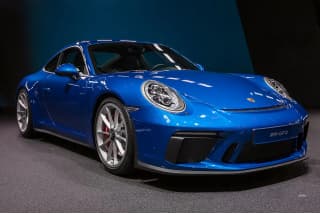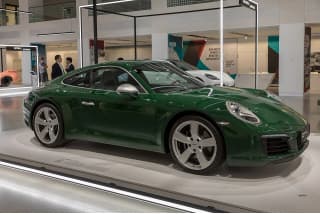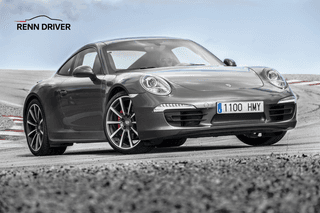
The Porsche 911 Turbo is the most powerful model in the standard 911 lineup, positioned above the Carrera and below the GT cars. The current 992 generation produces 572 hp from a twin turbocharged 3.7 liter flat six, reaches 60 mph in 2.7 seconds, and has a top speed of 199 mph. It is available as a coupe and a cabriolet, with all wheel drive and an eight speed dual clutch gear box on every model.
In this article, we’ll explain the Porsche 911 Turbo, the range-topping everyday 911. We’ll cover every generation, the Turbo S, the Cabriolet, and the coming hybrid.
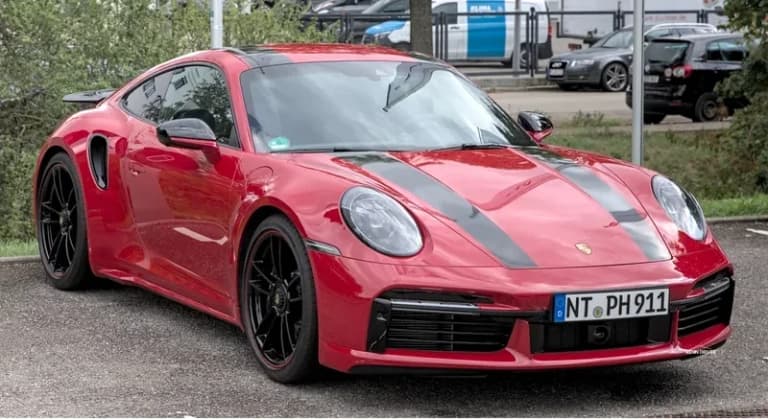
Quick Summary
- First produced in 1975 as the 930 Turbo
- Current model: 992 generation (2020 to present)
- 572 hp, 553 lb ft of torque from a twin turbocharged 3.7 liter flat six
- 0 to 60 mph in 2.7 seconds, top speed of 199 mph
- Available as a coupe and a cabriolet
- All wheel drive with eight speed dual clutch gear box, no manual option
- Starting price around $197,200 for the 2025 coupe
What Is the Porsche 911 Turbo?
The Porsche 911 Turbo is the range topping model in the standard Porsche 911 lineup. It sits above the Carrera and below dedicated track cars like the GT3 and GT3 RS. Porsche has produced the Porsche 911 Turbo since 1975, making it one of the longest running nameplates in the German sports car world and one of the fastest production cars you can use as a daily driver.
Unlike the GT models, which are built for racing and track days, the Porsche 911 Turbo is designed to be a good all rounder. It combines serious power output with a refined chassis, a quiet cabin, and enough room for rear seat passengers. It is the sort of car you can drive to work, take on a road trip across Germany, and still feel confident pushing hard on a mountain road.
From the factory, every Porsche 911 Turbo gets wider rear wheels, upgraded brakes with larger brake discs, active anti roll bars, and a more aggressive front end and rear bumper compared to the Carrera. The result is a car that feels planted and capable at any speed, whether you are accelerating out of a corner or cruising through town on a quiet afternoon. The Porsche 911 Turbo is only offered as a coupe and a cabriolet. It is not available as a Targa.
What Are the Porsche 911 Turbo Generations?
Porsche has produced seven generations of the Porsche 911 Turbo across five decades of motorsport and road car development. Each one built on the last, adding more power, better technology, and improved refinement. Here is every generation from the original 930 to the current 992.
930 Turbo (1975 to 1989)
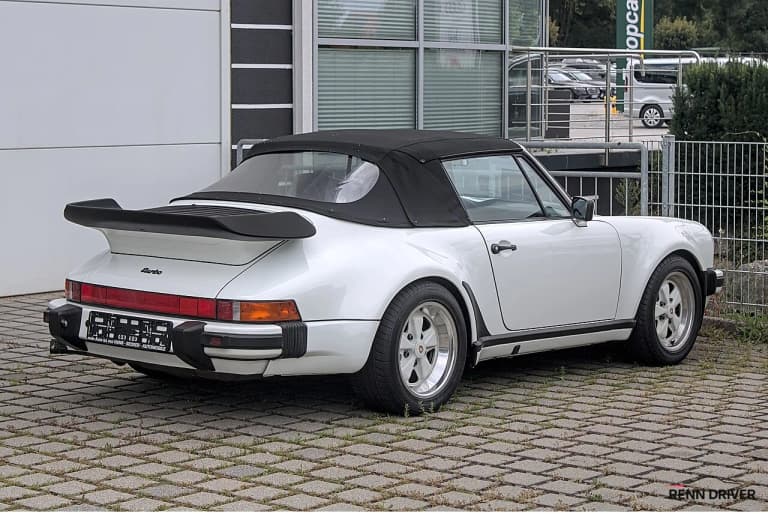
The original Porsche 911 Turbo arrived in 1975 and changed the sports car world. Porsche fitted a single turbocharger to the air cooled 3.0 liter flat six, producing 260 hp. A year later the engine grew to 3.3 liters with a power output of 300 hp. The 930 earned the nickname The Widowmaker because of its sudden turbo lag and the way the boost arrived all at once, overwhelming the rear wheels before the driver could react.
The car came with a four speed manual gear box, a whale tail rear wing, and wider fenders that gave it a style unlike anything else on the road. Porsche produced around 21,000 units over the 930's 14 year production run. Clean examples have become highly collectible and their values have risen a lot in recent years. The 930 remains one of the most recognizable cars Porsche has ever built and is hard to find in good condition at a reasonable price.
964 Turbo (1990 to 1994)
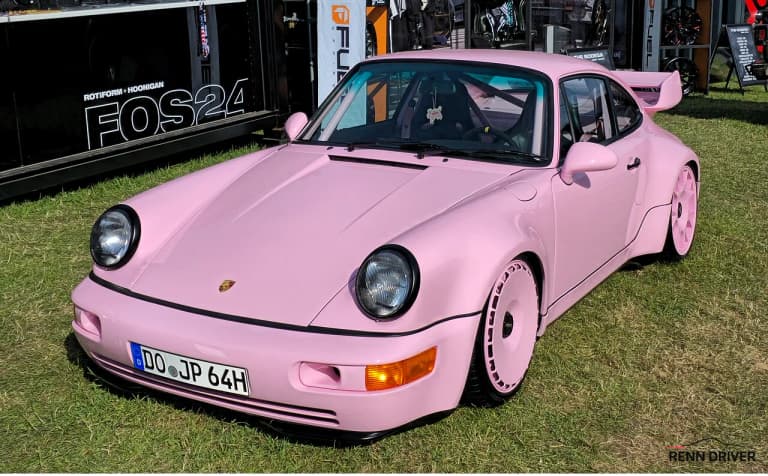
The 964 generation Porsche 911 Turbo replaced the 930 and brought the car into the modern era. It arrived with anti lock brakes, power steering, and a coil spring suspension replacing the old torsion bars. The initial 964 Turbo used a 3.3 liter engine producing 320 hp, but in 1993 Porsche delivered a 3.6 liter version with 360 hp and a five speed gear box.
The 964 Turbo was mechanically simpler than what followed, but it remains a good car with a raw character that later generations smoothed out. Porsche produced it in relatively small numbers, which makes it a special find if you are looking on the used market today.
993 Turbo (1995 to 1998)
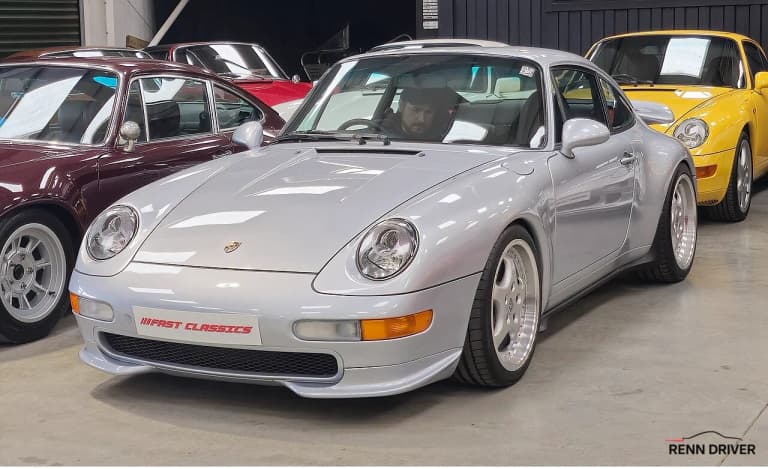
The 993 Porsche 911 Turbo was the final air cooled Turbo and one of the most special cars Porsche has ever produced. It was the first Porsche 911 Turbo with twin turbochargers and the first to send power to all four wheels as standard. The 3.6 liter flat six delivered 408 hp and torque that made it quicker than essentially anything else on the road at the time.
The 993 also introduced a wider body style that would define the look of every Porsche 911 Turbo going forward. It weighed around 3,307 lbs, which was lighter than the 996 and 997 that replaced it. The end of air cooled production made the 993 Turbo an inevitable collector car, and good examples now command high prices. If you find one in good condition, expect to pay a lot more than the original sticker.
996 Turbo (2001 to 2005)
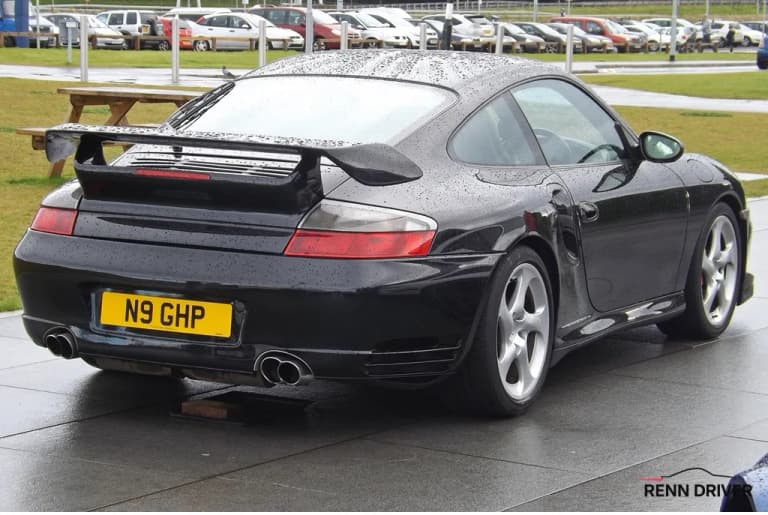
The 996 Porsche 911 Turbo was the first water cooled Turbo and a major change from everything that came before it. Under the body sat the Mezger engine, a 3.6 liter twin turbocharged flat six producing 415 hp. This engine was derived from the racing unit in the Le Mans winning Porsche 911 GT1, tying the road car directly to Porsche's motorsport heritage.
The 996 Porsche 911 Turbo was available as both a coupe and a cabriolet. Porsche offered a six speed manual gear box and the Tiptronic auto transmission. It was quicker than the 993 with good throttle response and noticeably less lag. The 996 Turbo remains one of the best values you can find in the used Porsche market, with good examples starting around $60,000.
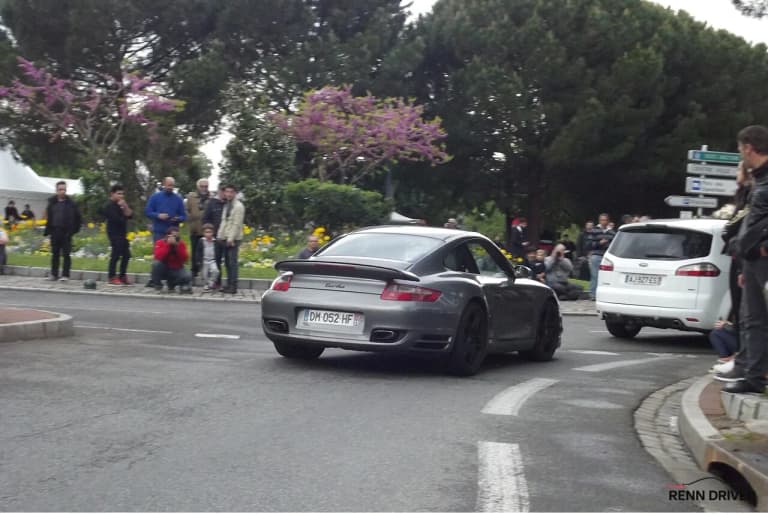
997 Turbo (2006 to 2012)
The 997 Porsche 911 Turbo was the first to use variable geometry turbochargers, a concept borrowed from diesel engines and adapted for a gasoline sports car. This virtually eliminated turbo lag and gave the Porsche 911 Turbo much smoother power delivery throughout the rev range.
Power output started at 480 hp from the 3.6 liter flat six and rose to 500 hp in the 997.2 facelift. The 997 was also the first Porsche 911 Turbo to offer the PDK dual clutch gear box, which made it quicker than ever in acceleration tests. It arrived as a coupe and a cabriolet. The 997 is the generation where the Porsche 911 Turbo changed from a raw machine into a refined car capable of matching things costing twice as much at the dealer.
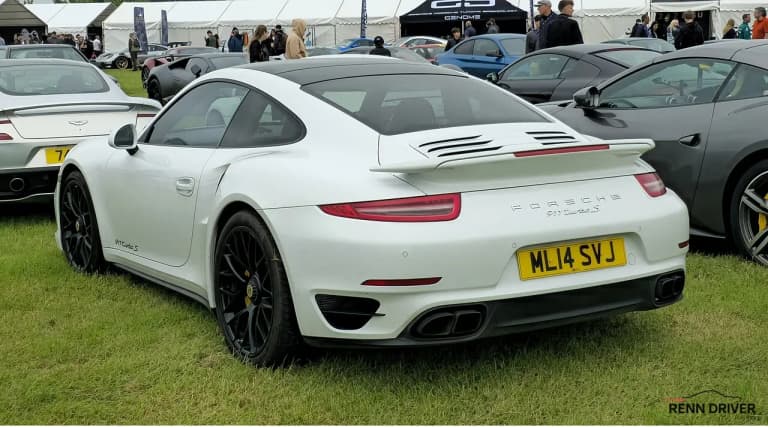
991 Turbo (2013 to 2019)
The 991 Porsche 911 Turbo moved to a larger 3.8 liter twin turbocharged flat six producing 520 hp. It introduced rear axle steering, active front and rear aerodynamics, and a longer wheelbase that gave the car a more stable feel at high speed. The chassis was wider than the 997, with a more pronounced bumper at each end and a deeper front end.
The 991 Turbo S pushed power output to 580 hp and was the first Porsche 911 Turbo to reach 200 mph. The 991 generation also marked the end of the manual gear box, with the dual clutch transmission becoming the only option. A close look at the numbers shows the 991 Turbo S completed its era as one of the most capable cars of its time, and used examples continue to hold their value well.
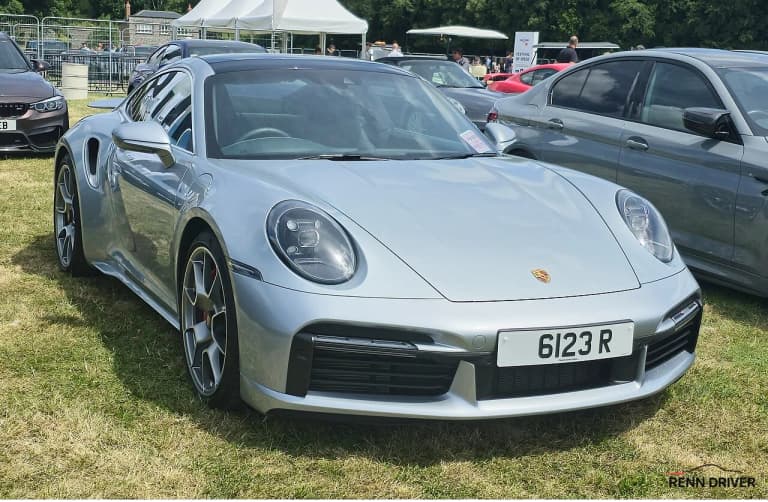
992 Turbo (2020 to Present)
The current 992 Porsche 911 Turbo uses a 3.7 liter twin turbocharged flat six producing 572 hp and 553 lb ft of torque. It is quicker than any previous Turbo S, reaching 60 mph in 2.7 seconds. The chassis is wider and stiffer than the 991, with a redesigned front end featuring larger air intakes and a bumper that integrates a retractable rear wing.
The 992 Porsche 911 Turbo is available as a coupe and a cabriolet. It can cruise quietly on the highway, then deliver relentless acceleration the moment you push the throttle. Porsche built the 992 to be the most complete car in their lineup, and by most measures it has achieved that goal. The eight speed gear box is precise and responsive, moving through gears so quickly you barely notice each change.
What Is the 911 Turbo S Cabriolet?
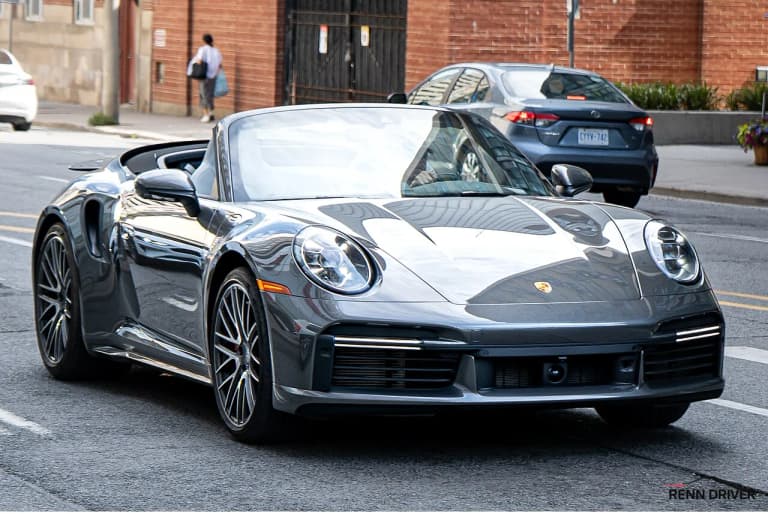
The 911 Turbo S Cabriolet is the open top version of the most powerful car in the standard Porsche 911 range. Porsche has offered the 911 Turbo S Cabriolet since the 997 generation, and it has become increasingly popular with buyers who want the Turbo S experience combined with open air driving.
The current 992 911 Turbo S Cabriolet produces 640 hp and reaches 60 mph in 2.7 seconds with the roof down. The fabric top opens and closes in around 12 seconds and can operate at speeds up to 30 mph. The 911 Turbo S Cabriolet shares the same chassis, brakes, and drivetrain as the coupe, so the driving feel is nearly identical.
The main difference between the 911 Turbo S Cabriolet and the coupe is weight. The roof mechanism adds roughly 130 lbs, making the cabriolet a fraction of a second slower in measured acceleration tests. In real driving, the difference is hard to notice. The 911 Turbo S Cabriolet starts at around $261,100 for the 2025 model year.
Porsche also produces a standard 911 Turbo Cabriolet with 572 hp. It is lighter and less expensive than the Turbo S Cabriolet, starting at around $217,500. Both the 911 Turbo Cabriolet and the 911 Turbo S Cabriolet share the same body style and the same eight speed dual clutch gear box. The cabriolet is a good choice if you want the sort of open top experience that makes people watch as you drive by.
How Does the Porsche 911 Turbo Compare to the Turbo S?
The Turbo S has always been the flagship. It gets more power, upgraded brakes, and additional equipment as standard. But the gap between the two is not as large as the price difference suggests. The standard Porsche 911 Turbo gives you roughly 90 percent of the Turbo S performance for significantly less money.
| Spec | 911 Turbo | 911 Turbo S |
|---|---|---|
| Horsepower | 572 hp | 640 hp |
| Torque | 553 lb ft | 590 lb ft |
| 0 to 60 mph | 2.7 seconds | 2.6 seconds |
| Top Speed | 199 mph | 205 mph |
| Brakes | Steel (PCCB optional) | Ceramic (PCCB standard) |
| Rear Axle Steering | Optional | Standard |
| Launch Control | With Sport Chrono option | Standard |
| Coupe Starting Price | $197,200 | $238,700 |
| Cabriolet Starting Price | $217,500 | $261,100 |
The biggest differences are the ceramic composite brake rotors, rear axle steering, and the Sport Chrono package with launch control. All three come as standard on the Turbo S and are optional on the base Porsche 911 Turbo. If you add those options to the base car, the price gap shrinks to around $20,000.
For most buyers, the Porsche 911 Turbo is the smarter choice. It is still an incredibly capable car, and the money saved can go toward options like special paint colors, the Burmester sound system, or ceramic brakes. The Turbo S makes more sense if you want everything from the factory with no compromises and do not mind paying the premium.
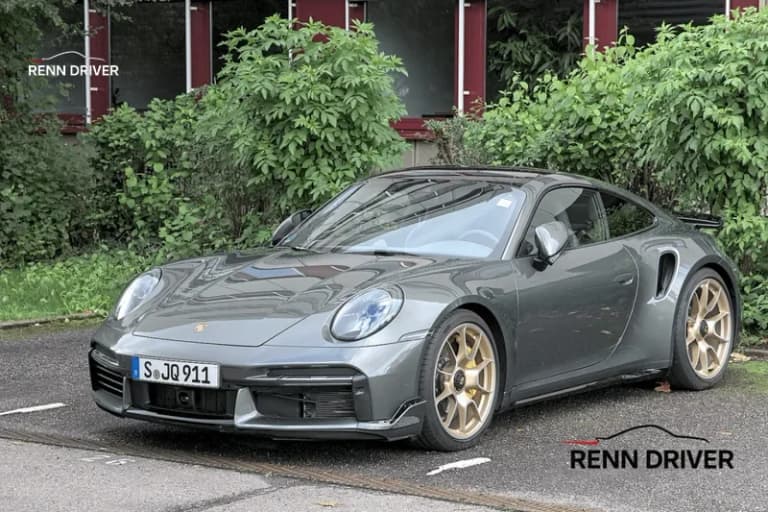
What Does the Porsche 911 Turbo Feel Like to Drive?
The first thing you notice behind the wheel of a Porsche 911 Turbo is the sound. The twin turbocharged flat six has a deep rumble at idle that builds into a howl as the revs climb. It is not as loud or as dramatic as a naturally aspirated GT3, but the sound has a character that makes it feel special every time you start the car.
Throttle response is immediate. The variable geometry turbochargers that Porsche has refined over several generations have essentially eliminated turbo lag in the modern Porsche 911 Turbo. Push the accelerator and the car simply goes, with relentless acceleration through each gear. The eight speed dual clutch shifts so quickly that you barely notice the gear changes, and the responsiveness in Sport Plus mode is pronounced compared to the normal setting.
The chassis feels incredibly balanced on a good road. The wider body and wider rear wheels give the Porsche 911 Turbo a planted feel that inspires confidence through corners. Active anti roll bars keep the body flat, and the optional rear axle steering makes the car feel lighter and more agile than its measured curb weight of around 3,636 lbs. The combination of four wheel drive and precise steering means you can push hard without drama, even on a cold or damp road.
In everyday driving, the Porsche 911 Turbo is surprisingly comfortable. The adaptive suspension soaks up bumps well in its softer setting, the cabin stays quiet at highway speed, and the seats are good for long drives. A lot of people find that the Porsche 911 Turbo makes a lot of sense as a daily driver, even if they never take it near a track. It is a fast, capable car that simply does everything well, which is why Porsche keeps producing it year after year.
Is a Hybrid Porsche 911 Turbo Coming?
Porsche has confirmed that a hybrid version of the 911 is in development. Reports suggest the next generation, expected to arrive around 2027 or 2028, will combine the flat six with an electric motor. This would place the Porsche 911 Turbo among the first hybrid sports cars in the 911 lineup, joining the broader auto industry move toward electrification that has been hard to catch up with for many manufacturers.
The hybrid system is expected to add both power output and torque while improving fuel economy. Early reports suggest the combined output could exceed 600 hp in the base model. The electric motor would assist with low speed acceleration and fill in the gaps between gear changes, making the car feel even more responsive and essentially removing any remaining hint of turbo lag.
Porsche has been clear that the 911 will not go fully electric anytime soon. Unlike electric cars that abandon combustion entirely, the hybrid approach lets the company keep the flat six engine while meeting stricter emissions rules. For Porsche 911 Turbo fans, this is good news. The additional torque from the electric motor could make the next Porsche 911 Turbo the quickest version ever produced.
The current 992 Porsche 911 Turbo remains the last purely internal combustion model. If you are watching the market, this detail could make the 992 special in the years to come, similar to how the 993 became a collector car after Porsche completed the switch from air cooling to water cooling. Whether or not the hybrid arrives on the reported dates, the direction is evident and the change feels inevitable.
How Much Does a Porsche 911 Turbo Cost?
The 2025 Porsche 911 Turbo coupe starts at $197,200 in the United States. The Turbo S coupe starts at $238,700. The 911 Turbo Cabriolet starts at $217,500 and the 911 Turbo S Cabriolet starts at $261,100.
Options add a lot to the total cost. Popular choices at the dealer include the Sport Chrono package with launch control, the Burmester sound system, ceramic composite brakes for the base Porsche 911 Turbo, lightweight sport seats, and a wide range of color and leather options. A well equipped Porsche 911 Turbo coupe can reach $230,000 or more before you place your order. Certain special paint colors add $10,000 or more on their own, so the configurator is worth a close look.
On the used market, the Porsche 911 Turbo offers good value compared to buying new. A 991 generation car from 2014 or 2015 can be found starting around $100,000, while a clean 997 from 2007 or 2008 might cost between $80,000 and $95,000. The 996 Turbo is the most affordable entry point, with good examples starting around $60,000 to $70,000. Regardless of which generation you choose, the Porsche 911 Turbo holds its value better than most cars in this price range. A basic set of service records and maintenance history go a long way when it comes time to sell.
Frequently Asked Questions
Is the Porsche 911 Turbo a supercar?
The Porsche 911 Turbo is often considered a supercar because of its performance. It reaches 60 mph in 2.7 seconds and tops out at 199 mph, which places it alongside cars like the Ferrari F8 and McLaren 720S. However, it is more practical than most cars in that category, with usable rear seats, a front boot for luggage, and a comfortable ride that makes it a good daily driver.
Is the Porsche 911 Turbo worth it over the Carrera?
The Porsche 911 Turbo is a significant step up from the Carrera. It adds roughly 200 hp, wider rear wheels, larger brake discs, and a more capable chassis. If you want a car that handles everything from highway cruising to spirited driving on a mountain road, the Porsche 911 Turbo is worth the additional cost.
Can you daily drive the Porsche 911 Turbo?
Yes, the Porsche 911 Turbo is one of the best daily drivers in the sports car world. It has a smooth ride, a quiet cabin at highway speed, good grip in all weather, and enough room for groceries or a weekend bag. A lot of Porsche 911 Turbo owners use it as their only car and find it handles every situation well.
Does the Porsche 911 Turbo come with a manual gear box?
No, the Porsche 911 Turbo has not offered a manual gear box since the 991 generation. The current 992 Porsche 911 Turbo comes exclusively with the eight speed dual clutch. Porsche dropped the manual because the dual clutch delivers quicker shift times and better acceleration.
What is the difference between the Porsche 911 Turbo and the Turbo S?
The Porsche 911 Turbo S produces 640 hp compared to the Turbo's 572 hp. It also comes with ceramic composite brakes, the Sport Chrono package with launch control, and dynamic chassis control as standard equipment. The Turbo S costs about $41,500 more than the base Porsche 911 Turbo.
How much horsepower does the Porsche 911 Turbo S have?
The current 992 generation Porsche 911 Turbo S produces 640 hp and 590 lb ft of torque from its 3.7 liter twin turbocharged flat six. This power output makes it one of the most powerful production cars in the Porsche lineup, behind only limited models like the 911 GT2 RS.
Is the 911 Turbo S Cabriolet slower than the coupe?
The 911 Turbo S Cabriolet is slightly heavier than the coupe because of the folding roof mechanism. In measured tests it is about 0.1 seconds slower to 60 mph. In everyday driving the difference is essentially impossible to notice. The 911 Turbo S Cabriolet remains one of the quickest open top cars you can find from any auto manufacturer in the world.
Will the next Porsche 911 Turbo be a hybrid?
Reports indicate that the next generation Porsche 911 Turbo, expected around 2027 or 2028, will use a hybrid powertrain combining the flat six with an electric motor. This would make the current 992 the last purely internal combustion Porsche 911 Turbo. Porsche has said the 911 will not go fully electric, so the hybrid approach is the road forward for the nameplate.
Images: MSVG, Hatsukari715, Calreyn88, GPS 56, Dayat Banggai, Alexandre Prevot, Kevauto, OWS Photography, via Wikimedia Commons, various CC licenses.