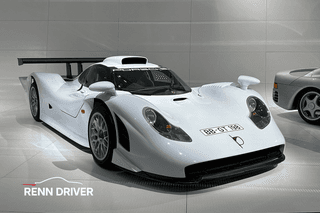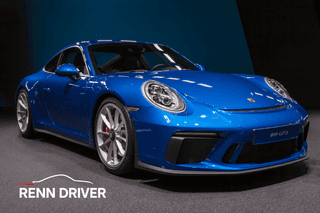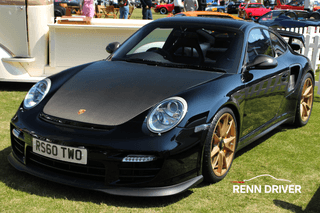
The Porsche 911 GT3 RS is the most track-focused street-legal Porsche 911 you can buy. RS stands for Rennsport (racing sport in German). The current 992 GT3 RS produces 518 hp from a naturally aspirated 4.0-liter flat-six engine, generates 860 kg (1,895 lbs) of downforce at 285 km/h, and lapped the Nürburgring Nordschleife in 6:44.848. It starts at $223,800 in the US and comes exclusively with a 7-speed PDK transmission.
In this article, we'll explore the Porsche 911 GT3 RS. We'll cover RS history, engine and drivetrain, and aero focus.

Contents
- 1 Quick Summary
- 2 Where the 911 GT3 RS Fits in the 911 Lineup
- 3 Every 911 GT3 RS Generation
- 4 Engine and Drivetrain
- 5 Aerodynamics and Downforce
- 6 Chassis and Suspension
- 7 Exterior and Interior
- 8 Weissach Package
- 9 Motorsport Heritage
- 10 Specs Table
- 11 911 GT3 RS vs GT3 vs GT2 RS
- 12 Pricing and Market Values
- 13 Ownership and Running Costs
- 14 Frequently Asked Questions
- 15 Final Thoughts
Quick Summary
- Production: 2003 (996 RS) to present (992 RS)
- Generations: 996, 997.1, 997.2, 991.1, 991.2, 992
- Engine: 4.0L naturally aspirated flat-six engine, 9,000 rpm redline (991.2 and 992)
- Power: 381 hp (996) to 518 hp (992)
- Transmission: Six-speed manual on 996 and 997 cars, 7-speed PDK only since 991.1
- Top speed: 296 km/h / 184 mph (992), 310 km/h / 193 mph (991.2)
- Downforce: 860 kg (1,895 lbs) at 285 km/h (992 RS), double the 991.2
- Nürburgring lap: 6:44.848 (992 GT3 RS)
- Weissach Package: Carbon fiber panels, magnesium wheels, titanium roll cage, saves 25–30 kg
- MSRP: $223,800 (992 RS, US)
- What defines it: The most aerodynamically advanced, track-focused sports car Porsche builds with a license plate
The full guide below covers all the details.
Where the 911 GT3 RS Fits in the 911 Lineup
Porsche offers a wide model range within the 911, from everyday Carrera coupes to full-on race-derived cars. The 911 GT3 RS sits near the top, above the standard Porsche 911 GT3 and below the turbocharged GT2 RS in terms of outright power.
| Model | Focus | Transmission | Power (hp) |
|---|---|---|---|
| Carrera / S | Daily sports car | Manual / PDK | 379–443 |
| GTS | Balanced sport | Manual / PDK | 473 |
| Porsche 911 GT3 | Road and track | Manual / PDK | 502 |
| 911 GT3 RS | Track-dominant | PDK only | 518 |
| GT2 RS | Extreme power | PDK only | 690 |
| Turbo S | Speed and comfort | PDK only | 641 |
The Porsche 911 GT3 strikes a balance between comfort on the road and capability on a circuit. The 911 GT3 RS removes that balance entirely. It is a car engineered for grip, aerodynamic downforce, and consistency over repeated laps, not grand touring comfort or headline top speed.
Every 911 GT3 RS Generation
Porsche first introduced the 911 GT3 RS to meet homologation requirements for GT racing. The car quickly became the benchmark for track-focused street-legal sports cars. Here is how each generation evolved.
996 GT3 RS (2003–2005)
Porsche built around 682 units of the 996 GT3 RS. It was not offered in the United States, which adds to its rarity today. The 3.6-liter flat-six engine produced 381 hp, and the car weighed under 3,000 lbs thanks to carbon fiber body panels, a steel roll cage, and a single-mass flywheel.
The 996 GT3 RS came exclusively with a six-speed manual transmission. It had no stability control and minimal sound insulation. The front seats were lightweight full bucket seats with six-point harness capability. This was a raw, mechanical car that achieved its capability through weight reduction and chassis tuning rather than aerodynamics.
997.1 GT3 RS (2006–2009)
The first 911 GT3 RS offered globally, including in the US market. The 3.6-liter Mezger engine produced 415 hp. Porsche added a carbon fiber rear wing, a polycarbonate rear windscreen, and wider rear wheels compared to the standard 911 GT3.

The 997 GT3 RS was praised for its chassis balance and steering feel. It came exclusively with a six-speed manual transmission and rear-wheel drive. The car weighed 1,375 kg (3,031 lbs) with full bucket seats and lightweight doors standard.
997.2 GT3 RS (2010–2011)
Power increased to 450 PS (444 hp) from a larger 3.8-liter flat-six engine. The car was more refined without losing its edge. It lapped the Nürburgring in around 7:33, faster than the Porsche Carrera GT. The 997.2 GT3 RS was also manual only.
Porsche also released the 997 GT3 RS 4.0, a limited run of 600 cars with 500 hp from a 4.0-liter engine, forged pistons, and titanium connecting rods. The 4.0 is now one of the most collectible modern Porsche 911 models ever built.
991.1 GT3 RS (2015–2016)
The 991 generation marked a major shift. The 911 GT3 RS moved to a 4.0-liter naturally aspirated flat-six engine producing 500 PS (493 hp) and came exclusively with the 7-speed PDK. The six-speed manual was no longer available.

The 991.1 also introduced rear-axle steering and used the wider Turbo body. The front fender louvers and large rear wing set the visual standard for every 911 GT3 RS that followed. Porsche achieved a wheelbase increase of 100 mm compared to the 997, which improved high-speed stability.
991.2 GT3 RS (2018–2019)
The 991.2 produced 520 PS (513 hp) with a 9,000 rpm redline. Revised aerodynamics and a stiffer chassis shortened the Nürburgring lap time to 6:56.4. Customers and journalists praised its predictability and the confidence it gave at the limit.

The Weissach Package appeared for the first time on the 991.2 GT3 RS. It included carbon fiber roof and hood panels, magnesium wheels, and a titanium roll cage (in markets outside the US). The Clubsport Package added a steel roll cage, fire extinguisher, and harness-ready front seats as standard in many markets.
992 GT3 RS (2022–present)
The biggest leap in the 911 GT3 RS history. The 992 GT3 RS still uses a 4.0-liter naturally aspirated flat-six engine, now producing 525 PS (518 hp). The real story is the aerodynamics. Porsche redesigned the entire front end, replacing the front trunk with a central radiator to feed a dramatically larger front splitter and underbody.
The 992 911 GT3 RS generates 860 kg (1,895 lbs) of downforce at 285 km/h, roughly double the 991.2 RS. An F1-style DRS (drag reduction system) flattens the rear wing on straights to reduce drag, then reactivates under braking. The Nürburgring lap time dropped to 6:44.848.

A steering wheel dial allows the driver to adjust dampers, Porsche Torque Vectoring, traction control, and differential settings in real time without taking their hands off the wheel. The 992 911 GT3 RS is the closest a street-legal Porsche 911 has ever come to a dedicated race car.
Engine and Drivetrain
Every 911 GT3 RS since the 991.1 uses a naturally aspirated 4.0-liter flat-six engine with individual throttle bodies, dry sump lubrication, forged pistons, and titanium connecting rods. These engines are closely related to the powerplants in Porsche’s 911 GT3 Cup race cars, adapted for emissions compliance and road use.
| Generation | Engine | Power | Redline | Transmission |
|---|---|---|---|---|
| 996 GT3 RS | 3.6L flat-six | 381 hp | 7,800 rpm | 6-speed manual |
| 997.1 GT3 RS | 3.6L Mezger flat-six | 415 hp | 8,400 rpm | 6-speed manual |
| 997.2 GT3 RS | 3.8L flat-six | 444 hp | 8,500 rpm | 6-speed manual |
| 991.1 GT3 RS | 4.0L flat-six | 493 hp | 8,800 rpm | 7-speed PDK |
| 991.2 GT3 RS | 4.0L flat-six | 513 hp | 9,000 rpm | 7-speed PDK |
| 992 GT3 RS | 4.0L flat-six | 518 hp | 9,000 rpm | 7-speed PDK |
The early 996 and 997 cars came exclusively with a six-speed manual transmission. Since the 991.1, Porsche has offered only the 7-speed PDK (Porsche Doppelkupplung). The dual-clutch gearbox shifts in under 100 milliseconds and allows the driver to keep both hands on the steering wheel during high-speed laps.
The 992 GT3 RS engine produces peak torque of 465 Nm (343 lb-ft) at 6,300 rpm. Power delivery is linear and builds progressively through the rev range. The engine sound is raw and mechanical, intensifying past 6,000 rpm as the individual throttle bodies open fully.
Aerodynamics and Downforce
Aerodynamics define the 992 911 GT3 RS more than any other attribute. The car generates its speed through downforce and drag management rather than through adding more horsepower.
The front axle uses a large front splitter that extends well beyond the bumper. Air flows through the central radiator in the nose (replacing the front trunk space) and exits through vented fenders and the hood. The underbody is fully sealed to maximize ground effect.
The two-piece rear wing is the most visible element. The upper element adjusts continuously, increasing angle under braking and cornering for maximum downforce, then flattening on straights via the DRS system to reduce drag. The driver activates DRS through a button on the steering wheel, similar to Formula 1 cars.

At 285 km/h, the 992 911 GT3 RS produces 860 kg of total downforce across both the front and rear axles. The 991.2 RS managed roughly 430 kg at the same speed. That increase transforms the car’s behavior in high-speed corners, where the tires are pushed harder into the road surface and the chassis feels more planted than any naturally aspirated Porsche 911 before it.
Chassis and Suspension
The 992 GT3 RS uses a double-wishbone front suspension, a first for any Porsche production car when it debuted on the 992 GT3. This design improves camber control and keeps the front tires flatter on the road surface during hard cornering. The rear uses a multi-link setup with rear-axle steering.
PASM adaptive dampers are standard. The car sits lower than the standard 911 GT3, with a ride height optimized for circuit use. Spring rates are significantly stiffer than the GT3, and the front and rear anti-roll bars are tuned for minimal body roll.
Ball joints replace rubber bushings at key suspension mounting points. This increases feedback through the steering wheel and reduces compliance, making the car more precise but also harsher over rough roads. The front axle and rear axles work together with the aero surfaces to keep the car balanced at high speed.
Daily driving a 911 GT3 RS is possible but not comfortable. The ride is harsh, tire noise is constant, and ground clearance can be an issue with steep driveways. On a circuit, the precision and planted feel make it one of the most capable sports cars ever produced.
Exterior and Interior
The 911 GT3 RS has always looked different from the standard Porsche 911 GT3. Each generation adds more aggressive bodywork, larger air intakes, and a bigger rear wing.
Exterior
The 992 RS uses a unique front fascia with enlarged air intakes, vented front fenders, and a carbon fiber hood with NACA ducts. The doors are lightweight, and the rear quarter panels are wider than the standard 911 GT3 to accommodate the rear wheels and wider tires.
The headlights are LED units shared with other 992 models. The rear wing towers above the engine lid on swan-neck supports. Side air intakes behind the doors feed the oil coolers and intercoolers. There is no rear windscreen wiper, and the rear window glass is lightweight specification.
Interior
All 911 GT3 RS models come standard with full bucket seats trimmed in Race-Tex. The front seats are designed for use with a racing harness and have integrated head restraints. There are no rear seats. The cabin is stripped of most sound insulation, and the doors use fabric pull straps instead of conventional handles.

The 992 RS cockpit features a steering wheel with a rotary dial that allows real-time adjustment of dampers, traction control, differential, and Porsche Torque Vectoring settings. The instrument cluster is a digital display with a central tachometer. There is minimal use of screens or touchpoints beyond the essentials.

The Clubsport Package, standard in some markets, adds a steel roll cage behind the front seats, a fire extinguisher, and a six-point harness preparation. Customers who plan to use the car on a circuit benefit from the additional safety equipment and the added chassis stiffness the roll cage provides.
Weissach Package
The Weissach Package is an optional lightweight package available on the 991.2 and 992 911 GT3 RS. It is named after the Porsche development center in Weissach, Germany.
The package includes carbon fiber roof panels, hood, upper rear wing element, and anti-roll bars. Optional magnesium wheels save an additional 8 kg over the standard forged aluminum wheels. In markets outside the US, a titanium roll cage replaces the steel Clubsport cage.
Total weight savings are 25 to 30 kg (55 to 66 lbs) depending on specification. On the 992 GT3 RS, the full Weissach Package with magnesium wheels brings the curb weight down to approximately 1,450 kg (3,197 lbs).
Weissach-equipped cars consistently command higher prices on the secondary market. The combination of weight savings, visual distinction, and limited production makes them more desirable to customers and collectors.
Motorsport Heritage
The RS badge comes directly from Porsche’s racing division. RS stands for Rennsport, German for racing sport. Each 911 GT3 RS generation borrows directly from Porsche’s motorsport program:
- The 992 RS central radiator is nearly identical to the 911 GT3 Cup race car setup
- Aerodynamic data was developed in parallel with the GT3 Cup and RSR programs
- The double-wishbone front suspension was first used on the 911 RSR endurance race car
- Adjustable dampers, brake cooling ducts, and oil cooling systems are all derived from track-bred engineering
The Porsche 911 GT3 RS is directly related to three race cars in the current Porsche motorsport lineup: the 911 GT3 Cup (used in the Carrera Cup one-make series), the 911 GT3 R (GT3-class endurance racing), and the 911 RSR (GTE/LMGT3 class at Le Mans and the World Endurance Championship).
Specs Table
| Spec | 991.2 GT3 RS | 992 GT3 RS |
|---|---|---|
| Engine | 4.0L NA flat-six | 4.0L NA flat-six |
| Power | 520 PS (513 hp) | 525 PS (518 hp) |
| Torque | 470 Nm (347 lb-ft) | 465 Nm (343 lb-ft) |
| Redline | 9,000 rpm | 9,000 rpm |
| Transmission | 7-speed PDK | 7-speed PDK |
| 0–100 km/h | 3.2 seconds | 3.2 seconds |
| Top speed | 312 km/h (194 mph) | 296 km/h (184 mph) |
| Curb weight | 1,430 kg (3,153 lbs) | 1,480 kg (3,263 lbs) |
| Downforce (285 km/h) | ~430 kg | 860 kg (1,895 lbs) |
| Nürburgring lap | 6:56.4 | 6:44.848 |
| Drivetrain | Rear-wheel drive | Rear-wheel drive |
| Front suspension | MacPherson strut | Double-wishbone |
| Rear-axle steering | Yes | Yes |
| DRS | No | Yes |
| Wheelbase | 2,457 mm | 2,457 mm |
| MSRP (US) | ~$187,500 | $223,800 |
911 GT3 RS vs GT3 vs GT2 RS
| 911 GT3 | 911 GT3 RS | GT2 RS | |
|---|---|---|---|
| Power | 502 hp | 518 hp | 690 hp |
| Engine | 4.0L NA | 4.0L NA | 3.8L twin-turbo |
| Transmission | Manual or PDK | PDK only | PDK only |
| Downforce | Moderate | 860 kg at 285 km/h | High |
| DRS | No | Yes | No |
| Rear seats | Optional (Touring) | No | No |
| Daily drivable | Yes | Barely | Barely |
| MSRP | $169,700 | $223,800 | $293,200 |
The standard Porsche 911 GT3 is the more versatile car. It comes with a six-speed manual transmission option, offers the Touring Package for a subtler look, and is capable enough for occasional track days without punishing the driver on the road. The 911 GT3 RS sacrifices that versatility for pure circuit capability.
The GT2 RS adds a turbocharged engine with 690 hp but keeps a similar chassis philosophy. It is faster in a straight line and achieves similar lap times through power rather than downforce. The GT3 RS is more progressive and predictable at the limit, which many drivers prefer.
Pricing and Market Values
The 992 911 GT3 RS starts at $223,800 in the US before taxes and options. The Weissach Package adds roughly $15,000. PCCB ceramic brakes are a $13,000 option. A fully optioned car with Paint to Sample colors can reach $280,000 to $300,000 before any dealer markups.
Used 991.2 GT3 RS cars trade between $180,000 and $250,000 depending on mileage, Weissach specification, and color. Low-mile Weissach examples with desirable Paint to Sample colors have sold for $240,000 or more at auction.
Earlier generations have appreciated significantly. Clean 997 GT3 RS cars now sell for $200,000 to $350,000. The 997 GT3 RS 4.0 is a blue-chip collector car, with examples trading above $600,000. The 996 GT3 RS, never sold in the US, commands $250,000 to $400,000 depending on condition and history.
The 911 GT3 RS holds value better than almost any other Porsche 911 variant. Limited production, strong demand from customers, and a direct connection to motorsport all support long-term values.
Ownership and Running Costs
Owning a 911 GT3 RS is more expensive than owning a standard Porsche 911 GT3. The car uses components designed for repeated high-speed use, and those components wear faster.
- Tires: Michelin Pilot Sport Cup 2 R tires are standard. A set costs around $2,000 and wears quickly on circuit, especially at the rear wheels
- Brakes: PCCB ceramic brakes last longer than steel rotors under sustained heat but cost significantly more to replace
- Maintenance: Porsche recommends shortened fluid change intervals for cars that see regular track use
- Insurance: Premiums are higher than a standard Porsche 911, particularly for newer 992 RS models
Despite the running costs, the 911 GT3 RS holds its value well and requires fewer electronic systems to maintain than many competing sports cars. This makes it popular with drivers who want a capable track car that also retains its value over the years.
Frequently Asked Questions
What does GT3 RS stand for?
GT3 RS stands for Gran Turismo 3 Rennsport. Rennsport is German for racing sport. The RS designation identifies this as the most track-focused variant of the Porsche 911 GT3 line.
Can you get a manual transmission in a Porsche 911 GT3 RS?
No, not in the current generation. The 996 and 997 GT3 RS models came exclusively with a six-speed manual transmission, but since the 991.1 in 2015, Porsche has offered only the 7-speed PDK gearbox. The Porsche Doppelkupplung dual-clutch system shifts faster than any driver could with a manual.
How fast is the 992 Porsche 911 GT3 RS?
The 992 Porsche 911 GT3 RS reaches 100 km/h (62 mph) in 3.2 seconds and has a top speed of 296 km/h (184 mph). Its Nürburgring Nordschleife lap time is 6:44.848, making it one of the fastest naturally aspirated production cars ever around that circuit.
Is the Weissach Package worth it?
Yes, the Weissach Package is worth it for buyers who prioritize lap time and future collectibility. It saves 25 to 30 kg through carbon fiber and magnesium components, and Weissach-equipped 911 GT3 RS cars consistently sell for higher prices on the secondary market.
How much downforce does the 992 911 GT3 RS produce?
The 992 Porsche 911 GT3 RS produces 860 kg (1,895 lbs) of downforce at 285 km/h. That is roughly double the 991.2 GT3 RS. The increase comes from the active DRS rear wing, enlarged front splitter, and sealed underbody.
How much does a Porsche 911 GT3 RS cost?
The 992 Porsche 911 GT3 RS starts at $223,800 in the United States before options and taxes. Fully optioned cars with Weissach Package and Paint to Sample colors can reach $300,000. Used 991.2 GT3 RS models trade between $180,000 and $250,000 depending on specification.
Is the 911 GT3 RS a good daily driver?
No, the Porsche 911 GT3 RS is not a good daily driver for most people. The ride is very firm, road noise is constant, there are no rear seats, and ground clearance is limited. It is possible to daily drive one, but the standard Porsche 911 GT3 or GT3 Touring are far more comfortable for regular use.
Final Thoughts
The Porsche 911 GT3 RS is not built for daily driving, highway cruising, or subtlety. It is built to lap a circuit as quickly and consistently as possible, then do it again the next day.
For drivers who want maximum aerodynamic downforce, a naturally aspirated flat-six engine that revs to 9,000 rpm, and a chassis derived from Porsche’s racing program, the 911 GT3 RS is the pinnacle of the Porsche 911 lineup. Every generation has achieved that goal more completely than the one before it.
Images: Calreyn88, Alexander-93, MrWalkr, Vauxford, Mr.choppers, The Car Spy, CC BY-SA 4.0 / CC BY 2.0, via Wikimedia Commons