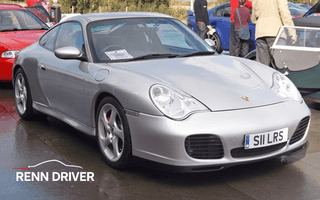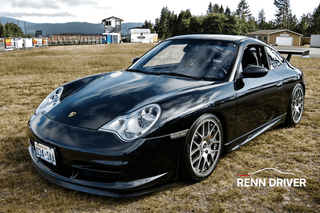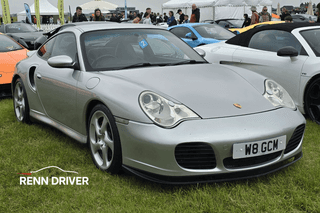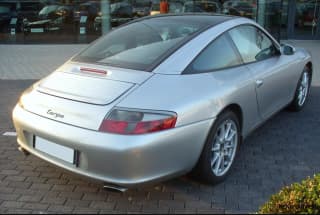
The Porsche 996 is the fifth-generation Porsche 911, produced from 1997 to 2006. It was the first Porsche 911 to use a water cooled engine and is available as a Carrera, Carrera 4, Cabriolet, Targa, Turbo, GT3, and GT2. Clean 996 Carrera coupé models start around $25,000, making the Porsche 996 the most affordable way to own a Porsche 911 Carrera today.
In this article, we’ll explain the Porsche 996, the first water-cooled 911 generation. We’ll cover the Carrera models, the IMS bearing, running costs, and what to pay.

Contents
- 1 Quick Summary
- 2 History and Development
- 3 Design and Bodyshell
- 4 Porsche 996 Carrera Models
- 5 Cabriolet and Targa
- 6 Turbo, GT3, and GT2
- 7 Specifications
- 8 IMS Bearing
- 9 The Driving Experience
- 10 Maintenance and Costs
- 11 How It Compares to Other 911s
- 12 The Love Hate Debate
- 13 Buying Guide
- 14 Frequently Asked Questions
Quick Summary
- Production years: 1997 to 2006 (all Porsche 996 variants)
- Internal code: Type 996
- Models: 911 Carrera, Carrera 4, Carrera 4S, Cabriolet, Targa, Turbo, Turbo S, GT3, GT2
- Engine: Water-cooled flat-six (3.4L and 3.6L)
- Power: 296 hp (early 911 Carrera) to 476 hp (GT2)
- Top speed: 174 mph (911 Carrera), 190 mph (Turbo and GT3), 198 mph (GT2)
- Body styles: Coupé, Cabriolet, Targa
- Transmission: Six-speed manual or five-speed Tiptronic automatic
- Curb weight: Approximately 2,910 lbs (911 Carrera coupé)
- Designers: Harm Lagaay, Pinky Lai
- Total production: Over 175,000 units across all body styles
- Legacy: The water-cooled engine Porsche 911 that modernized the series and saved the company
History and Development
By the mid-1990s, Porsche was in serious financial trouble. The air-cooled Porsche 993 was selling steadily, but the company needed a vehicle that could be produced more efficiently. It also had to meet tightening emissions standards across Europe and North America.
The solution was a completely new Porsche 911 built around a water-cooled engine. This decision marked the end of over 30 years of air-cooled flat-six production.
First unveiled at the 1997 IAA International Motor Show in Frankfurt, the Porsche 996 was more than simply a new 911 Carrera. It was a complete reimagining of the Porsche 911 for the modern era. The water-cooled engine replaced the legendary air-cooled motor that had defined every Porsche 911 since 1963.
Love it or hate it, this was the biggest sign of change in the history of the series.
Porsche shared the 996 Carrera platform with the Boxster (Type 986). This drew sharp criticism from purists who thought a Porsche 911 Carrera should share nothing with a lower-priced sports car. The two vehicles used the same front bodyshell, headlights, and several interior components.
This parts-sharing strategy cut production costs by roughly 30 percent. That move was critical for a company on the edge of insolvency. Without the Boxster-shared platform, the Porsche 996 might never have been built at all.
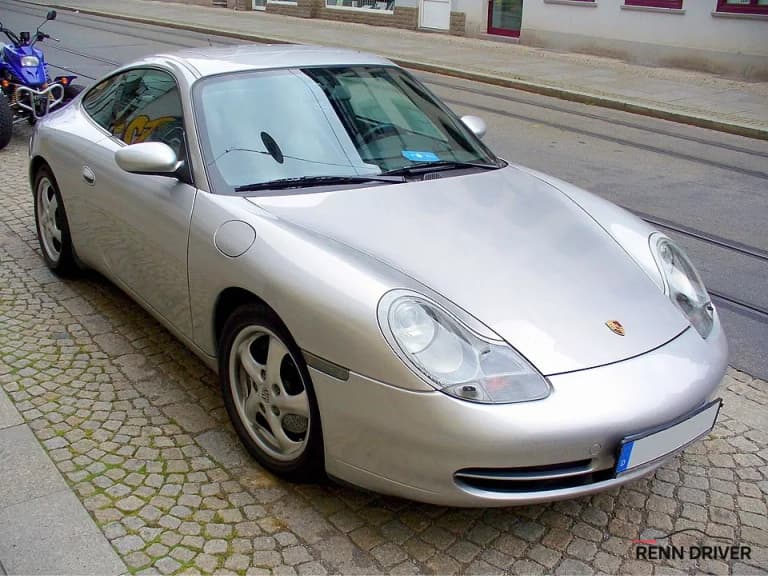
The first model year 996 Carrera arrived in 1998 for the US market. It came with a 3.4-liter water-cooled engine producing 296 horsepower and a top speed of 174 mph. Porsche sold the 911 Carrera alongside the Carrera 4 all-wheel-drive variant from the start.
By 2002, the Porsche 996 had received a significant mid-cycle facelift. Changes included a larger 3.6-liter flat-six making 320 horsepower, revised headlights, and improved interior quality. This update addressed many early complaints and produced a more polished 911 Carrera in every respect.
The 2000 Porsche 996 model year is notable. It was the first full production year where every 911 Carrera variant was available to buyers worldwide. Porsche produced the 996 in phases.
The 911 Carrera and Carrera 4 launched first, followed by the Cabriolet and Turbo. The 996 GT3 and GT2 arrived later as the high-performance flagships of the series. Each variant used a version of the water-cooled engine.
The Turbo, GT3, and GT2 ran the Mezger flat-six. This was a far more robust motor with no IMS bearing concerns.
In retrospect, the thought that the Porsche 996 would damage the 911 name was wrong. Porsche produced over 175,000 units across all body styles. That makes the 996 one of the most commercially successful 911 Carrera models in the history of the Porsche 911 series.
The new 911 did not kill the brand. It saved it.
Design and Bodyshell
The Porsche 996 bodyshell was a clean break from every previous Porsche 911. Lead designer Pinky Lai penned the shape under the direction of Harm Lagaay. The most controversial design element was the integrated headlight units, which critics dubbed "fried egg" lights.
These replaced the classic round headlights that had defined the Porsche 911 since the original 901. The fried egg headlights became a sign of the times. People either accepted them or rejected the 996 entirely based on the look of those front lamps.
The bodyshell itself was built from galvanized steel and high-strength materials. Porsche engineered it to be both lighter and stiffer than the 993 body. This improved handling speed and reduced noise at highway pace.
The doors were wider and opened to reveal a more spacious cabin. The windshield was more steeply raked. The overall drag coefficient dropped to 0.30 for the coupé, making it more aerodynamically efficient than any previous Porsche 911.
Porsche produced the 996 Carrera in three body styles. The coupé was the core model in the lineup, with clean lines, a fixed roof, and the lowest curb weight. The Cabriolet added open-air capability with a fully electric soft top.
The Targa featured a massive sliding glass roof panel that provided an open feel without fully removing the top. Each body style was available in standout Porsche colors including Arctic Silver Metallic, Guards Red, Speed Yellow, and Midnight Blue Metallic.
One important detail that is easy to identify on the Porsche 996 Carrera is the size of the rear bumper. The standard 911 Carrera wears a narrower rear body than the Turbo and Carrera 4S, which use the wider Turbo bodyshell.
The Turbo-body cars are visually wider at the rear quarters and sit on a broader rear track. This width difference is the fastest way to tell a 996 Carrera apart from a 996 Turbo or Carrera 4S when viewed from behind.
Inside, the Porsche 996 was a significant step forward for the Porsche 911 Carrera. The dashboard featured a cleaner layout than the 993. It had five analog gauges, a center-mounted tachometer, automatic climate control, and a choice of six-speed manual or five-speed Tiptronic.
Sport seats were standard across the range. Buyers could option full leather, an upgraded Bose sound system, and navigation. The interior materials do not match today's Porsche 911 Carrera quality, but they hold up well for a vehicle of this era.
Porsche 996 Carrera Models
The 996 Carrera lineup spans two distinct phases, each with its own character, specifications, and market reputation.
996.1 Carrera (1998 to 2001)
The 996.1 Porsche 911 Carrera was the first water-cooled engine Porsche 911 ever produced. It used a 3.4-liter flat-six producing 296 horsepower and 258 lb-ft of torque. The 911 Carrera could reach a top speed of 174 mph with a 0-to-60-mph time of 5.0 seconds.
The Carrera 4 added all-wheel drive for improved traction in wet conditions. Curb weight for the 911 Carrera coupé was approximately 2,910 pounds. That made it one of the lighter Porsche 911 models of the modern era.
This model year range is the most affordable entry point into 996 Carrera ownership. It is also the period most affected by IMS bearing concerns.
996.2 Carrera (2002 to 2004)
The 996.2 Porsche 911 Carrera received the larger 3.6-liter water-cooled engine with 320 horsepower and 273 lb-ft of torque. Porsche revised the headlights to a cleaner design. The interior trim materials and electronics were also improved throughout the 911 Carrera.
The top speed rose to 177 mph, and 0 to 60 mph dropped to 4.8 seconds. The 996.2 was a noticeably better vehicle than the early cars. Most buyers shopping for a Porsche 996 today prefer these later examples.
The 996.2 Carrera addressed nearly every complaint leveled at the original.
Carrera 4S
Beyond the standard 911 Carrera, the 996 Carrera lineup included several special models that deserve attention. The Carrera 4S combined the Turbo wide body with the naturally aspirated 911 Carrera engine and all-wheel drive. Clean examples with low miles are climbing in value.
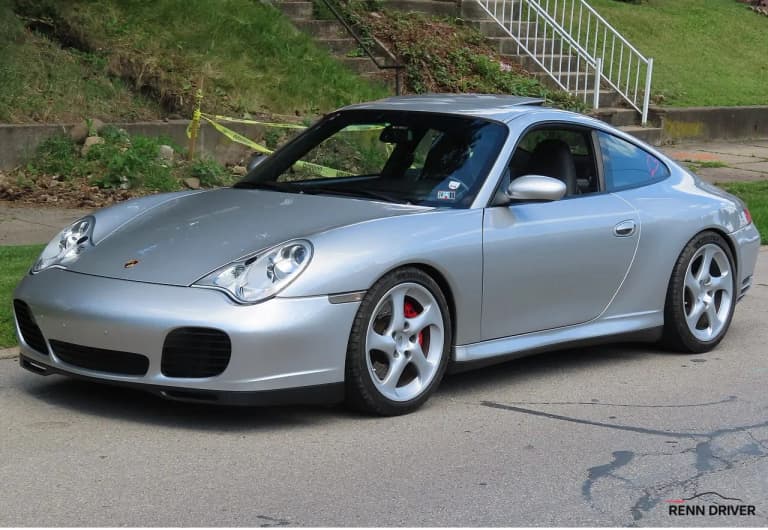
The 40th Anniversary Edition was produced in 2003 and limited to 1,963 units worldwide. It featured unique GT Silver Metallic paint, a 345-horsepower hand-built engine, and special interior trim details.
Cabriolet and Targa
The Porsche 996 Cabriolet is one of the most overlooked vehicles in the 911 Carrera range, but it deserves serious attention from buyers. Porsche produced the 996 Carrera Cabriolet from 1998 alongside the coupé. It shared all mechanical components with its hardtop sibling, including the same water-cooled engine, transmission options, and suspension setup.
The Cabriolet featured a fully electric soft top that could be raised or lowered at lower speeds in approximately 20 seconds. With the top down, the Porsche 911 Carrera Cabriolet delivered a completely different driving experience compared to the coupé. Wind noise was well managed for an open-top vehicle at speed, and Porsche reinforced the bodyshell to maintain structural rigidity with the roof removed.
The 996 Carrera Cabriolet was available in both rear-wheel drive and all-wheel drive (Carrera 4) configurations. The Cabriolet added roughly 130 pounds over the coupé due to the soft top mechanism and body reinforcement. Curb weight came to around 3,040 pounds.
Despite the extra weight, the 996 Carrera Cabriolet still reached a top speed of 171 mph. It covered 0 to 60 mph in 5.2 seconds with the 3.6-liter water-cooled engine. For weekend drives or open-air motoring, the Cabriolet was the ideal choice.
The Porsche 996 Turbo Cabriolet, introduced for the 2004 model year, paired the 415-horsepower twin-turbo Mezger engine with open-air motoring. The Turbo S Cabriolet pushed output to 450 horsepower, making it the most powerful Porsche 911 Cabriolet of its time. These Turbo Cabriolet models are now among the rarest 996 vehicles produced, and their values reflect that scarcity.
The Porsche 996 Targa arrived in 2002 with a unique full-glass sliding roof panel. Unlike previous Targa models that used a removable roof section, the 996 Targa featured an electrically operated glass panel that slid beneath the rear window. This gave the Targa a distinctive greenhouse look and an open-air feel without removing any body panels.
The 996 Carrera Targa is rarer than both the coupé and the Cabriolet. Collectors are starting to take notice. For buyers who want something different from the standard 911 Carrera coupé, the Targa is a strong choice.
Turbo, GT3, and GT2
The high-performance Porsche 996 models are where this 911 Carrera series truly shines. Each uses the Mezger water-cooled engine, which is far more robust than the standard 911 Carrera motor and has no IMS bearing issues.
Porsche 996 Turbo
The Porsche 996 Turbo arrived in 2001 with a 3.6-liter twin-turbocharged flat-six producing 415 horsepower. All-wheel drive was standard. The Porsche 911 Turbo could sprint from 0 to 60 mph in 4.0 seconds with a top speed of 190 mph.
Those speed figures marked the 996 Turbo as one of the fastest production vehicles in the world at the time. The Turbo S variant increased power to 450 horsepower and added PCCB ceramic brakes as standard. Whether in coupé or Cabriolet form, the Porsche 911 Turbo remains one of the most capable vehicles Porsche has ever built.
Many owners describe the 996 Turbo as the sweet spot of the entire 911 Turbo series. It is fast enough to be genuinely thrilling and simple enough to maintain without specialist electronics. The platform has proven its durability over hundreds of thousands of miles.
Porsche 996 GT3
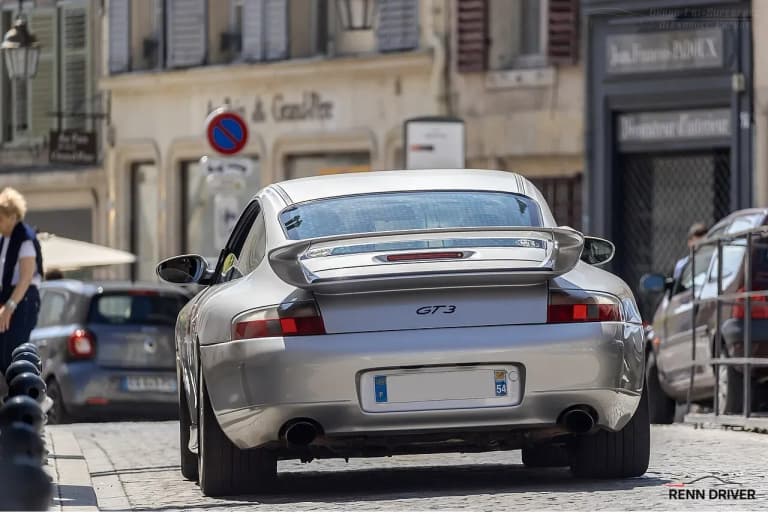
The Porsche 996 GT3 was the track-focused Porsche 911 of its era. The first GT3 appeared in 1999 with a naturally aspirated 3.6-liter Mezger engine producing 360 horsepower. This version was not sold in North America.
The 996.2 GT3 followed in 2003 with 380 horsepower, a top speed of 190 mph, and a six-speed manual as the only option. It had no rear seats, reduced sound deadening, and a lowered and stiffened suspension. A front lip and rear wing produced real downforce at speed.
The GT3 stripped the Porsche 911 Carrera back to its essentials. It is a future classic, and values are rising at a pace that shows no sign of slowing.
Porsche 996 GT2
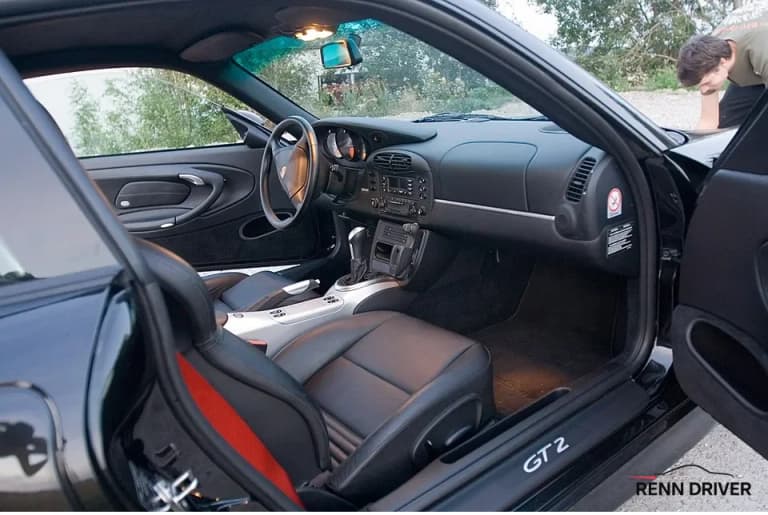
The Porsche 996 GT2 was the most extreme Porsche 911 of its era. It delivered 476 horsepower through the rear wheels only, with no traction control and no all-wheel drive. The top speed was 198 mph, placing the GT2 in the company of supercars costing far more.
Porsche produced fewer than 1,300 GT2 units globally. That makes it one of the rarest Porsche 911 models in the entire series. The GT2 is brutally fast and unforgiving, built for experienced drivers who want the rawest possible Porsche 911 experience.
Porsche 996 Specifications
| Model | Engine | Power | 0-60 mph | Top Speed | Weight | Years |
|---|---|---|---|---|---|---|
| 911 Carrera (996.1) | 3.4L water-cooled flat-six | 296 hp | 5.0 s | 174 mph | 2,910 lbs | 1998–2001 |
| 911 Carrera (996.2) | 3.6L water-cooled flat-six | 320 hp | 4.8 s | 177 mph | 2,932 lbs | 2002–2004 |
| 911 Carrera 4S | 3.6L water-cooled flat-six | 320 hp | 5.0 s | 174 mph | 3,175 lbs | 2002–2005 |
| 911 Carrera Cabriolet | 3.6L water-cooled flat-six | 320 hp | 5.2 s | 171 mph | 3,040 lbs | 1998–2004 |
| 911 Turbo | 3.6L twin-turbo Mezger flat-six | 415 hp | 4.0 s | 190 mph | 3,395 lbs | 2001–2005 |
| 911 Turbo S | 3.6L twin-turbo Mezger flat-six | 450 hp | 3.8 s | 190 mph | 3,395 lbs | 2005 |
| 911 GT3 | 3.6L NA Mezger flat-six | 380 hp | 4.3 s | 190 mph | 2,976 lbs | 1999–2005 |
| 911 GT2 | 3.6L twin-turbo Mezger flat-six | 476 hp | 3.9 s | 198 mph | 3,131 lbs | 2002–2004 |
The 996 Carrera specifications tell a clear story of progress across each model year. The 996.1 Porsche 911 Carrera featured the water-cooled 3.4-liter flat-six engine producing 296 horsepower. Paired with the six-speed manual, this 911 Carrera could reach a top speed of 280 km/h (174 mph).
The 0-to-100-km/h sprint took 5.0 seconds. That placed the 996 Carrera among the fastest vehicles in its price class at the time.
The 996.2 911 Carrera stepped up to 320 horsepower and 273 lb-ft of torque from its larger 3.6-liter water-cooled engine. This 911 Carrera rode on 18-inch wheels with red-painted brake calipers, and a limited-slip differential helped put power down efficiently through the rear wheels. A Tiptronic automatic was available for buyers who wanted a more relaxed driving style, though most enthusiasts chose the manual.
Buyers could choose between the Porsche 911 Carrera coupé, the Cabriolet, or the Targa. All three body styles were available in standout Porsche colors. The rear-wheel drive layout gave the 996 Carrera its signature handling balance.
All-wheel drive was available through the Carrera 4 and Carrera 4S for drivers who wanted extra grip. The Porsche 996 Carrera blended speed, comfort, and daily usability better than any previous Porsche 911 in the series.
IMS Bearing: The Elephant in the Room
The intermediate shaft (IMS) bearing is the single most discussed mechanical issue on any Porsche 996 Carrera. The bearing supports the intermediate shaft that drives the camshafts inside the water-cooled engine. When it fails, metal debris contaminates the oil and can destroy the entire motor.
The result is an engine rebuild or replacement that costs $15,000 to $25,000.
Here is what every buyer needs to know. The IMS issue affects the 996.1 and early 996.2 Porsche 911 Carrera models that use the standard water-cooled engine. Failure rates are estimated at roughly 1 to 8 percent depending on model year, mileage, and maintenance history.
An upgraded IMS bearing from a specialist like LN Engineering costs $2,000 to $3,000 when done alongside a clutch replacement. The Porsche 996 Turbo, GT3, and GT2 are not affected because they use the Mezger water-cooled engine with a different bearing design.
The sale of replacement IMS bearings and related services has become a cottage industry around the Porsche 996. Many 996 Carrera vehicles on the market have already had the bearing replaced with an upgraded aftermarket unit. This adds value and peace of mind for the next owner.
If you are shopping for a 996 Carrera, budget for the fix or simply find a Porsche 911 Carrera that has already been sorted.
The IMS issue is real, but it should not scare you away from the Porsche 996 Carrera. Thousands of these vehicles have covered well over 100,000 miles with no bearing failure. Regular oil changes at the correct interval with the correct specification oil are the best preventative measure.
So many high-mileage 996 Carrera models are still running strong. That speaks to how durable the engine actually is when properly maintained.
The Driving Experience
The Porsche 996 Carrera delivers a driving experience that modern Porsche 911 models simply cannot replicate. At just over 2,900 pounds, the 911 Carrera coupé is significantly lighter than today's Porsche 992 at 3,400 pounds. That lower weight is something you feel immediately the first time you turn into a corner.
The hydraulic power steering provides genuine feedback through the wheel. The brakes feel strong and progressive whether you are on a back road or pushing at track speed.
The balance is pure Porsche 911: a rear-engine weight bias that rewards smooth inputs and punishes sloppy technique. Push the 996 Carrera hard through a series of fast corners and you feel every surface change through the chassis. The six-speed manual gearbox has a satisfying mechanical action with short throws.
The water-cooled engine note builds with real intensity as you approach the 7,200-rpm redline. The flat-six sounds markedly different from the air-cooled motors that came before it.
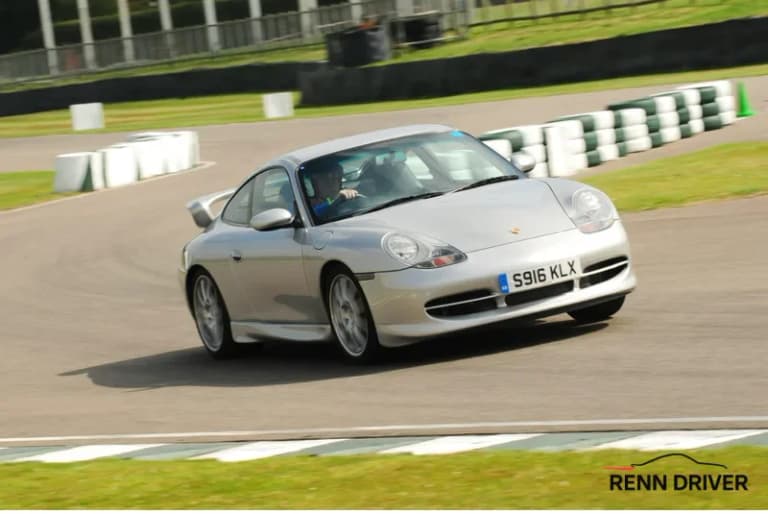
The Porsche 996 Cabriolet adds another dimension to the driving experience. With the top down, you hear the water-cooled engine more clearly and feel more connected to the speed and surroundings. The Cabriolet is an excellent vehicle for spirited weekend drives and longer road trips.
The Cabriolet retains the same suspension, brakes, and powertrain as the coupé. It is not a compromised vehicle — it is the same 911 with the roof removed.
The cabin is simple by today's standards. There are no giant touchscreens, no fake engine sounds, and no drive-mode selectors with a dozen settings. The Porsche 996 interior is built around analog gauges, real engine noise, and a driving position that puts you low and close to the road.
The interior may feel dated in spots. The 996 Carrera rewards with an honest, engaging connection between car and driver. That is what many Porsche owners love about this era of the 911.
Maintenance and Costs
The Porsche 996 Carrera is one of the most affordable Porsche 911 models to maintain. Parts are widely available from both Porsche and aftermarket suppliers at reasonable prices. Independent Porsche specialists know these vehicles inside and out.
Many common maintenance jobs are accessible for home mechanics with the right tools and a factory service manual.
Typical maintenance costs for a Porsche 996 Carrera include:
- Oil change: $200 to $300
- Clutch replacement: $1,500 to $2,000
- IMS bearing retrofit: $2,000 to $3,000
- Coolant expansion tank replacement: $500 to $800
- Rear main seal repair: $800 to $1,200
- Full set of tires: $800 to $1,400
- Brake pads and rotors (front): $600 to $900
Budget for these items and the Porsche 996 Carrera is surprisingly affordable to run over tens of thousands of miles. The key is not to defer maintenance. A cheap Porsche 996 with deferred repairs can quickly become an expensive Porsche.
Look for a 911 Carrera with complete service records. Find evidence that the previous owner cared about the vehicle rather than simply accumulating miles without addressing known issues.
The 996 Carrera also benefits from a massive parts supply. Porsche produced over 175,000 units of the 996, so used parts are plentiful and aftermarket support is strong. Specialist companies offer upgraded engine components, suspension kits, exhaust systems, and interior refresh parts.
Finding a Porsche specialist who knows the 996 Carrera well is not difficult in most markets.
How It Compares to Other 911s
Porsche 996 vs Porsche 993
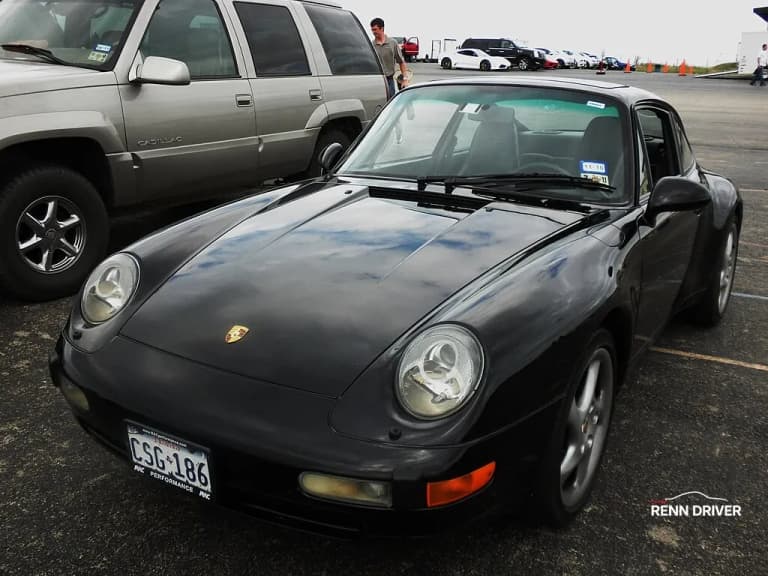
The Porsche 993 is the air-cooled 911 that came directly before the 996. The 993 is more analog and more connected to the original 911 character. Values have climbed dramatically over the past decade.
A clean 993 Carrera now costs two to three times what a comparable 996 Carrera commands. If you want the Porsche 911 Carrera experience at a fraction of the price, the 996 is the smarter buy by a wide margin.
Porsche 996 vs Porsche 997
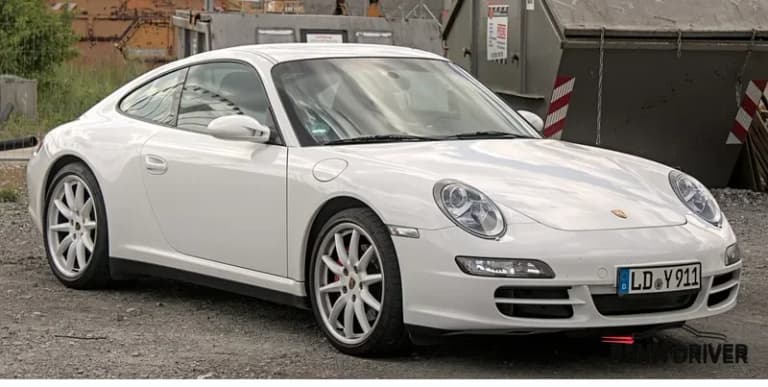
The Porsche 997 that replaced the 996 fixed the styling complaints and improved the interior. Porsche brought back round headlights, added more technology, and refined the water-cooled engine further. The 997 Porsche 911 Carrera prices are rising quickly.
The gap between the 997 and 996 is narrowing. Many buyers who missed the window on a 997 are now turning to the 996 Carrera before values rise further.
Porsche 996 vs Porsche 992
Compared to today's Porsche 992, the 996 feels like a completely different vehicle. Modern Porsche 911 Carrera models are faster, heavier, and packed with digital systems. The 996 Carrera is smaller, lighter, and more connected to the road.
It trades refinement for rawness, which is exactly what many Porsche 911 enthusiasts love about this era. The 996 also costs a fraction of a new Porsche 992 Carrera, which starts at over $110,000 before options.
The Love Hate Debate
No Porsche 911 divides opinion quite like the Porsche 996. When it launched, purists rejected the water cooled engine and the headlight design that shared its look with the Boxster. The 996 Carrera was seen as a departure from everything the air cooled 911 stood for. People called it the Porsche that lost its soul. That reputation stuck for over a decade.
The reality is more nuanced. The Porsche 996 was the result of a company fighting to survive. Porsche AG needed to cut production costs and meet tightening emissions regulations. The water cooled flat six was the engineering answer, and the shared front end with the Boxster kept the vehicle development within budget. Without the 996, there might not be a Porsche 911 today. That fact alone means this car deserves a closer look from anyone serious about the Porsche 911 lineage.
In recent years, the narrative has shifted. Doug DeMuro bought a Porsche 996 Carrera 4S and documented the experience on YouTube, introducing the car to millions of viewers through his videos. His coverage helped a new generation of enthusiasts see past the stigma. Other YouTube channels followed, and content creators discovered that the 996 Carrera was not the disappointment purists had claimed. It was simply a different kind of Porsche 911 Carrera, one built for a new era.
The love hate debate around the Porsche 996 says more about the people having it than the car itself. Those who actually drive a 996 Carrera tend to come away impressed. The chassis is balanced, the flat six engine pulls cleanly to its 7,200 rpm redline, and the overall speed and composure on a winding road are exactly what you would expect from a Porsche 911. The fact that you can buy one for a fraction of what any other Porsche 911 generation costs simply makes the case stronger. Love it or hate it, the 996 Carrera is the most accessible Porsche 911 on the market today.
Buying Guide
If you want a Porsche 911 Carrera that is raw, quick, and engaging, the Porsche 996 is your best option. Clean examples are still available for well under $50,000. No other Porsche 911 delivers this much speed and driving involvement for the money.
Here is what to look for when shopping for a 996 Carrera. Start by prioritizing vehicles with complete maintenance records. Look for consistent oil changes, major service items, and any IMS bearing work.
Budget for the IMS bearing fix if the work has not been done. Find a Porsche 911 Carrera from an owner who maintained the vehicle properly and can document the history. Get a pre-purchase inspection from a Porsche specialist familiar with the 996 Carrera water-cooled engine.
Look at the doors, bodyshell, and interior for signs of accident damage or deferred repairs. And once you buy one, drive it. These Porsche 911 Carrera vehicles were built to cover thousands of miles at speed, not sit in garages.
Current Market Values
Current market values for the Porsche 996 range widely based on model, miles, and condition:
- 996 Carrera coupé (high miles): $20,000 to $28,000
- 996 Carrera coupé (clean, low miles): $30,000 to $45,000
- 996 Carrera Cabriolet: $22,000 to $38,000
- 996 Carrera 4S: $35,000 to $55,000
- 996 Turbo: $50,000 to $75,000
- 996 GT3: $80,000 to $130,000
- 996 GT2: $120,000 to $200,000+
The Cabriolet typically trades at a slight discount to the coupé, making it excellent value for a Porsche 911 convertible. The Carrera 4S holds a premium over the standard 911 Carrera because of its wider Turbo body and all-wheel drive combination.
GT3 and GT2 values are in a different league entirely. Both models continue to appreciate steadily as collectors recognize their place in Porsche 911 history.
The Porsche 996 might simply be the smartest way into Porsche 911 ownership today. Values have been rising steadily, but the 996 Carrera still offers more performance per dollar than any other 911 Carrera in the series. The time to buy is now.
Frequently Asked Questions
What years was the Porsche 996 produced?
Porsche produced the 996 from 1997 to 2006, covering all Porsche 911 Carrera, Turbo, GT3, and GT2 variants. The base 911 Carrera ran from the 1998 model year through 2004, while the Turbo and GT models continued through 2005. The Cabriolet and Targa body styles followed the same production timeline as their coupé counterparts.
Which Porsche 996 models are the most reliable?
The most reliable Porsche 996 models are the Turbo, GT3, and GT2. All three use the Mezger water-cooled engine with no IMS bearing concerns. For 911 Carrera models, long-term reliability depends on proper maintenance and whether the IMS bearing has been addressed.
Later model year 996 Carrera vehicles from 2002 to 2004 tend to have fewer issues than early cars. These are the ones most specialists recommend to buyers.
How much does a Porsche 996 cost today?
A Porsche 996 Carrera coupé costs anywhere from $20,000 for a high-mileage vehicle to $45,000 for a clean, low-miles example. The 996 Carrera Cabriolet is slightly less than the coupé at equivalent mileage. The Porsche 996 Turbo ranges from $50,000 to $75,000.
GT3 models start around $80,000, and the rare GT2 can exceed $200,000. All 996 Carrera values have been trending upward as the market recognizes the model's place in Porsche 911 history.
What is the IMS bearing issue on the Porsche 996?
The IMS bearing is a component inside the Porsche 996 Carrera water-cooled engine that can fail and cause catastrophic internal damage. The bearing supports the intermediate shaft. When it wears out, metal debris enters the oil system and destroys the motor.
The IMS issue affects 911 Carrera models but does not affect the Turbo, GT3, or GT2. The fix costs $2,000 to $3,000. Many Porsche 996 Carrera vehicles on the market have already had the bearing replaced with an upgraded aftermarket unit.
Is the Porsche 996 a good investment?
The Porsche 996 is widely considered one of the best-value Porsche 911 models on the market today. The 996 Carrera remains undervalued compared to the air-cooled 993 that preceded it and the 997 that followed. Prices are steadily rising across all models as appreciation grows.
Clean, low-miles coupé and Cabriolet examples with documented maintenance history are the ones to buy now before values climb further.
What is the top speed of a Porsche 996?
The Porsche 996 Carrera has a top speed of 174 mph (280 km/h) with the 3.4-liter engine and 177 mph with the 3.6-liter engine. The 911 Turbo reaches a top speed of 190 mph, the GT3 hits 190 mph, and the GT2 tops out at 198 mph. Even the base Porsche 911 Carrera is a seriously fast vehicle by any standard.
How do you identify a Porsche 996 Carrera from a 996 Turbo?
The easiest way to identify a Porsche 996 Turbo versus a standard 996 Carrera is by the rear body width. The Porsche 996 Turbo and Carrera 4S use a wider rear bodyshell with flared rear quarters, larger air intakes, and a broader rear track. The standard 911 Carrera has a narrower rear body. The Turbo also features a different front bumper with larger air ducts and side air intakes that feed the intercoolers.
Is the Porsche 996 Cabriolet worth buying?
The Porsche 996 Cabriolet is absolutely worth buying for the right owner. The 996 Carrera Cabriolet shares every mechanical component with the coupé and provides an open-air driving experience that transforms the character of the Porsche 911. Cabriolet models typically sell for slightly less than equivalent coupé models, making the 996 Cabriolet one of the best values in the entire Porsche 911 Carrera range. Buyers should inspect the soft top mechanism and body reinforcement points for any signs of wear.
Images by: Ultegra, all licensed under CC BY-SA 4.0, via Wikimedia Commons, Mark Harkin, CC BY 2.0, via Wikimedia Commons, Thomas doerfer, CC BY-SA 3.0, via Wikimedia Commons, David Hunter, CC BY 2.0, via Wikimedia Commons, Calreyn88, CC BY-SA 4.0, via Wikimedia Commons, Mats Lindh, CC BY 2.0, via Wikimedia Commons, MercurySable99, CC BY-SA 4.0, via Wikimedia Commons, Stahlkocher, CC BY-SA 3.0, via Wikimedia Commons, Alexander-93, all licensed under CC BY-SA 4.0, via Wikimedia Commons, KevinRachel2010, CC BY 3.0, via Wikimedia Commons