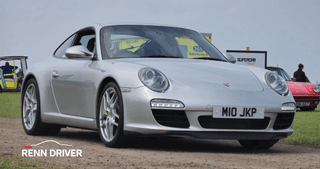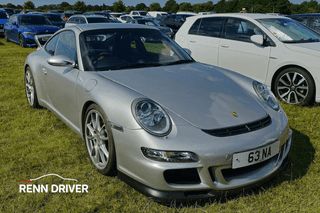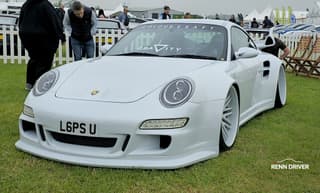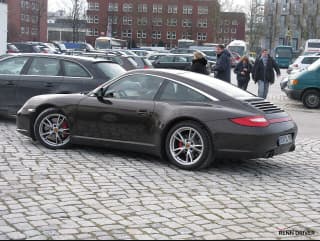
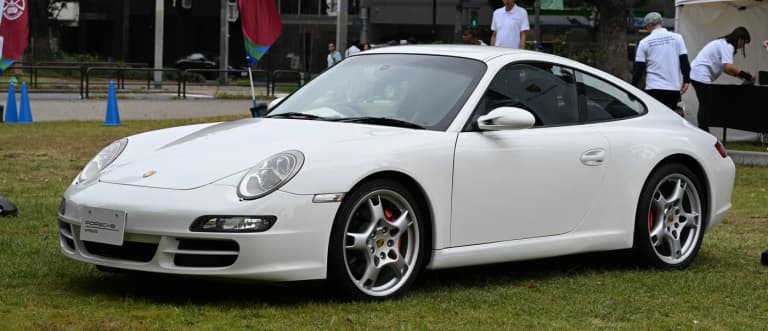
The Porsche 997 is the sixth generation of the Porsche 911, produced from 2004 to 2013. Also known as the Type 997, it is widely considered the last analog 911 thanks to its hydraulic steering, naturally aspirated flat-six engines in the 911 Carrera range, and the introduction of the PDK dual-clutch transmission in the 997.2. Porsche AG built over 213,000 Porsche 997 units across coupe, cabriolet, Targa, Turbo, and GT variants.
In this article, we’ll explain the Porsche 997, the sixth-generation 911 sold from 2004 to 2013. We’ll cover the two phases, every model, bore scoring, and market values.
Contents
- 1 Quick Summary
- 2 A Tale of Two Halves: 997.1 vs 997.2
- 3 Body Styles: Coupe, Cabriolet, and Targa
- 4 Porsche 997 Model Breakdown
- 5 Engine Specifications by Model
- 6 Performance and Driving Experience
- 7 Design and Exterior Details
- 8 Interior and Technology
- 9 Porsche 997 Carrera GTS
- 10 Porsche 997 Sport Classic
- 11 Porsche 997 Speedster
- 12 Buying Guide: What to Look For
- 13 Pricing and Market Values
- 14 Frequently Asked Questions
- 15 Final Thoughts
Quick Summary
- Production Years: 2004 to 2013 (Type 997)
- Phases: 997.1 (2004 to 2008) and 997.2 (2009 to 2013)
- Notable Models: 911 Carrera, Carrera S, Carrera 4S, 911 Carrera GTS, Carrera Cabriolet, Carrera S Cabriolet, Targa 4, Targa 4S, 911 Turbo, Turbo S, 911 GT3, GT3 RS, GT2, GT2 RS, 911 Sport Classic, Speedster
- Engines: 3.6-liter and 3.8-liter naturally aspirated flat-six (Carrera models), 3.6-liter and 3.8-liter twin-turbo flat-six (Turbo models), 3.6-liter, 3.8-liter, and 4.0-liter high-rev naturally aspirated flat-six (GT models)
- Transmissions: Six-speed manual gearbox, five-speed Tiptronic (997.1), seven-speed PDK dual-clutch (997.2)
- Key Features: Hydraulic steering, Porsche Active Suspension Management (PASM), direct fuel injection (997.2), variable turbine geometry turbochargers, Sport Chrono Package
- Total Production: Over 213,000 units
- Legacy: The Porsche 997 is widely considered the last analog-feeling Porsche 911, bridging the gap between the classic 911 driving experience and modern performance
A Tale of Two Halves: 997.1 vs 997.2
Understanding the Porsche 997 starts with the split between its two production phases. The Type 997 was produced across nine model years, and each half brought a different character to the car. The differences matter significantly for buying decisions, reliability, and long-term ownership.
Porsche 997.1 (2004 to 2008)
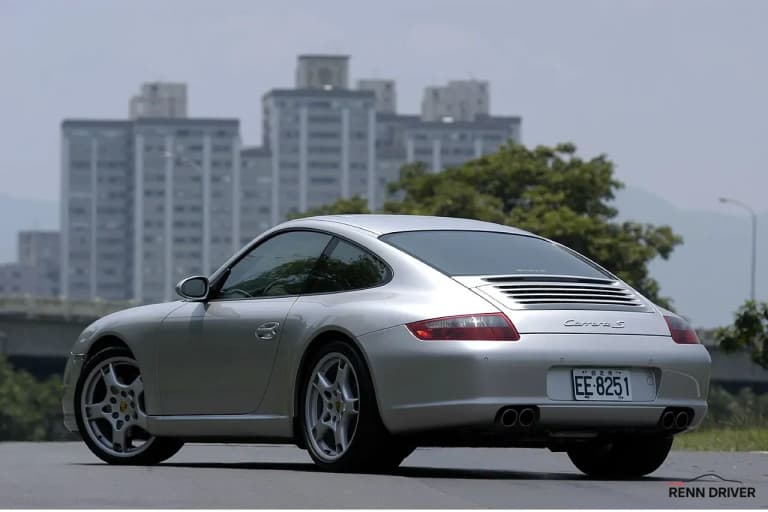
The first phase of the Porsche 997 was a direct response to criticism of the Porsche 996. Porsche AG brought back the round headlights, cleaned up the interior and exterior styling, and improved the overall build quality.
The 997.1 Porsche 911 Carrera used a 3.6-liter naturally aspirated flat-six engine producing 325 horsepower. The Carrera S stepped up to a 3.8-liter unit with 355 horsepower. Both engines delivered linear power and a satisfying exhaust note that rewarded drivers who explored maximum engine speed.
Transmission options for the Porsche 997.1 included a six-speed manual gearbox and a five-speed Tiptronic automatic. The six-speed manual remains the enthusiast choice, offering precise shifts and full engagement with the drivetrain. The optional Tiptronic worked well enough for daily use but lacked the responsiveness that sport driving demands.
Porsche launched the Porsche 997.1 with Porsche Active Suspension Management as an option on most models and standard on the Carrera S. This system allowed drivers to toggle between comfort and sport damping, making the 997 equally capable on highway commutes and back roads.
The Porsche 997.1 did carry over one significant concern from the 996: the intermediate shaft bearing. While Porsche AG improved the design compared to the earlier generation, this bearing can still fail and cause catastrophic engine damage. Any Porsche 997.1 buyer should budget for an intermediate shaft bearing inspection or replacement as part of the purchase process.

Porsche 997.2 (2009 to 2013)
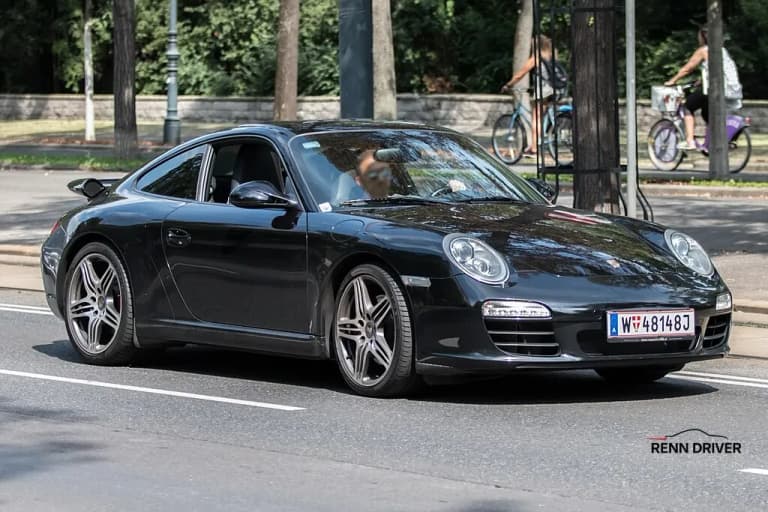
The mid-cycle refresh transformed the Porsche 997 in ways that went far beyond cosmetics. Porsche AG introduced direct fuel injection across the Porsche 911 Carrera range, which boosted power while improving fuel economy. The base 911 Carrera climbed to 345 horsepower and the Carrera S reached 385 horsepower from a larger-bore version of the same flat-six.
The biggest mechanical change in the Porsche 997.2 was the introduction of the PDK dual-clutch transmission, replacing the old Tiptronic. The seven-speed PDK shifted faster than any human could manage with a six-speed manual, offered seamless acceleration, and proved more fuel-efficient than the stick shift. The new transmission quickly became the preferred choice for many buyers.
The six-speed manual gearbox remained available for purists who preferred shorter gear ratios and direct engagement.
Porsche AG also eliminated the intermediate shaft bearing in the 997.2 engine design, removing the single biggest reliability concern from the earlier Porsche 997 cars. This change alone makes the 997.2 the safer long-term purchase for most buyers.
Visual updates to the Porsche 997.2 included LED daytime running lights and redesigned LED taillights. Reshaped exterior mirrors and subtle tweaks to the front and rear bumpers completed the refresh. The updated Porsche Communication Management system added better navigation and connectivity.
Inside the cabin, the materials felt richer and the overall quality took another step forward.
The Porsche 997.2 era also saw Porsche AG expand the lineup considerably. The 911 Carrera GTS arrived as a new performance tier. The Turbo S offered the ultimate forced induction package.
Special editions like the 911 Sport Classic and the Speedster added collector appeal.
With its combination of reliability, refinement, and expanded model range, the Porsche 997.2 represents the more complete package for most Porsche 911 buyers.
Body Styles: Coupe, Cabriolet, and Targa
Porsche AG offered the Porsche 997 in three distinct body styles, each with its own character and audience. Understanding the differences helps narrow down which Porsche 997 coupe, cabriolet, or Targa suits your needs.
The coupe is the purest expression of the Porsche 911 Carrera formula. It offers the stiffest body structure, the lowest weight, and the most direct driving feel. For anyone who prioritizes handling dynamics and plans to push the car on track, the coupe is the natural choice.
The Porsche 997 coupe body features a double-bubble roof on select GT models and the 911 Sport Classic. This adds visual distinction to an already iconic shape.
The Carrera Cabriolet and Carrera S Cabriolet models feature a power-operated soft top that transforms the driving experience entirely. With the roof down, the flat-six soundtrack fills the cabin without any filter. Porsche AG engineered the convertible top to operate quickly and fold neatly.
Daily driving with the roof up felt close to the coupe experience. The Carrera Cabriolet was available in rear-wheel-drive and all-wheel-drive configurations. The Carrera S Cabriolet added the larger 3.8-liter engine and PASM sports suspension for a more capable open-air Porsche 911 sports car.
The Targa versions brought a unique glass canopy roof that slid back electrically. This offered a middle ground between the coupe and the full cabriolet. Only available with all-wheel drive, the Targa 4 and Targa 4S had slightly wider rear fenders and the distinctive Targa bar.
The glass roof added weight compared to the coupe, but many owners loved the open-air feel combined with roll-over protection. For a detailed look at these Targa models, see our Porsche 997 Targa guide.
Porsche 997 Model Breakdown
911 Carrera and Carrera S
The 911 Carrera models form the backbone of the Porsche 997 lineup. The base Porsche 911 Carrera delivered 325 horsepower in the 997.1 and 345 horsepower in the 997.2. This was more than enough for spirited driving on any road.
The Carrera S added the larger 3.8-liter engine (355 hp in the 997.1, 385 hp in the 997.2). It also brought larger brakes with upgraded brake calipers, standard PASM, and 19-inch wheels.
Both the 911 Carrera and Carrera S were available as coupes and as Carrera Cabriolet or Carrera S Cabriolet convertibles. Transmission choices included the six-speed manual gearbox across both phases, plus the Tiptronic in the Porsche 997.1 and the PDK dual-clutch in the Porsche 997.2. Rear-wheel drive kept the weight down and the driving experience pure.
The Porsche 997 Carrera S is often considered the sweet spot of the entire generation. The S version delivered real performance without the complexity of turbocharging or all-wheel drive. It could be optioned with the sports exhaust, Sport Chrono Package, and sports suspension to create a seriously capable vehicle.
For a deeper look, visit our 997 Carrera guide.
911 Carrera 4 and Carrera 4S
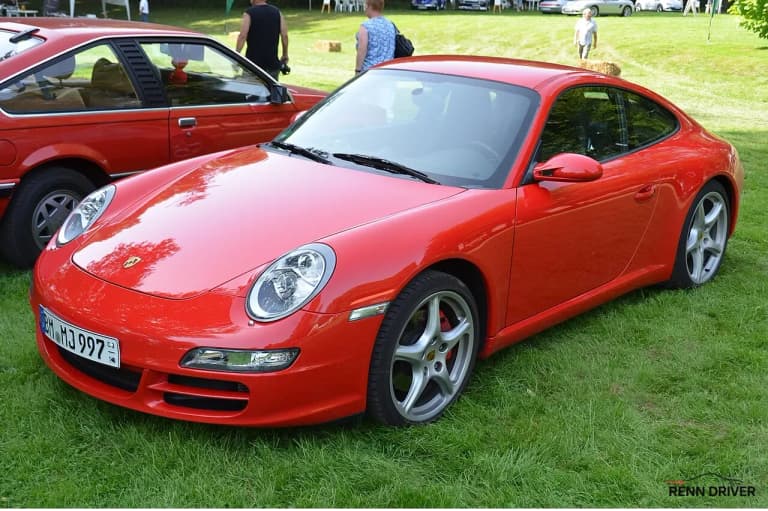
The all-wheel-drive versions of the Porsche 911 Carrera added a viscous-coupling center differential. This sent power to the front wheels when the rear wheels lost traction.
The Carrera 4 and Carrera 4S featured wider rear fenders (44mm wider than the rear-wheel-drive models) and a wider rear track. A full-width reflector strip connected the taillights. The system added slightly more weight due to the additional all-wheel-drive hardware.
The Carrera 4S combined all-wheel-drive grip with the 3.8-liter engine, bigger brakes, and the PASM chassis. This made the Porsche 997 Carrera 4S one of the most versatile Porsche 911 models in the range.
In regions with variable weather, the Carrera 4S offered year-round usability that the rear-wheel-drive Porsche 911 Carrera coupe could not quite match. The added traction also inspired confidence during spirited driving in wet or cold conditions.
Porsche AG offered the Porsche 911 Carrera 4 and Carrera 4S in coupe and cabriolet forms. The Porsche 997.2 update brought the same direct fuel injection engines, PDK option, and LED lighting upgrades to all-wheel-drive models. The Carrera 4S Cabriolet proved particularly popular for buyers who wanted all-season capability with open-top driving.
911 Carrera GTS
Porsche launched the 911 Carrera GTS in 2010 as a Porsche 997.2-exclusive model. It slotted between the Carrera S and the 911 GT3 in the lineup. The Carrera GTS used a 3.8-liter naturally aspirated flat-six tuned to 408 horsepower.
This was the most power available in any naturally aspirated Porsche 911 Carrera at the time.
The 911 Carrera GTS came standard with the wider body from the Carrera 4 models and the sports exhaust system. It also included a sports suspension with PASM, the Sport Chrono Package, and center-lock wheels.
Inside, the Carrera GTS featured Alcantara trim throughout the cabin and sport seats as standard. These were not cosmetic additions. Each upgrade made the car more engaging to drive.
Porsche AG also offered the Carrera 4 GTS with all-wheel drive, and both the rear-drive and all-wheel-drive versions were available as coupes and cabriolets. The 911 Carrera GTS could be ordered with either the six-speed manual gearbox or the PDK dual-clutch. For an overview of the GTS badge across all Porsche 911 generations, see our Porsche GTS guide.
The Carrera GTS quickly became a favorite among enthusiasts who wanted more than a Carrera S. It did not need the track focus of a GT3 to win fans.
Its combination of power, the wider body stance, and the sports exhaust sound made the 911 Carrera GTS deeply satisfying on a twisty road. Today, the Porsche 997 Carrera GTS commands premium prices on the used market.
Carrera Cabriolet and Carrera S Cabriolet
Open-top versions of the Porsche 997 were available across nearly every Porsche 911 Carrera variant. The Carrera Cabriolet offered the base engine while the Carrera S Cabriolet added the more powerful 3.8-liter flat-six, bigger brakes, and PASM. Both the Carrera Cabriolet and Carrera S Cabriolet came with a fully electric soft top that opened and closed in about 20 seconds.
The Porsche 997 Carrera Cabriolet and Carrera S Cabriolet were available with rear-wheel drive or all-wheel drive. Buyers could choose between a standard Carrera Cabriolet, Carrera S Cabriolet, Carrera 4 Cabriolet, or Carrera 4S Cabriolet. Each cabriolet configuration maintained the same engine and chassis specifications as its coupe counterpart, with only a small weight penalty from the convertible mechanism.
The Carrera S Cabriolet with all-wheel drive proved particularly popular in markets with variable climates. It delivered Porsche 911 Carrera performance with the versatility of a drop-top and the security of power going to all four wheels.
For warm-weather driving with the top down and the sports exhaust filling the cabin, the Carrera S Cabriolet is hard to beat. It remains one of the most enjoyable ways to experience a Porsche 997. The Carrera 4S Cabriolet is similarly prized among collectors.
Targa 4 and Targa 4S
The Porsche 997 Targa carried forward the sliding glass roof concept that Porsche introduced on the 996 Targa. A large glass panel slid back under the rear window, offering open-air motoring without fully removing the roof structure. The Targa versions were only offered with all-wheel drive, giving them the wider rear fenders and added grip of the Carrera 4 models.
The Targa 4 used the base Porsche 911 Carrera engine while the Targa 4S received the Carrera S powerplant with PASM and bigger brakes. Both Targa versions were heavier than equivalent coupes due to the glass roof mechanism and additional structural reinforcement. That extra weight was noticeable on track but barely mattered on the road.
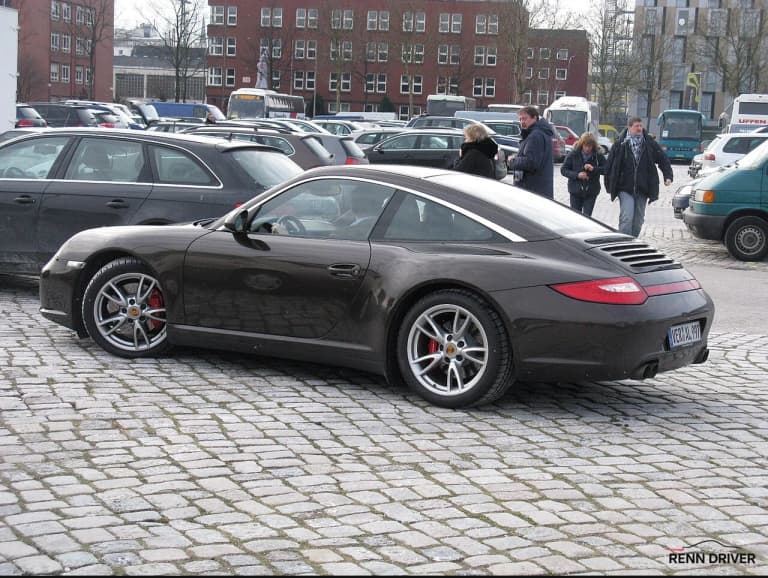
A Targa 4 GTS also became available during the Porsche 997.2 era, combining the open-roof experience with the 408-hp 911 Carrera GTS engine package. This Targa version remains one of the rarest and most desirable Porsche 997 configurations for collectors who value both exclusivity and driving enjoyment.
911 Turbo and Turbo S
The Porsche 997 Turbo was a different machine entirely from the naturally aspirated Porsche 911 Carrera. The 997.1 911 Turbo used a 3.6-liter twin-turbocharged version of the legendary Mezger flat-six engine, producing 480 horsepower and 460 lb-ft of torque. This was the same basic engine architecture that powered Porsche race cars at Le Mans, adapted for road use with variable turbine geometry turbochargers.
The 997.1 Porsche 911 Turbo came standard with all-wheel drive and larger air intakes on the rear fenders. It also featured a more aggressive rear wing and Porsche Ceramic Composite Brakes as an option. With the Sport Chrono Package activated, overboost pushed output temporarily to 500 horsepower.
Performance was staggering for the era: the 911 Turbo reached 60 mph in just 3.7 seconds with the six-speed manual.
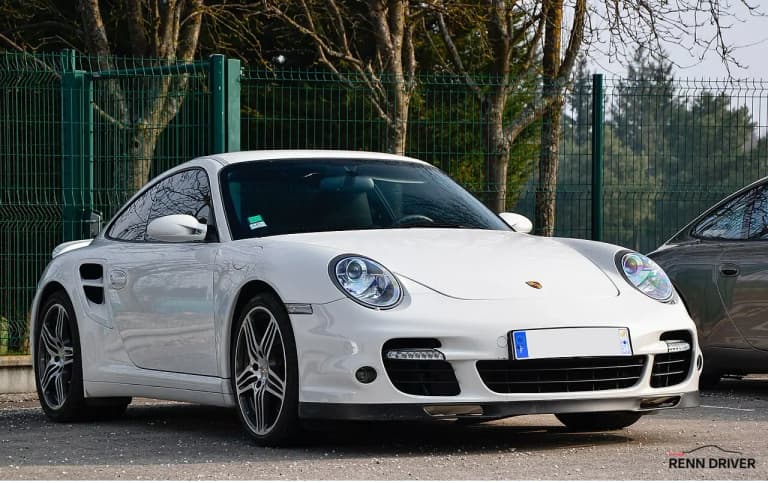
The 997.2 Porsche 911 Turbo switched to a 3.8-liter direct-injection engine with 500 horsepower and 480 lb-ft of torque. Porsche AG also made the PDK dual-clutch available for the first time in a Porsche 911 Turbo, which dropped acceleration times even further. The PDK-equipped 997.2 911 Turbo could reach 60 mph in approximately three seconds flat.
Porsche launched the Turbo S as the ultimate expression of the Porsche 997 Turbo platform. Available only in the 997.2 phase, the Turbo S produced 530 horsepower. It came loaded with PCCB ceramic brakes, the Sport Chrono Package, center-lock wheels, and interior upgrades as standard.
The Porsche 911 Turbo S was the fastest-accelerating Porsche 911 available at the time. It represented the peak of the Porsche 997 as a grand touring supercar.
Both the 911 Turbo and Turbo S were offered as coupes and as Turbo Cabriolet variants. This made them available as open-top all-wheel-drive rockets with over 500 horsepower. The Turbo S Cabriolet remains one of the most desirable Porsche 997 cabriolet models for collectors.
911 GT3 and GT3 RS
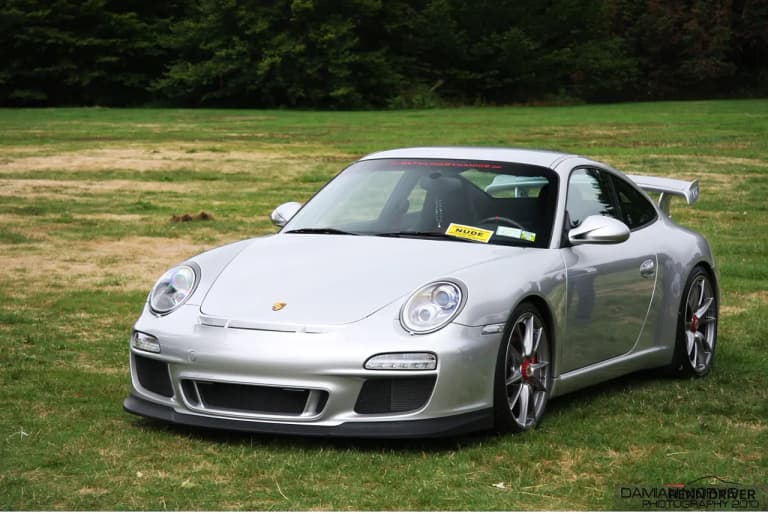
The 997 GT3 and GT3 RS represent the track-focused side of the Porsche 997 range. These GT cars used high-revving naturally aspirated engines derived from the Mezger architecture. They came with a six-speed manual gearbox exclusively and lightweight construction to prioritize feel and feedback above all else.
Porsche's motorsport department developed these models with technology derived directly from race cars.
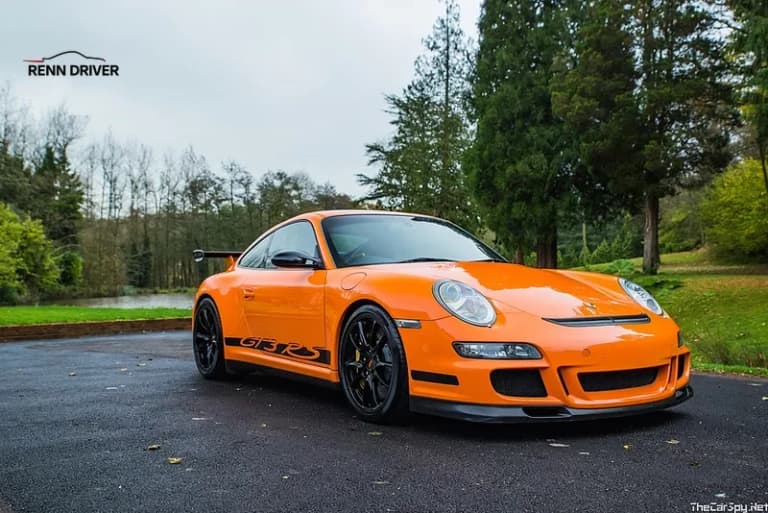
The 997.1 911 GT3 produced 415 horsepower from a 3.6-liter engine that revved to over 8,000 rpm. The GT3 RS added an upgraded body with a wider stance and stiffer suspension components. It used lighter parts sourced from the racing program and a prominent rear wing for additional downforce.
Porsche designed the RS with adjustable front spoiler and rear aerodynamics. This allowed owners to fine-tune the car for different tracks.
The 997.2 911 GT3 stepped up to 435 horsepower from a 3.8-liter engine. It featured improved aerodynamics and a comprehensively re-tuned suspension setup. The 911 GT3 RS 997.2 matched that power and added even more weight reduction.
The crowning achievement was the GT3 RS 4.0, which used a 4.0-liter naturally aspirated flat-six producing 500 horsepower at 8,250 rpm. Porsche built just 600 units of the RS 4.0, each featuring a lightweight carbon-fiber double-dome roof and aggressive air intakes. That car now commands prices well above $400,000 and is considered one of the greatest naturally aspirated Porsche 911 models ever made.
All 911 GT3 models came with a six-speed manual gearbox and no automatic option. Combined with the high-rev engines, direct steering, and minimal electronic intervention, these remain among the purest driver's cars of the 21st century. The Porsche 997 911 GT3 established the template for every Porsche 911 GT3 that has followed.
GT2 and GT2 RS
The 997 GT2 took the 911 Turbo's twin-turbocharged engine and dropped it into a lighter, rear-wheel-drive chassis with no all-wheel-drive safety net. The result was 530 horsepower, a six-speed manual gearbox, and a car that demanded respect from its driver at all times. The Porsche 997 GT2 was essentially the most extreme road-legal Porsche 911 you could buy.
The GT2 RS pushed even harder, producing 620 horsepower from the same 3.6-liter twin-turbo flat-six with slightly larger turbochargers. Porsche used carbon fiber for the front fenders, engine cover, and rear wing to strip weight.
The brake calipers were finished in red. Porsche fitted a lightweight single-mass flywheel and a sport clutch to sharpen the drivetrain response. The GT2 RS reached 60 mph in 3.3 seconds and carried a top speed over 205 mph.
Porsche AG limited the GT2 RS to just 500 units worldwide during its production run. The car remains one of the most aggressive and collectible Porsche 911 variants from any generation. These GT cars are rare, extremely fast, and built for skilled drivers who wanted the most intense experience the Porsche 997 platform could deliver.
911 Sport Classic
Porsche AG produced just 250 units of the 911 Sport Classic in 2009, making it one of the rarest Porsche 997 variants. Based on the Carrera S with the wider body from the Carrera 4 models, the 911 Sport Classic featured a ducktail rear spoiler. The design was inspired by the original 1973 Carrera RS.
It had a distinctive double-dome roof with two subtle raised sections. Fuchs-style center-lock wheels in Carrara White and a Sport Gray Metallic paint were exclusive to this model.
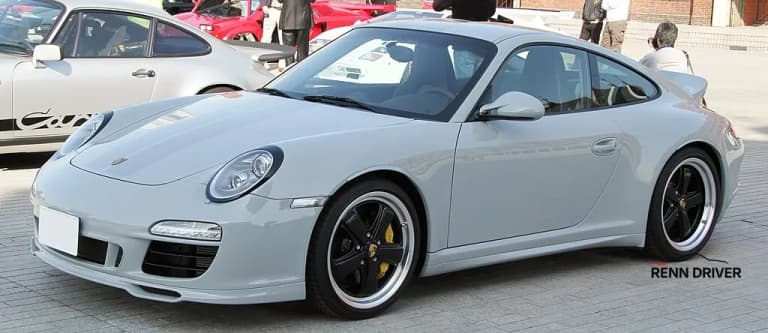
Under the hood of the 911 Sport Classic sat a 3.8-liter flat-six tuned to 408 horsepower, paired exclusively with a six-speed manual gearbox. The interior used woven leather with interior stitching in Espresso brown accents that set it apart from every other Porsche 997 model. Porsche designed the 911 Sport Classic as a tribute to the racing heritage of the Porsche 911.
It blended modern performance with vintage design cues and a nod to the classic Carrera RS lineage.
Today, the 911 Sport Classic is a significant collector car that regularly sells for three to four times its original sale price. Its limited production run, manual-only drivetrain, and distinctive styling have cemented its place as a milestone car in the Porsche 997 lineup. The Sport Classic's success led Porsche AG to produce a second-generation 911 Sport Classic based on the 992 generation.
911 Speedster
Porsche capped the Porsche 997 generation with the 911 Speedster, limited to 356 units as a nod to the original Porsche 356. Based on the 911 Carrera GTS platform, the Speedster featured a lower windshield and a manually operated soft top. It also had a distinctive double-bubble tonneau cover behind the seats, wider rear fenders, and unique Fuchs-inspired wheels.
The Porsche 997 Speedster's 3.8-liter engine produced 408 horsepower, and it was paired exclusively with a six-speed manual gearbox and rear-wheel drive. Available in Carrara White or Pure Blue, the Speedster was a farewell gesture to the Porsche 997 era. It has become highly sought after by collectors.
The Speedster's low production numbers and unique styling make it one of the most collectible Porsche 911 models from the 997 generation.
Engine Specifications by Model
The Porsche 997 range used several variations of the flat-six engine. Here is a comprehensive breakdown of the key technical specs across all major Porsche 997 models.
| Model | Engine | Power | Torque | 0 to 60 |
|---|---|---|---|---|
| 911 Carrera (997.1) | 3.6L NA | 325 hp | 273 lb-ft | 4.8s |
| Carrera S (997.1) | 3.8L NA | 355 hp | 295 lb-ft | 4.5s |
| 911 Carrera (997.2) | 3.6L DFI | 345 hp | 288 lb-ft | 4.5s |
| Carrera S (997.2) | 3.8L DFI | 385 hp | 310 lb-ft | 4.3s |
| 911 Carrera GTS | 3.8L DFI | 408 hp | 310 lb-ft | 4.2s |
| 911 Turbo (997.1) | 3.6L Twin Turbo | 480 hp | 460 lb-ft | 3.7s |
| 911 Turbo (997.2) | 3.8L Twin Turbo DFI | 500 hp | 480 lb-ft | 3.2s |
| Turbo S | 3.8L Twin Turbo DFI | 530 hp | 516 lb-ft | 3.1s |
| 911 GT3 (997.1) | 3.6L NA Mezger | 415 hp | 299 lb-ft | 4.1s |
| 911 GT3 (997.2) | 3.8L NA Mezger | 435 hp | 317 lb-ft | 3.9s |
| GT3 RS 4.0 | 4.0L NA Mezger | 500 hp | 339 lb-ft | 3.8s |
| GT2 | 3.6L Twin Turbo | 530 hp | 505 lb-ft | 3.6s |
| GT2 RS | 3.6L Twin Turbo | 620 hp | 516 lb-ft | 3.3s |
All naturally aspirated Porsche 911 Carrera models used Porsche's M97 engine family in the Porsche 997.1 and the 9A1 (DFI) engine in the Porsche 997.2. The crankshaft and cylinder walls in the M97 were known weak points. The 997.2 9A1 engine with its revised internals is the more reliable long-term choice.
The 911 GT3 and 911 Turbo models used derivatives of the Mezger engine. This design traces its lineage directly to Porsche's motorsport program and Le Mans-winning race cars.
Performance and Driving Experience
What sets the Porsche 997 apart from later Porsche 911 generations is the way the car communicates with the driver. The hydraulic power steering delivers genuine road feel through the steering wheel, letting you sense every change in surface texture and grip level. Later Porsche 911 models switched to electric steering, which improved fuel economy but reduced that direct tactile connection.
The Porsche 997 chassis development favors involvement over comfort. The Type 997 is smaller and lighter than the 991 that replaced it. This makes the car easier to place on the road and more responsive to driver inputs.
The rear-engine layout creates a distinctive rotation into corners that experienced drivers learn to exploit. PASM keeps the body controlled without making the ride punishing. Porsche Active Suspension Management remains one of the best adaptive damping systems ever fitted to a sports car of this era.
Braking performance is exceptional across the Porsche 997 range. Standard models came with large ventilated discs and multi-piston brake calipers. Porsche Ceramic Composite Brakes (PCCB) were available as an option on higher trim levels and standard on the Turbo S.
The PCCB system offered virtually fade-free stopping power and reduced unsprung weight. This benefited both track performance and daily driving comfort.
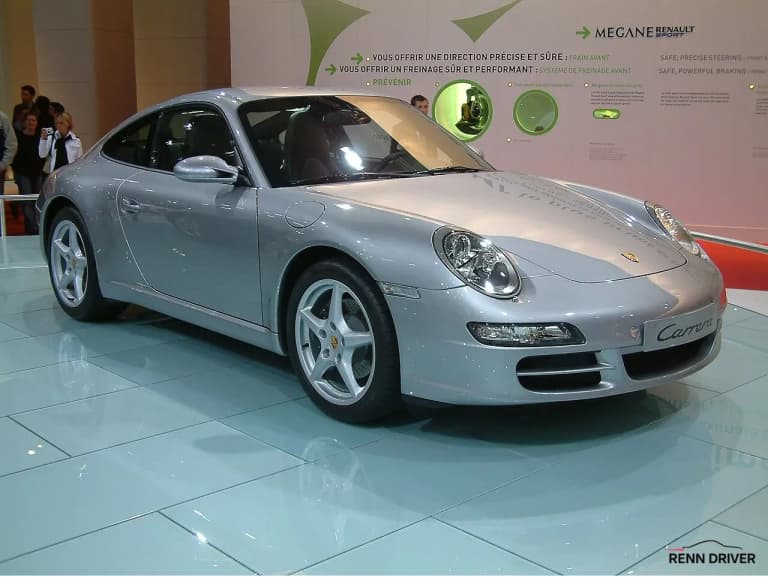
The Porsche 997.2 models benefited from a newly developed resonance intake system that improved airflow and throttle response. Combined with direct fuel injection, the 997.2 engines felt crisper and more eager than their predecessors. This was particularly noticeable in the mid-range where daily driving happens most often.
The Carrera S and 911 Carrera GTS with their 3.8-liter engines delivered particularly strong midrange torque.
For enthusiasts who value the six-speed manual gearbox, the Porsche 997 is among the last generations where the manual feels perfectly matched to the car. The shift action is precise, the clutch engagement is predictable, and the gear ratios suit both relaxed cruising and spirited driving. The PDK is objectively faster, but the six-speed manual rewards skill and attention in a way that automated transmissions cannot replicate.
The sports suspension option lowered the ride height by 20mm and stiffened the springs and dampers. This sharpened turn-in response and reduced body roll during hard cornering.
Combined with the optional limited-slip differential and launch control via Sport Chrono, a well-specified Porsche 997 coupe was formidable. It could rival dedicated sports cars costing twice as much. The sports exhaust added an invigorating soundtrack to the experience.
Design and Exterior Details
The Porsche 997 returned to the round headlights that defined the Porsche 911 for decades. After the 996's polarizing "bug eye" or "fried egg" headlamp design, Porsche AG knew the interior and exterior styling had to change. The 997's headlamp design was both a callback to the classic 911 and a step forward in aerodynamic efficiency.
The overall silhouette of the Porsche 997 remained unmistakably Porsche 911: a sloping roofline, compact proportions, and the signature rear haunches over the engine bay. The front bumper incorporated larger air intakes that fed cooling to the brakes and radiators. The side profile was clean and uncluttered.
The rear featured integrated exhaust outlets and a retractable rear spoiler that deployed automatically at higher speeds.
The Porsche 997.2 brought subtle but meaningful styling changes. LED daytime running lights gave the front end a more modern presence. Reshaped exterior mirrors reduced wind noise.
Updated taillights with LED technology improved visibility and gave the car a more distinctive nighttime appearance.
These updates gave the Porsche 997.2 a noticeably more modern look than the outgoing versions.
911 Turbo models stood apart with their wider body, larger air intakes feeding the intercoolers, and a fixed rear wing. 911 GT3 RS models added even more visual drama with large rear wings, front canards, and lightweight body panels. The 911 Sport Classic's double-dome roof and ducktail spoiler created one of the most distinctive profiles in modern Porsche 911 history.
Porsche AG offered a vast palette of standard and special-order paint colors for the Porsche 997. Options ranged from classic Guards Red and Speed Yellow to more subtle choices like Arctic Silver Metallic and Basalt Black. Paint to Sample allowed buyers to select from hundreds of additional colors, creating one-of-a-kind Porsche 997 examples.
Some of the most sought-after Porsche 997 examples are those painted in special-order shades. These command premiums in today's market.
Interior and Technology
The Porsche 997 interior represented a significant step up from the 996. The dashboard layout was cleaner, materials felt higher quality, and the overall cabin ambiance matched the car's position as a premium Porsche 911 sports car. The five-gauge instrument cluster with the central tachometer remained a Porsche 911 trademark, giving the driver immediate access to critical information.
The Porsche 997.1 launched with Porsche Communication Management (PCM) as an option, offering navigation, CD-based audio, and a color display. The Porsche 997.2 updated PCM added a touchscreen interface, improved navigation, and Bluetooth connectivity for phone calls and audio streaming. Neither system matches modern infotainment, but the Porsche 997's cabin is designed around driving rather than technology.
Standard seats provided good support for everyday driving. The optional sport seats and adaptive sport seats offered better bolstering for spirited driving on a track day. Full leather, partial leather, and Alcantara trim options allowed buyers to customize the interior.
The 911 Carrera GTS models came standard with Alcantara covering most interior surfaces. This added both grip and a sporty aesthetic. The 911 Sport Classic featured unique woven leather with Espresso-brown interior stitching.
Climate control was straightforward and effective across all Porsche 997 models. The Sport Chrono Package added a lap timer on the dashboard and a sport button on the steering wheel. This sharpened throttle response, stiffened the PASM dampers, and changed the transmission mapping on PDK-equipped cars.
The optional sports exhaust opened valves in the mufflers at higher RPMs. This created a louder, more aggressive sound that many Porsche 997 owners consider essential.
Compared to the fully digital interfaces found in the 992 generation, the Porsche 997's cabin feels refreshingly analog. Physical buttons control the climate and audio. Analog gauges provide information without distraction.
The Porsche 997 interior lets the driver focus on the road rather than managing screens. This is part of why this generation of the Porsche 911 remains so appealing to enthusiasts.
Porsche 997 Carrera GTS
The Porsche 997 Carrera GTS arrived in 2010 as the ultimate naturally aspirated Porsche 911 Carrera of the 997 generation. Porsche fitted the 3.8 liter flat six with the X51 Powerkit, producing 408 hp and 310 lb ft of torque. The Porsche 997 Carrera GTS came in coupe, cabriolet, and rear wheel drive or all wheel drive configurations, giving buyers four possible combinations.
What separated the Porsche 997 GTS from the Carrera S was the wider body from the Carrera 4, center lock wheels, sport exhaust, and Alcantara interior. The car sat 10 mm lower on its PASM suspension. With a 6 speed manual gearbox, the Porsche 997 Carrera GTS coupe reached 60 mph in 4.2 seconds and a top speed of 190 mph. The GTS Cabriolet added open air driving to the package with minimal performance penalty.
Today the Porsche 997 Carrera GTS is one of the most sought after variants of the entire 997 911 generation. Prices reflect that desirability, with clean examples commanding $80,000 to $120,000 depending on mileage, transmission, and specification. The combination of the naturally aspirated flat six, wide body stance, and driver focused setup makes the Porsche 997 GTS a future classic among Porsche 911 enthusiasts.
Porsche 997 Sport Classic
The Porsche 997 Sport Classic is one of the rarest Porsche 911 models ever produced. Limited to just 250 units worldwide, this Porsche 911 was based on the rear wheel drive Porsche 997 Carrera S with the Powerkit engine producing 408 hp. Every Porsche 997 Sport Classic came finished in Sport Classic Gray, a color exclusive to this car that has become iconic among collectors.
Porsche fitted the 997 Sport Classic with a ducktail rear spoiler inspired by the original Porsche 911 Carrera RS 2.7, wider rear fenders from the Carrera 4, and Fuchs style wheels. Inside, woven leather and Espresso brown upholstery distinguished it from any other Porsche 911 in the lineup. The car came exclusively with a 6 speed manual gearbox, reinforcing its position as a purist machine.
At launch, the Porsche 997 Sport Classic sold for approximately $240,000. Today, values have climbed well past $500,000, making it one of the most valuable modern Porsche 911 models. The Sport Classic proved that Porsche could blend heritage design cues with modern performance, a formula the company has repeated with the Porsche 911 Sport Classic in the 992 generation.
Porsche 997 Speedster
The Porsche 997 Speedster debuted in 2010 as a limited run of 356 units, a number chosen to honor the original Porsche 356 Speedster. Based on the Porsche 997 Carrera GTS platform, this Porsche 911 featured a lower windshield, a manually operated fabric top, and a distinctive double bubble tonneau cover behind the seats.
Under the bodywork, the Porsche 997 Speedster used the same 408 hp 3.8 liter flat six as the GTS. Every Speedster came with a 2 speed PDK gearbox (Porsche did not offer the manual for this variant) and rear wheel drive. The car rode 24 mm lower than a standard Porsche 911 Carrera, giving it a planted, aggressive stance.
Original prices were around $200,000, but the Porsche 997 Speedster has appreciated dramatically. Low mileage examples now sell for $300,000 to $400,000 at auction. Like the Sport Classic, the Porsche 997 Speedster represents a piece of Porsche 911 history that connects the modern car to its earliest roots.
Buying Guide: What to Look For
Buying a Porsche 997 requires knowing what to inspect and what to avoid. Here are the key areas to focus on during your search for the right car.
The intermediate shaft bearing remains the primary concern for Porsche 997.1 models. This bearing supports the intermediate shaft in the engine and can fail without warning, causing catastrophic damage. Replacement costs between $2,000 and $4,000 depending on the shop.
That is a fraction of the cost of rebuilding an engine.
Some owners upgrade to a more robust aftermarket bearing as a preventive measure. The Porsche 997.2 eliminated this bearing entirely, so it is not a concern on later cars.
Bore scoring is another Porsche 997.1 issue where the cylinder walls develop vertical scratches that allow oil to bypass the piston rings. Symptoms include excessive oil consumption and blue smoke on startup. A bore scope inspection during the pre-purchase process can identify this problem before you commit to buying.
Affected engines may require a full rebuild or Nikasil replating of the cylinder walls.
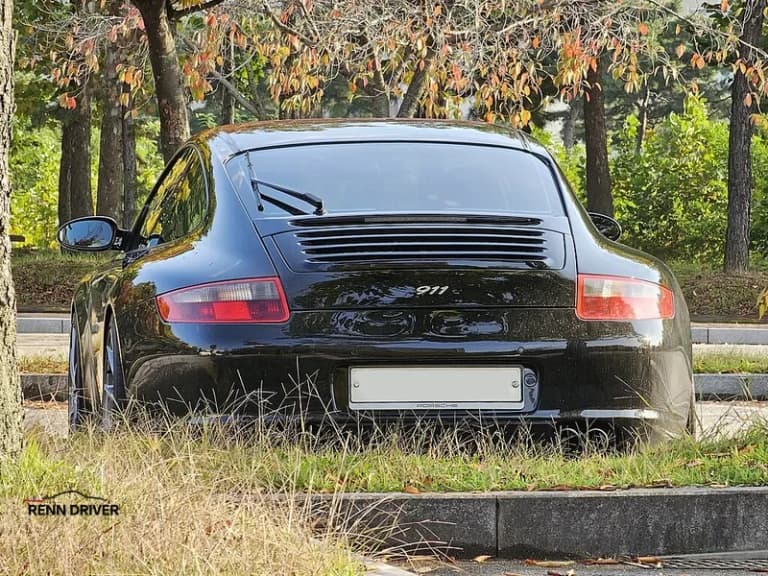
The Tiptronic transmission in Porsche 997.1 models is reliable but limits the car's resale value and driving enjoyment. If you are choosing between two otherwise equal Porsche 997.1 examples, the six-speed manual will almost always hold its value better. It also provides a more engaging experience.
Check the condition of the Porsche 997's body and suspension components, particularly the front control arm bushings and rear trailing arm mounts. These wear over time and can introduce vagueness into the steering feel. Replacement of these suspension components refreshes the car's handling significantly.
On all-wheel-drive models (Carrera 4, Carrera 4S, Targa), inspect the front differential and transfer case for leaks or unusual noises. These components are robust but expensive to repair if neglected. The all-wheel-drive system in the Porsche 997 is generally reliable when serviced on schedule.
Service history matters enormously with any Porsche 911. Look for consistent maintenance records from Porsche dealerships or reputable independent specialists. Cars with documented history from workshops that understand these engines tend to be more reliable and command higher sale prices.
Porsche 997 examples with full service records from Porsche Club members or long-term single owners tend to be the best investments.
The PDK transmission in Porsche 997.2 models is extremely reliable when properly maintained. Fluid changes every 40,000 miles keep the dual-clutch packs in good condition. Ignoring this service can lead to jerky shifts and eventual clutch pack failure.
Always get a pre-purchase inspection from a Porsche specialist before buying any Porsche 997. This should include a bore scope of the cylinders (especially on 997.1 models) and a compression and leak-down test. A thorough underbody inspection for accident damage and a scan of the car's electronic systems for fault codes are also essential.
Pricing and Market Values
The Porsche 997 market has matured significantly over the past several years. Prices have stabilized for most models, with GT variants continuing to appreciate steadily.
Here is a general guide to current market pricing for the most common Porsche 997 models.
A Porsche 997.1 911 Carrera coupe with a six-speed manual transmission and reasonable mileage typically sells between $35,000 and $50,000. Carrera S models from the same era command $40,000 to $60,000 depending on options and condition. Tiptronic cars sell for roughly 10 to 15 percent less than equivalent manuals.
The Porsche 997.1 Carrera remains one of the most affordable ways to enter Porsche 911 ownership.
The Porsche 997.2 carries a premium. Base Porsche 911 Carrera models start around $45,000 for higher-mileage examples and range up to $65,000 for well-optioned, low-mileage cars. The Carrera S 997.2 sits between $55,000 and $80,000, with PDK and manual examples trading at similar prices in this generation.
Carrera 4S models add roughly $5,000 to $10,000 over their rear-wheel-drive equivalents. The 911 Carrera GTS commands a significant premium, with prices typically between $85,000 and $120,000 depending on specification and mileage. The Carrera GTS coupe with the six-speed manual is the most sought-after configuration.
911 Turbo models range from $70,000 for higher-mileage Porsche 997.1 examples to over $150,000 for low-mileage 997.2 Turbo S models. The Porsche 911 Turbo S in particular has shown consistent appreciation as a collectible vehicle.
GT models exist in a different price bracket entirely. The 911 GT3 997.1 trades between $120,000 and $180,000. The 911 GT3 997.2 sits between $150,000 and $250,000.
The GT3 RS commands $200,000 and up. The legendary GT3 RS 4.0 regularly exceeds $500,000 at auction.
The GT2 RS is the most expensive standard-production Porsche 997, with prices often exceeding $600,000. The 911 Sport Classic has also appreciated dramatically, with recent sales approaching $400,000 to $500,000.
Carrera S Cabriolet and Carrera Cabriolet models generally sell for comparable or slightly lower prices than their coupe counterparts. Targa versions trade at a small discount to coupes in most markets. The Speedster commands prices in the $200,000 to $300,000 range, reflecting its limited production and unique character.
Values across the Porsche 997 range are supported by the car's position as the last hydraulically steered, analog-feeling Porsche 911. As newer Porsche 911 generations become increasingly digital, demand for the Porsche 997's driving experience continues to grow among enthusiasts who value connection over technology. For buyers on a budget looking at their first Porsche, see our cheapest Porsche guide.
Frequently Asked Questions
What years was the Porsche 997 made?
The Porsche 997, also known as the Type 997, was produced from 2004 to 2013 across two phases. The 997.1 covers model years 2004 through 2008, and the 997.2 spans 2009 through 2013. Porsche AG built over 213,000 Porsche 997 units during the full production run, making the Type 997 one of the most successful Porsche 911 generations in the car's history.
Is the Porsche 997 reliable?
The Porsche 997.2 is generally very reliable, especially with direct fuel injection and the elimination of the intermediate shaft bearing. The 997.1 has known issues including IMS bearing failure and bore scoring that can lead to expensive repairs. A pre-purchase inspection from a Porsche specialist is essential for any 997.1. With proper maintenance, both generations deliver many years of dependable service.
Should I buy a manual or PDK Porsche 997?
The six-speed manual offers a more engaging driving experience and connects you directly to the car. The PDK dual-clutch, available only on 997.2 models, shifts faster, is easier in traffic, and is slightly more fuel-efficient. Enthusiasts tend to favor the manual, but PDK is the better choice for mixed use that includes heavy commuting. Both transmissions hold their value well.
How much does a Porsche 997 cost?
Porsche 997 prices range from approximately $35,000 for a 997.1 Carrera coupe with higher mileage to over $600,000 for rare GT2 RS examples. Most buyers shopping for a Carrera S or Carrera 4S will find well-maintained examples between $50,000 and $80,000. The GTS, Turbo S, Sport Classic, and limited-edition models command significantly higher prices.
Which Porsche 997 is the best to buy?
For daily driving, the Porsche 997.2 Carrera S offers the best combination of performance, reliability, and value. The Carrera 4S adds all-wheel-drive security for year-round use. For weekend driving and occasional track days, the 911 Carrera GTS delivers a more focused experience. Collectors should look at the 911 GT3, GT3 RS, or 911 Sport Classic for long-term appreciation potential.
How does the Porsche 997 compare to the 991?
The Porsche 997 versus 991 comparison comes down to connection versus refinement. The Porsche 997 is smaller, lighter, and has hydraulic steering that delivers more road feel. The Porsche 991 is more powerful, more technologically advanced, and more comfortable over long distances. The Porsche 997 appeals to drivers who want to feel every detail of the road, while the 991 suits those who want a broader performance envelope with more modern amenities.
Are Porsche 997 values going up?
Porsche 997 GT models have appreciated significantly and continue to rise. Well-maintained Porsche 997.2 Carrera S and 911 Carrera GTS examples are also trending upward as buyers recognize the Porsche 997 as the last analog Porsche 911. Base 997.1 Porsche 911 Carrera models have stabilized and represent strong value for the money, particularly in six-speed manual form. The Porsche 997 is increasingly seen as a smart investment for the future.
Can you daily drive a Porsche 997?
The Porsche 997 is an excellent daily driver. The Porsche 911 Carrera and Carrera S models offer comfortable seats, effective climate control, a usable trunk in the front, and ride quality that works well on regular roads. The Porsche 997.2 with PDK makes city driving particularly easy. Many owners use their Porsche 997 as their only car without any compromise.
What is the rarest Porsche 997?
The 911 Sport Classic (250 units), GT3 RS 4.0 (600 units), 911 Speedster (356 units), and GT2 RS (500 units) are the rarest production Porsche 997 models. Among these, the 911 Sport Classic and GT3 RS 4.0 tend to attract the most collector interest due to their unique specifications and limited production numbers.
Does the Porsche 997 have a Mezger engine?
The 911 GT3, GT3 RS, 911 Turbo, Turbo S, GT2, and GT2 RS models in the Porsche 997 range all used engines derived from the Mezger architecture, which traces its lineage to Porsche's Le Mans-winning race cars. The standard Porsche 911 Carrera models used the M97 engine family (997.1) and the 9A1 engine (997.2), which are different designs from the Mezger.
What is the Porsche 997 Carrera S Cabriolet?
The Porsche 997 Carrera S Cabriolet is the open-top version of the Carrera S, combining the 3.8-liter flat-six engine with a power-operated soft top. The Carrera S Cabriolet was available in both rear-wheel-drive and all-wheel-drive configurations. It is one of the most popular Porsche 997 cabriolet models and offers a compelling blend of Porsche 911 Carrera performance and open-air driving.
Final Thoughts
The Porsche 997 occupies a unique position in the Porsche 911 lineage. The Type 997 arrived at the right moment to correct the 996's missteps, and Porsche AG delivered a car that felt honest and complete. From the base Porsche 911 Carrera coupe to the terrifying GT2 RS, every model in the range shared a commitment to driver engagement that defined this generation of the Porsche 911.
Porsche AG built the Porsche 997 during a period when the Porsche 911 still relied on hydraulic steering, naturally aspirated engines in the 911 Carrera range, and a chassis small enough to feel alive on a narrow mountain road. Those qualities are increasingly rare in modern sports cars, and they are what make the Porsche 997 more desirable with each passing year. The Porsche 997 represents the final evolution of the analog Porsche 911 before electric steering and forced induction changed the formula.
Whether you are shopping for your first Porsche 911, looking for a weekend car that rewards every drive, or building a collection around the best of the water-cooled era, the Porsche 997 deserves serious consideration. It is not the newest Porsche 911, but for many enthusiasts, the Porsche 997 remains the most complete one.
Images by: Alexander-93, all licensed under CC BY-SA 4.0, via Wikimedia Commons, Alexandre Prevot, CC BY-SA 4.0, via Wikimedia Commons, Charles from Port Chester, New York, CC BY 2.0, via Wikimedia Commons, Damian B Oh, CC BY-SA 4.0, via Wikimedia Commons, The Car Spy on Flickr, CC BY 2.0, via Wikimedia Commons, Johannes Maximilian, CC BY-SA 4.0, via Wikimedia Commons, Calreyn88, CC BY-SA 4.0, via Wikimedia Commons, Alexandre Prévot from Nancy, France, CC BY-SA 2.0, via Wikimedia Commons, Ank Kumar, CC BY-SA 4.0, via Wikimedia Commons