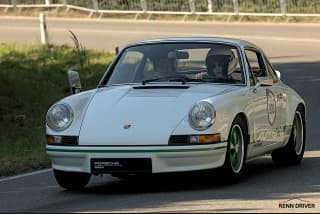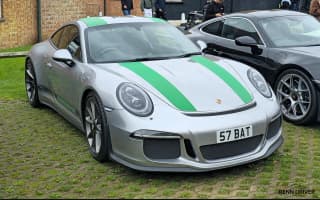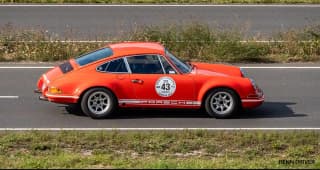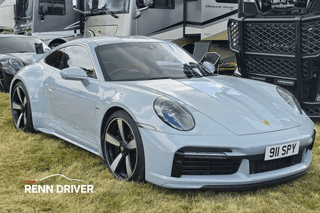
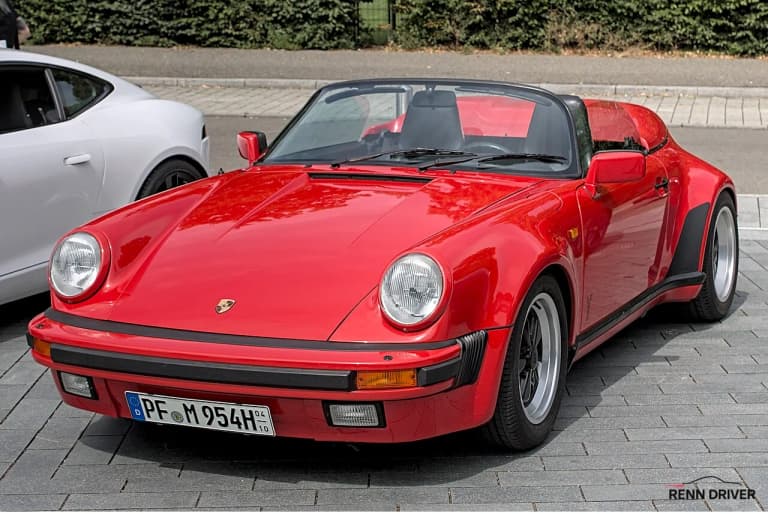
The Porsche 911 Speedster is a limited production, open top variant. It features a lower screen, a hand-operated soft top, and a double-bubble rear deck. Porsche has produced Speedsters across four generations: the G body (1989), 993 (1995), 997 (2010), and 991 (2019). Total production across all of them is under 3,000 cars.
In this article, we’ll trace the 911 Speedster, the low-screen, limited-run open 911, across four generations. We’ll cover the 1989 G-body, the two-car 993, the 991's GT3 engine, and market values.
Contents
- 1 Quick Summary
- 2 Speedsters Through the Generations
- 2.1 G-Body Speedster (1989)
- 2.2 993 Speedster (1995)
- 2.3 997 Speedster (2010)
- 2.4 991 Speedster (2019)
- 3 All Speedsters Compared
- 4 Market Values
- 5 FAQs
- 6 Final Thoughts
The full guide below covers all the details.
Quick Summary
- Generations: G-body (1989), 993 (1995), 997 (2010), 991 (2019)
- Defining features: Low screen, hand-operated soft top, double-bubble rear deck, lightweight construction
- Total production (all gens): Under 3,000 units
- Most recent: 991 Speedster (2019), 502 hp naturally aspirated flat-six, 6-speed gearbox, 1,948 units
- Rarest: 993 Speedster (1995), only 2 units built
- Key difference from Cabriolet: The car has a lower front screen, a simpler folding top, and is lighter. The Cabriolet has a full-height front glass and a powered folding roof.
Speedsters Through the Generations
The Speedster name goes back to 1954, when Porsche created the 356 Speedster as a lightweight, affordable open-top sports car for the American market. It became the most iconic Porsches, and that thing carries forward into every successor.
When Porsche revived the name for the 911 in 1989, they kept the same philosophy: take a standard model, lower the screen, simplify the roof mechanism, remove weight, and build fewer of them. Every 911 Speedster since has followed that formula.
G-Body Speedster (1989)
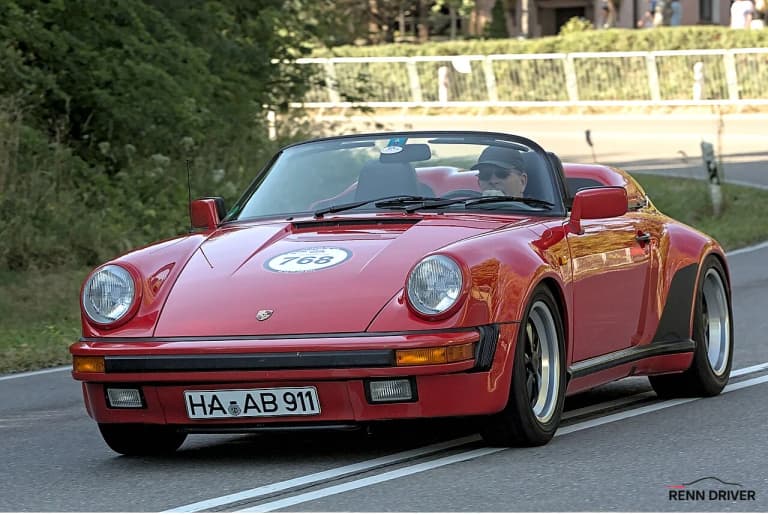
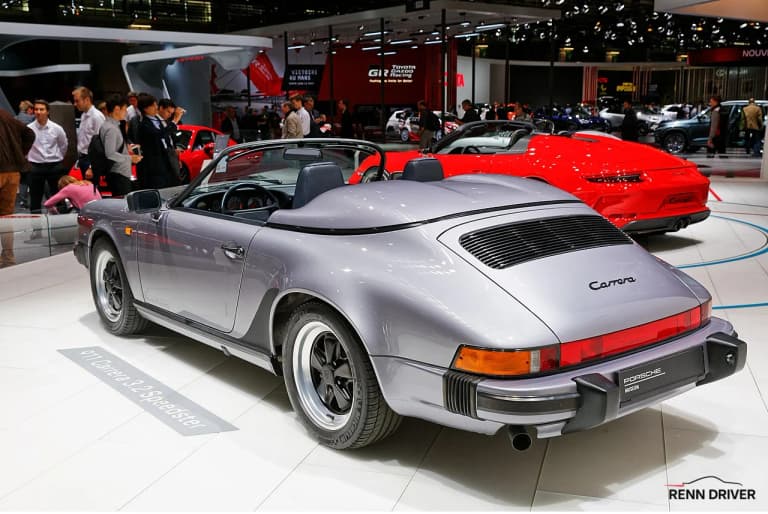
The first G-body 911 Speedster arrived in 1989 as a send-off for the G-body generation. Porsche produced approximately 2,104 units in both narrow-body and Turbo-look wide-body configurations.
The front glass sits roughly 3 inches lower than the standard Cabriolet. The soft top tucks under a fiberglass double-bubble cover that defines the classic look. It uses the same 3.2L flat-six from the Carrera, producing 217 hp.
Narrow-body cars are more common. Turbo-look wide-body Speedsters are rarer and more valuable. Both are now firmly in the collector car segment.
993 Speedster (1995)
The rarest 911 variant ever built is the 993 Speedster. Porsche produced only 2 units, both commissioned through the Porsche Exclusive department. They are based on the 993 Carrera with the Speedster treatment: lower glass, hand-operated top, and double-bubble deck lid.
These cars almost never appear for sale. When they do, prices are well into seven figures. For most collectors, the 993 car exists as something you read about but never see in person.
997 Speedster (2010)
Porsche brought the Speedster back properly with the 997 generation in 2010. They produced 356 units, a deliberate nod to the original 356 Speedster.
The 997 car uses the 3.8L flat-six from the Carrera S, producing 408 hp. It comes exclusively with a 7-speed PDK transmission. The body is based on the 997 GTS wide-body, and the car rides 24mm lower than the standard Carrera.
It was offered in two colors: Pure Blue (a heritage color) and white. Every car came with a Heritage Design package that included retro touches like Fuchs-style wheels and brown leather interior.
991 Speedster (2019)
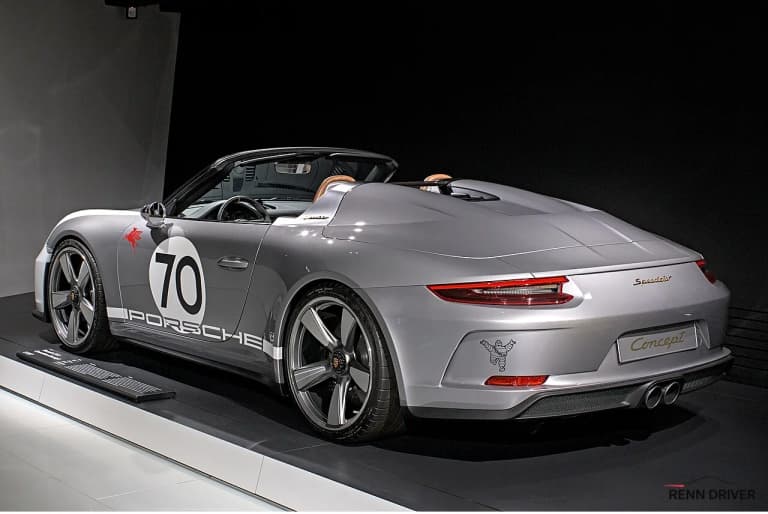
The most recent and most powerful Speedster is based on the 991 generation. Porsche produced 1,948 units, and every single one uses the naturally aspirated 4.0L flat-six from the GT3, producing 502 hp. Transmission is a 6-speed gearbox only. No PDK option.
This is the enthusiast's Speedster. The GT3 powerplant, 6-speed gearbox, rear-wheel drive, and open-top driving combine into something no other 911 offers. The driving experience is unlike any other 911. Open-top driving at this level requires nothing more than forward motion and a good road. Weight is approximately 3,230 lbs, about 200 lbs less than the GT3 Touring.
Porsche offered it in a Heritage Design Edition with a two-tone color scheme and retro graphics, as well as standard colors. The Heritage Design cars command a premium on the secondary market.
All Speedsters Compared
| G-Body (1989) | 997 (2010) | 991 (2019) | |
|---|---|---|---|
| Engine | 3.2L flat-six | 3.8L flat-six | 4.0L flat-six (GT3) |
| Power | 217 hp | 408 hp | 502 hp |
| Transmission | 5-speed | PDK | 6-speed |
| Production | ~2,104 | 356 | 1,948 |
| NA/Turbo | NA | NA | NA |
The 993 Speedster (2 units) is excluded from the table because it is a one-off special that most people will never see.
Market Values
All of them have appreciated significantly and are considered blue-chip collectibles.
- G-Body Speedster (narrow): $150,000 to $250,000
- G-Body Speedster (Turbo-look): $250,000 to $400,000
- 997 Speedster: $300,000 to $450,000
- 991 Speedster: $350,000 to $500,000
- 991 Heritage Design Speedster: $400,000 to $600,000+
The 991 model is particularly strong because of the GT3 engine and manual combination. As the last naturally aspirated, open-top 911 variant of this type, its collector status is essentially guaranteed. Each year the pool of naturally aspirated Porsches shrinks.
Frequently Asked Questions
How many were made?
Total production across all generations is under 3,000 units. The G-body accounts for about 2,104, the 997 for 356, and the 991 for 1,948. The 993 had only 2 units.
What engine does the 991 Speedster have?
The 991 car uses the same 4.0L naturally aspirated flat-six from the GT3. It produces 502 hp and revs to 9,000 rpm. That sound at the top of the rev range is the thing that makes this car special.
Does it come with a manual transmission?
Yes, some versions do. The G-body and the 991 are manual only. The 997 model is PDK only.
How much is one worth?
Values range from $150,000 for a G-body narrow-body to over $500,000 for a 991 Heritage Design Edition. All are appreciating collectibles.
What is the difference between one and a Cabriolet?
The car has a lower screen, a soft top that stows under a double-bubble cover, and lighter construction. The Cabriolet has a full-height windshield and a powered folding roof. It is rarer and more expensive.
Will there be a 992 version?
No, Porsche has not announced a 992 variant as of early 2026. The 991 may have been the last one, given the shift toward electrification in future 911 generations.
Final Thoughts
This is Porsche building a car at its most romantic. Every generation strips away complexity and adds character: the lower screen, the folding top, the double-bubble deck, the limited numbers. These are special cars built for people who want to feel the air and hear the engine without a filter.
The 991 model, with its GT3 engine and 6-speed gearbox, might be the best open-top 911 ever made. It combines the raw mechanical appeal of the GT3 with the open-air experience of a convertible, wrapped in the most distinctive body style in the 911 lineup.
If you get a chance to drive one on a good road, take it. That road will feel different with the screen down.
Images by: Alexander-93, Thesupermat, MB-one, licensed under CC BY-SA 4.0, via Wikimedia Commons