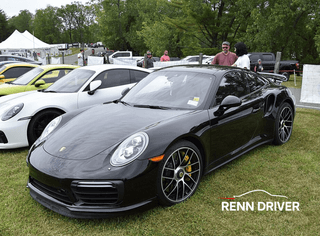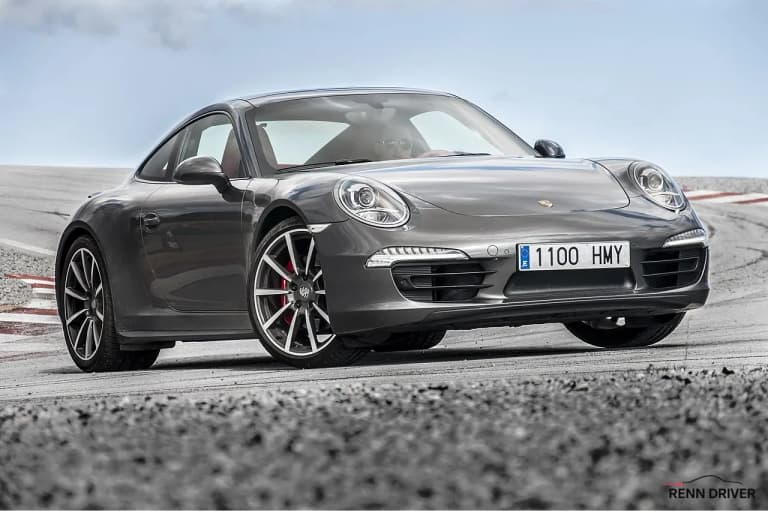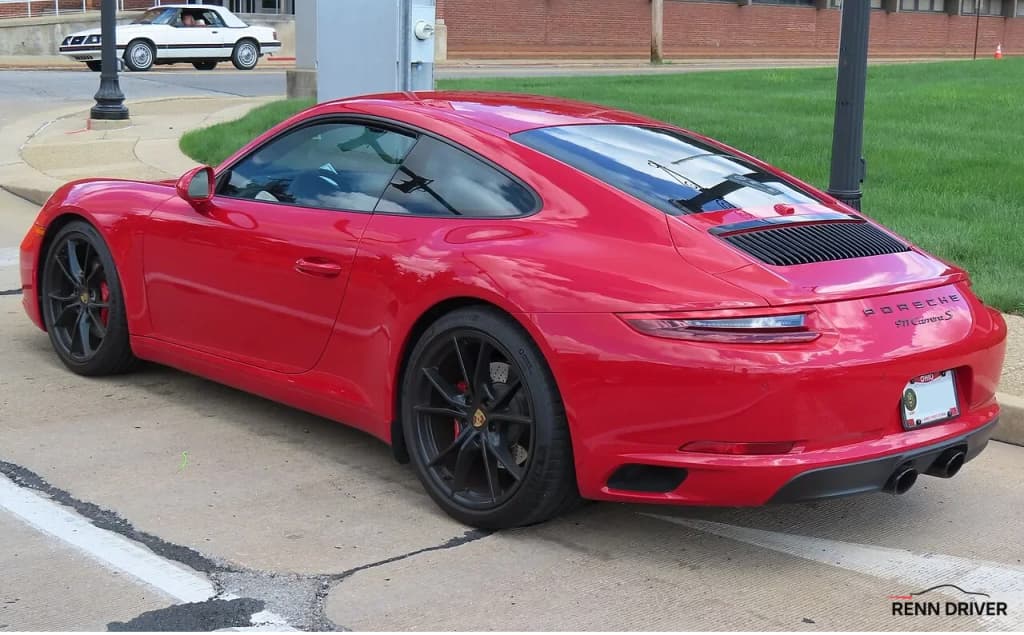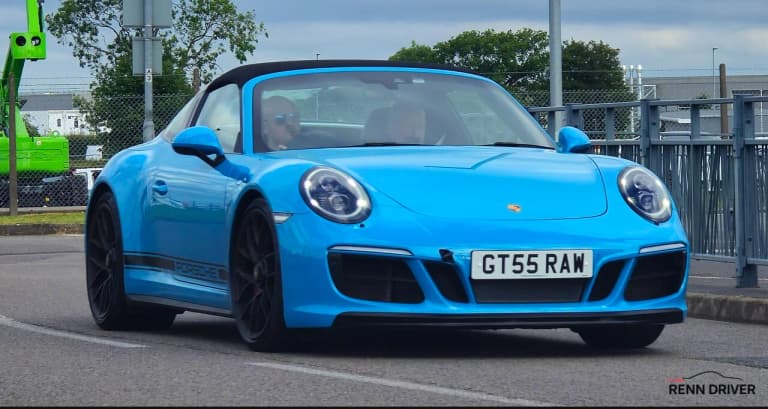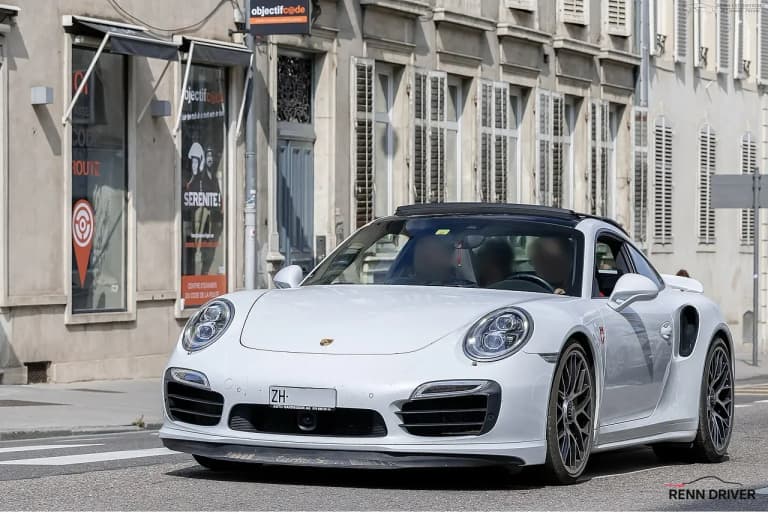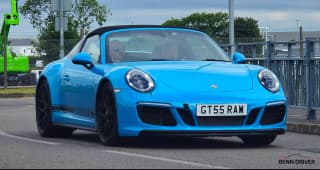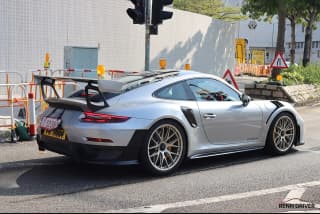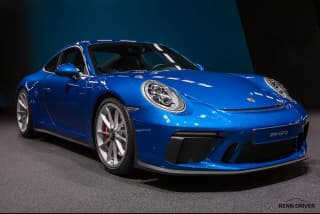
The Porsche 991 is the seventh generation Porsche 911, produced from 2012 to 2019. The 991.1 uses naturally aspirated flat six engines while the 991.2 switched to a 3.0-liter twin turbocharged flat six for the 911 Carrera range. Available as a coupe, cabriolet, and Targa in rear wheel drive or all wheel drive, the Porsche 911 991 spans everything from daily-driving 911 Carrera models to the 700 hp GT2 RS race car.
This guide covers every Porsche 991 model, engine, transmission, and body style, plus a buying guide with current pricing and what to look for.

Contents
- 1 Quick Summary
- 2 991 Generation Overview
- 3 Porsche 991.1 (2012 to 2015)
- 4 Porsche 991.2 (2016 to 2019)
- 5 911 Carrera and Carrera S
- 6 911 Carrera GTS
- 7 Carrera T
- 8 911 Carrera 4 and Carrera 4S
- 9 911 Targa 4 and Targa 4S
- 10 S Cabriolet Models
- 11 911 Turbo and Turbo S
- 12 911 GT3
- 13 911 GT3 RS
- 14 911 GT2 RS
- 15 911 R
- 16 911 Speedster
- 17 50th Anniversary Edition
- 18 Club Coupe
- 19 Touring Package
- 19 Engines and Transmissions
- 20 Rear Wheel Drive vs All Wheel Drive
- 21 Chassis, Suspension, and Steering
- 22 Brakes
- 23 Interior and Technology
- 24 Exterior Design and Aerodynamics
- 25 Wider Body Models
- 26 Buying Guide and Pricing
- 27 Renn Driver's Take
- 28 Frequently Asked Questions
Quick Summary
- Production Years: 2012 to 2019 (991.1: 2012 to 2015, 991.2: 2016 to 2019)
- Body Styles: Coupe, Cabriolet, Targa
- Notable Models: 911 Carrera, Carrera S, 911 Carrera GTS, Carrera T, Targa 4, Targa 4S, Targa 4 GTS, 911 Turbo, Turbo S, Porsche 911 GT3, GT3 RS, GT2 RS, 911 R, Speedster
- Engines: 3.4L and 3.8L naturally aspirated flat six (991.1), 3.0L twin turbocharged flat six (991.2), 3.8L twin turbo (Turbo/Turbo S), 3.8L and 4.0L naturally aspirated (GT models)
- Transmissions: 7 speed manual transmission, 7 speed PDK
- Drivetrain: Rear wheel drive or all wheel drive depending on model
- Platform: Aluminum and steel construction, 100 mm longer wheelbase than the 997
- Dimensions: Length 4,491 mm, Width 1,808 mm (1,852 mm for wider body models), Wheelbase 2,450 mm
- Key Tech: PASM, PDCC, rear axle steering, sport chrono package, Porsche Torque Vectoring
- Total Production: Approximately 233,540 units
991 Generation Overview
A New Platform
The Porsche 991 was the first Porsche 911 to ride on a completely new platform since the 996 arrived in 1997. Every major dimension changed. The wheelbase grew by 100 mm to 2,450 mm, which improved stability at speed and gave more room in the cabin.
The front track widened by 46 mm and the rear track by 18 mm. This planted the rear wheels more firmly and gave the Porsche 911 991 a more confident stance through high speed corners.
Porsche used a mixed material construction of aluminum and high strength steel to cut weight by up to 45 kg compared to the outgoing 997. The front suspension towers, doors, front fenders, hood, and roof panel were all aluminum. This weight saving improved everything: acceleration, braking distances, fuel consumption, and the way the car changed direction.
Porsche introduced the 991 at the 2011 Frankfurt Motor Show. Sales began in late 2011 for the 2012 model year. The Porsche 911 991 replaced the beloved 997 with a significant leap in technology and refinement.
Electric power steering arrived for the first time on a Porsche 911, replacing the hydraulic system that enthusiasts had praised for decades. The switch was controversial, but Porsche tuned the system to deliver more feedback than most competitors offered.
The 991 generation also marked the debut of a redesigned 7 speed PDK transmission and an available 7 speed manual gearbox. Both were new developments tailored for the longer legged highway cruising and spirited driving that Porsche 911 owners expect.
991 Production Numbers
Porsche built approximately 233,540 units of the Porsche 991 across both phases. That total includes every body style and trim, from base 911 Carrera coupes to the ultra rare 911 Speedster. The 991 outsold every previous Porsche 911 generation and cemented its place as one of the most commercially successful sports cars of its era.
Much of that success came from the expanded model range. It offered a Porsche 911 for nearly every type of buyer, from the standard Carrera coupe to the track-ready Porsche 911 GT3 RS.
Porsche 991.1 (2012 to 2015)
991.1 Engine Specs
The 991.1 used naturally aspirated flat six engines with direct fuel injection, a first for the standard 911 Carrera range. The base 911 Carrera received a 3.4 liter engine producing 350 horsepower and 287 lb ft of torque. The Carrera S stepped up to a 3.8 liter unit making 400 horsepower and 325 lb ft of torque.
Both engines used VarioCam Plus variable valve timing and revved freely to their redlines. They delivered the kind of linear throttle response that made naturally aspirated Porsche 911 models so rewarding to drive.
These engines were not based on the legendary Mezger design. They used the more modern water cooled architecture that Porsche had been developing since the 996. Porsche made significant refinements to airflow, combustion efficiency, and engine performance.
Direct fuel injection improved both power output and fuel economy, a combination that satisfied regulators and enthusiasts alike.
991.1 Exterior Changes
At first glance, the 991.1 looked like a proper evolution of the 997 rather than a radical departure. The new headlights were slimmer and more angular, and the greenhouse was more steeply raked. The entire Porsche 911 sat lower and wider, with more sculpted fenders over the rear wheels.
An adaptive rear spoiler deployed automatically at speed, adjusting its angle based on driving mode and velocity. LED daytime running lights became a signature feature of the 991's front fascia, giving it new styling that aged well.
Porsche 991.2 (2016 to 2019)
991.2 Engine Specs
The 991.2 brought the most significant mechanical change in the 911 Carrera lineup since the switch from air cooled to water cooled engines. Porsche replaced the naturally aspirated 3.4 and 3.8 liter flat sixes with a new 3.0 liter twin turbocharged flat six across the entire Carrera range. This was the Porsche 911's first use of forced induction on the standard Carrera.
The base 911 Carrera now produced 370 horsepower and 331 lb ft of torque. The Carrera S made 420 horsepower and 368 lb ft of torque, a serious power increase over the 991.1 Carrera S.
Torque arrived much lower in the rev range compared to the 991.1 engines. This made the 991.2 Porsche 911 feel quicker in everyday driving. The turbo lag was minimal thanks to twin scroll turbochargers and an electronically controlled wastegate.
Some purists mourned the loss of natural aspiration and the high revving character, but the performance numbers were undeniable.
The 991.2 Carrera S with the sport chrono package could sprint from 0 to 60 mph in 3.7 seconds. That was quicker than the 991.1 Carrera S by nearly half a second.
991.2 Exterior Changes
Visually, the 991.2 received subtle but important updates. The rear section was reshaped with new vertical air intakes in the rear bumpers. The tail lights received a different internal structure with a four point brake light pattern.

New LED headlights with four point daytime running lights became standard equipment. The front bumper had slightly larger air intakes to feed the turbocharged engine's cooling requirements. From a distance the changes were subtle, but side by side the 991.2 looks cleaner and more purposeful than the 991.1.
911 Carrera and Carrera S
The 911 Carrera and Carrera S form the backbone of the Porsche 991 lineup. These are the Porsche 911 Carrera models that most buyers cross shopped. They represent the sweet spot of Porsche 911 ownership.
There is enough performance to thrill, enough refinement to use every day, and enough options to personalize through Porsche Exclusive Manufaktur.
911 Carrera (991.1)
The base 911 Carrera used a 3.4 liter naturally aspirated flat six producing 350 hp. Power went to the rear wheels through either the 7 speed manual transmission or the 7 speed PDK. With the PDK and sport chrono package, the 911 Carrera reached 60 mph in 4.2 seconds and topped out at 179 mph.
The base Carrera came as standard with 19 inch wheels, PASM sport suspension, and a well appointed interior. Even as the entry point to Porsche 911 Carrera ownership, the 991.1 911 Carrera felt far from basic.
Carrera S (991.1)
The Carrera S added the larger 3.8 liter engine with 400 hp, 20 inch wheels, larger brakes, and a sportier exhaust note. The Carrera S was the pick of the 991.1 range for enthusiasts who wanted naturally aspirated power. It offered that experience without stepping into the Porsche 911 GT3 price bracket.
The Carrera S with PDK and sport chrono package managed 0 to 60 mph in 3.9 seconds. Top speed reached 188 mph. PASM was standard.
The Porsche Sport Exhaust was available as an option that transformed the engine note from refined to aggressive.
911 Carrera (991.2)
The 991.2 911 Carrera replaced its predecessor's 3.4 liter engine with the 3.0 liter twin turbocharged flat six. It made 370 hp and 331 lb ft of torque. The increase in mid range torque made the 911 Carrera feel substantially quicker in real world conditions.
With PDK and the sport chrono package, the 0 to 60 mph time dropped to 3.8 seconds. Top speed was 183 mph. The turbocharged engine also improved fuel efficiency, helping Porsche meet increasingly strict emissions targets.
Carrera S (991.2)
The 991.2 Carrera S pushed the 3.0 liter twin turbo engine to 420 hp and 368 lb ft of torque. This was a genuine performance leap over the 991.1 Carrera S thanks to the abundant low end torque. With PDK and the sport chrono package, the 0 to 60 mph sprint happened in 3.7 seconds.
Top speed hit 191 mph. The 991.2 Carrera S remained the best car in the standard Porsche 911 Carrera lineup. It offered the ideal balance of daily comfort and spirited driving performance.
911 Carrera GTS
The Porsche GTS badge has always represented the sweet spot between the standard Carrera S and the more extreme GT models. The 911 Carrera GTS delivered more power, sportier standard equipment, and a more focused character. It achieved this without the compromises that come with a track oriented GT car.
The GTS models are the ones that most enthusiast publications call the best car in the 991 generation for driving enjoyment.
Carrera GTS (991.1)
The 991.1 911 Carrera GTS used a tuned version of the 3.8 liter naturally aspirated engine producing 430 hp and 325 lb ft of torque. Standard equipment included the sport chrono package, Porsche Sport Exhaust, PASM sport suspension, 20 inch center lock wheels, and Alcantara interior accents.
The wider body from the Carrera 4 models was fitted to both rear wheel drive and all wheel drive 911 Carrera GTS variants. This gave the car a more aggressive stance over the rear wheels.
The 991.1 GTS models are among the most desirable Porsche 991 cars on the used market. They combine naturally aspirated power with the best factory equipment on any 911 Carrera.
Carrera GTS (991.2)
The 991.2 911 Carrera GTS received a higher output version of the 3.0 liter twin turbocharged flat six. It made 450 hp and 405 lb ft of torque.
Combined with PDK and the sport chrono package, the 911 Carrera GTS could reach 60 mph in 3.4 seconds. Top speed was 193 mph.
The GTS models came with PASM sport suspension lowered by 10 mm, the sport chrono package, and the Porsche Sport Exhaust as standard. All wheel drive versions used the wider body with its flared rear fenders.
GTS Cabriolet and GTS Targa
The 911 Carrera GTS was available in every body style Porsche offered for the 991. The GTS Cabriolet gave open air driving fun with the full GTS equipment list. It was one of the most popular GTS models among buyers in warmer climates.

The Targa 4 GTS combined the classic Targa bar design with all wheel drive and the sportier GTS setup. Both the GTS Cabriolet and the Targa 4 GTS used the wider body as standard. These variants appealed to buyers who wanted something more distinctive than a standard S Cabriolet or Targa 4S.
Carrera T
Porsche introduced the Carrera T for the 991.2 generation, reviving a name first used on the original 911T from 1968. The Carrera T was positioned between the base 911 Carrera and the Carrera S. It used the standard 370 hp 3.0 liter twin turbo engine but with a focus on reduced weight and driver engagement.
Standard equipment on the Carrera T included a 7 speed manual transmission, a mechanical rear differential lock, and PASM sport suspension lowered by 20 mm. The car also featured rear wheel drive, reduced sound insulation, and a shortened shift lever. The rear seats were deleted and lightweight glass was used for the rear window, contributing to the overall weight saving.
The Carrera T weighed about 35 pounds less than a standard 911 Carrera.
Porsche offered bucket seats as an option, and many Carrera T buyers specified the car with the lightest possible configuration to maximize driving fun. Some chose the optional full bucket seats for a more locked-in feel on the track.
The Carrera T represented a purist's approach to the Porsche 911, focusing on the connection between driver and machine rather than outright power. With the 7 speed manual and rear wheel drive, the Carrera T offered spirited driving. It did so without the stratospheric price of a Porsche 911 GT3.
911 Carrera 4 and Carrera 4S
The all wheel drive Porsche 911 Carrera 4 and Carrera 4S models used Porsche Traction Management (PTM). This system distributed power between the front and rear axles. Under normal conditions, most of the power went to the rear wheels.
When sensors detected slip, the all wheel drive system could send up to 40 percent of torque to the front axle within milliseconds.
The 911 Carrera 4 and Carrera 4S models were distinguished by their wider body. It added 22 mm to the rear width to accommodate wider rear wheels and tires. A full width LED light bar connected the tail lights across the rear, making the all wheel drive models easy to spot.
The wider track over the rear axle gave these models more mechanical grip and more stable handling in wet or cold conditions.
For buyers in climates with rain or occasional snow, the all wheel drive Carrera 4S was the best car in the Porsche 911 lineup. It offered true year round use.
Engine specs matched their rear wheel drive counterparts. The Carrera 4 shared its engine with the base 911 Carrera, and the Carrera 4S used the Carrera S engine. Both were available with the 7 speed manual or the 7 speed PDK.
911 Targa 4 and Targa 4S
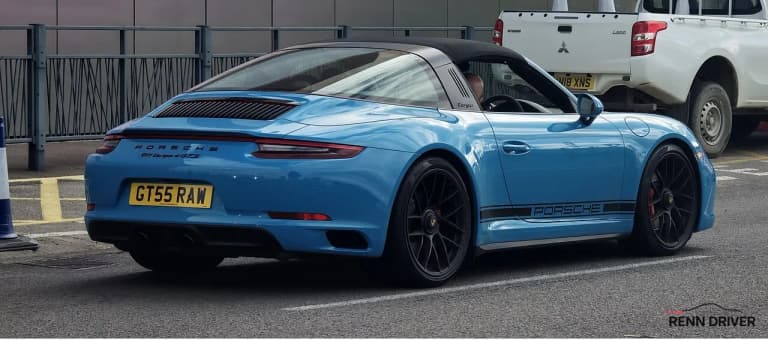
The 991 Targa revived the classic Targa bar design that had been absent since the 993 generation. Instead of the sliding glass roof used on the 997, the 991 Targa featured a fully automatic folding roof mechanism. It stowed the panel behind the rear seats.
The brushed aluminum Targa bar remained fixed, giving the Porsche 911 its signature look while also serving as a structural element.

All 991 Targa models used all wheel drive as standard. The Targa 4 shared its powertrain with the 911 Carrera 4, and the Targa 4S matched the Carrera 4S. The retractable roof mechanism was a marvel of engineering, with a choreography of panels and glass that took about 19 seconds to open or close.
The Targa added roughly 60 kg over an equivalent 911 Carrera coupe. Despite the extra weight, the open air experience with the Targa bar framing the view made it a favorite. Buyers who wanted something more distinctive than a standard cabriolet gravitated to it.
Both Targa 4 and Targa 4S were available with the 7 speed manual transmission or PDK.
S Cabriolet Models
The Porsche 911 Carrera S Cabriolet and Carrera 4S Cabriolet offered the full Carrera S driving experience with a power operated fabric roof. The S Cabriolet used rear wheel drive and the standard body width, while the 4S Cabriolet added all wheel drive and the wider body.
Porsche engineered the convertible top to operate at speeds up to 31 mph. The insulation was good enough that highway cruising felt nearly as quiet as the coupe.
Both the 991.1 and 991.2 offered S Cabriolet models. The 991.1 S Cabriolet combined the 3.8 liter naturally aspirated engine with open top motoring. The 991.2 S Cabriolet benefited from the twin turbo engine's additional torque, making it feel more effortless at any speed.
A GTS Cabriolet was also available for buyers who wanted the most equipment and highest power output in a convertible format. The S Cabriolet struck a balance between grand touring comfort and Carrera S performance. These models remain popular on the used market for their versatility.
911 Turbo and Turbo S
The 991 Turbo and Turbo S sat above the 911 Carrera range as the ultimate all weather grand touring sports cars. Both used a 3.8 liter twin turbocharged flat six and came standard with all wheel drive, the wider body, and adaptive aerodynamics.
The 911 Turbo has always been the Porsche 911 you buy when you want supercar speed with everyday usability. The Porsche 991 generation delivered that promise better than any version before it.
Turbo (991.1)
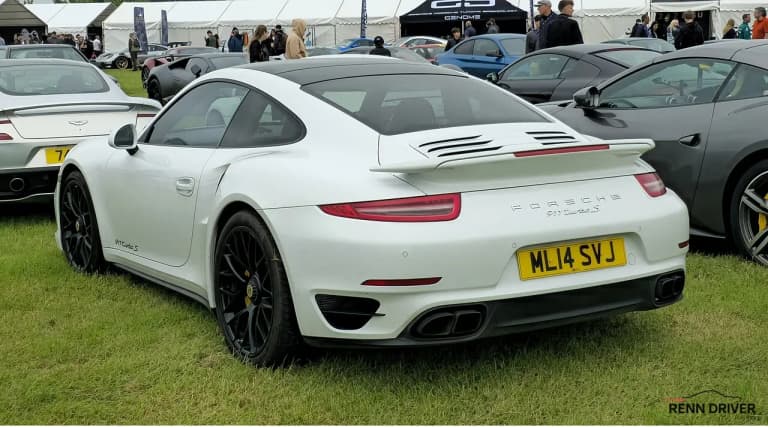
The 991.1 911 Turbo produced 520 horsepower and 487 lb ft of torque from its 3.8 liter twin turbo engine. With all wheel drive and the 7 speed PDK, the 911 Turbo reached 60 mph in 3.1 seconds and topped out at 195 mph. Standard equipment included PASM, Porsche Active Aerodynamics with a deployable front lip and adjustable rear spoiler, and the sport chrono package.
The rear wheels received most of the power under normal conditions. The all wheel drive system could shuffle torque forward almost instantly when the car needed more traction.
Turbo S (991.1)
The Turbo S pushed power to 560 horsepower and 516 lb ft of torque. Standard equipment added PCCB ceramic brakes, sport seats with 18 way adjustment, and the Porsche Dynamic Chassis Control system. The 991.1 Turbo S hit 60 mph in 2.9 seconds and reached a top speed of 197 mph.

These numbers put the Turbo S in direct competition with cars costing twice as much.
Turbo and Turbo S (991.2)
The 991.2 911 Turbo increased to 540 hp, while the Turbo S reached 580 hp and 553 lb ft of torque. Both benefited from revised turbochargers with larger compressors and modified intake ports. The 991.2 Turbo S could reach 60 mph in 2.8 seconds, making it one of the quickest production sports cars available at any price.

Top speed rose to 205 mph for the Turbo S. A dynamic boost function on PDK models provided an additional burst of torque during full throttle acceleration.
Turbo Cabriolet
Both the 911 Turbo and Turbo S were available as a Turbo Cabriolet. These convertible versions offered the same powertrain, all wheel drive system, and performance specs with only a minor weight penalty. The Turbo Cabriolet and Turbo S Cabriolet represented the pinnacle of open top grand touring in the Porsche 911 991 lineup.
Few other cars could combine 500 plus horsepower, all wheel drive traction, and wind in your hair with such composure. The Turbo S Cabriolet was also a strong performer for year round everyday use, making it a genuine daily driver despite its supercar-level acceleration.
911 GT3
The 991 GT3 carried forward the Porsche tradition of building a track focused, naturally aspirated street-legal track car that could double as a road car. Both 991.1 and 991.2 versions used high revving flat six engines derived from motorsport. They were mounted behind the rear axle and connected to the rear wheels only.
GT3 (991.1)
The 991.1 Porsche 911 GT3 used a 3.8 liter naturally aspirated flat six producing 475 horsepower at 8,250 rpm, with a redline of 9,000 rpm. Porsche initially offered the 991.1 GT3 only with the 7 speed PDK. This decision generated controversy among Porsche 911 purists who expected a manual transmission in their GT3.
Rear axle steering was standard, turning the rear wheels up to 1.5 degrees to improve both low speed agility and high speed stability. The 991.1 GT3 hit 60 mph in 3.3 seconds and reached a top speed of 196 mph.
Early 991.1 GT3 production was complicated by an engine-related recall after reports of a car catching fire. Porsche addressed the issue comprehensively and the problem did not recur on corrected units.
GT3 (991.2)
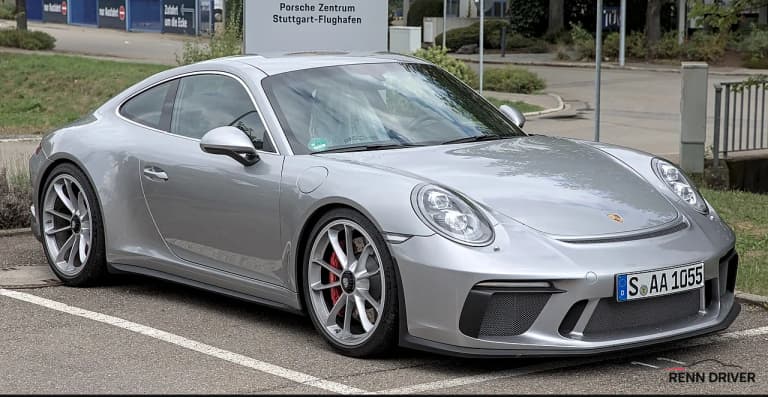
The 991.2 Porsche 911 GT3 expanded the engine to 4.0 liters, producing 500 horsepower at 8,250 rpm with a redline of 9,000 rpm. More importantly, Porsche reintroduced the 6 speed manual transmission as an option alongside the 7 speed PDK. The manual GT3 was an answer to enthusiast demand and became an instant favorite.
Rear axle steering remained standard. The 4.0 liter engine delivered 339 lb ft of torque. The exhaust note was one of the best sounding flat six engines Porsche ever produced.
Top speed with the 6 speed manual was 199 mph. The cornering performance on the track was a significant step beyond the 911 Carrera GTS.
GT3 with Touring Package
Porsche introduced the GT3 with Touring Package for the 991.2 generation. The touring package deleted the fixed rear wing and replaced it with an automatically deploying spoiler from the standard 911 Carrera.
The rest of the Porsche 911 GT3 mechanicals remained untouched. It kept the same 4.0 liter 500 hp engine, rear axle steering, and chassis tuning.

The touring package was only available with the 6 speed manual transmission, making it the ultimate sleeper GT3. Leather replaced Alcantara on the dashboard and door panels, and silver anodized aluminum trim added a refined touch.
The GT3 Touring was the Porsche 911 you could park anywhere without drawing special attention. It could then set fast lap times on a circuit.
911 GT3 RS
The GT3 RS took the GT3 formula and turned every setting up a notch. Wider body panels, more aggressive aerodynamics, a fixed rear wing, stiffer suspension, and more power defined the GT3 RS. It was the closest thing to a race car that Porsche sold with license plates.
GT3 RS (991.1)
The 991.1 GT3 RS used a 4.0 liter naturally aspirated flat six producing 500 horsepower at 8,250 rpm and 338 lb ft of torque. It came exclusively with the 7 speed PDK.
The wider body added 28 mm to the front track. It used lightweight CFRP for the engine cover, front fenders, and rear quarter panel air intakes.
Rear axle steering was standard. The GT3 RS weighed 1,420 kg dry and could hit 60 mph in 3.1 seconds.
Top speed was 193 mph, intentionally limited by the aggressive aerodynamic setup that prioritized downforce over straight line speed.
GT3 RS (991.2)
The 991.2 GT3 RS pushed the 4.0 liter engine to 520 horsepower and 346 lb ft of torque. Revised intake and exhaust systems extracted the extra power while maintaining the naturally aspirated character that makes the GT3 RS special. Porsche also revised the front diffuser and rear wing endplates to increase total downforce.
The PDK was the only transmission.
With the sport chrono package, 0 to 60 mph took 3.0 seconds flat. The 991.2 Porsche 911 GT3 RS lapped the Nurburgring Nordschleife in 6 minutes 56.4 seconds. That was a remarkable time for a naturally aspirated rear engine sports car.
911 GT2 RS
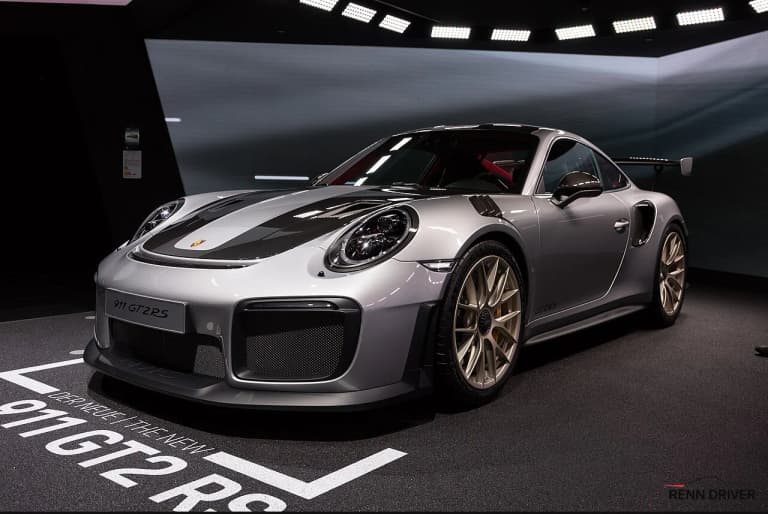
The 991 GT2 RS was the most powerful and fastest Porsche 911 ever built at the time of its release in 2017. It combined the Turbo S engine with GT3 RS levels of weight reduction and aerodynamic aggression. All 700 horsepower went to the rear wheels only.
There was no all wheel drive safety net on this Porsche 911 GT2 RS.
The 3.8 liter twin turbo flat six produced 700 hp and 553 lb ft of torque. Power was transmitted through the 7 speed PDK to the rear axle. The Porsche 911 GT2 RS reached 60 mph in 2.7 seconds and had a top speed of 211 mph.
Porsche offered an optional Weissach Package that added lightweight magnesium wheels, carbon fiber anti roll bars, and additional carbon fiber body panels. It also included titanium roll cage mounts, saving an additional 30 kg.

The GT2 RS set a production car lap record at the Nurburgring Nordschleife with a time of 6 minutes 47.3 seconds. It was rear wheel drive, turbocharged, and terrifyingly fast. All that forced induction power went exclusively to the rear wheels.
This made the GT2 RS one of the most challenging and rewarding race car-like Porsche 911 models ever created.
911 R
The 911 R was Porsche's answer to enthusiasts who wanted the GT3 RS engine without the massive fixed rear wing and race car aesthetics. Released in 2016, the 911 R used the 991.1 GT3 RS 4.0 liter naturally aspirated flat six producing 500 horsepower. It was mated exclusively to a 6 speed manual transmission.
Power went to the rear wheels through a single mass flywheel and a limited slip differential.
Porsche limited production to just 991 units, a number chosen to match the generation code. The 911 R weighed 1,370 kg, making it one of the lightest Porsche 911 models of its generation. Carbon fiber was used for the front fenders, engine cover, and rear panel.
The interior featured lightweight carbon fiber full bucket seats, no rear seats, and minimal sound insulation. A cloth door pull strap replaced the standard door handle, echoing the lightweight philosophy of the Carrera RS 2.7 from the 1970s.
The 911 R hit 60 mph in 3.7 seconds and reached a top speed of 200 mph. Values skyrocketed immediately after launch, with some examples selling for three to four times their original sale price.
The 911 R proved something important. A manual transmission and rear wheel drive, stripped of electronic distractions, could still be the best way to experience a Porsche 911.
911 Speedster
The 991 Speedster was the final model built on the 991 platform and served as the generation's farewell. Released in 2019, it used the 991.2 Porsche 911 GT3's 4.0 liter naturally aspirated flat six producing 502 horsepower. It was paired exclusively with a 6 speed manual transmission and rear wheel drive.
Porsche built 1,948 units, honoring the year Porsche was founded.
The 911 Speedster featured a unique double bubble tonneau cover behind the seats, a shortened windshield with a lower rake angle, and no power roof. A lightweight fabric top was provided for weather protection but was clearly not the intended way to drive the car. GT3 suspension and rear axle steering came standard.
The Speedster combined open air motoring with genuine GT performance in a way that no other Porsche 911 Carrera variant could match. It remains one of the most collectible Porsche 911 models from any generation.
50th Anniversary Edition
In 2013, Porsche introduced the 50th Anniversary Edition to celebrate 50 years of the Porsche 911. Based on the 991.1 Carrera S with rear wheel drive, it used the wider body from the all wheel drive models. It came in a unique Geyser Grey Metallic paint with a special dash plaque and embossed headrests.
Porsche limited this special edition to 1,963 units, matching the year the original 901 prototype debuted.
The 50th Anniversary Edition featured 20 inch Fuchs style wheels as a tribute to the classic design. The full sport chrono package was standard equipment. It combined heritage styling with modern Carrera S performance in a limited edition package.
Club Coupe
The Porsche 911 Club Coupe was a limited edition built in 2012 to celebrate the 60th anniversary of the first Porsche Club. Based on the 911 Carrera S, the Club Coupe featured an exclusive Club Blau paint color. It also used the wider body from the all wheel drive models.
A power kit raised output to 430 hp, matching the 911 Carrera GTS.
The sport chrono package and PASM sport suspension were also standard.
Only 13 units of the Club Coupe were built. This makes it one of the rarest Porsche 991 models in existence and a prized collector piece.
Touring Package
The Porsche 991 GT3 Touring Package arrived with the 991.2 facelift as an alternative to the standard fixed wing GT3. Porsche removed the rear wing and replaced it with a retractable spoiler from the Porsche 911 Carrera, giving the GT3 a sleeper appearance that blended into traffic. The 500 hp 4.0 litre flat six and 6 speed manual gearbox remained identical to the winged car.
The Touring Package proved enormously popular among Porsche 911 enthusiasts who wanted GT3 performance without the visual drama. Prices for the 991.2 GT3 Touring now match or exceed the standard GT3, as collectors value the understated look. The Touring concept was so successful that Porsche carried it forward into the 992 generation, where the GT3 Touring has become a staple of the Porsche 911 lineup.
Engines and Transmissions
Naturally Aspirated Flat Six Engines
The 991.1 Carrera engines represented the final generation of naturally aspirated flat sixes in the standard Porsche 911 Carrera lineup. The 3.4 liter engine in the base 911 Carrera used direct fuel injection and VarioCam Plus to produce 350 hp. The 3.8 liter in the Carrera S and 911 Carrera GTS delivered 400 to 430 hp depending on tune.
These model engines revved cleanly to their redlines and delivered a linear power curve that rewarded skilled driving. The direct fuel injection system improved combustion efficiency and reduced emissions compared to the port injection engines in the 997.
Twin Turbo Flat Six (991.2)
The 3.0 liter twin turbocharged flat six in the 991.2 911 Carrera range used twin scroll turbochargers. They were mounted inside the engine's V of the exhaust manifolds. Peak boost pressure was 0.8 bar in the base 911 Carrera and 1.0 bar in the Carrera S.
The result was significantly more torque throughout the rev range. This made the 991.2 feel quicker in everyday conditions despite the smaller displacement.
Variable turbine geometry was not used on the 911 Carrera engines; that technology was reserved for the 911 Turbo and Turbo S models.
GT Engines
The GT models used bespoke naturally aspirated engines that were distinct from the 911 Carrera units. The 991.1 Porsche 911 GT3 used a 3.8 liter engine making 475 hp. The GT3 RS and 911 R used a 4.0 liter version producing 500 hp.
For the 991.2, the Porsche 911 GT3 and GT3 RS both used 4.0 liter engines making 500 and 520 hp respectively. These engines shared components with Porsche's Cup race car program and featured dry sump lubrication, titanium connecting rods, and individual throttle bodies. The GT2 RS used the Turbo S's 3.8 liter twin turbo engine retuned to produce 700 hp.
7 Speed Manual Transmission
The 991 introduced a 7 speed manual transmission for the first time in a Porsche 911. The seventh gear was a tall overdrive ratio designed to reduce highway cruising RPM and improve fuel consumption. First through sixth gears were closely spaced for performance driving.
The shift action received mixed reviews from enthusiasts. Some found the gates slightly notchy compared to the outgoing 997's six speed, but the extra gear proved useful on long highway drives. The Carrera T received a short throw shifter that improved the 7 speed manual experience significantly.
The 7 speed manual was available across most 911 Carrera models. It was the only transmission offered on the 911 R and the 991.2 GT3 with Touring Package.
7 Speed PDK
The 7 speed PDK in the Porsche 991 was a significant improvement over the unit in the 997. Shift times dropped below 100 milliseconds, and the calibration became smoother in comfort mode while remaining aggressive in sport and sport plus modes. The PDK was the quicker transmission in every measurable performance metric, and it was essentially the default choice for buyers who prioritized outright speed.
Launch control through the sport chrono package made the PDK devastatingly effective off the line.
Most performance reviews awarded the 7 speed PDK higher marks for outright speed. They also acknowledged that the 7 speed manual offered a more engaging driving experience. The PDK was the only transmission available on the 991.1 Porsche 911 GT3, the GT3 RS (both generations), and the GT2 RS.
Rear Wheel Drive vs All Wheel Drive
The Porsche 991 offered both rear wheel drive and all wheel drive configurations across most of its lineup. Rear wheel drive models included the 911 Carrera, Carrera S, 911 Carrera GTS, Carrera T, Porsche 911 GT3, GT3 RS, GT2 RS, and 911 R.
These rear wheel drive models weighed less and offered a more direct, adjustable handling character. The rear wheel drive layout kept the weight distribution biased toward the rear axle, which rewarded smooth, precise inputs.
All wheel drive models included the 911 Carrera 4, Carrera 4S, all Targa models, 911 Turbo, and Turbo S. They used Porsche Traction Management to distribute torque between the front and rear axles. The all wheel drive system was rear biased under normal conditions, only sending power to the front wheels when rear wheel slip was detected.
The all wheel drive system added approximately 50 kg and marginally reduced fuel economy. The gains in wet weather traction and launch performance were significant.
The 911 Turbo and Turbo S used a more sophisticated version of the all wheel drive system. It featured a multi plate clutch that could vary torque distribution more aggressively.

For dry weather driving on clean roads, rear wheel drive offered the more rewarding experience. For year round use in mixed conditions, all wheel drive was the pragmatic choice. Both configurations delivered the confidence and balance that define the Porsche 911.
Chassis, Suspension, and Steering
The Porsche 991 used MacPherson struts at the front and a multi-link setup at the rear. Same basic layout as the 997, but with significant revisions. Porsche retuned the geometry for the longer wheelbase.
Aluminum replaced steel in many suspension components, cutting unsprung weight. The result was a 911 that felt more composed over rough surfaces and more planted at high speed.
It kept the nimble, responsive character that defines a 911. The improved weight distribution made the 991 more approachable for a wider range of drivers.
PASM
Porsche Active Suspension Management (PASM) was standard on the Carrera S, GTS, Turbo, and GT models. It was optional on the base Carrera. PASM electronically adjusted damping force on each wheel independently, switching between comfort and sport settings.
The PASM Sport variant came standard on GTS models. It lowered the ride height by 10 mm.
PDCC (Porsche Dynamic Chassis Control) was available on Turbo and Turbo S models. This active anti-roll bar system reduced body roll during hard cornering.
Rear Axle Steering
Rear axle steering was one of the most significant chassis technologies on the Porsche 991. It was standard on all Porsche 911 GT3, GT3 RS, GT2 RS, and 911 Turbo models. At low speeds, it turned the rear wheels up to 1.5 degrees opposite the front wheels.
This reduced the turning circle and improved agility.
At higher speeds, the rear wheels turned in the same direction as the front wheels. This increased stability and smoothed out transitions during high speed lane changes. The system effectively shortened the wheelbase at low speeds and lengthened it at high speeds.
Sport Chrono Package
The sport chrono package was one of the most popular options on the Porsche 991. It came as standard equipment on GTS, 911 Turbo, and GT models. It added a dashboard mounted stopwatch, a Sport Plus driving mode, dynamic engine mounts, and launch control on PDK equipped cars.
The sport chrono package also sharpened throttle response, quickened PDK shift times in Sport Plus mode, and adjusted the stability control threshold.
For spirited driving, the sport chrono package transformed the 911 Carrera's character from composed grand tourer to focused sports car with improved cornering performance. Porsche also offered a Porsche Track Precision app that logged lap times and driving data when the sport chrono package was fitted.
Brakes
Standard Porsche 991 911 Carrera models used ventilated and cross drilled steel disc brakes with four piston fixed calipers at the front and rear. The Carrera S upgraded to larger rotors and painted calipers. 911 Turbo and GT models received even larger brakes with six piston front calipers.
Porsche Ceramic Composite Brakes (PCCB) were optional across the 911 Carrera range and standard on the Turbo S and GT2 RS. PCCB used ceramic composite rotors that weighed roughly 50 percent less than equivalent steel rotors, significantly reducing unsprung weight at each corner.
The ceramic brakes offered nearly fade free performance during track use and lasted longer than steel rotors under normal driving conditions. The yellow PCCB calipers became a status symbol among Porsche 911 owners, though the replacement cost when the rotors eventually wore out was substantial.
Interior and Technology
The Porsche 991 interior represented a major step forward in quality and design compared to the 997. The dashboard layout was cleaner and the materials were higher grade. The overall fit and finish moved closer to premium luxury car standards without losing the driver focused layout.
The centrally mounted tachometer, a Porsche 911 tradition, remained the dominant gauge. Two secondary screens flanked it with configurable displays for navigation, trip data, and vehicle settings.
Porsche Communication Management (PCM) was the standard infotainment system, featuring a 7 inch touchscreen with navigation, Bluetooth connectivity, improved connectivity options, and USB inputs. The 991.2 received an updated PCM system with a higher resolution screen and Apple CarPlay integration.
Optional Bose or Burmester sound systems catered to audiophiles. Full bucket seats were available on GTS and GT models, with electrically adjustable sport seats standard on Carrera S trims.
The driving position was excellent, with a low hip point, good visibility, and controls positioned within easy reach. Two usable rear seats were standard on 911 Carrera, Targa, and 911 Turbo models. They were best suited for small children or extra luggage space.
The front trunk offered 125 liters of cargo space, enough for a weekend bag. The Porsche 991's interior struck the right balance between modern technology and the focused, purposeful character that Porsche 911 buyers expect.
Exterior Design and Aerodynamics
The Porsche 991 was the most aerodynamically efficient Porsche 911 to date when it launched. The longer wheelbase and wider stance gave the car better proportions, and Porsche used active aerodynamics across the range.
An electrically deployable rear spoiler rose at highway speeds and adjusted its angle based on the selected driving mode. At 120 km/h in the Normal position, it increased downforce over the rear axle without significantly affecting drag.
The 911 Turbo and Turbo S added Porsche Active Aerodynamics (PAA) with a three position front lip spoiler and a variable angle rear wing. In the Speed position, the front spoiler retracted and the rear wing flattened to reduce drag for maximum top speed. In the Performance position, both extended fully to generate maximum downforce.
GT models took aerodynamics further. The GT3 RS featured a fixed carbon fiber rear wing, front dive planes, and a rear diffuser that generated significant downforce. The GT2 RS added even more aggressive aerodynamic elements.
These included carbon fiber hood vents, a magnesium roof panel, and NACA ducts in the hood for brake cooling.
Tail Lights and Lighting
The Porsche 991 introduced a new tail light design that carried through both phases. The 991.1 featured a three dimensional light cluster with LED brake lights and new headlights that gave the front a distinctive look. The 991.2 updated the design with a four point brake light signature in the tail lights and Porsche Dynamic Lighting System (PDLS) headlights.
All wheel drive models added a full width LED light bar connecting the two tail lights. This became one of the most recognizable visual identifiers in the 991 lineup. Front lighting options ranged from bi xenon headlights with LED daytime running lights on the 991.1 to full LED matrix headlights available on the 991.2.
Wider Body Models
The wider body was standard on all 911 Carrera 4, Carrera 4S, Targa, 911 Turbo, and Turbo S models. All wheel drive 911 Carrera GTS variants also received it. It added 22 mm to the rear width compared to standard rear wheel drive 911 Carrera models and the associated bodywork changes.
The additional width accommodated wider rear wheels and tires (305 mm versus 295 mm rear tires on S models). This increased mechanical grip and gave the Porsche 911 a more muscular stance when viewed from behind.
The wider body also appeared on the 50th Anniversary Edition and the Club Coupe despite both being rear wheel drive cars. On rear wheel drive GTS models, the wider body was not standard but could be ordered as an option. The wider body added minimal weight but significantly changed the visual character and improved traction from the rear wheels under hard acceleration.
Buying Guide and Pricing
The Porsche 991 offers one of the broadest ranges of any used Porsche 911 on the market today. Prices start around $55,000 for high mileage 991.1 911 Carrera coupes. They stretch well beyond $300,000 for low mileage Porsche 911 GT3 RS and GT2 RS examples.
The 911 R commands $400,000 to $600,000 or more depending on specification and mileage. Speedster values have settled in the $350,000 to $450,000 range for a typical sale.
For most buyers, the 991.2 Carrera S represents the best value in the Porsche 991 lineup. The turbocharged engine is more refined and responsive than the 991.1 unit, and 991.2 models tend to have fewer mechanical issues.
A well optioned 991.2 Carrera S coupe with the sport chrono package and a 7 speed manual transmission trades in the $80,000 to $110,000 range. The 911 Carrera GTS commands a premium but delivers more equipment and more power for the money.
The Carrera T with a 7 speed manual transmission sits in the $90,000 to $120,000 price range. It offers a unique driving experience that no other 991 variant replicates.
For buyers who want naturally aspirated power, a 991.1 Carrera S or 911 Carrera GTS is the right call. Prices range from $65,000 to $100,000 depending on mileage and options.
What to Look For
When shopping for a Porsche 991, prioritize a full service history from a Porsche dealer or reputable independent specialist. The 991.1 engines can develop cylinder scoring in some cases. This issue is far less widespread than the problems that affected earlier 996 and 997.1 engines.
A pre purchase inspection with a bore scope examination is strongly recommended for any 991.1 model.
Check for PDCC leaks on 911 Turbo and GT models equipped with the system. Inspect the PCCB ceramic rotors for cracks or excessive wear if fitted. PDK transmissions are extremely reliable but should have their fluid changed at regular intervals.
The 7 speed manual transmission is robust but may show synchro wear on high mileage examples. Look for desirable options like the sport chrono package, Porsche Sport Exhaust, PASM, and sport seats. These significantly affect resale value.
Pay special attention to the condition of the wheels, as curb rash on the 20 inch rims is common and costly to repair.
Running Costs
Annual maintenance costs for a Porsche 991 are reasonable by Porsche standards. Oil changes run $300 to $400 at a dealer. Major service intervals at 40,000 miles can cost $1,500 to $2,500 depending on what is included.
Tires for a Carrera S coupe cost $1,200 to $1,800 for a set of quality rubber from the rear wheels to front. Brake pads and rotors for steel brakes run $1,500 to $2,500. PCCB ceramic brake replacement, when needed, costs $8,000 to $12,000 or more.
The turbocharged 991.2 engines return better fuel economy than the naturally aspirated 991.1 units, typically averaging 22 to 26 mpg in mixed driving.
Porsche 991 pricing varies widely depending on model, mileage, and specification. A base Porsche 911 Carrera coupe from the 991.1 generation starts around $55,000 for higher mileage examples. The Porsche 911 Carrera S commands $65,000 to $85,000 depending on condition and options. All wheel drive Porsche 911 Carrera 4S models sit slightly higher due to their broader appeal in all weather conditions.
The 991 Cabriolet adds roughly $5,000 to $10,000 over equivalent coupe prices. The Porsche 911 Carrera GTS Cabriolet, widely considered one of the best daily drivers in the 991 lineup, ranges from $90,000 to $130,000. For the Porsche 911 Targa 4S, expect to pay a premium of $10,000 to $15,000 over the Carrera 4S coupe, as the distinctive Targa bar design holds its value well.
At the top of the range, the Porsche 991 GT3 commands $150,000 to $200,000 for the 991.1 and $180,000 to $250,000 for the 991.2 with its improved 4.0 litre flat six. The GT3 RS, GT2 RS, 911 R, and Speedster all sit in collector car territory, with prices well above their original MSRP. The 991 GT2 RS in particular has become one of the most sought after modern Porsche 911 models, with values exceeding $400,000 for low mileage examples.
For 0 to 60 mph acceleration, the Porsche 991 range spans from 4.4 seconds in the base Porsche 911 Carrera to 2.7 seconds in the GT2 RS. The Carrera T with its 7 speed manual achieves 4.3 seconds. Every turbocharged 991.2 model improved on its 991.1 equivalent by at least 0.2 seconds thanks to the additional torque from the twin turbo flat six engine.
Renn Driver's Take
I have not driven this car yet, but I will update this section once I do.
Frequently Asked Questions
What years is the Porsche 991?
The Porsche 991 was produced from 2012 to 2019. The 991.1 phase covered the 2012 to 2015 model years, and the 991.2 phase ran from 2016 to 2019. Porsche introduced the Porsche 911 991 at the 2011 Frankfurt Motor Show, with the first customer deliveries beginning in early 2012.
The final 991 built was a Speedster that rolled off the production line in 2019 before the 992 generation took over.
What is the difference between the Porsche 991.1 and 991.2?
The biggest difference between the Porsche 991.1 and 991.2 is the engine. The 991.1 uses naturally aspirated flat six engines (3.4L and 3.8L). The 991.2 switched to a 3.0 liter twin turbocharged flat six for the entire 911 Carrera range.
The 991.2 also received updated tail lights with a four point brake light design and revised bumpers. It gained a new PCM infotainment system with improved connectivity. Additional models like the Carrera T and the Porsche 911 GT3 with Touring Package were also introduced.
Is the Porsche 991 reliable?
The Porsche 991 is generally reliable, especially in 991.2 form. The turbocharged engines in the 991.2 have proven durable and are less prone to cylinder scoring than some 991.1 engines. The 7 speed PDK transmission is nearly bulletproof.
The 7 speed manual transmission is robust and straightforward. Regular maintenance at proper intervals keeps most Porsche 991 models running well for 100,000 miles and beyond. GT models require more frequent attention due to higher operating stresses.
Should I buy a manual or PDK 991?
The 7 speed manual transmission offers a more engaging, connected driving experience and is preferred by enthusiasts who value driver involvement above all else. The 7 speed PDK is faster in every measurable performance metric, smoother in traffic, and does not require clutch pedal management. For daily driving, the PDK is more convenient.
For weekend and spirited driving, the 7 speed manual rewards effort with a more visceral experience. Manual transmission Porsche 991 models also tend to hold their value better on the used market.
What is the best Porsche 991 to buy?
The best Porsche 991 to buy depends on intended use. For daily driving with occasional spirited driving, the 991.2 Carrera S with the sport chrono package is the top pick. It represents the best value in the Porsche 911 lineup for most buyers.
For a more focused driving experience, the Carrera T or 911 Carrera GTS offer additional character.
For track use, the Porsche 911 GT3 is the benchmark.
The Turbo S is the best car for buyers who want maximum straight line performance with all weather all wheel drive capability. The 911 R and Speedster are for collectors.
How fast is the Porsche 991 Turbo S?
The 991.2 Turbo S produces 580 horsepower and reaches 60 mph in 2.8 seconds with the 7 speed PDK and sport chrono package. Top speed is 205 mph. The 991.1 Turbo S made 560 horsepower and hit 60 mph in 2.9 seconds.
Both versions of the Turbo S use all wheel drive and the wider body. They are capable of delivering their performance in nearly any weather condition for year round use.
What is the Porsche 911 GT3 RS?
The Porsche 911 GT3 RS is the track-focused variant of the GT3. It features wider body panels, more aggressive aerodynamics, a fixed rear wing, and stiffer suspension. The same naturally aspirated flat-six is tuned to produce more power.
The 991.1 GT3 RS produced 500 hp from a 4.0 liter engine, and the 991.2 GT3 RS made 520 hp. Both GT3 RS models were available only with the 7 speed PDK and rear wheel drive. The GT3 RS is designed for drivers who want the closest possible experience to a race car while retaining street legality.
Is the Porsche 991 a good investment?
Certain Porsche 991 models have proven to be strong investments. The 911 R, Porsche 911 GT3 RS, GT2 RS, and Speedster have all appreciated significantly since new. Standard 911 Carrera models have depreciated as expected but appear to be stabilizing in the modern era.
The Porsche 991 is likely to be remembered as the last Porsche 911 generation to offer naturally aspirated engines in its GT range. This should support long term values for the best specified examples.
Does the Porsche 991 come in all wheel drive?
Yes, the Porsche 991 is available in both rear wheel drive and all wheel drive configurations. Rear wheel drive is standard on the 911 Carrera, Carrera S, 911 Carrera GTS (coupe), and Carrera T. It is also standard on the Porsche 911 GT3, GT3 RS, GT2 RS, 911 R, and Speedster.
All wheel drive is standard on the Carrera 4, Carrera 4S, all Targa models, all 911 Turbo models, and all Turbo S models. The all wheel drive system uses Porsche Traction Management to distribute torque between the front and rear wheels.
What does the Porsche Sport Exhaust do?
The Porsche Sport Exhaust is a factory option that uses electronically controlled exhaust valves to increase exhaust volume and alter the tone. When activated via a button on the center console, the Porsche Sport Exhaust opens bypass valves. This creates a louder, more aggressive exhaust note.
It does not significantly change power output but transforms the auditory character of the car. The effect is particularly noticeable on naturally aspirated 991.1 models where the flat six engine note is more prominent.
Images: Alexander Migl, CC BY-SA 4.0, David Villarreal Fernandez, CC BY-SA 2.0, TTTNIS, CC0, Matti Blume, CC BY-SA 4.0, Alexander-93, CC BY-SA 4.0, Calreyn88, CC BY-SA 4.0, all via Wikimedia Commons