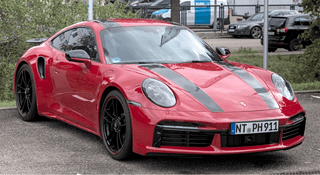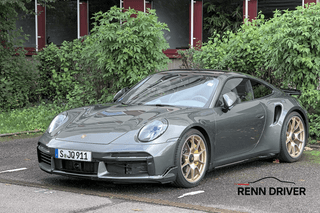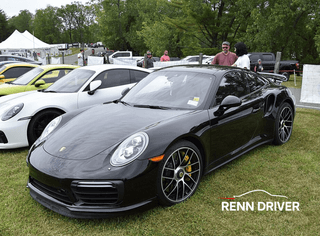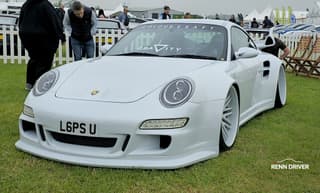
Five generations. Seven wildly different cars. All carrying the same badge.
The 911 Turbo S has existed since 1997, and it has never meant the same thing twice. The 993 Turbo S was a hand-built air-cooled collector piece. The 996 Turbo S is still undervalued. The 997 is the sweet spot for used buyers right now. The 991 made the idea of a daily supercar completely real. The 992.1 was the last pure combustion version, and it ran 0 to 60 in the low twos. The 992.2 has gone hybrid and crossed 700 hp.
Quick Answer: The Porsche 911 Turbo S is the highest-performance Turbo variant, produced across five 911 generations since 1997. Each version combines all-weather usability with increasingly extreme acceleration.
In this article, we’ll rank every Porsche 911 Turbo S generation, 993 to 992.2. We’ll cover generation specs, known issues, used prices, and which one fits your budget.
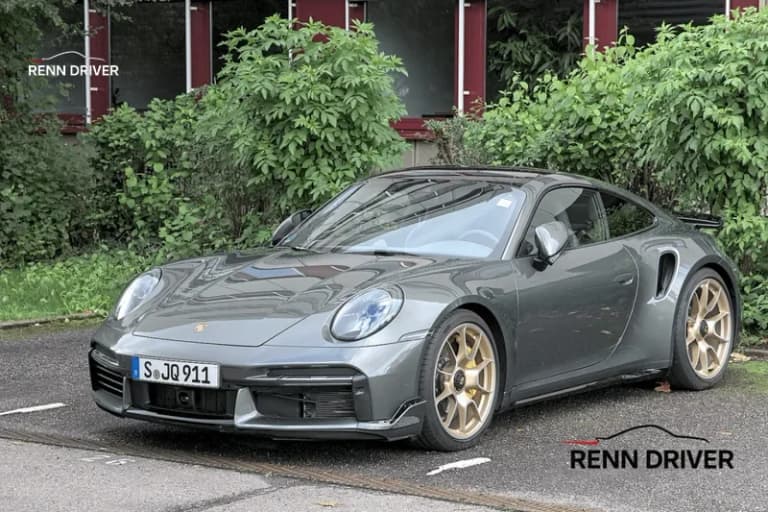
Quick Specs Comparison
| Generation | Years | Power | Torque | 0–60 mph | Transmission | Units Built |
|---|---|---|---|---|---|---|
| 993 Turbo S | 1997 | 450 PS | 431 lb-ft | 3.7s | 6-speed manual | ~345 |
| 996 Turbo S | 2004–2005 | 450 hp | 457 lb-ft | 4.2s | 6-speed manual | ~1,563 |
| 997 Turbo S | 2010–2012 | 530 hp | 516 lb-ft | 3.1s | 7-speed PDK | ~3,400 |
| 991.1 Turbo S | 2013–2015 | 560 hp | 516 lb-ft | 2.6s | 7-speed PDK | ~4,000 |
| 991.2 Turbo S | 2016–2019 | 580 hp | 553 lb-ft | 2.7s | 7-speed PDK | ~5,000 |
| 992.1 Turbo S | 2020–2024 | 640 hp | 590 lb-ft | 2.6s* | 8-speed PDK | ~8,000 |
| 992.2 Turbo S | 2025+ | 701 hp (hybrid) | 590 lb-ft | 2.4s | 8-speed PDK | ongoing |
*992.1 Porsche claimed 2.6s; Car and Driver measured 2.2s in instrumented testing.
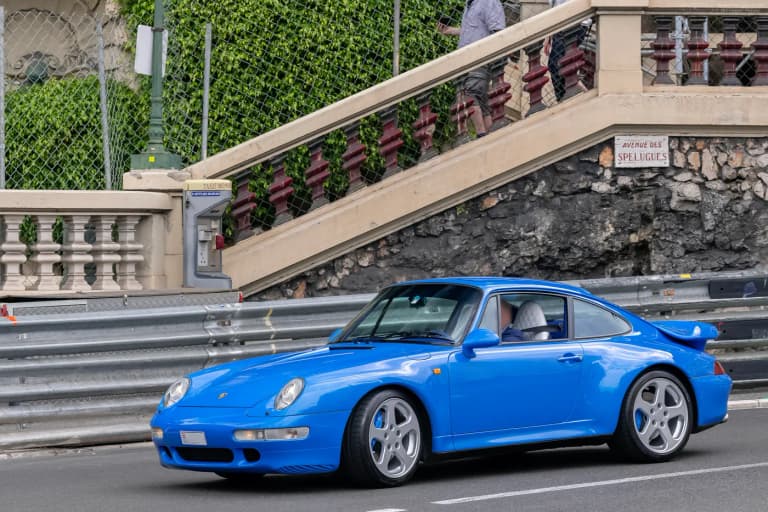
993 Turbo S (1997): The One That Started It All
Roughly 345 units. Air-cooled. Hand-built by Porsche Exclusive. If you need one reason this car commands $500,000 at auction, that is it.
Porsche fitted larger K-24 turbochargers, an additional oil cooler, and a revised Motronic management system to the already formidable 993 Turbo platform. The result was 450 PS (444 bhp) from the 3.6-liter flat-six, up from 408 hp on the standard Turbo. The widebody bodywork, fixed rear wing, and 18-inch Cup wheels set the visual template for every Turbo S that followed.
The US market received around 30 cars. Every single one was a 6-speed manual with rear-wheel drive. No cabriolet, no PDK, no active chassis electronics. Just a hand-built air-cooled engine at 6,000 rpm with all of its power going to the rear wheels through a mechanical limited-slip differential.
What to know before buying: This is a collector car first, a driver's car second. Maintenance costs are significant. Air-cooled specialists charge accordingly. Engine rebuild runs $30,000 to $50,000 if it comes to that. Given the purchase price, that is a rounding error, but factor it in. Condition documentation and service history matter more than mileage on these.
What to pay: Clean driver-quality examples start around $400,000. Low-mileage, documented, well-specified cars regularly exceed $600,000. The US-market cars command a premium over ROW spec. Prices have climbed steadily for a decade and show no sign of stopping.
Who should buy it: Collectors who want the definitive modern Porsche. If you are buying one to drive regularly, budget for a full mechanical refresh first and plan on air-cooled specialist servicing for life.
996 Turbo S (2004–2005): The Most Overlooked Turbo S
The 996 Turbo S is the most undervalued generation by a wide margin. It shares its engine architecture with the Le Mans-winning GT1. The Mezger flat-six is one of the most robust engines Porsche has ever built. And yet it sells at a fraction of what comparably rare Porsches cost, largely because of the 996's maligned "fried egg" headlights.
Standard equipment included the X50 power kit (450 hp, 457 lb-ft), PCCB ceramic composite brakes, and Porsche's Sport Chrono Package. It was the first 911 Turbo S to offer a cabriolet body style. Total production across both body styles came to roughly 1,563 units, making it far rarer than most buyers realize.
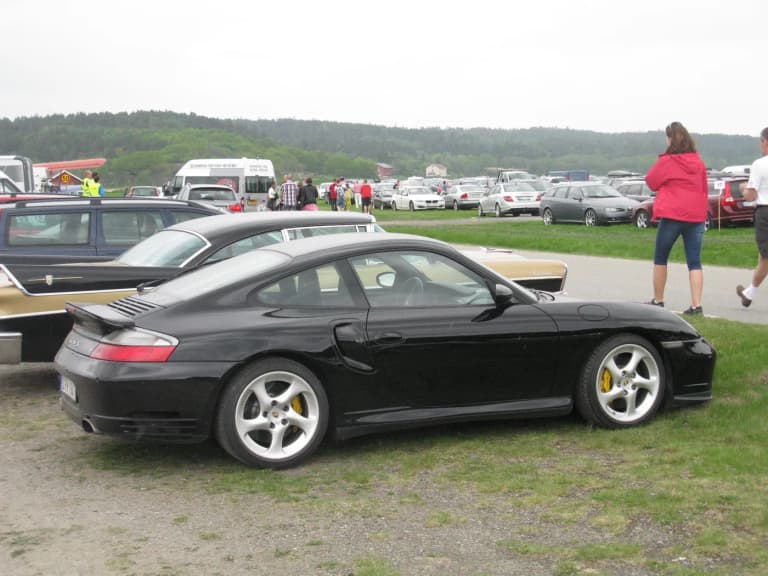
The Mezger engine in the 996 Turbo S does not suffer the intermediate shaft bearing (IMS) failure that plagued naturally aspirated 996 Boxster and Carrera models. That is a critically important distinction. The IMS issue that gives the 996 its bad reputation does not apply here. The Turbo S engine is structurally different.
What to watch for: Water pump and coolant pipe failures are the main mechanical concerns on high-mileage examples. RMS (rear main seal) leaks are common but manageable. Tip: have a Porsche specialist pull the engine covers and check for any seepage before buying. Deferred maintenance is the real risk on these, not fundamental engineering flaws.
What to pay: Coupes in good shape run $120,000 to $160,000. Well-documented low-mileage examples push toward $180,000. The cabriolet carries a slight premium for rarity. Prices have moved up significantly in the past three years as the broader 996 market has started to correct.
Who should buy it: Anyone who wants Mezger engine pedigree, genuine rarity, and the full Turbo S equipment list at a price that is a fraction of the 993. This is the generation that sophisticated buyers are acquiring before the market catches up fully.
997 Turbo S (2010–2012): The Sweet Spot for Used Buyers
This is the generation to buy right now if you want a used Turbo S that you will actually drive hard and enjoy without sweating every maintenance invoice.
The 997 Turbo S produces 530 hp and 516 lb-ft from a 3.8-liter twin-turbo flat-six. It was the first generation offered exclusively with PDK, dropping the manual entirely. The 7-speed PDK in this car is quick and feels appropriately mechanical. PCCB, Sport Chrono, Porsche Torque Vectoring (PTV), and dynamic engine mounts all came standard. It ran to 60 mph in 3.1 seconds from the factory, which still feels properly fast on public roads.
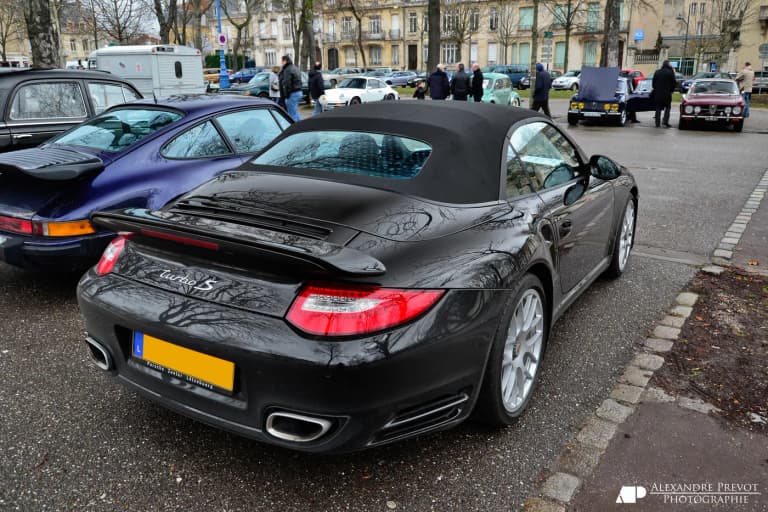
The 997 Turbo S was faster in a straight line than the 997 GT2 at launch. That says something about where the Turbo S sits in the lineup.
What to watch for: Water pump failure is the most common issue and can cause serious damage if ignored. Budget for a proactive water pump replacement if the service history is unclear. The PDK dual-clutch fluid should be changed every 40,000 km regardless of what the service interval says. Early PDK units on high-mileage cars occasionally show clutch wear. Inspect the PCCB rotors carefully: they are expensive to replace (around $8,000 to $12,000 for a full set) but last well if the car has not been used aggressively on track without proper warm-up.
What to pay: Clean examples with verified service history sit between $120,000 and $160,000. Lower-mileage cars with strong documentation push toward $175,000. Avoid anything with incomplete service records or evidence of track use without corresponding brake maintenance.
Who should buy it: Enthusiasts who want to use the car. The 997 Turbo S is old enough to have settled values but new enough to drive as a daily machine without feeling like you are living in the past. It is the best entry point into the Turbo S experience for people who want a driver rather than a collector piece.
991.1 Turbo S (2013–2015): Where the Modern Turbo S Formula Began
The 991 generation redefined what the Turbo S could be. 560 hp, 516 lb-ft, and a 0 to 60 time of 2.6 seconds made it the first production 911 to crack 2.7 seconds to 60. Porsche Dynamic Chassis Control (PDCC) with active anti-roll bars became standard for the first time on a Turbo S. Center-lock 20-inch wheels were new. Rear-axle steering debuted on the platform.
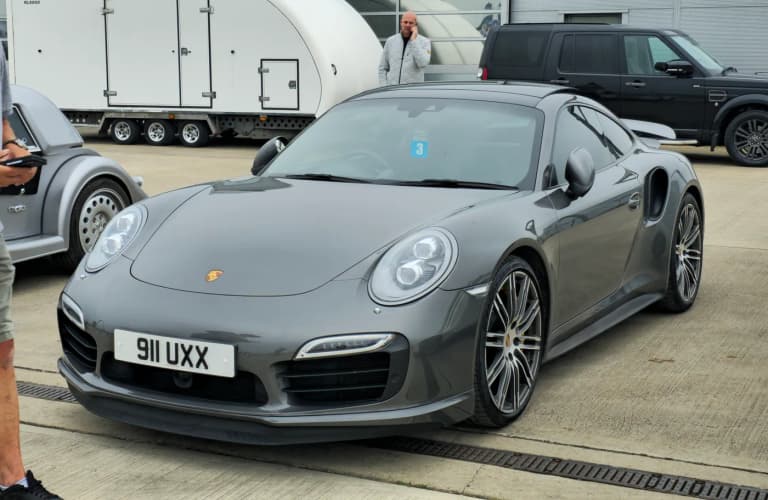
This is when the Turbo S stopped being just a fast 911 and started being genuinely competitive with dedicated supercars costing twice the price. A base 991.1 Turbo S would embarrass Ferrari 458s, McLaren MP4-12Cs, and Lamborghini Gallardos in real-world driving conditions. That was not a subtle shift.
What to watch for: Early 991.1 cars (2014 model year) had occasional PDK software issues that were addressed via firmware updates. Confirm any updated software has been applied. The center-lock wheels require a specific socket for removal and are sometimes over-torqued by shops unfamiliar with the system, leading to stuck hubs. PDCC actuators on high-mileage cars occasionally need attention and are not cheap. Otherwise the 991.1 is a relatively straightforward car to own.
What to pay: Good 991.1 examples sit around $150,000 to $185,000 depending on spec and mileage. Well-optioned cars with Sport Exhaust and desirable colors push higher. The market has stabilized after a significant run-up post-pandemic.
Who should buy it: Buyers who want the full modern Turbo S experience (PDK, PDCC, rear-axle steering, center-lock wheels) at the lowest possible entry price. If the 997 feels dated and the 991.2 is out of budget, the 991.1 is the right call.
991.2 Turbo S (2016–2019): The Most Refined Naturally Evolved Turbo S
The facelift brought meaningful changes, not just a power bump. 580 hp and 553 lb-ft were the headline numbers, but the more important updates were the wet-mode traction setting (first time on a Turbo), the Sport Response button that holds a performance-optimized map for 20 seconds at a press, and revised turbocharger geometry that tightened throttle response noticeably.
Top speed went to 205 mph. The 991.2 Turbo S was also the first Turbo S to offer a Lightweight package, shaving weight through carbon fiber door panels and bucket seats. The revised PDK software was sharper than the 991.1 version. The whole car felt more composed and quicker to respond than the car it replaced, even if the numbers looked similar on paper.
What to watch for: The 991.2 is generally a robust car. The Sport Response button adds stress to the driveline under repeated use; check for any PDK hesitation on hard acceleration. Inspect the front brake callipers for uneven wear, which can indicate a stuck calliper piston. If the car has PCCB, check rotor thickness carefully. The 991.2 was a popular track day car in stock form, so look for evidence of hard use.
What to pay: The 991.2 sits between $175,000 and $220,000 for well-documented examples. Lightweight Package cars or rare colors carry a premium. The Exclusive Manufaktur cars with custom paint push significantly higher.
Who should buy it: Anyone who wants the absolute peak of the naturally evolved air-to-air intercooled Turbo S formula before the 992 changed the packaging significantly. The 991.2 is the generation many purists consider the sweet spot of the modern Turbo S era.
992.1 Turbo S (2020–2024): The Last Pure Combustion Turbo S
When the 992.1 Turbo S launched, Car and Driver put it on a test track and ran 0 to 60 in 2.2 seconds. Porsche claimed 2.6 seconds. Both numbers came from the same car. The difference is launch control conditions and timing methodology. In the real world, this car is violent off the line in a way no previous Turbo S had been.
640 hp and 590 lb-ft came from a heavily revised 3.8-liter engine with new turbochargers, new intercoolers, and a new 8-speed PDK. The body was 10mm wider at the rear than the 991.2. The brake discs were the largest ever fitted to a production 911 at that point. The rear wing gained active aerodynamic control. Everything about the 992.1 was bigger, wider, and more aggressive than what came before.
It was also the last 911 Turbo S with a purely combustion powertrain. That fact will matter to values over the next decade.
What to watch for: The 992.1 is a recent car and the used examples on the market are mostly low-mileage. The 8-speed PDK is new architecture; have a specialist inspect the fluid condition and check for any software updates. The active rear wing mechanism should be tested through its full range. Otherwise, early evidence suggests the 992.1 is as mechanically reliable as any recent Turbo.
What to pay: Used 992.1 Turbo S examples trade between $185,000 and $250,000, depending heavily on mileage, color, and options. Cars configured with Sport Exhaust, a Manufaktur interior, or desirable exterior colors hold premiums. As the 992.2 T-Hybrid ramps up in volume, expect 992.1 values to settle further. The “last pure combustion” narrative will likely provide a floor.
Who should buy it: Anyone who wants the most usable, most complete combustion Turbo S ever made and does not want to pay new-car money for the hybrid version. Buy a well-documented low-mileage example and drive it.
992.2 Turbo S T-Hybrid (2025+): 701 hp and Electric Turbos
Porsche downsized the engine from 3.8 to 3.6 liters and added T-Hybrid technology: two electric exhaust gas turbochargers (eTurbos), an electric motor integrated into the 8-speed PDK, and a 1.9 kWh battery mounted over the front axle. The result is 701 hp combined system output, 2.4 seconds to 60 mph, and a Nurburgring time of 7:03 minutes.
The eTurbos eliminate lag almost entirely. Instead of waiting for exhaust mass flow to spin up the compressor, the electric motor in each turbo spins it immediately from standstill. The torque delivery is different from any previous Turbo S: flatter, more immediate, with less of the progressive swell that characterized the older cars. Whether you find that more or less exciting is a matter of taste. The performance numbers are not a matter of taste.
The 992.2 also gets the largest PCCB ceramic brakes ever fitted to a production 911: 420mm front, 410mm rear. The rear tires are 325-section items on 21-inch center-lock wheels. Starting price is $270,300 before options.
What to know: The T-Hybrid is not a plug-in and cannot run on electricity alone. The battery is small and designed for burst performance. Long-term reliability data does not yet exist at scale. For a car at this price, that is worth acknowledging. Early owner reports are positive, but the eTurbo system is genuinely new engineering.
Who should buy it: Buyers who want the fastest, most technologically advanced 911 available today and are comfortable being early adopters of new powertrain architecture. If you are buying new and plan to keep it for ten years, the hybrid system should not be a concern. If you are nervous about long-term eTurbo reliability, the 992.1 is right there at a significant discount.
What the Turbo S Adds Over the Standard Turbo
The gap has grown with every generation. In 1997 it was 40 hp and hand-built exclusivity. In 2024 it is 60 hp, standard PCCB ceramic brakes, standard PDCC active anti-roll bars, wider rear wheels, center-lock forged wheels, a revised rear diffuser, and a completely different chassis calibration on track.
The standard 911 Turbo offers steel brakes with PCCB as a paid option, Sport Chrono as a paid option, and rear-axle steering as a paid option. The Turbo S makes all of that standard and adds features that are not available on the base Turbo at any price: PDCC, center-lock wheels, and the wider rear track that changes how the car handles at the limit.
The premium is typically $40,000 to $70,000 new. Add up PCCB ($9,000), Sport Chrono ($3,500), PDCC (not available on base Turbo), and the spec-level cosmetics and the Turbo S is genuinely good value for what it bundles. It also holds resale better in every generation studied.
Which Generation Should You Buy?
The answer depends on budget and how you plan to use it.
Under $160,000: 997 Turbo S. Best performance-per-dollar in the used market right now. Proper Turbo S kit, PDK, fast by any current standard. Buy a car with verified service history and put the money you saved toward a proactive maintenance refresh.
$160,000 to $200,000: 991.1 Turbo S. Gets you PDCC, rear-axle steering, center-lock wheels, and the genuinely modern Turbo S experience. If you find a clean 991.2 at the low end of this range, take it over the 991.1 every time.
$200,000 to $260,000: 991.2 or 992.1. The 991.2 is the peak of the naturally evolved formula; the 992.1 is wider, faster, and the last pure combustion version. Both are outstanding. The 992.1 is the better long-term hold if values diverge along the combustion versus hybrid axis.
$260,000 and above (new): 992.2 T-Hybrid. The most powerful 911 ever built. Buy it if you want the absolute current state of the art and are comfortable with first-generation hybrid engineering in a Porsche.
Collector budget: 993 Turbo S with full documentation. Nothing else in this list is in the same category as a collector asset. If you are buying the 996, buy it now before the Mezger premium fully arrives.
Images: Alexander Migl, CC BY-SA 4.0, via Wikimedia Commons; M 93, CC BY-SA 3.0 DE, via Wikimedia Commons