The Porsche 993 Turbo isn’t just another fast 911. It’s the fourth-generation Turbo and the final air cooled flagship, a car that neatly closes the book on one of Porsche’s most beloved eras. Ask any seasoned enthusiast or serious collector, and they’ll tell you this is where Stuttgart reached its peak before moving on to water-cooling.
Quick Answer: The Porsche 993 Turbo is the final air-cooled 911 Turbo. It combined twin turbochargers with all-wheel drive and closed Porsche's air-cooled Turbo era.
In this article, we'll explain what makes the Porsche 993 Turbo special. We'll cover its twin-turbo engine, all-wheel drive, performance, and market values.
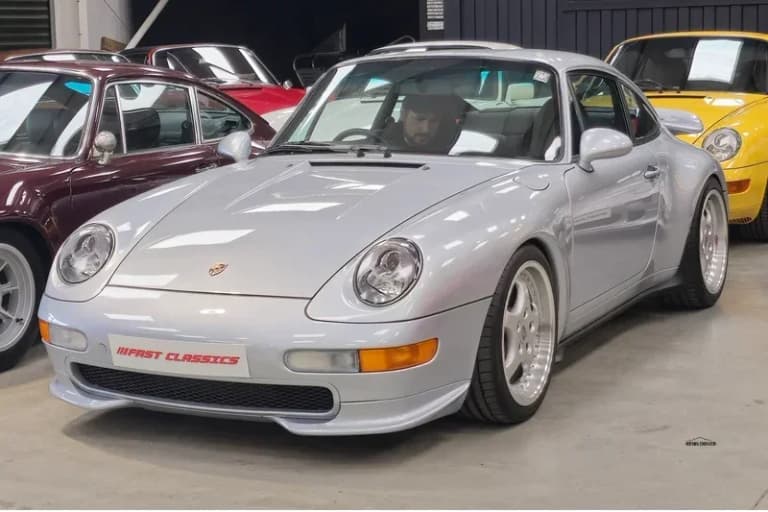
Introduced for the 1995 model year, the 993 Turbo combined tradition with technology. It has a 3.6-liter twin turbo flat-six and, for the first time on a Turbo, all-wheel drive. That twin turbo configuration reduced lag compared to the single-turbo 964. A new 6 speed manual gearbox and timeless styling still turn heads today. That 6 speed manual was widely praised for its precise action and short throws. Production numbers were low, values are sky-high, and demand keeps climbing.
This is your guide to what makes the 993 Turbo special, and what you need to know before stepping into ownership of this desirable classic 911 Turbo.
Contents
Quick Summary
- Production Years: 1995–1998
- Engine: 3.6L twin-turbo flat-six
- Power: 408–450 hp
- Transmission: 6-speed manual
- Top Speed: 180–187 mph
- Layout: Rear-engine, all-wheel drive system
- Legacy: Last air-cooled Turbo, last largely hand-assembled 911, and one of Porsche’s ultimate modern classics
History, Evolution, and Specs
To understand the 993 Turbo’s place in history, you have to look back. The G-model 911s of the 1970s gave us the very first turbocharged 911, the 930. That car established the template: a wide-body, massive rear spoiler, and brutal power delivery.
The 964 Turbo generation that followed in the early 1990s was essentially a heavily updated 930, especially in its early 3.3-liter engine form. It was wild, it was raw, and it scared a generation of drivers.
Then came the 993, produced from 1994 as the successor to the 964. Only about 20% of its parts carried over. Everything else was new: body panels, suspension, features, and interior. By the 1995 model year, Porsche launched the Turbo, and the game changed forever.
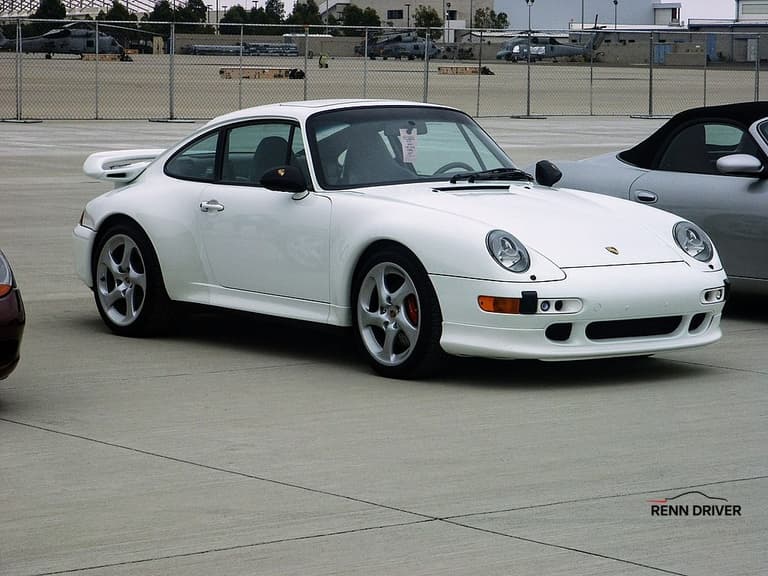
Air-Cooled Evolution: 964 vs 993
Where the 964 Turbo was still rear wheel drive and notorious for turbo lag, it revolutionized the industry. For the first time, the Turbo arrived with a standard all wheel drive layout. The all wheel drive system drew power from all four corners. This wasn’t a token system, either. It was derived from the Carrera 4 and adapted to handle more torque and abuse. The Carrera 4 system was uprated for the Turbo, running more torque than any Carrera before it. This was a clear shift from the rear-wheel-drive Carrera setup, which remained available for purists.
All wheel drive, dual turbos, and a 6 speed manual instantly set it apart from every other 993 produced. It was quicker off the line, more stable in corners, and more approachable at the limit. The Turbo’s all-wheel drive system stood in contrast to its rear wheel drive counterpart, the Carrera.
Compared with the 964 Turbo 3.6, the new car offered:
- Twin-turbo engine (vs single-turbo)
- Six-speed gearbox (vs five-speed)
- Wider front and rear tracks and improved suspension geometry with a slightly lowered suspension that improved handling balance.
- Retractable rear wing that was more integrated into the body
- Modern ECU logic, electronic engine management, upgraded ABS brakes, and larger front and rear brakes
The result was a Carrera platform transformed. That Carrera-derived machine retained the drama of a 911 Turbo but with a level of usability and confidence that made it stand out as the definitive air-cooled supercar.
Technical Specs & Performance
At its heart, the 993 Turbo was still a 3.6-liter flat-six. But Porsche completely re-engineered the engine. The engine retained the air-cooled flat-six layout but gained twin turbochargers, a new engine management system, stronger engine internals, and improved engine cooling. Two smaller KKK turbochargers reduced lag and delivered a smoother surge of power, while revised cooling and an increased intercooler capacity ensured durability under load.
- Standard output: 408 hp and 398 lb-ft of torque
- X50 package: 430 hp, upgraded turbos, and an enlarged intercooler
- The Turbo model’s bodyshell was also strengthened to handle the extra torque
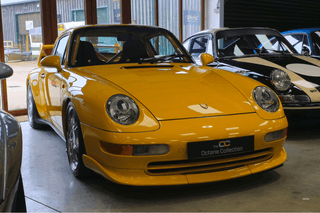
- Turbo S: 450 hp, lighter weight, extra air inlets, yellow brake calipers, and cross-drilled brakes as standard
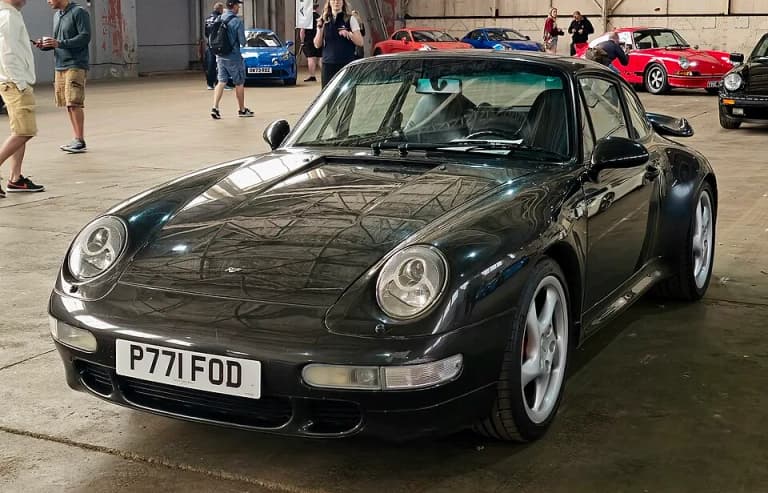
Factory numbers claimed a top speed of 180–187 mph, depending on specification. Independent tests often showed slightly higher. Part of its refined character came from the dual flow exhaust system, which improved both sound quality and efficiency. The engine delivered 0–62 mph in just 4.5 seconds, and the engine felt stronger than its stats suggested, and many journalists remarked that it felt faster in the real world than its stats suggested.
On the track or fast road, its combination of AWD stability and sharp six-speed gear ratios was formidable. It could keep pace with contemporary Ferraris and even surprise them out of corners.
Design & Interior
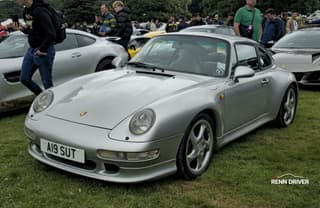
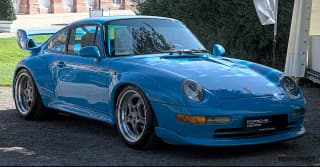
The Turbo, designed by Tony Hatter, is widely considered among the most beautiful 911 designs Porsche produced. The front and rear bumpers were smoother and more aerodynamic than the 964, while flared rear wheel arches gave it proper Turbo aggression, with redesigned rear bumper moldings that gave the car a more integrated and modern look. The flared wheel arches housed wider wheels and tires, boosting grip and visual drama. The rear wheels were significantly wider than on the standard Carrera, and the wheels were shod in 285-section rubber at the rear.
The rear spoiler was integrated into the design more gracefully than the whale-tails of old, giving the vehicle a muscular yet timeless profile. However, special editions like the Turbo S received a larger rear wing for added downforce.
Inside, the design stayed simple. It even retained small rear seats, a classic 911 hallmark that blended practicality with performance. There are five dials, clean switchgear, and a tactile feel that echoed earlier air-cooled models. Enthusiasts loved the way Porsche combined traditional elements like analog gauges with features such as improved climate control and better ergonomics.
While the Turbo was officially offered only as a coupé, it shared the generation with the legendary Carrera RS model and the Carrera S. The Carrera RS was the lightweight track variant of the same generation. The Carrera RS was the lightweight track variant, while the Carrera S offered wider bodywork on the naturally aspirated platform. Rare Targa models and Cabriolet conversions of the Turbo were built by Porsche Exclusive and aftermarket specialists. These are now unicorns in the collector world.
Market Value & Collectibility
If you want one, bring a very large checkbook. The Porsche 993 Turbo has become a blue-chip collector car, with values reflecting its status as the final air cooled Porsche 911 Turbo and the pinnacle of the Carrera-derived Turbo lineage.
- 993 Turbo (standard): $250k–$400k
- 993 Turbo X50: $325k–$450k
- 993 Turbo S: $1M+ (345 Turbo S cars produced worldwide)
Between 1995 and 1998, Porsche produced just 5,978 993 Turbos. The Turbo S variant was produced in even smaller numbers, with only 345 units produced worldwide. Only 345 Turbo S models were made as a special send-off. Many were sold in Europe and the USA, with markets like California quickly adopting them as status symbols. Today, Porsche AG’s limited production strategy ensures strong long-term demand.
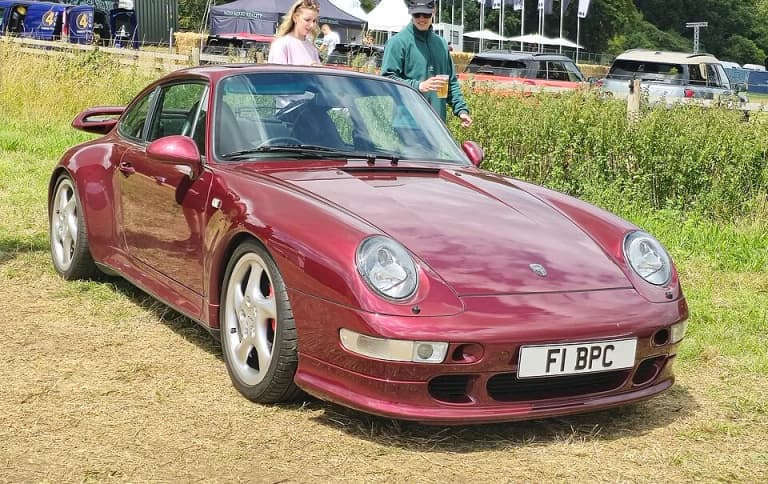
Today, cars with history, rare colors, or Porsche Exclusive options fetch top prices at auction. Tiptronic cars, however, consistently trail manuals in both performance appeal and long-term value. A low-mileage example offered by a factory dealer can easily break records. Period reviewers often noted that Tiptronic-equipped cars suffer in value compared to manual examples, making manuals the better investment. The Porsche Museum itself displays several 993 Turbos, underscoring their importance to the brand’s legacy.
Fun Facts
- The 993 Turbo was the first time a Turbo featured all-wheel drive, derived from the Carrera 4 system.
- It appeared in Bad Boys (again!) and Gone in 60 Seconds, boosting its pop-culture profile.
- Front and rear hollow-spoke wheels were the first of their kind on a production 911, reducing unsprung mass. These lightweight hollow wheels reduced rotational inertia compared to solid-spoke wheels, and the wider rear wheels also accommodated the Turbo’s wider rear tracks. The specific wheels used on the Turbo were unique to the model and not shared with standard Carrera wheels.
- Porsche Exclusive even built one-off Targa Turbo S examples for VIPs. The Turbo S received distinct front and rear spoilers not found on the standard car.
- As production time wound down, Porsche removed certain heavy components to create sharper handling in lightweight specials.
- Some track-focused builds even received a welded roll cage, making them closer to GT race cars than road cars.
- Many reviewers in period called it the perfect “Evo step.” It’s the ultimate refinement of air cooled engineering before the water-cooled 996 Turbo.
- Track-focused models sometimes featured additional brake cooling upgrades for endurance racing. The road car’s brakes were already exceptional for the era.
Frequently Asked Questions (FAQs)
Why is the Porsche 993 Turbo so expensive?
Because it’s the last air-cooled Turbo, produced in low numbers, with timeless design and incredible performance.
How does it compare to a 964 Turbo?
The 993 Turbo is smoother, faster, and more stable, thanks to twin turbos, all wheel drive system, and 408–450 hp.
Was it offered in different body styles?
Yes, while the standard was a coupé, rare Targa models and Cabriolet versions were built in tiny numbers. And while manuals dominate the market, a handful of Tiptronic-equipped cars exist, though they’re far less collectible.
How many were built?
Just under 6,000 in total, with only 345 Turbo S examples.
Is it a good investment?
Absolutely. Values have only increased, and the car’s status as the final air-cooled Porsche 911 Turbo makes it a blue-chip collectible.
Conclusion
This 911 Turbo is more than a standard Porsche. It’s a statement piece, a blend of classic analog characteristics and modern features that delivers an unmatched driving experience. At the end of its production run, it represented the pinnacle of air cooled Porsche engineering.
For enthusiasts, this 911 Turbo got everything right: performance, stability, and timeless design. For collectors of the Turbo S and base Turbo alike, it’s a safe haven for money and a permanent fixture in any serious garage. Many also see the 993 Turbo as the perfect balance before the later rear wheel drive GT models like the 993 GT2 took Porsche in a new direction.
Whether you’re chasing one at auction in California, admiring it in the Porsche Museum, or lucky enough to drive one on your favorite course, the Porsche 993 Turbo is still the definitive answer to the question: What should a 911 Turbo be?
Photo credit: Calreyn88, CC BY-SA 4.0, via Wikimedia Commons, Frank and Myra Fan., CC BY 2.0, via Wikimedia Commons