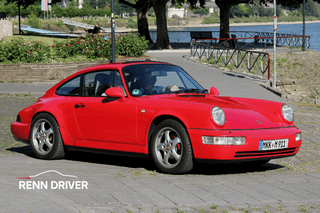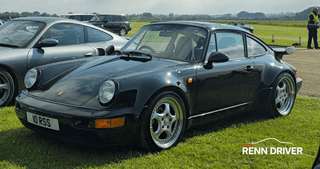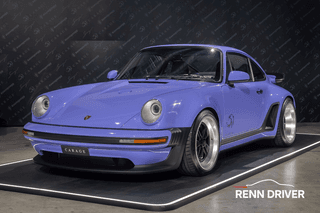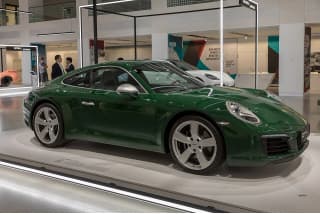
Across the many generations of Porsche 911s, the Porsche 964 doesn’t always get top billing. It doesn’t have the air-cooled purity of the earlier G-body cars. It doesn’t have the raw modernity of the 993.
But ask any true enthusiast, and they’ll tell you: the 964 911 is where old-school soul meets modern engineering. Porsche internally designated it the Type 964, and owners who have driven the full 964 series rank it among the most rewarding air-cooled 911s ever produced.
The 964 911 series earned that reputation honestly.
Quick Answer: The Porsche 964 is an air-cooled 911 generation that blends classic character with more modern engineering. Porsche designated it Type 964.
In this article, we'll explain how the Porsche 964 modernized the air-cooled 911. We'll cover Carrera models, all-wheel drive, Tiptronic, and buying advice.

When it launched in 1989, the 964 911 wasn’t just a facelift. It was a full reboot of the Porsche 911 formula and marked a new generation of the iconic model. Roughly 85% of its parts were new. It kept the familiar shape, but under the skin, everything changed: suspension, drivetrain, electronics, even the driving experience.
So why should you care about the Type 964 today? It marked a genuine transition in the 964 911 series, daring to evolve without losing the classic 911 feel while introducing updates that owners had been asking for.
It set the stage for everything that came after, while still keeping enough analog feel to satisfy purists. The 964 911's innovations, including all-wheel drive and coil-spring suspension, made the 964 911 accessible to a broader range of buyers. The car was produced in several distinct versions across its run. Porsche sold over 63,000 units across all versions of the 964 series from 1989 to 1994.
Contents
- 1 Quick Summary
- 2 A New Era: Inside the 964 Revolution
- 3 Carrera 2 vs. Carrera 4: Which Should You Want?
- 4 The Tiptronic Question: Should You Avoid It?
- 5 The 964 Turbo: A Beast with a Bite
- 6 Special Models: RS, RS America, and More
Quick Summary
- Production Years (model years): 1989–1994
- Notable Models: Carrera 2, Carrera 4, RS, RS America, Turbo 3.3, Turbo 3.6
- Body Styles: Coupe, Targa, Cabriolet
- Key Innovations: Features include all-wheel drive (Carrera 4), Tiptronic transmission, ABS, coil spring suspension
- Comfort Feature: Air conditioning was available, enhancing comfort and convenience
- Engine: 3.6-liter flat-six (M64 engine)
- Why It Stands Out: First major 911 redesign since 1974, balances modern tech with classic feel
A New Era: Inside the 964 Revolution
When Porsche unveiled the 964, they had a problem: the 911 was aging, fast. Sales were soft. The design was decades old. Internally, there were whispers that it might be the last 911.
But instead of pulling the plug, Porsche doubled down.
The 964 brought serious updates and featured new technologies and design elements:
- New suspension: Out went the torsion bars, in came modern coil springs and MacPherson struts.
- Electronic aids: ABS became standard across all variants.
- Aerodynamics: Bumpers were smoothed out. An automatically extending rear spoiler replaced the classic ducktail.
- AWD debut: The Porsche 911 Carrera 4 marked the first time a 911 sent power to all four wheels.
These weren’t gimmicks. They made the car faster, safer, and easier to drive, without gutting the raw feel.
Carrera 2 vs. Carrera 4: Which Should You Want?
The Porsche 911 Carrera 2 sends power to the rear wheels only. The 911 Carrera 4 adds all-wheel drive across all four corners.
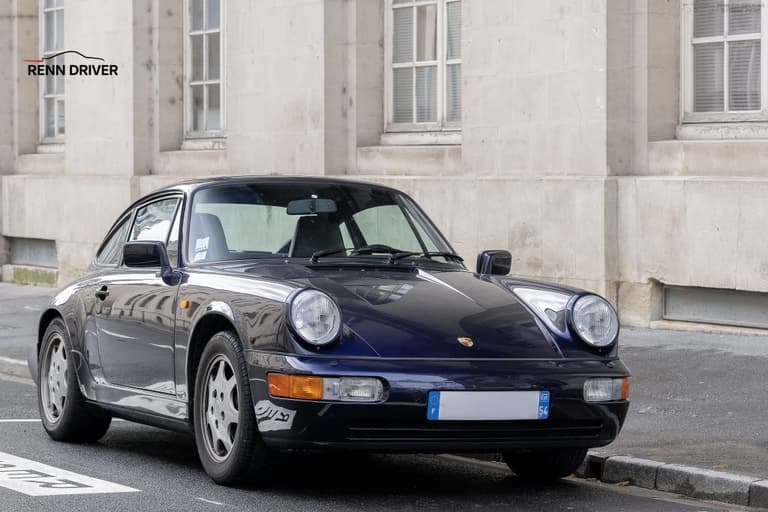
Both share the same 3.6-liter M64 engine, pumping out about 247 horsepower and 228 lb-ft of torque. That may not sound like much today, but keep in mind this was the late ‘80s. These were fast, serious sports cars.
Here’s how they differ:
Porsche 911 Carrera 2:
- Purist pick: lighter, more engaging
- Available in five-speed manual and Tiptronic
- Coupé, Carrera 2 Cabriolet, and Targa options
911 Carrera 4:
- AWD adds grip, especially in bad weather
- Heavier and a bit more complex
- More tech-heavy, but just as engaging to pilot
If you want simplicity and analog charm, go C2. If you value stability and all-weather performance, C4 is the call.
The Tiptronic Question: Should You Avoid It?
In 1990, Porsche introduced the Tiptronic automatic. It let drivers shift manually without a clutch pedal, years before paddle shifters became mainstream.
Was it revolutionary? Yes.
Was it fun? Not really.
Tiptronic cars are fine for cruising, but they’re slower, less engaging, and more expensive to maintain. Unless you’re specifically looking for a daily use or a collector piece, stick to the manual.
The 964 Turbo: A Beast with a Bite
You can’t talk about the 964 without mentioning the Turbo. And no, this isn’t just a Carrera with a few bolt-ons. The Turbo was a different animal, a high-performance vehicle that set new standards for the model.

The first 964 Turbo, introduced for the 1991 model year, was powered by the classic 3.3-liter engine from the 930, producing 320 hp. In 1993, Porsche upgraded the Turbo to a 3.6-liter engine, boosting output to 360 hp. That car, the 964 Turbo 3.6, is now one of the most collectible 911s of the era and highly sought after when available for sale.
What made it special:
- Widebody look with aggressive styling
- Rear-wheel drive only
- Laggy, but thrilling boost delivery
- Expensive then, and even pricier now
Pro tip: If you see a Turbo S or a Flachbau (slant nose), those featured special editions are rare gems. Expect six-figure prices.
Special Models: RS, RS America, and More
Porsche didn’t stop at the base cars. The 964 chassis spawned some of the most beloved special edition vehicles, many of which were focused on maintaining the spirit and performance of the 964.
Some of these vehicles have been modified for enhanced performance or uniqueness. The RS America, for example, is based on the Porsche 911 Carrera 2 and is highly sought after for its rarity and driving experience.
Carrera RS (Europe-only)
- Lightweight, track-focused
- No power steering, no back seats, thinner glass
- About 260 hp from a reworked 3.6L
- Never sold in the US, but some are here now as imports
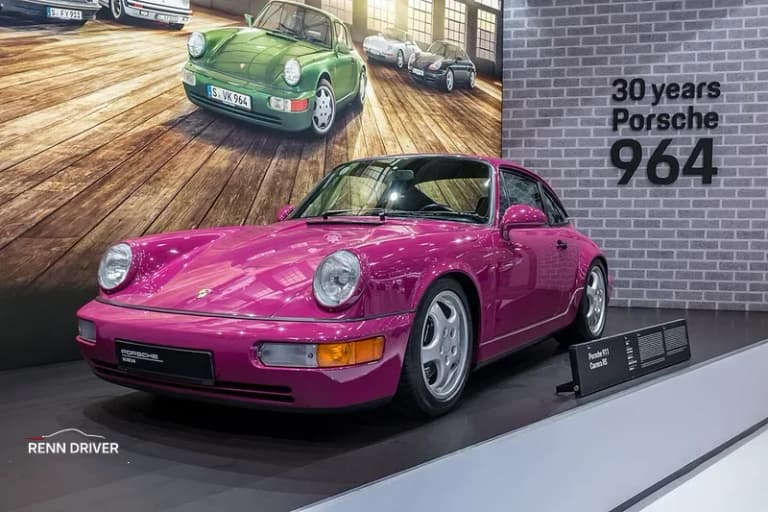
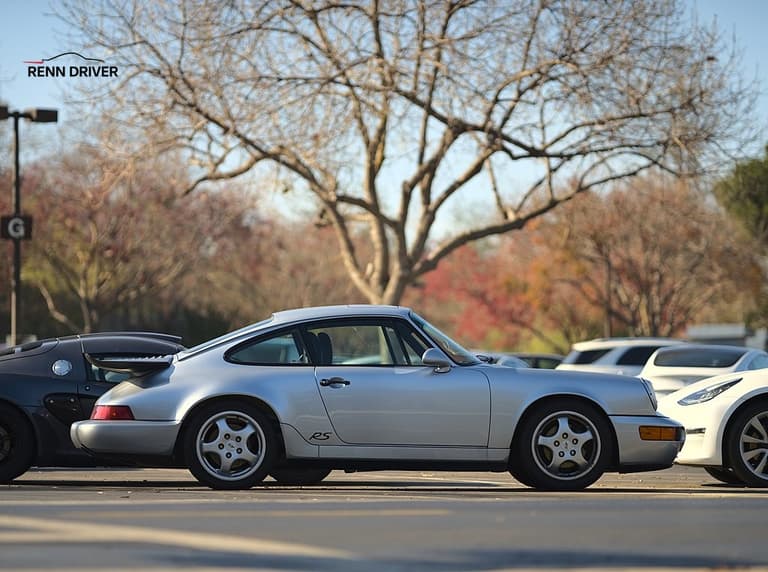
RS America (US market)
- Lighter than standard Carrera 2
- Manual steering, limited options
- Fixed rear wing and cloth interior
- Built from 1993–1994, only 701 made
964 Speedster (1993)
- Built in 1993 only, with 936 units produced worldwide
- Based on the Carrera 2 cabriolet chassis, but lighter than the standard Cabriolet
- Distinctive low windshield, fixed rear tonneau cover with the signature hump, and no fold-down top mechanism
- Available in two versions: the base Speedster and the America Roadster variant
- The America Roadster added a fixed rear wing, shed even more weight, and accounted for just 202 of the 936 cars built
The Speedster was Porsche wrapping up the open-top 964 911 formula with intention. Its stripped-back construction and dramatic silhouette made it stand apart from every other 964 on the road. Today, clean examples sit at the top of the 964 series price spectrum, with America Roadsters especially sought after by collectors.
Other special editions include:
- Carrera Cup: A race car for the street
- Jubilee (30 Jahre 911): Anniversary edition, only 911 made
- Turbo S Leichtbau (Turbo S Lightweight): Stripped-out Turbo built for homologation
These cars are collectible, expensive, and usually snapped up fast.
Design: Subtle Evolution with a Big Impact
At a glance, the 964 looks a lot like the earlier 911s. But look closer, and the differences become obvious.
- Integrated bumpers that feature improved aerodynamics
- The electric rear spoiler rises automatically above 50 mph
- Cleaner lines that feature less chrome and flush-fit glass
- Wide rear haunches, especially on Turbo models, feature a more aggressive stance
Inside, you still get the five-gauge dash and upright windshield, but with nicer materials and better ergonomics.
Paint and Trim: What Were Your Options?
The 964 came in a wide range of colors, some timeless, some wild. Standouts include:
- Guards Red
- Maritime Blue
- Rubystone Red (aka Pink!)
- Mint Green
- Polar Silver
Certain colors are more desirable in specific regions, with collectors in different parts of the world favoring unique shades.
Interior choices were equally varied: black leather, cashmere beige, cobalt blue, and even purple.
Many rare colors now add a premium at auction, and rare color 964s are often seen at live auctions. A 964 in Rubystone or Mint Green? That’s instant collector bait, and these rare color cars often fetch higher prices at sale.
Restoring a Legend: 964 Restoration Insights
Thinking of restoring a Porsche 964? Here's what to look out for.
The 964 chassis ages well, but not without attention. The battery tray in the front trunk is the first thing any inspector should check: moisture collects there and rust develops from the inside out on neglected cars. Rear quarter rust along the inner wheel arches is the bigger structural concern, requiring proper metalwork rather than filler. On the mechanical side, the rear main seal leak and dual-mass flywheel wear separate a professionally sorted car from one that has been cosmetically refreshed but not properly rebuilt. A full restoration on a 964 in average condition typically runs between $30,000 and $60,000, factoring in bodywork, an engine-out inspection, fresh seals, and period-correct interior work.
The 964 also built a second life as the foundation for some of the most celebrated custom builds in the air-cooled world. Singer Vehicle Design built their entire reputation on 964-based restorations, making the platform synonymous with the idea that a classic 911 can be reimagined without losing its soul. It accommodates modern suspension geometry, wider bodywork, and upgraded brakes without major surgery, which is why it became the preferred base for that kind of work. Even owners with no interest in a commission-level build have taken note: a properly sorted 964 in stock form already drives like a great driver's car.
Owners who have gone through a thorough restoration consistently report the same result. The finished car feels more intentional than the original factory process allowed for. A well-restored 964 today, particularly in a rare color, holds its value in a way that makes the restoration cost easier to justify. These are not cars that depreciate after a proper rebuild.
Maintenance and Reliability: What to Watch For
Here’s the good news: the 964 is a tough, well-built vehicle. Many owners report years of reliable use with regular servicing. But some parts don’t come cheap.
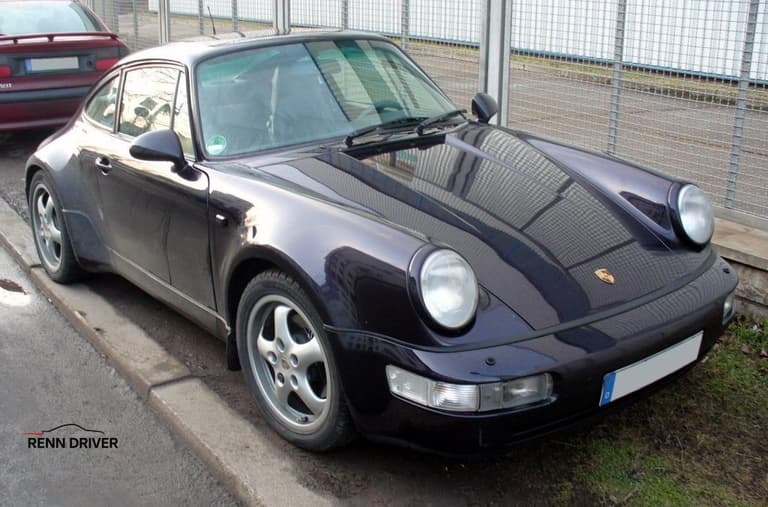
Things to keep an eye on:
- Cylinder head leaks: Common in early models, fixed by mid-run
- Dual-mass flywheel failure
- HVAC control units: Expensive to repair
- ABS sensors and electrical gremlins
Routine maintenance is key to keeping your vehicle in top shape. Budget about $2,000–3,000 per year for upkeep. Specialists with expertise in maintaining Porsche vehicles can help ensure reliability and longevity. And if you’re buying, get a pre-purchase inspection (PPI). Always.
964 vs. the Rest: How It Compares to Other 911s
Let's compare this model to the others in the family.
964 vs. 930 Turbo: The 930 is rawer in every way. Its turbocharged engine delivers boost in a single dramatic surge, and without ABS or coil-spring suspension the car demands constant attention. The 964 series is the more livable choice, with ABS standard across all versions and a suspension setup that tracks predictably on real roads. Owners who drive their cars regularly tend to find the 964 easier to live with day to day without feeling they have given up meaningful character.
964 vs. 993: Compared to the 993, the 964 is slightly less refined but considerably more affordable, and widely considered the peak aesthetic of the air-cooled 911 series. Its multilink rear suspension makes it more planted at speed, and the interior feels a step more polished. The 964 sits below it in refinement, which is why it typically sells for less than a comparable 993. That price gap makes the 964 the more accessible entry point into the 964 911 range for buyers who want the experience without the premium.
964 vs. 992: Night and day in terms of technology. The 992 is faster, safer, and more capable in every measurable specification. What the 964 gives back is directness: a steering rack with genuine feedback, a naturally aspirated engine that builds revs without electronic mediation, and a chassis that communicates what it is doing at every moment. Owners who have driven both consistently describe the 964 as simply more involving.
Collectibility and Value Trends
The 964 used to be the overlooked middle child. Not anymore.
Prices have climbed steadily in the past decade. The 964 now commands serious money when sold at auction or through specialist dealers, with demand for specific model years showing no signs of softening. For example, the most collectible model years, such as the 1993 Turbo 3.6 and 1992 Carrera RS, are highly sought after and often command top prices when they appear for sale. Availability varies by region, with some versions more commonly sold through North American or European listings than others.
Here’s a rough breakdown:
- Carrera 2/4 (manual): $60,000–85,000
- RS America: $120,000+
- Turbo 3.3: $150,000–200,000
- Turbo 3.6: $250,000+
- Carrera RS: $200,000–300,000 (imported)
Prices depend on condition, mileage, and originality. Paint-to-sample cars and low-mileage examples fetch huge premiums.
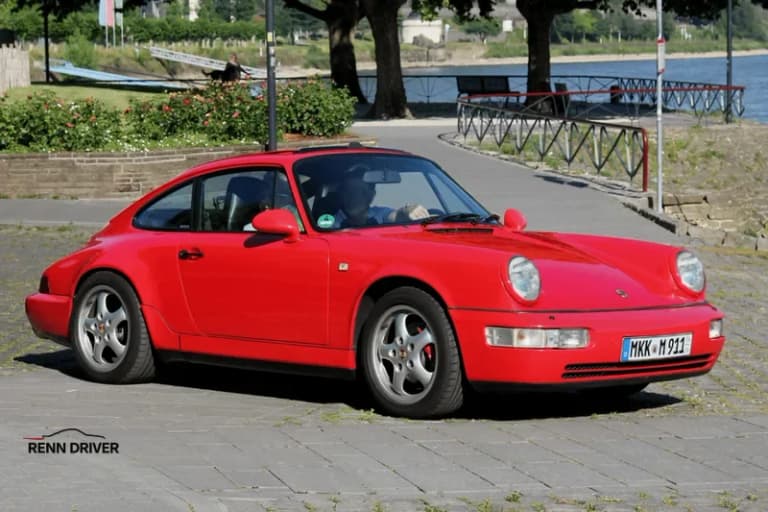
Why We Love the Porsche 964
The 964 911 sits at a turning point in Porsche history. It marked the transition from purely analog engineering to a car that could live in the modern world. It’s the last air-cooled Porsche 911 series before OBD2 and wide-scale electronics. It’s the first to feel livable for daily driving. It’s raw enough to feel old-school but refined enough that you’d take it on a road trip.
It also laid the foundation for the final air-cooled generation, which became the darling of collectors. But without the 964, the 993 doesn’t happen.
For owners who want a Porsche 911 with real feedback, timeless looks, and daily usability, the Type 964 is a sweet spot. It’s not cheap anymore, but it remains a deeply rewarding air-cooled 911, regularly sold today at prices that still reflect real value rather than speculation.
Frequently Asked Questions (FAQs)
Is the Porsche 964 a good daily driver?
Yes, especially the Carrera 2 with a manual. It has ABS, a comfortable cabin, and a steering feel that takes the effort out of low-speed maneuvering. Just be ready for maintenance costs.
How many Porsche 964s were made?
Roughly 63,000 units globally across all models.
What’s the best 964 to buy?
For value: Carrera 2 manual. For performance: Turbo 3.6. For collectors: Carrera RS or Turbo S.
Is the 964 reliable?
Yes, if well-maintained. But neglected cars can be money pits.
Does the 964 have power steering?
Yes, it was the first 911 to offer it.
What does 964 mean?
It’s Porsche’s internal model code. Just like 993, 996, or 997.
Final Thoughts
The Porsche 964 is the sleeper hit of the air-cooled era. Not the first. Not the last. But maybe the most important.
It’s where Porsche took the risk to modernize the 911 without killing its character. And decades later, it still feels like a car that knows exactly what it is.
If you get the chance to own a 964 911 today, or even drive one, don’t pass it up.
Images by: Rudolf Stricker, Alexandre Prevot, Thomas Doerfer, Alexandre Prévot all licensed under CC BY-SA 4.0, CC BY-SA 2.0, CC BY-SA 3.0 via Wikimedia Commons, Lothar Spurzem, CC BY-SA 2.0 DE, via Wikimedia Commons, Dllu, CC BY-SA 4.0, via Wikimedia Commons, Matti Blume, CC BY-SA 4.0, via Wikimedia Commons