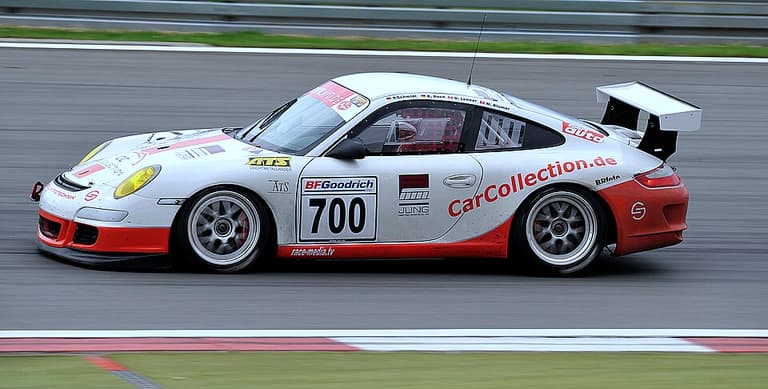
The Porsche 911 GT3 Cup is Porsche's dedicated one-make race car, built exclusively for the Porsche Carrera Cup, Supercup, and GT3 Cup Challenge series worldwide. The current 992-generation GT3 Cup produces 510 PS (503 hp) from a 4.0-liter naturally aspirated flat-six and has been in production since 2021. Porsche has built over 4,400 GT3 Cup cars across four generations, making it the most produced racing Porsche in history.
In this article, we'll explain the Porsche 911 GT3 Cup. We'll cover Cup generations, 992 specifications, and one-make racing.
Contents
Quick Summary
| Spec | 992 GT3 Cup (Current) |
|---|---|
| Years | 2021 to present |
| Engine | 4.0L naturally aspirated flat-six |
| Power | 510 PS (503 hp) at 8,400 rpm |
| Torque | 470 Nm (347 lb-ft) |
| 0 to 100 km/h | 3.4 seconds |
| Top Speed | Approx. 300 km/h (186 mph) |
| Weight | 1,260 kg (2,778 lbs) race-ready |
| Transmission | 6-speed sequential or 7-speed PDK |
| Price | Approx. EUR 225,000 (ex-works) |
What Is the Porsche 911 GT3 Cup
The Porsche 911 GT3 Cup is not a road car with a roll cage bolted in. It is a purpose-built race car that Porsche Motorsport designs, manufactures, and sells directly to customer racing teams. Every GT3 Cup car leaves the factory in Weissach ready to race, with a welded steel roll cage, racing fuel cell, fire suppression system, and a flat-six engine derived from the road-going 911 GT3.
Porsche introduced the first GT3 Cup in 1998 based on the 996 generation. The idea was straightforward: give privateer teams an affordable, reliable, and fast race car that could compete in identical-specification series around the world. That formula worked so well that Porsche has now built over 4,400 GT3 Cup cars across four generations, making it the best-selling racing car the company has ever produced.
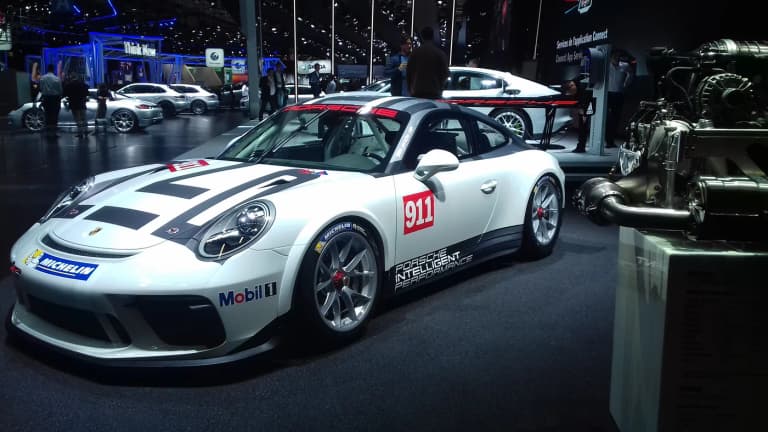
The GT3 Cup is the entry point to Porsche's customer motorsport pyramid. Above it sit the GT3 R for GT3-class endurance racing and the 911 GT3 R rennsport for unrestricted track use. Below it are arrive-and-drive experience programs. But the Cup car is where most professional Porsche racing careers begin.
Every GT3 Cup Generation
996 GT3 Cup (1998 to 2005)
The original GT3 Cup was based on the 996 GT3 and used a 3.6-liter flat-six producing 360 hp at 7,200 rpm. It weighed 1,140 kg dry and came with a six-speed sequential manual gearbox. Porsche built this car specifically for the newly expanded Porsche Carrera Cup and Supercup series, which had previously used the 993-based Carrera Cup car.
The 996 GT3 Cup established the template that every generation since has followed: a naturally aspirated flat-six, rear-wheel drive, a welded cage, and spec-controlled components to keep racing close and costs manageable. An updated version arrived in 2002 with the 996.2 facelift body, improved aerodynamics, and 380 hp.
997 GT3 Cup (2005 to 2013)
The 997-generation GT3 Cup arrived in 2005 with a 3.6-liter engine producing 400 hp. The car received carbon fiber reinforced plastic (CFRP) body panels for the first time, which reduced weight and improved aerodynamic efficiency. A mid-cycle update in 2009 brought a larger 3.8-liter engine producing 450 hp, matching the displacement increase in the road car.
This generation ran for eight seasons and saw the GT3 Cup expand into more national Carrera Cup championships across Asia, the Middle East, and Latin America. The 997 Cup car is the one that truly made Porsche customer racing a global operation.
991 GT3 Cup (2013 to 2017)
The 991 GT3 Cup brought a major change: a paddle-shift sequential gearbox with pneumatic actuation replaced the traditional H-pattern manual. Power climbed to 460 hp from a 3.8-liter direct-injection flat-six revving to 8,500 rpm. The car weighed 1,175 kg and featured a revised roll cage, wider wheels, and significantly more aggressive aerodynamics than its predecessor.
Porsche also introduced a new data logging system for this generation, giving teams more insight into tire wear, fuel consumption, and driver inputs. The 991 Cup car raised the performance bar while keeping per-season running costs competitive with other one-make series.
992 GT3 Cup (2021 to Present)
The current GT3 Cup is the most powerful and most advanced in the car's history. Porsche enlarged the engine to 4.0 liters, the same displacement as the road-going 992 GT3, and increased output to 510 PS (503 hp) at 8,400 rpm with 470 Nm (347 lb-ft) of torque. It reaches 100 km/h in 3.4 seconds.
The body is wider than any previous Cup car. The 992 uses the wide-body Turbo shell rather than the narrower Carrera body, which gives the car a wider rear track and more room for the 12.4-inch rear wheels. The front track is also wider, and the front fenders are unique to the Cup car.
A new centerlock wheel design with a single central locking nut replaced the five-lug pattern used on all previous generations. This allows faster pit stops and better wheel alignment consistency. The front wheels are 11 inches wide on 18-inch rims, while the rears are 12.4 inches wide.
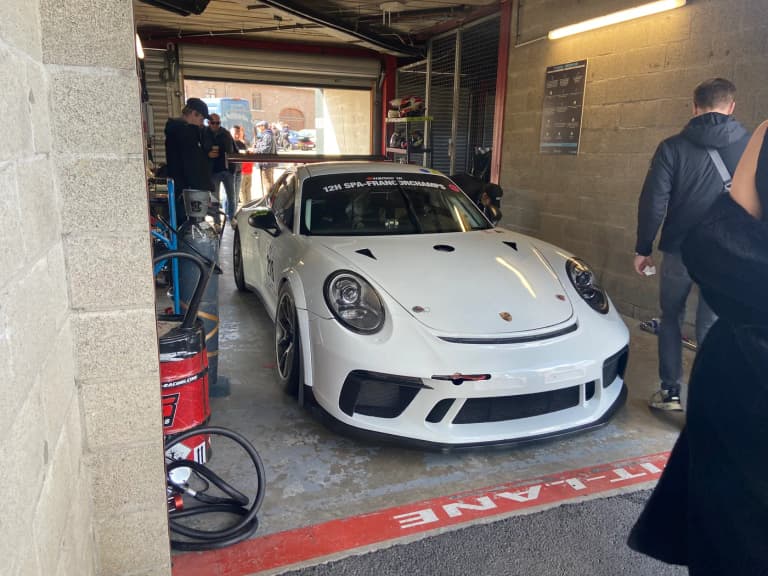
Starting in 2025, the Porsche Supercup switched to Haru Oni e-fuel, making the GT3 Cup the first major one-make race car to run on synthetic fuel in competition.
Engine and Powertrain
Every GT3 Cup engine is a naturally aspirated flat-six built by Porsche Motorsport. The current 4.0-liter unit shares its basic architecture with the road-going 992 GT3 engine, but with race-specific calibration, a dry-sump oil system, and higher-flow exhaust routing optimized for sustained high-RPM running.
The engine redlines at 8,400 rpm and produces its peak power there. Torque peaks at 6,150 rpm. Unlike the road car, which offers both manual and PDK transmissions, the Cup car uses a racing sequential gearbox. The current 992 Cup is available with either a six-speed sequential or a seven-speed PDK dual-clutch unit, both operated via paddle shifters on the steering wheel.
| Generation | Displacement | Power | Torque |
|---|---|---|---|
| 996 Cup | 3.6L | 360 to 380 hp | 360 Nm |
| 997 Cup | 3.6L / 3.8L | 400 to 450 hp | 400 to 435 Nm |
| 991 Cup | 3.8L | 460 hp | NA |
| 992 Cup | 4.0L | 510 PS (503 hp) | 470 Nm |
Porsche seals the engine and gearbox to prevent modifications. Between races, teams service the cars according to a strict maintenance schedule provided by Porsche Motorsport. Engine rebuilds are performed at set mileage intervals by authorized centers, which keeps the playing field level and controls costs.
Chassis and Aerodynamics
The GT3 Cup's chassis starts as a steel monocoque from the standard 911 production line. Porsche Motorsport then strips it, adds the welded roll cage, and installs race-specific suspension geometry. The front suspension uses MacPherson struts with adjustable ride height, camber, and anti-roll bar settings. The rear uses a multi-link setup with similar adjustability.
Aerodynamics on the 992 Cup car produce meaningful downforce at racing speeds. The front splitter is deeper and wider than the road car's, and the rear wing is a fixed, adjustable-angle unit mounted on swan-neck supports. Porsche does not publish exact downforce figures for the Cup car, but the combination of the wider body, flat underbody, and large rear wing creates a noticeably more planted car than any road-going GT3.
The braking system uses steel racing discs with six-piston front calipers and four-piston rears. ABS is included and calibrated for slick racing tires, but there is no traction control or stability control. The driver manages the car entirely through throttle, brake, and steering inputs.
Safety Equipment
The GT3 Cup meets FIA safety standards for international GT racing. The welded steel roll cage is integrated into the body structure and protects the driver in the event of a rollover or heavy impact. A racing fuel cell replaces the standard fuel tank, and a plumbed-in fire suppression system can be activated by the driver or by marshals from outside the car.
The driver sits in a carbon fiber racing seat with a six-point harness. A HANS device is mandatory in all series. The door panels are stripped and replaced with lightweight carbon fiber covers that incorporate side-impact padding. The windshield is laminated safety glass, while the side and rear windows are polycarbonate to save weight.
Rescue crews can access the car through a quick-release steering wheel and removable window nets. The battery has an external kill switch accessible from outside the car. These safety features are standardized across all GT3 Cup cars globally, so marshals at any circuit know exactly how to handle the car in an emergency.
Racing Series
The GT3 Cup is the only car eligible to compete in Porsche's one-make racing championships. These series operate at three levels.
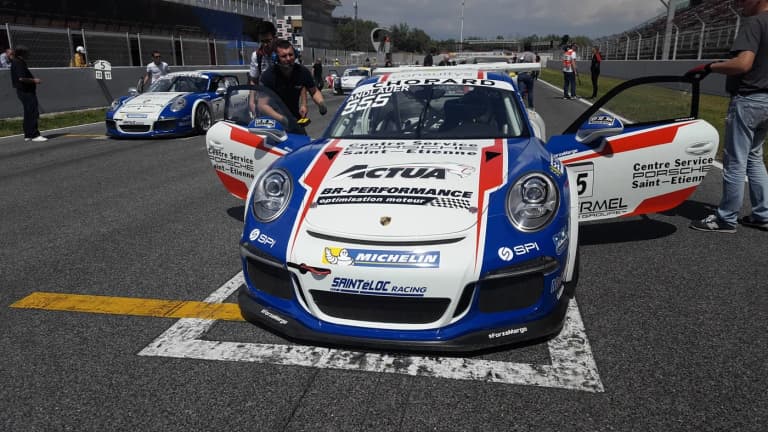
Porsche Supercup
The Porsche Mobil 1 Supercup is the top tier. It has run as a support race to Formula 1 since 1993, visiting circuits like Monaco, Spa-Francorchamps, Monza, and Silverstone. Around 24 cars compete per event. The Supercup is where factory-supported drivers and top privateer talents race in front of the largest global audiences.
Patrick Huisman holds the record with four consecutive titles (1997 to 2000). Other notable champions include Rene Rast, Michael Ammermller, and Larry ten Voorde, who won three titles. Lechner Racing is the most successful team with 12 championship wins.
Porsche Carrera Cup
National and regional Carrera Cup series run in Germany, France, Great Britain, Italy, Japan, Australia, Brazil, Asia, the Middle East, and North America. These championships use the same GT3 Cup car as the Supercup but operate independently with their own calendars and regulations. The Carrera Cup is where most aspiring professional drivers get their first Porsche racing experience.
GT3 Cup Challenge
The GT3 Cup Challenge series cater to amateur and gentleman drivers. They typically use slightly older-specification Cup cars and offer a more accessible entry point to Porsche one-make racing. Series run in North America, Asia, and other regions.
GT3 Cup vs GT3 Road Car
The GT3 Cup and the road-going 911 GT3 share a 4.0-liter naturally aspirated flat-six engine and the basic 911 body structure, but almost everything else is different. The Cup car is a pure race machine. The road car is a street-legal sports car that happens to be very fast on a circuit.
| Feature | GT3 Cup | GT3 Road Car |
|---|---|---|
| Power | 510 PS (503 hp) | 503 hp (992.1) / 510 hp (992.2) |
| Weight | ~1,260 kg | ~1,435 kg |
| Transmission | Sequential racing gearbox | 6-speed manual or 7-speed PDK |
| Traction Control | None | PSM with Sport mode |
| ABS | Race-calibrated | Road-calibrated |
| Interior | Stripped, roll cage, racing seat | Full interior, leather, infotainment |
| Street Legal | No | Yes |
| Price | ~EUR 225,000 | ~USD 172,000 |
The Cup car weighs roughly 175 kg less than the road car. That weight savings comes from the stripped interior, polycarbonate windows, single racing seat, and the absence of sound deadening, air conditioning, and infotainment. The suspension geometry is race-specific with wider adjustment ranges for camber, toe, and ride height.
The road-going GT3 shares enough DNA with the Cup car that Porsche Motorsport engineers have described the street version as a detuned, emissions-compliant Cup engine in a luxury shell. Both cars rev to similar RPMs and use the same bore and stroke. The Cup car simply runs without catalytic converters, without sound restrictions, and without the compromises required for road certification.
Pricing and Availability
Porsche sells the GT3 Cup directly to customer racing teams through its Porsche Motorsport department. The 992 GT3 Cup has a base price of approximately EUR 225,000 (around USD 245,000) ex-works from Weissach. That price includes the complete race-ready car with all mandatory safety equipment, but it does not include spares, data systems, or transport.
A full season budget for a Carrera Cup campaign typically runs between EUR 350,000 and EUR 500,000, depending on the series and the number of rounds. That figure covers the car, entry fees, tires, fuel, spares, transport, and team support. In the context of international GT racing, the GT3 Cup remains one of the most cost-effective ways to compete at a professional level.
Used GT3 Cup cars are available through Porsche Motorsport's network and from privateer teams selling at the end of a season. A one-season-old 992 Cup car typically sells for EUR 150,000 to EUR 180,000. Older 991 and 997 Cup cars can be found for significantly less, making them popular choices for amateur track day enthusiasts and historic racing events.
Notable Drivers
The GT3 Cup has served as a proving ground for drivers who went on to race in Formula 1, the World Endurance Championship, and other top-level categories. The Porsche Supercup grid has included future Le Mans winners, DTM champions, and F1 hopefuls at various points in their careers.
Patrick Huisman dominated the early Supercup era. Rene Rast won the Supercup before becoming a multiple DTM champion with Audi. Michael Ammermller won three Supercup titles in a row. Larry ten Voorde matched that record with three of his own. The common thread among these drivers is that the GT3 Cup is where they learned to race in professional conditions with minimal driver aids.
Frequently Asked Questions
Is the Porsche 911 GT3 Cup street legal?
No. The GT3 Cup is a purpose-built race car with no headlights for road use, no indicators, no sound deadening, and no emissions equipment. It cannot be registered for public roads in any country.
How much does a Porsche 911 GT3 Cup cost?
A new 992 GT3 Cup costs approximately EUR 225,000 (around USD 245,000) ex-works from Porsche Motorsport in Weissach. Used Cup cars from the previous season typically sell for EUR 150,000 to EUR 180,000. Older 991 and 997 Cup cars are available for less.
What racing series use the GT3 Cup?
The GT3 Cup is the sole car used in the Porsche Supercup (Formula 1 support races), national and regional Porsche Carrera Cup championships, and the GT3 Cup Challenge series for amateur drivers. Combined, these series run in over 20 countries.
How much horsepower does the GT3 Cup have?
The current 992 GT3 Cup produces 510 PS (503 hp) from a 4.0-liter naturally aspirated flat-six engine revving to 8,400 rpm. Earlier generations ranged from 360 hp (996 Cup) to 460 hp (991 Cup).
Can anyone buy a Porsche 911 GT3 Cup?
Yes. Porsche sells the GT3 Cup directly to customer racing teams through Porsche Motorsport. You do not need to be a professional driver to buy one. However, you do need access to a race track, a support team, and the budget to run it. A full Carrera Cup season costs EUR 350,000 to EUR 500,000 beyond the car itself.
What is the difference between the GT3 Cup and the GT3 R?
The GT3 Cup is a spec race car for one-make Porsche series where every car is identical. The GT3 R is a higher-performance endurance racing car built for FIA GT3-class competition against other manufacturers in races like the 24 Hours of Spa, IMSA, and the Nurburgring 24 Hours. The GT3 R has more power, more aerodynamic freedom, and a different set of regulations.