The Porsche 911 GT3 Touring is a variant of the 911 GT3 that replaces the fixed rear wing with a retractable spoiler. It shares the same engine, chassis, suspension, and brakes as the winged GT3. Porsche introduced the Touring package with the 991.2 GT3 in 2017, continued it on the 992 GT3, and offers it again on the 992.2 GT3. The Touring is built for enthusiasts who want GT3 performance without the visual intensity of a large rear wing.
Contents
- 1 Quick Summary
- 2 What Is the GT3 Touring?
- 3 991.2 GT3 Touring (2018)
- 4 992 GT3 Touring (2021)
- 5 992.2 GT3 Touring (2025)
- 6 All GT3 Touring Generations Compared
- 7 GT3 Touring vs. GT3 Wing
- 8 Who Is the GT3 Touring For?
- 9 Market Values
- 10 Renn Driver's Take
- 11 FAQs
- 12 Final Thoughts
The full guide below covers all the details.
Quick Summary
- Generations offered: 991.2 (2018), 992 (2021), 992.2 (2025)
- Key difference from standard GT3: Retractable rear spoiler instead of fixed swan-neck wing
- Mechanical changes: None. Same engine, chassis, suspension, and brakes as the winged GT3
- Transmission: Manual standard on all generations. PDK available on 992 and 992.2
- Engine: 4.0L naturally aspirated flat-six across all three generations
- Power range: 500 hp (991.2) to 503 hp (992/992.2)
What Is the GT3 Touring?
The GT3 Touring is not a lesser GT3. It is the same car wearing different clothes from the rear bumper back.
Porsche created the Touring package to give buyers an alternative to the large fixed wing. The retractable rear spoiler deploys automatically at speed and tucks away when parked or cruising. Underneath, the engine, transmission, suspension geometry, braking system, and chassis stiffness are identical to the standard GT3.
The result is a car that draws less attention on the street while delivering the same driving experience on a back road or circuit. The Touring also receives a slightly different interior treatment, with leather replacing Alcantara on several surfaces and a few subtle trim changes that lean toward grand touring rather than pure track use.
The Touring does sacrifice some high-speed aerodynamic downforce compared to the fixed wing version. At street speeds, this difference is irrelevant. On a fast circuit, the winged car has a measurable advantage in high-speed stability. For most driving, the Touring gives up nothing that matters.
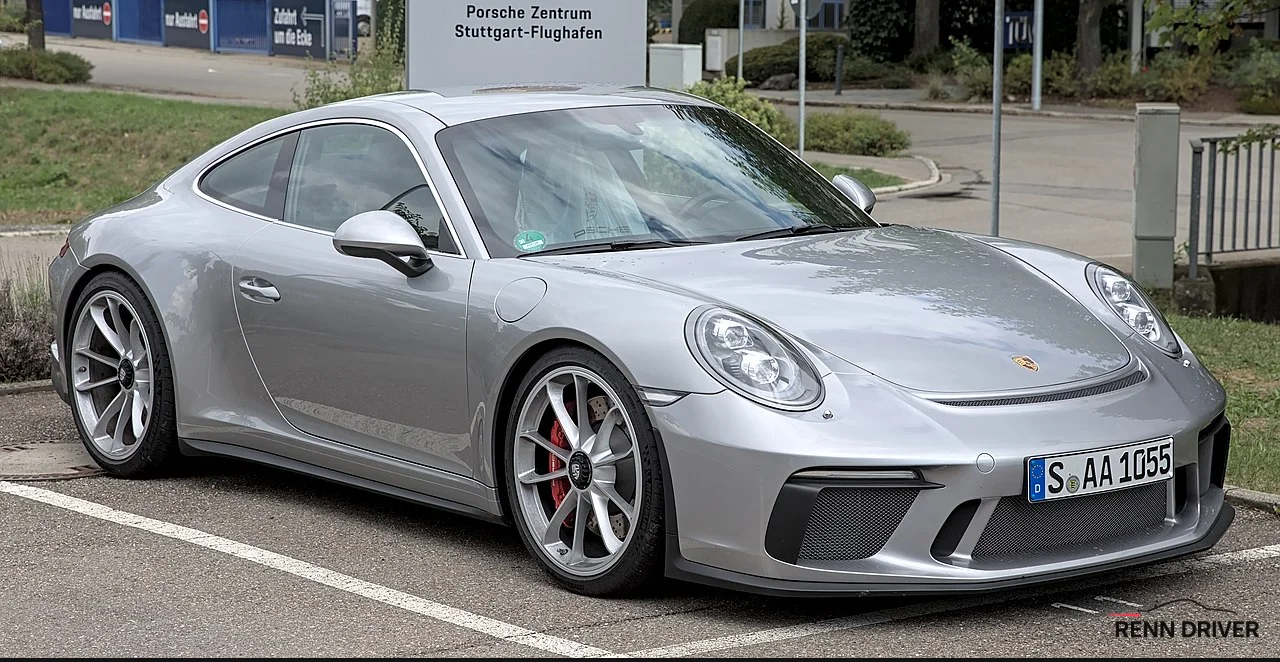
991.2 GT3 Touring (2018)
The 991.2 GT3 Touring was the first. Porsche introduced it alongside the facelifted 991.2 GT3 in 2017 as a factory option, though it quickly became a model in its own right.
Engine: 4.0L naturally aspirated flat-six producing 500 hp at 8,250 rpm and 339 lb-ft of torque at 6,000 rpm. Redline at 9,000 rpm.
Transmission: 6-speed manual only. The 991.2 GT3 Touring was exclusively manual, which made it an instant hit with purists. The standard 991.2 GT3 offered both manual and PDK, but Porsche reserved the Touring exclusively for the stick shift.
Performance: 0 to 60 mph in approximately 3.7 seconds. Top speed of 196 mph.
The 991.2 GT3 Touring was a direct response to buyer demand. Many customers wanted the GT3 experience without the visual aggression. Porsche initially expected modest sales but the Touring quickly accounted for a significant percentage of GT3 orders.
The car helped redefine what a GT3 could look like. Before the Touring, there was an assumption that GT3 buyers wanted the wing. After it, the market proved that many preferred the subtlety.
992 GT3 Touring (2021)
The 992-generation GT3 Touring arrived shortly after the winged 992 GT3 and expanded the formula. For the first time, the Touring was available with both a 6-speed manual and a 7-speed PDK.
Engine: 4.0L naturally aspirated flat-six producing 502 hp at 8,400 rpm and 346 lb-ft of torque at 6,100 rpm.
Transmission: 6-speed manual or 7-speed PDK. Opening the Touring to PDK buyers was controversial among enthusiasts but broadened the appeal significantly.
Performance: 0 to 60 mph in approximately 3.2 seconds (PDK) or 3.7 seconds (manual). Top speed of 198 mph (manual) or 196 mph (PDK).
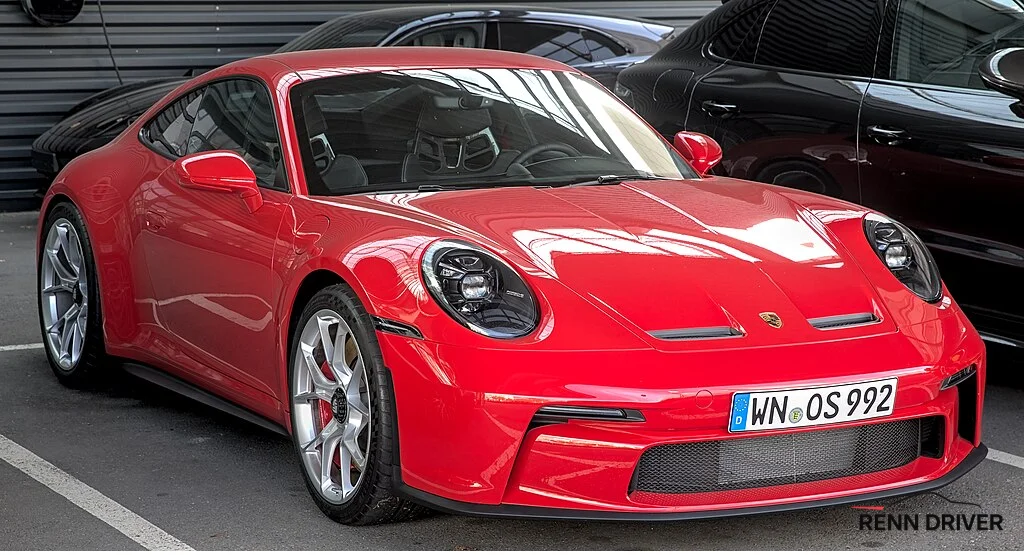
The 992 GT3 Touring benefits from all the chassis improvements of the 992 platform: the double-wishbone front suspension derived from Porsche's race cars, the refined rear-axle steering, and the improved cooling. The swan-neck wing mount on the standard GT3 is replaced by the Touring's clean decklid and pop-up spoiler, but the underfloor aerodynamics remain the same.
This generation firmly established the Touring as a permanent part of the GT3 lineup rather than a one-off experiment.
992.2 GT3 Touring (2025)
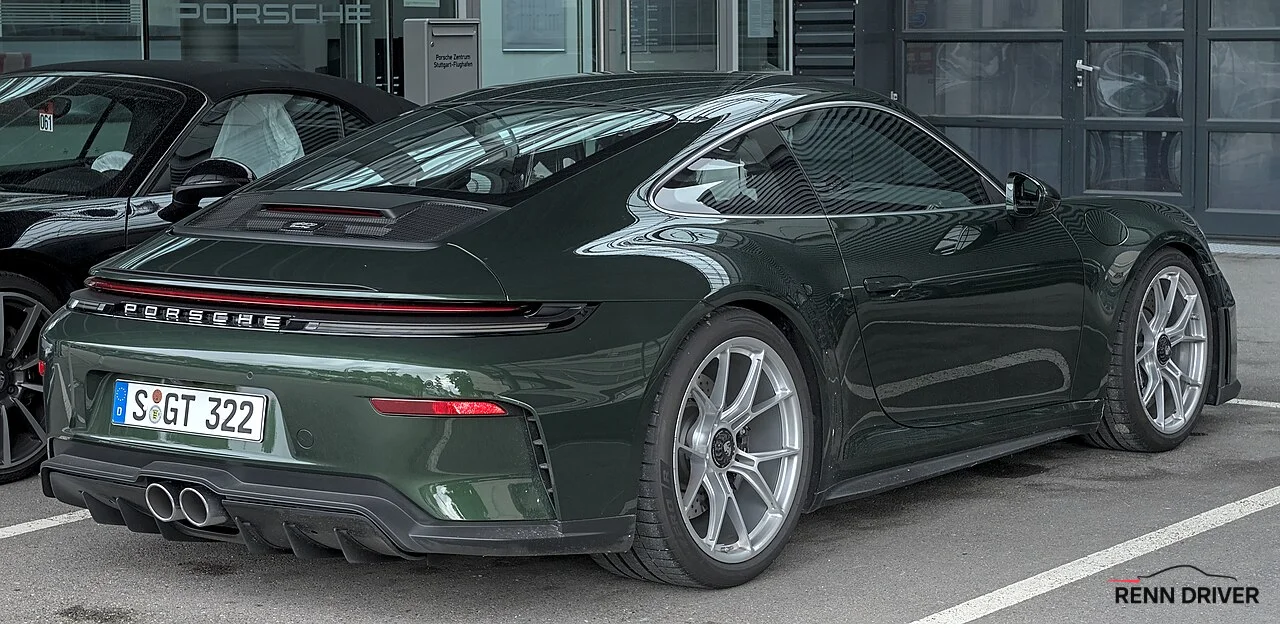
The facelifted 992.2 Touring continues the formula with the facelifted 992 generation. It carries the same 4.0L naturally aspirated flat-six, and both manual and PDK remain available.
Engine: 4.0L naturally aspirated flat-six producing 503 hp.
Transmission: 6-speed manual or 7-speed PDK.
The 992.2 update brings revised exterior styling, updated interior technology, and refinements to the chassis tuning. The Touring treatment remains the same: retractable spoiler, leather interior surfaces, and the same mechanical specification as the winged car.
With hybrid technology arriving in other Porsche models, the 992.2 GT3 Touring may represent one of the last opportunities to buy a naturally aspirated, non-hybrid GT3. That prospect has driven strong demand even before deliveries began.
All GT3 Touring Generations Compared
| 991.2 (2018) | 992 (2021) | 992.2 (2025) | |
|---|---|---|---|
| Engine | 4.0L NA flat-six | 4.0L NA flat-six | 4.0L NA flat-six |
| Power | 500 hp | 502 hp | 503 hp |
| Torque | 339 lb-ft | 346 lb-ft | 346 lb-ft |
| Transmission | 6-speed manual | 6MT or 7PDK | 6MT or 7PDK |
| 0 to 60 mph | ~3.7 s | ~3.2 s (PDK) | ~3.2 s (PDK) |
| Top Speed | 196 mph | 198 mph (MT) | 198 mph (MT) |
| Front Suspension | MacPherson strut | Double wishbone | Double wishbone |
| Rear Axle Steering | Yes | Yes (revised) | Yes (revised) |
GT3 Touring vs. GT3 Wing
The question comes up every time someone orders a GT3: wing or Touring?
Aerodynamics: The fixed wing generates more downforce at high speed, particularly above 100 mph. On a fast circuit with long straights and high-speed corners, the winged car has a measurable advantage in stability and cornering grip. On a technical circuit or public roads, the difference is minimal.
Visual presence: The wing makes a statement. The Touring does not. Some buyers want the car to announce itself. Others prefer to fly under the radar. Neither approach is wrong.
Interior treatment: The Touring comes with leather surfaces where the standard GT3 uses Alcantara. The Touring also includes body-colored exterior trim instead of the black accents on the winged car. Small details, but they shift the character toward refinement.
Resale: Both hold value extremely well. Manual Touring cars from the 991.2 generation have appreciated significantly. The 992 Touring with a manual is similarly strong. PDK Touring cars hold value but do not command the same premiums as manuals.
On track: If you are chasing lap times at fast circuits, the wing is the better tool. If you track occasionally and spend most of your time on the road, the Touring gives up nothing meaningful.
Who Is the GT3 Touring For?
The GT3 Touring exists for the driver who wants the mechanical excellence of the GT3 without broadcasting it to everyone in a parking lot.
It is for the person who drives back roads on weekends, takes the car to the occasional track day, and values the naturally aspirated flat-six and manual transmission above all else. It is for the owner who parks it in a city without worrying about the wing being a conversation starter at every traffic light.
The Touring is also increasingly popular with collectors. The combination of GT3 mechanicals, understated looks, and manual transmission creates a car that ages extremely well both aesthetically and financially.
Market Values
- 991.2 GT3 Touring (manual): $220,000 to $300,000 depending on mileage, color, and options
- 992 GT3 Touring (manual): $250,000 to $350,000
- 992 GT3 Touring (PDK): $220,000 to $280,000
- 992.2 GT3 Touring: Allocation only as of 2025, trading above MSRP
Manual GT3 Touring cars consistently command premiums over their PDK and winged counterparts. Color matters significantly. PTS (Paint to Sample) and rare factory colors add substantial value.
Renn Driver's Take
I have not driven this car yet, but I will update this section once I do.
Frequently Asked Questions
Is the GT3 Touring slower than the GT3 with a wing?
No, the Porsche 911 GT3 Touring has the same engine, chassis, and brakes as the winged GT3. In a straight line, performance is identical. On a fast circuit, the winged GT3 has more downforce at high speeds, which can improve lap times by a few tenths. On public roads and slower circuits, there is no meaningful speed difference.
Does the GT3 Touring come with a manual transmission?
Yes. The Porsche 911 GT3 Touring comes with a 6-speed manual transmission as standard across all generations. The 992 and 992.2 GT3 Touring also offer the 7-speed PDK as an option. The 991.2 GT3 Touring was manual only.
What is the difference between the GT3 Touring and a regular 911 Carrera?
The GT3 Touring uses the same 4.0L naturally aspirated flat-six, double-wishbone front suspension, rear-axle steering, and track-focused chassis as the GT3. A standard 911 Carrera uses a twin-turbo 3.0L engine and a softer, comfort-oriented suspension. The GT3 Touring is a fundamentally different car that shares only the 911 body shape.
Which GT3 Touring generation is the best?
Each GT3 Touring generation has its appeal. The 991.2 GT3 Touring is the purest because it was manual only. The 992 GT3 Touring is the most capable thanks to the double-wishbone front suspension. The 992.2 GT3 Touring is the most refined. For driving enjoyment, any generation delivers the core GT3 experience.
Will the GT3 Touring hold its value?
Yes, the Porsche 911 GT3 Touring has held its value exceptionally well across both available generations. Manual cars have appreciated above MSRP. As one of the last naturally aspirated, non-hybrid Porsche models, the GT3 Touring is widely expected to remain a strong collectible.
Can you track a GT3 Touring?
Yes. The GT3 Touring shares every mechanical component with the standard GT3, including the suspension, brakes, and cooling. It is fully capable on a circuit. The only difference is reduced high-speed downforce from the retractable spoiler versus the fixed wing, which matters mainly on faster tracks.
Final Thoughts
The GT3 Touring proved that not every serious driver's car needs to look like a race car. Since 2017, it has offered the full GT3 experience in a package that works on the road, at dinner, and on a circuit without compromise in any direction that actually matters.
The 4.0L naturally aspirated flat-six revving to 9,000 rpm, the manual gearbox, the connected chassis. Those are the things that define the GT3 experience. The wing, or lack of one, is a matter of personal style.
For a deeper look at each generation, read our guides on the car it's based on, the current generation, the 997 GT3, and the facelifted model.
Images: Wikimedia Commons, licensed under CC BY-SA 4.0