The Porsche 911 Targa is a semi-open body style that has been part of the 911 lineup since 1967. Porsche invented and trademarked the Targa name. Across eight generations, the roof design has evolved from a simple removable panel with a Targa bar, to a sliding glass roof (993 and 996), to a fully automated folding roof system (991 and 992) that brings back the iconic Targa bar. The current 992 Targa starts at approximately $137,000.
Contents
- 1 Quick Summary
- 2 What Makes a Targa a Targa
- 3 All Targa Generations at a Glance
- 4 Long Hood Targa (1967 to 1973)
- 5 G-Body Targa (1974 to 1989)
- 6 964 Targa (1989 to 1994)
- 7 993 Targa (1995 to 1998)
- 8 996 Targa (2002 to 2005)
- 9 997 Targa (2007 to 2013)
- 10 991 Targa (2014 to 2019)
- 11 992 Targa (2020 to present)
- 12 The Evolution of the Targa Roof
- 13 Which Targa Should You Buy?
- 14 Renn Driver's Take
- 15 FAQs
- 16 Final Thoughts
The full guide below covers all the details.
Quick Summary
- First year: 1967
- Generations: 8 (long hood, G-body, 964, 993, 996, 997, 991, 992)
- Roof designs: Removable panel (1967 to 1994), sliding glass (1995 to 2013), automated folding (2014 to present)
- Targa bar: Present on every generation except the 993 and 996
- Name origin: The Targa Florio road race in Sicily
- Current price: 992 Targa 4 from approximately $137,000 MSRP
What Makes a Targa a Targa
A Targa is not a convertible and not a coupe. It sits between the two, offering open-air driving with more structural integrity than a cabriolet and more sky than a coupe with a sunroof.
The defining elements of a Targa have evolved over the decades, but the core idea remains the same: a section of the roof can be opened or removed while a fixed structural element (usually the Targa bar) stays in place. This gives the driver wind, sun, and the sensation of being exposed to the elements without the full vulnerability of a completely open car.
Porsche patented the Targa name in the 1960s, which is why no other manufacturer uses it. When BMW or Mercedes build a similar body style, they call it something else. The Targa name belongs to Porsche alone.
Every Targa since 1967 has been all-wheel drive or rear-wheel drive depending on the generation, shared its platform and mechanicals with the corresponding Carrera models, and been offered alongside the coupe and cabriolet in the full 911 model range.
All Targa Generations at a Glance
| Generation | Years | Roof Type | Targa Bar | Power |
|---|---|---|---|---|
| Long Hood | 1967 to 1973 | Removable panel | Yes | 130 to 190 hp |
| G-Body | 1974 to 1989 | Removable panel | Yes | 150 to 231 hp |
| 964 | 1989 to 1994 | Removable panel | Yes | 247 to 250 hp |
| 993 | 1995 to 1998 | Sliding glass | No | 272 to 285 hp |
| 996 | 2002 to 2005 | Sliding glass | No | 320 hp |
| 997 | 2007 to 2013 | Sliding glass | No | 345 to 400 hp |
| 991 | 2014 to 2019 | Automated folding | Yes | 370 to 450 hp |
| 992 | 2020 to present | Automated folding | Yes | 379 to 473 hp |
Long Hood Targa (1967 to 1973)
The original 1967 to 1973 Targa started it all. Porsche debuted the body style in 1967 with a brushed stainless steel Targa bar, a removable roof panel, and a folding soft rear window. From 1969, the soft window was replaced by fixed glass.
Available as the 911T, 911E, and 911S, the long hood Targa spans engine sizes from 2.0L to 2.4L. These are the most collectible Targas, with 911S versions commanding prices above $200,000 for clean examples. The short wheelbase models (1967 to 1968) are especially prized.
Read more about the original long hoods.
G-Body Targa (1974 to 1989)
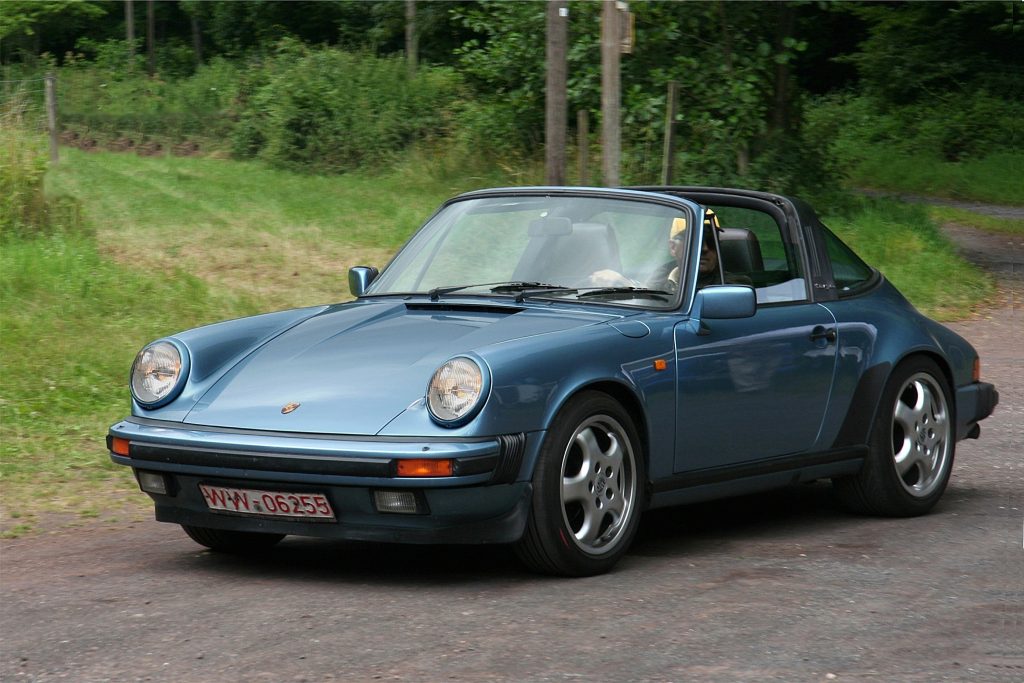
The G-body Targa kept the removable roof panel and Targa bar but added impact bumpers to meet US safety regulations. This era spans the 2.7L cars, the 911 SC, and the Carrera 3.2, with power ranging from 150 to 231 hp.
The G-body Targa is the longest-running Targa generation at 15 years. The SC Targa is the best entry point for buyers who want a classic Targa at a reasonable price. The Carrera 3.2 with the G50 gearbox (1987 to 1989) is the most refined version.
Read more about the impact bumper cars.
964 Targa (1989 to 1994)
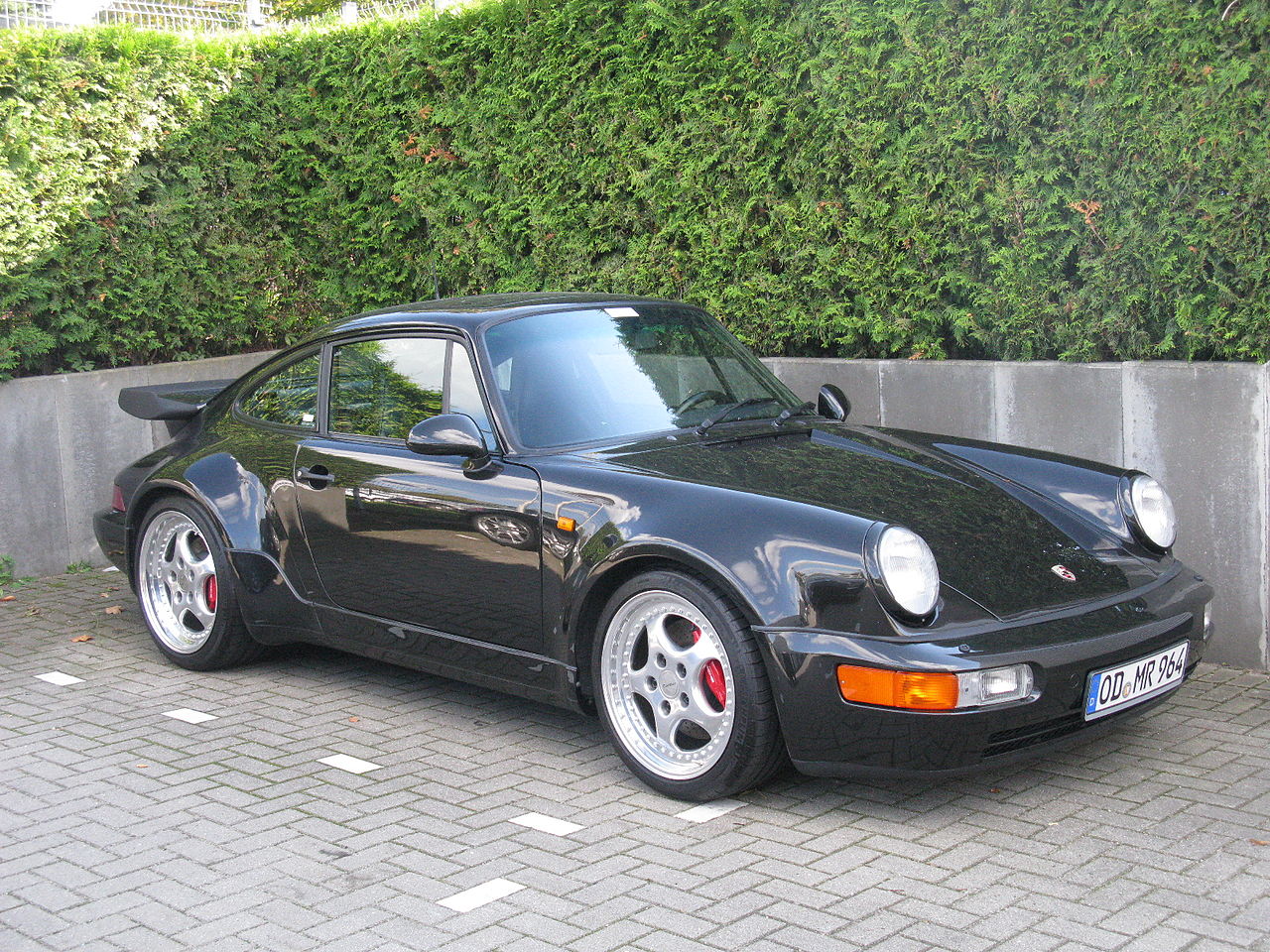
The 964 Targa was the last Targa to use the traditional removable roof panel and Targa bar before Porsche switched to the glass roof design. It uses the 964's 3.6L air-cooled flat-six making 247 to 250 hp and was available in both rear-wheel-drive Carrera 2 and all-wheel-drive Carrera 4 versions.
The 964 Targa is often overlooked because it was produced in smaller numbers and overshadowed by the 993 that followed. This makes it one of the more affordable air-cooled Targas and a strong option for buyers who want the classic Targa bar design with a more modern driving experience than the G-body.
993 Targa (1995 to 1998)
The 993 Targa was a complete reimagining of the Targa concept. Porsche dropped the Targa bar entirely and replaced the removable panel with a large glass roof that slides electrically under the rear window. The result looks nothing like previous Targas, and opinions remain divided.
The 993 Targa uses the same 3.6L air-cooled flat-six making 272 to 285 hp. About 4,583 were built, making it rarer than the 993 Cabriolet. Values have climbed steadily as the last air-cooled Targa.
Read more about the last air-cooled Targa.
996 Targa (2002 to 2005)
The 996 Targa continued the glass roof concept from the 993 but with a larger panel. The glass roof extends further and slides open to a greater degree. It uses the 996's 3.6L water-cooled flat-six making 320 hp.
The 996 Targa is the most affordable modern Targa, with prices starting around $30,000 to $40,000 for clean examples. It shares the 996's IMS bearing concern (on M96 engine cars), so a pre-purchase inspection is essential.
997 Targa (2007 to 2013)
The 997 Targa used a similar glass roof design to the 996 but with a larger, restyled panel. The 997 Targa 4 and Targa 4S came exclusively with all-wheel drive. Power ranges from 345 hp (Targa 4) to 400 hp (Targa 4S with the DFI engine).
The 997.2 Targa 4S (2009 to 2013) with the DFI engine eliminated the IMS bearing concern and is considered the best of the glass-roof Targas. Values sit between $50,000 and $80,000 for well-kept examples.
991 Targa (2014 to 2019)
The 991 Targa brought back the Targa bar. This was a dramatic return to the original design language, and the reception was overwhelmingly positive. The roof panel is no longer manually removable or glass-sliding. Instead, an elaborate automated mechanism lifts the rear deck, folds the roof panel behind the seats, and lowers everything back into place in about 19 seconds.
The 991 Targa is available as the Targa 4 (370 hp, later 370 hp turbo) and Targa 4S (420 hp, later 420 hp turbo), both with all-wheel drive. The Heritage Design Edition and Sport Classic inspired models added exclusivity.
992 Targa (2020 to present)
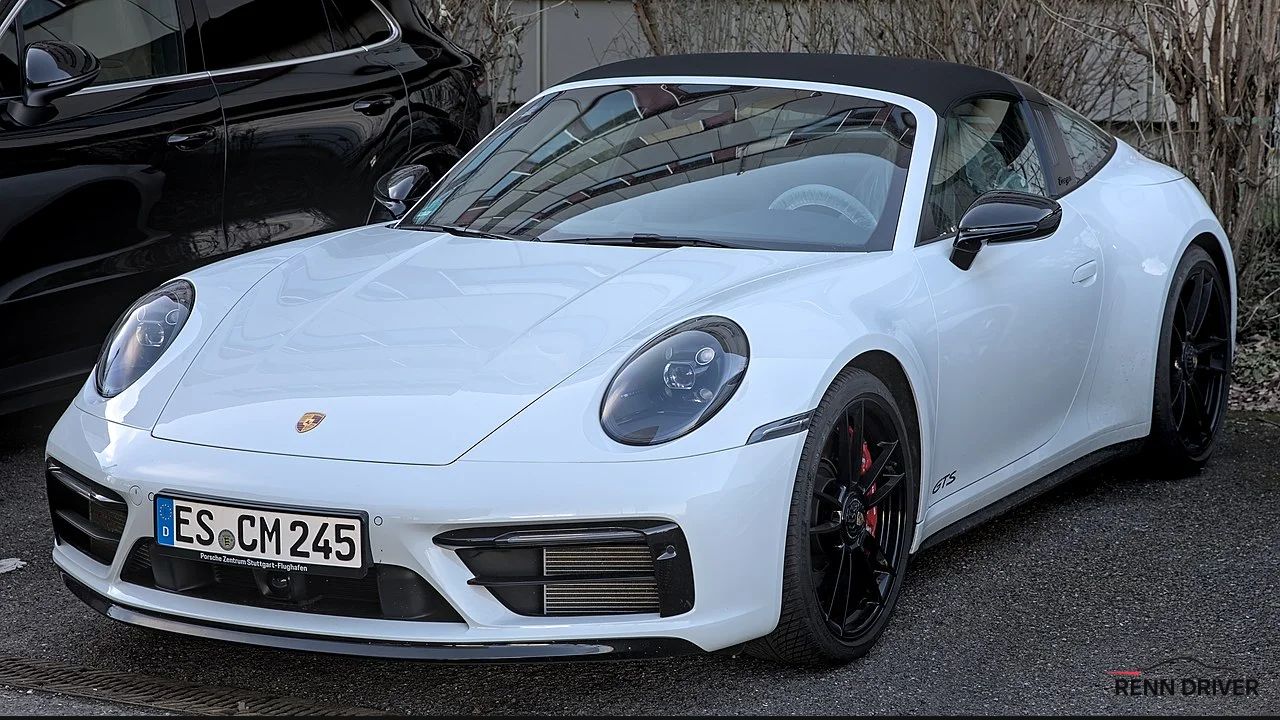
The 992 Targa continues the 991's automated Targa bar design with updated styling, a wider body, and the 992's improved chassis. The Targa 4 makes 379 hp, the Targa 4S makes 443 hp, and the Targa 4 GTS makes 473 hp. All use PDK or a seven-speed manual (GTS only).
The 992 Targa is the most refined and capable Targa ever built. It is also the heaviest, tipping the scales at over 3,600 lbs. Pricing starts at approximately $137,000 for the Targa 4 and climbs past $170,000 for the GTS.
The Evolution of the Targa Roof
The Targa roof has gone through four distinct design philosophies across eight generations:
Phase 1: Manual removable panel (1967 to 1994). The original concept. A vinyl or metal panel lifts out and stows in the trunk. The Targa bar stays fixed. Simple, mechanical, and prone to leaks if the seals are old.
Phase 2: Sliding glass roof (1995 to 2013). Porsche eliminated the Targa bar and introduced a glass panel that slides electrically. The 993, 996, and 997 all used this approach. It was clever and practical but lost the visual identity of the Targa bar.
Phase 3: Automated folding with Targa bar (2014 to present). The 991 and 992 brought back the Targa bar and added a complex automated roof mechanism. The result looks like a classic Targa from the outside but operates at the push of a button. The engineering is impressive, and the visual connection to the original is strong.
Each phase reflects the design priorities of its era. The original was pure function. The glass roof was about practicality. The modern automated system is about theater and heritage.
Which Targa Should You Buy?
- Best value: The 996 Targa is the most affordable modern Targa. Expect to pay $30,000 to $45,000 for a clean example.
- Best daily driver: The 992 Targa 4 is the most comfortable, refined, and capable Targa for daily use. It handles everything from commuting to spirited weekend drives.
- Best driver's car: The 997.2 Targa 4S offers the best balance of analog feel and modern reliability. The DFI engine is bulletproof, the chassis is communicative, and the glass roof has minimal maintenance concerns.
- Best collector car: The long hood 911S Targa is the most collectible Targa and one of the most valuable production 911s. It is an investment-grade car with strong long-term appreciation.
- Best classic Targa experience: The Carrera 3.2 Targa with G50 gearbox delivers the definitive Targa bar experience with a reliable engine, good parts availability, and reasonable purchase prices.
Renn Driver's Take
I have not driven this car yet, but I will update this section once I do.
Frequently Asked Questions
What does Targa mean on a Porsche?
Targa is a body style exclusive to Porsche, named after the Targa Florio road race in Sicily. It refers to a semi-open roof design with a removable or retractable roof section and, in most generations, a fixed roll bar called the Targa bar. Porsche trademarked the name in the 1960s.
Is the Porsche Targa all-wheel drive?
Yes, modern Porsche Targas (991 and 992) are exclusively all-wheel drive. Earlier Targas were available in both rear-wheel-drive and all-wheel-drive configurations depending on the generation and model variant.
Is a Targa better than a Cabriolet?
It depends on your priorities. The Porsche Targa offers more structural rigidity than the Cabriolet and a distinctive look with the Targa bar. The Cabriolet provides a fully open experience. The Targa is generally preferred by buyers who want some open-air driving without the full exposure and wind buffeting of a convertible.
How much does a Porsche 911 Targa cost?
A new Porsche 992 Targa 4 starts at approximately $137,000 MSRP. Used Targas range from around $30,000 for a 996 Targa to over $300,000 for a long hood 911S Targa in excellent condition.
Which Porsche Targa has the Targa bar?
The Porsche 911 Targa features the iconic Targa bar on the long hood (1967 to 1973), G-body (1974 to 1989), 964 (1989 to 1994), 991 (2014 to 2019), and 992 (2020 to present) generations. The 993, 996, and 997 Targas replaced the bar with a sliding glass roof.
How many Targa generations are there?
There are eight Porsche 911 Targa generations: the long hood, G-body, 964, 993, 996, 997, 991, and 992. Each generation corresponds to a 911 generation and shares its platform and mechanicals with the Carrera models of that era.
Final Thoughts
The Targa is the most distinctive body style in the 911 lineup. It has been part of the range for nearly 60 years, survived multiple design reinventions, and emerged in the modern era as one of the most desirable ways to buy a 911.
Whether you prefer the raw simplicity of the original long hood, the refined reliability of the G-body, the innovative glass roof of the last air-cooled Targa, or the automated spectacle of the 992, there is a Targa for every kind of Porsche enthusiast.
The Targa bar is the common thread. It is the element that ties 1967 to today, a visual signature that says: this is open air driving, Porsche style.
Image: Renn Driver