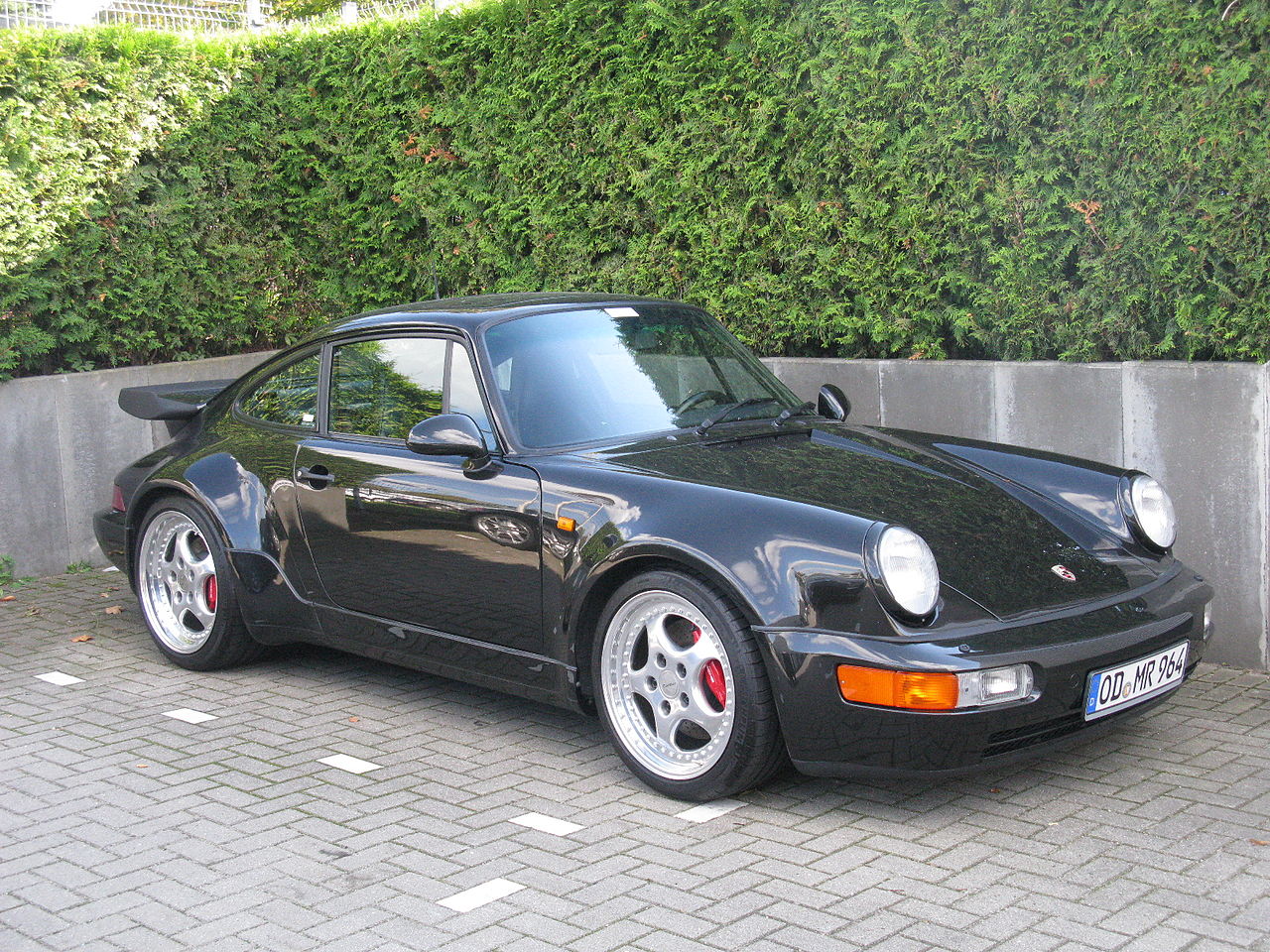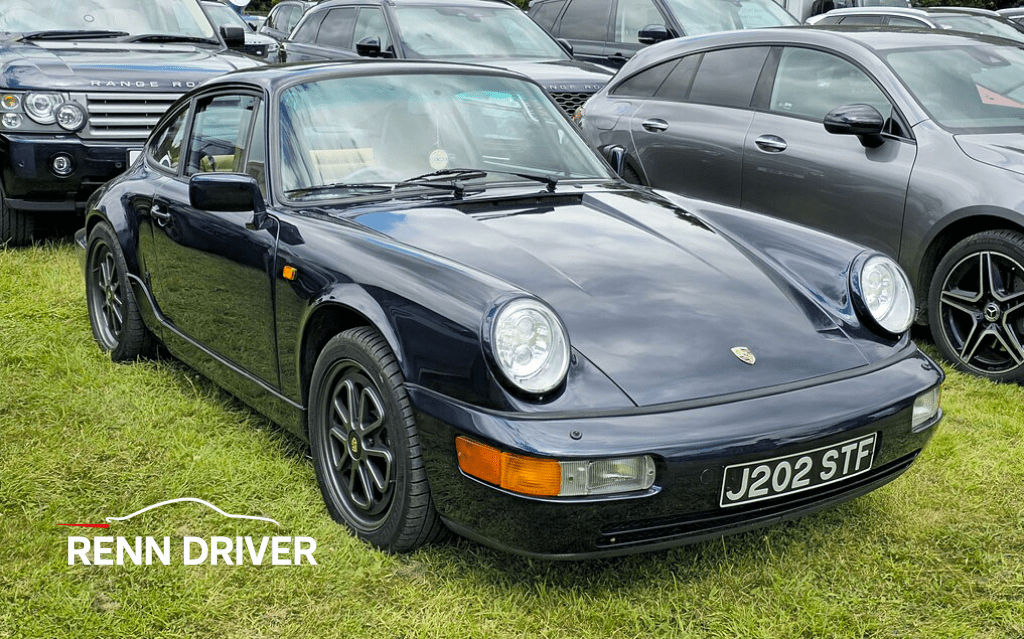
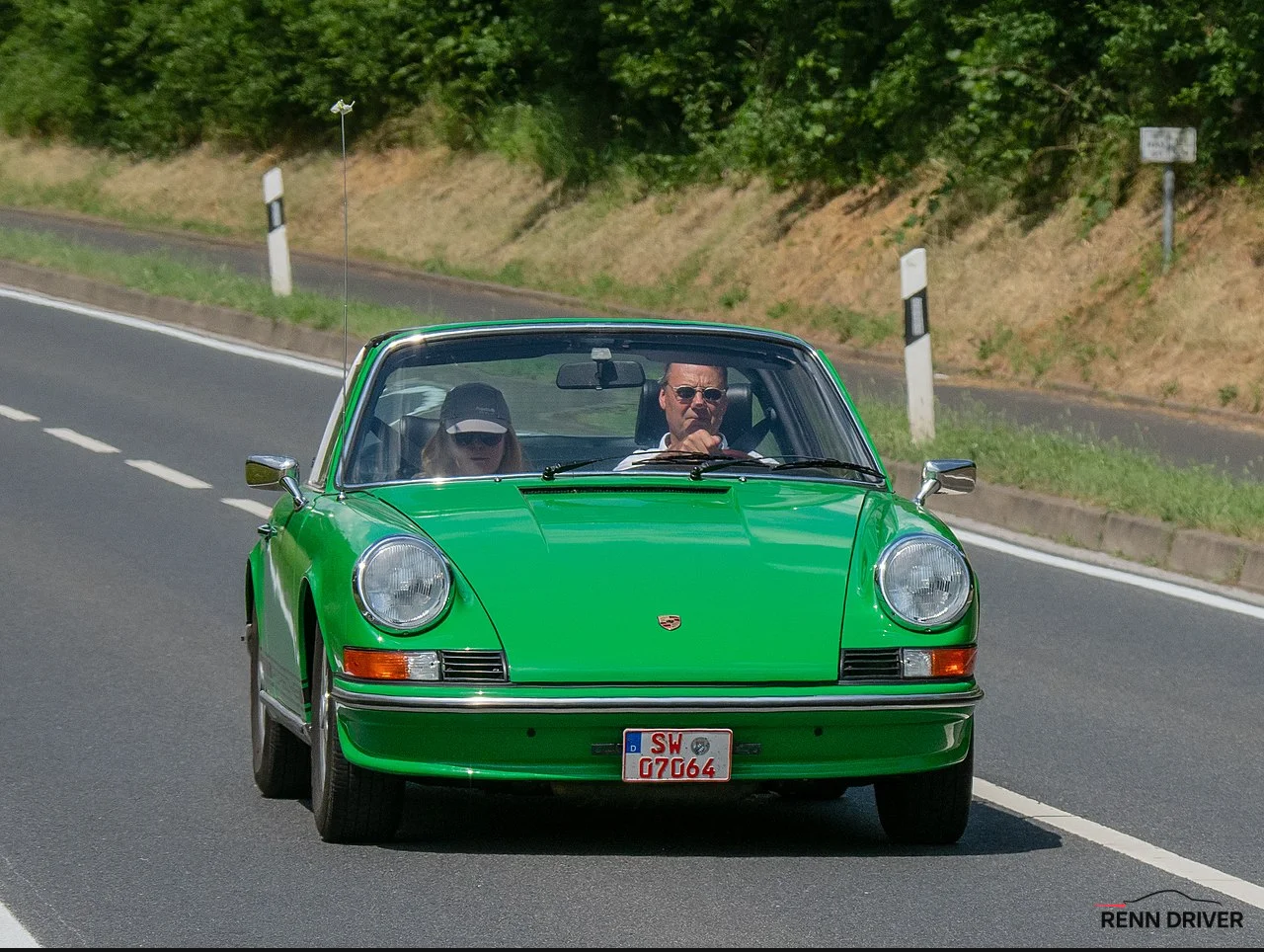
The Porsche 911T was the entry-level 911 produced from 1967 to 1973. The "T" stands for Touring. It was lighter, simpler, and more affordable than the 911E and 911S, powered by a 2.0L, 2.2L, or 2.4L air-cooled flat-six producing 110 to 140 hp depending on the year. Originally the cheapest way into a 911, the T is now a highly collectible classic with values ranging from $80,000 for project cars to over $200,000 for pristine matching-numbers examples.
Contents
Quick Summary
- Production years: 1967 to 1973
- Engine: 2.0L (1967 to 1969), 2.2L (1970 to 1971), 2.4L (1972 to 1973) air-cooled flat-six
- Power: 110 hp (2.0L) to 140 hp (2.4L)
- Transmission: 4-speed manual (standard) or 5-speed manual, plus Sportomatic semi-automatic option
- Layout: Rear-engine, rear-wheel drive
- Body styles: Coupe and Targa
- "T" stands for: Touring
- Current values: $80,000 to $200,000+
History and Purpose
When Porsche restructured the 911 lineup for the 1967 model year, it created a three-tier hierarchy: the 911T at the bottom, the 911E in the middle, and the 911S at the top. The T replaced the base 911 and the short-lived 911L (Luxus).
The T was designed as the accessible 911. It used Weber carburetors instead of the more expensive Bosch mechanical fuel injection found on the E and S. It had cast-iron cylinder liners instead of the Biral (aluminum with iron lining) units used in the higher-spec models. The interior was simpler, with leatherette seats instead of leather and fewer standard features.
None of this was a compromise in any meaningful sense. The 911T was still a rear-engined, air-cooled sports car with the same basic architecture as its more powerful siblings. It was simply configured for a broader audience, including buyers who wanted the classic 911 driving experience without the higher price tag.
Porsche sold more 911Ts than any other variant during the long-hood era. It was the volume model, the one that kept the factory running while the S and E served as halo products. Total production across all years was approximately 35,000 units, making it the most numerous long-hood 911 by a significant margin.
Specs by Year
| Years | Engine | Power | Torque | Fuel System | Top Speed |
|---|---|---|---|---|---|
| 1967 to 1969 | 2.0L | 110 hp | 116 lb-ft | Weber carburetors | 127 mph |
| 1970 to 1971 | 2.2L | 125 hp | 130 lb-ft | Zenith carburetors | 130 mph |
| 1972 to 1973 | 2.4L | 140 hp | 144 lb-ft | Bosch K-Jetronic CIS fuel injection (US) or Zenith carburetors (ROW) | 134 mph |
The 2.4L version is the most desirable among drivers because it produces the most power and torque while benefiting from the improved oiling system introduced for 1972. The early 1972 models had a distinctive external oil filler flap on the rear right fender, which was moved back inside the engine bay during the model year.
911T vs 911E vs 911S
Understanding the three-tier hierarchy of the long-hood era is essential for any buyer.
| 911T (Touring) | 911E (Einspritzung) | 911S (Super) | |
|---|---|---|---|
| Position | Entry-level | Mid-range | Top-tier |
| Power (2.2L era) | 125 hp | 155 hp | 180 hp |
| Fuel system | Carburetors | Bosch MFI | Bosch MFI |
| Suspension | Standard torsion bar | Hydropneumatic front (1969 to 1971) | Stiffer torsion bars, anti-roll bars |
| Interior | Leatherette, basic | Leather, upgraded | Leather, sport gauges |
| Wheels | Steel (standard) | Fuchs alloy | Fuchs alloy |
| Weight | Lightest (~2,250 lbs) | ~2,300 lbs | ~2,275 lbs |
The T's lighter weight partially offset its lower power output. In period, experienced drivers noted that a well-driven 911T could keep up with a 911S on twisty roads, where the S's extra power was harder to deploy fully. The T's simpler carburetors were also easier to tune and maintain than the E and S's mechanical fuel injection.
Engine and Drivetrain
All 911T engines are air-cooled horizontally opposed six-cylinder units with a single overhead camshaft per cylinder bank. The basic architecture is shared across all long-hood 911 variants. The differences lie in the internals.
The T uses cast-iron cylinder liners (Biral units came on higher models), lower compression ratios, and Weber or Zenith carburetors. These components are less expensive to produce and maintain. The compression ratio on the 2.0L T is 8.6:1, compared to 9.1:1 on the 911S of the same era.
The standard transmission was a 4-speed manual (the Porsche Type 901/902 gearbox). A 5-speed manual was optional and is the more desirable configuration today. Porsche also offered the Sportomatic semi-automatic transmission, a torque converter coupled to a conventional gearbox with a vacuum-operated clutch. The Sportomatic is an interesting period piece but lacks the engagement of the manual.
The final drive ratios varied by specification and market. US-spec cars with Sportomatic had taller gearing to meet emissions requirements, which blunted performance noticeably.
Design and Interior
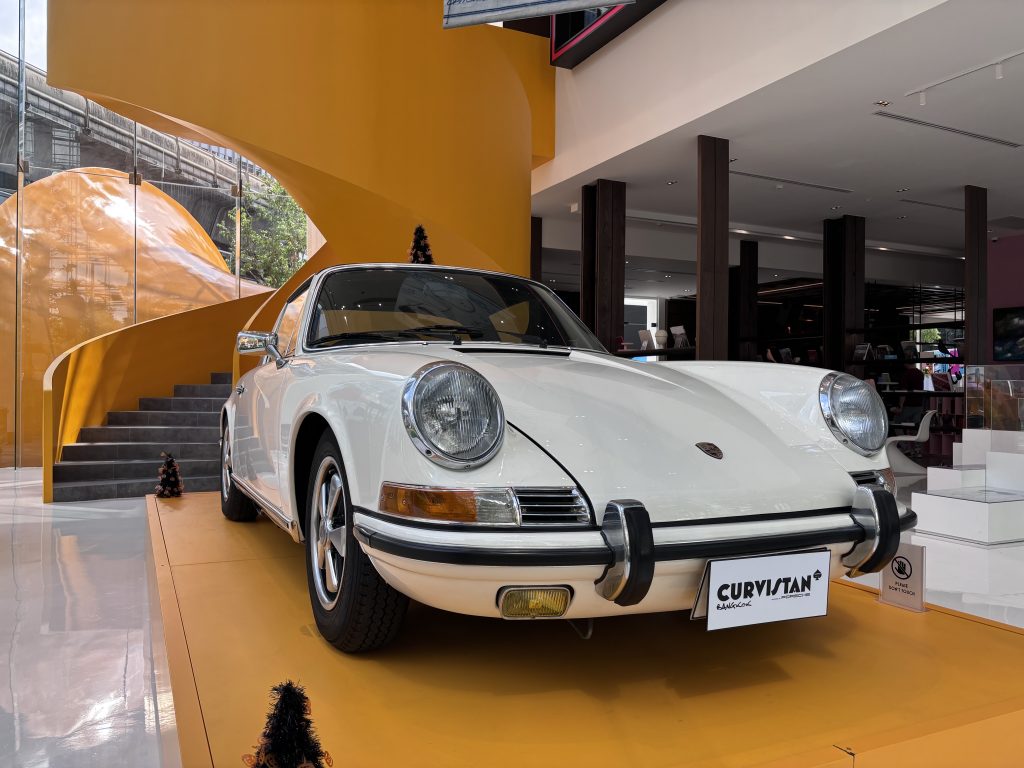
The 911T shares the same long-hood body as the E and S. From the outside, the main visual differences are subtle: steel wheels with hubcaps instead of Fuchs alloys (standard configuration), simpler chrome trim, and smaller "T" badging on the engine lid.
The interior is where the cost savings are most apparent. The T came standard with leatherette (vinyl) seats instead of leather, rubber floor mats instead of carpet, and fewer standard gauges. The instrument cluster used a tachometer and speedometer with auxiliary gauges for oil pressure and temperature, but the clock and fuel gauge were simpler units.
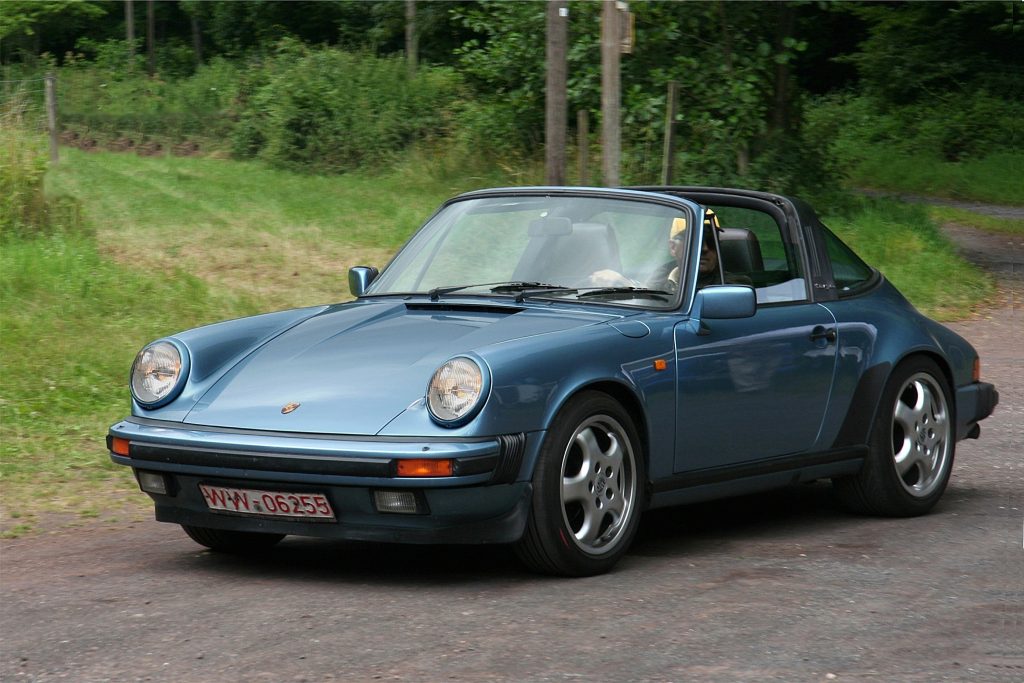
Available in both coupe and Targa body styles, the T Targa is particularly desirable today. The removable roof panel, brushed stainless Targa bar, and folding rear window (early cars) or fixed glass rear window (later cars) give it a distinctive look and an open-air driving experience that the coupe cannot match.
Color options followed the standard Porsche palette of the era: Bahia Red, Tangerine, Conda Green, Light Ivory, and numerous other period shades. Special-order Paint to Sample colors were available at additional cost, though they were rarely ordered on the entry-level T.
Driving Experience
The 911T is the lightest long-hood 911, and that lightness defines the driving experience. With approximately 2,250 lbs and 110 to 140 hp depending on the year, the car does not feel fast by modern standards. What it feels is alive.
The steering is unassisted and communicates every surface change through the thin-rimmed steering wheel. The throttle response through the carburetors is immediate and linear. The gearbox (particularly the 5-speed) has a mechanical precision that modern transmissions cannot replicate. And the rear-engine weight distribution creates a driving dynamic that rewards smooth inputs and punishes abrupt ones.
The lighter weight of the T actually works in its favor on tight, twisting roads. There is less inertia to manage, and the car changes direction with a willingness that the heavier E does not quite match. On open highways, the lower power output becomes more apparent, and the S pulls away decisively. But on a mountain road with tight corners, the T is a genuine pleasure.
The sound is pure air-cooled flat-six: a mechanical rattle at idle, a rising wail under acceleration, and the constant whir of the cooling fan behind you. It is the authentic early 911 experience.
Current Values
The 911T has appreciated significantly over the past two decades. Once considered the "base model" and priced accordingly, it is now recognized as the most affordable entry point into long-hood 911 ownership, and that accessibility has driven demand.
- Project or incomplete cars: $50,000 to $80,000. Cars needing significant mechanical or cosmetic work.
- Driver-quality coupes: $80,000 to $120,000. Running, driving cars with some cosmetic imperfections or non-original components.
- Good-condition coupes (matching numbers): $120,000 to $175,000. Clean cars with original engine and transmission, documented history.
- Excellent/concours coupes: $175,000 to $225,000+. Fully restored or exceptionally original examples.
- Targa models: Generally command a 10% to 20% premium over equivalent coupes in today's market.
The 2.4L cars (1972 to 1973) tend to bring the highest prices because they offer the most power, the improved oiling system, and the final evolution of the long-hood design. The 2.0L cars (1967 to 1969) are valued for their earliest-production status and pure simplicity.
Buying Guide
If you are considering a 911T, here is what to look for.
Check the Numbers
Matching numbers (original engine and transmission paired to the chassis) is critical for value. The chassis number is stamped on the left door jamb and on a plate in the front trunk. The engine number is stamped on the crankcase. A Porsche Certificate of Authenticity (available from Porsche for a fee) confirms original specification, color, and engine/transmission numbers.
Rust Inspection
Long-hood 911s are prone to rust in specific areas: the longitudinal chassis rails beneath the doors, the battery box area in the front trunk, the front suspension mounting points, the rear quarter panels near the taillights, and the area around the Targa bar mounting points (Targa models). A thorough inspection by a specialist is mandatory.
Engine Health
Check for excessive oil leaks, blue smoke on startup (valve guide wear), and unusual mechanical noise. A compression test and leak-down test are essential. Healthy cylinders should show compression within 10% of each other and less than 5% leak-down.
Previous Modifications
Many 911Ts were modified over the decades. Common modifications include engine upgrades (fitting S-spec pistons and camshafts), upgraded carburetors (fitting Weber 40 IDAs from the S), and suspension modifications. These can improve the driving experience but reduce value if the original components are not included.
Renn Driver's Take
I have not driven this car yet, but I will update this section once I do.
Frequently Asked Questions
What does the T stand for in Porsche 911T?
The T in Porsche 911T stands for Touring. It designated the entry-level variant in the 911 lineup from 1967 to 1973, positioned below the 911E and 911S.
How much is a Porsche 911T worth?
A Porsche 911T is worth between $80,000 and $200,000 or more depending on year, condition, matching numbers status, and body style. Targa models typically command a 10% to 20% premium over coupes. The 2.4L (1972 to 1973) cars tend to bring the highest prices.
How much horsepower does a Porsche 911T have?
The Porsche 911T produces between 110 hp (2.0L, 1967 to 1969) and 140 hp (2.4L, 1972 to 1973) depending on the model year and engine displacement.
Is the Porsche 911T the same as the classic 911?
The Porsche 911T is one variant of the classic long-hood 911, produced alongside the 911E and 911S from 1967 to 1973. All three share the same basic body and rear-engine flat-six layout but differ in power output, fuel system, interior specification, and price.
What is the difference between the 911T and the 911E?
The Porsche 911T uses carburetors, produces less power, has a simpler interior with leatherette seats, and came standard with steel wheels. The 911E uses Bosch mechanical fuel injection, produces 30 to 25 more horsepower, features a leather interior, and came with Fuchs alloy wheels. The 911E also used hydropneumatic front suspension from 1969 to 1971.
Should I buy a 911T coupe or Targa?
It depends on your priorities. The Porsche 911T coupe is the purer driving experience with a stiffer body structure. The 911T Targa offers open-air motoring with the removable roof panel and is currently more desirable in the collector market, commanding a 10% to 20% value premium. Both are excellent choices.
Final Thoughts
The Porsche 911T is the car that made the early 911 accessible. While the 911S got the magazine covers and the 911E got the technology, the T put more people behind the wheel of a real Porsche 911 than any other variant of the era.
Its simplicity is now its greatest asset. The carburetor-fed flat-six is easy to work on. The lighter weight makes it lively on back roads. And the lack of complexity means there is less to go wrong. For anyone looking to experience a long-hood 911 without spending S-model money, the 911T remains the best entry point. And with values continuing to climb, it is also proving to be a sound investment.
The original car that launched the 911 legend started it all, but the 911T brought the dream to life for thousands of drivers.
Images by: Renn Driver and Contributors, licensed under CC BY-SA 2.0, via Wikimedia Commons