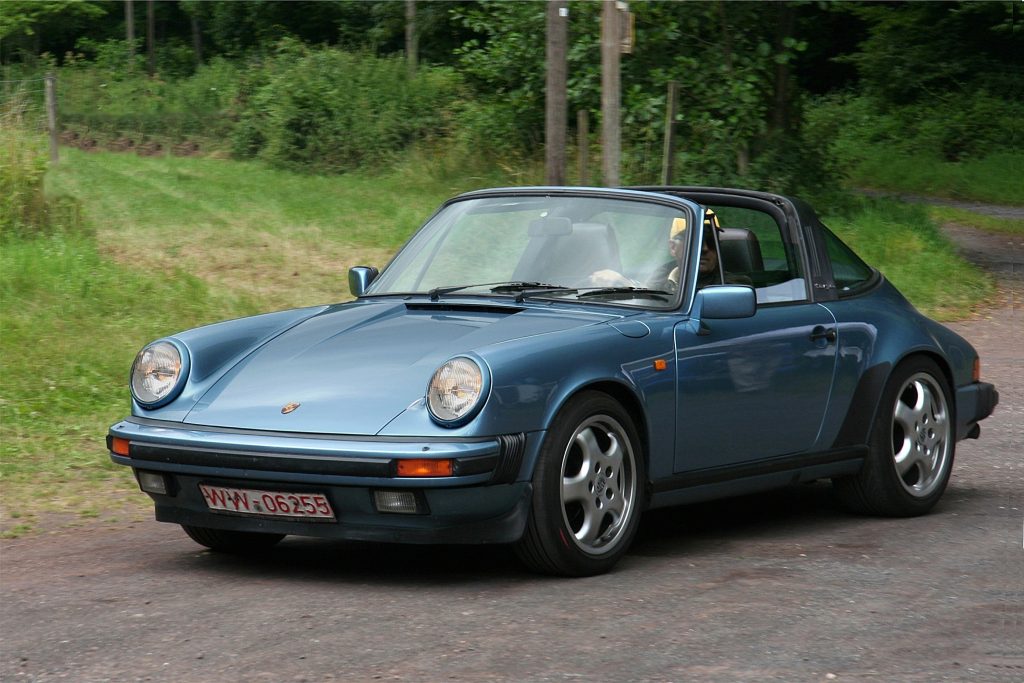
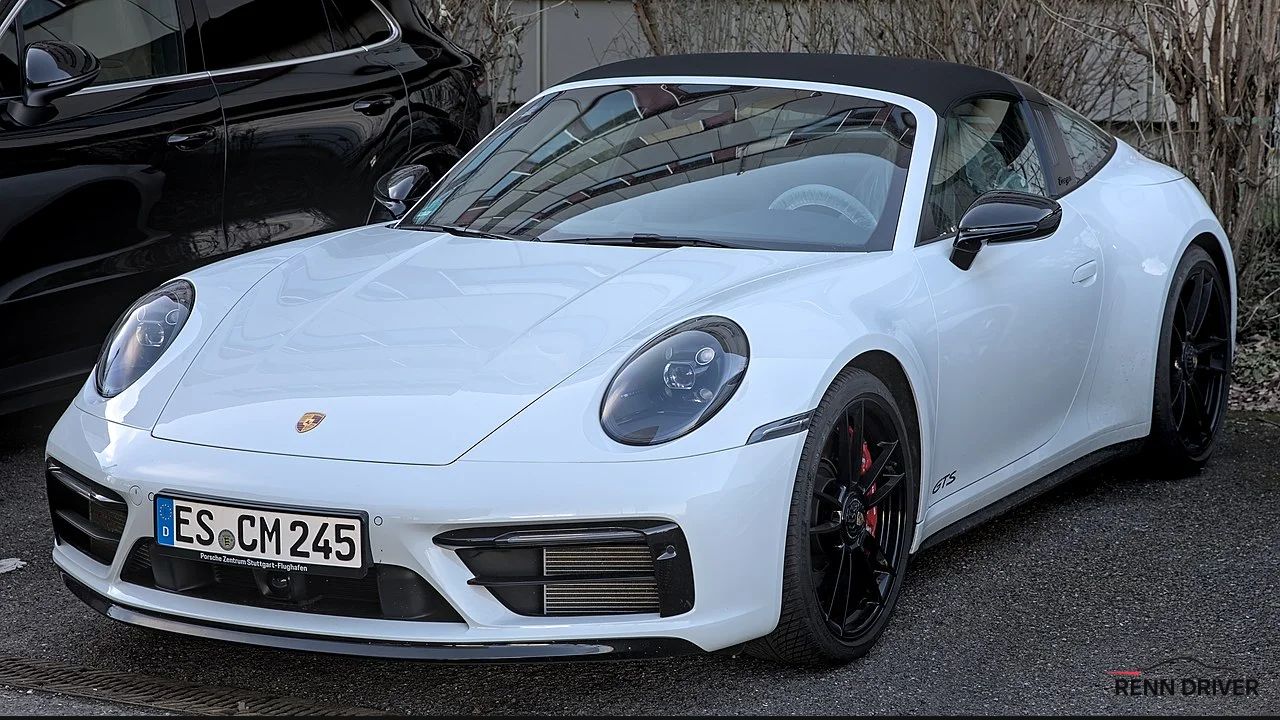
The Porsche 992 Targa (2020 onwards) is the open-top version of the 992 generation 911 featuring the signature Targa bar, a folding roof panel, and a wraparound glass rear window. It is available as the Targa 4 (379 hp) and Targa 4S (443 hp), both powered by a twin-turbo 3.0L flat-six with all-wheel drive. A GTS variant rounds out the lineup with 473 hp.
Contents
- 1 Quick Summary
- 2 What Makes the Targa Different
- 3 992 Targa 4
- 4 992 Targa 4S
- 5 992 Targa 4 GTS
- 6 The Targa Roof Mechanism
- 7 Targa vs. Cabriolet
- 8 Targa vs. Coupe
- 9 Pricing and Options
- 10 Renn Driver's Take
- 11 FAQs
- 12 Final Thoughts
The full guide below covers all the details.
Quick Summary
- Production years: 2020 onwards
- Engine: 3.0L twin-turbo flat-six
- Variants: Targa 4 (379 hp), Targa 4S (443 hp), Targa 4 GTS (473 hp)
- Transmission: 8-speed PDK standard, 7-speed manual available on some variants
- Drive: All-wheel drive standard on all Targa models
- Key feature: Signature Targa bar, folding roof panel, wraparound glass rear window
- Weight penalty vs. coupe: Approximately 50 to 70 kg (110 to 155 lbs)
- MSRP range: ~$120,000 (Targa 4) to ~$150,000+ (Targa 4 GTS)
What Makes the Targa Different
The Targa is not a convertible and not a coupe. It occupies its own space in the 911 lineup and has done so since 1967.
The defining features are the fixed Targa bar that arcs over the cabin, the removable (or in the 992's case, power-folding) roof panel, and the large wraparound glass rear window. When the roof is open, you get fresh air and sky above while retaining the structural rigidity of the bar and the protection of the glass rear section.
The Targa bar itself is a polished aluminum structure that wraps from one B-pillar to the other. On the 992, it is finished in a brushed aluminum look that references the original 1967 Targa. It is both a structural element and the most recognizable design feature of any Targa model.
All 992 Targas come with all-wheel drive. This has been the case since the last air-cooled generation. The combination of AWD grip and open-air driving makes the Targa a compelling year-round sports car, particularly in climates with variable weather.
992 Targa 4
The base Targa 4 uses the same 3.0L twin-turbo flat-six found in the standard Carrera, producing 379 hp and 331 lb-ft of torque. The 8-speed PDK dual-clutch transmission is standard.
Performance:
- 0 to 60 mph: approximately 4.0 seconds (PDK)
- Top speed: 180 mph
- Weight: approximately 3,594 lbs (1,630 kg)
The Targa 4 is the entry point to Targa ownership, and for most drivers, it provides more performance than they will ever use on public roads. The all-wheel-drive system distributes torque seamlessly, and the PDK transmission is among the best dual-clutch units in production.
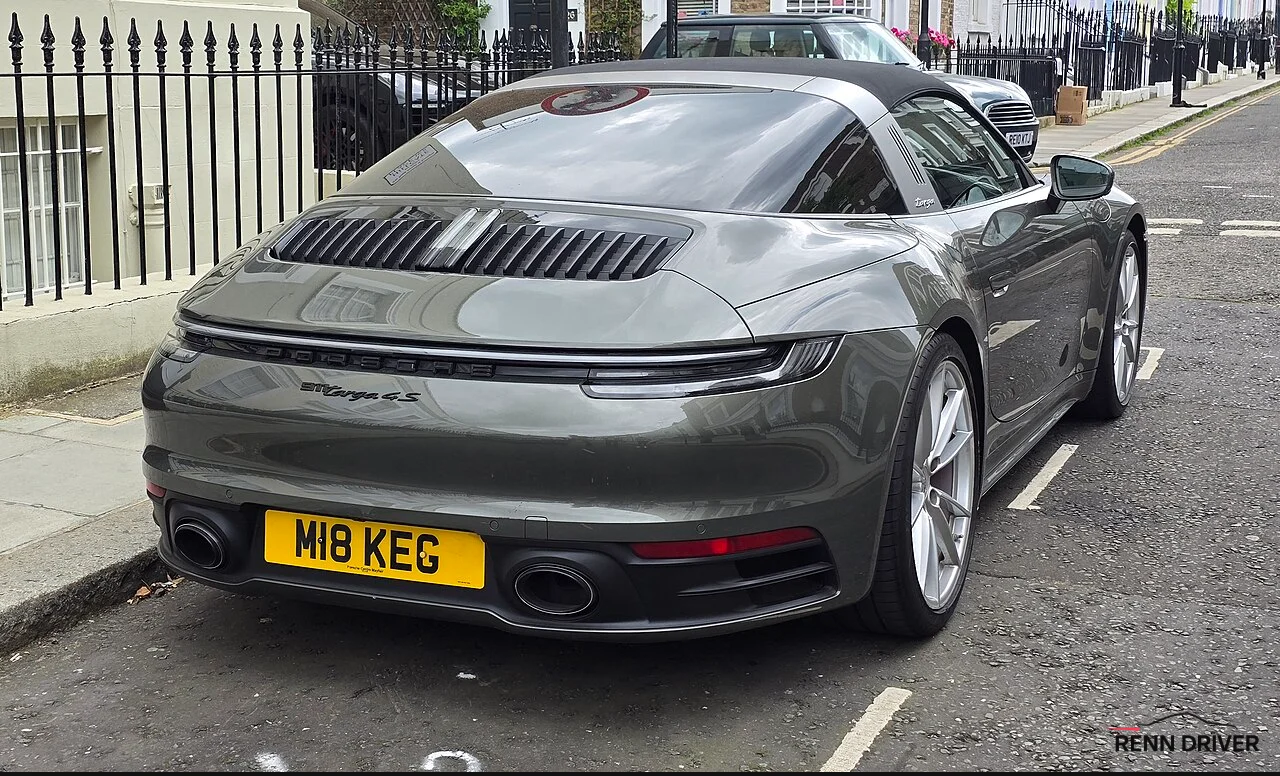
992 Targa 4S
The Targa 4S steps up to 443 hp and 390 lb-ft of torque from the same 3.0L twin-turbo flat-six, achieved through larger turbochargers and revised engine management.
Performance:
- 0 to 60 mph: approximately 3.4 seconds (PDK with Sport Chrono)
- Top speed: 188 mph
- Weight: approximately 3,616 lbs (1,640 kg)
The 4S adds the Sport Chrono package as standard equipment, PASM sport suspension as an option, and larger brakes. It occupies the sweet spot in the Targa range for enthusiasts who want more performance without moving to the GTS.
A 7-speed manual transmission is available on the Targa 4S in some markets. The manual Targa 4S is a rare configuration and a favorite among driving purists who want the Targa experience with three pedals.
992 Targa 4 GTS
The Targa 4 GTS sits at the top of the Targa lineup with 473 hp and 420 lb-ft of torque. It uses the same engine as the Carrera GTS with enhanced turbochargers and calibration.
Performance:
- 0 to 60 mph: approximately 3.2 seconds (PDK with Sport Chrono)
- Top speed: 191 mph
The GTS adds PASM sport suspension as standard, the Sport Chrono package, the sport exhaust system, lightweight glass, and black exterior accents. It represents the most complete Targa specification, combining open-air driving with a genuine performance focus.
The GTS is also available with the 7-speed manual, making it the most powerful manual Targa ever produced.
The Targa Roof Mechanism
The 992 Targa uses a fully automated roof mechanism that is genuinely impressive to watch. The entire glass rear section lifts up and back, the fabric roof panel folds and stows behind the rear seats, and the glass section returns to its closed position. The process takes approximately 19 seconds and can be operated at speeds up to 30 mph.
The mechanism is complex. It involves multiple electric motors, hinges, and latches working in precise sequence. Porsche engineered it to be reliable, but it is still one of the most intricate roof systems on any production car. The glass rear window and the structural bar mean the Targa does not fold as flat as a conventional convertible, but the tradeoff is a car that looks extraordinary from every angle, roof open or closed.
With the roof closed, the Targa is nearly as quiet as the coupe. Wind noise around the bar and roof seals is minimal at highway speeds. The glass rear window provides decent visibility and lets light into the cabin even when closed.
Targa vs. Cabriolet
Both the Targa and Cabriolet offer open-air driving in a 992 chassis, but the experience is different.
- Open-air experience: The Cabriolet opens up more of the sky. The Targa bar remains fixed overhead, so you get fresh air from above but the bar frames the view. Some prefer the Targa's partial open feel; others want the full convertible experience.
- Structural rigidity: The Targa bar adds structural stiffness that the Cabriolet does not have. The Targa feels more planted and composed, especially on uneven surfaces.
- Looks: This is subjective, but the Targa bar gives the car a distinctive profile that the Cabriolet cannot match. The Targa is arguably the best looking 911 variant from any angle.
- Weight: The Targa is slightly heavier than the Cabriolet due to the bar and glass rear section.
- Drive: The Targa comes exclusively with AWD. The Cabriolet is available in both rear-wheel-drive and AWD configurations.
Targa vs. Coupe
The coupe is lighter, stiffer, and the natural choice for pure driving dynamics. The Targa trades some of that stiffness and adds roughly 50 to 70 kg for the roof mechanism, bar structure, and glass rear window.
In practice, the difference on the road is subtle. The Targa does not feel soft or compromised. The AWD system actually improves traction and stability, which compensates for the added weight in many situations. If you value the open-air option and the iconic design, the dynamic penalty is worth accepting.
The Targa also commands a price premium of approximately $10,000 to $15,000 over the equivalent coupe specification. Resale values are strong, particularly for well-specced Targa 4S and GTS models.
Pricing and Options
| Model | MSRP (approx.) |
|---|---|
| 992 Targa 4 | $120,000 |
| 992 Targa 4S | $137,000 |
| 992 Targa 4 GTS | $150,000+ |
Popular options include the Sport Chrono package (standard on 4S and GTS), PCCB ceramic brakes, rear-axle steering, and the full leather interior. Heritage Design Edition models with retro color schemes and details have been offered in limited numbers and trade at premiums on the secondary market.
Renn Driver's Take
I have not driven this car yet, but I will update this section once I do.
Frequently Asked Questions
Is the Porsche 992 Targa all-wheel drive?
Yes. Every Porsche 992 Targa comes standard with all-wheel drive. There is no rear-wheel-drive Targa option. This has been the case for the Targa since the 993 generation.
How much does the Porsche 992 Targa cost?
The Porsche 992 Targa 4 starts at approximately $120,000 MSRP. The Targa 4S starts at approximately $137,000. The Targa 4 GTS starts above $150,000. Options and market adjustments can increase the final price significantly.
Is the 992 Targa available with a manual transmission?
Yes. The Porsche 992 Targa 4S and Targa 4 GTS are available with a 7-speed manual transmission. The base Targa 4 comes with the 8-speed PDK only.
What is the difference between the 992 Targa and the 992 Cabriolet?
The Porsche 992 Targa has a fixed aluminum bar, a folding roof panel, and a wraparound glass rear window. The Cabriolet has a fully folding soft top. The Targa is AWD only, while the Cabriolet is available in RWD and AWD. The Targa offers more structural rigidity but slightly less open-air exposure.
How long does the Targa roof take to open?
The Porsche 992 Targa roof opens or closes in approximately 19 seconds. The mechanism can be operated at speeds up to 30 mph.
Is the 992 Targa heavier than the coupe?
Yes. The Porsche 992 Targa weighs approximately 50 to 70 kg (110 to 155 lbs) more than the equivalent coupe, due to the roof mechanism, Targa bar, and glass rear window.
Final Thoughts
The 992 Targa is the 911 for people who want it all: the performance of the 992 platform, the open-air experience, the all-weather confidence of AWD, and one of the most beautiful automotive designs ever drawn.
The Targa bar makes every 911 it touches look better. The glass rear window catches light in a way that no coupe or cabriolet can match. And the driving experience, while slightly softer than the coupe, remains unmistakably 911.
If you can only have one 911 and you want to enjoy it in every condition, the Targa is a compelling choice. The Carrera coupe may be purer, but the Targa is the one you will find excuses to drive.
Images: Wikimedia Commons, licensed under CC BY-SA 4.0