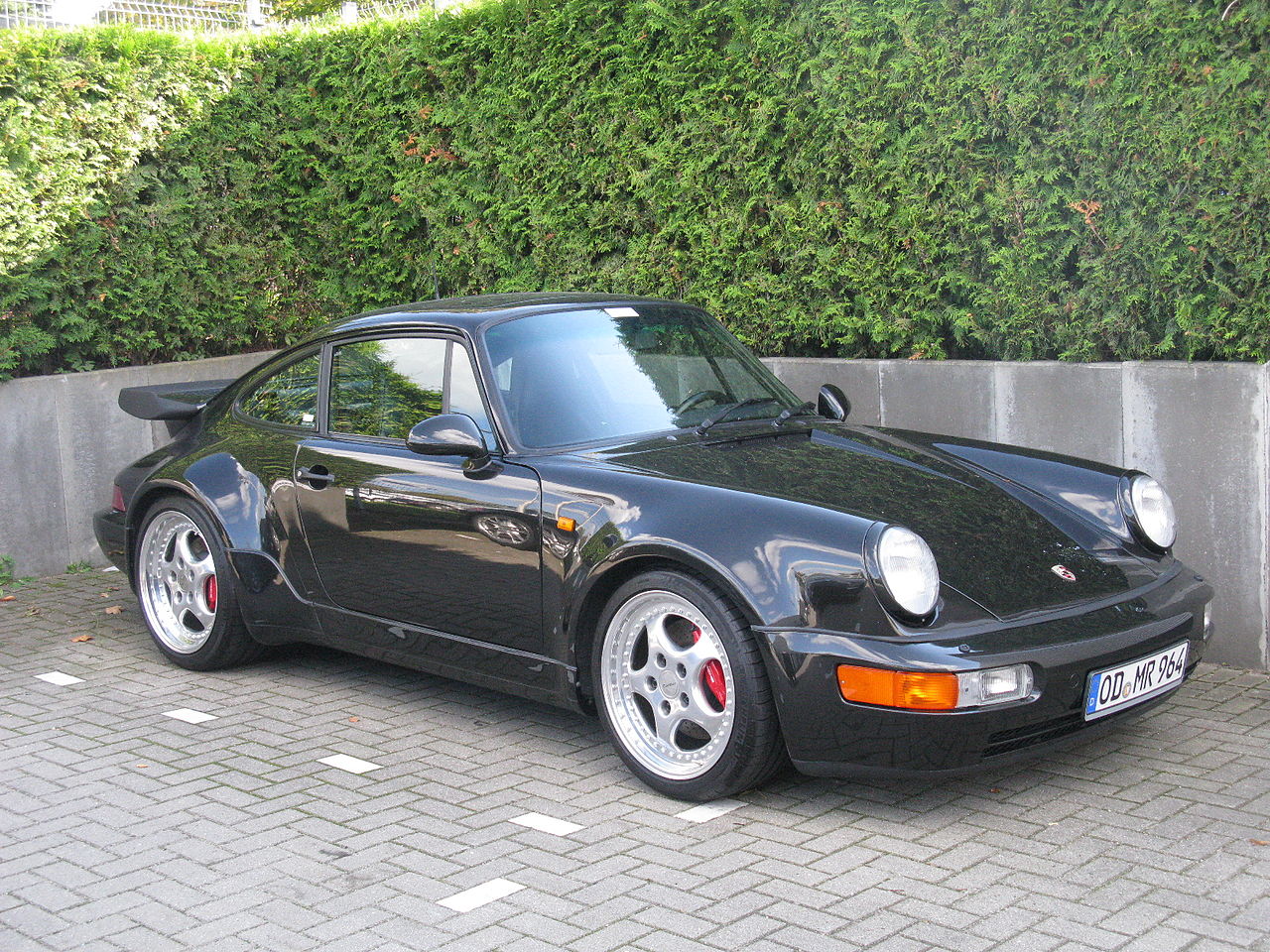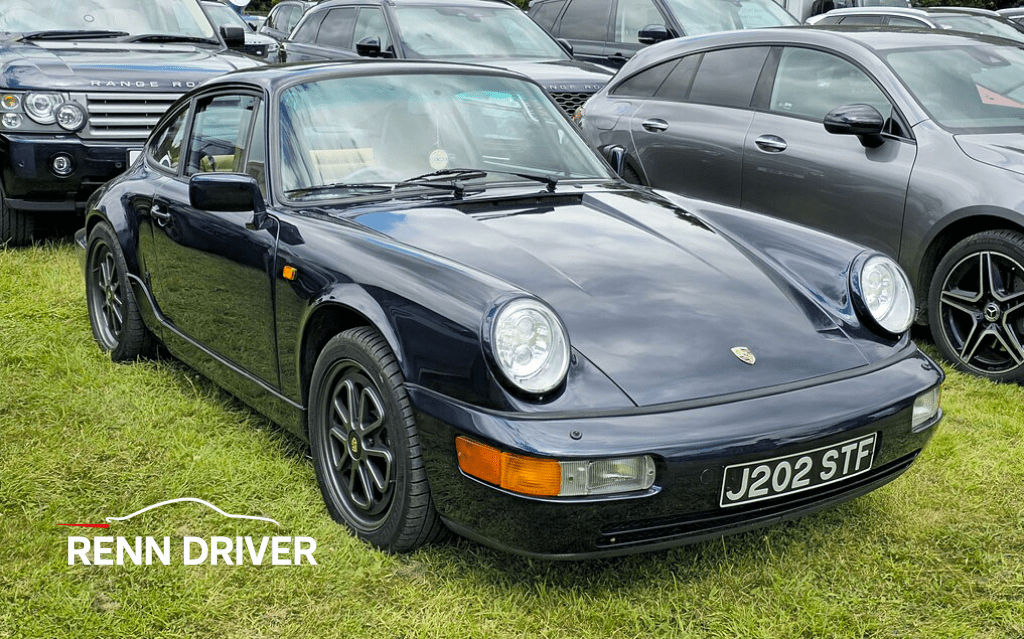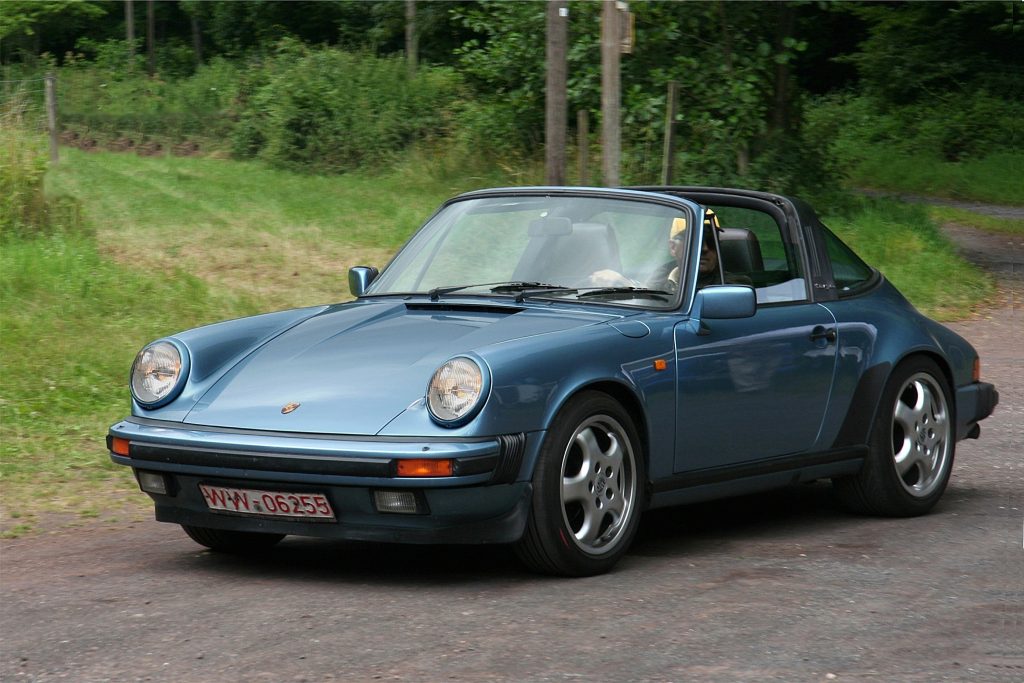
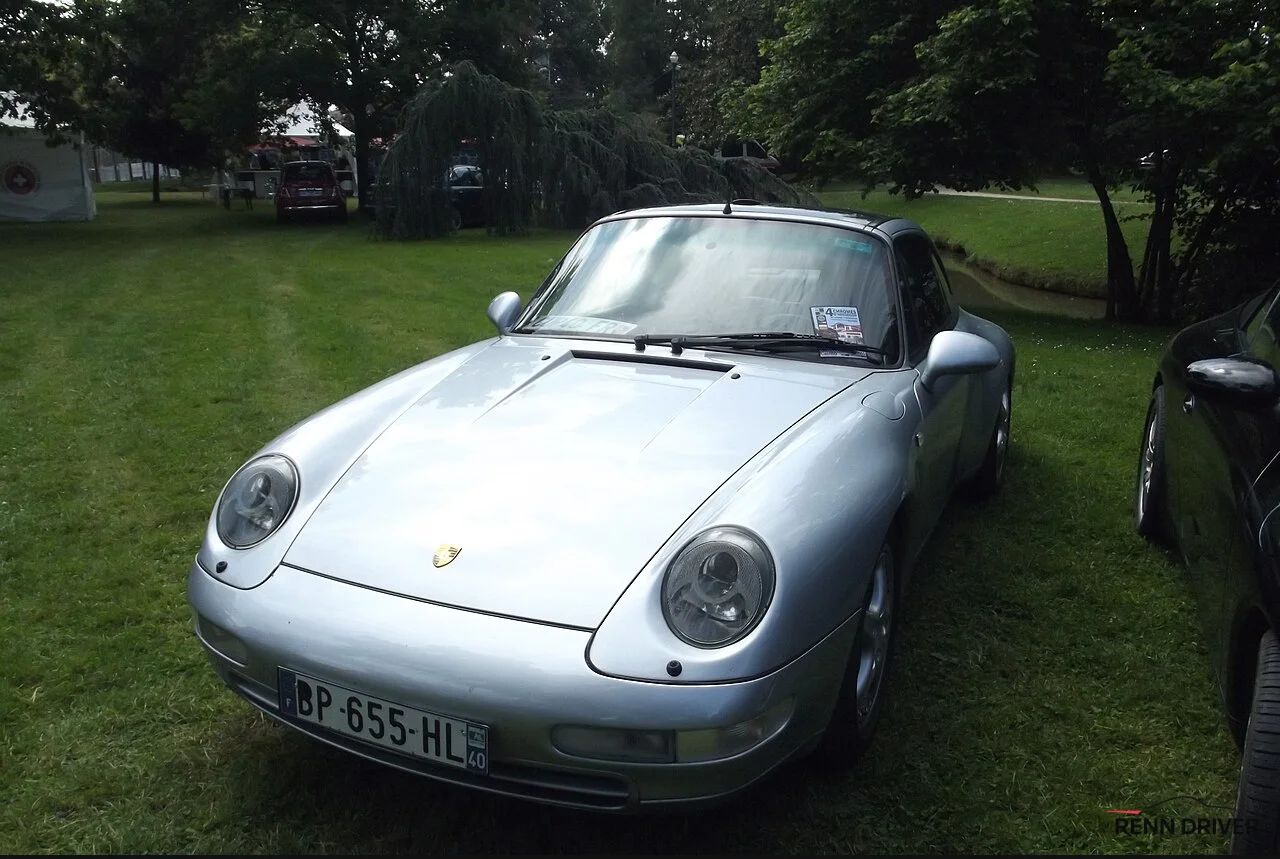
The Porsche 993 Targa (1995 to 1998) is the last air-cooled Targa 911. It replaced the traditional removable roof panel and Targa bar with a large glass roof that slides electrically under the rear window. Power comes from a 3.6L flat-six making 272 to 285 hp. About 4,583 were built, and values now reflect its rarity as the final air-cooled open-top 911.
Contents
- 1 Quick Summary
- 2 A New Kind of Targa
- 3 How the Glass Roof Works
- 4 Engine and Drivetrain
- 5 Technical Specifications
- 6 Design and Interior
- 7 993 Targa vs 993 Cabriolet
- 8 Collectibility and Values
- 9 Maintenance and Known Issues
- 10 Renn Driver's Take
- 11 FAQs
- 12 Final Thoughts
The full guide below covers all the details.
Quick Summary
- Production years: 1995 to 1998
- Engine: 3.6L air-cooled flat-six
- Power: 272 hp (early), 285 hp (VarioRam, from 1996)
- Transmission: 6-speed manual or 4-speed Tiptronic
- Drive: Rear-wheel drive (Targa) or all-wheel drive (Targa 4)
- Top speed: 162 mph
- 0 to 60 mph: 5.4 seconds
- Roof type: Electrically sliding glass panel, no Targa bar
- Production: Approximately 4,583 units
A New Kind of Targa
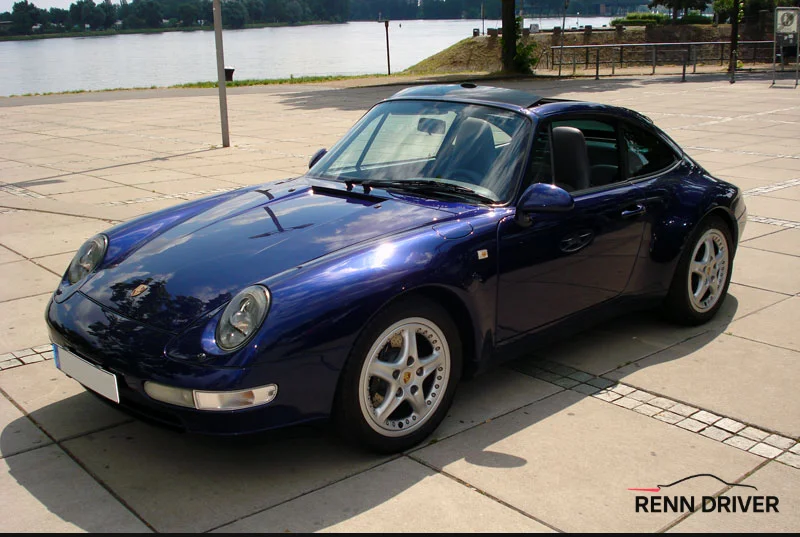
When Porsche unveiled the final air-cooled generation Targa in 1995, it looked nothing like the Targas that came before it. Gone was the signature Targa bar that had defined the body style since 1967. Gone was the removable roof panel that you had to stow by hand. In their place, Porsche fitted a massive glass panel that slid electrically beneath the rear window at the push of a button.
This was a radical departure. The Targa bar had been the visual hallmark of the model for nearly 30 years. Purists were skeptical. But Porsche had a practical reason for the change: the old design leaked, rattled, and required storage space for the removed panel. The new glass roof solved all three problems.
The 993 Targa was built on the Cabriolet platform, sharing its reinforced body structure. This meant it was slightly heavier than the coupe but structurally rigid enough to handle the open roof without excessive flex. It was only available as a rear-wheel-drive model initially, with the all-wheel-drive Targa 4 joining the lineup later.
How the Glass Roof Works
The 993 Targa's roof mechanism is clever engineering. A large tinted glass panel covers the front section of the roof, roughly the size of a sunroof on steroids. When you press the switch, the glass panel lifts slightly at the rear edge, then slides backward and tucks underneath the fixed rear window.
The whole operation takes about 10 seconds. You can operate it at speeds up to 50 km/h (about 30 mph), though most owners do it while parked. With the roof open, you get a wide opening above the front seats that lets in plenty of air and light without the full exposure of a cabriolet.
When closed, the glass roof creates a greenhouse effect inside the cabin. On hot days, this is noticeable. Porsche fitted a tinted coating to reduce heat buildup, but it does not eliminate the issue entirely. In cooler climates, the closed glass roof gives the cabin an airy, open feel that the steel-roofed coupe cannot match.
Engine and Drivetrain
The 993 Targa shares its mechanicals entirely with the base Carrera. That means a 3.6L air-cooled flat-six sitting in the traditional rear overhang position.
Early 993 Targas (1995 to mid 1996) produce 272 hp from the naturally aspirated engine. From mid 1996 onward, Porsche fitted VarioRam, a variable intake manifold system that boosted output to 285 hp and improved mid-range torque. The VarioRam cars feel noticeably stronger between 4,000 and 6,000 rpm, where you spend most of your time on the road.
The standard gearbox is a six-speed manual, one of the best manual transmissions Porsche has ever fitted to a 911. The throws are short and precise, and the clutch feel is engaging without being heavy. A four-speed Tiptronic automatic was available for buyers who preferred a more relaxed experience, but manual cars are far more desirable today.
The engine in the 993 is closely related to the Mezger design, though it is not a true Mezger unit. Critically, it does not suffer from the IMS bearing failures that would plague the later M96 engines in the 996 and 997. This makes the 993 one of the most mechanically reliable 911 generations to own.
Technical Specifications
| Spec | Value |
|---|---|
| Engine | 3.6L air-cooled flat-six |
| Power | 272 hp (early) / 285 hp (VarioRam) |
| Torque | 243 lb-ft (early) / 251 lb-ft (VarioRam) |
| Transmission | 6-speed manual / 4-speed Tiptronic |
| Drive | Rear-wheel drive or all-wheel drive |
| 0 to 60 mph | 5.4 seconds (manual) |
| Top speed | 162 mph |
| Curb weight | Approximately 3,064 lbs (1,390 kg) |
| Roof | Electrically sliding glass panel |
| Production | Approximately 4,583 units |
Design and Interior
From the outside, the 993 Targa is immediately recognizable. The glass roof gives the car a distinctive silhouette that looks different from both the coupe and the cabriolet. The roofline is uninterrupted by a Targa bar, which gives the car a cleaner, more modern profile than previous Targa generations.
The rear window wraps around more than the coupe's, and the C-pillars are thinner to accommodate the sliding glass mechanism. The overall effect is a car that looks lighter and more open than the coupe, even with the roof closed.
Inside, the 993 Targa is identical to the Carrera. You get the same five-gauge instrument cluster, the same leather-wrapped steering wheel, and the same rear seats that are best used for luggage. The cabin is well insulated from wind noise when the roof is closed, and road noise levels are comparable to the coupe at highway speeds.
The only Targa-specific interior feature is the roof control switch, mounted in the center console. There is also a manually operated shade that can cover the glass panel when parked to reduce heat buildup inside the car.
993 Targa vs 993 Cabriolet
The 993 Targa and Cabriolet both offer open air driving, but the experience is different.
| 993 Targa | 993 Cabriolet | |
|---|---|---|
| Roof type | Sliding glass panel | Fabric soft top |
| Open feel | Large sunroof sensation | Full convertible experience |
| Wind noise | Less (partial opening) | More (full exposure) |
| Structural rigidity | Higher (fixed rear glass) | Lower (flexible top) |
| Weight | Similar | Similar |
| Production | ~4,583 | ~14,600 |
| Values | Higher (rarer) | Lower (more common) |
The Targa is the better choice if you want the option to crack the roof open on a sunny drive without the full exposure and wind buffeting of a convertible. The Cabriolet is the choice if you want maximum sun and sky above you. Both share the same drivetrain and performance figures.
The Targa is significantly rarer. Porsche built roughly three times as many Cabriolets as Targas, which contributes to the Targa's higher market values today.
Collectibility and Values
The 993 Targa benefits from two powerful market forces: it is the last air-cooled 911, and it is one of the rarest body styles in the 993 lineup.
Values have climbed steadily over the past decade. Clean, well-documented manual examples now trade between $90,000 and $140,000 depending on color, options, and mileage. VarioRam cars (1997 to 1998 model years) command a slight premium over earlier cars. Tiptronic cars sell for 15 to 25 percent less than equivalent manuals.
Special colors, Sport Seats, and documented Porsche Exclusive options add to the value. Low-mileage garage queens occasionally appear at auction and can exceed $160,000.
Compared to the 993 Carrera coupe, the Targa typically trades at a slight premium due to lower production numbers. Compared to the 993 Cabriolet, the Targa commands a meaningful premium because of its rarity and distinctive design.
Maintenance and Known Issues
Mechanically, the 993 Targa is as reliable as any other 993 Carrera. The air-cooled flat-six is a proven engine with no catastrophic failure points when properly maintained. Regular oil changes, valve adjustments, and timing chain tensioner checks keep the engine healthy for hundreds of thousands of miles.
Targa-specific issues to watch for:
- Glass roof seals: The rubber seals around the sliding glass panel degrade over time and can cause water leaks. Replacement seals are available but require careful installation.
- Roof motor and mechanism: The electric motor that drives the sliding panel can fail. The mechanism uses cables and guides that wear over time. Repair costs run $1,500 to $3,000 depending on what needs replacing.
- Rear window seal: The large rear window has its own seal that can leak if damaged or dried out.
- Drain channels: Blocked drain channels cause water to pool and leak into the cabin. Regular cleaning prevents this.
Beyond the roof mechanism, standard 993 maintenance applies. Budget $2,000 to $4,000 per year for routine maintenance from a Porsche specialist.
Renn Driver's Take
I have not driven this car yet, but I will update this section once I do.
Frequently Asked Questions
Does the 993 Targa have a Targa bar?
No, the Porsche 993 Targa does not have a Targa bar. Porsche replaced the traditional Targa bar and removable roof panel with a large glass roof that slides electrically under the rear window. The 993 is the only air-cooled generation without the classic Targa bar design.
How much horsepower does the 993 Targa have?
The Porsche 993 Targa produces 272 hp in early models and 285 hp in later models equipped with VarioRam. It uses the same 3.6L air-cooled flat-six as the 993 Carrera.
How many 993 Targas were built?
Porsche built approximately 4,583 units of the 993 Targa between 1995 and 1998, making it one of the rarer body styles in the 993 lineup.
Does the 993 Targa have IMS bearing issues?
No, the 993 Targa does not have IMS bearing issues. The air-cooled flat-six engine used in all 993 models predates the M96 engine that introduced the IMS bearing concern in the 996 generation.
How much is a 993 Targa worth?
A clean Porsche 993 Targa with a manual transmission sells for $90,000 to $140,000 depending on condition, mileage, and options. Low-mileage examples can exceed $160,000. Tiptronic cars sell for 15 to 25 percent less.
Is the 993 Targa a good daily driver?
Yes, the Porsche 993 Targa is a good daily driver for someone comfortable with the maintenance requirements of a 25 plus year old air-cooled Porsche. It is comfortable, reasonably quiet with the roof closed, and reliable when properly maintained.
Final Thoughts
The 993 Targa is a fascinating car. It sits at the intersection of tradition and innovation, keeping the air-cooled soul of the classic 911 while introducing a roof design that was years ahead of its time. The glass panel mechanism that felt futuristic in 1995 is now the kind of clever analog engineering that enthusiasts love.
As the last air-cooled Targa, it occupies a unique position in the air-cooled 993 lineup. It is rarer than the Cabriolet, more distinctive than the coupe, and offers a driving experience that falls beautifully between the two. You get the open air feeling without sacrificing the structural composure that makes a coupe feel planted at speed.
For buyers looking at 993s, the Targa deserves serious consideration. It is not just an alternative to the coupe or cab. It is its own thing entirely.
Images: Renn Driver