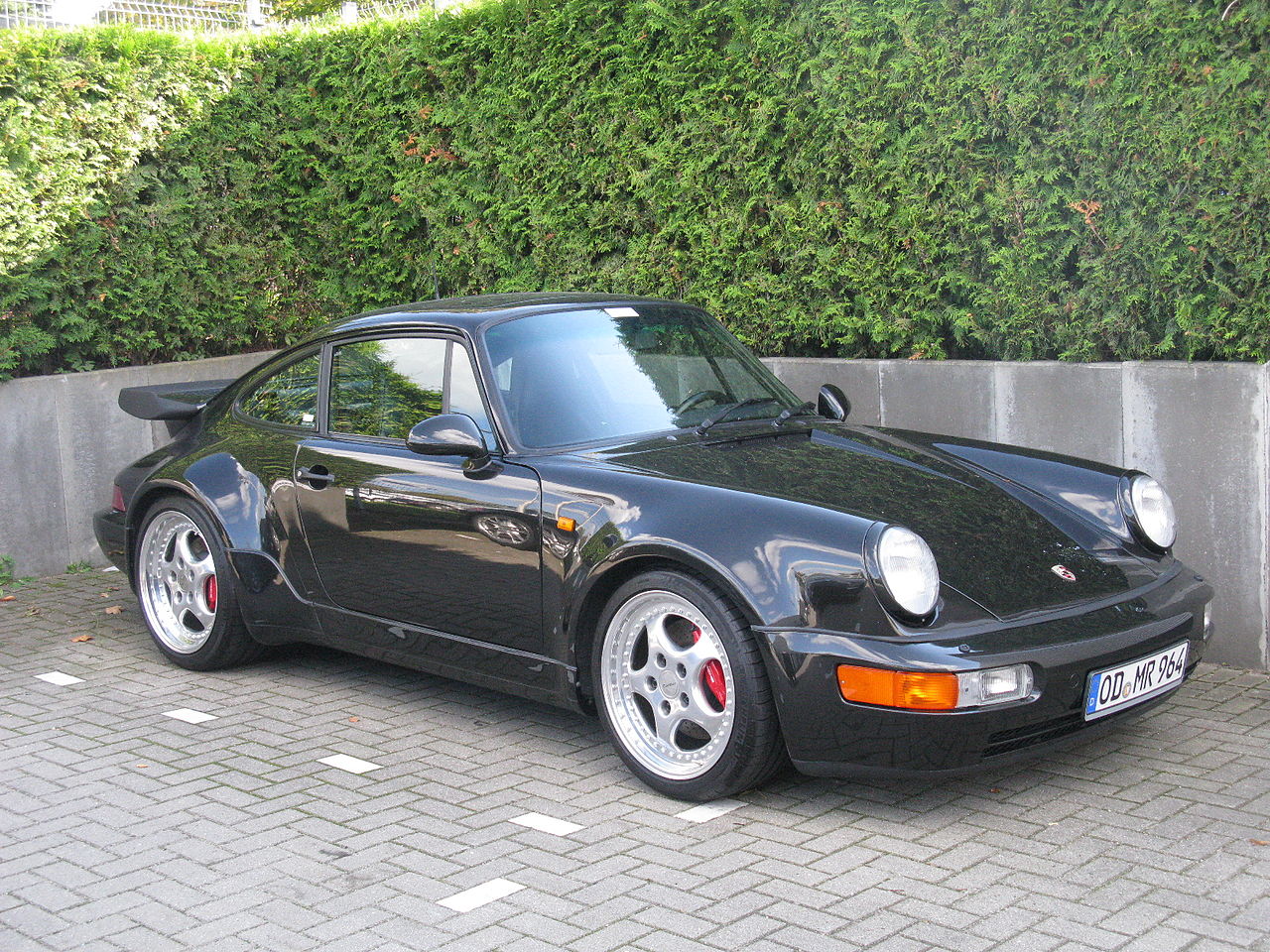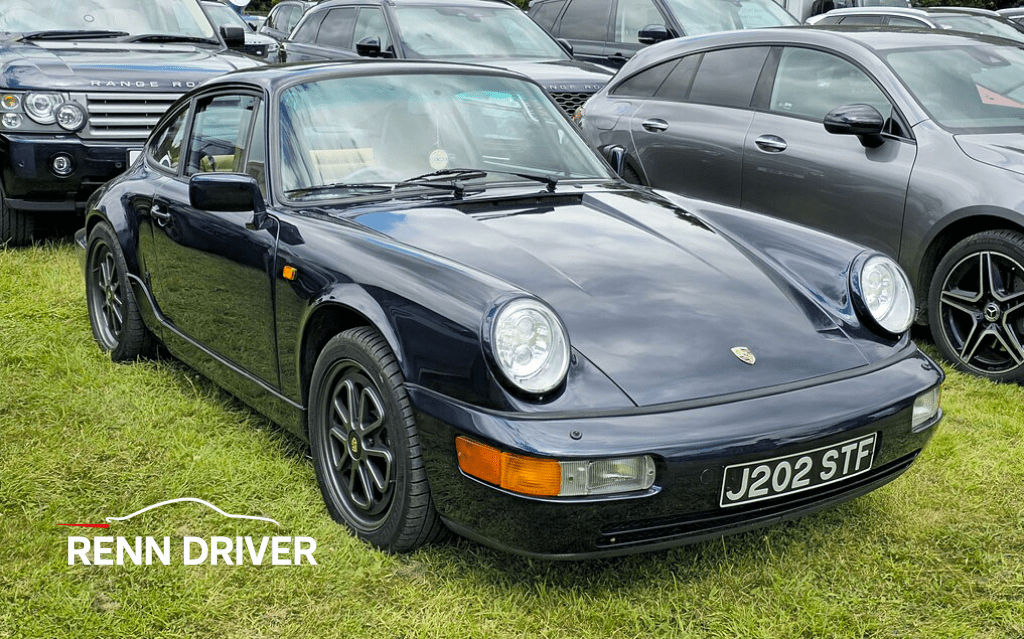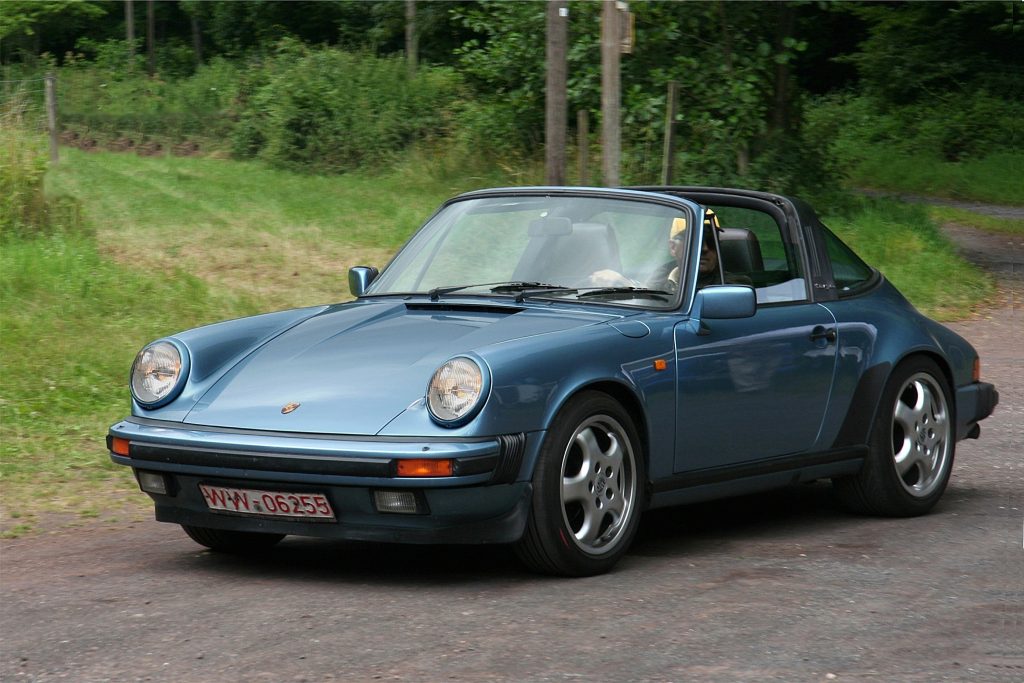
The Porsche G-body Targa (1974 to 1989) is the second generation of the 911 Targa, defined by the impact bumpers ("accordion" style) and the classic full-width stainless steel Targa bar. It covers two major sub-generations: the 2.7L cars (1974 to 1977) and the SC and Carrera 3.2 Targas (1978 to 1989). Power ranges from 150 hp in the earliest cars to 231 hp in the final Carrera 3.2. This is the Targa silhouette that became an icon.
Contents
- 1 Quick Summary
- 2 The G-Body Generation
- 3 The Targa Bar Design
- 4 2.7L G-Body Targa (1974 to 1977)
- 5 911 SC Targa (1978 to 1983)
- 6 Carrera 3.2 Targa (1984 to 1989)
- 7 Specifications by Year
- 8 Collectibility and Values
- 9 Buying and Maintenance
- 10 Renn Driver's Take
- 11 FAQs
- 12 Final Thoughts
The full guide below covers all the details.
Quick Summary
- Production years: 1974 to 1989
- Sub-generations: 2.7L (1974 to 1977), SC (1978 to 1983), Carrera 3.2 (1984 to 1989)
- Engines: 2.7L flat-six (150 to 175 hp), 3.0L flat-six (180 to 204 hp), 3.2L flat-six (207 to 231 hp)
- Transmission: 4-speed or 5-speed manual, 3-speed Sportomatic (early only)
- Drive: Rear-wheel drive
- Roof type: Removable panel with full-width stainless steel Targa bar
- Key feature: The classic Targa silhouette with the brushed stainless Targa bar
The G-Body Generation
The G-body (sometimes called the "impact bumper" 911) arrived for the 1974 model year. It is defined by the large accordion-style bumpers that Porsche developed to meet new US crash safety regulations. These bumpers gave the car a different look from the earlier chrome-bumper long hood cars, but the body underneath was still the same basic structure.
The G-body ran from 1974 all the way through 1989, making it the longest-running 911 generation. During that 15 year span, the Targa was offered in every model variant: the 2.7L cars, the 911 SC, and the Carrera 3.2.
Throughout this period, the Targa kept the same basic roof design: a removable panel above the front seats, a fixed full-width Targa bar spanning from B-pillar to B-pillar, and a soft plastic rear window (replaced by a fixed glass rear window from 1978). This is the Targa layout that people picture when they hear the word "Targa." It is the silhouette that defined the body style for an entire generation of car enthusiasts.
The Targa Bar Design
The Targa bar is what makes a Targa a Targa. On the G-body, it is a wide stainless steel hoop that runs across the roof from one side of the car to the other. It serves as both a structural member and a styling element. The brushed stainless finish catches the light in a way that is unmistakable. You can spot a Targa from two blocks away just by the bar.
The removable roof panel sits forward of the Targa bar, above the driver and passenger. It lifts out manually and can be stored in the front trunk. Without the panel, you have a large rectangular opening above the cabin that lets in wind and sun.
Behind the Targa bar, the early G-body cars (1974 to 1977) had a folding soft plastic rear window. This window could be unzipped and folded down to create an even more open experience, similar to a convertible. From 1978 onward, Porsche replaced the soft rear window with a fixed glass unit that improved visibility, reduced wind noise, and eliminated the need for a zipper that eventually failed.
The Targa bar also provides structural rigidity. Without a full roof, the body needs reinforcement to prevent flex. The bar serves as a roll hoop in the event of a rollover, giving the Targa a meaningful safety advantage over a full convertible with no fixed overhead structure.
2.7L G-Body Targa (1974 to 1977)
The earliest G-body Targas used 2.7L flat-six engines in various states of tune. In the US market, the base 911 and 911S were replaced by the 911 and 911S for 1974, then by the 912E (four-cylinder, one year only) and 911S for 1976 to 1977.
Power ranged from 150 hp in the most restricted US-spec cars to 175 hp in the European Carrera 2.7. These are the lightest G-body 911s and, despite their modest power figures, they feel lively on the road thanks to low curb weight and a willing engine.
These early G-body Targas are characterized by the soft rear window, which many owners have since replaced with the later glass unit. The accordion bumpers are more pronounced on these cars than on the later SC and 3.2 models, giving them a distinctive look.
The 2.7L engine is reliable when maintained but has a few quirks. The CIS (Continuous Injection System) fuel injection can be finicky, and thermal reactors (used on some US cars for emissions) run hot and can cause underhood heat problems. Many owners have removed the thermal reactors and replaced them with proper headers.
911 SC Targa (1978 to 1983)
The 911 SC arrived in 1978 and unified the model range. Instead of multiple engine variants, Porsche offered one model with a 3.0L flat-six. Power started at 180 hp for 1978 and climbed to 204 hp by 1983. This was the car that saved the 911 from cancellation. Porsche was seriously considering replacing the 911 with the front-engined 928, but strong SC sales proved the market still wanted a rear-engined sports car.
The SC Targa received the fixed glass rear window, which was a major improvement over the soft window. It also gained improved interior materials, better sound insulation, and a more refined overall feel compared to the earlier 2.7L cars.
Mechanically, the SC is one of the most robust 911 engines ever built. The 3.0L flat-six is understressed and returns huge mileages when properly maintained. It is common to see SC engines running well past 200,000 miles. The SC Targa is often recommended as the best entry point into classic air-cooled 911 ownership because of its reliability, parts availability, and reasonable purchase prices.
Carrera 3.2 Targa (1984 to 1989)
The Carrera 3.2 was the final evolution of the G-body. Porsche increased displacement to 3.2 liters and brought back the "Carrera" name, which had been absent from the base model since the mid 1970s. Power output jumped to 207 hp initially and reached 231 hp by the end of production, depending on the market and catalytic converter setup.
The 3.2 Targa is the most refined of the G-body Targas. It benefits from years of development, with improved heating and ventilation, a more comfortable interior, better brakes, and slightly wider rear fenders that give it a more planted stance. A Getrag G50 five-speed gearbox replaced the earlier 915 unit from 1987, giving the car a much better shift feel and a hydraulic clutch instead of the cable-operated unit.
The Carrera 3.2 Targa is also the last car with the classic body shape before the 964 arrived in 1989 with its new bodywork. For many enthusiasts, the Carrera 3.2 represents the peak of the classic 911 formula: air-cooled, rear-engined, simple, and thoroughly sorted after decades of development.
Specifications by Year
| Model | Years | Engine | Power | Transmission |
|---|---|---|---|---|
| 911 Targa (2.7) | 1974 to 1977 | 2.7L flat-six | 150 to 175 hp | 4 or 5 speed manual |
| 911 SC Targa | 1978 to 1983 | 3.0L flat-six | 180 to 204 hp | 5-speed manual |
| Carrera 3.2 Targa | 1984 to 1989 | 3.2L flat-six | 207 to 231 hp | 5-speed manual (915 or G50) |
Collectibility and Values
G-body Targas have traditionally traded below their coupe counterparts, but that gap has been narrowing. The Targa's open-air appeal, combined with its distinctive look, has attracted a new generation of buyers who value the body style for its uniqueness rather than dismissing it as "not a coupe."
Current market values (clean, well-maintained examples):
- 2.7L Targa (1974 to 1977): $50,000 to $80,000
- SC Targa (1978 to 1983): $50,000 to $90,000
- Carrera 3.2 Targa (1984 to 1989): $60,000 to $110,000
The Carrera 3.2 with the G50 gearbox (1987 to 1989) commands the highest prices among G-body Targas. European-spec cars with higher power output and no emissions equipment are also valued above their US counterparts. Special colors, sport seats, and low mileage add significant premiums.
Compared to coupes, Targas typically sell for 10 to 20 percent less. Compared to Cabriolets (available from 1983), Targas sell for slightly less in warm climates and slightly more in cooler ones where the fixed roof offers better year-round usability.
Buying and Maintenance
The G-body Targa is a mechanically simple car, which is one of its greatest strengths. The air-cooled flat-six has no water cooling system to leak, no timing belt to replace, and no complex electronics to fail. Regular oil changes, valve adjustments every 15,000 miles, and attention to the chain tensioners keep the engine healthy.
Targa-specific items to check when buying:
- Targa bar corrosion: The stainless steel bar itself does not rust, but the mounting points and surrounding body metal can corrode, especially in cars from salt belt regions.
- Roof panel seal: The rubber seal around the removable panel dries out and cracks over time. New seals are readily available and should be replaced if they leak.
- Rear window seal (soft window cars): If the car still has the original soft rear window, check the zipper and the plastic for cloudiness and cracks. Many owners upgrade to the glass rear window.
- Body flex: Without a full roof, the Targa body can develop cracks around the windshield frame and door openings. Check these areas carefully on any car you are considering.
- Heater boxes: The heat exchangers that provide cabin heating wrap around the exhaust and corrode from the outside in. Replacements are expensive but critical for safety (exhaust leaks) and cabin comfort.
Annual maintenance costs for a G-body Targa run $2,000 to $4,000 at an independent specialist. Parts are widely available through suppliers like Pelican Parts, Stoddard, and Paragon.
Renn Driver's Take
I have not driven this car yet, but I will update this section once I do.
Frequently Asked Questions
What is a Porsche G-body Targa?
The Porsche G-body Targa is the 911 Targa produced from 1974 to 1989. It features impact-absorbing bumpers, a removable roof panel, and the signature full-width stainless steel Targa bar. It covers three model ranges: the 2.7L cars, the 911 SC, and the Carrera 3.2.
What does the Targa bar do?
The Targa bar on the Porsche G-body Targa is a stainless steel hoop that spans the roof from B-pillar to B-pillar. It provides structural rigidity to the open-top body, acts as a roll hoop for safety, and creates the distinctive Targa silhouette.
Which G-body Targa is the best to buy?
The Porsche 911 SC Targa (1978 to 1983) is the best G-body Targa for first-time buyers because of its reliable 3.0L engine, fixed glass rear window, and strong parts support. The Carrera 3.2 Targa with the G50 gearbox (1987 to 1989) is the best overall G-body Targa for driving experience and refinement.
How much is a G-body Targa worth?
A clean Porsche G-body Targa sells for $50,000 to $110,000 depending on the model and condition. SC Targas trade around $50,000 to $90,000, while Carrera 3.2 Targas with the G50 gearbox can reach $110,000 or more.
Is the G-body Targa practical as a daily driver?
Yes, the Porsche G-body Targa is practical as a fair-weather daily driver. It has a front trunk for luggage, small rear seats for extra storage, and adequate heating. However, it lacks modern safety features, air conditioning is optional (and often not fitted), and the ride is firm on rough roads.
Does the roof panel leak?
Yes, the G-body Targa roof panel can leak if the rubber seals are old or damaged. Replacing the seals with new ones solves the issue in most cases. Properly sealed G-body Targas are dry in normal rain conditions.
Final Thoughts
The G-body Targa is the 911 that defines the Targa concept. The original long hood generation introduced the idea, and the G-body perfected it. The combination of the stainless steel Targa bar, the removable roof panel, and the classic air-cooled flat-six creates a driving experience that feels timeless in a way that few cars can match.
Whether you choose an early 2.7L car for its lightness, an SC for its bulletproof reliability, or a Carrera 3.2 for its refinement and power, you are getting a car that looks and drives unlike anything else on the road. The Targa bar catches the light, the flat-six sings behind your head, and the removable panel turns a weekend drive into an event.
That is why, decades later, the G-body Targa remains one of the most desirable shapes in the entire 911 lineage.
Image: Alexander Migl, CC BY-SA 4.0, via Wikimedia Commons