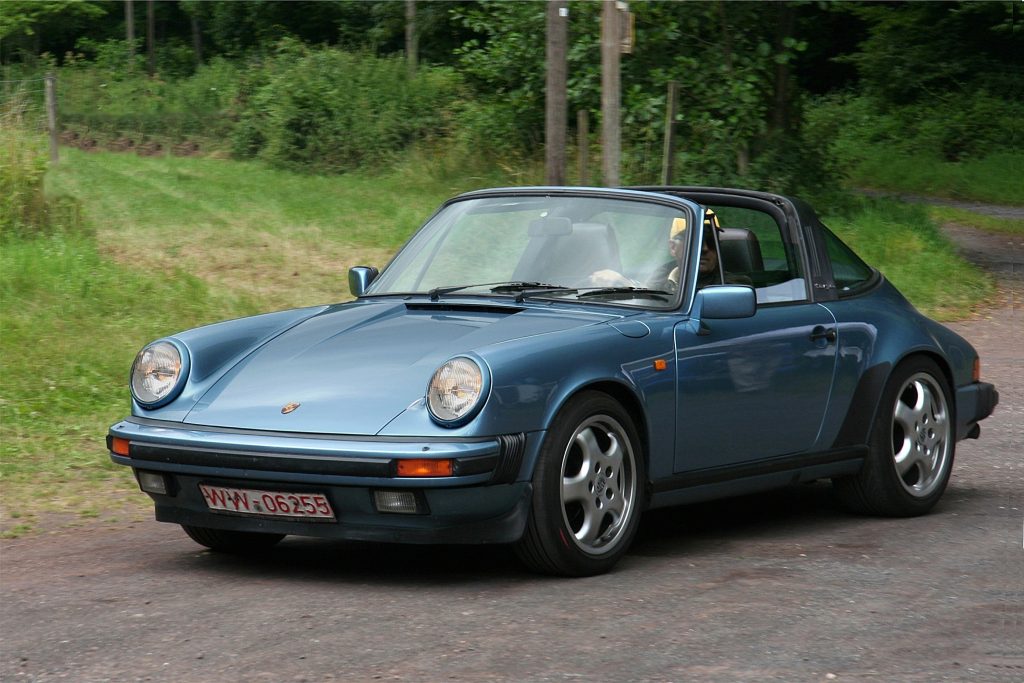
The Porsche long hood Targa (1967 to 1973) is the first production car to carry the Targa name, which Porsche patented. It features a removable roof panel, a full-width stainless steel or matte black Targa bar, and initially a folding soft rear window (replaced by a fixed glass window from 1969). Available as the 911T, 911E, and 911S Targa, with 2.0L to 2.4L flat-six engines making 130 to 190 hp. These are now among the most collectible 911s in existence.

Contents
- 1 Quick Summary
- 2 The Origin of the Targa Name
- 3 How the Original Targa Works
- 4 Models: 911T, 911E, and 911S Targa
- 5 Specifications by Year
- 6 Evolution from 1967 to 1973
- 7 Collectibility and Values
- 8 Buying a Long Hood Targa
- 9 Renn Driver's Take
- 10 FAQs
- 11 Final Thoughts
The full guide below covers all the details.
Quick Summary
- Production years: 1967 to 1973
- Models: 911T Targa, 911E Targa, 911S Targa
- Engines: 2.0L flat-six (130 to 170 hp), 2.2L flat-six (125 to 180 hp), 2.4L flat-six (140 to 190 hp)
- Transmission: 4-speed or 5-speed manual, Sportomatic semi-automatic
- Drive: Rear-wheel drive
- Roof type: Removable panel with full-width Targa bar
- Rear window: Folding soft plastic (1967 to 1968), fixed glass (1969+)
- Key fact: Porsche patented the "Targa" name. It comes from the Targa Florio road race in Sicily.
The Origin of the Targa Name
In the mid 1960s, Porsche needed a safer alternative to a full convertible. The US market, which was critical for sales, was rumored to be introducing rollover protection standards that would ban traditional convertibles. Porsche's solution was a new body style: a fixed roll bar spanning the roof, with a removable panel in front and a soft or glass rear window behind.
They named it "Targa" after the Targa Florio, the legendary Sicilian road race where Porsche had dominated for years. The word itself means "plate" or "shield" in Italian, and Porsche registered it as a trademark. When other manufacturers later built similar body styles, they had to call them "T-tops" or "removable hardtops" because Porsche owned the Targa name.
The first production 911 Targa debuted at the 1965 Frankfurt Motor Show and entered production in December 1966 as a 1967 model. It was an immediate success. Buyers loved the open air driving experience combined with the security of the Targa bar overhead. By the time production ended in 1973, the Targa had become a permanent part of the 911 lineup.
How the Original Targa Works
The long hood Targa's roof design is beautifully simple. A brushed stainless steel (or matte black on later "blackout" models) roll bar runs from one B-pillar to the other, creating a fixed arch over the cabin. Forward of the bar, a vinyl-covered roof panel sits on rubber seals. Two latches secure it to the windshield frame. To remove the panel, you release the latches, lift the panel out, and fold it into the front trunk.
On the earliest cars (1967 to 1968), the rear window was a soft plastic panel with a zipper along the bottom. You could unzip the window and fold it down behind the rear seats, creating a near-convertible experience. With both the roof panel removed and the rear window folded, the long hood Targa was almost fully open to the elements.
From 1969 onward, Porsche replaced the soft rear window with a fixed glass unit. This improved rear visibility, reduced wind noise at speed, and eliminated the problem of the plastic window becoming cloudy and brittle with age. The glass rear window became the standard for all subsequent Targas through the G-body era.
The Targa bar itself serves as a structural reinforcement and a rollover protection device. It is integrated into the body shell and adds meaningful rigidity compared to a full convertible. In the event of a rollover, the bar protects the occupants in a way that a fabric top cannot.
Models: 911T, 911E, and 911S Targa
The long hood era offered three distinct 911 models, and all three were available as Targas.
The 911T Targa was the entry level model. The "T" stood for Touring, and it used the least powerful version of the flat-six. With 130 hp from the 2.0L engine in its earliest form, the 911T was the most affordable way into a Targa. It used carburetors (Weber or Zenith) and had simpler interior trim. The 911T Targa is the most common long hood Targa because it sold in the highest numbers.
The 911E Targa sat in the middle. The "E" stood for Einspritzung (fuel injection). It used Bosch mechanical fuel injection, which gave it a smoother power delivery and slightly more power than the 911T. The 911E also received self-leveling hydropneumatic front struts (on 2.2L cars) and a more comfort-oriented suspension setup. It was positioned as the gentleman's 911.
The 911S Targa was the performance model. The "S" has always meant the sportiest variant in Porsche's lineup. The 911S used the highest-tuned version of the flat-six, with mechanical fuel injection and higher compression. From 170 hp in 2.0L form to 190 hp in 2.4L form, the S was the fastest long hood Targa you could buy. It also received Fuchs forged alloy wheels, which remain some of the most beautiful wheels ever fitted to a 911.
Specifications by Year
| Model Year | Engine | 911T hp | 911E hp | 911S hp |
|---|---|---|---|---|
| 1967 to 1969 | 2.0L flat-six | 130 | 140 | 170 |
| 1970 to 1971 | 2.2L flat-six | 125 | 155 | 180 |
| 1972 to 1973 | 2.4L flat-six | 140 | 165 | 190 |
All long hood Targas are rear-wheel drive and weigh approximately 2,250 to 2,400 lbs depending on specification and equipment. This light weight, combined with even the most modest engine option, makes for a car that feels agile and responsive in a way that no modern car can replicate.
Evolution from 1967 to 1973
The long hood Targa evolved continuously during its seven year production run:
- 1967: First year of production. Soft rear window. Short wheelbase (2,211 mm). Chrome exterior trim throughout.
- 1968: Last year of the short wheelbase. "A-series" with external oil filler on the right rear fender. Soft rear window still standard.
- 1969: Wheelbase extended by 57 mm to improve handling. Fixed glass rear window becomes standard. Mechanical fuel injection on E and S models. This is the year most enthusiasts consider the sweet spot for the long hood.
- 1970 to 1971: Engine increased to 2.2L. Minor interior updates. The 2.2L S is considered by many to be the best-sounding long hood engine.
- 1972 to 1973: Engine increased to 2.4L. External oil filler moved to inside the engine bay. Oil tank relocated from the right rear fender to inside the engine compartment (CIS-equipped cars). The 1973 model year is the final long hood, making it especially collectible.
Collectibility and Values
Long hood 911s are among the most valuable production Porsches, and the Targa body style is no exception. While coupes consistently trade above Targas by a margin, the gap has narrowed considerably in recent years as collectors have come to appreciate the Targa's unique character.
Current market values for clean, well-documented examples:
- 911T Targa (2.0L to 2.4L): $80,000 to $150,000
- 911E Targa (2.0L to 2.4L): $100,000 to $180,000
- 911S Targa (2.0L to 2.4L): $150,000 to $300,000+
Short wheelbase cars (1967 to 1968) and final year cars (1973) command premiums. Matching numbers (original engine with the original car) are critical for top values. Restored cars with non-original engines sell for significantly less.
The 911S Targa in any displacement is a serious collector car. The combination of the S-spec engine, Fuchs wheels, and the Targa body creates a package that appeals to both driving enthusiasts and museum-quality collectors.
Buying a Long Hood Targa
Buying a long hood Targa requires more homework than buying a modern Porsche. These cars are 50 plus years old, and condition varies enormously. Key areas to evaluate:
- Rust: The single biggest concern. Check the battery box area, front trunk floor, rocker panels, kidney areas (below the rear quarter windows), and the area around the Targa bar mounting points. Rust repair on a long hood 911 is expensive and time-consuming.
- Matching numbers: Verify the engine number, transmission number, and body color against the Porsche Certificate of Authenticity. Matching numbers cars are worth 30 to 50 percent more than non-matching cars.
- Targa bar condition: The stainless steel bar should be free of dents and deep scratches. The rubber seals around the bar should be intact. Check the body metal where the bar mounts for corrosion.
- MFI (Mechanical Fuel Injection): The Bosch MFI system on E and S models is complex and expensive to rebuild. A properly set up MFI system runs beautifully, but a neglected one causes running issues that are difficult to diagnose without specialist knowledge.
- Oil leaks: All air-cooled flat-sixes seep oil to some degree. A light coating on the underside of the engine is normal. Active drips or heavy oil deposits indicate deferred maintenance.
A pre-purchase inspection by a specialist who knows long hood 911s is not optional. It is mandatory. Budget $500 to $1,000 for a thorough inspection, and walk away from any car where the seller objects to having it inspected.
Renn Driver's Take
I have not driven this car yet, but I will update this section once I do.
Frequently Asked Questions
What is a Porsche long hood Targa?
A Porsche long hood Targa is a 911 Targa built between 1967 and 1973. It is called "long hood" because of the extended front fender line that gives these early 911s their distinctive proportions. It features a removable roof panel and the original full-width Targa bar.
Why is it called a Targa?
Porsche named the body style after the Targa Florio, a famous road race in Sicily where Porsche had a long history of success. Porsche trademarked the "Targa" name, which is why other manufacturers cannot use it for their own open-top models.
How much is a long hood Targa worth?
A Porsche long hood Targa sells for $80,000 to $300,000 or more depending on the model (T, E, or S), engine displacement, condition, and whether the numbers match. The 911S Targa is the most valuable, with the best examples exceeding $300,000.
What is the difference between the 911T, 911E, and 911S Targa?
The 911T Targa is the base model with the least powerful engine and simplest equipment. The 911E Targa has fuel injection and a comfort-oriented suspension. The 911S Targa has the most powerful engine, sport suspension, and Fuchs forged wheels.
Did the early Targa have a soft rear window?
Yes, the Porsche long hood Targa had a folding soft plastic rear window from 1967 to 1968. From 1969 onward, Porsche replaced it with a fixed glass rear window that improved visibility and durability.
Is a long hood Targa a good investment?
Yes, long hood Porsche Targas have appreciated significantly over the past two decades and are considered strong collector car investments. Matching numbers examples in good condition have shown consistent value growth. As with any collector car, condition and provenance are more important than the model designation alone.
Final Thoughts
The long hood Targa is where it all started. Before the impact bumper generation, before the 993, before the modern 992 brought the concept back full circle, there was this: a simple roll bar, a removable roof panel, and a flat-six engine singing in the open air behind your head.
These cars are expensive and require specialist care. They are not practical daily drivers, and they demand mechanical sympathy every time you drive them. But they reward that attention with an experience that no modern car, no matter how fast or refined, can duplicate.
The car that started it all created a legend. The long hood Targa gave that legend a new way to enjoy the sky. More than 50 years later, it remains one of the most beautiful and significant shapes Porsche has ever produced.
Image: Alexander Migl, CC BY-SA 4.0, via Wikimedia Commons