Gunther Werks is a California-based company that builds restomod Porsche 911s based on the last air-cooled 993 generation (1995 to 1998). Each car gets a full carbon fiber body, a 4.0L naturally aspirated air-cooled flat-six making approximately 430 hp, and a complete ground-up rebuild. Production is limited to about 25 cars per year. Prices start around $525,000 plus the cost of a donor 993. These are among the most sought-after restomods in the world.
Contents
- 1 Quick Summary
- 2 What Gunther Werks Does
- 3 Engine and Drivetrain
- 4 Carbon Fiber Body
- 5 Interior
- 6 The Build Process
- 7 Pricing
- 8 The Speedster Remastered
- 9 Gunther Werks vs Singer
- 10 Renn Driver's Take
- 11 FAQs
- 12 Final Thoughts
The full guide below covers all the details.
Quick Summary
- Based in: Huntington Beach, California
- Donor car: Porsche 993 (1995 to 1998)
- Engine: 4.0L naturally aspirated air-cooled flat-six, approximately 430 hp
- Body: Full carbon fiber panels
- Transmission: 6-speed manual (Getrag) or sequential gearbox option
- Weight: Approximately 1,225 kg (2,700 lbs)
- Production: About 25 cars per year
- Price: Starting around $525,000 (plus donor car)
- Founded: 2014
What Gunther Werks Does
Gunther Werks takes a donor Porsche 993 and rebuilds it from the ground up. Every component is removed, inspected, and either replaced or upgraded. The result is a car that retains the spirit of the original 993 but exceeds it in every measurable dimension.
The company was founded in 2014 by Peter Nam, a longtime Porsche enthusiast who wanted to create the ultimate air-cooled 911. The name "Gunther Werks" translates roughly to "Gunther Works" in German. The approach is obsessive: nothing from the original car is left untouched.
Unlike companies that add a body kit and a tune and call it done, Gunther Werks rebuilds the entire car. New wiring harness, new suspension, new engine internals, new body panels, new interior. The 993 shell is essentially a starting point rather than a finished foundation.
Engine and Drivetrain
The heart of every Gunther Werks build is a 4.0L naturally aspirated air-cooled flat-six engine, developed in partnership with Rothsport Racing in Portland, Oregon. Rothsport is one of the most respected Porsche air-cooled engine builders in the world.
The engine starts with the 993's original flat-six block but is completely rebuilt with larger displacement (bored and stroked to 4.0 liters), individual throttle bodies, a custom intake system, and a high-flow exhaust. The result is approximately 430 hp at the crank, which is remarkable for a naturally aspirated air-cooled engine.
Key engine specs:
- Displacement: 4.0 liters
- Power: Approximately 430 hp
- Redline: 7,800 rpm
- Aspiration: Naturally aspirated (no turbos, no supercharger)
- Cooling: Air-cooled with custom ducting
The standard transmission is a close-ratio 6-speed manual gearbox from Getrag, with a lightweight flywheel and single-mass clutch. Gunther Werks also offers a sequential gearbox option for clients who want a more motorsport-oriented experience. There is no PDK, no automatic, and no plans to offer one.
Carbon Fiber Body
Every exterior body panel on a Gunther Werks 993 is made from carbon fiber. The doors, fenders, hood, bumpers, rear quarter panels, and roof are all replaced with lightweight carbon components. Clients can choose between a painted finish (where the carbon is hidden under color) or an exposed carbon weave for a more aggressive look.
The body is not just a direct copy of the stock 993. Gunther Werks widened the rear fenders to accommodate wider tires and added functional aerodynamic elements, including a ducktail rear spoiler that pays homage to the classic 911 Carrera RS. The front bumper has larger air intakes for improved engine and brake cooling.
The full carbon body saves significant weight. A stock standard 993 Carrera model weighs approximately 1,370 kg (3,020 lbs). A Gunther Werks 993 comes in at roughly 1,225 kg (2,700 lbs), a reduction of over 300 lbs.
Interior
The interior gets the same level of attention as the exterior and drivetrain. Gunther Werks strips the original 993 cabin and rebuilds it with:
- Lightweight carbon fiber bucket seats with Alcantara or leather upholstery
- A custom carbon fiber dashboard with analog gauges
- Alcantara-wrapped steering wheel (smaller diameter than stock)
- Billet aluminum shift knob and door handles
- Simplified center console with minimal controls
- No infotainment screen (a Bluetooth-capable head unit is available)
The philosophy is subtraction. Everything that does not contribute to the driving experience is removed or simplified. The interior feels purposeful without being stripped bare. It is still comfortable enough for a long drive, but every detail is oriented toward the driver.
The Build Process
Building a Gunther Werks 993 is a multi-step process that typically takes 10 to 14 months:
- Source a donor car. The client provides a Porsche 993 or Gunther Werks helps locate one. The condition of the donor does not matter much since the car will be completely disassembled.
- Disassembly. The donor 993 is stripped to a bare shell in Huntington Beach.
- Shell preparation. The steel unibody is inspected, repaired if needed, and reinforced. A roll bar and additional chassis stiffening are added.
- Carbon body panels. All exterior panels are replaced with carbon fiber components.
- Engine build. The flat-six goes to Rothsport Racing for the 4.0L rebuild.
- Assembly. New suspension, brakes, wiring, interior, and drivetrain components are installed.
- Testing and delivery. Each car is road tested and track tested before handoff.
Clients work directly with the Gunther Werks team throughout the process, choosing colors, materials, and specification details.

Pricing
A Gunther Werks 993 build starts at approximately $525,000. This does not include the donor car, which typically costs $50,000 to $100,000 depending on condition and variant.
Total cost for a finished Gunther Werks 993 usually lands between $575,000 and $700,000 depending on options. Exposed carbon, the sequential gearbox, and custom color matching add to the price.
On the secondary market, completed Gunther Werks cars have traded for well above the original build cost. Some examples have sold at auction for over $800,000. Demand consistently exceeds supply, and the waiting list is typically a year or longer.
The Speedster Remastered
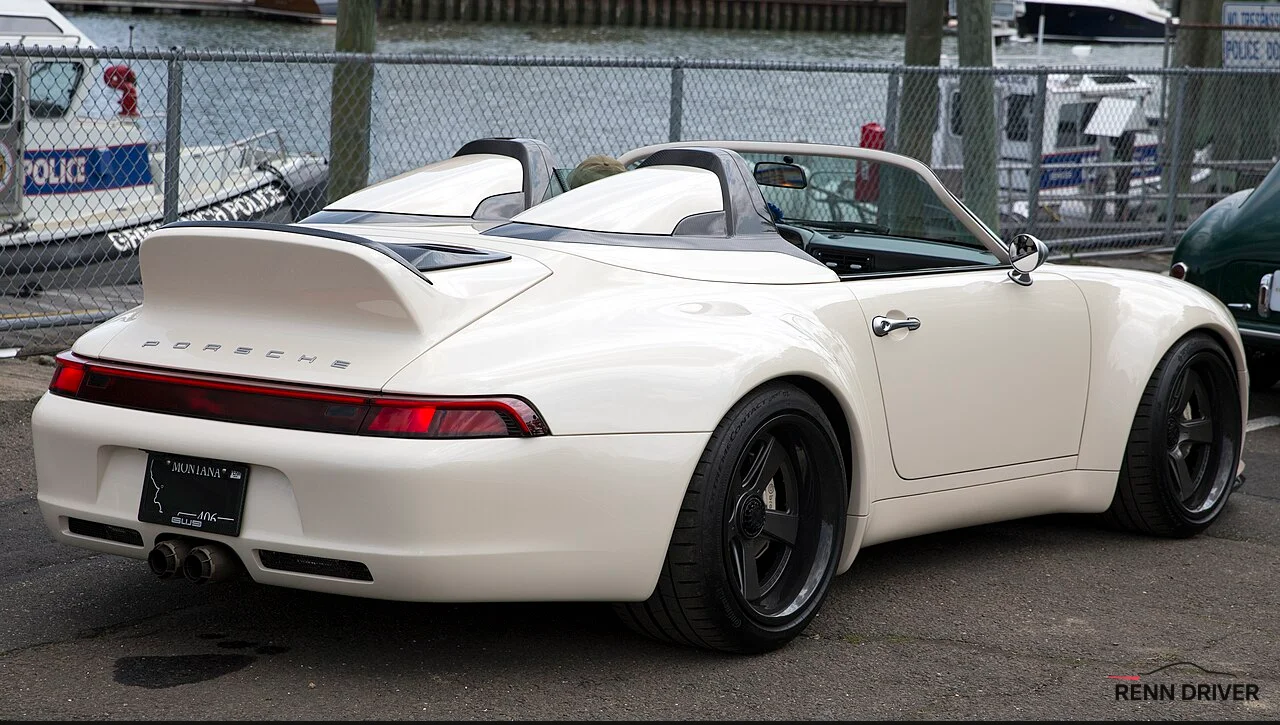
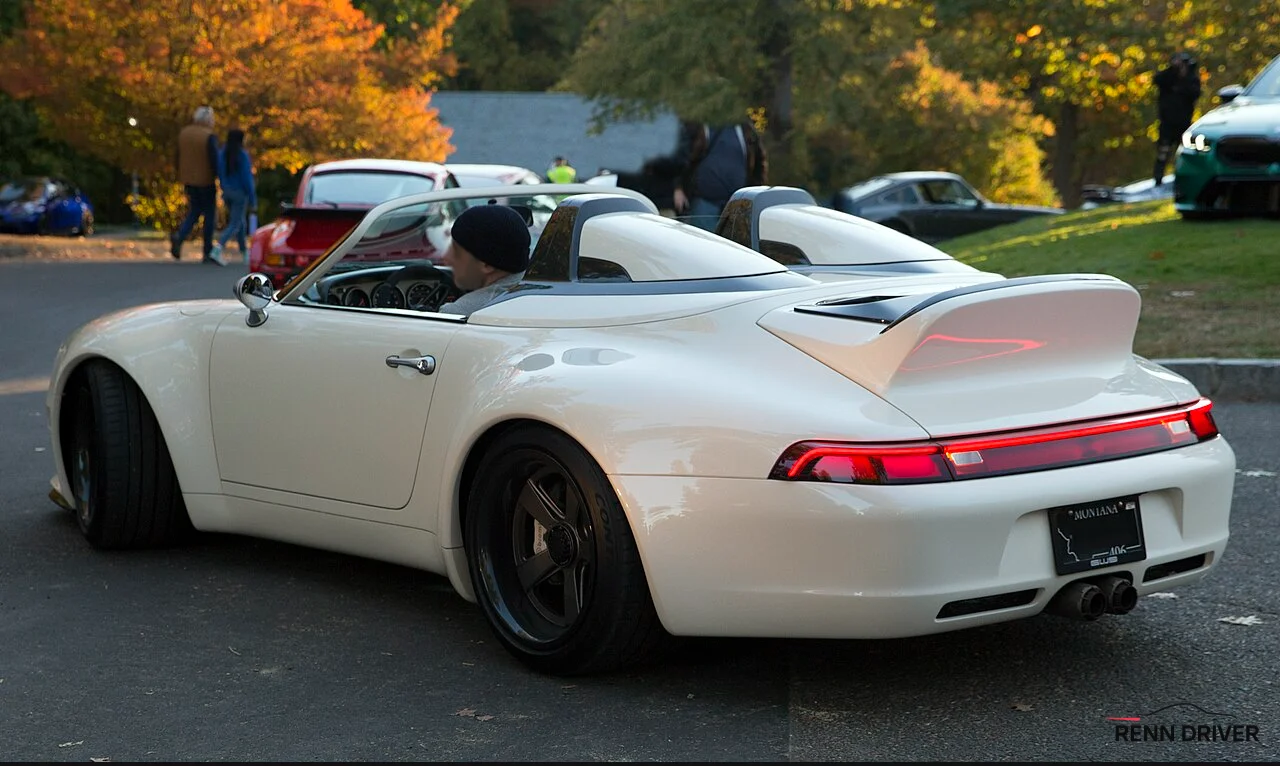
In 2021, Gunther Werks revealed the 993 Speedster Remastered, a roofless variant of their standard coupe. Only 25 units were planned. The Speedster uses the same 4.0L engine and carbon body but adds a distinctive double-bubble tonneau cover behind the seats and a shorter, raked windshield.
The Speedster is a direct tribute to Porsche's long history of open-top 911s. It weighs even less than the coupe and delivers a more visceral experience with nothing between the driver and the exhaust note but air.
Gunther Werks vs Singer
Gunther Werks and Singer Vehicle Design are the two most prominent names in the 911 restomod world, but they take different approaches.
| Aspect | Gunther Werks | Singer |
|---|---|---|
| Base car | 993 (1995 to 1998) | 964 (1989 to 1994) |
| Engine | 4.0L air-cooled, ~430 hp | 3.8L to 4.0L air-cooled, 300 to 500+ hp |
| Body | Full carbon fiber | Carbon fiber |
| Philosophy | Track-focused, aggressive | Refined, elegant |
| Starting price | ~$525,000 + donor | ~$600,000+ (all-in) |
| Annual production | ~25 cars | ~40 to 50 cars |
| Location | Huntington Beach, CA | Los Angeles, CA |
Singer builds elegant, refined machines that look like the 964 you always wished Porsche had made. Gunther Werks builds aggressive, track-ready machines that push the 993 beyond what the factory ever intended. Singer is a tailored suit. Gunther Werks is a racing suit.
Both are exceptional. The choice comes down to which generation you prefer (964 vs 993) and whether you lean toward refinement or aggression.
Renn Driver's Take
I have not driven this car yet, but I will update this section once I do.
Frequently Asked Questions
How much does a Gunther Werks 993 cost?
A Gunther Werks 993 costs approximately $525,000 for the build, plus $50,000 to $100,000 for the donor car. Total cost typically ranges from $575,000 to $700,000 depending on options and specification.
What engine does Gunther Werks use?
Gunther Werks uses a 4.0L naturally aspirated air-cooled flat-six engine developed by Rothsport Racing. The engine produces approximately 430 hp and revs to 7,800 rpm. It is based on the original 993 flat-six block, bored and stroked to 4.0 liters.
How many Gunther Werks cars are made each year?
Gunther Werks produces approximately 25 cars per year. Each one is built by hand and takes 10 to 14 months to complete.
Is Gunther Werks better than Singer?
It depends on what you want. Gunther Werks and Singer take different approaches. Gunther Werks is more track-focused and aggressive, based on the 993 platform. Singer is more refined and elegant, based on the 964. Neither is objectively better. The choice depends on whether you prefer the 993 or 964 generation and whether you prioritize track performance or grand touring refinement.
Do you need to provide a donor car to Gunther Werks?
Yes, a Gunther Werks build requires a donor Porsche 993. You can provide your own car, or the Gunther Werks team can help source one for you. The condition of the donor does not matter significantly since the car is completely disassembled and rebuilt.
Does Gunther Werks offer a manual transmission?
Yes, the standard transmission in a Gunther Werks 993 is a close-ratio 6-speed manual gearbox. A sequential gearbox is also available as an option for clients who want a motorsport-oriented driving experience.
Final Thoughts
Gunther Werks has carved out a distinct position in the restomod world by focusing exclusively on the 993 and pushing it further than anyone thought possible. The combination of a full carbon body, a 430 hp air-cooled flat-six, and a weight under 2,700 lbs creates something that feels closer to a race car than a restoration.
These are not museum pieces. They are built to be driven hard, and driven often. That philosophy, combined with the quality of execution, is what separates Gunther Werks from the dozens of other companies offering 911 restomods.
For more on the restomod world, read our guides on Singer Vehicle Design and RUF Automobile.
Photo credit: Rudolf Stricker, CC BY-SA 3.0, via Wikimedia Commons.