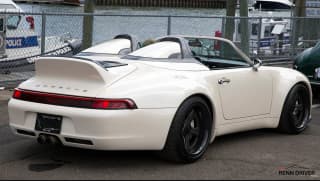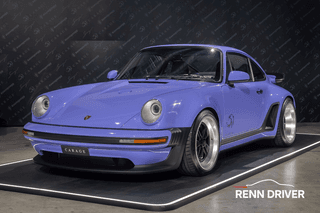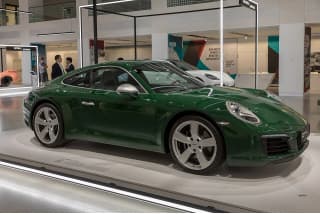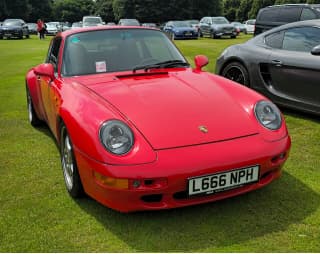
RUF Automobile is not a Porsche tuner. It is a German car manufacturer with its own VINs, its own type approval, and its own chassis. The 1987 CTR Yellowbird hit 213 mph, faster than anything Ferrari or Lamborghini built that year. Surviving originals now sell for more than $2 million.
In this article, we'll explain why RUF is more than a Porsche tuner. We'll cover manufacturer status, the Yellowbird, and key models.
This guide covers the full story: why RUF counts as a manufacturer rather than a tuner, what the Yellowbird actually was and why it mattered, every significant model from 1983 to today, how RUF compares to Singer as an investment, what buying one actually involves, and whether any have turned up in Asia. This is the guide Wikipedia does not write.
Contents
Why RUF Is a Manufacturer, Not a Tuner
This is the detail that stops most people cold. RUF Automobile GmbH is not a tuner. It is not a modifier. It is not a coachbuilder. It is a recognized automobile manufacturer, classified as such by the German Federal Motor Transport Authority (Kraftfahrt-Bundesamt, or KBA) since 1981.
What that classification actually means in practice:
- Own VINs: Every RUF that leaves Pfaffenhausen carries a RUF vehicle identification number. Not a Porsche VIN with a RUF badge. A RUF VIN. The car is registered with the authorities as a RUF, insured as a RUF, and titled as a RUF.
- Own type approval: Each RUF model goes through the EU type approval process as a new vehicle, not as a modified variant of an existing one. RUF submits the car independently and receives independent homologation.
- Own warranty: RUF backs its cars with its own manufacturer warranty, not Porsche's.
- Own engineering: For most of its history, RUF received bare bodyshells from Porsche and built the cars from there. The engine, transmission, suspension, and body modifications were all RUF's work. Since the 2017 CTR, RUF designs and builds its own chassis entirely.
Compare this to what a tuner does. TechArt, Gemballa, and 9ff take finished Porsche cars, modify them, and sell them back with the Porsche VIN still in place. The car is still legally a Porsche. RUF does something fundamentally different: it builds a new vehicle that happens to use Porsche architecture as its starting point.
The closest analogy is a coachbuilder relationship from the classic era, where a manufacturer would produce a rolling chassis and a specialist would design and build the body and interior. RUF's version of that is more extreme: it takes a Porsche bodyshell (or its own chassis) and produces a vehicle so thoroughly reworked that it earns independent legal identity.
This matters for collectors in a concrete way. A RUF is not a modified Porsche with a value ceiling tied to its Porsche origins. It is its own thing, with its own provenance, its own factory records, and its own market. That is part of why Yellowbirds can sell for $2 million while a standard 1987 911 Carrera sells for $80,000.
The RUF Story
The business started in 1939 when Alois Ruf Sr. opened a vehicle repair workshop in Pfaffenhausen, a market town of roughly 3,500 people in the Bavarian Swabia region, about 70 kilometers west of Munich. The garage fixed whatever came through the door: Volkswagens, trucks, farm equipment. Porsche service came later as the brand grew in Germany through the 1950s and 1960s.
In 1974, Alois Ruf Jr. took over. He was 24 years old and already obsessed with performance. He started modifying customer Porsches beyond the scope of normal service work, fitting larger turbos, retuning engine management, and upgrading suspension components. Word spread that the Pfaffenhausen shop could make a 911 significantly faster than the factory had left it.
By the late 1970s, Ruf was ordering bare bodyshells directly from Porsche and building complete cars from scratch. The KBA manufacturer recognition in 1981 was the official acknowledgment of what was already happening in practice: Pfaffenhausen was producing its own vehicles, not modifying existing ones.
The business has remained family-owned. Alois Ruf Jr. still runs the company today. Production is deliberately small: rarely more than 30 to 40 cars per year across all models. The factory employs roughly 80 people. Every car is built by hand.
The Yellowbird: What Actually Happened in 1987
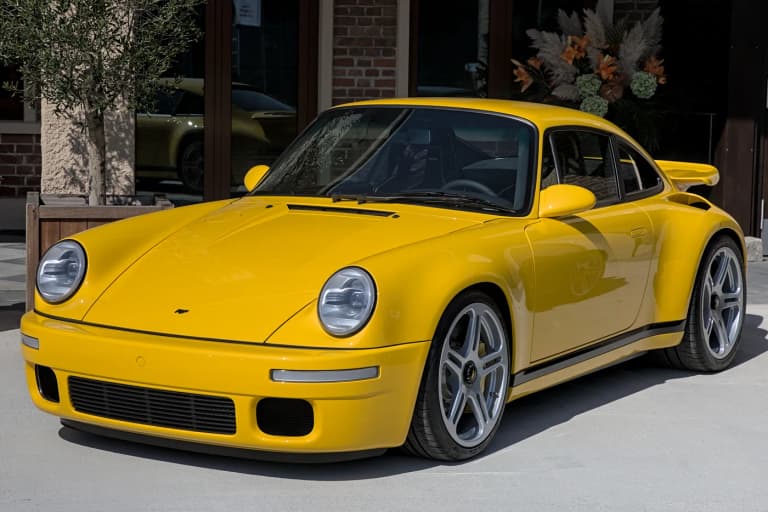
The car that made RUF famous has a name that came from nowhere official. Sport Auto magazine, which organized the famous Nurburgring Nordschleife test, filmed several cars that day. One of them was a yellow RUF CTR. Someone on the production crew called it the Yellowbird because of its color and the way it moved, darting and swooping through corners. The name stuck. RUF never used it officially, but the car has been the Yellowbird ever since.
Here is what RUF actually built:
- Engine: 3.4-liter twin-turbo flat-six, built on the base of the 3.2-liter Carrera engine but extensively reworked with a longer stroke, larger turbos, and a bespoke intercooler system
- Power: 469 hp at 5,950 rpm
- Torque: 408 lb-ft
- Top speed: 213 mph (342 km/h), verified by Sport Auto at the high-speed circuit at Nardo
- 0 to 60 mph: 3.7 seconds
- Weight: 1,150 kg
- Transmission: RUF-designed 5-speed gearbox with a dog-leg first gear
- Production: 29 cars built between 1987 and 1992
For context: the Ferrari F40 had not yet been announced. The Lamborghini Countach LP5000 QV topped out at around 183 mph. The Porsche 959 was faster in a straight line but was all-wheel drive, software-managed, and cost three times as much. The Yellowbird was lighter than all of them and faster than almost all of them on a road course.
The Nurburgring video is the thing that burned the car into collective memory. Sport Auto journalist Stefan Roser drove the CTR around the Nordschleife on a day when most of it was still accessible to fast road cars. The footage, shot from inside and outside the car, shows Roser committing to corners at speeds that make no physical sense for a rear-engined car with no active aerodynamics and no electronic stability control. The tail comes out in third gear on the long straights. Roser catches it, feeds in opposite lock, and keeps accelerating. At one point the car is fully sideways on the crest of a hill with its front wheels slightly airborne. He keeps going.
What the video does not show is how close the margins were. Roser was one of the most skilled test drivers in Germany at the time. The Yellowbird required genuine car control because it had none of the safety nets a modern car provides. Too much throttle mid-corner in a 911 of that era could spin the car instantly. At 200 mph. On a public road with no run-off.
The Belgian journalist and racing driver Paul Frere, who had competed at Le Mans and tested virtually every significant performance car of the postwar era, drove the CTR for Road and Track and called it the fastest car he had ever driven. He was 72 years old at the time and had nothing to prove. His verdict carried weight precisely because he had the reference points to mean it.
The cultural impact compounded over decades. The Yellowbird appeared in Gran Turismo starting with the original 1997 release, exposing an entire generation of gamers to a car they might otherwise never have heard of. It became one of the most discussed cars on early internet forums precisely because it seemed implausible: a family business in Bavaria had out-engineered Ferrari and Lamborghini with 29 hand-built cars. The story was too good not to repeat.
Every Significant RUF Model
RUF has produced dozens of variants over the decades. These are the ones that defined the company:
RUF BTR (1983 to 1989)
The BTR was RUF's first significant production model and the car that established the company's reputation before the Yellowbird arrived. Based on the Porsche 911 Turbo (930), it used a larger KKK turbocharger, a bespoke intercooler, and revised engine management to push output to 374 hp. In a world where the factory 930 produced 300 hp and was already considered terrifying, the BTR was an act of provocation. The acronym stands for Brun Turbo Rennmotor, a reference to an early motorsport collaboration.
RUF CTR Yellowbird (1987 to 1992)
See above. The car that changed everything. Based on the G-body 911 platform but so comprehensively reworked that shared components with the standard car were minimal. The chassis was reinforced, the bodywork was modified for aerodynamic balance, and the RUF-designed gearbox replaced the Porsche unit entirely. Of the 29 built, most are still in private hands and rarely surface for sale.
RUF CTR2 (1995 to 1996)
The CTR2 took the 993-generation twin-turbo engine and built a rear-wheel-drive car around it at a moment when Porsche itself had moved the 993 Turbo to all-wheel drive. That decision was deliberate. Alois Ruf Jr. believed rear-wheel drive produced a more communicative, more rewarding car. He was right, though it meant the CTR2 was genuinely challenging to drive fast. Power started at 520 hp and reached 580 hp in the later Sport version. Top speed exceeded 217 mph, making it faster than the original CTR. Fewer than 40 were built. Values today sit between $800,000 and $1.5 million for good examples.
RUF RGT (1999 to 2005)
The RGT represented a deliberate change of direction. Instead of turbocharging a 911 platform to maximum power, RUF built a naturally aspirated GT car on the 996 generation, using a 3.8-liter flat-six producing around 385 hp. The RGT was lighter than the standard 996 GT3, more focused, and equipped with RUF's own bodywork modifications including wider rear haunches and a more aggressive front air management system. It was the car RUF built for drivers who cared more about feel than numbers.
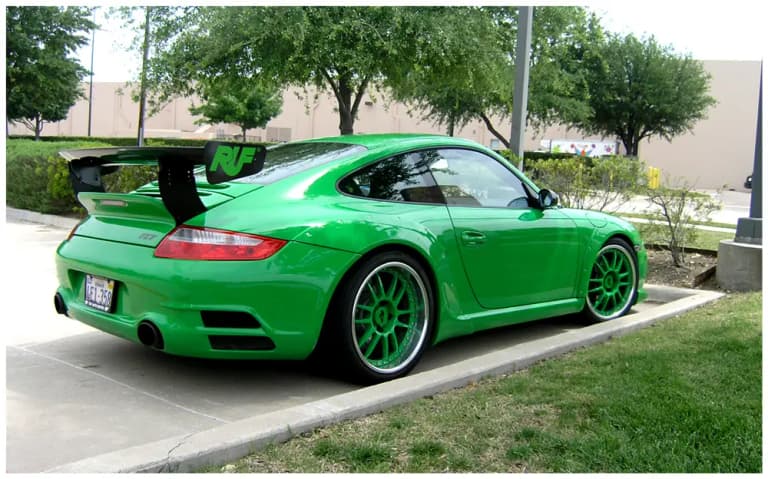
RUF Rt 12 (2004 to 2012)
The Rt 12 placed a 3.8-liter twin-turbo flat-six producing up to 650 hp into a 997-generation platform and offered it in both rear-wheel and all-wheel drive configurations. At 219 mph it was the fastest production car RUF offered at the time. The all-wheel-drive version made the power genuinely usable; the rear-wheel-drive version was something else entirely.
RUF CTR3 (2007 to 2012)
The CTR3 was the most radical thing RUF had built to that point. Instead of modifying a Porsche bodyshell, RUF designed and built a new mid-engine chassis using a carbon fiber and aluminum tubular space frame. The 3.8-liter twin-turbo flat-six now sat behind the driver, producing 700 hp in standard form and 777 hp in the Clubsport variant. Top speed reached 236 mph. It looked nothing like a 911. Approximately 30 were built. The CTR3 was the proof of concept for what eventually became the 2017 CTR: a fully RUF-engineered car that shared only architecture DNA with Porsche.
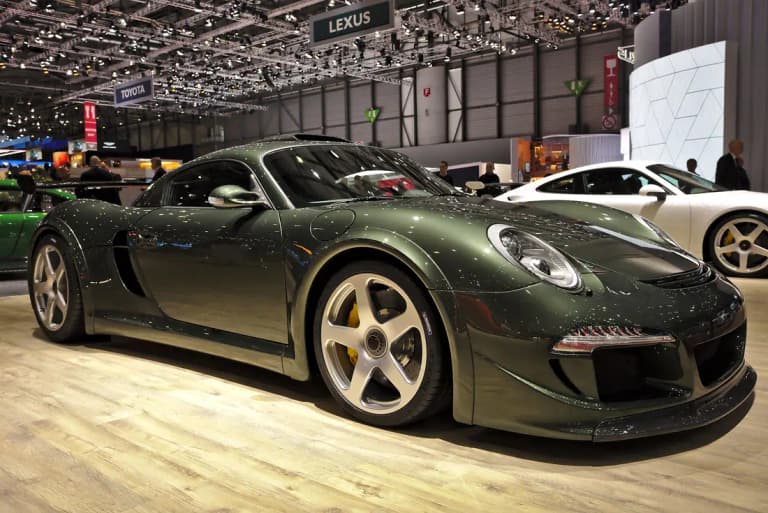
RUF SCR (2017 to present)
When RUF introduced the 2017 CTR, it also unveiled the SCR: the naturally aspirated answer to the same question. The SCR uses a 4.0-liter naturally aspirated flat-six producing 510 hp in a carbon fiber monocoque that weighs 88 kg on its own. The complete car weighs 700 kg, giving it a power-to-weight ratio that most turbocharged cars struggle to match. The SCR makes no concessions to comfort or compliance. It is the car RUF builds for people who want to feel everything.
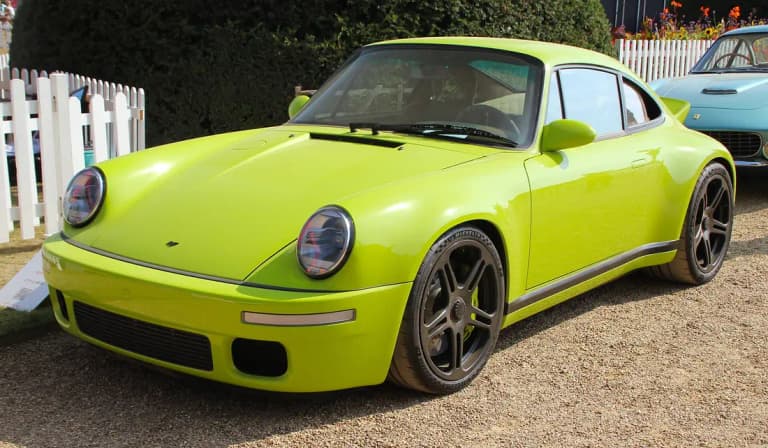
RUF CTR (2017 to present)
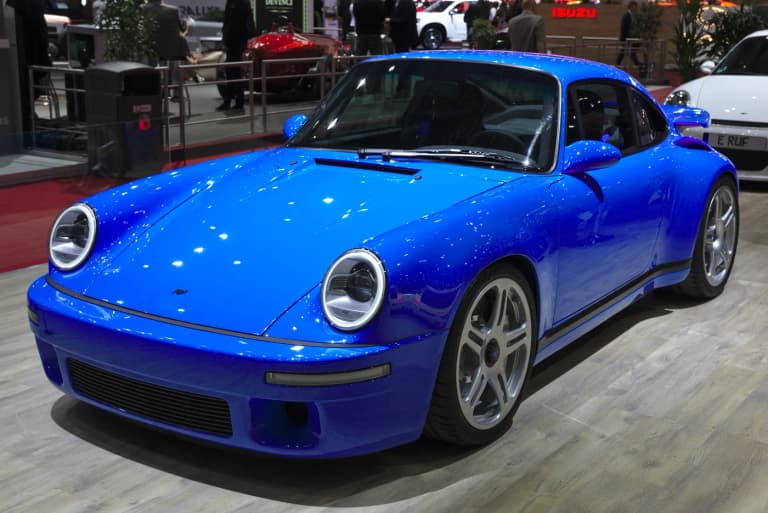
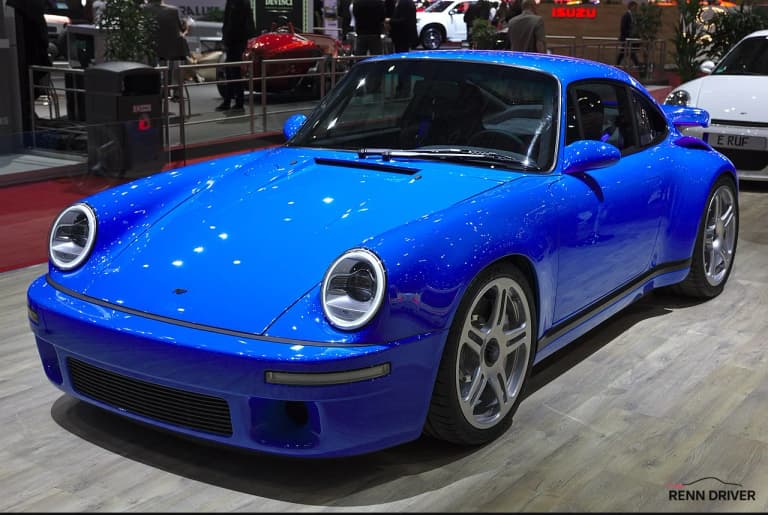
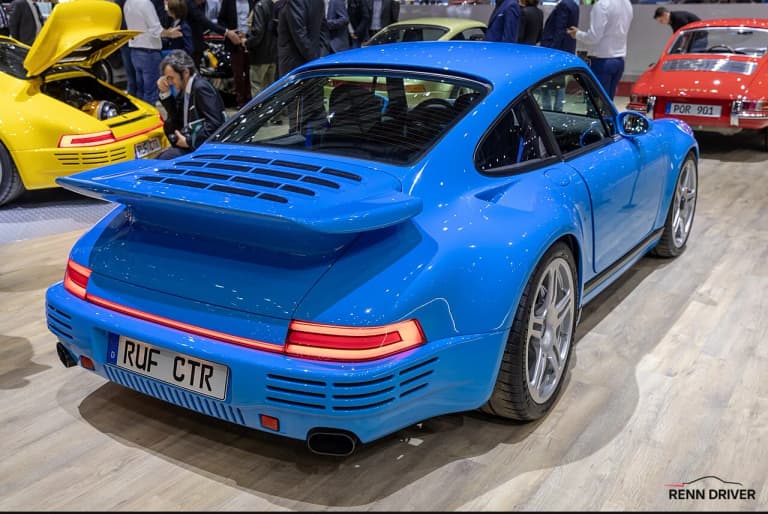
The modern CTR is the defining statement of what RUF has become. Revealed at Geneva in 2017, it uses a carbon fiber monocoque that RUF designed from the beginning, with no Porsche bodyshell underneath. The only architecture connection to Porsche is the basic flat-six layout and some suspension geometry references. Everything else is RUF: the 3.6-liter twin-turbo engine producing 710 hp, the 7-speed manual gearbox developed in-house, the carbon body, the interior. The car looks like a 911 because Alois Ruf Jr. loves 911 proportions, not because it shares body panels with one.
Specifications:
- Power: 710 hp
- Torque: 649 lb-ft
- Weight: 1,200 kg
- Top speed: 225 mph
- Transmission: 7-speed manual
- Chassis: Carbon fiber monocoque, 88 kg
- Production: Fewer than 75 units total
RUF Rodeo (2021 to present)
The Rodeo is the curveball nobody expected. RUF took the 911 platform, raised the ride height, added all-terrain tires, reinforced the bodywork, and built an off-road capable sports car. It is not a stunt. The Rodeo uses a naturally aspirated flat-six, proper long-travel suspension, and a body that references classic Safari rally cars. It is the kind of thing that only a small independent manufacturer can build: too weird for Porsche to risk, too good to dismiss.
RUF vs Singer: Different Animals
Singer Vehicle Design and RUF Automobile are the two names that come up whenever someone wants the most desirable 911-based car in the world. The comparison is understandable. Both are small, expensive, and obsessively detailed. Beyond that, they are doing fundamentally different things.
What Singer does: Singer takes a customer-supplied 964-generation 911 and rebuilds it comprehensively. The donor car is the starting point. Singer disassembles it, builds a carbon fiber body around the steel tub, upgrades or replaces everything mechanical, and produces a finished car that looks like a perfect 964 and drives like nothing else. The car retains its Porsche VIN because it started life as a Porsche. Singer is a restorer and reimaginer. The philosophy is about taking something beautiful and making it perfect.
What RUF does: RUF either starts with a bare Porsche bodyshell (older models) or its own chassis (modern CTR and SCR), and builds a new car that earns its own VIN. The philosophy is about engineering and speed. RUF is not trying to make the perfect 911. It is trying to make the fastest, most capable car it can using flat-six architecture as the starting point.
| Aspect | RUF | Singer |
|---|---|---|
| Legal status | Manufacturer (own VINs) | Restorer / modifier (Porsche VINs) |
| Philosophy | Engineering and speed | Beauty and refinement |
| Base platform | Multiple generations, own chassis (CTR 2017) | 964 only |
| Founded | 1939 (manufacturing from 1970s) | 2009 |
| Location | Pfaffenhausen, Germany | Los Angeles, USA |
| Max output | 710 hp (CTR 2017) | 500+ hp (DLS) |
| Entry price (new) | $400,000 to $1M+ | $600,000 to $1M+ |
| Collector appeal | Speed records, motorsport heritage, independent VIN | Aesthetic perfection, celebrity ownership, cultural cachet |
As investments, the two have moved differently. Singer values have climbed dramatically as the brand became a cultural phenomenon, with DLS units trading between $1.5 and $2 million when they appear. RUF values are anchored to individual model significance: a Yellowbird is a $2 million car, a CTR2 is an $800,000 to $1.5 million car, and a modern CTR is essentially untested on the secondary market because almost none have come up for sale.
The honest answer on which is the better investment is that nobody knows yet. Singer has had a decade of Hollywood attention and mainstream automotive media coverage. RUF has had 80 years of engineering credibility and a manufacturing status that Singer does not have. Both have strong cases. Neither is a bad choice if you have the money and the patience.
The more useful question is what kind of car you actually want. Singer builds art you can drive. RUF builds weapons you can drive on the road. They are both correct answers to different questions.
Buying a RUF: What It Actually Involves
There are two ways to acquire a RUF. New from the factory, or used from the collector market. Both routes are more involved than buying a standard Porsche.
New from Pfaffenhausen
RUF builds the CTR and SCR to order. The process starts by contacting the factory directly at ruf-automobile.de. There is no dealership network in the traditional sense: RUF has authorized representatives in some markets, but the relationship is more like a factory agent than a franchised dealer. For customers in Asia, Japan has historically had the strongest RUF representation, with a dedicated importer that has handled deliveries for Japanese buyers since the late 1980s.
Build times for a new CTR or SCR typically run 12 to 18 months from order confirmation. Specification is handled directly with the factory. RUF offers extensive customization on paint, interior materials, and some mechanical configurations, but unlike Singer, the car starts from a defined model specification rather than being entirely bespoke from a blank sheet.
Pricing for a new CTR has not been formally published, but estimates from dealers and journalists who have discussed it with the factory place it around $700,000 to $900,000 depending on specification. The SCR is believed to be in a similar range.
Used market
RUF cars appear at specialist dealers and major international auctions. Gooding and Company, RM Sotheby's, and Bonhams have all handled significant RUF sales. Values by model:
- Original CTR Yellowbird (1987 to 1992): $1.5 million to $3 million. The record is moving upward. A car in exceptional documented condition with known history commands a significant premium.
- CTR2 (1995 to 1996): $800,000 to $1.5 million. The Sport variant at the top of that range.
- CTR3 (2007 to 2012): $600,000 to $1 million. Values have strengthened as the car's significance in RUF history became clearer.
- Rt 12: $250,000 to $400,000, depending on drivetrain configuration and condition.
- RGT: $150,000 to $250,000. The most accessible significant RUF on the used market.
- Modern CTR (2017 to present): Essentially no secondary market yet. Too few examples exist and almost none have come up for sale. The value when they do trade is likely to be substantial.
The conversion route
RUF also performs conversions on existing Porsches. If you own a 993 or 964 and want RUF engine, suspension, and body work applied to it, you can ship the car to Pfaffenhausen. In this case the car retains its Porsche VIN because it started as a Porsche, but receives factory-documented RUF specification. These conversion cars are documented by RUF and carry some collector value above a standard Porsche, though considerably less than a factory-built RUF with its own VIN.
Ownership experience
Owning a RUF is not like owning a standard Porsche. Parts that fail are not available at the local dealer. RUF supplies spare parts from Pfaffenhausen, and some components are unique to RUF models. The factory maintains records of every car it has built and provides service support and parts supply directly. For owners outside Europe, the logistics of major service work can involve shipping the car internationally.
The driving experience is what justifies all of it. Owners who have documented their time with Yellowbirds describe a car that demands engagement at all times. There is no DSC to catch a slide. There is no torque vectoring. There is an engine producing 469 hp in a 1,150 kg car with a 5-speed gearbox, a rear-engine layout, and the width of a standard 1987 911. The feedback is total and the consequences of errors are real. That is exactly what the people who buy them want.
RUF in Asia
RUF's presence in Asia has been centered on Japan, which has the region's strongest collector car market and a longstanding relationship with the Pfaffenhausen factory. Japanese enthusiasts discovered RUF in the 1980s and 1990s, and several significant models ended up in Japan during that period. The Japanese importer Option House has handled RUF sales and service in Japan for decades, and multiple CTRs and CTR2s are known to be in Japanese private collections.
In the rest of Asia, documented RUF ownership is rare but not nonexistent. Hong Kong's collector car community has historically been one of the most active in the region, and at least a few RUF models are believed to be held there. Singapore's growing collector market has attracted significant exotica over the past decade, and a RUF CTR2 was reportedly present at a private collection viewing in Singapore in the early 2020s, though information on Asian private collections is typically not made public.
Thailand's Porsche scene is active and growing, with Das Treffen Bangkok attracting increasingly significant cars each year. A factory RUF has not been documented at a Thai event to date, though the network of enthusiasts who attend and organize those events has the connections to make it happen. The right Porsche generation collector in Thailand could reasonably source a conversion model through RUF's international service network.
For buyers in Thailand or elsewhere in Southeast Asia interested in a new RUF, the path runs through the factory directly or through a Japanese authorized representative, with Japan being the practical regional hub for RUF access.
Frequently Asked Questions
Is RUF a car manufacturer or a tuner?
RUF is a recognized car manufacturer. The German Federal Motor Transport Authority granted RUF manufacturer status in 1981. Every RUF built carries its own RUF vehicle identification number and receives its own type approval as a new vehicle. Tuners like TechArt or Gemballa modify existing Porsches and the cars retain their Porsche VINs. RUF builds new vehicles.
What is the RUF Yellowbird and why is it famous?
The Yellowbird is the nickname for the 1987 RUF CTR, a twin-turbo flat-six car that hit 213 mph at a time when almost nothing in the world could match it. It became famous partly through a Sport Auto video of journalist Stefan Roser lapping the Nurburgring Nordschleife at speeds that look impossible for a rear-engined car without electronic stability aids. The car also appeared in Gran Turismo from 1997 onward, cementing it in the memory of an entire generation of driving enthusiasts. Only 29 were built. Surviving examples are worth more than $2 million.
How much does a RUF cost?
It depends entirely on the model. An original Yellowbird trades between $1.5 million and $3 million. A CTR2 runs $800,000 to $1.5 million. The modern CTR (2017) is believed to cost around $700,000 to $900,000 new, but very few have come up for sale on the secondary market. The most accessible significant RUF on the used market is the RGT at around $150,000 to $250,000.
What is the difference between RUF and Singer?
RUF is a manufacturer that builds its own cars using Porsche architecture as a base. Singer is a restorer that takes existing 964-generation Porsches, rebuilds them comprehensively, and returns a car that still carries its Porsche VIN. RUF is about engineering and performance. Singer is about refinement and aesthetics. Both produce exceptional cars. They are not really competing with each other because they are answering different questions.
What is the fastest RUF ever made?
The CTR3 Clubsport reached 236 mph with 777 hp from its mid-mounted twin-turbo flat-six. The modern CTR (2017) reaches 225 mph with 710 hp. By top speed the CTR3 Clubsport holds the record.
Can I buy a RUF in Asia?
Yes, though the process runs through the factory in Pfaffenhausen or an authorized representative. Japan has the strongest RUF presence in Asia, with a dedicated importer that has handled deliveries for decades. For buyers in Southeast Asia, direct contact with the factory is the most reliable route. Build times for new cars typically run 12 to 18 months.
Does RUF still make cars?
Yes. Current production includes the CTR (710 hp, carbon monocoque), the SCR (510 hp, naturally aspirated, 700 kg), and the Rodeo (off-road capable). RUF also performs conversions and restorations on customer Porsches at the Pfaffenhausen factory.
Final Thoughts
The remarkable thing about RUF is not any individual car. It is the consistency of the ambition. For more than 80 years, the same family in the same Bavarian town has been asking the same question: how fast can a flat-six rear-engined car go? The answers have ranged from 213 mph in 1987 to 236 mph in 2012, and the 2017 CTR's carbon monocoque represents the most complete answer yet.
What separates RUF from every other company working in this space is legitimacy. Not cultural legitimacy, though it has that too, but legal and engineering legitimacy. RUF builds cars. It does not modify cars. That distinction, formalized by the German government in 1981, is the foundation of everything the company has achieved since.
For anyone serious about the world of air-cooled and water-cooled 911-based performance cars, RUF is not optional knowledge. It is the benchmark against which everything else is measured. The Yellowbird set a standard in 1987 that most manufacturers have still not matched. That is not a small thing.
For more on the world of reimagined and performance-built 911s, see our guide to Singer Porsche and our overview of Porsche 911 generations.
Photo credits: Alexander Migl, CC BY-SA 4.0, via Wikimedia Commons. Edvvc, CC BY 2.0, via Wikimedia Commons. Outsider1924, Public domain, via Wikimedia Commons. Alexander Migl, CC BY-SA 4.0, via Wikimedia Commons. MrWalkr, CC BY-SA 4.0, via Wikimedia Commons.