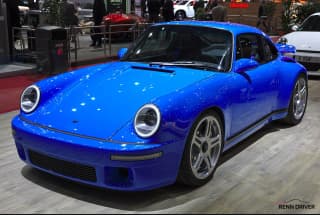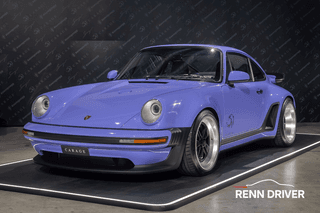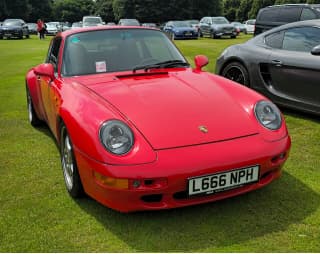
A Porsche 993 restomod is a ground-up rebuild of the last air-cooled 911 (1995 to 1998), transformed with modern engineering while keeping the soul of the original. Gunther Werks is the benchmark: full carbon fiber body, 4.0L naturally aspirated flat-six producing 430 hp, and a price starting well above $1 million all-in. Singer, Theon Design, and DP Motorsport each take the same platform in their own direction. This guide covers all of them.
In this article, we'll compare the builders reimagining the Porsche 993. We'll cover Gunther Werks, Singer, Theon Design, and DP Motorsport.
Contents
- 1 Why the 993?
- 2 What a Restomod Adds That a Stock 993 Cannot
- 3 Gunther Werks: The Carbon Fiber Benchmark
- 4 Singer Vehicle Design: The Market Leader
- 5 Theon Design: The British Alternative
- 6 DP Motorsport: The German Track Specialist
- 7 Builder Comparison
- 8 Investment or Driver?
- 9 What a Restomod Costs vs a Stock 993
- 10 How to Get on the Gunther Werks Waitlist
- 11 FAQs
- 12 Final Thoughts
Why the 993?
Not every air-cooled 911 becomes a restomod platform. The 993 attracts the most attention, and the reasons are not arbitrary.
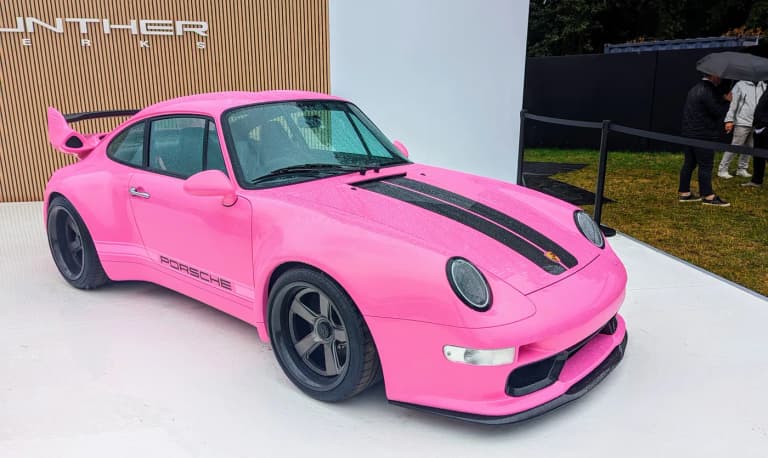
Porsche produced the 993 from 1995 to 1998. It was the last 911 with an air-cooled engine before Porsche switched to water-cooled powertrains with the 996 in 1999. For a significant portion of the Porsche community, that distinction matters enormously. The air-cooled engine has a character, a sound, and a mechanical intimacy that water-cooled cars do not replicate. The 993 is the last of that lineage, and it arrived at the end of that era with the most refined version of the formula.
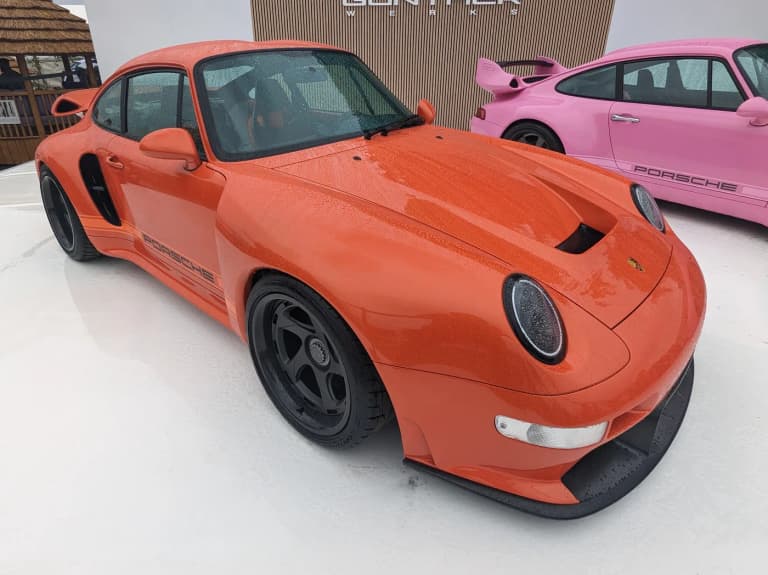
The 993 generation also represented a genuine engineering leap over the 964 it replaced. Porsche gave it a fully revised multi-link rear suspension (replacing the semi-trailing arms that made earlier 911s tricky at the limit), a stiffer bodyshell, variable-power steering, and a significantly more powerful engine. In standard Carrera trim it produced 272 hp. The 993 Turbo produced 408 hp from twin turbos and became one of the defining performance cars of its decade.
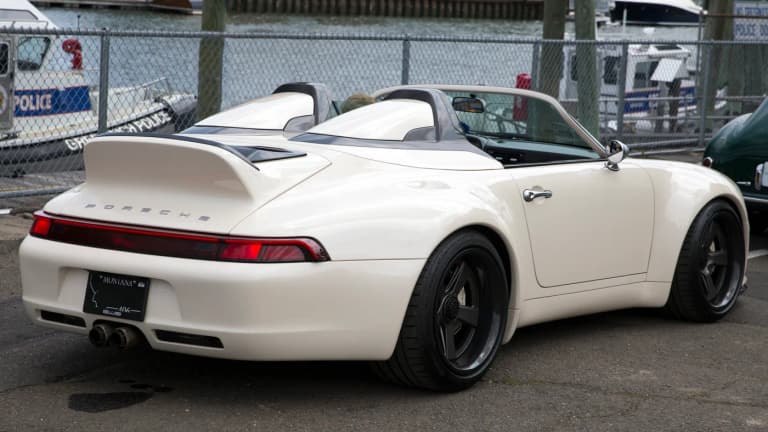
For restomod builders, the 993 offers the ideal combination: the emotional cachet of the last air-cooled 911, a bodyshell that responds well to modern suspension geometry, and an engine platform that Porsche air-cooled specialists have spent decades learning how to push far beyond factory limits. The proportions are right. The platform is right. The story writes itself.
The 964 (1989 to 1994) is also popular, especially through Singer, but the 993 is increasingly the more desirable platform partly because it received so much engineering refinement in period and partly because it is genuinely the end of an era.
What a Restomod Adds That a Stock 993 Cannot
A stock 993 in excellent condition is already a remarkable car. So what does a restomod program actually add?
The honest answer is that a restomod does not make the car more authentic. It makes it more capable, lighter, faster, and more consistent than a 30-year-old car can be in original specification. Builders like Gunther Werks are not preservationists. They are engineers who start with the emotional architecture of a 993 and then ask what it would look like if they had no constraints.
The tangible differences in a top-tier 993 restomod versus a stock example:
- Power: Stock 993 Carrera produces 272 hp. A Gunther Werks unit produces 430 hp from a larger-displacement naturally aspirated engine with individual throttle bodies. That is 58 percent more power without adding forced induction.
- Weight: Stock 993 weighs approximately 1,370 kg (3,020 lbs). A full carbon restomod comes in under 1,225 kg (2,700 lbs). That 300-plus pound reduction changes everything about how the car feels.
- Suspension: Modern geometry, high-end monotube dampers, and precise alignment that factory tolerances from the 1990s could not achieve. The car goes where you point it without the drama that characterizes stock air-cooled 911s.
- Brakes: Carbon-ceramic or large-format motorsport brake packages replace the factory setup. These do not fade. They do not complain.
- Reliability: A freshly rebuilt car with new rubber, new wiring, new seals, and zero deferred maintenance is dramatically more dependable than a 30-year-old original.
- Bespoke specification: Every restomod is built to the client's exact brief. Color, materials, trim level, and mechanical specification are all chosen. No stock car offers this.
What a restomod gives up is originality and, by extension, a certain kind of collector value. A matching-numbers, low-mileage original 993 is worth significant money to a different kind of buyer. The restomod market and the concours-preservation market do not overlap much.
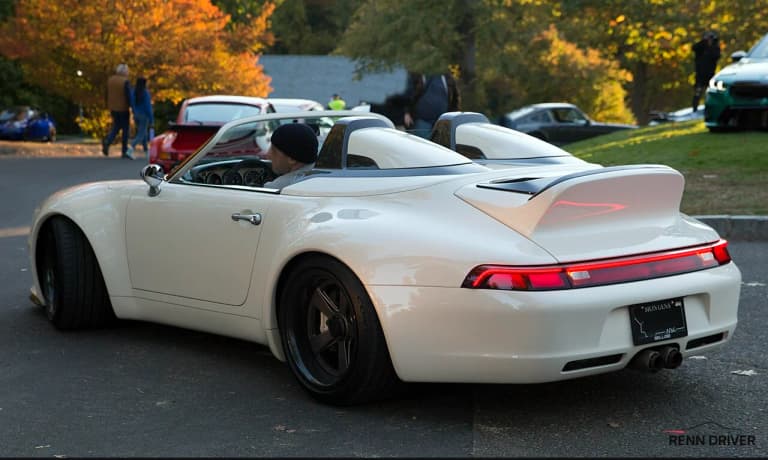
Gunther Werks: The Carbon Fiber Benchmark
Gunther Werks is the company most people think of first when the 993 restomod conversation comes up, and the reputation is earned.
Origins and the Name
The company was founded in 2016 by Peter Nam and operates out of Burlingame, California. The name is a tribute to Günther Steckönig, a legendary Porsche test driver and chief tester who spent decades evaluating 911s at the limit. Nam chose the name deliberately. Steckönig understood what a 911 should feel like better than almost anyone who ever worked for Porsche, and that standard of knowingness about the car is what Gunther Werks aspires to in everything they build.
The 4.0L Engine
The heart of a Gunther Werks build is a 4.0L naturally aspirated air-cooled flat-six developed in partnership with Rothsport Racing in Portland, Oregon. Rothsport is one of the most respected Porsche air-cooled engine builders in North America, with deep experience in both road and competition engines.
The engine starts from the original 993 flat-six block but is comprehensively rebuilt: bored and stroked to 4.0 liters, fitted with individual throttle bodies, a custom intake system, high-flow exhaust headers, and revised cylinder heads. The result is approximately 430 hp at around 7,800 rpm. For context, this is a naturally aspirated air-cooled engine producing power outputs that serious turbocharged cars struggle to match.
The engine note at full chat is not something you forget. Individual throttle bodies mean instantaneous throttle response with no lag, no waiting, no electronic softening of the connection between your right foot and combustion.
Key engine specifications:
- Displacement: 4.0 liters
- Power: Approximately 430 hp
- Redline: 7,800 rpm
- Aspiration: Naturally aspirated
- Induction: Individual throttle bodies
- Cooling: Air-cooled with custom ducting
The transmission is a close-ratio 6-speed manual Getrag gearbox with a lightweight flywheel and single-mass clutch. A sequential gearbox is available as an option. There is no PDK, no automatic, no plans to offer one.
Full Carbon Fiber Body
Every exterior body panel on a Gunther Werks 993 is replaced with carbon fiber: doors, fenders, hood, bumpers, rear quarter panels, roof. Clients choose between a painted finish or exposed carbon weave.
The body is not a direct copy of the stock 993 silhouette. Gunther Werks widened the rear fenders to accommodate the wider rubber the car now demands, added functional aerodynamic elements including a ducktail rear spoiler referencing the classic Carrera RS 2.7, and redesigned the front bumper with larger cooling intakes. The result looks immediately like a 993 and immediately like nothing Porsche ever offered from the factory.
The full carbon body drops approximately 200 lbs versus the equivalent steel panels. Combined with other weight reductions throughout the car, the finished build comes in under 1,225 kg (2,700 lbs), versus 1,370 kg (3,020 lbs) for a stock Carrera.
Suspension and Chassis
The 993's already-revised multi-link rear suspension is retained as a starting point, but everything is replaced and upgraded. New geometry, new high-end monotube dampers, new bushings, new uprights. The front suspension receives similar treatment. The result is a car that handles with a precision the factory car could not approach, partly because modern components are simply better and partly because the weight reduction transforms the dynamics.
Brakes are a matched high-performance package, with large-format rotors and motorsport-grade calipers. These do not fade on track.
Interior
The interior philosophy is purposeful minimalism. Gunther Werks strips the original 993 cabin and rebuilds it with carbon fiber bucket seats trimmed in Alcantara or leather, a custom carbon fiber dashboard with analog gauges, an Alcantara-wrapped smaller-diameter steering wheel, billet aluminum shift knob and door handles, and a simplified center console. Infotainment screens are not part of the standard spec. A Bluetooth-capable head unit is available for clients who need it.
The result is a cabin that rewards the driver without punishing passengers. It is not a stripped race car interior. It is a considered, tasteful expression of subtraction: everything present serves a purpose.
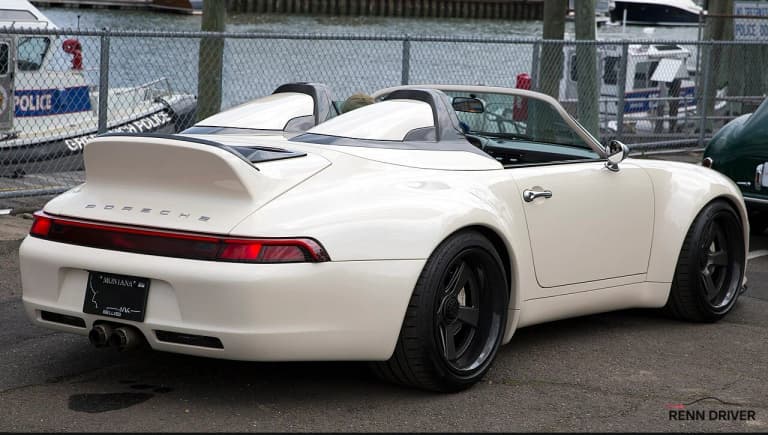
The 993 Speedster Remastered
In 2021, Gunther Werks revealed the 993 Speedster Remastered, a roofless variant limited to 25 units. It uses the same 4.0L engine and carbon body but adds a double-bubble tonneau cover behind the seats and a shorter, raked windshield. It weighs less than the coupe and delivers a more visceral experience: open air, full engine noise, no barrier between driver and machine.
All 25 units were spoken for quickly.
Build Process and Timeline
A Gunther Werks build takes 10 to 14 months from donor car to delivery. The process:
- Donor sourcing: The client provides a 993 or Gunther Werks helps locate one. Condition matters less than you might expect because the car is completely disassembled.
- Disassembly: The donor is stripped to a bare shell in Burlingame.
- Shell preparation: The steel unibody is inspected, repaired where needed, and reinforced. A roll bar and additional chassis stiffening are added.
- Carbon panels: All exterior panels are replaced with carbon fiber components.
- Engine build: The flat-six goes to Rothsport Racing for the 4.0L rebuild.
- Assembly: New suspension, brakes, wiring harness, interior, and drivetrain components are installed.
- Testing: Each car is road tested and track tested before delivery.
Clients have direct access to the team throughout and make specification decisions at each stage.
Pricing
Customer builds from Gunther Werks now start above $1.2 million all-in, reflecting the demand for the cars and the cost of materials and labor at this level. Early builds were quoted around $525,000 plus the donor car, but the market has moved substantially. Secondary market examples have traded at auction for well over the original build cost. Production runs around 25 cars per year and the waitlist reflects that constraint.
Singer Vehicle Design: The Market Leader
Singer Vehicle Design is the name that brought the 911 restomod concept to global attention, and they deserve the credit.
Founded in Los Angeles in 2009 by Rob Dickinson, Singer works primarily with the 964 (1989 to 1994) rather than the 993. Their approach is to take a client's 964, completely disassemble it, and rebuild it to a specification that blends period Porsche aesthetics with modern engineering capability. Singer calls it "reimagining" rather than restoring or modifying, and the distinction is meaningful. The goal is not to make a faster 964. The goal is to make the 964 that the factory might have produced if money, time, and regulations had not been constraints.
Their standard Reborn program uses a 3.8L air-cooled flat-six producing around 390 hp, with carbon fiber body panels, a fully redesigned interior, and extensive bespoke specification choices. Price for a standard Reborn starts around $500,000 plus the donor car.
The Dynamics and Lightweighting Study (DLS) is a different level entirely: a collaboration with Williams Advanced Engineering (the Formula 1 team's technology division) that produced a limited series of ultra-lightweight, ultra-powerful 911s. The DLS cars use a 4.0L engine developed with Williams producing 500 hp, with carbon fiber everywhere and a target weight of under 2,200 lbs. Price: $1.8 million and up. All units were sold before the car was publicly revealed.
Singer covers more ground than Gunther Werks in terms of output volume, global presence, and the breadth of their program. They are also the company that made the broader culture outside Porsche enthusiast circles aware that this category of car existed.
We cover Singer in much more detail in our Singer Porsche guide.
Theon Design: The British Alternative
Theon Design operates out of the United Kingdom and focuses specifically on the 993 platform, making them a direct conceptual counterpart to Gunther Werks rather than a competitor to Singer's 964 program.
Their programme is called the TDP-993. Like Gunther Werks, Theon takes a donor 993 and rebuilds it comprehensively, with bespoke carbon fiber bodywork, uprated suspension, and a significantly more powerful engine. The aesthetic approach leans slightly more toward the period-correct than Gunther Werks, with body modifications that feel like refined evolution rather than bold reimagination.
Theon has also explored an electric powertrain option for the 993 platform, which is a genuinely interesting direction. An electric restomod loses the air-cooled engine character that most buyers cite as the whole point, but it opens the platform to a different kind of performance envelope. Whether that direction finds buyers willing to spend restomod money for an EV 993 remains to be seen.
Public information about Theon's production numbers, pricing, and specific technical specifications is limited relative to Gunther Werks and Singer. They are a smaller operation and have not pursued the same level of media exposure. For buyers in Europe, proximity and the ability to deal in sterling without currency risk is a practical advantage.
DP Motorsport: The German Track Specialist
DP Motorsport is a German company with a long history in Porsche motorsport that predates the restomod category as a concept. Based in Germany, they have been preparing and modifying 911s for circuit use for decades and bring genuine racing pedigree to their customer cars.
Their 993-based work leans toward the track end of the spectrum more than Singer or Gunther Werks. Where Gunther Werks builds a car that is extremely capable on track but equally usable on the road, DP Motorsport's orientation is more motorsport-first. The aesthetic philosophy references racing history more explicitly, with livery options and details drawn from Porsche's competition heritage.
For a buyer who wants a 993 restomod with genuine German motorsport provenance and a track-first philosophy, DP Motorsport is worth serious consideration. For buyers outside Europe, access is less straightforward than working with Gunther Werks or Singer, both of which have established processes for international clients.
Builder Comparison
| Builder | Base Platform | Engine | Orientation | Starting Price |
|---|---|---|---|---|
| Gunther Werks | 993 | 4.0L air-cooled, ~430 hp | Road and track, aggressive | $1.2M+ all-in |
| Singer (Reborn) | 964 | 3.8L air-cooled, ~390 hp | Road-focused, refined | ~$500K + donor |
| Singer DLS | 964/911 | 4.0L, ~500 hp | Extreme lightweight | $1.8M+ |
| Theon Design | 993 | Uprated flat-six, EV option | Road-focused, refined | Undisclosed |
| DP Motorsport | 993 | Competition-built flat-six | Track-first | Undisclosed |
Gunther Werks vs Singer: The Real Difference
These two companies attract the most direct comparisons, so the honest breakdown:
Singer works with the 964, Gunther Werks works with the 993. This is not a small distinction. The 993 is the better car in almost every objective engineering sense. It has better suspension geometry, a more refined chassis, and a more developed engine. If the 964 is the raw, characterful option, the 993 is the car that Porsche had finally worked out how to get right. Gunther Werks starts from a stronger foundation.
The aesthetic philosophies differ significantly. Singer's work reads as an elevated, romanticized version of the original car, with color choices and interior details that feel carefully curated for visual beauty. A Singer looks like a car you would want to photograph from every angle. Gunther Werks cars are more aggressive. The wider rear fenders, the carbon weave, the ducktail: it communicates performance intent before you turn a wheel. A Gunther Werks car looks like it would rather be on a circuit than in a gallery.
Neither is correct. These are different answers to different questions. If you want the most beautiful, photographable, dinner-party-appropriate restomod, Singer is probably your answer. If you want the most focused, most capable, most driver-oriented 993 restomod, Gunther Werks makes the stronger case.
Investment or Driver?
The honest answer is that the best 993 restomods have done extraordinarily well as investments by accident, not by design. Gunther Werks did not set out to build appreciating assets. They set out to build the best possible 993. The financial returns have followed from the quality, the scarcity, and the cultural moment for air-cooled Porsches.
Whether that trend continues is a question no one can answer with confidence. Collector car markets move in cycles. Air-cooled Porsches have been in a bull market for over a decade, and the 993 restomod category has amplified that trend rather than simply tracking it.
What is clear is that finished examples from established builders like Gunther Werks have consistently traded on the secondary market for more than their original build cost. That is notable given that most bespoke built-to-order cars depreciate substantially the moment they leave the builder.
The practical advice for anyone approaching this as an investment: buy from an established builder with documented provenance, keep the car in excellent condition, and do not treat it as a pure financial instrument. If you are spending $1.2 million on a car primarily for investment purposes, there are more efficient places to put that capital. If you are spending it because you want the best possible 993 and the financial return is a welcome bonus, you are approaching it correctly.
What a Restomod Costs vs a Stock 993
The gap is enormous, and it should be understood clearly before anyone considers commissioning a restomod.
A stock Porsche 993 Carrera in good condition currently trades between $80,000 and $150,000 depending on specification, mileage, and history. A pristine low-mileage example with desirable options can reach $200,000. The 993 Turbo commands a significant premium, with clean examples well above $200,000 and the best ones reaching $350,000 or more.
A completed Gunther Werks 993 starts above $1.2 million. Theon and DP Motorsport do not publish pricing openly, but buyers should expect similar territory for a fully bespoke program. Singer's Reborn program starts around $500,000 plus the donor 964.
The premium over a stock car is not buying a better 993. It is buying an entirely different proposition: a bespoke, hand-built machine that happens to be descended from a 993. The two categories attract different buyers for different reasons, and that is fine. The stock 993 market and the restomod market coexist without much tension because the customers are not the same people making the same choice.
How to Get on the Gunther Werks Waitlist
Gunther Werks does not have a public online form where you submit your email address and wait. The process is personal and relationship-based, which is standard for builders operating at this price point and production volume.
The practical steps:
- Contact the company directly. Gunther Werks can be reached through their official website at guntherwerks.com. Initial inquiries should be genuine expressions of interest with a clear understanding of what the program costs and entails.
- Attend events. Gunther Werks cars appear at major concours and automotive events including the Pebble Beach Concours d'Elegance weekend events, Monterey Car Week, and similar gatherings. Meeting the team in person is the most effective introduction.
- Be serious about the donor car. Having a 993 in mind, or already owning one you are prepared to commit, signals genuine intent. Speculative inquiries from people who may or may not proceed are less attractive to a small team managing a 12-plus month backlog.
- Be patient. The waitlist is real. Production is approximately 25 cars per year. New clients should expect at minimum a 12 to 18 month wait from commission to delivery.
Theon Design can be reached through their website for UK and European buyers. DP Motorsport's point of contact for customer car projects is through their German facility.
Frequently Asked Questions
What is a 993 restomod?
A 993 restomod is a ground-up rebuild of a Porsche 993 (the air-cooled 911 produced from 1995 to 1998), modified and upgraded with modern engineering while retaining the car's fundamental character. This typically means a more powerful engine, carbon fiber body panels, modern suspension, upgraded brakes, and a bespoke interior. The result is a car that exceeds the original's performance in every measurable way while maintaining its identity as an air-cooled 911.
How much does a Gunther Werks 993 cost?
Customer builds from Gunther Werks now start above $1.2 million all-in, including the donor car. Early builds were priced around $525,000 plus donor, but pricing has moved significantly with demand. Secondary market examples have consistently traded above the original build cost.
What engine does Gunther Werks use?
Gunther Werks uses a 4.0L naturally aspirated air-cooled flat-six developed with Rothsport Racing in Portland, Oregon. It produces approximately 430 hp at around 7,800 rpm, with individual throttle bodies and a custom exhaust. It is based on the original 993 flat-six block, bored and stroked to 4.0 liters.
Is a 993 restomod a good investment?
Completed examples from established builders like Gunther Werks have appreciated substantially above their build cost on the secondary market. Whether this continues depends on the broader collector car market and demand for air-cooled Porsches specifically. These cars were not designed as financial instruments, and buyers who approach them primarily as investments rather than as driver's cars are likely misaligned with the product. The investment returns have been a consequence of quality and scarcity, not a guarantee.
What is the difference between Gunther Werks and Singer?
Gunther Werks works with the 993 (1995 to 1998); Singer works primarily with the 964 (1989 to 1994). Gunther Werks takes a more aggressive, track-oriented approach with exposed carbon fiber and wider bodywork. Singer's aesthetic is more refined and elegant. Both produce extraordinary cars, and the choice between them is largely about which generation of 911 you prefer and whether you lean toward aggressive performance or refined elegance.
Do you need to provide a donor car?
Yes. A Gunther Werks build requires a donor Porsche 993 as the starting point. The client can provide one, or Gunther Werks can help source a suitable example. Because the car is completely disassembled and rebuilt, the condition of the donor matters less than you might expect, though a rust-free shell is obviously preferred.
Does Gunther Werks only build the 993?
Gunther Werks has focused exclusively on the 993 platform, which is a deliberate choice. Deep specialisation in one platform produces better results than spreading across multiple generations. Their entire programme, engineering infrastructure, and supplier relationships are built around the 993.
What is the Gunther Werks 993 Speedster?
The 993 Speedster Remastered was revealed in 2021 as a limited run of 25 cars. It uses the same 4.0L engine and carbon fiber body as the coupe but adds an open roofline, a double-bubble tonneau cover behind the seats, and a shorter raked windshield. All 25 units were sold. It weighs less than the coupe and delivers a more open, visceral driving experience.
Final Thoughts
The 993 restomod category exists because a specific type of enthusiast decided that the last air-cooled 911 deserved better than what three decades of age and factory compromise had left it with. Gunther Werks, Singer, Theon Design, and DP Motorsport each represent a different answer to the same fundamental question: what would the perfect 993 look like if you started from scratch with no constraints?
Gunther Werks has built the most compelling case for one version of that answer: a full carbon fiber machine with 430 hp, 200 pounds lighter than the stock car, built to be driven hard and driven often. Named after a man who spent his career knowing exactly what a 911 should feel like, and built by people who share that conviction.
For anyone in the enthusiast community who has spent time thinking about what a definitive modern interpretation of the Porsche 993 could be, these builders have provided the answer. It costs more than most people can consider spending on a car. It is also, by any reasonable measure, worth it.
Read our full breakdown of Singer Vehicle Design for more on the 964 restomod world, and our Porsche 993 guide for context on the stock car these programs start from.
Photo credit: Rudolf Stricker, CC BY-SA 3.0, via Wikimedia Commons.