The Mezger engine is a Porsche flat-six used in the 996 and 997 generation GT3, GT3 RS, Turbo, and GT2 models. Named after Hans Mezger, the engineer who designed the original 911 engine and the 917's flat-twelve, the Mezger is fundamentally different from the M96/M97 engines in the standard Carrera. It features a gear-driven intermediate shaft (no IMS bearing issue), dry-sump lubrication, and internal components derived directly from the 962 Le Mans race engine. The Mezger is one of the primary reasons why GT3 and Turbo models command significant premiums over Carrera equivalents from the same era.
Contents
Who Was Hans Mezger?
Hans Mezger (1929 to 2020) was one of the most important engineers in Porsche's history. He joined Porsche in 1956 and spent his career designing engines that won on the racetrack and defined road cars for generations.
His most notable achievements include:
- The original 911 engine (1963): Mezger was the lead engine designer for the air-cooled flat-six that powered the first 911
- The 917 flat-twelve (1969): The engine that gave Porsche its first overall Le Mans victory
- The TAG/Porsche Formula 1 engine (1983 to 1987): The 1.5L V6 turbo that powered McLaren to three World Championships
- The 962 Group C engine (1984 to 1990s): The water-cooled flat-six that dominated endurance racing for a decade
Mezger retired from Porsche in 1993, but his engine designs continued to evolve and were used in production cars until 2012. The "Mezger engine" designation is an enthusiast term, not an official Porsche name. Porsche internally referred to these engines by their engineering codes (e.g., M96/79 for the 996 GT3 engine). But the enthusiast community adopted "Mezger" to distinguish these engines from the less robust M96/M97 family used in the standard Carrera.
What Makes the Mezger Different
The Mezger engine shares the flat-six layout with the M96/M97, but the two are fundamentally different designs. Here are the key engineering differences.
Gear-Driven Intermediate Shaft
The most important difference. The M96/M97 engines use a chain-driven intermediate shaft with a sealed ball bearing (the notorious IMS bearing) that can fail catastrophically. The Mezger engine uses a gear-driven intermediate shaft with a plain bearing that is continuously lubricated by the engine's oil system. There is no IMS bearing failure risk.
Dry-Sump Lubrication
Standard Carrera models use wet-sump lubrication, where oil is stored in the oil pan beneath the engine. The Mezger uses dry-sump lubrication, where oil is stored in a separate external tank. A scavenge pump continuously removes oil from the crankcase and returns it to the tank.
The advantages of dry-sump are significant for a performance engine:
- Consistent oil pressure during sustained cornering, braking, and acceleration (no oil starvation)
- The engine can be mounted lower because the oil pan is shallower
- Better oil cooling because the separate tank acts as an additional heat exchanger
- Reduced windage (oil misting in the crankcase), which frees up power at high rpm
Stronger Crankcase
The Mezger crankcase is a different casting from the M96/M97. It uses thicker walls, reinforced bearing surfaces, and a more rigid overall structure. This is necessary to handle the higher power output and sustained high-rpm operation that the GT3 and Turbo models demand.
Individual Cylinder Liners
The Mezger uses pressed-in cylinder liners (Nikasil or Lokasil coated), while the M96/M97 engines use integrated cylinder barrels that are part of the crankcase casting. The Mezger approach allows for individual cylinder replacement if damage occurs, whereas bore scoring on an M96/M97 engine often requires a complete crankcase replacement or expensive repair.
Mezger vs M96/M97
| Feature | Mezger | M96/M97 |
|---|---|---|
| Used in | GT3, GT3 RS, Turbo, GT2 | Carrera, Carrera S, Boxster, Cayman |
| Intermediate shaft | Gear-driven, plain bearing | Chain-driven, sealed ball bearing (IMS) |
| Lubrication | Dry-sump | Wet-sump |
| Crankcase | Reinforced casting | Lighter casting |
| Bore scoring risk | Very low | Known issue (especially 996) |
| IMS bearing failure risk | None | 2% to 10% estimated |
| Redline (NA variants) | 8,200 to 8,400 rpm | 7,200 to 7,500 rpm |
| Heritage | 962 race engine lineage | Clean-sheet design (1996) |
The comparison makes clear why enthusiasts and collectors assign premium value to Mezger-equipped cars. The Mezger is simply a more robust, more capable, and more proven engine design.
Which Cars Have the Mezger Engine
The Mezger engine was used in the following production models:
996 Generation (1999 to 2005)
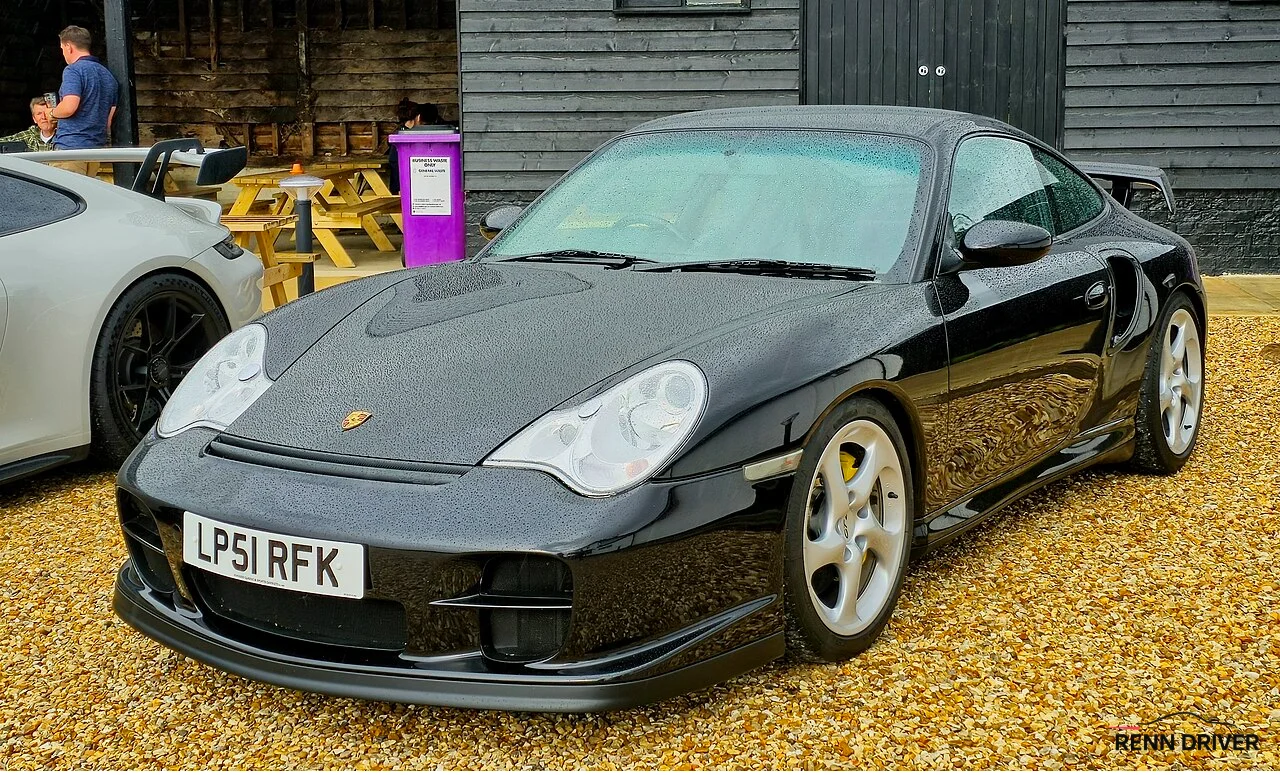
- 996 GT3 (1999 to 2005): 3.6L, 360 hp (Mk1) to 381 hp (Mk2)
- 996 GT3 RS (2004): 3.6L, 381 hp
- 996 Turbo (2001 to 2005): 3.6L twin-turbo, 415 hp (420 hp with X50 power kit)
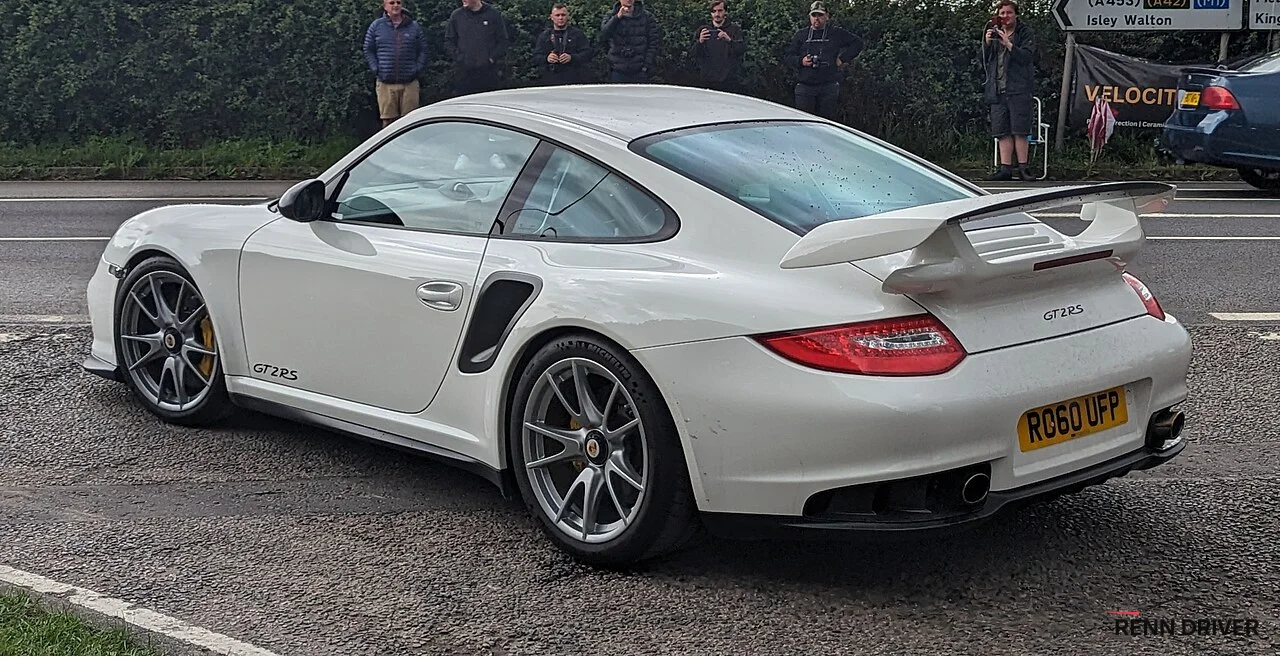
- 996 GT2 (2002 to 2005): 3.6L twin-turbo, 462 hp
997 Generation (2005 to 2012)
- 997 GT3 (2006 to 2011): 3.6L, 409 hp (997.1) to 435 hp (997.2 3.8L)
- 997 GT3 RS (2007 to 2012): 3.6L to 3.8L, 409 hp to 450 hp. The 997 GT3 RS 4.0 produced 500 hp
- 997 Turbo (2006 to 2013): 3.6L twin-turbo, 473 hp (997.1) to 500 hp (997.2)
- 997 GT2 (2008 to 2009): 3.6L twin-turbo, 523 hp
- 997 GT2 RS (2010 to 2011): 3.6L twin-turbo, 612 hp
The 997 GT3 RS 4.0 and 997 GT2 RS represent the final and most extreme expressions of the Mezger engine in production form. The GT3 RS 4.0 is particularly revered: 500 hp from 4.0 liters, naturally aspirated, with a redline of 8,250 rpm. Only 600 units were built, and current values exceed $700,000.
The 991 generation (2012 onward) did not use the Mezger engine. The GT3 and GT3 RS switched to a new 3.8L and later 4.0L flat-six (sometimes called the 9A1 family), while the Turbo and GT2 moved to the turbocharged version of the same architecture. These newer engines are excellent in their own right but are distinct from the Mezger lineage.
Race Lineage: From 962 to Road Car
The Mezger engine's road car application grew directly from Porsche's racing programs. The lineage is traceable through specific engineering choices.
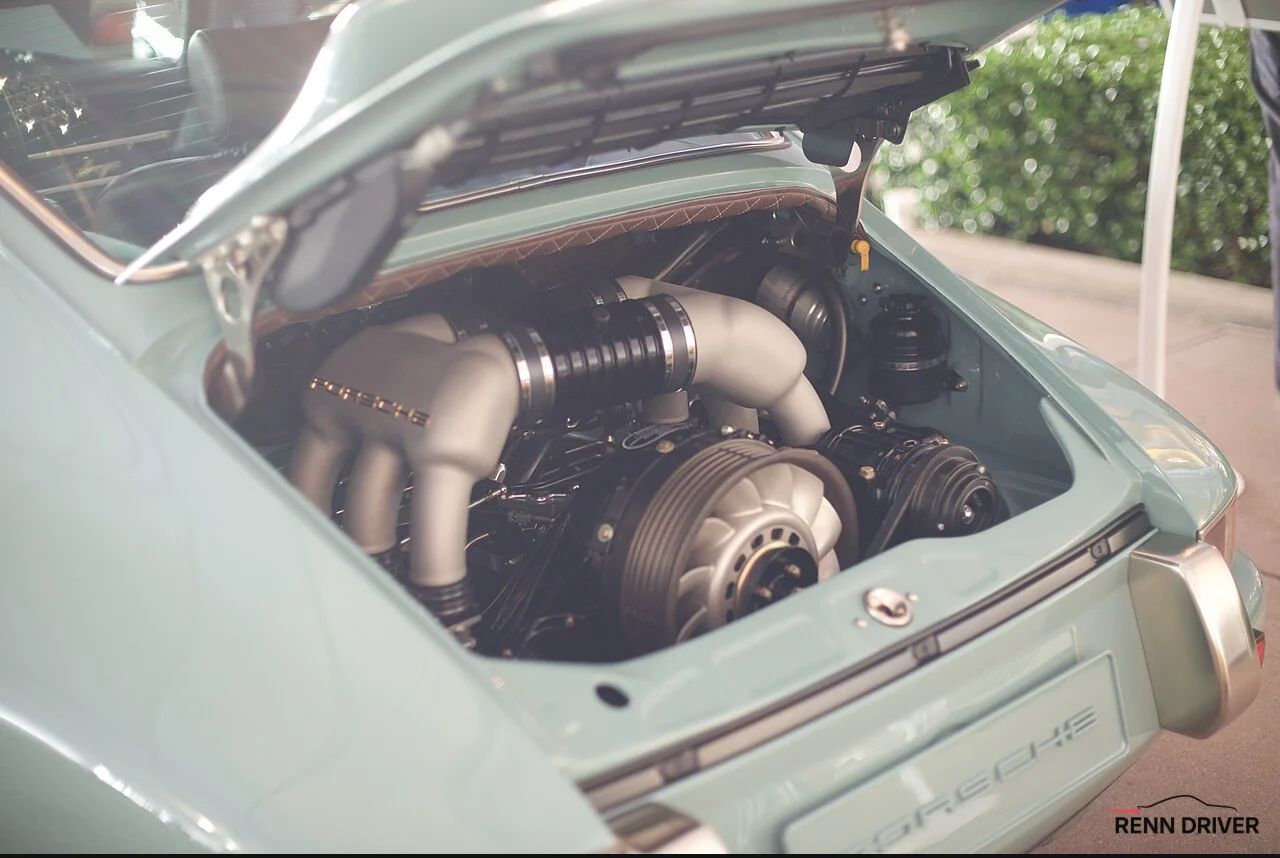
The Porsche 962 (also known as the 962C in FIA Group C specification) dominated endurance racing throughout the 1980s and into the 1990s. Its engine was a water-cooled, turbocharged flat-six with an aluminum crankcase, individual cylinder liners, dry-sump lubrication, and a gear-driven intermediate shaft. These are exactly the features that distinguish the Mezger road engine from the M96/M97.
When Porsche developed the 996 GT3 in the late 1990s, the GT department chose not to use the new M96 engine that powered the Carrera. Instead, they went back to the proven race engine architecture and adapted it for road use. The decision was deliberate: the GT3 was a competition-oriented car, and it needed a competition-proven engine.
The same logic applied to the Turbo and GT2. The M96/M97 engine was not designed to handle the thermal and mechanical stresses of twin turbocharging at the power levels Porsche targeted. The Mezger, with its reinforced crankcase, dry-sump oiling, and gear-driven internals, could.
This racing heritage is one of the intangible qualities that makes the Mezger special. When you start a 996 GT3 or a 997 Turbo, the engine you are hearing is a direct descendant of the powerplant that won Le Mans, Daytona, and Sebring.
Reliability and Longevity
The Mezger engine is widely regarded as one of the most reliable high-performance engines ever built. Its robustness comes from the convergence of race-grade construction and relatively modest power output for its mechanical capability.
In naturally aspirated form (GT3), the Mezger produces approximately 100 hp per liter, which is well within the engine's structural limits. The redline of 8,200 to 8,400 rpm is high by road car standards but conservative by racing standards, where the same basic engine architecture was run at 10,000+ rpm with forced induction.
Common reliability characteristics:
- Oil system: The dry-sump system is extremely effective. Oil starvation, one of the most common causes of engine failure in track-driven cars, is essentially eliminated
- No IMS bearing risk: The gear-driven intermediate shaft requires no maintenance and does not fail
- Chain tensioners: The cam chain tensioners should be inspected at 80,000 to 100,000 miles and replaced if worn. This is a maintenance item, not a design flaw
- Bore scoring: Extremely rare on Mezger engines compared to M96/M97
- Track use: The Mezger handles regular track abuse that would destroy many other engines. Proper oil and coolant management is still required, but the engine's construction provides substantial margins of safety
Mezger engines with 100,000+ miles are not uncommon, including examples that have seen extensive track use. A few documented examples have exceeded 200,000 miles with original internals. Rebuild intervals depend heavily on use, but with proper maintenance, the Mezger can go 150,000+ miles without requiring major internal work.
Naturally Aspirated vs Turbocharged Mezger
The Mezger engine was produced in both naturally aspirated (GT3, GT3 RS) and turbocharged (Turbo, GT2) configurations. Each delivers a fundamentally different driving experience.
Naturally Aspirated Mezger (GT3/GT3 RS)
The NA Mezger is characterized by linear power delivery, an electric throttle response, and a sound that builds from a low-frequency rumble to a high-pitched scream at the redline. Power arrives progressively and rewards high-rpm driving. The car in naturally aspirated form is at its best between 5,000 and 8,400 rpm, where the engine produces its most engaging sound and strongest acceleration.
The driving experience is visceral and communicative. There is no turbo lag, no sudden surge of boost. Just a direct connection between throttle pedal and crankshaft.
Turbocharged Mezger (Turbo/GT2)
The turbo Mezger delivers massive torque from relatively low rpm. The twin-turbo setup provides rapid boost buildup, and the power arrives with force rather than finesse. The forced induction variant and 997 Turbo are devastatingly fast in straight-line acceleration, with the ability to overwhelm rear tires (GT2) or deploy all-wheel-drive traction (Turbo).
The sound is deeper, more muted, and characterized by the distinctive whistle of the turbochargers spooling. It is less dramatic than the NA Mezger but conveys an undeniable sense of controlled brutality.
The Mezger Premium
Mezger-equipped cars consistently command higher prices than their M96/M97 Carrera counterparts. The premium reflects both the engine's superior reliability and its motorsport heritage.
Current approximate value comparisons:
- 996 Carrera: $25,000 to $50,000 vs 996 GT3: $80,000 to $150,000
- 996 Carrera: $25,000 to $50,000 vs its turbocharged sibling: $70,000 to $120,000
- 997.1 Carrera S: $45,000 to $70,000 vs its 997 successor: $120,000 to $200,000
- 997.2 Carrera S: $55,000 to $90,000 vs 997.2 GT3: $150,000 to $250,000
The premium is not solely about the Mezger engine. GT3 and Turbo models also have superior suspension, brakes, aerodynamics, and exclusivity. But the engine is the foundation. Buyers know they are getting a powertrain that does not carry the IMS bearing risk, that handles track use without complaint, and that traces its lineage to Le Mans.
The twin-turbo 996 GT2 represents one of the strongest value propositions in the Mezger world. It offers the twin-turbo Mezger engine, rear-wheel drive, manual transmission, and aggressive aerodynamics at a price point below the naturally aspirated GT3 RS of the same era.
Renn Driver's Take
I will do some more research on this and give my updated thoughts soon.
Frequently Asked Questions
What is a Mezger engine?
A Mezger engine is a Porsche flat-six used in the 996 and 997 generation GT3, GT3 RS, Turbo, and GT2 models. Named after engineer Hans Mezger, it features a gear-driven intermediate shaft, dry-sump lubrication, and a reinforced crankcase derived from the 962 race engine. It is distinct from the M96/M97 engines used in standard Carrera models.
Does the Mezger engine have the IMS bearing problem?
No, the Mezger engine does not have the IMS bearing problem. The Mezger uses a gear-driven intermediate shaft with a continuously lubricated plain bearing, unlike the M96/M97 engines which use a sealed ball bearing (IMS) that can fail.
Which Porsches have the Mezger engine?
The Mezger engine is found in the 996 GT3, 996 GT3 RS, 996 Turbo, 996 GT2, 997 GT3, 997 GT3 RS, 997 Turbo, 997 GT2, and 997 GT2 RS. It was not used in any 991 or later models.
Is the Mezger engine reliable?
Yes, the Mezger engine is widely considered one of the most reliable high-performance engines ever produced. With no IMS bearing risk, dry-sump lubrication, and race-derived construction, Mezger engines routinely exceed 100,000 miles including extensive track use. Some documented examples have surpassed 200,000 miles with original internals.
Why is the Mezger engine so expensive?
Mezger-equipped Porsches are expensive because the engine is more robust and reliable than the M96/M97, has no IMS bearing risk, handles track use without issue, and carries direct motorsport heritage from the 962 Le Mans program. These factors combine with the exclusivity of GT3, Turbo, and GT2 models to justify the premium.
Did Porsche stop making the Mezger engine?
Yes, Porsche stopped producing the Mezger engine after the 997 generation, which ended production in 2012 (GT2 RS) and 2013 (Turbo). The 991 generation GT3, Turbo, and GT2 models use a different flat-six architecture. The Mezger's direct lineage ended with the 997 GT2 RS.
Final Thoughts
The Mezger engine is the connecting thread between Porsche's racing glory days and its road car excellence. It took the principles that Hans Mezger established in the 962 race engine and packaged them in a street car, giving owners a powertrain that performs, sounds, and endures like nothing else in the sports car world.
The M96/M97 engines in the standard Carrera were capable, cost-effective designs that served their purpose. But they were never intended to operate at the extremes that the Mezger handles routinely. For track use, high-mileage reliability, and long-term value retention, the Mezger remains in a class of its own.
If you are considering a 996 or 997 and the budget allows, choosing a Mezger-powered GT3 or Turbo over a standard Carrera is not just a performance upgrade. It is a fundamentally different ownership experience built on one of the finest engines Porsche has ever produced.
For more on the broader Porsche engine family, see our complete flat-six engine history.
Images by: Renn Driver and Contributors, licensed under CC BY-SA 2.0, via Wikimedia Commons