
What sets the GT3 RS apart is not just peak horsepower, but the way that engine power is delivered. The Porsche 911 GT3 RS is the most track-oriented 911 you can buy from Porsche. It’s street-legal, but it’s not built with comfort in mind.
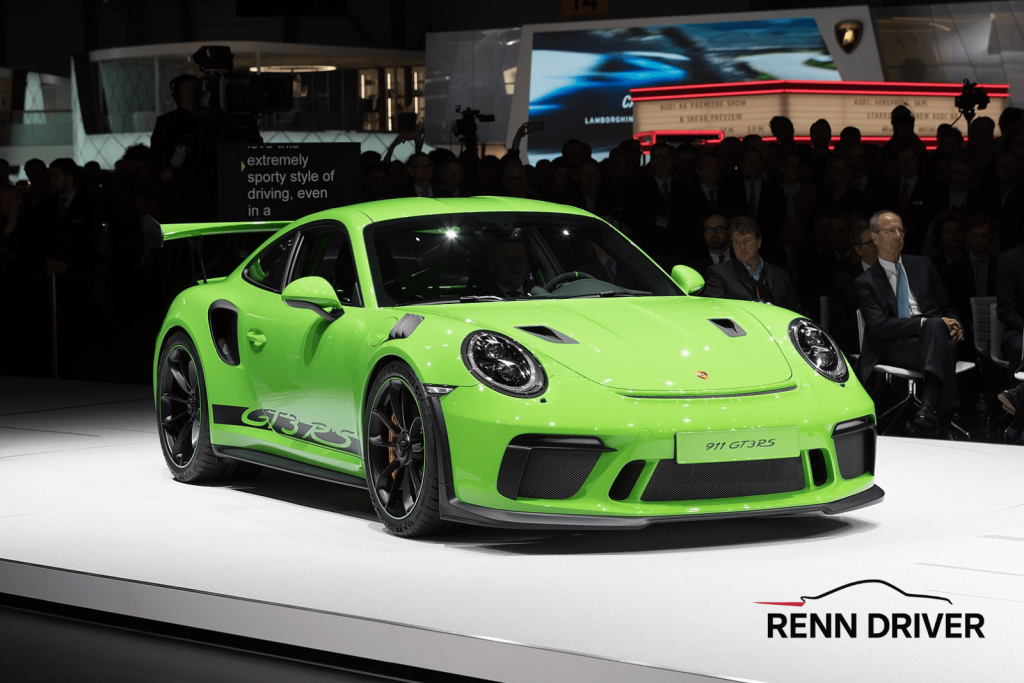
This article covers the development, specs, driving dynamics, and key options available on the Porsche GT3 RS. If you’re looking to understand how this model fits into the 911 lineup, or you’re considering buying one, this guide will walk through the essentials.
Quick Summary
- Production Period: 2003 (996 RS) to present (992 RS)
- Generations: 996, 997.1, 997.2, 991.1, 991.2, 992
- Engine: 4.0L naturally aspirated flat‑six, 9,000 rpm redline (most recent models)
- Power Output: Ranges from ~381 hp (996) to ~518 hp (992 RS)
- Transmission: Manual on early generations, 7‑speed PDK only since 991.1
- Top Speed: 296 km/h (992), 310 km/h on earlier models
- Performance Features: Rear‑axle steering, double‑wishbone front suspension (992), DRS active aero (992), Clubsport options
- Weissach Package: Lightweight carbon panels, magnesium wheels, titanium cage, cuts ~25–30 kg
- Nürburgring Best Lap: 6:44.848 (992 GT3 RS)
- Position in Lineup: Porsche’s most track-focused road-legal 911 model, designed for lap times over comfort
Contents
- 1 Quick Summary
- 2 Where the GT3 RS Fits in the 911 Lineup
- 3 Porsche 911 GT3 RS History: Generation by Generation
- 4 Exterior and Interior
- 5 Engine and Performance
- 6 Transmission and Handling
- 7 Motorsport Background
- 8 Weissach Package and Lightweight Options
- 9 Pricing and Market Trends
- 10 Ownership Costs and Considerations
- 11 GT3 RS vs Other 911s
- 12 GT3 RS Trivia
- 13 Frequently Asked Questions (FAQs)
- 14 Final Thoughts
Where the GT3 RS Fits in the 911 Lineup
Porsche offers a wide spectrum of 911 models, from everyday Carreras to full-on track monsters. The GT3 RS sits at the sharper end of the range. Here’s how the GT3 RS stacks up against other key Porsche 911 variants:
| Model | Focus | Transmission | Power (hp) | Street Comfort |
|---|---|---|---|---|
| Carrera / S | Daily driving | Manual/PDK | ~379–443 | ★★★★★ |
| GTS | Balanced sport | Manual/PDK | ~473 | ★★★★☆ |
| GT3 | Road + track | Manual/PDK | ~502 | ★★★☆☆ |
| GT3 RS | Track-dominant | PDK only | ~518 | ★☆☆☆☆ |
| GT2 RS | Power + track | PDK | ~690 | ★★☆☆☆ |
| Turbo / S | Speed + comfort | PDK | ~572–641 | ★★★★☆ |
While the Porsche 911 GT3 strikes a balance between road and track, the RS ditches compromise in favor of race track domination.
The Porsche GT3 RS is not just a “faster GT3.” It is a different concept and mindset. One engineered for grip, consistency, and extreme aerodynamics, not grand touring comfort or headline top speed alone.
Porsche 911 GT3 RS History: Generation by Generation
Porsche first introduced the GT3 RS to meet homologation requirements, but it quickly became a favorite among track-focused drivers. Here’s how it evolved:
996 GT3 RS (2003–2005)
Only around 682 units were made. It wasn’t offered in the U.S., which adds to its rarity today. Built with a 3.6L flat-six producing 381 hp, it featured carbon fiber body parts, a roll cage, and a single-mass flywheel. Weighing under 3,000 lbs, it was considered raw and mechanical, with no stability control and minimal insulation. This generation was manual only and fitted with a large rear spoiler and a fixed rear wing.

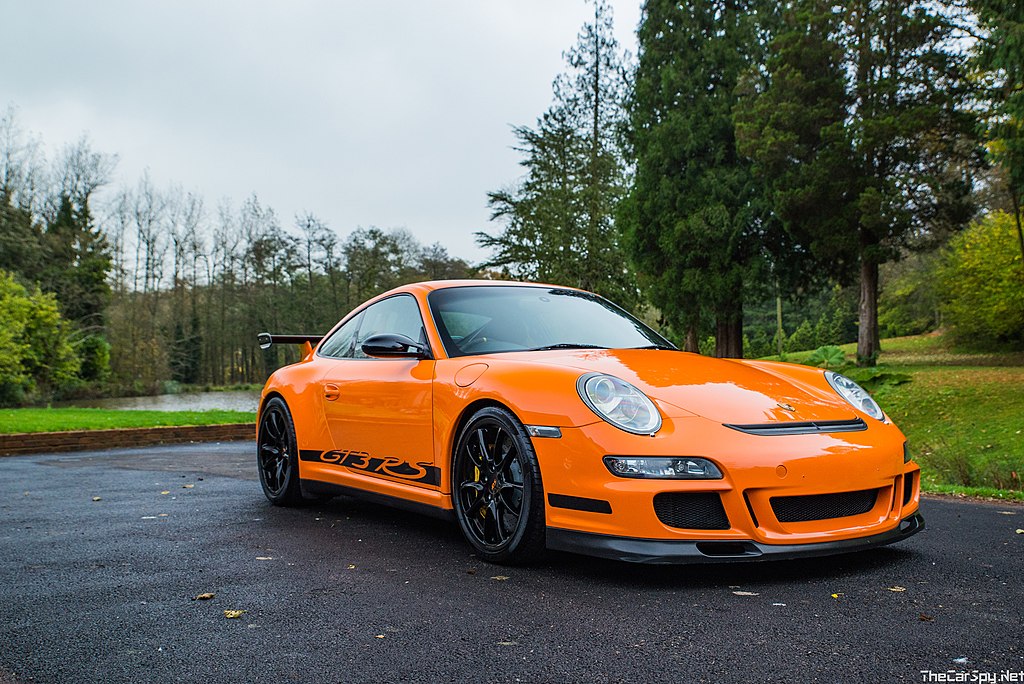
997.1 GT3 RS (2006–2009)
Now offered globally, including the U.S.. Powered by a 3.6L Mezger engine (~415 hp), it was praised for chassis balance. Porsche added a carbon fiber rear wing, a polycarbonate rear window, and wider rear wheels compared to the standard GT3. This model also came exclusively with a manual transmission.
997.2 GT3 RS (2010–2011)
Power rose to 450 PS (~444 hp) via a 3.8L flat-six. The driving experience was more refined without losing its edge. Nürburgring time dropped significantly, around 7:33, faster than the Carrera GT. It was also manual only.
991.1 GT3 RS (2015–2016)
With 500 PS (~493 hp), it introduced electromechanical steering, rear-axle steering, and a wider Turbo body. It used a 4.0L engine and only came with PDK. The front fender louvers and massive rear wing set the new visual tone for RS models.

991.2 GT3 RS (2018–2019)
20 PS (~513 hp), 9,000 rpm redline, and revised aerodynamics. Weight dropped slightly. Lap time at Nürburgring improved to 6:56.4. Owners praised its predictability and confidence at the limit.
992 GT3 RS (2022–present)
The biggest leap yet. Still a 4.0L NA engine, but with 525 PS (~518 hp) and radically advanced aerodynamics, including F1-style DRS. The cooling system was redesigned, replacing the front trunk with a central radiator. Nürburgring lap: 6:44.848.

Each generation was not just more powerful, but also more focused. More grip, more feedback, and less compromise.
Exterior and Interior
The RS has always stood apart from the base GT3 or Carrera models visually.
Exterior
The 991.2 RS had a fixed rear wing, side air intakes, and functional fender vents to reduce lift. The 992 RS added active aerodynamics, including an adjustable two-piece rear wing and a DRS system that flattens the wing at high speeds for reduced drag.
The front suspension design required larger intakes and a unique vented hood (bonnet) to manage airflow through the radiators. Overall, the car prioritizes cooling, downforce, and stability over aesthetics or luggage space. At speed, both the front and rear axles work with the aero surfaces to keep the vehicle planted.
Interior
All GT3 RS models come with fixed-back bucket seats, trimmed in Alcantara or Race-Tex. The Clubsport Package, offered in Europe and some other markets, includes a half roll cage, a fire extinguisher, and harness-ready seats.
The cockpit features minimal controls, with no giant screens dominating the interior. In the 992 RS, a new steering wheel dial allows real-time adjustment of dampers, traction control, differential settings, and even Porsche Torque Vectoring. It is a cabin that strips away distractions, keeping the focus on the road or race track ahead.
Engine and Performance
What sets the GT3 RS apart is not just peak horsepower, but the way that engine power is delivered. Both the 991.2 and 992 GT3 RS use a naturally aspirated 4.0L flat-six with titanium connecting rods, dry sump lubrication, and individual throttle bodies. These engines are race-derived and extremely responsive.
In many ways, they are very close to the same engine used in Porsche’s GT3 race cars, adapted just enough for emissions, durability, and road use.
| Generation | Horsepower | 0–100 km/h | Top Speed | Redline |
| 991.2 GT3 RS | 520 PS (~513 hp) | 3.2 sec | 310 km/h (193 mph) | 9,000 rpm |
| 992 GT3 RS | 525 PS (~518 hp) | 3.2 sec | 296 km/h (184 mph) | 9,000 rpm |
In practice, the 992 RS is more about grip and aerodynamics than raw acceleration. Its drag reduction system opens at high speeds, while the chassis generates over 1,895 lbs (860 kg) of downforce at 285 km/h. This is double the 991.2 RS. The engine sound is a key part of the experience, raw, mechanical, and increasingly intense past 6,000 rpm.
Driving Feel: What the GT3 RS Feels Like
Driving a GT3 RS, especially the 991.2 or 992 generation, is a visceral experience. The throttle response is razor sharp, and the steering communicates every nuance of the front tires.
You’ll feel:
- Braking force that pins you to your harness
- Aero grip that makes high-speed corners feel effortless
- A suspension tuned for track precision, not comfort
While some modern supercars soften the edge with tech, the GT3 RS delivers raw mechanical feedback. The cabin is loud, and the ride is firm. But what sets it apart is the confidence it gives under load.
Transmission and Handling
While early GT3 RS models were equipped with a manual transmission, all GT3 RS models since the 991.1 generation have come exclusively with the 7-speed PDK gearbox. Shift times are near-instant, and no six-speed manual option has been offered on recent RS trims.
Handling is the priority here:
- Rear-axle steering improves agility at low speeds and stability at high speeds.
- Porsche Stability Management (PSM) remains unobtrusive until pushed.
- PASM adaptive dampers can be stiff for daily driving, especially on rough roads.
- The 992 RS uses a new double-wishbone front suspension, which is the
The 992 RS uses a new double-wishbone front suspension, which is the first for any Porsche production car. This improves camber stiffness and tire contact on track.
Feedback is precise, confidence-inspiring, and often described as “telepathic” by pro drivers.
Daily driving a GT3 RS is possible, but not ideal. The ride is harsh over poor roads, tire roar is constant, and clearance can be an issue with steep driveways. On track, though, the precision and planted feel make it one of the most confidence-inspiring 911s ever built.
Motorsport Background
The RS badge comes directly from Porsche’s racing division. RS stands for Rennsport, or “racing sport.” The 911 GT3 RS is closely aligned with:
- 911 GT3 Cup (track-only, used in the Carrera Cup series)
- 911 GT3 R (GT3-class endurance racing)
- 911 RSR (Le Mans GTE class)
Each GT3 RS generation borrows from Porsche’s race car programs:
- The 992 RS’s central radiator is nearly identical to the Cup car setup.
- Aerodynamic data for the RS was developed in parallel with the Cup and RSR cars.
- Adjustable suspension, dial-based setup controls, and extreme brake cooling and oil cooling are all track-bred features.
As a manufacturer, Porsche uses the GT3 RS to show what is possible when a road-legal car is pushed toward race car levels of focus. It’s as close as you can get to a race car with a license plate, short of buying a Cup car.
Weissach Package and Lightweight Options
The Weissach Package isn’t just about carbon fiber aesthetics. It cuts weight and raises performance potential. Included features:
- Carbon fiber roof, hood, wing, and anti-roll bars
- Magnesium wheels (optional) shave 8 kg over forged wheels
- Titanium roll cage (not offered in the U.S. due to regulations)
- Shift paddles made from carbon, inspired by 918 Spyder design
Beyond weight savings, the Weissach Package often includes unique Paint to Sample (PTS) options, contrasting stitching, and special trim elements. These boost visual appeal and resale value. Magnesium wheels are not just lighter. They’re rare and highly sought after by collectors. Many Weissach builds are tailored to individual tastes, which makes them stand out in auctions and collections.
The package saves 25–30 kg (~55–66 lbs) depending on spec. On the 992 GT3 RS, the full Weissach + magnesium setup brings the curb weight down to just 1,450 kg (~3,197 lbs). Collectors often prefer Weissach-spec cars, and resale values tend to reflect that.
Pricing and Market Trends
MSRP for the 992 GT3 RS starts around $223,800 USD, but actual transaction prices are often higher due to:
- High demand
- Low production volume
- Expensive options (e.g., $15k Weissach Package, $13k PCCB)
Used 991.2 GT3 RS models range from $180,000 to $250,000 USD, depending on:
- Mileage
- Spec (PTS paint, Weissach, bucket seats)
- Market conditions (auction vs private sale)
Example: On Bring a Trailer, low-mile 991.2 RS models with Weissach have sold for $240,000+. RS models tend to retain value better than most high-performance cars. Many owners track them, but most are still well-preserved. The 996 and 997 generations have already appreciated.
Ownership Costs and Considerations
Owning a GT3 RS isn’t just about the initial cost. It’s about maintaining performance.
- Tires: Michelin Pilot Sport Cup 2 R tires wear quickly on track (~$2,000+/set)
- Brakes: PCCB ceramic brakes last longer than steel but are expensive to replace
- Maintenance: Porsche recommends frequent fluid changes if the car sees track use
- Insurance: Premiums are typically higher than a base 911, especially for newer RS models
- Track Use: Warranty allows for occasional track days, but damage from racing isn’t covered
Despite the costs, the GT3 RS holds value well and requires fewer electronic babysitters than rivals. This makes it popular with purist drivers.
GT3 RS vs Other 911s
| Model | Power | Transmission | Top Speed | Focus |
| GT3 | ~502 hp | Manual/PDK | 319 km/h | Road + track |
| GT3 RS | ~518 hp | PDK only | 296 km/h | Track-focused |
| Turbo S | ~641 hp | PDK only | 330 km/h | High-speed GT |
| GT2 RS | ~690 hp | PDK only | 340 km/h | Extreme power |
- GT3 vs GT3 RS: The RS adds more aero, stiffness, and sharper chassis tuning. No rear seats.
- Turbo S vs GT3 RS: The Turbo S is faster in a straight line; the RS is quicker in corners and more connected.
- GT2 RS vs GT3 RS: The GT2 RS has more power and less margin for error. The GT3 RS is more confidence-inspiring.
- 911 Cup Car vs RS: The Cup is lighter, stiffer, and not road-legal. The RS feels close but usable.
If your main goal is track use with occasional road drives, the RS is a well-rounded answer.
GT3 RS Trivia
- RS stands for “Rennsport” or racing sport in German
- 9,000 rpm redline is standard on the 991.2 and 992 GT3 RS
- 992 GT3 RS uses F1-style DRS for active aero
- Early GT3 RS models (996, 997) were manual only
- The 991.2 RS shares much of its suspension concept and many ball joints with the Cup car.
Frequently Asked Questions (FAQs)
What does GT3 RS mean?
“RS” stands for Rennsport, which is German for “racing sport.” These models focus on track performance while remaining street-legal.
Can you get a manual transmission in a GT3 RS?
Not in recent generations. The 996 and 997 generations of the GT3 RS came exclusively with a manual transmission, but since the 991.1 model, Porsche has only offered a 7-speed PDK gearbox.
How fast is the GT3 RS?
The 992 GT3 RS reaches 0–100 km/h in approximately 3.2 seconds, with a top speed of around 296 km/h (184 mph). Earlier models like the 991.2 could hit ~310 km/h depending on gearing and aero.
Is the Weissach Package worth it?
Yes, if you’re a buyer who prioritizes performance, aesthetics, and future collectibility. The Weissach option reduces weight by roughly 25–30 kg and adds exclusive carbon visual trim, magnesium wheels, and an (optional) titanium roll cage.
How much downforce does the GT3 RS generate?
The 992 generation produces up to ~860 kg of downforce (1,895 lbs) at 285 km/h, roughly double what the 991.2 GT3 RS produces, thanks to its active DRS wing and aerodynamic enhancements.
How well do GT3 RS models hold value?
Very well. 991.2 models in Weissach spec frequently sell for $200k–$250k USD with low mileage, often exceeding original MSRP. The 992 RS is similarly in high demand and has limited production.
Which GT3 RS generation has the best driving feel?
It depends. The 991.2 is praised for its predictability, balance, and linear rev-happy engine. The 992 brings more grip, higher downforce, and sharper chassis tuning, making it feel more like a race car with every lap point.
Final Thoughts
The GT3 RS isn’t built for daily driving, long road trips, or subtlety. It’s built to lap a circuit, as quickly and consistently as possible. For drivers who want maximum performance and a racecar feel in a street-legal Porsche, this is the pinnacle of the 911 lineup.
Photo credit: Matti Blume, CC BY-SA 4.0 <https://creativecommons.org/licenses/by-sa/4.0>, via Wikimedia Commons, stephenhanafin, CC BY-SA 2.0, via Wikimedia Commons, The Car Spy on Flickr : https://www.flickr.com/photos/thecarspy/, CC BY 2.0, via Wikimedia Commons, Damian B Oh, CC BY-SA 4.0, via Wikimedia Commons, Alexander Migl, CC BY-SA 4.0, via Wikimedia Commons