The Porsche 911 Turbo has long stood at the intersection of raw performance and real-world usability. Since its debut in the 1970s, the Turbo badge has represented more than just speed. It’s about balance, refinement, and technology like Porsche Traction Management. These channel the immense force of the turbo’s engine to the rear wheels with confidence.
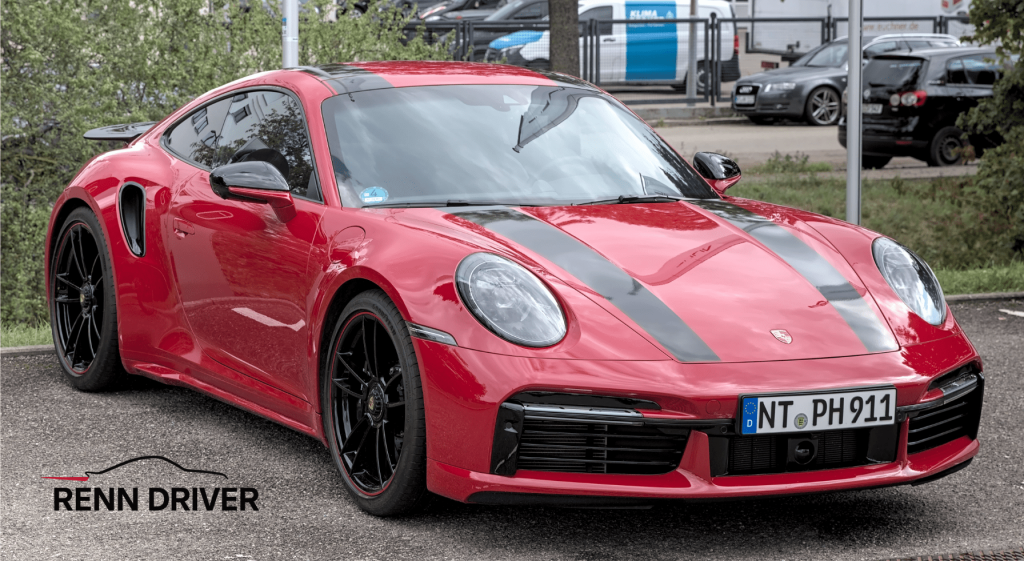
In this article, we’ll explore the full history and evolution of the Porsche 911 Turbo, from its air-cooled origins to the latest 992 generation. You’ll learn about key milestones across each model, standout features in the current 911 Turbo, and how it compares to the even faster Turbo S variant.
Contents
Quick Summary
- First Appearance: 1975 (930 Turbo)
- Current Model: 992 Turbo
- Power: 572 hp from a twin-turbo 3.7-liter flat-six
- 0–60 mph: 2.7 seconds
- Top Speed: 199 mph
- Key Features: All-wheel drive, active aerodynamics, 8-speed PDK, adaptive suspension
- Reputation: The perfect blend of speed, luxury, and everyday comfort
The Evolution of the Porsche 911 Turbo
The 911 Turbo debuted in 1975 with the 930 generation. It quickly earned the nickname “The Widowmaker” for its brutal power delivery and challenging handling. But over time, it evolved, adding refinement, safety, and cutting-edge technology to its resume.
930 Turbo (1975–1989)
The original icon, with a single turbocharger and a 4-speed manual transmission. It is known for its sudden turbo lag and wide rear fenders.
964 Turbo (1990–1994)
The 964 Turbo brought anti-lock brakes and power steering. Later models received a 3.6-liter engine and optional all-wheel drive.
993 Turbo (1995–1998)
The 993 Turbo was the last air-cooled Turbo. It was the first to use twin-turbocharging and standard AWD.
996 Turbo (2001–2005)
996 Turbo was the first water-cooled 911 Turbo. It introduced the now-iconic Mezger engine, shared with the 911 GT1.
997 Turbo (2006–2012)
997 Turbo was the first to use variable geometry turbos and the dual-clutch PDK, while still offering rear wheel drive–biased handling. Thanks to Porsche’s advanced AWD systems.
991 Turbo (2013–2019)
991 Turbo added rear-axle steering, active aerodynamics, and more advanced driver assistance systems.
992 Turbo (2020–present)
The current model. Faster than any previous Turbo S, with technology like Porsche Traction Management, which ensures seamless grip across all four wheels.

The 992 Turbo: Power Meets Comfort
At the heart of the 992-generation 911 Turbo is the twin-turbo 3.7-liter flat-six, the benchmark among modern turbo engines. Inside, you still get the classic 2+2 layout with surprisingly usable rear seats. It’s one of the reasons the Turbo feels as practical as it is fast.
Paired with an 8-speed PDK dual-clutch transmission, it rockets from 0–60 mph in just 2.7 seconds. That’s only a fraction behind the more powerful Turbo S.
Yet it’s more than just numbers. The 992 Turbo offers a comfortable ride, a quiet cabin at highway speeds, and a full suite of modern infotainment and safety features. It’s a supercar you can genuinely live with every day.
Key Performance Features
- All-Wheel Drive: Ensures all-season traction and control.
- Active Aerodynamics: Front spoiler and rear wing adjust based on speed and driving mode.
- Porsche Active Suspension Management (PASM): Adapts damping in real time for optimal comfort or agility.
- Launch Control: Included with the optional Sport Chrono Package.
Turbo S: The Ultimate Evolution of the Turbo
The Turbo S takes everything the 911 Turbo does and turns it up a notch.
- Power: 640 hp and 590 lb-ft of torque
- 0–60 mph: 2.6 seconds
- Brakes: Standard Porsche Ceramic Composite Brakes (PCCB)
- Extra Features: Rear-axle steering, dynamic chassis control, and Sport Chrono all come standard
The Turbo S is for those who want the ultimate 911 experience without stepping into GT territory. It’s faster, more track-focused, and comes loaded with every performance upgrade available.
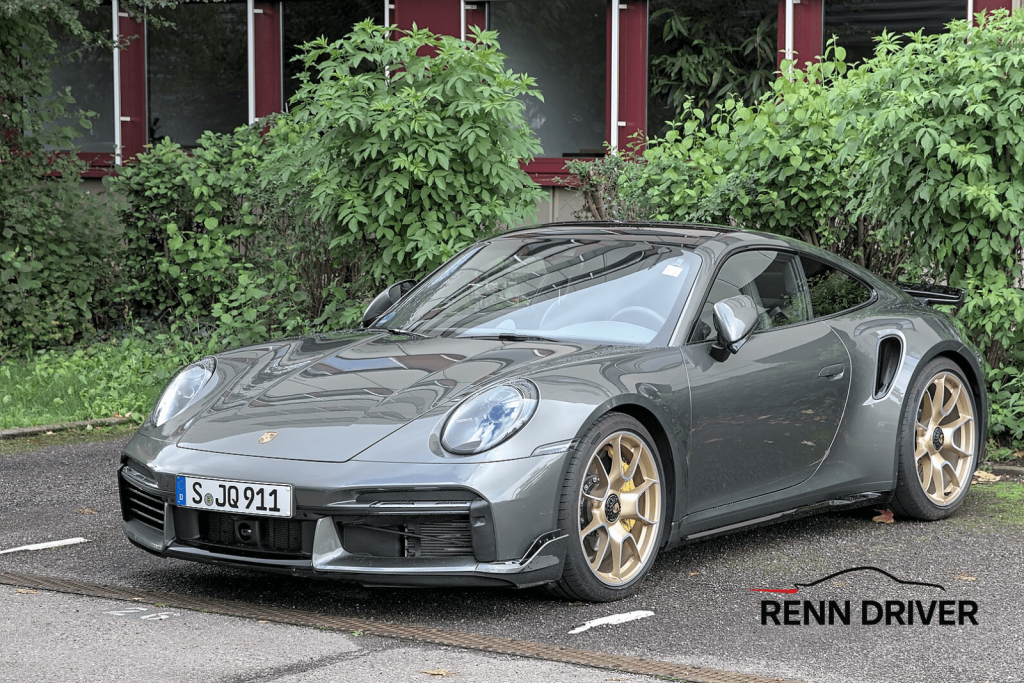
Turbo vs. Turbo S – Quick Comparison
| Feature | 911 Turbo | 911 Turbo S |
|---|---|---|
| Horsepower | 572 hp | 640 hp |
| 0–60 mph | 2.7 seconds | 2.6 seconds |
| Brakes | Steel (PCCB optional) | Ceramic (PCCB standard) |
| Rear-Axle Steering | Optional | Standard |
| Price (Starting MSRP) | ~$197,200 | ~$238,700 |
Design and Interior
Both Turbo and Turbo S models share a bold, wide-body design and unmistakable road presence. Key design elements include:
- Wide rear arches and integrated air intakes
- Retractable rear wing and active front splitter
- Full-width LED light bar at the rear
- Available lightweight or sport packages
Inside, drivers are greeted with luxurious materials, a 10.9-inch infotainment touchscreen, and available 18-way Adaptive Sport Seats. The multifunction steering wheel puts key controls at the driver’s fingertips, while the classic 2+2 layout means there are still usable rear seats. It’s one of the features that sets the Turbo apart from most supercars. Every detail strikes a balance between sporty engagement and everyday sophistication.
Fun Facts About the Porsche 911 Turbo
- The original 911 Turbo (930) earned the nickname “The Widowmaker” due to its challenging boost lag and rear-engine layout.
- The 993 Turbo was the first 911 Turbo to feature all-wheel drive.
- The 997 Turbo introduced variable geometry turbochargers, a first for gasoline engines in production cars.
- The 996 Turbo’s Mezger engine was derived from the Le Mans-winning 911 GT1.
- The 992 Turbo is faster than every previous Turbo S generation.

Frequently Asked Questions (FAQs)
Is the Porsche 911 Turbo a supercar?
Yes, it’s often classified as a supercar due to its performance, but it’s known for being more livable and practical than most cars in that category.
Is the Turbo worth it over the Carrera?
If you want all-wheel drive, more power, and true supercar performance, the Turbo is a major step up from the standard 911 Carrera.
Can you daily drive the 911 Turbo?
Absolutely. The Turbo is one of the most comfortable and reliable high-performance cars for daily use.
Does the 911 Turbo come in manual?
No. Like the Turbo S, it is only available with the PDK transmission to ensure the fastest, most efficient shifts.
Which should I choose: Turbo or Turbo S?
If you want the best of the best with all the bells and whistles, go for the Turbo S. But if you want 90% of the performance for less money, the standard Turbo is the smarter pick.
What’s the difference between the 911 Turbo and the Turbo S?
The Turbo S is the top-tier model, offering more horsepower, upgraded brakes (PCCB), and advanced performance features like rear-axle steering and Sport Chrono as standard equipment. The Turbo is a slightly less powerful, but still incredibly fast, variant.
Is the 911 Turbo S a good daily driver?
Yes. Despite its hypercar-level performance, the Turbo S is known for being surprisingly comfortable and usable for daily driving. Its all-wheel-drive system, adaptive suspension, and refined interior make it one of the most livable supercars on the market.
Is a manual transmission available for the Turbo S?
No. Since the 997.2 generation, the Turbo S has been available exclusively with Porsche’s 8-speed PDK dual-clutch transmission. This is optimized for the quickest and most efficient shifts.
Which generation of the 911 Turbo S is the fastest?
The current 992-generation Turbo S is the fastest to date, with a 0-60 mph time of 2.6 seconds and a top speed of 205 mph.
Final Thoughts
The Porsche 911 Turbo has come a long way from its early days as a wild, rear-engined brute. Today, it represents the pinnacle of balanced performance: lightning fast, luxuriously equipped, and surprisingly easy to live with.
Whether you choose the standard Turbo or the range-topping Turbo S, you’re getting one of the most well-rounded performance machines ever made. It’s not just fast, it’s brilliant.
Photo credit: Alexander Migl, CC BY-SA 4.0, via Wikimedia Commons, Calreyn88, CC BY-SA 4.0, via Wikimedia Commons, Alexander Migl, CC BY-SA 4.0, via Wikimedia Commons, OWS Photography, CC BY 4.0, via Wikimedia Commons