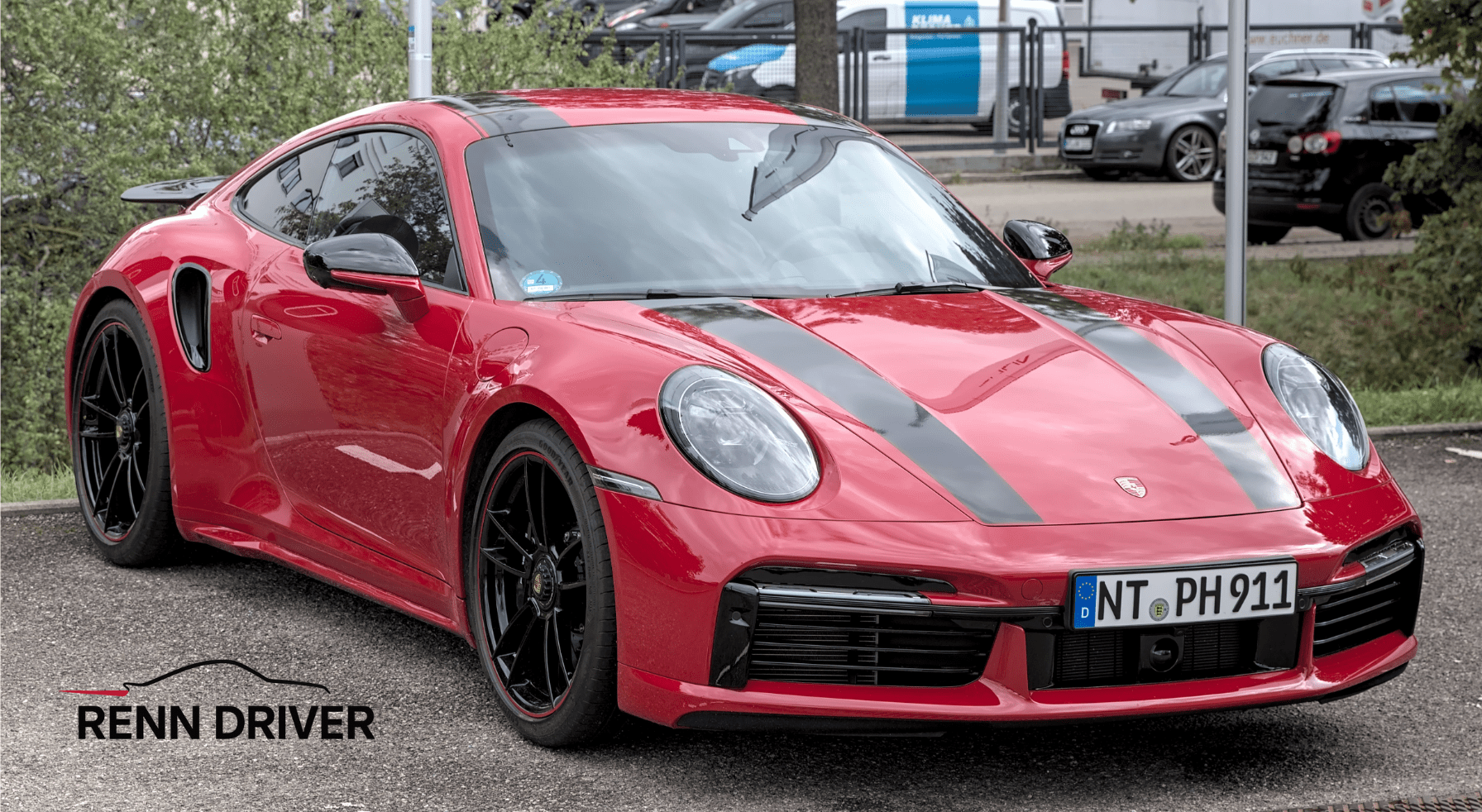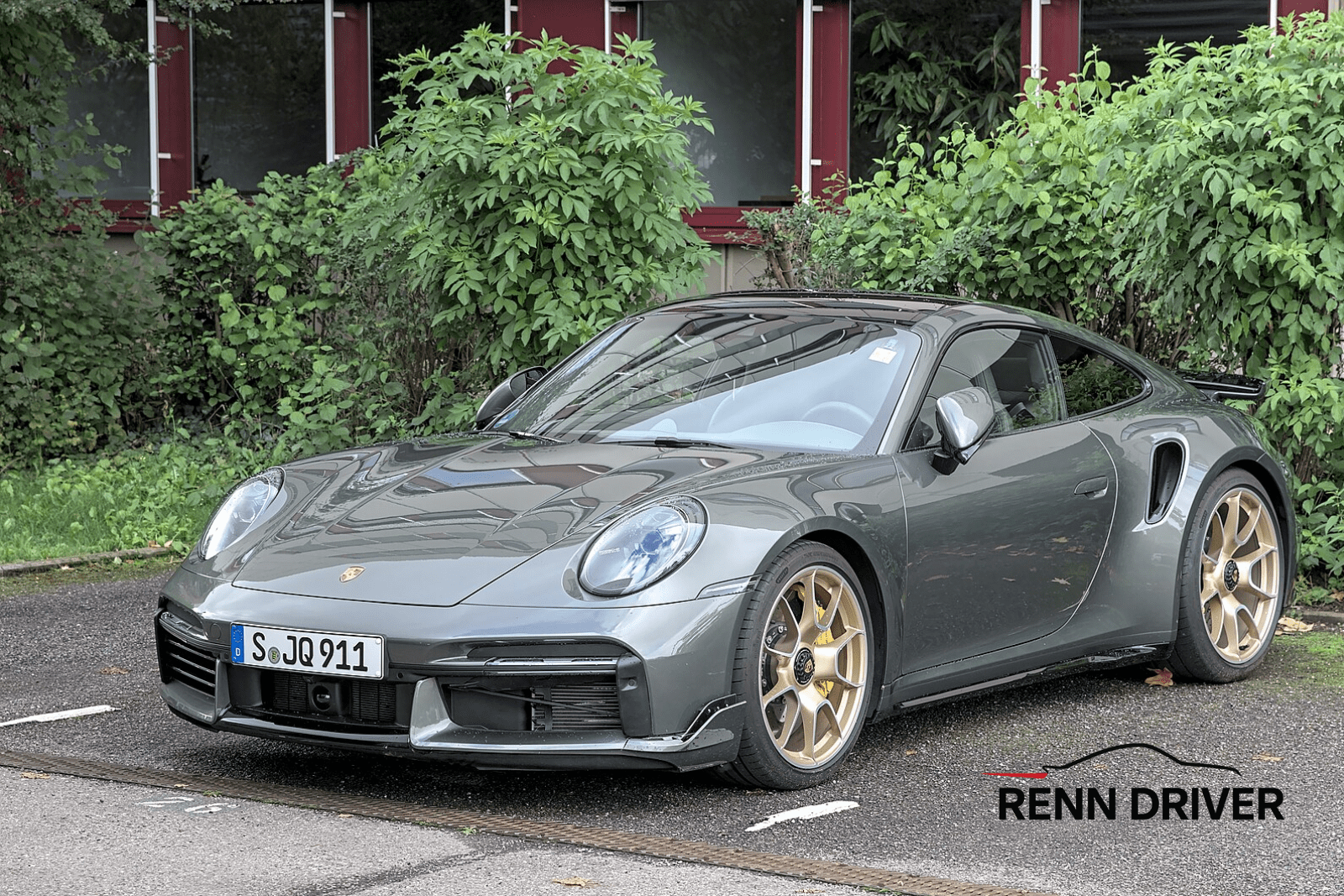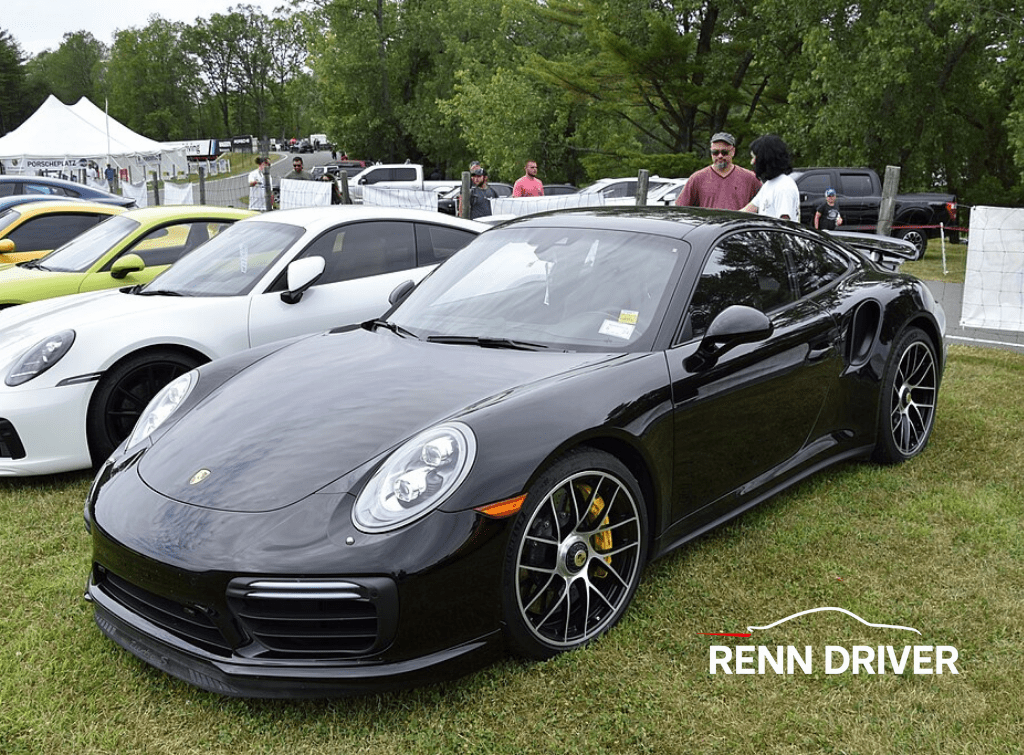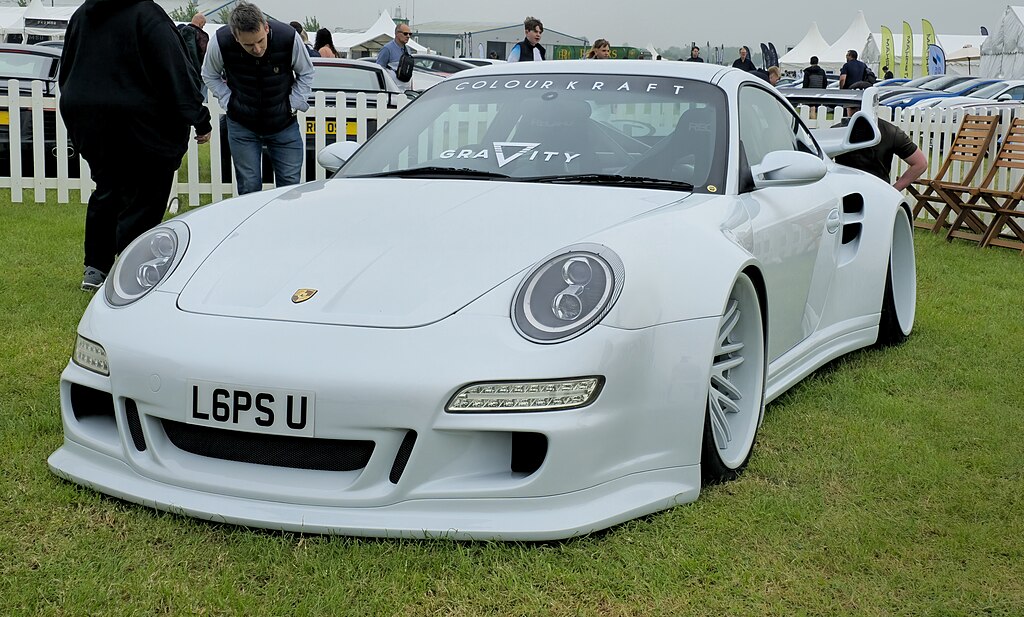
The Porsche 911 Turbo S is the most powerful production 911 in every generation it has existed. The current 992.2 Turbo S makes 701 hp through a T-Hybrid system, hits 60 mph in 2.4 seconds, and costs $270,300. Since its debut as the 993 Turbo S in 1997, it has consistently been the car that sits between the standard Turbo and the track-focused GT cars.
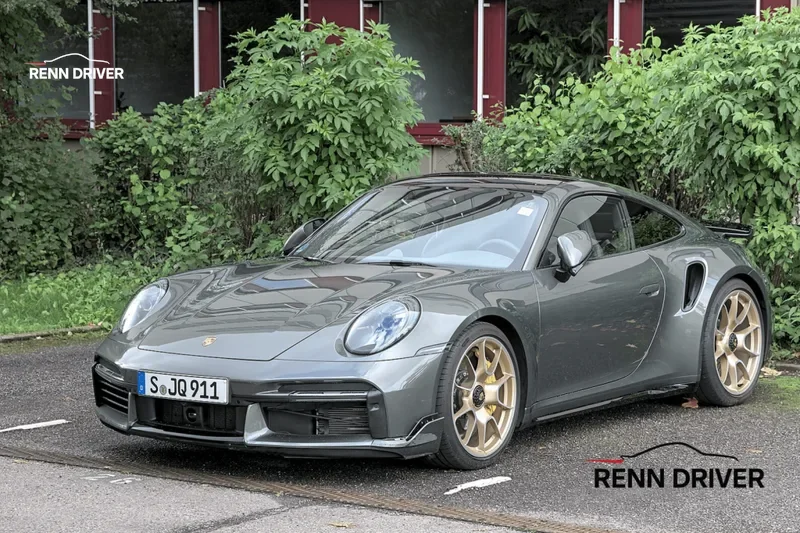
Here is the current 992 Turbo S, the car that every generation has been building toward.
Contents
Quick Summary
- First appearance: 1997 (993 Turbo S)
- Current model: 992.2 Turbo S with T-Hybrid (2025/2026)
- Power: 701 hp combined system output from a 3.6L twin-turbo flat-six with electric turbos
- 0–60 mph: 2.4 seconds
- Top speed: 200 mph
- Starting MSRP: $270,300
- What defines it: Every generation gets more power than the Turbo, plus PCCB ceramic brakes, Sport Chrono, and the best chassis hardware Porsche offers short of a GT car
The full guide below covers all the details.
What Is the Turbo S?
The Turbo S sits at the top of the 911 Turbo lineup in every generation. It takes the standard Turbo platform and adds more power, better brakes, and every performance option Porsche offers as standard equipment. Where the regular Turbo is already fast enough to embarrass most supercars, the Turbo S removes any remaining gap.
It is not a stripped-out track weapon like the GT3 or a rear-drive monster like the GT2 RS. The Turbo S keeps all-wheel drive, full luxury, and everyday usability while delivering acceleration that competes with cars costing three times as much. That combination is what makes it unique in the 911 range.
The badge first appeared on the 993 generation in 1997 and has been offered on every generation since.
Every Turbo S Generation
993 Turbo S (1997–1998)
The original Turbo S and the most collectible 911 Turbo ever made. Porsche's Exclusive department hand-built each car with larger K-24 turbochargers, an additional oil cooler, and a modified Motronic engine management system. The result was 450 PS (444 bhp) from the 3.6L air-cooled twin-turbo flat-six, compared to the standard 993 Turbo's 408 hp.
Only around 345 units were produced, making it one of the rarest modern 911s. As the last air-cooled Turbo, these cars now command prices well into the six figures at auction. The 993 Turbo S came only with a six-speed manual transmission and a fixed rear wing that hinted at its motorsport potential.

996 Turbo S (2005)
The 996 generation brought the Turbo S into the water-cooled era. Built for only one model year, the 996 Turbo S came standard with the X50 power kit that bumped the Mezger engine to 450 hp and 457 lb-ft of torque. It also included PCCB ceramic composite brakes as standard, setting a pattern that every Turbo S would follow.
Around 1,563 units were built, split between coupes and cabriolets. The 996 Turbo S was the first Turbo S offered as a convertible. Despite the 996's polarizing headlight design, the Turbo S variant has appreciated steadily as collectors recognize the Mezger engine's connection to the Le Mans-winning GT1.
997 Turbo S (2010–2013)
The 997 Turbo S marked a turning point. It was the first Turbo S offered exclusively with PDK, dropping the manual transmission option entirely. With 530 hp and 516 lb-ft from a 3.8L twin-turbo flat-six, it was actually faster than the 997 GT2 in a straight line.
Standard equipment included PCCB brakes, Sport Chrono, Porsche Torque Vectoring, and dynamic engine mounts. The 997 Turbo S established the modern Turbo S formula: take every optional performance upgrade from the standard Turbo and make it standard.
991 Turbo S (2013–2019)
The 991 generation split into two sub-generations. The 991.1 Turbo S (2014–2016) made 560 hp and hit 60 mph in 2.6 seconds, making it the first 911 to crack that barrier. The 991.2 facelift (2017–2019) pushed power to 580 hp and top speed to 205 mph.
Both versions came with PCCB, Sport Chrono, Porsche Dynamic Chassis Control (PDCC) with active anti-roll bars, and center-lock wheels. The 991 Turbo S proved that an all-wheel-drive luxury car could match or beat dedicated supercars costing two to three times more. It made the idea of a "daily supercar" completely real.
992.1 Turbo S (2020–2024)
The 992 Turbo S arrived with a massive jump: 640 hp and 590 lb-ft from a 3.8L twin-turbo flat-six paired with a new 8-speed PDK. Porsche claimed 2.6 seconds to 60 mph, but Car and Driver recorded 2.2 seconds in their instrumented testing, with other outlets consistently landing in the low 2-second range.
It was the widest 911 Turbo ever built, with 10mm wider rear tires and completely redesigned turbochargers and intercoolers. The 992 Turbo S was faster than nearly every hypercar on the road when it launched. For $230,000, nothing could touch it in the real world.

992.2 Turbo S T-Hybrid (2025/2026)
The current car rewrites the formula. Porsche downsized the engine from 3.8L to 3.6L but added T-Hybrid technology: two electric exhaust gas turbochargers (eTurbos), an integrated electric motor in the PDK, and a compact 1.9 kWh battery over the front axle. Combined system output is 701 hp.
The eTurbos virtually eliminate turbo lag. The electric motor fills in torque gaps that no combustion engine can cover on its own. The result is 2.4 seconds to 60 mph, 200 mph top speed, and a Nurburgring time of 7:03, which is 14 seconds faster than the outgoing car.
At $270,300, it is the most powerful production 911 ever built. It wears the largest PCCB ceramic brakes ever fitted to a two-door Porsche (420mm front, 410mm rear) and rolls on wider 325-section rear tires. Turbonite accents, a color developed exclusively for Turbo models, mark it visually.
Specs Comparison Table
| Generation | Years | Engine | HP | Torque | 0–60 mph | Top Speed |
|---|---|---|---|---|---|---|
| 993 Turbo S | 1997–1998 | 3.6L twin-turbo flat-6 (air-cooled) | 450 PS | 431 lb-ft | 3.7s | 184 mph |
| 996 Turbo S | 2005 | 3.6L twin-turbo flat-6 (Mezger) | 450 hp | 457 lb-ft | 4.2s | 191 mph |
| 997 Turbo S | 2010–2013 | 3.8L twin-turbo flat-6 | 530 hp | 516 lb-ft | 3.1s | 195 mph |
| 991.1 Turbo S | 2014–2016 | 3.8L twin-turbo flat-6 | 560 hp | 516 lb-ft | 2.6s | 198 mph |
| 991.2 Turbo S | 2017–2019 | 3.8L twin-turbo flat-6 | 580 hp | 553 lb-ft | 2.7s | 205 mph |
| 992.1 Turbo S | 2020–2024 | 3.8L twin-turbo flat-6 | 640 hp | 590 lb-ft | 2.6s | 205 mph |
| 992.2 Turbo S | 2025+ | 3.6L twin-turbo flat-6 + T-Hybrid | 701 hp | 590 lb-ft | 2.4s | 200 mph |
Turbo S vs Standard Turbo
The gap between the Turbo and Turbo S has grown over the years. In the 993 era, the difference was about 40 hp and hand-built exclusivity. In the 992 era, the Turbo S adds 60+ hp, standard ceramic brakes, active suspension, wider tires, center-lock wheels, and a completely different character on track.
The standard 911 Turbo offers steel brakes (with PCCB optional), optional Sport Chrono, and optional rear-axle steering. The Turbo S bundles all of that as standard and adds equipment you cannot get on the base Turbo at any price, like PDCC active anti-roll bars and exclusive wheel designs.
For most buyers, the standard Turbo delivers 90% of the experience. The Turbo S is for people who want the absolute best 911 Porsche makes, without compromise and without excuses.
Is the Turbo S Worth the Premium?
The Turbo S typically costs $40,000–70,000 more than the standard Turbo, depending on the generation. That premium buys you ceramic brakes alone worth $8,000–10,000, Sport Chrono worth $3,000–4,000, and a pile of chassis and cosmetic upgrades that would cost more than the price difference if ordered individually.
From a value perspective, the Turbo S also tends to hold its resale value better. Limited production on early models (993, 996) creates genuine collector premiums. Even the mass-produced 992 Turbo S traded above MSRP for most of its first two years.
If you plan to keep the car and want the best possible version, the Turbo S is almost always the smarter long-term buy.
Market Values and Collectibility
The 993 Turbo S is the clear collectibility king. With only 345 units produced and its status as the last air-cooled Turbo, prices regularly exceed $500,000 at auction. Clean examples with low miles can push past $700,000.
The 996 Turbo S is undervalued relative to its rarity and Mezger engine pedigree. Strong examples trade in the $120,000–180,000 range, with prices climbing as the broader 996 market corrects upward.
The 997 Turbo S offers the best performance per dollar in the used market. Clean examples sit around $120,000–160,000 and deliver genuinely fast real-world performance.
The 991 Turbo S is entering the sweet spot for used buyers. Prices have settled into the $150,000–220,000 range depending on sub-generation and specification, which is a lot of car for the money.
The 992 Turbo S still trades near or above its original MSRP. As the T-Hybrid model takes over, expect the 992.1 Turbo S to become the "last pure combustion Turbo S," which will likely support its values long-term.
Renn Driver's Take
I have not driven this car yet, but I will update this section once I do.
Frequently Asked Questions
Is the Porsche 911 Turbo S faster than the GT3?
Yes, the Porsche 911 Turbo S is faster in a straight line. The current Turbo S hits 60 mph in 2.4 seconds compared to the GT3's 3.2 seconds with PDK. On a track, it depends on the circuit. The GT3 is lighter and has more downforce, so it can be quicker on technical tracks. The Turbo S dominates on high-speed circuits where its power advantage and all-wheel-drive traction pay off.
Can you get a Porsche 911 Turbo S with a manual transmission?
No, the Porsche 911 Turbo S has not been available with a manual transmission since the 993 generation ended in 1998. From the 997 onward, the Turbo S has been PDK only. The standard Turbo offered a manual on some generations, but the S has been automatic-exclusive for over two decades.
How much does a Porsche 911 Turbo S cost?
The 2026 Porsche 992.2 Turbo S starts at $270,300 before options, destination, and taxes. A well-optioned example typically lands between $290,000 and $320,000. Used 992.1 Turbo S models (2020–2024) trade around $200,000–250,000 depending on mileage and specification.
Is the Turbo S a good daily driver?
Yes, the Porsche 911 Turbo S is one of the best daily drivers among true supercars. It has all-wheel drive for all-season traction, adaptive suspension for comfort on rough roads, a quiet cabin at highway speeds, and a front trunk for groceries. It combines genuine supercar performance with the kind of usability you expect from a luxury sedan.
What is the difference between the 911 Turbo and the Turbo S?
The Porsche 911 Turbo S adds 40–70 hp (depending on the generation), standard PCCB ceramic composite brakes, Sport Chrono Package, active suspension systems like PDCC, center-lock wheels, and exclusive interior appointments. The Turbo S bundles every performance option Porsche offers on the Turbo platform, removing the need to option-up the standard car.
Which Turbo S generation is the best to buy used?
The 997 Turbo S offers the best value in the used market right now. It delivers 530 hp, a 3.1-second 0–60 time, and the full Turbo S equipment package for around $120,000–160,000. The 991 Turbo S is a close second, with more power and newer tech but higher prices in the $150,000–220,000 range.
How many 993 Turbo S models were made?
Porsche produced approximately 345 units of the 993 Turbo S between 1997 and 1998. Each car was hand-built by Porsche's Exclusive (Sonderwunsch) department. Some sources cite up to 435 units, with the discrepancy likely due to differences in counting regional variants.
Is the 992.2 Turbo S a hybrid?
Yes, the 2025/2026 Porsche 992.2 Turbo S uses a T-Hybrid system. It combines a 3.6L twin-turbo flat-six with electric exhaust gas turbochargers (eTurbos), an electric motor integrated into the PDK transmission, and a 1.9 kWh battery mounted over the front axle. The system produces a combined 701 hp. It is not a plug-in hybrid and cannot drive on electric power alone.
Final Thoughts
The Turbo S has always been the 911 that does everything. It is not the lightest 911. It is not the most focused. It is not the loudest or the most extreme. But it is the one that accelerates harder than almost anything on the road while keeping you comfortable enough to drive across a continent afterward.
Every generation has pushed the numbers further. From 450 hp in the hand-built 993 to 701 hp in the electrified 992.2, the trajectory is relentless. The brakes get bigger, the tires get wider, and the acceleration times keep shrinking. Yet the core promise has not changed: the fastest, most complete 911 Porsche makes.
If you want a race car for the street, buy a GT3. If you want a comfortable grand tourer, buy a Carrera. If you want both at the same time and in the same car, the Turbo S is the only answer Porsche has ever given.
Images: Alexander Migl, CC BY-SA 4.0, via Wikimedia Commons; M 93, CC BY-SA 3.0 DE, via Wikimedia Commons