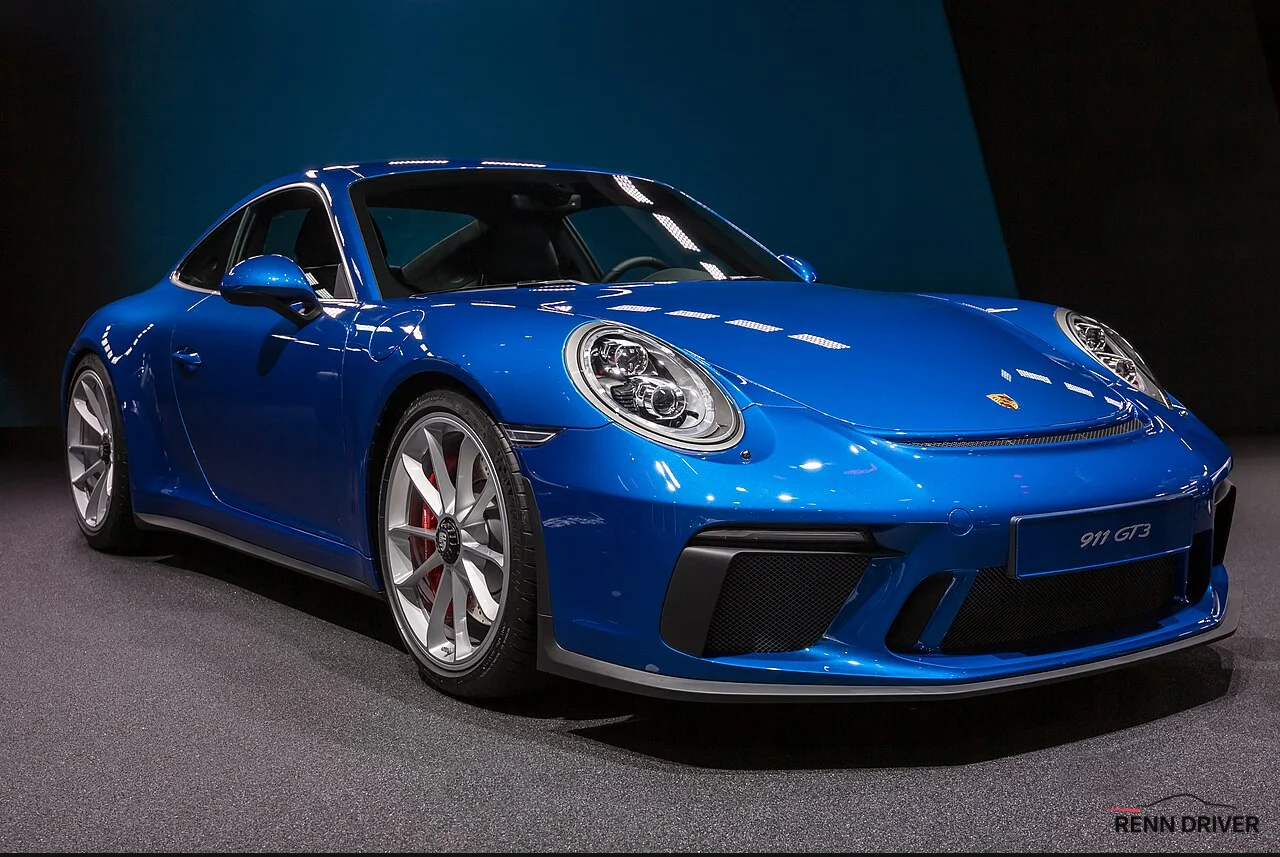
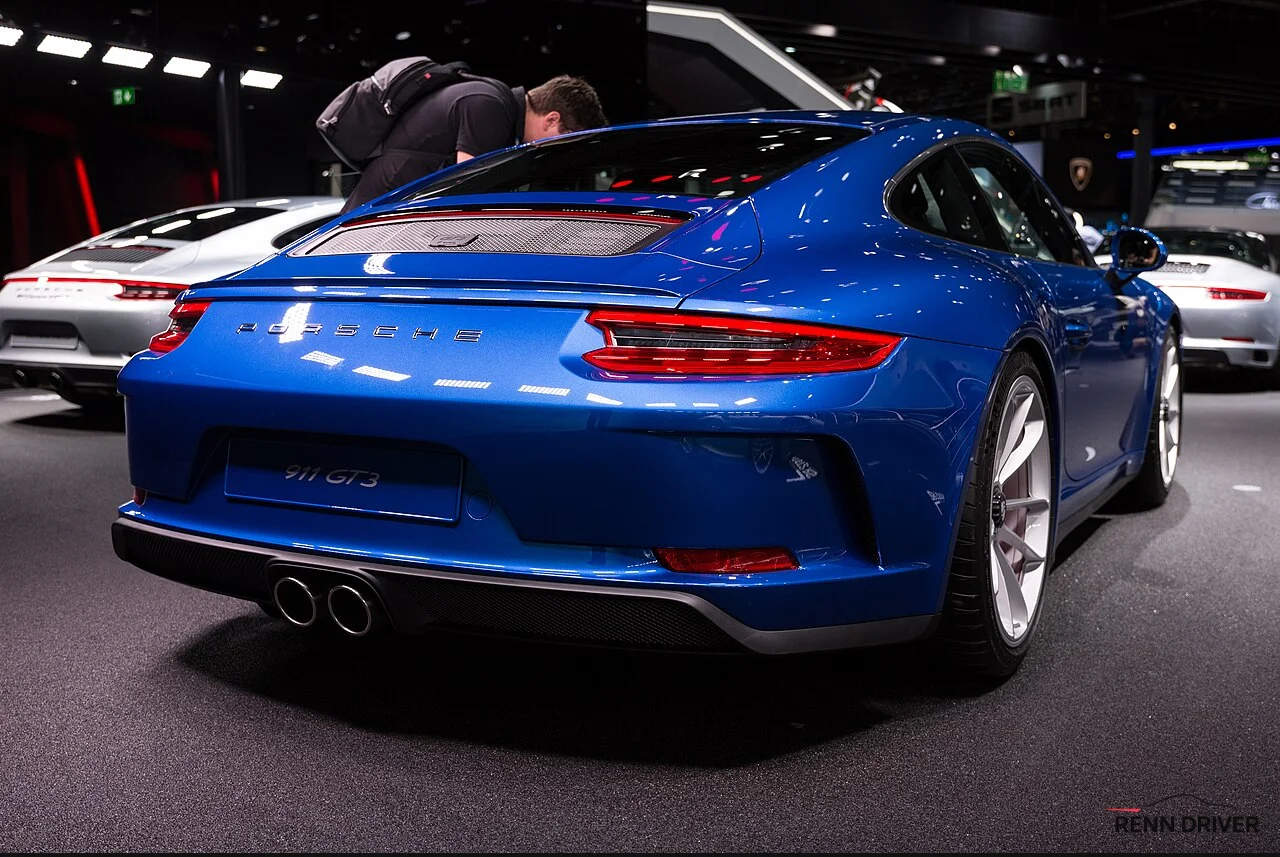
The Porsche 991 GT3 (2013 to 2019) comes in two sub-generations. The 991.1 GT3 makes 475 hp from a 3.8L naturally aspirated flat-six with PDK only. The 991.2 GT3 bumps output to 500 hp from a 4.0L engine and brings back the six-speed manual. The 991.2 also introduced the Touring package, which deletes the fixed rear wing. Current values range from $130,000 to $200,000 depending on spec and transmission.
Contents
- 1 Quick Summary
- 2 History
- 3 The 991.1 GT3 (2013 to 2015)
- 4 The Manual Controversy
- 5 The 991.2 GT3 (2017 to 2019)
- 6 The Touring Package
- 7 Specs Comparison
- 8 Driving Experience
- 9 Maintenance and Known Issues
- 10 Market Values
- 11 Renn Driver's Take
- 12 FAQs
- 13 Final Thoughts
The full guide below covers all the details.
Quick Summary
- 991.1 GT3 production years: 2013 to 2015
- 991.2 GT3 production years: 2017 to 2019
- 991.1 engine: 3.8L naturally aspirated flat-six, 475 hp
- 991.2 engine: 4.0L naturally aspirated flat-six, 500 hp
- 991.1 transmission: 7-speed PDK only
- 991.2 transmission: 7-speed PDK or 6-speed manual
- Drive: Rear-wheel drive
- 991.2 GT3 0 to 60 mph: 3.2 seconds (PDK)
- Top speed: 198 mph (991.2)
- Touring package: Available on 991.2 only
History
The GT3 badge has always represented Porsche's commitment to naturally aspirated, track-focused 911s. The previous generation GT3 set a high standard with its Mezger-derived engine, manual gearbox, and motorsport chassis. The 991 GT3 had to follow that act while navigating a generation that brought bigger changes to the 911 platform than any before it.
The 991 generation introduced a longer wheelbase, electric power steering, and a wider use of aluminum in the chassis. For the GT3, Porsche's motorsport division had to prove that these changes enhanced rather than diluted the driving experience.
They succeeded, but not without controversy.
The 991.1 GT3 (2013 to 2015)
The 991.1 GT3 launched in 2013 with a 3.8L naturally aspirated flat-six producing 475 hp and 324 lb-ft of torque. The engine revs to 9,000 rpm and uses direct fuel injection for the first time in a GT3.
The chassis was new ground for the GT3. Active rear-wheel steering appeared on a GT3 for the first time, turning the rear wheels opposite to the fronts at low speeds and in the same direction at higher speeds. The result was sharper turn-in and greater high-speed stability than any previous GT3.
The suspension used a conventional MacPherson strut front setup (double-wishbone front suspension would not arrive until the 992 GT3). At the rear, a multi-link arrangement was tuned specifically for the GT3, sitting lower and stiffer than the standard Carrera.
PASM adaptive dampers were standard. PCCB ceramic brakes were optional. The fixed rear wing and front splitter generated meaningful downforce at speed.
The car was fast. Porsche quoted a Nürburgring lap time of 7:25, which was faster than the outgoing 997 GT3 RS. On track, the 991.1 GT3 was more composed, more capable, and more forgiving than its predecessor.
But it was missing something.
The Manual Controversy
The 991.1 GT3 was PDK only. No manual transmission was offered. This was the first GT3 in history without a stick shift option, and the enthusiast community reacted strongly.
Porsche's argument was the same one they would later make for the 991 GT2 RS: the PDK is objectively faster. It shifts in milliseconds, maintains engine speed perfectly on downshifts, and eliminates the possibility of a missed gear during a hot lap. For a car built to set track times, the PDK made rational sense.
The counterargument was equally clear. The GT3 is supposed to be the purist's 911. It is naturally aspirated, rear-wheel drive, and track-focused. The manual transmission is part of that identity. Removing it felt like removing the soul of the car.
Andreas Preuninger, head of Porsche's GT car division, acknowledged the feedback. He understood the frustration. And when the 991.2 GT3 arrived, the manual came back.
The controversy had a lasting impact. It proved that GT3 buyers cared about the experience of driving, not just the lap time. Porsche listened, and every GT3 since has offered a manual option.
The 991.2 GT3 (2017 to 2019)
The 991.2 GT3 addressed every criticism of the 991.1 while improving performance across the board. The engine grew from 3.8L to 4.0L, output increased to 500 hp, and the six-speed manual transmission returned as an option alongside the PDK.
The 4.0L engine is derived from the GT3 Cup racing car. It revs to 9,000 rpm and delivers its power with the linear, building intensity that naturally aspirated engines are known for. Torque is 339 lb-ft, spread across a wide band that rewards keeping the engine in its upper rev range.
The chassis received revised spring and damper settings. The rear-axle steering system was refined for more natural feel at the limit. Porsche also updated the front aerodynamics for better cooling and added a marginally larger rear wing.
The PDK version reaches 60 mph in 3.2 seconds. The manual version does it in 3.8 seconds. The top speed is 198 mph regardless of transmission. The Nürburgring lap time dropped to 7:12.7, an improvement of over 12 seconds compared to the 991.1.
The Touring Package
The 991.2 GT3 introduced the Touring package, and it became one of the most desirable 911 variants of the decade.
The Touring deletes the fixed rear wing and replaces it with an electrically deployed rear spoiler that sits flush with the rear decklid when retracted. The car looks like a standard Carrera from behind until the spoiler rises at speed. The interior gets a leather-wrapped dashboard and door panels instead of the standard GT3's cloth and Alcantara mix.
Mechanically, the Touring is identical to the standard GT3. Same 500 hp 4.0L engine. Same chassis. Same rear-axle steering. The only difference is the wing and interior trim.
The Touring was available with the manual transmission only at launch, though PDK was later added. Most buyers chose the manual, which was the entire point. The Touring was designed for enthusiasts who wanted GT3 performance without the visual aggression of the fixed wing.
It was also the car that proved the market wanted understated performance. Touring allocations sold out immediately, and the car has commanded a consistent premium on the secondary market.
Specs Comparison
| 991.1 GT3 | 991.2 GT3 | 991.2 GT3 Touring | |
|---|---|---|---|
| Engine | 3.8L NA flat-six | 4.0L NA flat-six | 4.0L NA flat-six |
| Power | 475 hp | 500 hp | 500 hp |
| Torque | 324 lb-ft | 339 lb-ft | 339 lb-ft |
| Transmission | 7-speed PDK | PDK or 6-speed manual | 6-speed manual (PDK added later) |
| 0 to 60 mph | 3.3 s (PDK) | 3.2 s (PDK) / 3.8 s (manual) | 3.8 s (manual) |
| Top speed | 196 mph | 198 mph | 198 mph |
| Rear wing | Fixed | Fixed | Retractable spoiler |
| Nürburgring time | 7:25 | 7:12.7 | N/A |
Driving Experience
The 991 GT3's defining characteristic is its engine. The naturally aspirated flat-six revs to 9,000 rpm with an urgency and mechanical intensity that turbocharged engines cannot replicate. Power builds linearly from around 4,000 rpm, then surges as the tachometer sweeps past 7,000. The last 2,000 rpm before redline is where the engine truly comes alive.
The rear-axle steering gives the 991 GT3 an agility that belies its size. The car rotates willingly into corners without the rear end feeling nervous. On track, this translates to faster corner entry speeds and more confidence during mid-corner adjustments.
The PDK version is clinically effective. Shifts happen so fast they feel like a continuous surge of acceleration. For pure lap time performance, the PDK 991 GT3 is the faster car.
The manual version is the more involving experience. The shift action is precise, with short throws and a mechanical engagement that connects the driver to the drivetrain. Rev-matching on downshifts requires skill, and the car rewards getting it right with a perfectly blipped throttle and seamless corner entry. Porsche includes an auto-blip function for those who want it, but most enthusiasts switch it off.
Compared to the outgoing 997 version, the 991 feels more planted and more capable at higher speeds. The longer wheelbase adds stability. The rear-axle steering compensates for the extra length in tight corners. The result is a car that is faster and more composed but still communicates clearly through the steering and chassis.
Maintenance and Known Issues
The 991 GT3 uses a different engine family than the 991 Carrera. It is derived from the GT3 Cup racing engine, which is a separate development line from the standard road car engine. This engine is robust and well proven in motorsport.
Key items to watch:
- Engine recall (991.1): Early 991.1 GT3 engines had a connecting rod issue that caused engine fires. Porsche issued a recall and replaced all affected engines at no cost. Any 991.1 GT3 on the market today should have documentation confirming the engine was addressed
- Rear main seal: Some 991 GT3 engines develop minor oil seepage at the rear main seal. This is cosmetic in most cases but worth monitoring
- PCCB brake rotors: If equipped, ceramic rotors are expensive to replace ($8,000 to $12,000 per axle) but last significantly longer than steel rotors
- Clutch wear (manual): The manual GT3's clutch can last 20,000 to 40,000 miles depending on driving style and whether the car sees track use. Replacement runs $3,000 to $5,000
- Rear-axle steering: The system is generally reliable but components are expensive if they need replacement. Budget $3,000 or more for parts
Annual maintenance typically runs $3,000 to $6,000. Track-driven cars will be at the higher end due to accelerated brake pad, tire, and fluid consumption.
Market Values
The 991 GT3 market breaks down by sub-generation and transmission:
- 991.1 GT3 (PDK only): $130,000 to $160,000 for clean examples
- 991.2 GT3 PDK: $150,000 to $180,000
- 991.2 GT3 manual: $160,000 to $200,000 (manual commands a premium)
- 991.2 GT3 Touring (manual): $170,000 to $210,000 (highest demand)
The Touring commands the strongest prices because of its limited production and desirability among collectors who want a subtle, manual GT3. Paint-to-sample colors, low mileage, and a clean history push values toward the top of each range.
The 991 GT3 represents strong value relative to the 992 GT3, which launched at a significantly higher price point. Buyers who want the GT3 experience without 992-level pricing are driving demand for clean 991.2 examples.
Renn Driver's Take
I have not driven this car yet, but I will update this section once I do.
Frequently Asked Questions
Does the 991 GT3 come with a manual transmission?
It depends on the year. The 991.1 GT3 (2013 to 2015) is PDK only. The 991.2 GT3 (2017 to 2019) offers both a seven-speed PDK and a six-speed manual transmission.
How much horsepower does the 991 GT3 have?
The 991.1 GT3 produces 475 hp from a 3.8L naturally aspirated flat-six. The 991.2 GT3 produces 500 hp from a 4.0L naturally aspirated flat-six.
What is the Porsche 991 GT3 Touring?
The Porsche 991 GT3 Touring is a variant of the 991.2 GT3 that replaces the fixed rear wing with a retractable spoiler and adds a leather-lined interior. It is mechanically identical to the standard GT3.
How much is a 991 GT3 worth today?
A Porsche 991.1 GT3 sells for $130,000 to $160,000. A 991.2 GT3 sells for $150,000 to $200,000 depending on transmission. The 991.2 GT3 Touring commands $170,000 to $210,000.
Is the 991 GT3 naturally aspirated?
Yes, every version of the Porsche 991 GT3 uses a naturally aspirated flat-six engine. No turbocharging is used.
What is the difference between the 991.1 and 991.2 GT3?
The main differences between the 991.1 and 991.2 GT3 are engine size (3.8L vs 4.0L), power output (475 hp vs 500 hp), and the return of the manual transmission option on the 991.2. The 991.2 also introduced the Touring package.
Did the 991 GT3 have any engine problems?
Early 991.1 GT3 engines had a connecting rod issue that was the subject of a Porsche recall. All affected engines were replaced at no cost. Any 991.1 GT3 on the market today should have documentation confirming the recall was completed.
Final Thoughts
The 991 GT3 is the generation that tested the boundaries of what GT3 buyers would accept. The PDK-only 991.1 proved the car was faster without a manual. The 991.2 proved that faster is not always the point.
Both versions deliver the core GT3 experience: a high-revving naturally aspirated engine, rear-wheel drive, and a chassis tuned for the track. The 991.2 with the manual transmission and Touring package has emerged as one of the most collectible modern 911 variants.
For buyers looking at the 992 GT3 but wanting better value, the 991.2 GT3 is the obvious choice. For those who want to experience the last GT3 before the double-wishbone front suspension arrived, the 991 is the one to drive.
Images by: Contributors, licensed under CC BY-SA 4.0, via Wikimedia Commons