The Porsche 911 S/T is the lightest 992-generation 911 ever built. It pairs the 518 hp, 4.0-liter naturally aspirated flat-six from the GT3 RS with a 6-speed manual transmission, weighs just 3,056 lbs, and was limited to 1,963 units to mark the 60th anniversary of the 911. It started at $290,000.
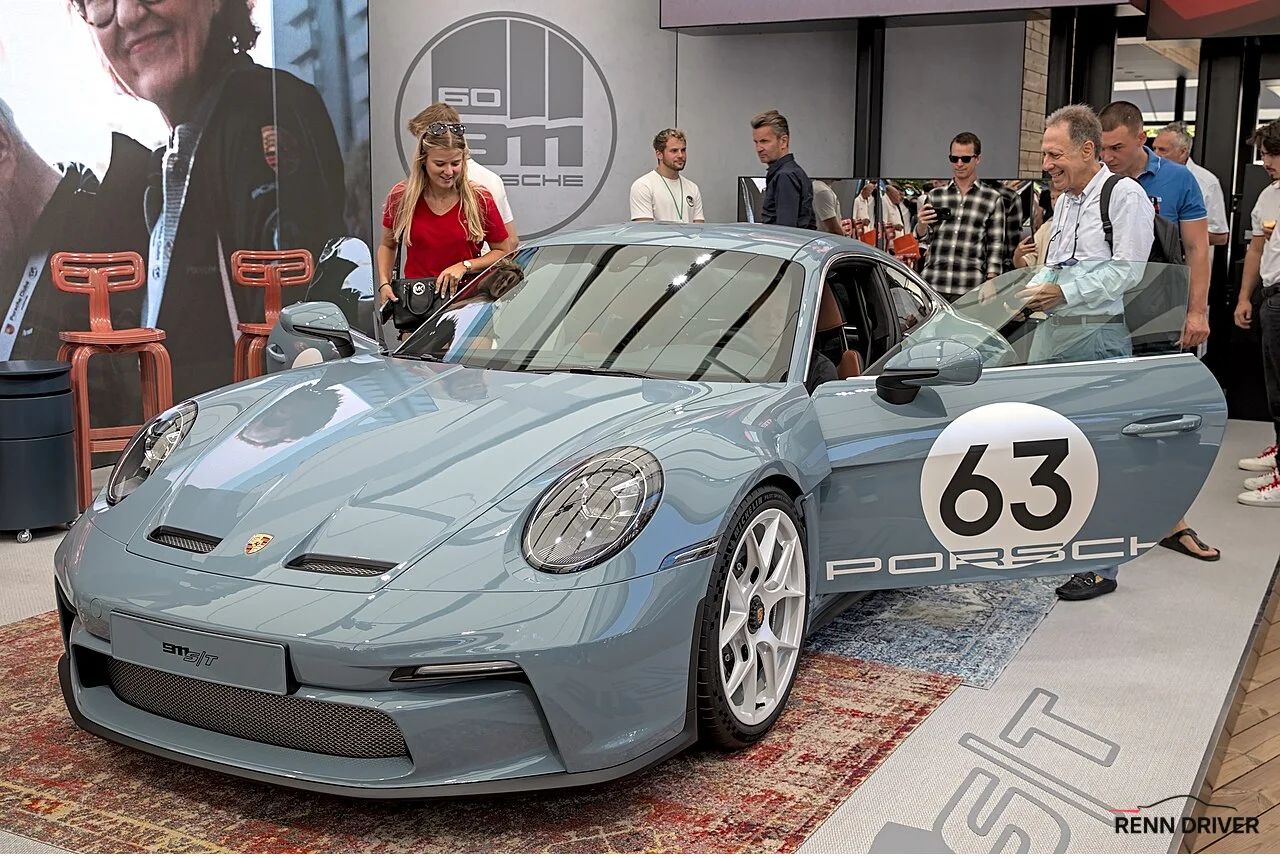
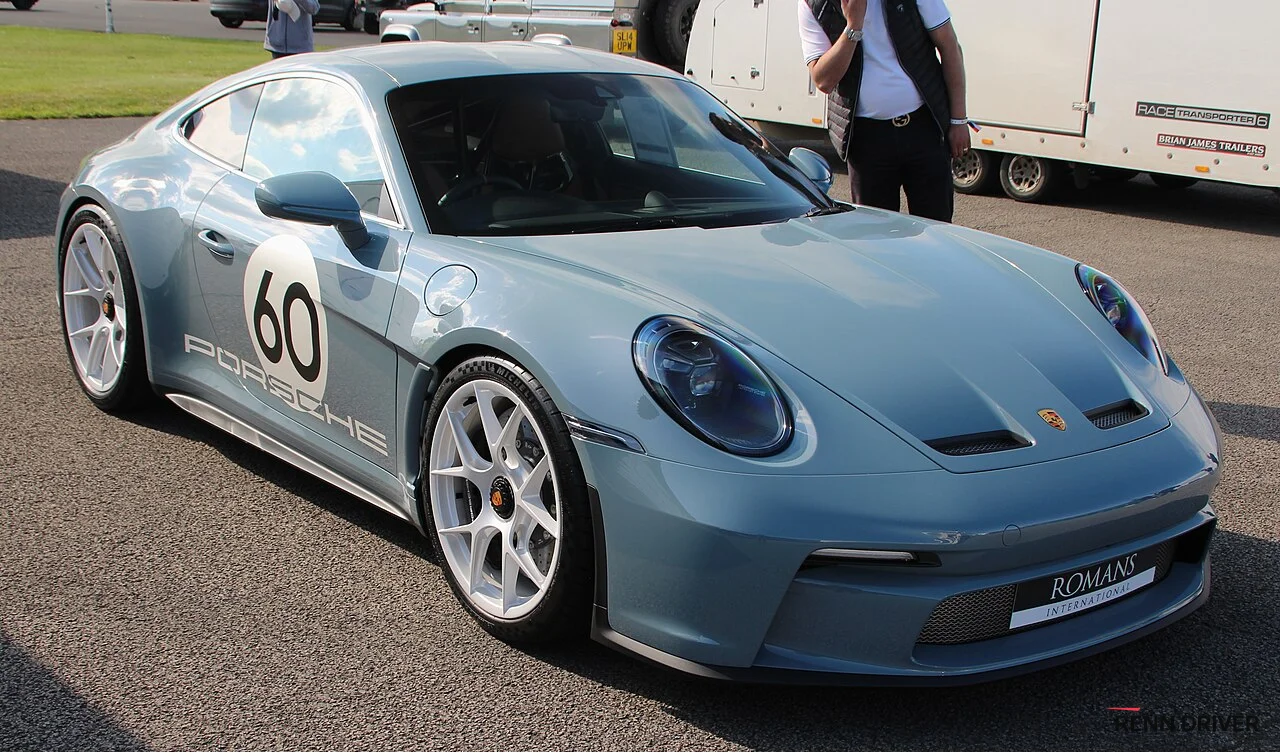
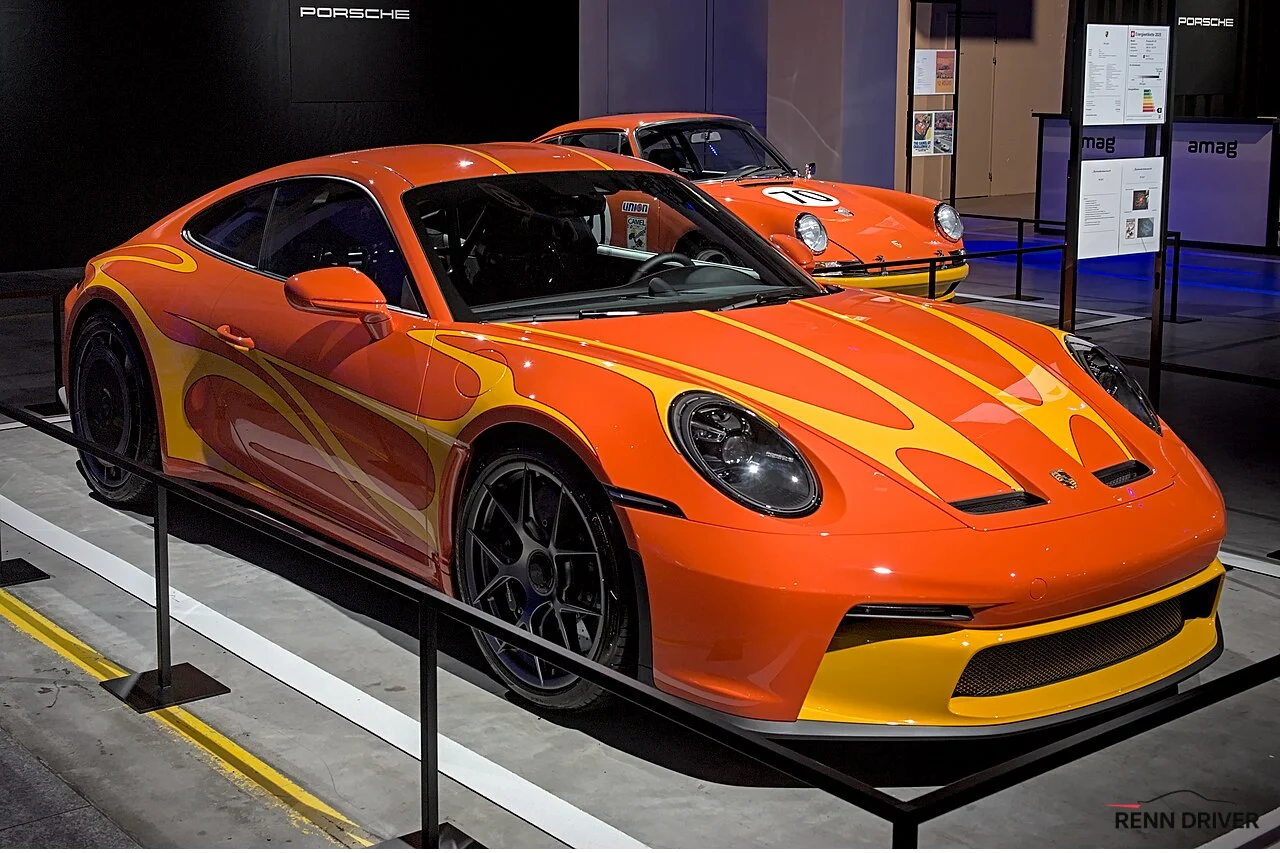
Here is the 911 S/T at its IAA debut, the car Porsche built to celebrate 60 years of the 911.
Contents
Quick Summary
- Production year: 2024 (992 generation)
- Engine: 4.0L naturally aspirated flat-six, 518 hp, 343 lb-ft
- Transmission: 6-speed manual (only option)
- 0–60 mph: 3.5 seconds
- Top speed: 186 mph
- Weight: 3,056 lbs (1,386 kg)
- Production: 1,963 units (60th anniversary of the 911)
- MSRP: $290,000 (excluding delivery)
- What defines it: The GT3 RS engine with a manual gearbox, wrapped in the lightest body Porsche could build on the 992 platform
The full guide below covers all the details.
What Makes the S/T Special
The 911 S/T exists because of a single question: what happens when you put the GT3 RS engine in the lightest possible 992 body and give it a manual transmission? Porsche had never offered the GT3 RS engine with a stick shift. The S/T is the only way to get that combination.
Everything about the car is built around reducing weight. The hood, roof, front fenders, and doors are carbon fiber. The wheels are magnesium. The glass is lightweight specification. The rear seats are gone. Even the clutch uses a single-mass flywheel instead of a dual-mass unit, saving roughly 23 lbs of rotating mass.
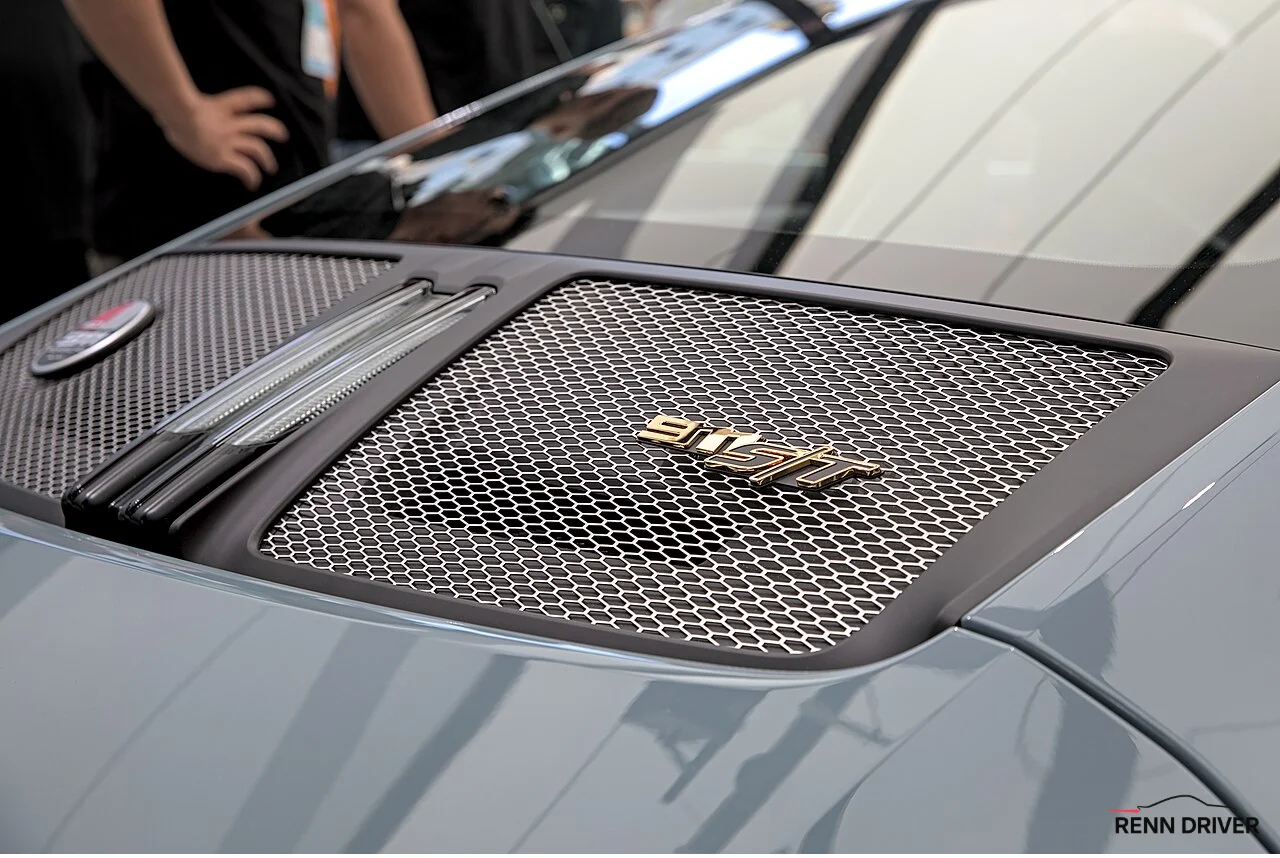
The result is 3,056 lbs, which is 70 lbs lighter than a GT3 Touring with a manual. In a car where every component was already optimized for performance, finding 70 more pounds to remove required engineering decisions that go beyond simply deleting equipment.
The Original 911 S/T
The name traces back to a racing homologation model Porsche built between 1970 and 1971. The original 911 S/T combined the 911 S engine with the lightweight interior from the 911 T (Touring), creating a car homologated for FIA Group 3 racing. Porsche built between 20 and 25 examples.
Those original cars dominated rally and endurance events. Three 911 S 2.2 ST cars took first, second, and fourth at the 1970 Monte Carlo Rally. Over the next three years, the S/T raced at the Acropolis Rally, the Nurburgring, the East African Safari Rally, Le Mans, and Daytona. The car weighed around 960 kg (2,120 lbs) and made roughly 270 hp from engines ranging between 2.0 and 2.4 liters.
The modern S/T takes up that philosophy: combine the most powerful naturally aspirated engine available with the most aggressive weight reduction possible, then let the driver sort it out with a manual gearbox.
Engine and Transmission
The 4.0-liter naturally aspirated flat-six is the same unit found in the GT3 RS. It produces 518 hp at 8,500 rpm and 343 lb-ft of torque, with a 9,000 rpm redline. This is the highest-output naturally aspirated engine Porsche puts in a road car, and the S/T is the only model that pairs it with a manual transmission.
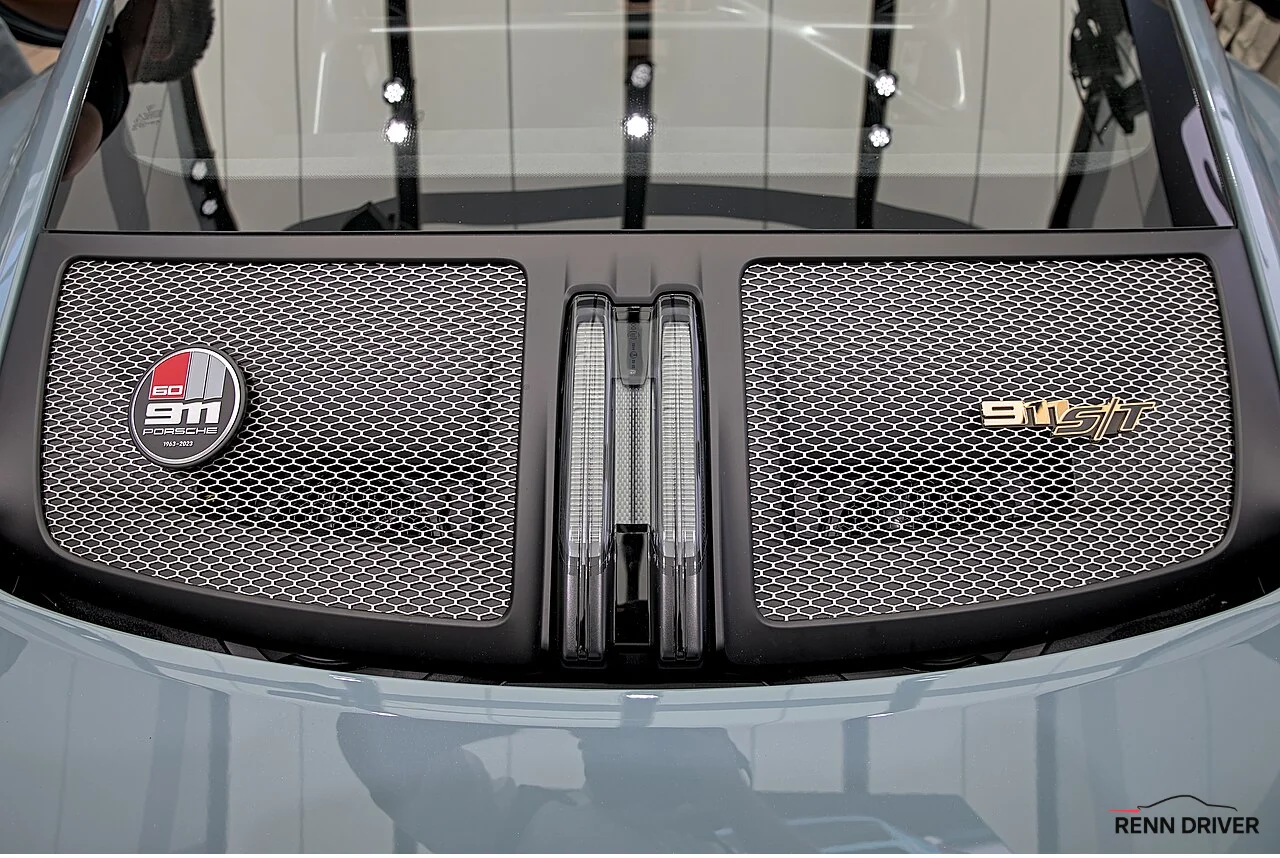
The 6-speed manual has shortened gear ratios compared to the GT3 Touring's gearbox. The single-mass flywheel makes the throttle response sharper and the rev matching quicker, though it also means more vibration at low RPM than a dual-mass setup. That is a deliberate trade-off. The car prioritizes feel over refinement.
There is no PDK option. Porsche made the manual the only choice because the S/T is explicitly about driver engagement, not lap time optimization. If you want the GT3 RS engine with PDK, you buy a GT3 RS.
Weight Savings
Getting to 3,056 lbs required carbon fiber in places where even the GT3 uses steel or aluminum. The full list of lightweight components:
- CFRP hood, roof, front fenders, and doors
- Carbon fiber rear anti-roll bar and shear panel
- Center-locking magnesium wheels: 20-inch front, 21-inch rear
- Lithium-ion starter battery
- Lightweight glass throughout
- CFRP full bucket seats (standard)
- Single-mass flywheel: saves ~23 lbs of rotating mass vs. dual-mass
- No rear-axle steering: removing the system saves weight and simplifies the rear end
- No rear seats
The deletion of rear-axle steering is significant. Every other 992-generation GT car offers it as standard. Porsche removed it from the S/T to save weight and because the car was tuned for a specific driving character that the engineers preferred without the system's intervention at the rear.
Chassis and Suspension
The S/T uses the same double-wishbone front suspension as the 992 GT3, derived from Porsche's racing program. The rear runs a multi-link setup without rear-axle steering. PCCB ceramic composite brakes are standard, with the same spec as the GT3.
Tire sizes are 255/35 ZR 20 at the front and 315/30 ZR 21 at the rear. The combination of magnesium wheels and these tire sizes gives the S/T enormous mechanical grip relative to its weight. Without rear-axle steering, the car relies on its suspension geometry and the driver's throttle inputs for rotation. Porsche tuned the dampers and anti-roll bars specifically for this configuration.
Design and Exterior
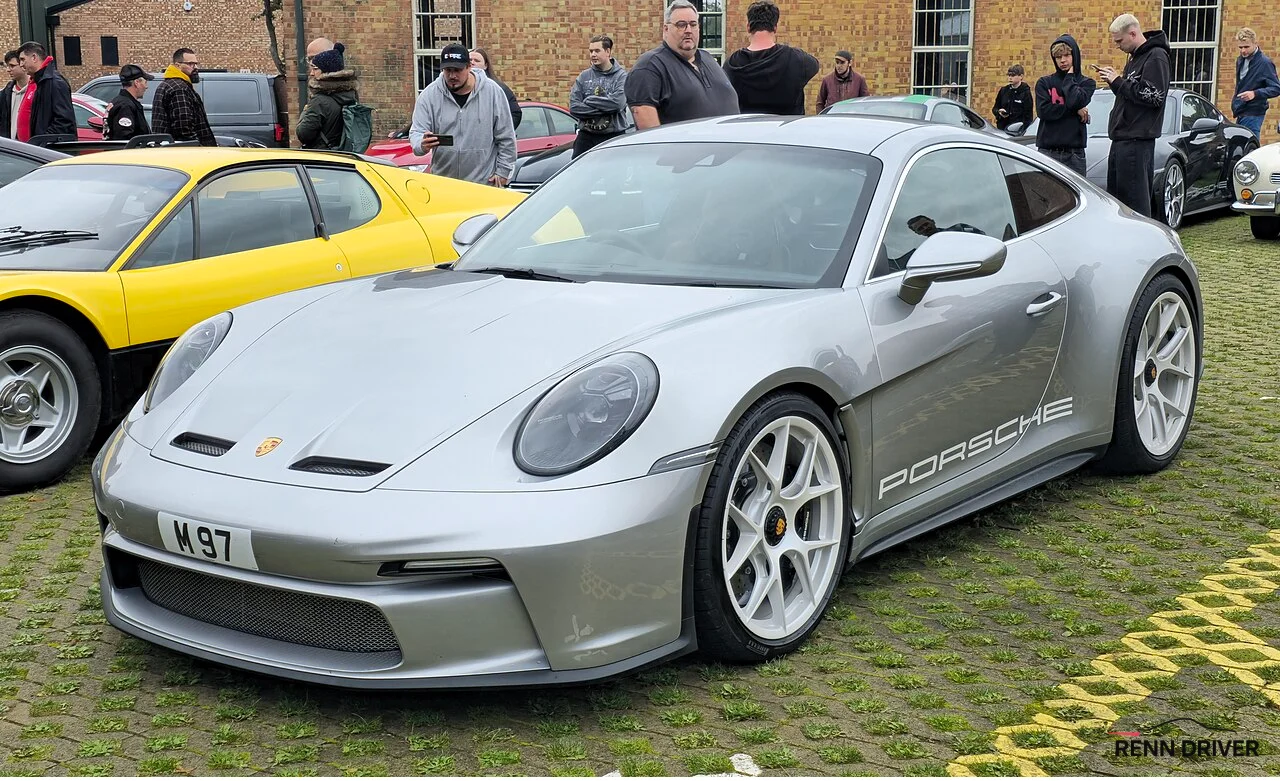
The S/T wears the GT3 Touring body with a retractable rear spoiler instead of the GT3 RS fixed wing. The visual presence is understated by GT car standards. Without a massive wing or aggressive aero, the S/T can pass for a well-optioned Carrera at a glance.
Closer inspection reveals the details. The CFRP doors and fenders have a slightly different surface texture than steel. The center-lock magnesium wheels are a visual giveaway. The instrument cluster and Sport Chrono clock use a classic green color scheme unique to the S/T, referencing vintage Porsche instrumentation.
Porsche also released a companion Porsche Design Chronograph 1 matched to the S/T, with a titanium case priced at $13,500.
Heritage Design Package
The optional Heritage Design Package is the most visually distinctive way to spec an S/T. It includes Shore Blue Metallic paint (exclusive to this package), Ceramica-finish wheels, and an interior with cloth seat centers in Classic Cognac with black pinstripes.
The package also adds two-tone semi-aniline leather in Black and Classic Cognac, a perforated Dinamica roof lining, the classic Porsche crest, and gold logos and model designations on the exterior. Optional start numbers (0 through 99) and decorative foils complete the heritage look.
The Heritage Design Package deliberately references the color palette and materials of 1970s Porsche racing. It is the package that most directly connects the modern S/T to the original 911 S/T from 1970.
Specs Table
| Spec | 911 S/T |
|---|---|
| Engine | 4.0L naturally aspirated flat-six |
| Power | 518 hp @ 8,500 rpm |
| Torque | 343 lb-ft |
| Redline | 9,000 rpm |
| Transmission | 6-speed manual (only option) |
| Drivetrain | Rear-wheel drive |
| 0–60 mph | 3.5 seconds |
| Top Speed | 186 mph |
| Curb Weight | 3,056 lbs (1,386 kg) |
| Front Tires | 255/35 ZR 20 |
| Rear Tires | 315/30 ZR 21 |
| Brakes | PCCB ceramic composite (standard) |
| Rear-Axle Steering | No (deleted for weight savings) |
| Wheels | Center-lock magnesium |
| Production | 1,963 units |
| MSRP | $290,000 (excl. $1,650 delivery) |
S/T vs GT3 Touring
| GT3 Touring (manual) | 911 S/T | |
|---|---|---|
| Engine | 4.0L NA flat-six (GT3 spec) | 4.0L NA flat-six (GT3 RS spec) |
| Power | 502 hp | 518 hp |
| Weight | 3,126 lbs | 3,056 lbs |
| Transmission | 6-speed manual or PDK | 6-speed manual only |
| Rear-Axle Steering | Yes | No |
| Flywheel | Dual-mass | Single-mass |
| Body Panels | Mixed (steel/aluminum) | CFRP (hood, roof, fenders, doors) |
| Wheels | Aluminum | Magnesium (center-lock) |
| Production | Not limited | 1,963 units |
| MSRP | ~$180,000 | $290,000 |
The GT3 Touring is the rational choice. It delivers 95% of the S/T experience at roughly 60% of the price, with rear-axle steering included and no production cap. The S/T is for the buyer who wants the absolute purest expression of the naturally aspirated manual 911, with the knowledge that the combination will never be offered this way again.
Market Values
The 911 S/T launched at $290,000 before options. Heritage Design Package cars and fully optioned examples pushed past $350,000 before taxes. All 1,963 allocations sold out immediately.
Secondary market prices climbed well above MSRP from the start. As of 2026, clean low-mileage examples trade between $400,000 and $600,000. Heritage Design Package cars and PTS (Paint to Sample) specifications command the highest premiums.
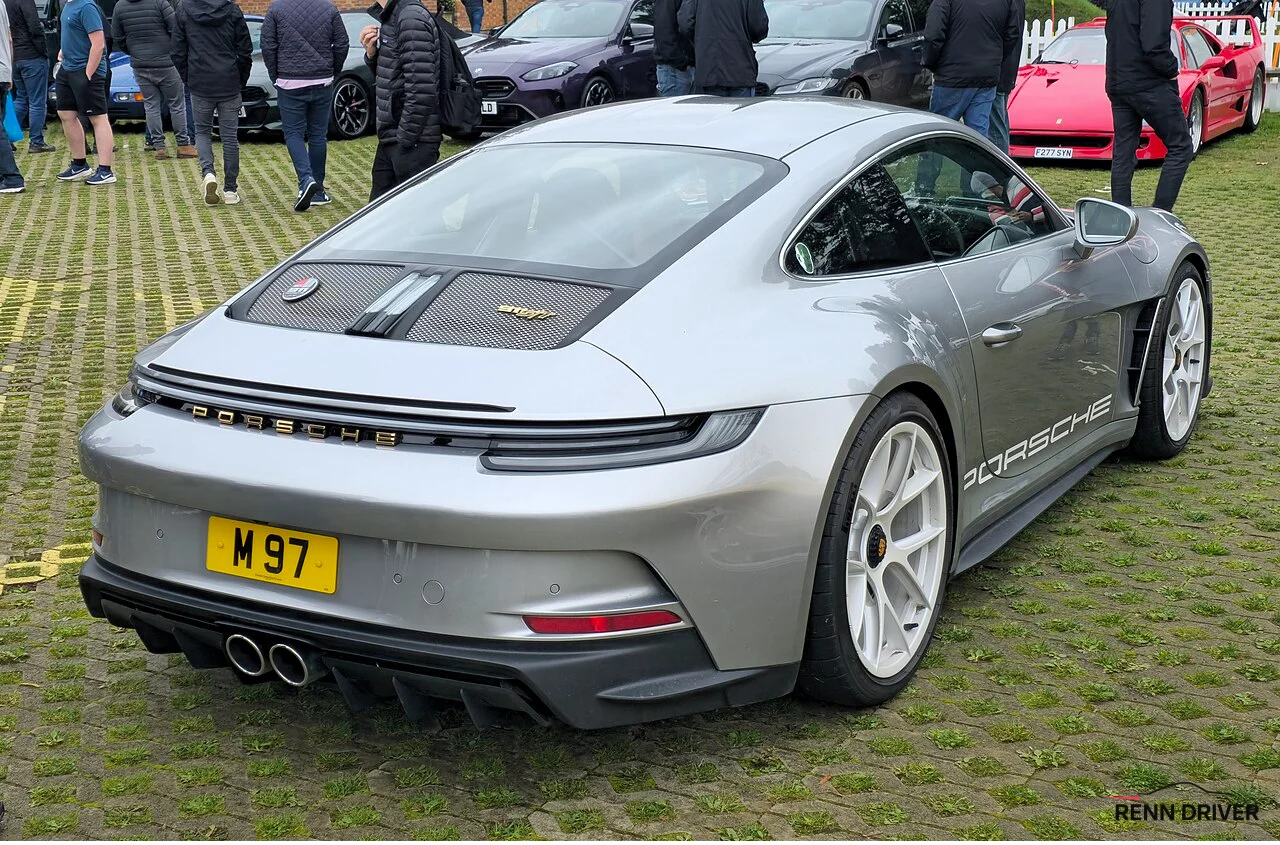
The S/T sits alongside the 911 Speedster and Sport Classic as a limited-run anniversary 911 that combines heritage storytelling with genuine mechanical distinction. The fact that it offers the only manual GT3 RS engine gives it a permanent claim that no other 992 model can make.
Renn Driver's Take
I have not driven this car yet, but I will update this section once I do.
Frequently Asked Questions
How many Porsche 911 S/T were made?
Porsche produced exactly 1,963 units of the 911 S/T worldwide. The number references 1963, the year the original Porsche 911 debuted at the Frankfurt Motor Show. All allocations sold out before production began.
Is the 911 S/T faster than the GT3?
No, the Porsche 911 S/T is not faster than the GT3 RS on a circuit because it lacks the RS's aggressive aerodynamics and PDK transmission. However, it is lighter than the GT3 Touring by 70 lbs and has 16 more horsepower, making it quicker in situations where weight matters more than downforce.
Does the 911 S/T come with a manual transmission?
Yes, the Porsche 911 S/T comes exclusively with a 6-speed manual transmission. There is no PDK option. The S/T is the only production Porsche that pairs the GT3 RS engine with a manual gearbox.
What is the difference between the 911 S/T and the GT3 Touring?
The Porsche 911 S/T uses the more powerful GT3 RS engine (518 hp vs. 502 hp), weighs 70 lbs less, has a single-mass flywheel, CFRP body panels, magnesium wheels, and no rear-axle steering. The GT3 Touring uses the standard GT3 engine, has rear-axle steering, and is not production-limited. The S/T costs roughly $110,000 more than the GT3 Touring.
Why does the 911 S/T not have rear-axle steering?
Porsche removed rear-axle steering from the 911 S/T to save weight. The engineering team also preferred the driving character of the car without the system's electronic intervention at the rear axle. Every other 992 GT car includes rear-axle steering as standard.
How much is a Porsche 911 S/T worth now?
As of 2026, clean low-mileage Porsche 911 S/T examples trade between $400,000 and $600,000 on the secondary market, well above the original $290,000 MSRP. Heritage Design Package cars and Paint to Sample specifications command the highest prices.
What does S/T stand for?
The S/T name references the original 1970 Porsche 911 S/T, which combined the 911 S engine with the lightweight interior of the 911 T (Touring). The "S" stands for Super (the high-performance model) and the "T" stands for Touring (the lightweight model). The modern S/T follows the same philosophy: maximum engine paired with maximum weight reduction.
Final Thoughts
The 911 S/T is Porsche's answer to its own rhetorical question: what is the most connected, most engaging 911 they can build with current technology? The answer turned out to be a car that strips away rear-axle steering, PDK, and excess weight, then hands the driver a 9,000 rpm flat-six and a manual gearbox.
It will almost certainly be remembered as the last of its kind. As hybrid systems and turbocharging take over even Porsche's GT cars, the S/T represents a closing chapter for the naturally aspirated, manual-only, lightweight 911. The 1,963 people who secured one own a piece of that history.
Images: Alexander-93, Calreyn88, MrWalkr, CC BY-SA 4.0, via Wikimedia Commons