The flat-six (also called a horizontally opposed six or boxer six) is Porsche's signature engine layout. Six cylinders are arranged in two banks of three, lying flat on opposite sides of the crankshaft. This design gives the engine a low center of gravity, compact dimensions, and natural balance. Porsche has used the flat-six in the 911 sports car since 1964, evolving from a 2.0L air-cooled unit making 130 hp to a 4.0L water-cooled engine making 518 hp in the latest GT3. It is the most defining engineering choice in Porsche's history.
Contents
How a Flat-Six Engine Works
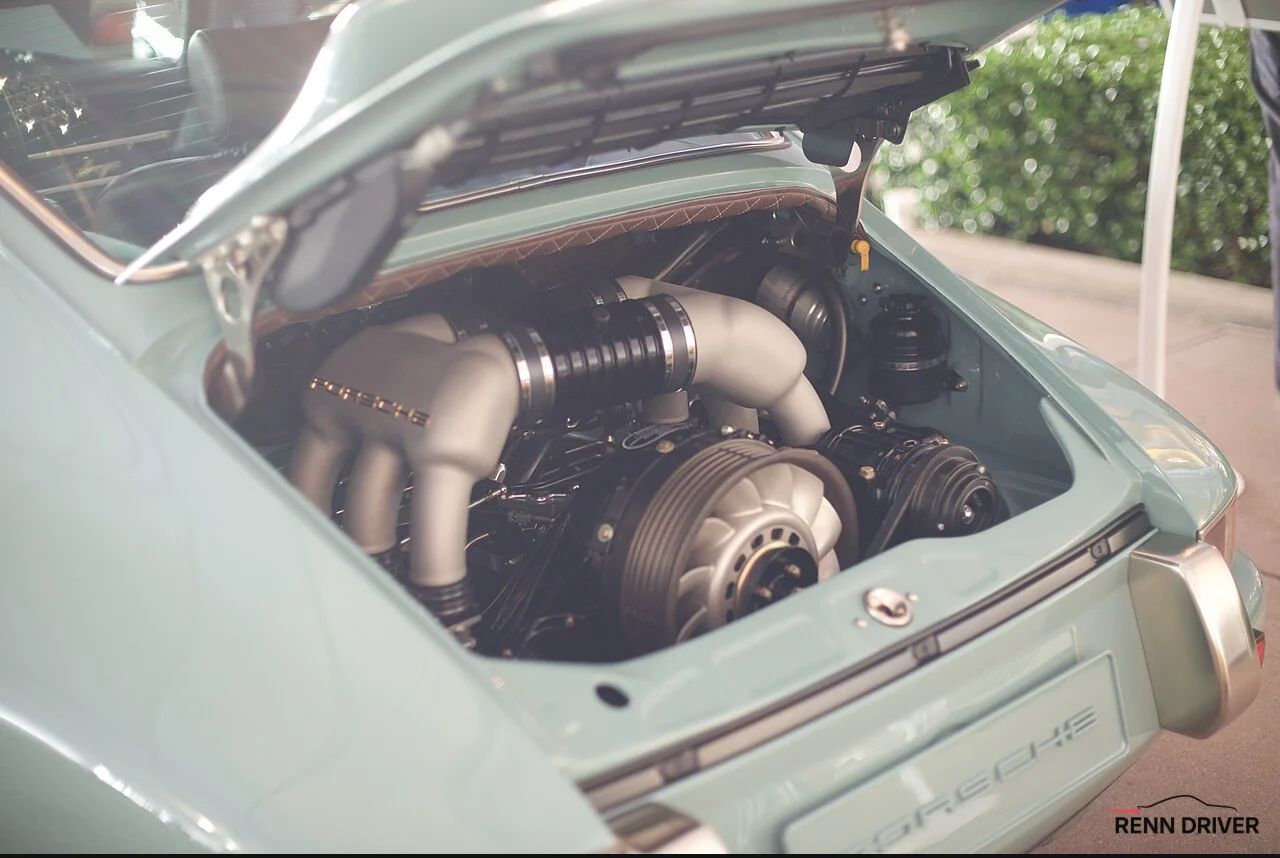
A flat-six engine arranges six cylinders in two horizontal banks of three, positioned on opposite sides of a central crankshaft. The pistons in opposing cylinders move toward and away from each other simultaneously, which is why this layout is also called a "boxer" engine. The pistons appear to be boxing each other.
The firing order is carefully designed so that the power pulses alternate between the two banks. In Porsche's flat-six, the firing order is 1-6-2-4-3-5, which distributes power pulses evenly across the crankshaft's rotation. This produces smooth, consistent power delivery and minimizes torsional vibration.
The crankshaft in a flat-six is shorter than in an inline-six because the cylinders are spread across two banks rather than arranged in a single line. A shorter crankshaft is stiffer and can withstand higher rpm without flex, which is one reason Porsche's flat-six engines are able to rev to 8,000 rpm and beyond in GT3 applications.
Each cylinder bank has its own camshaft (or camshafts, in the case of DOHC engines like the modern GT3). The camshafts are driven by chains from the crankshaft. The valve train operates conventionally, with the key difference being that everything is oriented horizontally rather than vertically.
The oil system is particularly important in a flat-six because the horizontal cylinder orientation means that oil can pool in the cylinders when the engine is stationary. Porsche addresses this through careful cylinder head design and, in performance applications, dry-sump lubrication systems that scavenge oil from multiple points in the engine.
Why Porsche Uses the Flat-Six
Porsche's commitment to the flat-six layout is driven by four fundamental engineering advantages.
Low Center of Gravity
Because the cylinders lie flat, the engine sits extremely low in the chassis. In the 911, where the engine is mounted behind the rear axle, this low center of gravity is critical. It keeps the heaviest component of the car as low as possible, which reduces body roll, improves cornering stability, and makes the rear-engine weight distribution more manageable.
A V6 or inline-six of equivalent displacement would sit significantly taller in the engine bay, raising the center of gravity and changing the car's handling characteristics fundamentally.
Compact Dimensions
The flat-six is short (front to back) relative to an inline-six, which is important for packaging in the 911's tight rear engine bay. It is also relatively narrow compared to a V6 at wide angles. The compact package allows the engine to fit behind the rear axle while leaving room for exhaust routing, cooling systems, and structural components.
Natural Balance
A flat-six with 120-degree crankshaft throws is inherently balanced for both primary and secondary forces. This means it runs smoothly without the need for balance shafts (which add weight, complexity, and parasitic power loss). The smooth operation enables high-rpm performance without destructive vibrations.
Structural Rigidity
The flat-six engine case, with cylinders extending horizontally from both sides, creates a wide, flat structure that is inherently rigid. This rigidity contributes to consistent bearing alignment, precise valve timing, and long-term durability. It also makes the engine suitable as a stressed member in the chassis, where it contributes to overall structural stiffness.
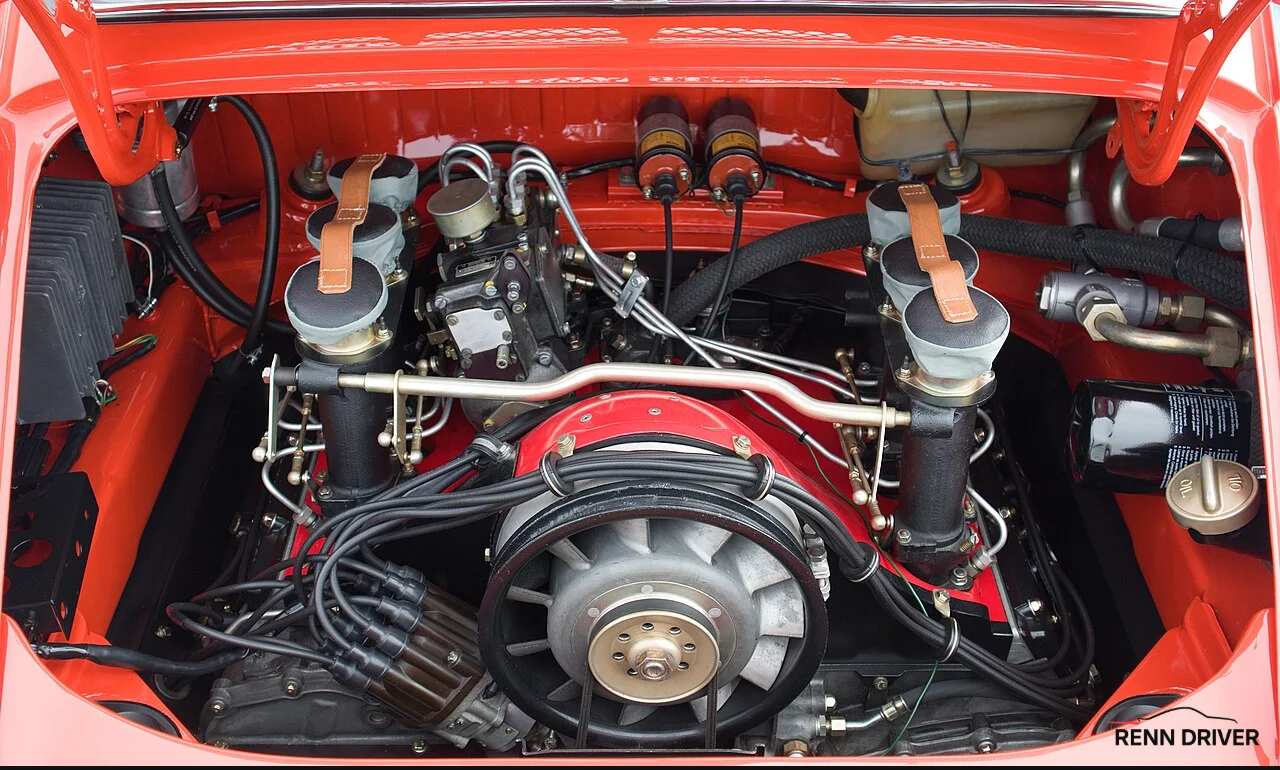
Flat-Six vs Inline-Six vs V6
Three six-cylinder layouts exist in the automotive world. Each has distinct characteristics.
| Flat-Six (Boxer) | Inline-Six | V6 | |
|---|---|---|---|
| Balance | Excellent (inherently balanced) | Excellent (perfectly balanced) | Good (may need balance shafts) |
| Height | Very low | Tall | Medium |
| Length | Short | Very long | Short |
| Width | Wide | Narrow | Medium |
| Center of gravity | Lowest | High | Medium |
| Exhaust note | Distinctive, textured | Smooth, refined | Varies widely |
| Used by | Porsche, Subaru | BMW, Toyota, Mercedes | Most manufacturers |
The inline-six is the closest rival to the flat-six in terms of inherent balance. BMW's inline-six engines are renowned for smoothness, and for good reason. The layout is naturally balanced for all primary and secondary forces. However, an inline-six is too long to fit behind the rear axle of a 911, which is why Porsche never considered it.
The V6 is the most common six-cylinder layout because it is compact and versatile. But most V6 configurations are not naturally balanced and require balance shafts to suppress vibration. This adds weight, complexity, and robs a small amount of power.
Porsche's flat-six combines the balance advantages of an inline-six with the compact dimensions of a V6, while adding the lowest possible center of gravity. For a rear-engined sports car, there is no better layout.
Air-Cooled vs Water-Cooled Flat-Six
Porsche produced air-cooled flat-six engines from 1964 through 1998, and water-cooled versions from 1997 onward. The transition happened between the final air-cooled 993 and 996 generations. For a deep exploration of this topic, see our full guide on air-cooled vs water-cooled Porsche 911s.
Air-Cooled (1964 to 1998)
Air-cooled engines use a belt-driven fan and cooling fins cast into the cylinder barrels and heads to dissipate heat. No water pump, no radiator, no coolant. The design is mechanically simpler and produces the distinctive, textured sound that defines classic 911s. The primary limitations are inconsistent cylinder temperatures (which affect emissions) and reduced cooling capacity in extreme conditions.
Water-Cooled (1997 onward)
Water-cooled engines circulate liquid coolant through passages in the cylinder heads and block. Radiators at the front of the car dissipate heat. This system maintains more consistent temperatures across all cylinders, enabling tighter tolerances, higher compression ratios, more power per liter, and cleaner emissions. The trade-off is increased complexity and the loss of the air-cooled engine's mechanical rawness.
The Mezger Engine
The Mezger engine deserves special attention in any discussion of Porsche's flat-six history. Named after Hans Mezger, the engineer who designed the original 911 engine and the 917's flat-twelve, the "Mezger" designation refers specifically to the flat-six used in the 996 and 997 GT3, GT3 RS, Turbo, and GT2 models.
The Mezger engine is distinct from the M96/M97 engines used in standard 996 and 997 Carrera models. It features a different crankcase design, a gear-driven (not chain-driven) intermediate shaft (eliminating the IMS bearing issue), dry-sump lubrication, and internal components built to withstand sustained high-rpm track use.
Its direct lineage traces back to the 962 Group C race engine that dominated Le Mans in the 1980s. The road-going version was detuned for emissions and longevity, but the fundamental architecture remained the same.
For a complete exploration of this engine, see that engine's full history.
Notable Porsche Flat-Six Engines
Type 901/01 (1964 to 1968) — 2.0L Air-Cooled
The original 911 engine. A 2.0L SOHC air-cooled flat-six producing 130 hp. Designed by Hans Mezger, Ferdinand Piech, and the Porsche engineering team. It established every fundamental design principle that subsequent 911 engines would follow: horizontally opposed cylinders, single overhead camshafts per bank, chain-driven camshaft timing, and dry-sump lubrication on performance variants.
3.0L RSR/Turbo Engine (1974 to 1977)
The turbocharged version of the air-cooled flat-six arrived in the 930 Turbo. A single KKK turbocharger fed 260 hp (later 300 hp) from 3.0L, then 3.3L. The turbo flat-six became the foundation of Porsche's forced-induction development that continues to this day.
3.6L 964 Engine (1989 to 1994)
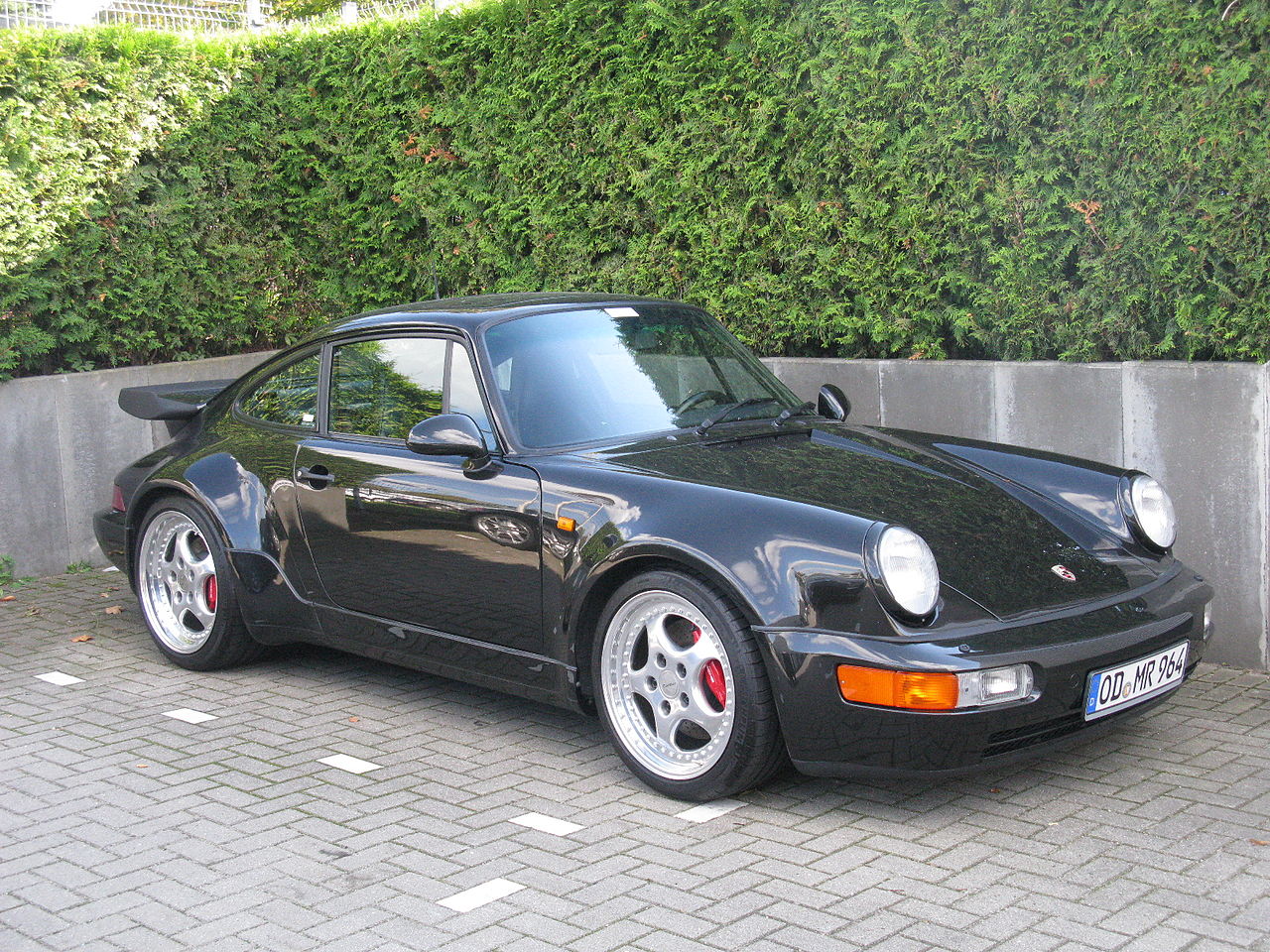
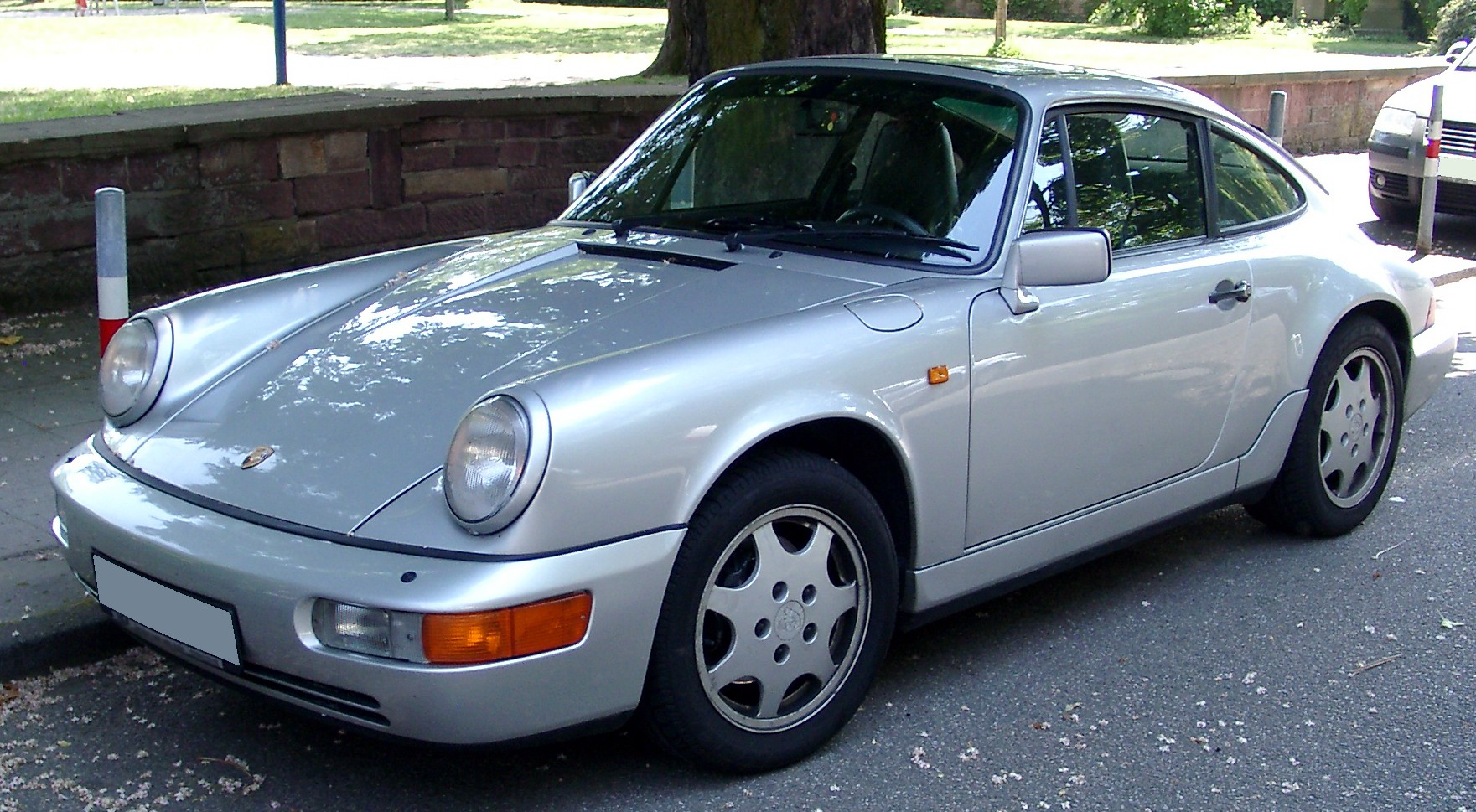
The final evolution of the twin-plug, SOHC air-cooled flat-six. The 964's M64 engine produced 247 hp and was considered the most refined air-cooled engine Porsche had built to that point.
3.6L 993 VarioRam Engine (1995 to 1998)
The 993 introduced VarioRam variable intake runners, increasing power to 272 hp. This was the final air-cooled 911 engine and is revered by enthusiasts for its combination of power, sound, and mechanical simplicity.
3.6L/3.8L Mezger (1999 to 2012)
Used across the 996 GT3, 997 GT3, 996/997 Turbo, and GT2 models. The Mezger produced 360 hp to 530 hp depending on variant. The naturally aspirated versions rev to 8,400 rpm. The turbocharged versions produce massive torque with twin turbochargers. This engine family is considered one of the greatest performance engines ever produced.
4.0L 9A1 (2014 onward) — GT3/GT3 RS
The current naturally aspirated flat-six used in the naturally aspirated track car and GT3 RS. The 991 version produces 500 hp, and the 992 GT3 produces 502 hp (518 hp in the RS). Individual throttle bodies, titanium connecting rods, and a 9,000 rpm redline. This engine carries forward the Mezger's spirit in a modern, water-cooled package.
3.0L Twin-Turbo (2016 onward) — Carrera
The 991.2 introduced turbocharging to the base Carrera for the first time. The 3.0L twin-turbo flat-six produces 370 hp (Carrera) to 640 hp (Turbo S). It represents a shift toward efficiency and broad powerband performance, trading the naturally aspirated engine's high-rpm character for stronger mid-range torque.
The Flat-Six Sound
The sound of a Porsche flat-six is unlike any other engine. The horizontally opposed cylinder arrangement, combined with the exhaust routing and (in air-cooled cars) the cooling fan, creates a layered, complex tone that is immediately recognizable.
Air-cooled flat-sixes produce a raw, mechanical sound dominated by valve train clatter, the rhythmic pulse of opposed pistons, and the whoosh of the cooling fan. The exhaust note is raspy and gains urgency with rpm. At idle, an air-cooled 911 sounds like a mechanical device at work. Under full throttle, it sounds like a purpose-built machine.
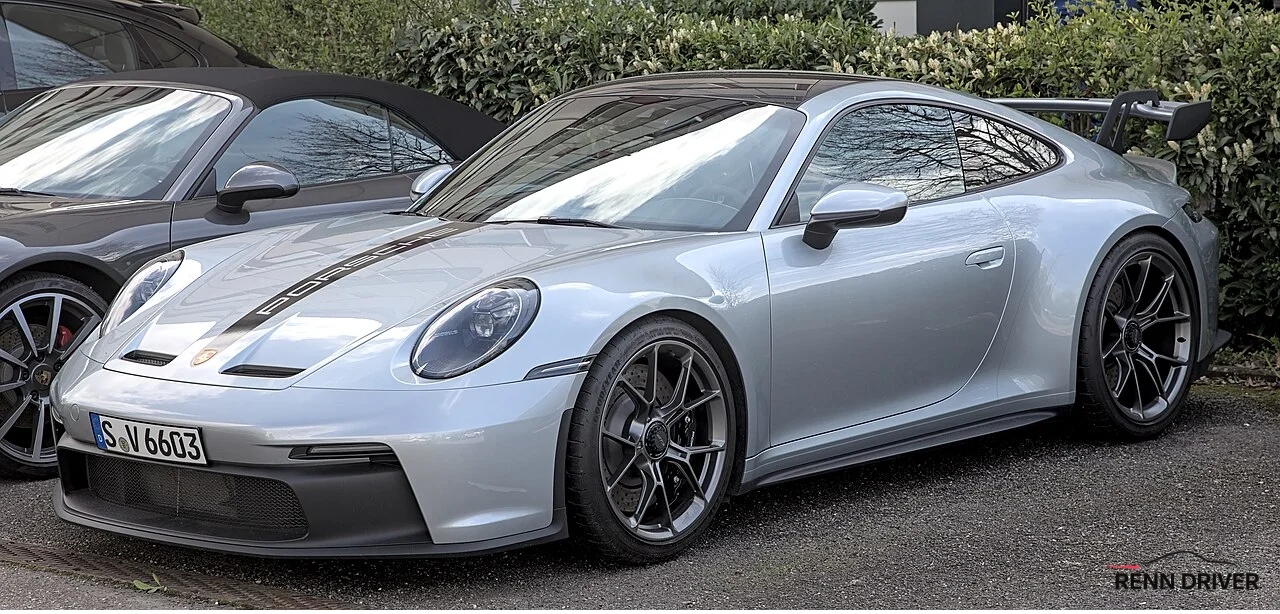
Water-cooled flat-sixes, particularly the naturally aspirated GT3 engines, produce a higher-pitched, more focused sound. The 4.0L engine in the 992 GT3 generates a wail at high rpm that is one of the most distinctive sounds in the modern automotive world. The absence of the air-cooling fan and the insulation of water jackets around the cylinders create a cleaner, more refined exhaust note.
Turbocharged water-cooled flat-sixes have a more muted character. The turbochargers absorb exhaust energy and dampen the natural engine note. What replaces it is a whooshing, pressurized tone that conveys power differently but lacks the naturally aspirated engine's high-rpm drama.
The Future of the Flat-Six
Porsche has confirmed that the flat-six will continue into the foreseeable future. The 992 generation 911 uses the flat-six in both turbocharged and naturally aspirated forms, and the GT3's 4.0L naturally aspirated engine remains in production.
Hybrid assistance is arriving. The next generation of turbocharged 911s is expected to incorporate an electric motor to supplement the flat-six, improving low-end response and reducing emissions. Porsche has stated that the 911 will be the last model in their lineup to go fully electric, and even then, the flat-six may continue in hybrid form for years.
The naturally aspirated flat-six in the GT3 faces the greatest regulatory pressure. Tightening emissions standards make it increasingly difficult to justify a high-revving, large-displacement naturally aspirated engine. Porsche's GT division has committed to keeping it for as long as possible, but the regulatory clock is ticking.
For now, the flat-six remains the heart of the 911 and the defining characteristic of the Porsche driving experience. Over sixty years of continuous development have produced an engine family that ranges from a 130 hp air-cooled unit to a 640 hp twin-turbo powerhouse, all sharing the same fundamental layout. No other engine configuration in automotive history has been developed so thoroughly by a single manufacturer.
Renn Driver's Take
I will do some more research on this and give my updated thoughts soon.
Frequently Asked Questions
What is a flat-six engine?
A flat-six engine is a six-cylinder internal combustion engine with the cylinders arranged in two horizontal banks of three on opposite sides of the crankshaft. The pistons move toward and away from each other, which is why it is also called a boxer engine. Porsche has used the flat-six layout in the 911 since 1964.
Why does Porsche use a flat-six instead of a V6?
Porsche uses a flat-six because it provides a lower center of gravity than a V6, is inherently balanced without requiring balance shafts, and fits compactly in the 911's rear-engine layout. The flat-six also produces a distinctive sound and has proven extremely durable across six decades of development.
Is a flat-six the same as a boxer engine?
Yes, a flat-six is a type of boxer engine. The terms are used interchangeably. "Boxer" refers to the opposing motion of the pistons, and "flat" refers to the horizontal cylinder orientation. Porsche and Subaru are the two manufacturers that currently produce boxer engines.
What is the most powerful Porsche flat-six?
The most powerful production Porsche flat-six is the 3.7L twin-turbocharged unit in the 992 Turbo S, producing 640 hp. The most powerful naturally aspirated Porsche flat-six is the 4.0L engine in the 992 GT3 RS, producing 518 hp.
Are all Porsche 911 engines flat-six?
Yes, every Porsche 911 ever produced uses a flat-six engine. From the original 2.0L air-cooled unit in 1964 to the current water-cooled engines in the latest generation, the flat-six has been a constant across all 911 generations.
What is the Mezger engine?
The Mezger engine is a specific Porsche flat-six used in the 996 and 997 GT3, GT3 RS, Turbo, and GT2 models. Named after engineer Hans Mezger, it features a gear-driven intermediate shaft (no IMS bearing issue), dry-sump lubrication, and race-derived construction. See our full Mezger engine breakdown for details.
Final Thoughts
The flat-six is not just an engine layout. It is the single engineering decision that makes the car it powers possible. Without the low center of gravity, compact dimensions, and natural balance of the horizontally opposed six, the rear-engine 911 concept would not work as well as it does.
From the first 2.0L Type 901 engine in 1964 to the screaming 4.0L in today's GT3, the flat-six has evolved continuously while staying true to its original principles. It is Porsche's most important engineering legacy, and it continues to define what the 911 is.
Images by: Renn Driver and Contributors, licensed under CC BY-SA 2.0, via Wikimedia Commons