The Porsche 911 Dakar is a limited-production, rally-inspired 911 built on the 992 platform. It makes 473 hp from a 3.0L twin-turbo flat-six, sits 50mm higher than a standard 911, rides on Pirelli all-terrain tires, and was limited to 2,500 units worldwide at $222,000. It is the first production 911 designed specifically for off-road use.
Here is the 911 Dakar, the car that took the rear-engine sports car into the dirt.
Contents
- 1 Quick Summary
- 2 What Makes the Dakar Different
- 3 The 1984 Paris-Dakar Connection
- 4 Engine and Powertrain
- 5 Suspension and Off-Road Hardware
- 6 Driving Modes
- 7 Exterior Design
- 8 Rallye Design Package
- 9 Interior and Equipment
- 10 Specs Table
- 11 Market Values and Collectibility
- 12 992.2 Dakar
- 13 Renn Driver's Take
- 14 Frequently Asked Questions
- 15 Final Thoughts
Quick Summary
- Production: 2023–2024 (992.1 generation)
- Engine: 3.0L twin-turbo flat-six, 473 hp, 420 lb-ft
- 0–60 mph: 3.2 seconds
- Top speed: 150 mph (limited by tire profile)
- Ground clearance: 161mm standard, 191mm with lift system engaged
- Tires: Pirelli Scorpion All Terrain Plus (245/45 ZR 19 front, 295/40 ZR 20 rear)
- Weight: 3,552 lbs (1,611 kg)
- Production run: 2,500 units worldwide
- MSRP: $222,000 (excluding delivery)
- What defines it: The only production 911 ever built for off-road driving, with rally-inspired suspension, all-terrain tires, and two dedicated off-road driving modes
The full guide below covers all the details.
What Makes the Dakar Different
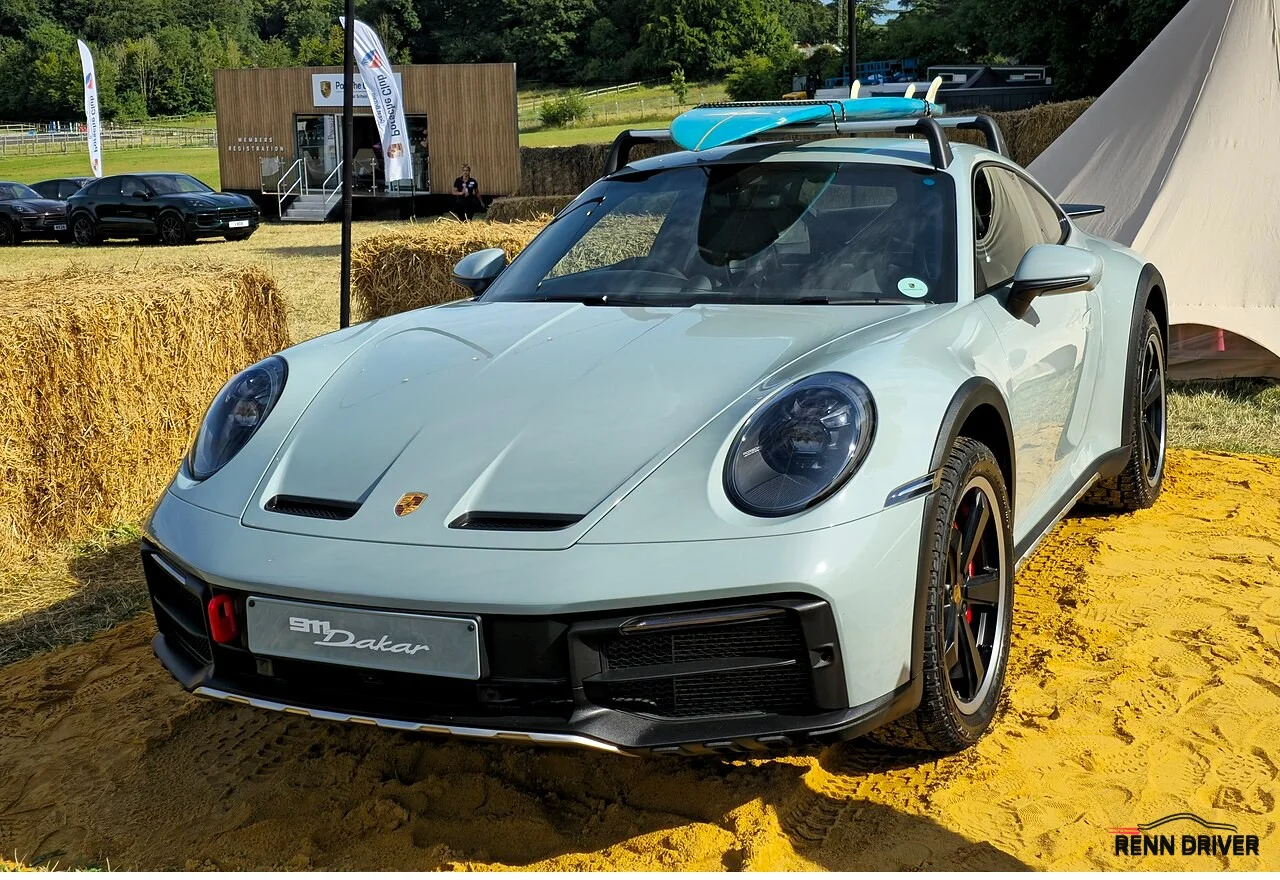
The 911 Dakar is not just a 992 with a lift kit. Porsche rebuilt the suspension geometry, added unique driving modes for loose surfaces, fitted all-terrain tires from the factory, and deleted the rear seats to save weight. The CFRP hood comes straight from the 911 GT3, and the engine mounts are GT3 items too.
Standard equipment includes Porsche Dynamic Chassis Control (PDCC), rear-axle steering, and Porsche Traction Management all-wheel drive. Those are options on other 911 models. On the Dakar, they come included because the car needs them to work properly across every surface type.
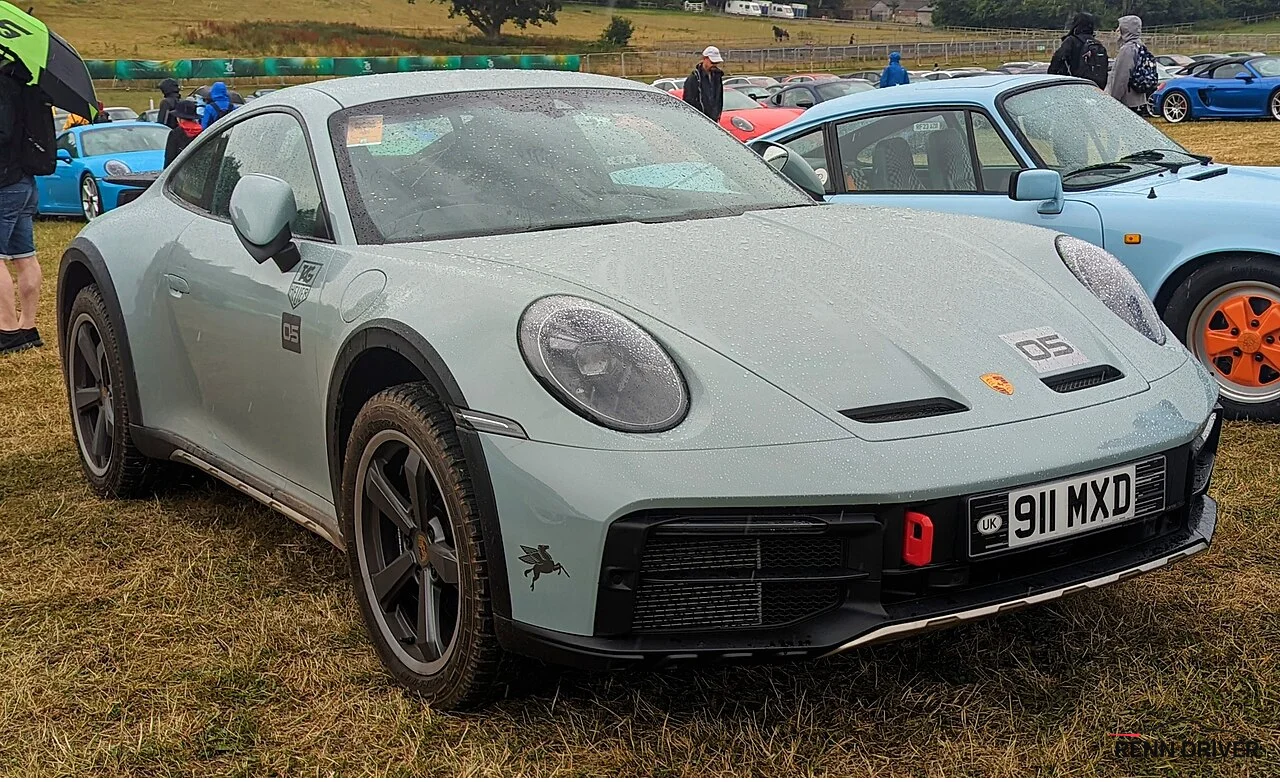
The top speed is capped at 150 mph, not because the engine cannot push harder but because the all-terrain tire sidewalls would become unsafe at higher speeds. Swap to road tires and the limiter rises to 190 mph, though that defeats the purpose of the car.
The 1984 Paris-Dakar Connection
The name comes from Porsche's overall victory at the 1984 Paris-Dakar Rally. Jacky Ickx convinced Porsche to enter a modified 911, known internally as the 953, in the grueling 7,500-mile race from Paris to Dakar, Senegal. René Metge and co-driver Dominique Lemoyne drove the 953 to an outright win, marking the first time a sports car had ever won the rally.
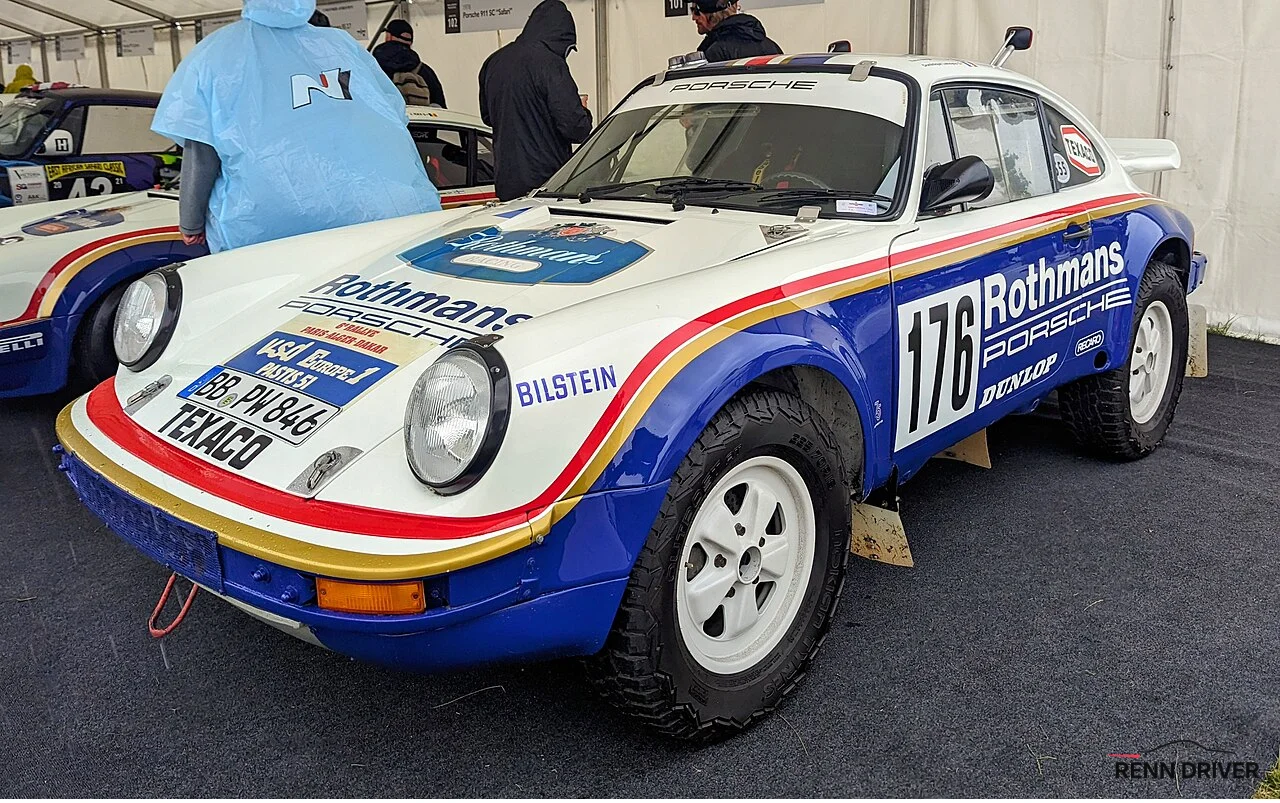
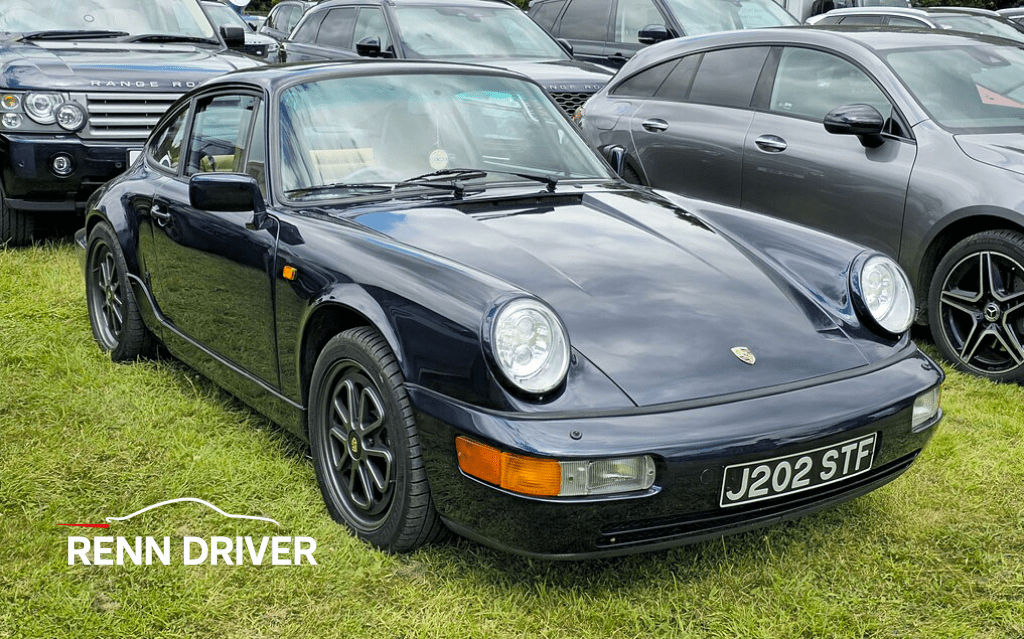
The 953 ran a 3.2-liter flat-six with roughly 300 hp and a prototype all-wheel-drive system with a 31:69 front-to-rear power split. It carried 270 liters of fuel (120 liters in the front trunk, 150 liters behind the driver) and had 270mm of wheel travel. The all-wheel-drive technology from the 953 program directly fed into the development of the Porsche 959, which went on to win the Paris-Dakar again in 1986.
That lineage is what makes the modern 911 Dakar more than a marketing exercise. Porsche actually raced a 911 through the Sahara and won.
Engine and Powertrain
The Dakar shares its 3.0-liter twin-turbo flat-six with the 911 Carrera GTS of the same generation. Output is 473 hp and 420 lb-ft of torque, sent through an 8-speed PDK to all four wheels via Porsche Traction Management.
There is no manual transmission option. The PDK is paired with the Dakar's driving modes and calibrated specifically for surfaces where wheel speed management matters more than driver engagement. The transmission shifts differently in Rallye and Off-Road modes, holding gears longer and managing torque delivery to prevent wheelspin on loose surfaces.
The engine mounts are borrowed from the GT3, which are stiffer than standard items. This gives the Dakar sharper throttle response and better control at speed, whether that speed is reached on tarmac or gravel.
Suspension and Off-Road Hardware
The Dakar sits 50mm higher than a 911 Carrera with sport suspension. The standard lift system raises the car an additional 30mm front and rear, bringing total ground clearance to 191mm (7.5 inches). The lift system works at speeds up to about 105 mph, well beyond what any normal lift system is designed for.
PDCC (Porsche Dynamic Chassis Control) is the active anti-roll bar system. It reduces body roll on road and allows the suspension to work more independently on uneven terrain. Rear-axle steering shortens the turning circle and improves stability at speed.
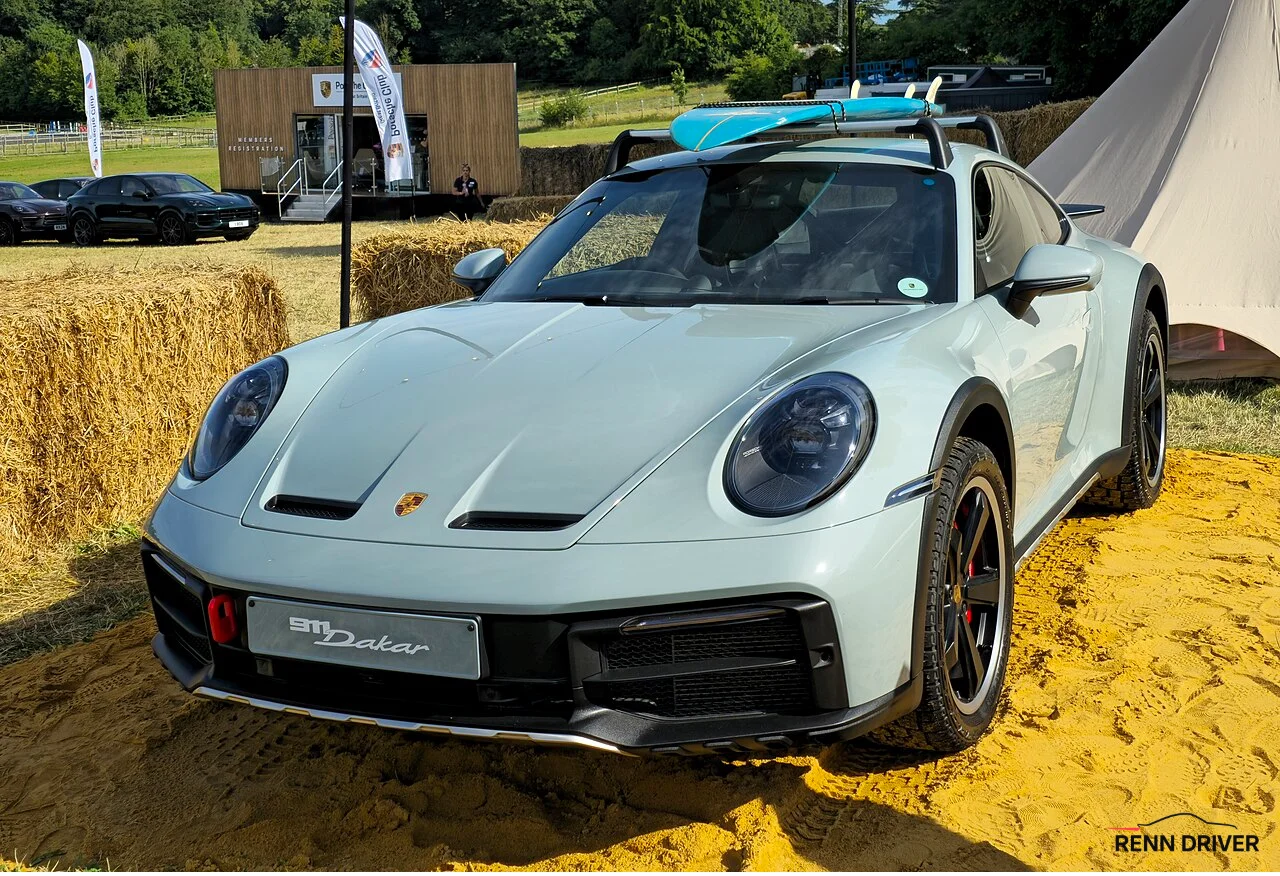
The Pirelli Scorpion All Terrain Plus tires are the key to the Dakar's off-road capability. They have 9mm tread depth, dual-carcass reinforced sidewalls, and a profile that can handle gravel, sand, and packed dirt without shredding. The sizes are staggered: 245/45 ZR 19 at the front and 295/40 ZR 20 at the rear.
Driving Modes
The Dakar has two dedicated off-road driving modes that no other 911 offers, selected via the mode switch on the steering wheel.
Rallye Mode sends more torque to the rear axle, loosens the stability control, and changes the differential behavior to allow controlled oversteer. On gravel or dirt, the car rotates with the throttle like a rally car. Rallye Launch Control allows up to 20% wheel spin off the line for maximum traction on loose surfaces.
Off-Road Mode maximizes traction for sand, deep gravel, and rough terrain. The lift system automatically engages for full ground clearance, and the stability systems are set to intervene as late as possible without letting the car get stuck.
Both modes also work with standard 911 driving modes: Normal, Sport, and Sport Plus remain available for road driving.
Exterior Design
The Dakar looks like nothing else in the 911 lineup. The raised stance is the most obvious change, but the details go much further.
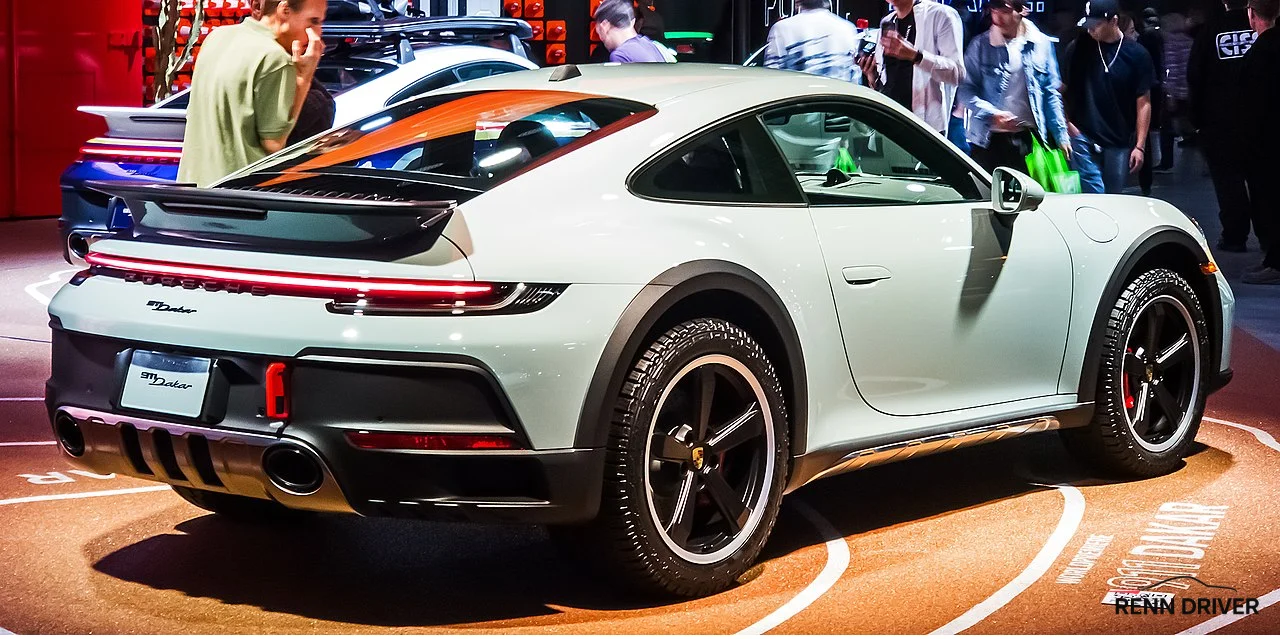
The CFRP (carbon fiber reinforced plastic) hood comes from the GT3, with large air extraction openings. A fixed rear spoiler replaces the standard retractable unit. Red forged aluminum tow hooks are mounted front and rear. Stainless steel protection covers the front fascia, side skirts, and rocker panels. The front air intakes are covered with fine mesh grilles to prevent rock damage.
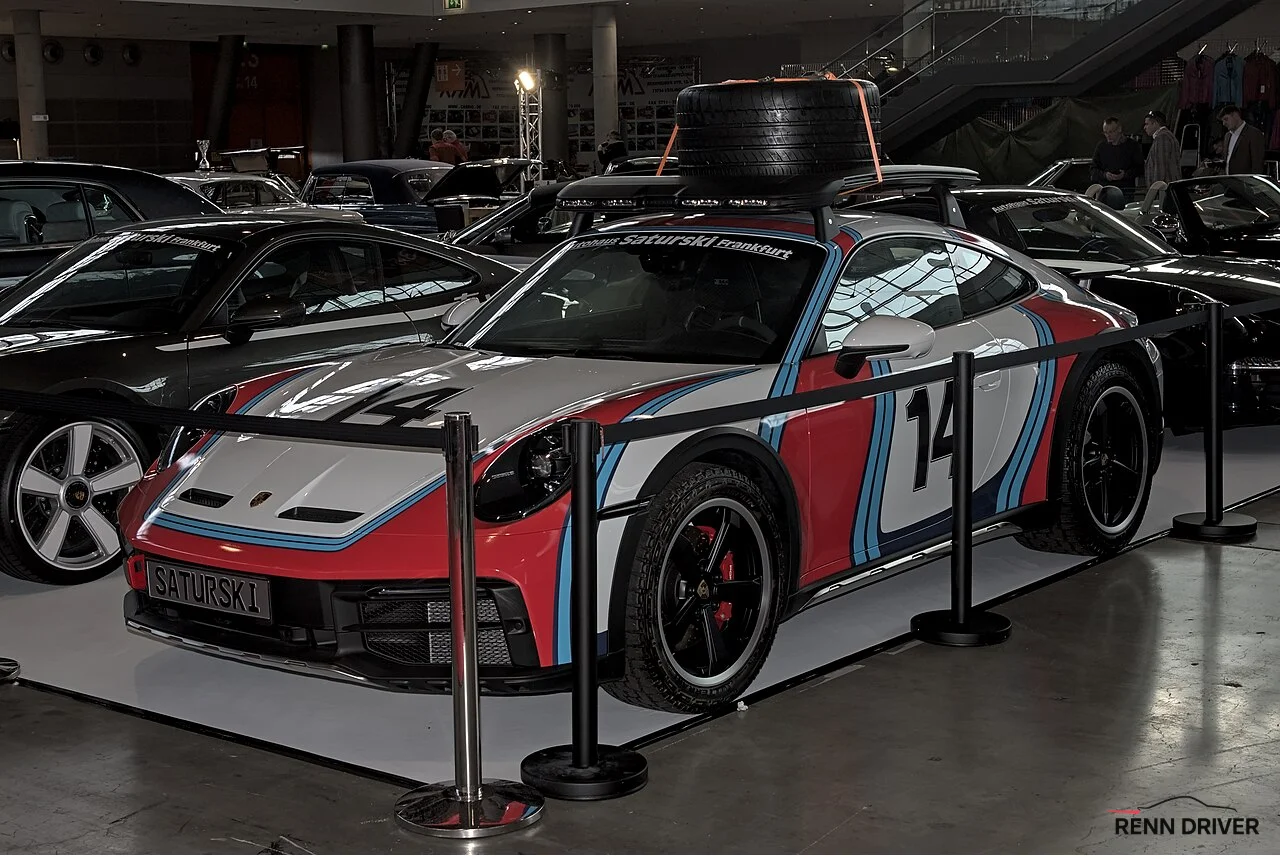
The rear seats are deleted, and the glass uses a lightweight specification. Every gram saved matters when you are adding the weight of reinforced suspension components and all-terrain tires.
The roof can be equipped with an optional aluminum basket that holds up to 42 kg (92 lbs) of gear. A 12-volt power socket on the roof connects to optional LED auxiliary lights via magnetic coupling. For the truly committed, Porsche also offers a two-person fold-out roof tent with a ladder, mattress, and storm protection.
Rallye Design Package
Porsche Exclusive Manufaktur offered the Rallye Design Package as the most distinctive visual option. It features a two-tone paint scheme in White and Gentian Blue Metallic, directly referencing the Rothmans livery of the 953 and 959 Paris-Dakar racers.
The package includes optional start numbers (0 through 999) on the doors, making each car unique. This was the first time Porsche combined two-tone paint with a decorative livery on a production car.
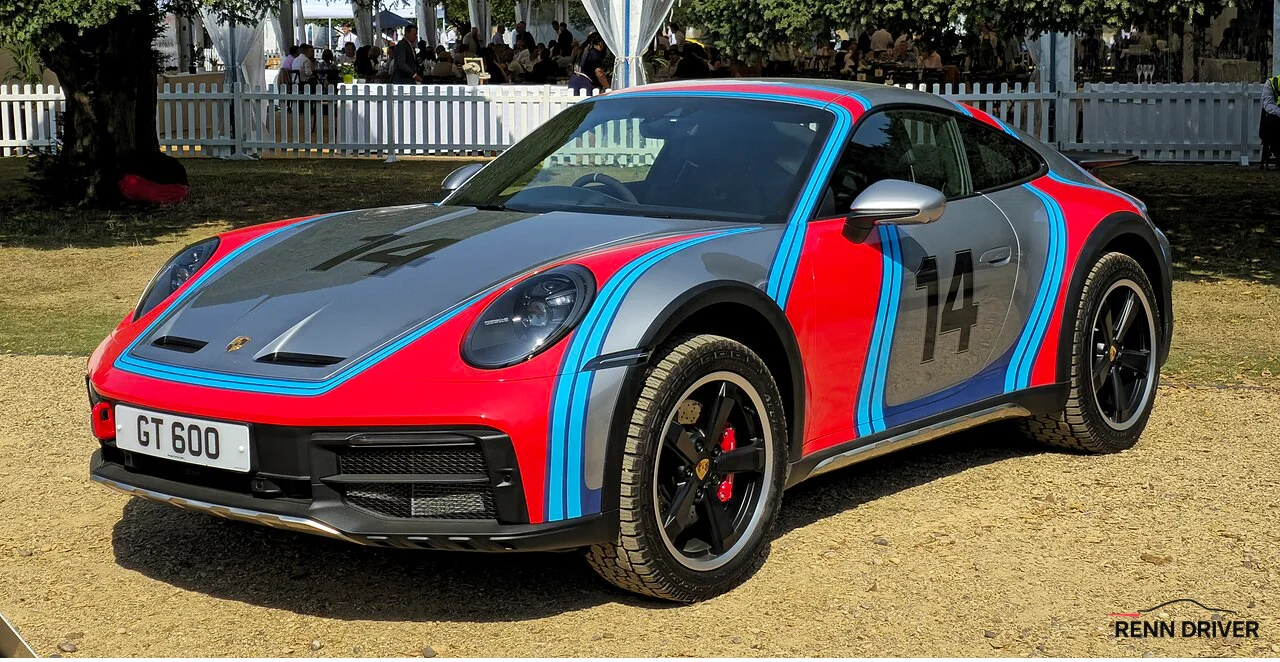
Beyond the Rallye Design Package, the Dakar was available in Shade Green, an exclusive color not offered on any other 911 variant.
Interior and Equipment
Full carbon fiber bucket seats come standard, carried over from the GT3. Race-Tex upholstery features decorative stitching in Shade Green, exclusive to the Dakar. The rear seat delete opens up storage space and saves weight.
Standard equipment includes Sport Chrono Package, Porsche Communication Management (PCM), and a multifunction sport steering wheel. The mode switch on the steering wheel provides direct access to the Rallye and Off-Road modes without navigating through menus.
Porsche also released a companion Porsche Design Chronograph 1 in a titanium carbide housing, the first watch to use that material, matched to the 911 Dakar.
Specs Table
| Spec | 911 Dakar (992.1) |
|---|---|
| Engine | 3.0L twin-turbo flat-six |
| Power | 473 hp @ 6,500 rpm |
| Torque | 420 lb-ft @ 2,300–5,000 rpm |
| Transmission | 8-speed PDK |
| Drivetrain | All-wheel drive (PTM) |
| 0–60 mph | 3.2 seconds |
| Top Speed | 150 mph (all-terrain tires) / 190 mph (road tires) |
| Curb Weight | 3,552 lbs (1,611 kg) |
| Ground Clearance | 161mm (191mm with lift) |
| Front Tires | 245/45 ZR 19 Pirelli Scorpion AT Plus |
| Rear Tires | 295/40 ZR 20 Pirelli Scorpion AT Plus |
| Suspension | PDCC + rear-axle steering (standard) |
| Production | 2,500 units |
| MSRP | $222,000 (excl. $1,450 delivery) |
| Production Years | 2023–2024 |
Market Values and Collectibility
All 2,500 units sold out before production began, which tells you everything about demand. Early cars traded significantly above MSRP on the secondary market, with some examples reaching $300,000 or more in the first year.
As of 2026, prices have settled but remain above the original sticker for clean, low-mileage examples. Rallye Design Package cars and Shade Green examples command the highest premiums. The limited production run and the fact that there has never been anything like this in the 911 lineup before make it a strong collectible long-term.
The Dakar sits in a similar collectibility bracket to the 911 Sport Classic and 911 S/T: limited-run, special-purpose 911s that represent a specific moment in Porsche's history.
992.2 Dakar
A facelifted 992.2 Dakar is expected for late 2026 or early 2027. Prototypes have been spotted with the GTS T-Hybrid powertrain, which would give the next Dakar up to 532 hp in short bursts from a 3.6-liter single-turbo flat-six with electric assistance. A deployable rear spoiler replaces the fixed unit from the 992.1 car.
Estimated pricing is around $250,000, reflecting the 992.2 generation's price increases across the 992 lineup. Whether Porsche limits production again remains to be seen, but the original car's instant sellout makes another capped run likely.
Renn Driver's Take
I have not driven this car yet, but I will update this section once I do.
Frequently Asked Questions
How many Porsche 911 Dakars were made?
Porsche produced exactly 2,500 units of the 911 Dakar worldwide. All units were sold before production began, despite the $222,000 starting price. The car was built during the 2023 and 2024 model years on the 992.1 platform.
Can you take the Porsche 911 Dakar off-road?
Yes, the Porsche 911 Dakar is specifically designed for off-road driving. It comes with Pirelli all-terrain tires, 191mm of ground clearance with the lift system engaged, and two dedicated off-road driving modes (Rallye and Off-Road). Porsche tested it extensively on gravel, sand, and dirt roads during development.
Is the 911 Dakar faster than a normal 911?
No, the 911 Dakar is not faster than a standard 911 Turbo S or GT3 on pavement. Its top speed is limited to 150 mph on all-terrain tires (190 mph with road tires), and it weighs 3,552 lbs. However, it shares its 473 hp engine with the Carrera GTS and hits 60 mph in 3.2 seconds, which is faster than most sports cars on the road.
Does the 911 Dakar come with a manual transmission?
No, the Porsche 911 Dakar is only available with the 8-speed PDK automatic transmission. A manual was never offered because the PDK integrates with the Rallye and Off-Road driving modes to manage torque delivery across different surfaces.
What is the Rallye Design Package?
The Rallye Design Package is an optional visual package from Porsche Exclusive Manufaktur that adds a two-tone paint scheme in White and Gentian Blue Metallic, inspired by the Rothmans livery on the original 953 Paris-Dakar car. It includes optional racing start numbers (0 through 999) on the doors. This was the first time Porsche offered a two-tone paint and decorative livery combination on a production car.
How much is a Porsche 911 Dakar worth now?
As of 2026, clean low-mileage Porsche 911 Dakars trade above the original $222,000 MSRP. Rallye Design Package cars and Shade Green examples command the highest premiums, sometimes reaching $280,000 or more. Prices have settled from the initial frenzy when some cars traded above $300,000, but the 2,500-unit production cap supports long-term values.
What car won the 1984 Paris-Dakar Rally?
The Porsche 953 won the 1984 Paris-Dakar Rally outright. Driven by René Metge and Dominique Lemoyne, the 953 was a modified 911 with a 3.2-liter flat-six, prototype all-wheel drive, and 270mm of suspension travel. It was the first time a sports car won the rally. The 953's all-wheel-drive technology later evolved into the Porsche 959.
Is a new 911 Dakar coming?
Yes, a 992.2 generation Porsche 911 Dakar is expected for late 2026 or early 2027. Prototypes have been spotted using the GTS T-Hybrid powertrain with up to 532 hp. Pricing is estimated around $250,000.
Final Thoughts
The 911 Dakar is Porsche proving that the 911 platform can do things nobody asked it to do and do them brilliantly. Raising a 911 by 50mm, fitting all-terrain tires, and sending it into the desert sounds like a thought experiment. Porsche built it, limited it to 2,500 cars, sold every one before the first example left the factory, and created a genuine collectible in the process.
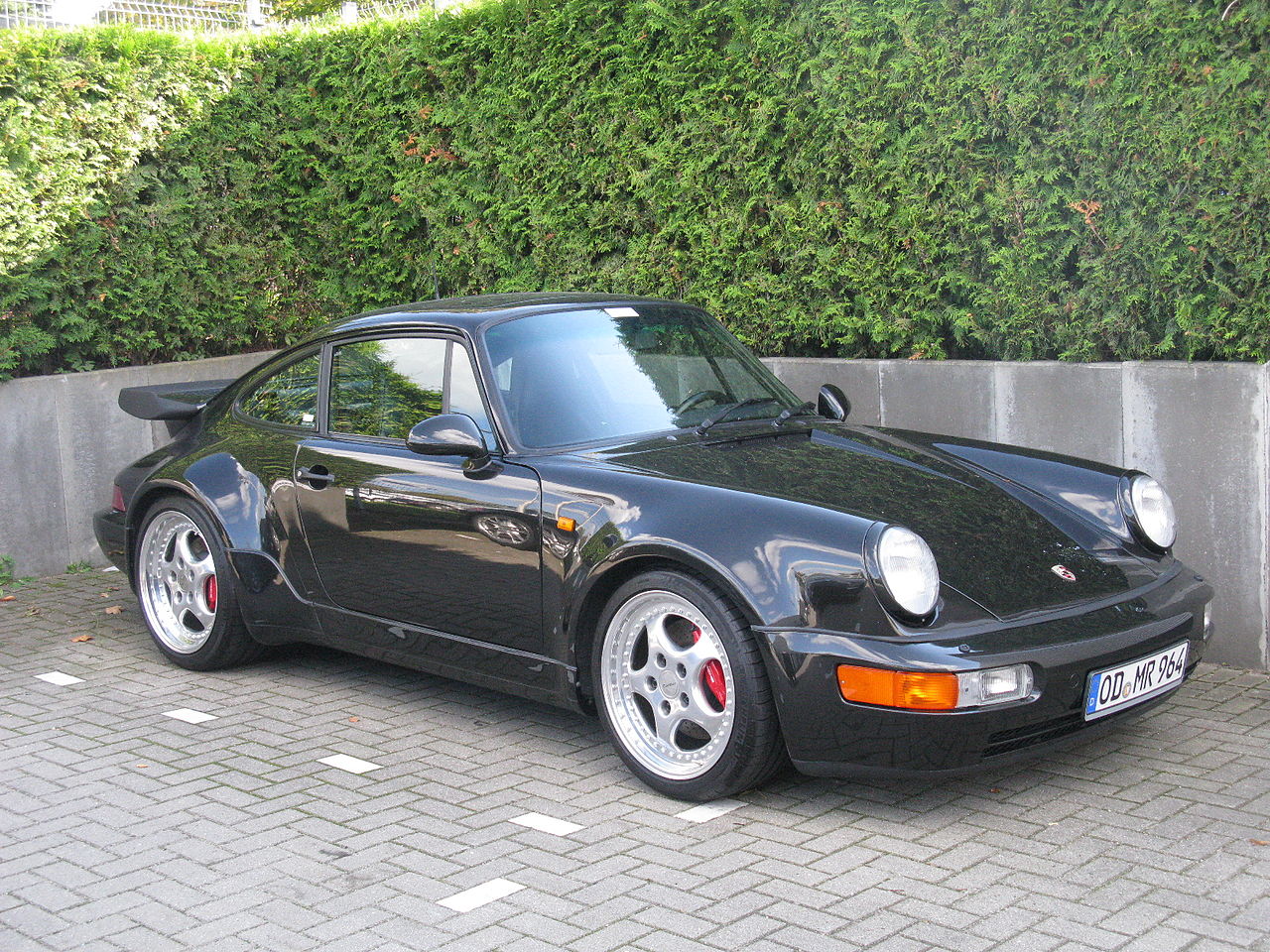
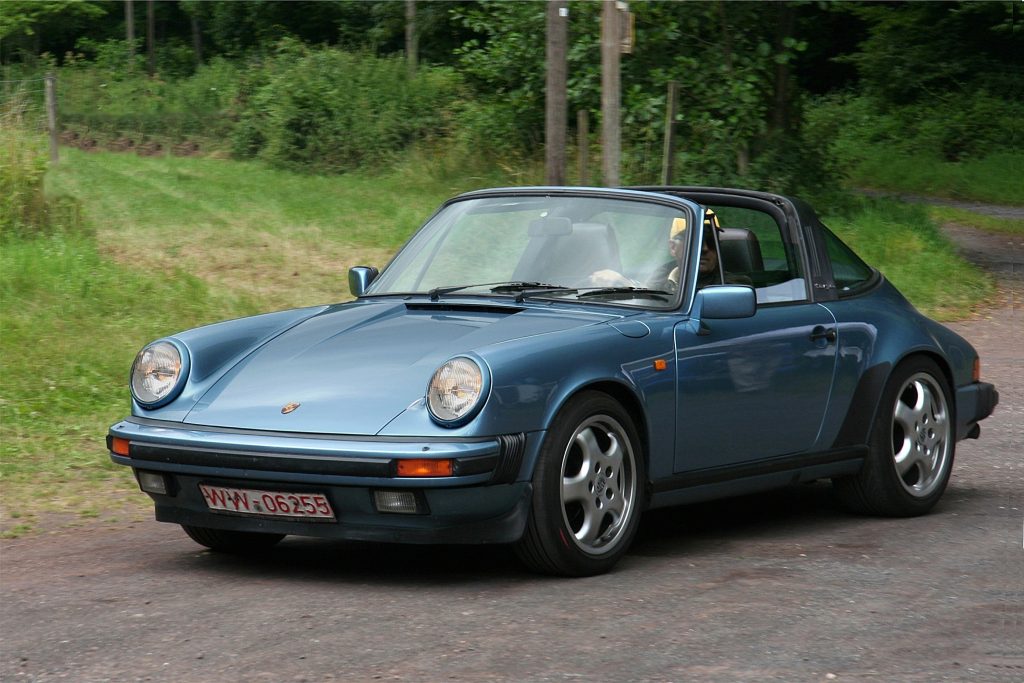
It connects directly to the 953 that won Paris-Dakar in 1984, which gives it more authenticity than most special editions can claim. The Targa was built for open-air driving. The Turbo was built for straight-line speed. The GT3 was built for the track. The Dakar was built for everywhere else.
Images: M 93, CC BY-SA 3.0 DE; Calreyn88, CC BY-SA 4.0; Alexander-93, CC BY-SA 4.0, via Wikimedia Commons