
The Porsche 911 GT3 is not for show. It is built to be driven. It is Porsche’s most focused, naturally aspirated 911.
The latest version carries forward the GT3’s legacy with a 9,000 rpm redline, rear-wheel drive, and the option for a manual transmission.
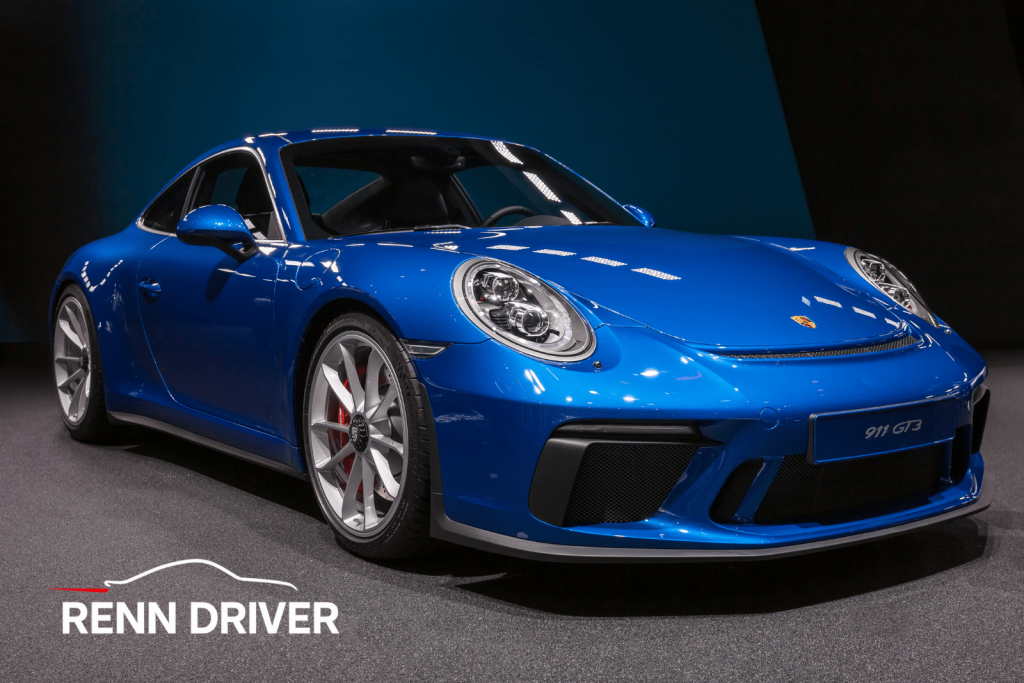
This article outlines everything that matters. You will find performance specs, design updates, GT3 RS differences, and how the 2025 model compares to other high-performance sports cars.
Contents
Quick Summary
- Production Period: 1999 (996 GT3) to present (992 GT3)
- Generations: 996, 997.1, 997.2, 991.1, 991.2, 992
- Engine: 4.0L naturally aspirated flat-six, 9,000 rpm redline
- Power Output: Ranges from 381 hp (996) to 502 hp (992 GT3)
- Transmission: 6-speed manual or 7-speed PDK
- Top Speed: 310 km/h (GT3)
- Performance Features: Rear-axle steering, double-wishbone front suspension, forged wheels
- Nürburgring Best Lap: 6:56.294 (992.2 GT3, manual)
- Position in Lineup: Porsche’s most analog and engaging 911, built for driving feel and precision
History of the GT3
The GT3 name first appeared in 1999 on the 996-generation 911. Porsche created it as a homologation special for FIA GT3 racing. The goal was to take racing technology and apply it to a street-legal 911.
Each generation of GT3 built on that goal:
- The 996 GT3 featured a lightweight chassis and the Mezger engine, a race-derived powerplant known for durability.
- The 997 GT3 improved comfort and grip without losing edge. The 997.2 introduced active engine mounts and center-lock wheels.
- The 991 GT3 dropped the manual transmission and introduced rear-wheel steering and PDK. This change was controversial at first, but quickly proved itself on track.
- The 992 GT3, launched in 2021, brought back the manual, added double-wishbone front suspension, and improved aerodynamics. It also introduced the Touring Package.
The 2025 GT3 builds on the 992 platform with subtle updates that improve handling, comfort, and customization.

Performance and Specifications
At the heart of the 2025 GT3 is a naturally aspirated 4.0-liter flat-six engine. It delivers 502 horsepower and 331 lb-ft of torque. Porsche kept the engine free of forced induction to preserve throttle response and high-revving character.
Drivers can choose between a 6-speed manual gearbox or a 7-speed dual-clutch PDK transmission. Both are calibrated for track use, with short ratios and precise engagement.
Acceleration and top speed:
- 0 to 60 mph: 3.7 seconds (manual), 3.2 seconds (PDK)
- Top speed: 194 mph (manual), 193 mph (PDK)
The GT3 rides on a rear-wheel drive platform with a mechanically locking rear differential. The chassis includes:
- Double-wishbone front suspension
- Rear-wheel steering
- Active dampers with driver-selectable modes
- Optional carbon ceramic brakes

Weight ranges from 3,239 to 3,276 pounds depending on options and transmission. With the Lightweight or Weissach Package, that number can drop even lower.
GT3 RS vs GT3: Key Differences
Porsche also offers a more extreme version of this car, the 911 GT3 RS. It uses the same 4.0-liter flat-six engine but with enhanced aerodynamics, a stiffer suspension, and a fixed rear wing. It’s built for maximum downforce and cornering performance, sacrificing comfort in favor of lap times.
While the GT3 remains road-friendly, the RS strips out weight and insulation, making it ideal for hardcore track use. If you’re deciding between the two, the GT3 is more versatile. The RS is sharper and much less forgiving.
What’s New for 2025?
Porsche made a series of refinements to the GT3 lineup for 2025. These updates focus on improving handling, visual appeal, and configurability.
Exterior updates:
- Redesigned LED headlights with a new signature
- Updated front diffuser for better airflow
- Underbody air guides now reduce lift more efficiently
Suspension:
- Revised geometry improves launch stability and cornering
- Recalibrated dampers with new adaptive control settings
- New rotary selector on the steering wheel adjusts suspension stiffness on the fly
Interior:
- Updated digital display graphics
- Refreshed interior trim with new material options for the Touring Package
New or revised packages:
- Weissach Package: Includes carbon fiber roof, front lid, mirrors, and rear wing. CFRP anti-roll bars and suspension links reduce unsprung mass.
- Lightweight Package: Forged magnesium wheels, lightweight glass, and removal of rear seats, sound deadening, and even floor mats
- Touring Package: Deletes the fixed rear wing, replaces it with a speed-dependent spoiler. Adds leather interior trim and more understated styling.
These changes do not alter the core formula but make the GT3 more refined and customizable.

Design and Interior
Every detail of the 2025 GT3 serves a purpose. The front bumper is shaped to direct air to the radiators and reduce lift. The rear diffuser and fixed wing create balanced downforce. Side vents behind the front wheels help release high-pressure air trapped in the wheel arches.
With the Touring Package, the large rear wing is replaced by a subtle speed-activated spoiler. This option appeals to buyers who want the performance of a GT3 without the visual drama.
Wheels and tires:
- Standard: 20-inch front and 21-inch rear forged alloys
- Optional: Forged magnesium wheels (with Lightweight Package)
- Tires: Michelin Pilot Sport Cup 2 or Cup 2 R
Interior layout:
- Analog tachometer in the center with digital screens on each side
- Lightweight sport seats or optional full bucket seats
- Porsche Communication Management (PCM) with touchscreen interface
- Optional Race-Tex materials and contrast stitching
Though built for speed, the GT3 remains usable. Climate control, navigation, and Apple CarPlay are standard.
Racing Heritage
The GT3’s reputation is built on the track. It traces its lineage directly to Porsche’s racing cars. The current engine is a close cousin to the unit used in the 911 GT3 Cup and 911 RSR. This is not just marketing. It is the same block, same crankcase, and similar internals, tuned for durability under race conditions.
The suspension layout, especially the double-wishbone front end, comes from the 911 RSR endurance racer. It improves camber stiffness and lets the tires maintain more contact with the road or track surface during cornering.
Porsche has also taken the GT3 to the Nürburgring. The new 992.2 GT3, equipped with a manual transmission, set a lap time of 6:56.294 minutes on the Nordschleife. This makes it the fastest production car with a manual gearbox to ever lap the track.
Competitors and Market Position
The GT3 competes in a segment full of exotic cars and high horsepower. But it stands apart because of its philosophy.
Comparison Table:
| Model | Drivetrain | Horsepower | 0–60 mph | Base Price |
|---|---|---|---|---|
| Porsche 911 GT3 | RWD | 502 hp | 3.3 sec | $224,495 |
| Ferrari 488 GTB | RWD | 661 hp | 3.0 sec | $280,000 |
| Lamborghini Huracán Evo | AWD | 631 hp | 2.9 sec | $261,000 |
| Nissan GT-R Nismo | AWD | 600 hp | 2.5 sec | $222,000 |
| Porsche 911 GT3 RS | RWD | 518 hp | 3.0 sec | $243,295 |
Want to go deeper on the GT3 RS? Read our full GT3 RS guide.
The GT3 is not the most powerful car in its class. It is not the fastest in a straight line either. But it is one of the most rewarding to drive. Its combination of precision, simplicity, and feel gives it an edge that numbers cannot explain.
Fun Facts
- The GT3 name comes from the FIA GT3 racing class.
- The rear seats are optional only on the GT3 Touring. Most GT3s come without them.
- The PDK used in the GT3 is lighter and quicker-shifting than the unit in regular 911s.
- Porsche’s GT cars are developed by a separate division known internally as the GT team.
Frequently Asked Questions (FAQs)
Is the 2025 Porsche 911 GT3 available with a manual transmission?
Yes. You can choose between a 6-speed manual or a 7-speed PDK dual-clutch automatic.
What is the difference between the Porsche 911 GT3 RS and GT3?
The GT3 RS is a more extreme, track-focused version. It has more downforce, a stiffer suspension, and a more aggressive aerodynamic setup. It also has more power and quicker acceleration.
For full details, check out our GT3 RS breakdown.
Can the GT3 be driven daily?
Yes. While it is tuned for performance, the GT3 has a comfortable enough ride for daily driving, especially with the Touring Package. It also comes with typical features like climate control, navigation, and connectivity.
What does the Weissach Package include?
It includes carbon fiber components such as the roof, front lid, and suspension links. It reduces weight and increases performance. The package also adds visual elements like exposed carbon weave and special badging.
How does the GT3 compare to turbocharged 911 models?
The GT3 uses a naturally aspirated engine, so it delivers power more progressively and with a higher redline. Turbo models have more torque and are quicker in a straight line, but they do not offer the same feel or character.
Final Thoughts
The 2025 Porsche 911 GT3 stays true to its roots. It is a driver’s car built with real motorsport development. The manual transmission is still available. The engine still revs past 9,000 rpm. The driving experience is still pure.
If you are looking for raw power or luxury, other 911s might suit you better. But if you want control, feedback, and one of the most engaging performance cars ever made, the GT3 remains one of the best choices on the market.
Whether you drive it on a back road, a race track, or just on the way to work, the GT3 rewards you every time you turn the wheel.
Photo credit: Matti Blume, CC BY-SA 4.0, via Wikimedia Commons, Curt Smith from Bellevue, WA, USA, CC BY 2.0, via Wikimedia Commons, Guillaume Vachey, CC0, via Wikimedia Commons