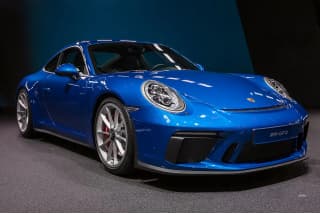
The Porsche 911 Sport Classic is a 550 hp, twin-turbo, manual, rear-drive 992 limited to 1,250 units. The 911 S/T is a 518 hp, naturally aspirated, manual, rear-drive 992 limited to 1,963 units. Both are among the rarest modern 911s, but they represent completely different ideas of what a special 911 should be.
In this article, we’ll compare the Porsche 911 Sport Classic and S/T to find the better collector’s car. We’ll cover engine, weight, design, and pricing.

Contents
Quick Summary
| Spec | Sport Classic | S/T |
|---|---|---|
| Year | 2023 | 2024 |
| Engine | 3.7L twin-turbo flat-six | 4.0L NA flat-six |
| Power | 550 hp | 518 hp |
| Torque | 443 lb-ft | 343 lb-ft |
| Transmission | 7-speed manual | 6-speed manual |
| 0 to 60 mph | ~3.7 sec | ~3.5 sec |
| Top Speed | 196 mph | 186 mph |
| Weight | ~3,351 lbs | 3,056 lbs |
| Production | 1,250 units | 1,963 units |
| MSRP | $272,150 | $290,000 |
Two Cars, One Mission
Porsche released both the Sport Classic and the S/T within about 18 months of each other. Both are manual only. Both are rear-wheel drive only. Both are limited production. And both are built on the 992 platform. On paper, they look like variations of the same idea.
In practice, they are very different cars. The Sport Classic is a heritage cruiser. It borrows its engine from the 911 Turbo. Retro styling wraps big power in a manual gearbox. Its pace rewards smooth driving. The S/T is a lightweight weapon. It takes the engine from the GT3 RS. It strips every unnecessary gram from the body. It dares the driver to chase the 9,000 rpm redline.
The Sport Classic looks backward. The S/T feels like a closing statement. Both are special, but they attract very different buyers.
Engine, Weight, and Interior
The engine is where these two cars diverge most dramatically. The Sport Classic uses the 3.7-liter twin-turbocharged flat-six from the 911 Turbo, detuned slightly to 550 hp and 443 lb-ft of torque. It pairs with a 7-speed manual gearbox, making the Sport Classic the most powerful manual 911 Porsche has ever sold.

The S/T uses the 4.0-liter naturally aspirated flat-six from the GT3 RS. It produces 518 hp at 8,500 rpm and 343 lb-ft of torque, with a 9,000 rpm redline. The transmission is a 6-speed manual with a single-mass flywheel that delivers sharper throttle response at the cost of more vibration at low RPM.
The difference in character is enormous. The Sport Classic builds torque from low RPM and pulls hard through the midrange, with the turbos providing a thick, effortless wave of power. The S/T demands revs. Below 4,000 rpm it is calm and civilized. Above 6,000 rpm it transforms into something urgent and mechanical, with a sound that turbocharged engines simply cannot reproduce.
Neither engine is better in an absolute sense. The Sport Classic is easier to drive quickly. The S/T rewards the driver who is willing to keep the revs high and work the gearbox.
Weight and Construction
The S/T is the lightest 992 ever built at 3,056 lbs (1,386 kg). Porsche achieved this with carbon fiber body panels (hood, roof, front fenders, and doors). It also uses magnesium center-lock wheels, a lithium-ion starter battery, and lightweight glass. Rear seats and sound insulation are deleted. The single-mass flywheel saves roughly 23 lbs of rotating mass compared to a dual-mass unit.
The Sport Classic weighs approximately 3,351 lbs (1,520 kg). It uses a carbon fiber hood but retains steel and aluminum for the rest of the body. The wider Turbo-based body, the heavier turbo engine, and a more complete interior all add mass. The Sport Classic is not a lightweight car by any measure.

That 295 lb difference shows up in how the cars respond to inputs. The S/T changes direction with less effort and feels more alive over a single lap. The Sport Classic, with its turbo torque and heavier mass, is more settled and planted at high speed.
Design and Styling
Few 992s look as distinctive as the Sport Classic. The fixed ducktail rear spoiler, borrowed from the 1973 Carrera RS 2.7, is the defining feature. A double-bubble roof adds helmet clearance and visual drama. Fuchs-style center-lock wheels, gold “Porsche” script on the rear, and standard Sport Gray Metallic paint finish the look. It directly references Porsche designs from the early 1970s.
The S/T is far more understated. It wears the GT3 Touring body with a retractable rear spoiler instead of a fixed wing. At a glance, it could be mistaken for a well-optioned Carrera. The CFRP doors and fenders have a slightly different surface texture. The magnesium center-lock wheels are unique to the S/T. The instrument cluster uses a heritage green color scheme.
The optional Heritage Design Package on the S/T adds Shore Blue Metallic paint, Ceramica-finish wheels, and two-tone leather with cloth seat centers. It connects the car more directly to the original 1970 911 S/T.
In terms of visual impact, the Sport Classic wins. It is a car that draws attention standing still. The S/T is a car you appreciate most from behind the wheel.
Interior
Both cars feature retro-inspired interiors, but the Sport Classic goes further. Pepita houndstooth fabric inserts on the seats and door panels break up the black and cognac leather. The Porsche crest appears on the headrests and dashboard. Even the key fob is color-matched. The overall effect is a cabin that feels crafted and ceremonial.

The S/T strips things back. CFRP full bucket seats are standard. The rear seats are gone. Sound insulation is reduced. The interior prioritizes lightness over luxury. It is comfortable enough for a weekend drive, but it never lets you forget that every gram was scrutinized during development.
For long-distance touring, the Sport Classic is the more livable car. For spirited driving where you want minimal distractions, the S/T’s cockpit puts the focus entirely on the road.
Chassis and Handling
The Sport Classic uses the wider Turbo body with PASM Sport Suspension, rear-axle steering, and a wider rear track. The suspension suits the car’s rear-wheel-drive layout. This makes the Sport Classic feel more playful than the all-wheel-drive Turbo it shares its engine with. Braking comes from standard PCCB ceramic composite brakes.
The S/T uses the GT3’s double-wishbone front suspension, derived from Porsche’s racing program. PCCB ceramic brakes are also standard. The key difference is that Porsche deleted rear-axle steering from the S/T to save weight. This means the car relies entirely on its suspension geometry and the driver’s throttle inputs for rotation at the rear.
The Sport Classic is more approachable. Rear-axle steering helps it feel agile despite its weight. The turbo torque provides easy exits from corners. The S/T demands more from the driver. Without rear-axle steering, it requires more commitment for accurate corner placement. The reward is a more honest and transparent connection between car and driver.
Performance Comparison
The Sport Classic has the higher top speed at 196 mph. It has 100 extra lb-ft of torque. Its turbo engine sustains power at high RPM without aerodynamic aids. The S/T tops out at 186 mph. Its retractable spoiler provides less downforce than the GT3 RS fixed wing. The naturally aspirated engine produces less power at the very top of the rev range.

In acceleration, the S/T is marginally quicker to 60 mph at around 3.5 seconds versus 3.7 seconds for the Sport Classic. The S/T’s weight advantage more than compensates for its lower power output in short bursts.
On a circuit, the S/T would be the faster car. GT3-derived suspension, lower weight, and a naturally aspirated engine give it an edge. The engine is easier to manage at the limit. It gains an edge where braking, turn-in, and mid-corner speed count. The Sport Classic is faster on the autobahn, where outright power and stability at 180+ mph count.
Full Specs Table
| Spec | Sport Classic | S/T |
|---|---|---|
| Generation | 992.1 | 992.1 |
| Engine | 3.7L twin-turbo flat-six | 4.0L NA flat-six |
| Power | 550 hp @ 6,750 rpm | 518 hp @ 8,500 rpm |
| Torque | 443 lb-ft | 343 lb-ft |
| Redline | ~7,200 rpm | 9,000 rpm |
| Transmission | 7-speed manual | 6-speed manual |
| Drivetrain | Rear-wheel drive | Rear-wheel drive |
| 0 to 60 mph | ~3.7 sec | ~3.5 sec |
| Top Speed | 196 mph | 186 mph |
| Curb Weight | ~3,351 lbs (1,520 kg) | 3,056 lbs (1,386 kg) |
| Rear-Axle Steering | Yes | No |
| Brakes | PCCB ceramic (standard) | PCCB ceramic (standard) |
| Wheels | Fuchs-style center-lock | Magnesium center-lock |
| Body Panels | CFRP hood, steel/aluminum body | CFRP hood, roof, fenders, doors |
| Rear Spoiler | Fixed ducktail | Retractable |
| Production | 1,250 units | 1,963 units |
| MSRP | $272,150 | $290,000 |
Pricing and Values
The Sport Classic launched at $272,150 before options. The S/T launched at $290,000. Both sold out immediately, and both now trade well above their original MSRP on the secondary market.
As of 2026, the Sport Classic trades between $350,000 and $500,000 depending on specification and mileage. Cars in the standard Sport Gray Metallic tend to hold the strongest values because it is the color most closely associated with the model. Rarer Sonderwunsch (custom order) colors like Gentian Blue Metallic push prices higher.
The S/T trades between $400,000 to $600,000. Heritage Design Package examples and Paint to Sample specifications sit at the top of that range. The S/T generally commands a higher premium than the Sport Classic because of its GT3 RS engine. That engine is unavailable with a manual in any other model.
Both cars are expected to hold value well. The Sport Classic and S/T each occupy a unique position in the 992 lineup that will not be replicated. As the 992.2 generation moves toward hybrid powertrains, these purely mechanical, manual-only specials become more collectible over time.
Which Should You Buy?
The Sport Classic is the car if you value style, grand touring ability, and effortless power. It is the 992 you buy when you want a car that looks sharp on a concours lawn. It still delivers 550 hp through a manual gearbox on a coastal road. The turbo engine makes long distances easy. The interior is a place you want to spend time in.
The S/T is the car if you value driving purity above everything else. It is lighter, more communicative, and built around an engine that demands to be revved. The 9,000 rpm redline and the single-mass flywheel sharpen the experience. The absence of rear-axle steering puts you closer to the mechanical experience than any other modern 911. It is the car you buy when driving feel is the priority. You must be willing to sacrifice refinement to get it.
If you can only own one, the question comes down to character. The Sport Classic is the more complete car. The S/T is the more memorable one.
Frequently Asked Questions
Is the 911 Sport Classic faster than the S/T?
Yes, the 911 Sport Classic is faster than the S/T in top speed. It has a higher top speed (196 mph vs 186 mph) and more horsepower (550 vs 518). The S/T is quicker to 60 mph. It would be faster on a circuit due to its 295 lb weight advantage and GT3-derived suspension.
Do both the Sport Classic and S/T come with a manual transmission?
Yes, both the Sport Classic and S/T come with a manual transmission. Both are manual only. The Sport Classic uses a 7-speed manual, while the S/T uses a 6-speed manual with a single-mass flywheel for sharper throttle response.
Why is the S/T more expensive than the Sport Classic?
The Porsche 911 S/T has a higher MSRP ($290,000 vs $272,150). This is because of extensive weight-saving measures, including CFRP body panels, magnesium wheels, and the GT3 RS engine. On the secondary market, the S/T also commands higher premiums. It offers the only manual GT3 RS engine combination.
Which is rarer, the Sport Classic or the S/T?
The Porsche 911 Sport Classic is rarer with 1,250 units produced versus 1,963 for the S/T. The S/T’s production number references 1963, the year the original 911 debuted.
Are the Sport Classic and S/T both rear-wheel drive?
Yes, the Sport Classic and S/T are both rear-wheel drive only. This is notable for the Sport Classic because it uses the Turbo engine, which normally comes in all-wheel-drive models. Pairing the turbo engine with rear-wheel drive gives the Sport Classic a more traditional 911 handling balance.
Will the Sport Classic and S/T hold their value?
Yes, the Sport Classic and S/T are both expected to hold their value well. They are limited-production, manual-only, rear-drive 992s released at the end of the purely combustion-powered era. As Porsche transitions to hybrid powertrains with the 992.2 generation, these analog specials become increasingly collectible.
Images: 2023 Porsche 911 992 Sport Classic by Calreyn88, CC BY-SA 4.0. Porsche 992 Sport Classic by pelican-actor, CC BY 2.0. 2024 Porsche 911 992 S-T by Calreyn88, CC BY-SA 4.0. Porsche 911 Sport Classic (992, 2023) by Charles from Port Chester, New York, CC BY 2.0. 2024 Porsche 911 S T by Calreyn88, CC BY-SA 4.0. Via Wikimedia Commons.