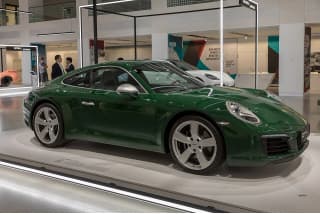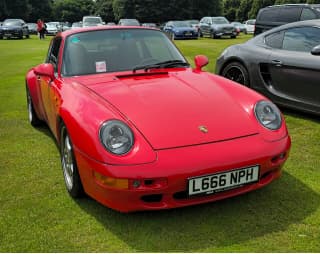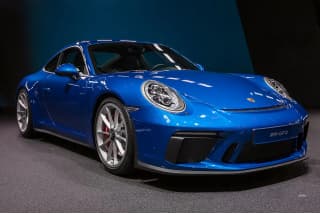
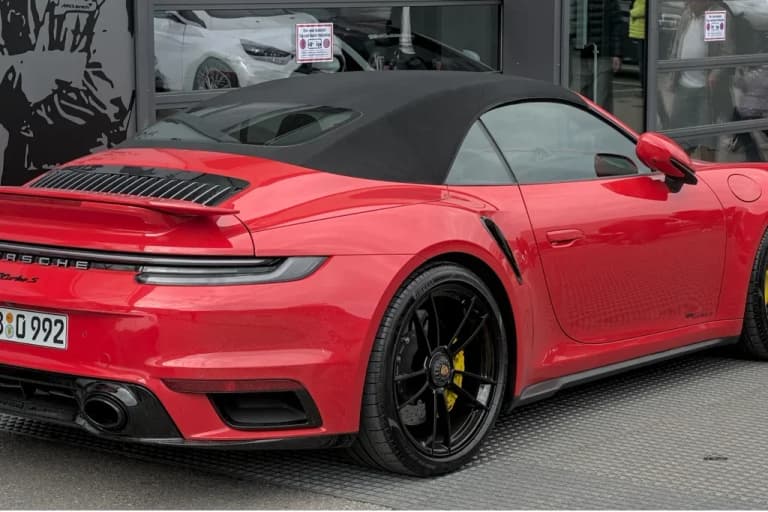
The Porsche 911 Turbo S Cabriolet is the most powerful open top 911 you can buy. The current 992.2 model produces 701 hp through a T-Hybrid system, reaches 60 mph in 2.5 seconds with the roof down, and starts at $284,300.
In this article, we’ll explain the Porsche 911 Turbo S Cabriolet, the fastest open-top 911 ever built. We’ll cover generations, performance, roof mechanism, and pricing.
Contents
Quick Summary
The Turbo S Cabriolet is the convertible version of the most powerful production 911. It has been offered since the 996 generation in 2005 and shares the same engine, drivetrain, and chassis as the coupe.
| Spec | 992.2 Turbo S Cabriolet |
|---|---|
| Year | 2025+ |
| Engine | 3.6L twin turbo flat six + T-Hybrid |
| Power | 701 hp combined |
| Torque | 590 lb ft |
| 0 to 60 mph | 2.5 seconds |
| Top Speed | 200 mph |
| Weight | 3,990 lbs (1,810 kg) |
| Layout | AWD, 8 speed PDK |
| Starting Price | $284,300 |
What Is the Turbo S Cabriolet?
The Porsche 911 Turbo S Cabriolet takes the most powerful production 911 and adds a folding soft top. It keeps the same engine, the same all wheel drive system, the same ceramic brakes, and the same chassis hardware as the Turbo S coupe. The only meaningful difference is the roof mechanism, which adds weight and changes the roofline when folded.
Porsche first offered the Turbo S as a cabriolet in 2005 during the 996 generation. That made it the first open top car to wear the Turbo S badge. Every generation since has included a cabriolet alongside the coupe, and demand for the open top version has grown with each new model.
The Turbo S Cabriolet is not a compromised car. Porsche reinforces the floor pan and adds structural bracing to compensate for the missing fixed roof. The result is a convertible that feels remarkably close to the coupe in terms of body rigidity and handling precision. You do pay a weight penalty, but the car is so powerful that the difference barely registers in everyday driving.
Every Turbo S Cabriolet Generation
996 Turbo S Cabriolet (2005)
The 996 Turbo S was the first generation to offer the Turbo S badge on a convertible. Built for a single model year, the 996 Turbo S came standard with the X50 power kit, pushing the Mezger engine to 450 hp and 457 lb ft of torque. Porsche fitted PCCB ceramic brakes as standard, setting a pattern every Turbo S Cabriolet would follow.
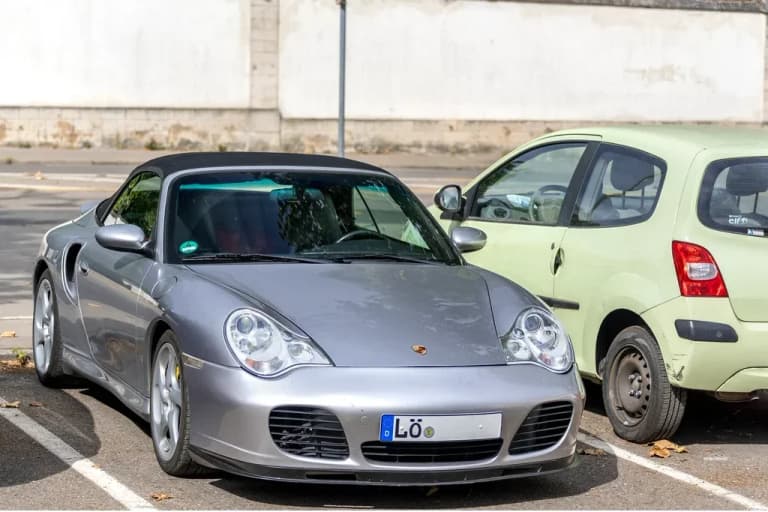
Around 1,563 units were produced across coupes and cabriolets. The fabric roof folded electrically in about 19 seconds. Despite the 996’s polarizing headlight design, the Turbo S Cabriolet has appreciated as collectors recognize the Mezger flat six and its connection to the GT1 race car.
997 Turbo S Cabriolet (2010 to 2013)
The 997 Turbo S was a turning point for the nameplate. It arrived as a PDK only car, dropping the manual transmission entirely. Power came from a 3.8 liter twin turbo flat six making 530 hp and 516 lb ft of torque.
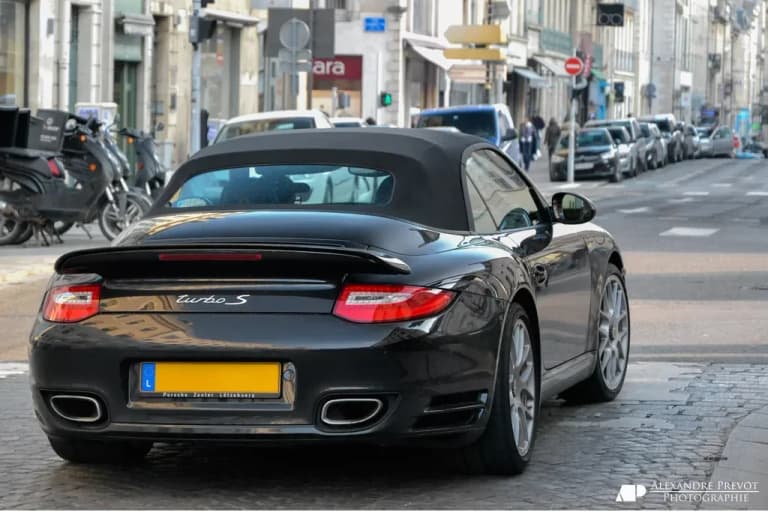
Standard equipment included PCCB brakes, Sport Chrono, Porsche Torque Vectoring, and dynamic engine mounts. The 997 Turbo S Cabriolet established the modern formula: take every optional performance upgrade from the standard Turbo and bundle it as standard. The convertible roof improved in operation speed and wind noise compared to the 996.
991 Turbo S Cabriolet (2013 to 2019)
The 991 generation split into two sub generations. The 991.1 Turbo S (2014 to 2016) made 560 hp and was the first 911 Turbo to crack the 2.6 second barrier to 60 mph. The 991.2 facelift (2017 to 2019) pushed output to 580 hp and the top speed to 205 mph.
Both versions came with PCCB ceramic brakes, Sport Chrono, Porsche Dynamic Chassis Control (PDCC) with active anti roll bars, and center lock wheels. The 991 Turbo S Cabriolet weighed roughly 3,660 lbs, about 130 lbs more than the coupe. The roof folded in around 13 seconds and could operate at speeds up to 31 mph.
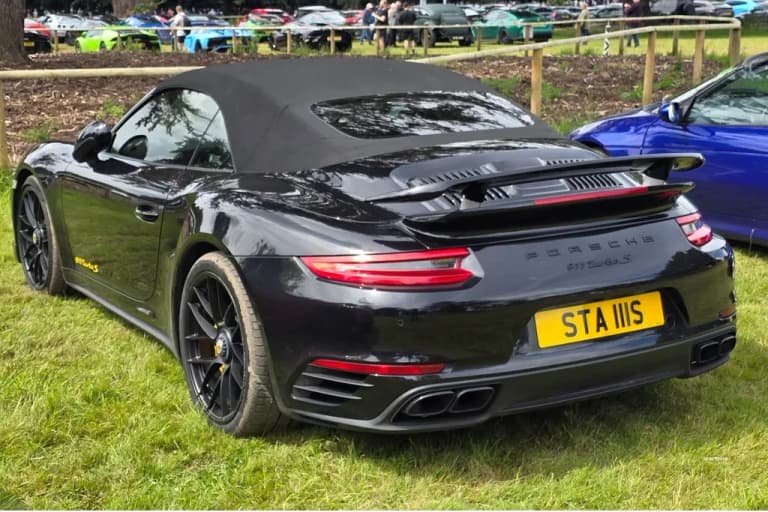
992.1 Turbo S Cabriolet (2020 to 2024)
The 992 Turbo S arrived with a significant power increase: 640 hp and 590 lb ft from a 3.8 liter twin turbo flat six paired with an 8 speed PDK. Porsche quoted a 2.7 second sprint to 60 mph for the cabriolet, though independent testers consistently recorded low 2 second times for the coupe.
The 992 Turbo S Cabriolet weighed 3,770 lbs. It was the widest 911 Turbo ever built, with 10mm wider rear tires and redesigned turbochargers. The fabric roof folded in 12 seconds and could operate at speeds up to 31 mph. For around $261,100, it was faster than nearly every hypercar on the road while still working perfectly as a weekend cruiser with the top down.
992.2 Turbo S Cabriolet T-Hybrid (2025+)
The current car is the most powerful open top 911 Porsche has ever produced. It uses the T-Hybrid system: a downsized 3.6 liter twin turbo flat six combined with two electric exhaust gas turbochargers (eTurbos), an integrated electric motor in the PDK, and a compact 1.9 kWh battery mounted over the front axle. Combined output is 701 hp.
The eTurbos virtually eliminate turbo lag. The electric motor fills torque gaps between gear changes that no combustion engine can cover alone. Porsche quotes 2.5 seconds to 60 mph for the cabriolet and a top speed of 200 mph. The car weighs 3,990 lbs, roughly 85 lbs heavier than the coupe due to the roof mechanism.
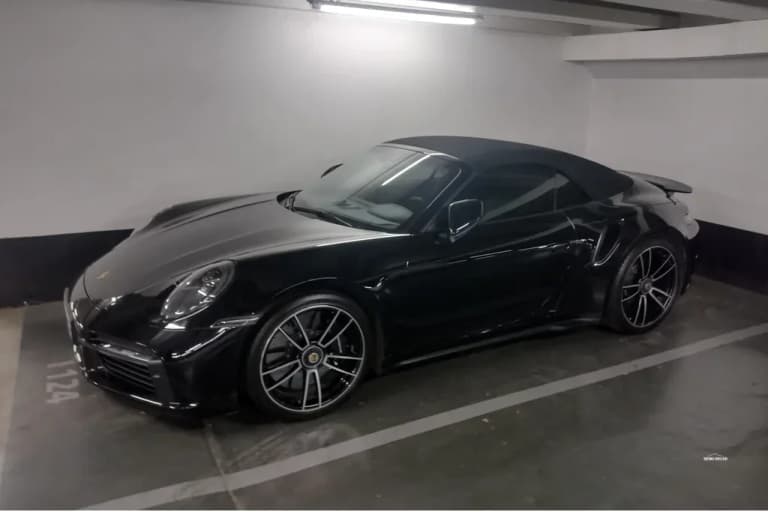
At $284,300 before options, the 992.2 Turbo S Cabriolet wears the largest PCCB ceramic brakes ever fitted to a two door Porsche (420mm front, 410mm rear) and rolls on 325 section rear tires. Turbonite accents, a color developed exclusively for Turbo models, mark it visually.
Engine and Powertrain
Every Turbo S Cabriolet shares its engine with the coupe. The powertrains have progressed from the 3.6 liter Mezger in the 996 to the T-Hybrid in the 992.2.
| Generation | Engine | HP | Torque |
|---|---|---|---|
| 996 Turbo S | 3.6L twin turbo flat 6 (Mezger) | 450 hp | 457 lb ft |
| 997 Turbo S | 3.8L twin turbo flat 6 | 530 hp | 516 lb ft |
| 991.1 Turbo S | 3.8L twin turbo flat 6 | 560 hp | 516 lb ft |
| 991.2 Turbo S | 3.8L twin turbo flat 6 | 580 hp | 553 lb ft |
| 992.1 Turbo S | 3.8L twin turbo flat 6 | 640 hp | 590 lb ft |
| 992.2 Turbo S | 3.6L twin turbo flat 6 + T-Hybrid | 701 hp | 590 lb ft |
The 992.2’s T-Hybrid is the most significant powertrain change in the Turbo S lineage. Porsche downsized the engine from 3.8 to 3.6 liters but added electric assistance at multiple points. The eTurbos use a small electric motor on each turbocharger shaft to spin the compressor before exhaust gases take over. This means full boost is available almost instantly, eliminating the last traces of lag that conventional turbochargers still have at low rpm.
The integrated electric motor sits between the engine and the 8 speed PDK. It contributes 82 hp and 110 lb ft on its own, filling in torque during gear changes and at low speeds. A 1.9 kWh battery mounted over the front axle stores recovered energy. The system cannot drive the car on electric power alone. It is designed purely to enhance throttle response and overall performance.
Performance and Specs
The Turbo S Cabriolet has gotten faster in every generation. Porsche’s official numbers for the cabriolet are typically 0.1 to 0.2 seconds slower than the coupe due to the weight penalty, but both versions share the same top speed.
| Generation | 0 to 60 mph | Top Speed | Weight |
|---|---|---|---|
| 996 Turbo S Cab | 4.2s | 191 mph | 3,605 lbs |
| 997 Turbo S Cab | 3.2s | 195 mph | 3,615 lbs |
| 991.1 Turbo S Cab | 2.8s | 197 mph | 3,660 lbs |
| 991.2 Turbo S Cab | 2.8s | 205 mph | 3,670 lbs |
| 992.1 Turbo S Cab | 2.7s | 205 mph | 3,770 lbs |
| 992.2 Turbo S Cab | 2.5s | 200 mph | 3,990 lbs |
The 992.2 Turbo S coupe set a Nurburgring time of 7:03.92, which is 14 seconds faster than the outgoing car. Porsche has not published a separate lap time for the cabriolet, but the small weight difference would add only a few seconds over a full Nordschleife lap.
The Roof
The Turbo S Cabriolet uses an electrically operated fabric soft top. It is not a retractable hardtop. Porsche chose fabric over a folding metal roof because it is lighter, takes up less trunk space when folded, and gives the car a cleaner silhouette.
The current 992 roof opens or closes in about 12 seconds and can operate at speeds up to 31 mph. Earlier generations were slower. The 996 took around 19 seconds, and the 997 and 991 fell somewhere in between. Porsche has refined the mechanism over each generation to reduce wind noise and improve the sealed feel at highway speeds.
When the roof is up, the Turbo S Cabriolet is remarkably quiet. Porsche uses acoustic glass and multi layer insulation in the fabric to reduce noise at cruising speed. With the roof down, wind buffeting is noticeable above 80 mph, but the optional wind deflector behind the rear seats helps significantly. At city speeds and on winding roads, driving with the top down is comfortable and lets you hear the flat six without any glass between you and the exhaust.
Cabriolet vs Coupe
The cabriolet adds roughly 80 to 130 lbs over the coupe depending on the generation. That weight comes from the folding roof mechanism, the structural reinforcements in the floor pan and windshield frame, and the electric motors that operate the top.
In acceleration tests, the difference is about 0.1 to 0.2 seconds to 60 mph. Top speed is the same. On a track, the coupe has a slight edge in rigidity and overall lap time, but you would need instrumented timing equipment to measure the gap. In daily driving, the two cars feel identical.
The cabriolet costs $14,000 more than the coupe in the current 992.2 generation. The 992.2 Turbo S coupe starts at $270,300, while the cabriolet starts at $284,300. That premium has stayed relatively consistent across generations. Whether the open top experience is worth the extra money is entirely personal. If you live somewhere with good weather and enjoy the feeling of open air driving, the cabriolet adds a dimension the coupe simply cannot deliver.
Chassis and Handling
The Turbo S Cabriolet uses the same chassis hardware as the coupe. The current 992.2 comes standard with PASM adaptive dampers, ehPDCC (electronically controlled active anti roll bars), rear axle steering, and the largest ceramic brakes Porsche has ever fitted to a two door car.
Porsche reinforces the cabriolet’s structure to compensate for the missing fixed roof. The floor pan gets additional cross bracing, and the windshield frame is strengthened. The result is a torsional rigidity figure that comes close to the coupe, though Porsche does not publish exact numbers. Owners and reviewers consistently report that the cabriolet feels solid and composed, with no noticeable cowl shake or flex over rough surfaces.
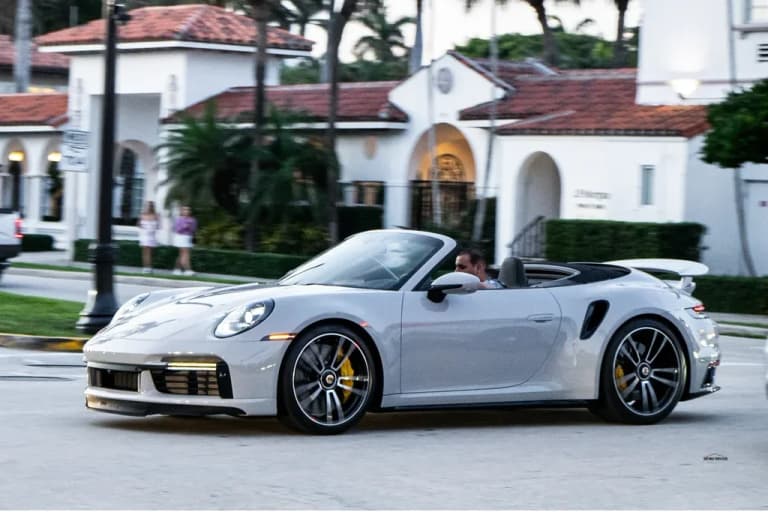
The all wheel drive system sends most of its power to the rear wheels under normal conditions and shifts torque forward when it detects slip. Combined with rear axle steering that turns the rear wheels in the opposite direction to the fronts at low speeds (for agility) and in the same direction at high speeds (for stability), the Turbo S Cabriolet feels smaller and more nimble than its nearly 4,000 lb curb weight suggests.
Interior and Technology
The cabin is identical to the Turbo S coupe. The 992.2 features a 12.6 inch curved digital instrument cluster ahead of the driver, a 10.9 inch central touchscreen running Porsche Communication Management (PCM), and an available passenger display. The analog tachometer in the center of the gauge cluster remains, keeping the traditional 911 layout.
Standard equipment on the Turbo S Cabriolet includes 18 way Adaptive Sport Seats Plus, a heated GT Sport steering wheel with Turbonite accents, a Bose Surround Sound System, and a leather interior. Carbon fiber, Alcantara, and upgraded audio from Burmester are available as options.
The rear seats are tight, as they are in every 911. They work for small children or bags, but adults will not be comfortable on anything longer than a short ride. The front trunk holds around 4.6 cubic feet of cargo, which is enough for a weekend bag or a set of groceries.
Design
The Turbo S Cabriolet shares the widebody look of the coupe. It is 1.8 inches wider than the standard Carrera at the rear, with pronounced fender flares that house the wider 325 section rear tires. The side air intakes behind the rear doors feed the intercoolers and give the car a muscular profile.
With the roof down, the Turbo S Cabriolet sits lower visually than the coupe and shows off the interior more prominently. The folded top stacks neatly behind the rear seats and does not create an awkward hump. The tonneau cover is body colored and blends cleanly into the rear deck.
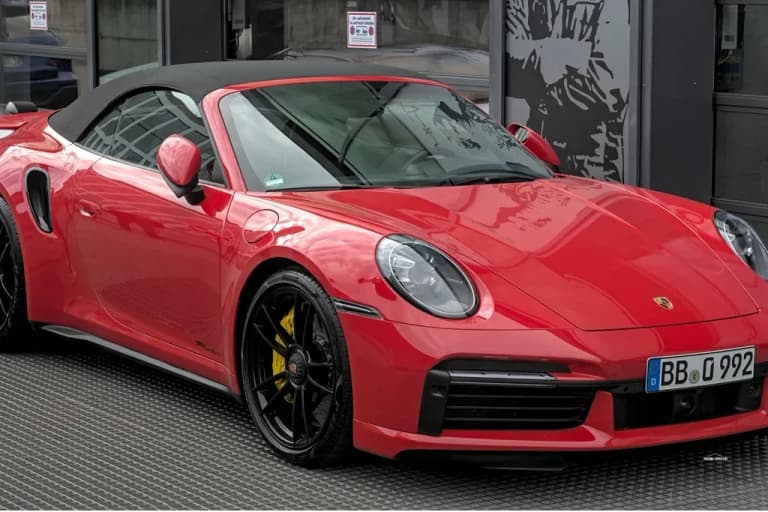
The 992.2 generation added Turbonite colored accents on the front air intake slats, mirror caps, and rear diffuser surround. These bronze gold details are exclusive to Turbo models and visually distinguish the Turbo S from the rest of the 911 lineup.
Pricing
The Turbo S Cabriolet has always carried a premium over the coupe. Current and recent pricing in US dollars:
| Model | Coupe MSRP | Cabriolet MSRP |
|---|---|---|
| 992.2 Turbo S (2025+) | $270,300 | $284,300 |
| 992.1 Turbo S (2020 to 2024) | $230,600 | $243,600 |
| 991.2 Turbo S (2017 to 2019) | $188,100 | $200,400 |
On the used market, the 992.1 Turbo S Cabriolet trades around $210,000 to $260,000 depending on mileage and options. The 991 Turbo S Cabriolet has settled into the $160,000 to $230,000 range, making it the best value if you want a relatively modern open top Turbo S. The 997 Turbo S Cabriolet sits around $130,000 to $170,000, and the 996 Turbo S Cabriolet commands $130,000 to $200,000 depending on condition, thanks to its Mezger engine and rarity.
Options add significantly to the sticker price on a new car. Popular choices include Burmester audio, special paint from the Paint to Sample catalog, Sport Design packages, and lightweight sport seats. A well specified 992.2 Turbo S Cabriolet can easily cross $320,000 before taxes and destination.
Ownership
The Turbo S Cabriolet shares the same maintenance schedule as the coupe. Porsche recommends service intervals every 12 months or 10,000 miles. A standard service runs around $500 to $800 at an authorized dealer. Major services, which include items like spark plugs and brake fluid, cost more but typically happen every four years or 40,000 miles.
The convertible top itself requires some additional attention. Porsche recommends cleaning the fabric regularly and applying a protective treatment once or twice a year to maintain water resistance. The roof mechanism is electrically operated and generally reliable, but repairs to the motors or linkage can be expensive if something goes wrong out of warranty.
Fuel economy is not a strong point. The 992.2 Turbo S Cabriolet is rated at roughly 15 mpg city and 20 mpg highway on the combined cycle. Real world driving on premium fuel will cost more than you might expect from a car this expensive. Insurance costs are also high, typically $3,000 to $5,000 per year depending on location and driving history.
Depreciation on the Turbo S Cabriolet has historically been kinder than on the standard Turbo Cabriolet. The Turbo S badge holds its value better because of the higher power output and more complete specification. The 993 and 996 Turbo S Cabriolets have actually appreciated over time, though more recent models still depreciate in their first few years before stabilizing.
Frequently Asked Questions
Is the Porsche 911 Turbo S Cabriolet slower than the coupe?
The Porsche 911 Turbo S Cabriolet is about 0.1 seconds slower to 60 mph than the coupe because of the added weight from the roof mechanism. The current 992.2 Cabriolet reaches 60 mph in 2.5 seconds compared to the coupe’s 2.4. Top speed is the same at 200 mph. In everyday driving, the difference is impossible to feel.
How much does the Porsche 911 Turbo S Cabriolet cost?
The 2025/2026 Porsche 992.2 Turbo S Cabriolet starts at $284,300 before options, destination, and taxes. A well optioned example typically lands between $300,000 and $320,000. Used 992.1 Turbo S Cabriolets (2020 to 2024) trade around $210,000 to $260,000 depending on specification and mileage.
How fast does the roof open?
The electrically operated fabric roof opens or closes in about 12 seconds on the current 992 generation. It can operate at speeds up to 31 mph. Earlier generations were slower, with the 996 taking around 19 seconds.
Is the Turbo S Cabriolet a good daily driver?
Yes. The Porsche 911 Turbo S Cabriolet has all wheel drive for all weather traction, adaptive suspension for a comfortable ride, a quiet cabin with the roof up, and enough room in the front trunk for daily errands. Many owners use it as their primary car. The convertible top adds the bonus of open air driving when the weather cooperates.
Does the Turbo S Cabriolet come with a manual transmission?
No. The Porsche 911 Turbo S Cabriolet has been PDK only since the 997 generation. The 996 Turbo S was available with a six speed manual or the Tiptronic automatic. From the 997 onward, PDK is the only option.
What is the difference between the Turbo Cabriolet and the Turbo S Cabriolet?
The Turbo S Cabriolet adds more power (701 hp vs 572 hp in the 992.2 generation), standard PCCB ceramic brakes, Sport Chrono, active suspension, rear axle steering, and center lock wheels. All of these are optional or unavailable on the standard Turbo Cabriolet. The Turbo S Cabriolet costs roughly $67,000 more than the base Turbo Cabriolet.
Images via Wikimedia Commons: Calreyn88, CC BY-SA 4.0; Alexander Migl, CC BY-SA 4.0; OWS Photography, CC BY 4.0; Mathious Ier, CC0; Alexandre Prévot, CC BY-SA 2.0.