
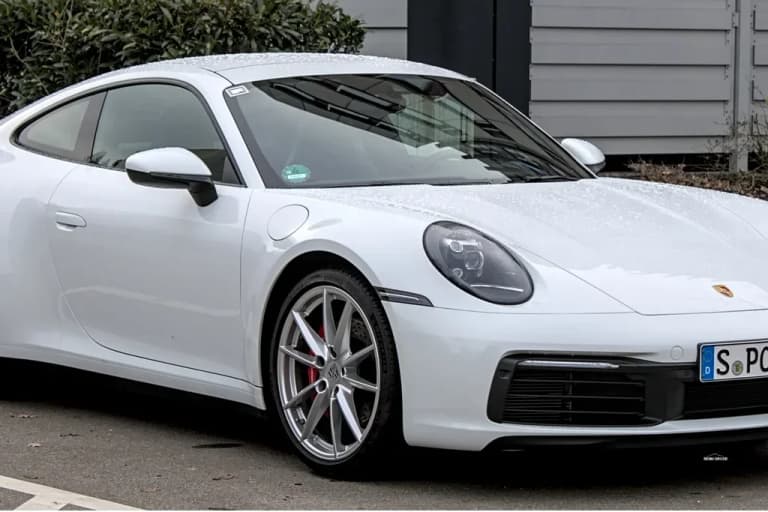
The Porsche 911 is a rear-engine flat-six starting at $115,400 while the Chevrolet Corvette C8 is a mid-engine V8 starting at $69,995. The Corvette offers more raw power per dollar. The 911 offers a deeper driving experience, more body styles, and stronger resale value.
In this article, we’ll compare the Porsche 911 with the mid-engine Chevrolet Corvette C8. We’ll cover their engine layouts, Nurburgring times, the price gap, and resale value.
Contents
Quick Summary
Here is how the current Porsche 911 and Chevrolet Corvette compare at a glance.
| Spec | 911 Carrera (992) | Corvette Stingray (C8) |
|---|---|---|
| Engine | 3.0L twin-turbo flat-six | 6.2L NA V8 |
| Power | 394 hp | 495 hp |
| Torque | 332 lb-ft | 470 lb-ft |
| 0 to 60 mph | 4.0 sec | 2.9 sec |
| Top Speed | 183 mph | 194 mph |
| Weight | 3,318 lbs | 3,647 lbs |
| Layout | Rear-engine, RWD | Mid-engine, RWD |
| Transmission | 8-speed PDK | 8-speed DCT |
| Starting Price | $115,400 | $69,995 |
Two Different Philosophies
The Porsche 911 and Chevrolet Corvette have been competing for sports car buyers since the 1960s. The 911 debuted in 1964 as a compact, air-cooled sports car from Stuttgart. The Corvette has been in continuous production since 1953, making it the longest-running sports car nameplate from an American manufacturer.
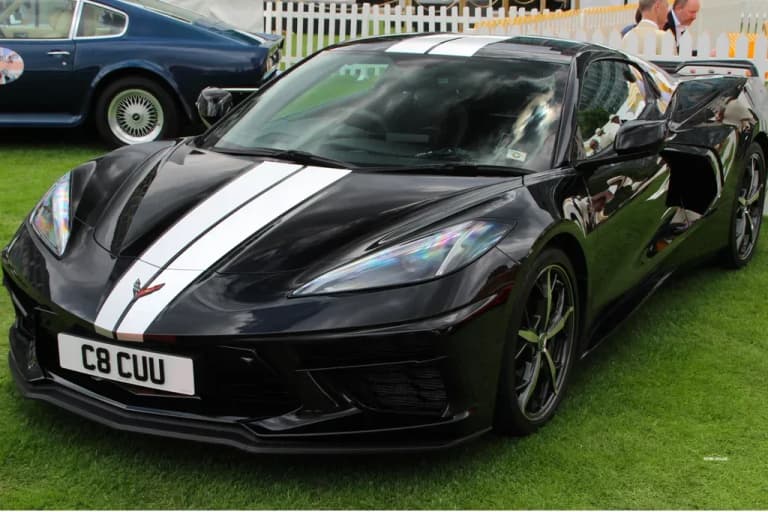
These two cars approach the same goal from completely different directions. The 911 uses a flat-six engine mounted behind the rear axle, a layout Porsche has refined over eight generations. The C8 Corvette broke with 67 years of front-engine tradition in 2020 by placing its V8 behind the driver for the first time. That single decision changed the Corvette from a front-engine grand tourer into a genuine mid-engine supercar competitor.
The rivalry is not just about speed. It is about value, engineering philosophy, and what each car prioritizes. The Corvette has always been the performance bargain. More power, more speed, and a lower price than almost anything from Europe. The 911 has always been the precision instrument. Less about brute force, more about balance, feedback, and the way the car communicates with the driver through every input.
Engine and Powertrain
This is where the two cars are most different. The 911 uses a turbocharged flat-six. The Corvette uses a naturally aspirated pushrod V8. Each has its own character, and the driving experience that results from each engine is distinct.
Porsche 911 Engine
The base 911 Carrera runs a 3.0-liter twin-turbocharged flat-six producing 394 hp and 332 lb-ft of torque. The engine is smooth, high-revving for a turbo motor, and makes peak power at 6,500 rpm. Porsche pairs it with an 8-speed PDK dual-clutch transmission that shifts faster than any human can manage with a manual.
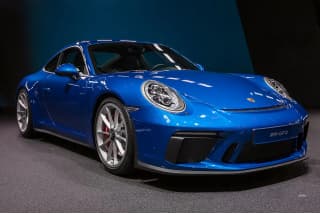
Move up the range and the numbers climb. The Turbo S uses a 3.7-liter twin-turbo flat-six making 641 hp, while the GT3 takes a completely different approach with a 4.0-liter naturally aspirated flat-six producing 503 hp and revving to 9,000 rpm. The GT3 engine is derived from the 911 RSR race car and is one of the best sounding flat-six engines ever fitted to a production car.
Chevrolet Corvette Engine
The C8 Stingray uses a 6.2-liter naturally aspirated LT2 V8 producing 495 hp and 470 lb-ft of torque with the optional NPP exhaust. It is a pushrod engine with two valves per cylinder, a design that dates back decades. That simplicity is part of the appeal. The V8 delivers massive low-end torque and a deep, aggressive exhaust note that the 911 cannot match at any price.
The Z06 variant is the one that rewrites the script. Its 5.5-liter LT6 flat-plane crank V8 produces 670 hp and revs to 8,600 rpm. It is the most powerful naturally aspirated V8 ever fitted to a production car. The ZR1 takes things further with a twin-turbocharged version of the same engine making 1,064 hp. At that level, the Corvette is competing with hypercars, not sports cars.
Performance and Specs
In a straight line, the Corvette wins at every price point. The base C8 Stingray hits 60 mph in 2.9 seconds. The base 911 Carrera takes 4.0 seconds. That is a full second faster for a car that costs $45,000 less.
The Z06 narrows the gap with the 911 GT3 on track. The Z06 lapped the Nurburgring Nordschleife in 7:11.8, while the 992 GT3 posted a 6:55.3. That is a significant 16-second advantage for the Porsche on the most demanding circuit in the world.
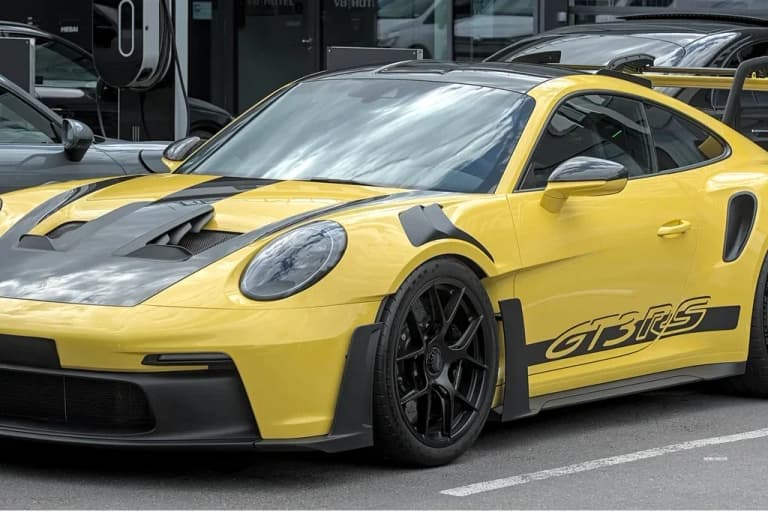
The Corvette ZR1 changes the conversation entirely. With 1,064 hp and a Nurburgring time of 6:50.7, it undercuts cars costing three times as much. The 992 GT3 RS replied with a 6:44.8, but the RS is a dedicated track weapon with massive aerodynamic downforce and a compromised ride for street use.
| Model | Power | 0 to 60 | Nurburgring |
|---|---|---|---|
| 911 Carrera | 394 hp | 4.0 sec | N/A |
| Corvette Stingray | 495 hp | 2.9 sec | N/A |
| 911 GT3 | 503 hp | 3.2 sec | 6:55.3 |
| Corvette Z06 | 670 hp | 2.6 sec | 7:11.8 |
| 911 GT3 RS | 518 hp | 3.0 sec | 6:44.8 |
| Corvette ZR1 | 1,064 hp | 2.3 sec | 6:50.7 |
| 911 Turbo S | 641 hp | 2.6 sec | N/A |
Chassis and Handling
The 911 has a rear-engine layout that puts the majority of the car’s weight behind the rear axle. This gives it exceptional traction out of corners and a unique rotation point that experienced drivers learn to exploit. Modern electronic stability systems have tamed the snap-oversteer that plagued older 911s, but the rear-engine character is still present. The car pivots around its mass in a way no mid-engine car can replicate.
The C8 Corvette sits its engine ahead of the rear axle in a conventional mid-engine layout. This gives it a more balanced weight distribution and more predictable handling at the limit. The C8 feels planted and neutral, closer to a Ferrari or McLaren in its behavior than any previous Corvette. The steering is accurate but lacks the detailed feedback that the 911 provides through its electrically assisted rack.
Both cars ride on adaptive dampers in their higher trims. The 911 offers Porsche Active Suspension Management (PASM) across the range, while the Corvette uses Magnetic Ride Control on Z51 and higher packages. Both systems work well, but the 911 strikes a better balance between ride comfort and body control. The Corvette can feel harsh over broken pavement, particularly in the Z06 and ZR1 with their wider, lower-profile tires.
Interior and Technology
The 911 interior is where the price gap becomes obvious. Porsche builds its cockpit around the driver with a high center console, a clean dashboard layout, and materials that feel expensive to the touch. The leather is thick, the switchgear has weight, and the 10.9-inch PCM infotainment system is responsive. The digital instrument cluster frames a central analog tachometer in a nod to classic 911 design.
The Corvette interior improved dramatically with the C8 generation. Gone is the cheap plastic that defined the C7 cabin. The C8 features a driver-focused cockpit with a wall of buttons separating driver and passenger, dual screens, and available leather and suede. It looks and feels like a car that costs more than it does. That said, some trim pieces still feel like General Motors parts-bin items, and the infotainment system is not as polished as the Porsche PCM.
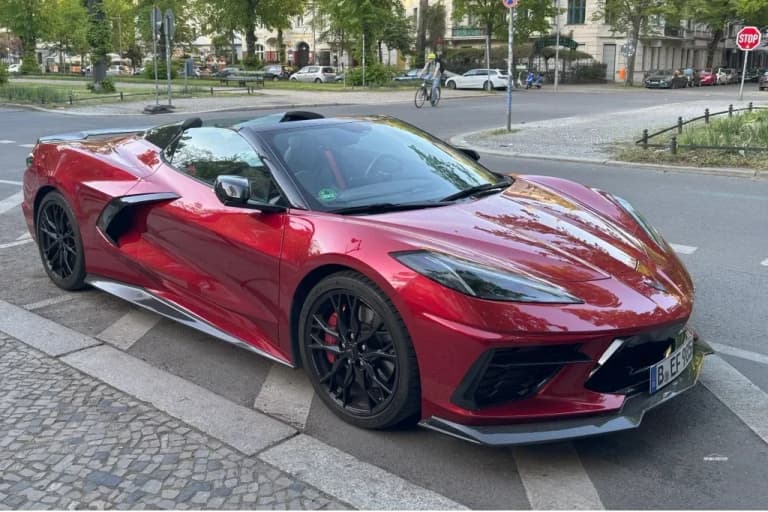
Storage space is another win for the 911. The rear-engine layout means the 911 has a front trunk (frunk) and a small rear shelf, giving it genuine usability as a daily driver. The C8 has a small frunk and a rear trunk, but neither is as generous as you might expect from a car this size.
Design
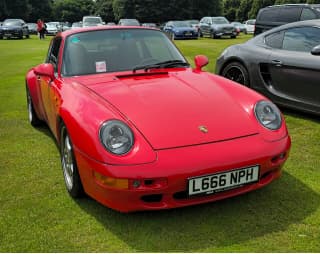
The 911 looks like a 911. Porsche has evolved the silhouette gradually over 60 years, and the current 992 is unmistakable from any angle. The rounded headlights, the sloping roofline, and the wide rear haunches are part of automotive design history. It is conservative, elegant, and ages well.
The C8 Corvette looks nothing like the car it replaced. The mid-engine layout demanded a completely new shape, and Chevrolet went aggressive. Sharp creases, angular vents, and a wedge profile give the C8 supercar presence that turns heads in a way the 911 does not. Love it or not, the C8 is dramatic. In a parking lot, it draws more attention than a base 911.
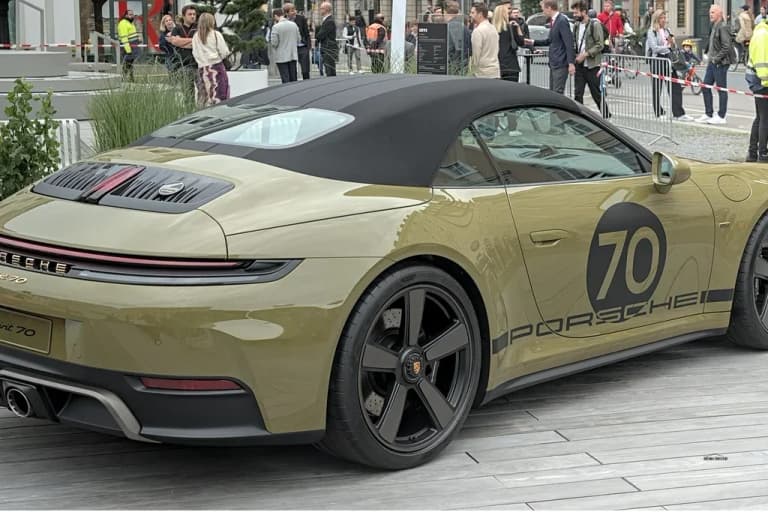
The 911 offers more body styles. The Corvette comes as a coupe with a removable targa-style roof panel or as a full convertible. The 911 is available as a coupe, Targa, and cabriolet across most of its variants.
Pricing
This is where the Corvette makes its strongest argument. The C8 Stingray starts at $69,995 for a car that hits 60 mph in under three seconds. The base 911 Carrera starts at $115,400 and is slower in a straight line.
| 911 Model | MSRP | Corvette Model | MSRP |
|---|---|---|---|
| Carrera | $115,400 | Stingray | $69,995 |
| Carrera GTS | $152,000 | E-Ray (Hybrid) | $102,900 |
| Turbo S | $236,100 | Z06 | $113,200 |
| GT3 | $175,900 | ZR1 | $173,300 |
| GT3 RS | $229,900 |
At the Z06 price of $113,200, you could buy a 911 Carrera but not a Carrera GTS. The Z06 makes 670 hp and revs to 8,600 rpm. The Carrera makes 394 hp. On paper, the Corvette is the clear value play at every tier.
The ZR1 at $173,300 is the most interesting comparison. For roughly the same money as a 911 GT3, you get 1,064 hp and a car that can reach 233 mph. No 911 at any price can match those numbers.
Ownership and Running Costs
The Corvette is cheaper to buy, and it is cheaper to own. Insurance rates are lower. Parts cost less. Any Chevrolet dealer can service it, and independent mechanics familiar with the LS and LT engine families are everywhere. Tires for the base Stingray are readily available and reasonably priced.
The 911 costs more to maintain. Porsche service intervals are longer (every 10,000 miles or 12 months), but each visit costs more. Brake jobs, tires, and routine maintenance run roughly 50% to 100% higher than the Corvette. The GT3 and GT3 RS require specialized service that only Porsche dealers or independent Porsche specialists can provide.
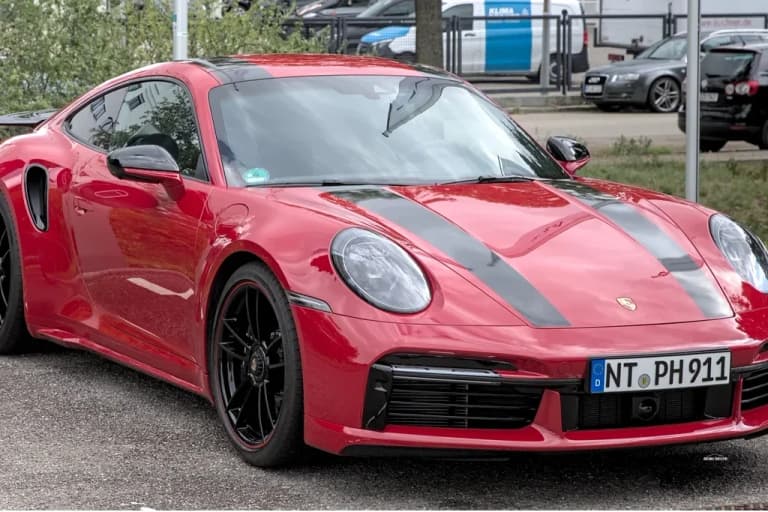
Porsche reliability is strong by sports car standards. The 992 generation has a solid track record so far, and Porsche consistently ranks at or near the top of reliability surveys for performance brands. The C8 Corvette has had some early production teething issues (reports of front-lift motor failures and electrical gremlins), but the drivetrain has proven durable.
Model Lineup Comparison
The 911 range is enormous. Porsche offers the 992 generation in over a dozen variants spanning from the base Carrera to the GT3 RS. Each model occupies a specific niche, from daily driving to track attack. The GTS T-Hybrid introduced with the 992.2 facelift is the first hybrid 911, producing 534 hp from a 3.6-liter turbocharged flat-six paired with an electric motor.
The Corvette lineup is smaller but covers a wide performance band. The Stingray is the entry point. The E-Ray adds hybrid all-wheel drive with 655 combined hp, making it the quickest Corvette to 60 mph at 2.5 seconds. The Z06 is the naturally aspirated track car. The ZR1 is the twin-turbo straight-line monster.
The 911 also offers more transmission choices. A 7-speed manual is available on several variants including the GT3. Every Corvette C8 comes exclusively with the 8-speed dual-clutch automatic. If a manual gearbox is important to you, the 911 is your only option in this comparison.
On the Track
Both cars are capable track machines, but they reward different driving styles. The 992 GT3 is one of the most precise track cars available at any price. Its naturally aspirated engine delivers linear power, the suspension is race-car stiff without being punishing, and the rear-engine layout gives it unmatched traction exiting slow corners.
The Corvette Z06 takes a different approach. It overwhelms corners with power and grip from its massive rear tires (345-section). The flat-plane crank V8 screams to 8,600 rpm and sounds more like a Ferrari 458 than a traditional American V8. On wider tracks with long straights, the Z06’s power advantage closes the gap with the GT3.
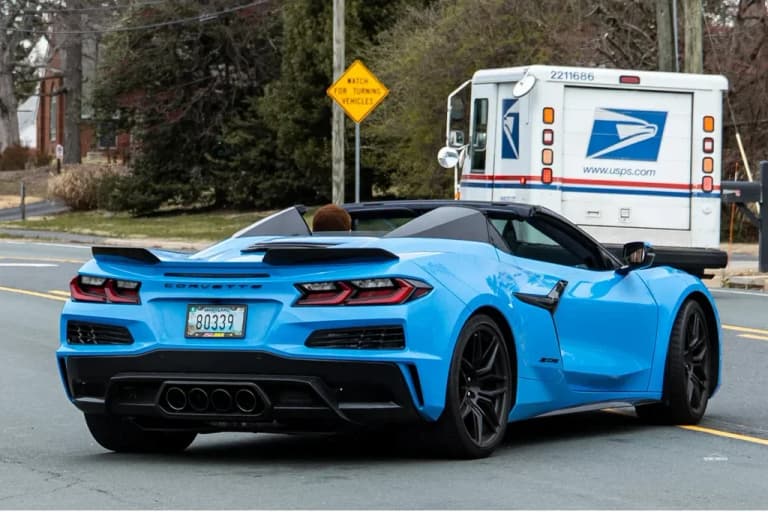
Tire costs are worth considering for track use. The GT3 runs Michelin Pilot Sport Cup 2 tires that cost roughly $400 to $500 per tire. The Z06 runs Michelin Pilot Sport 4S in massive sizes that cost a similar amount. Both cars will eat through a set of rear tires in two or three track days.
Resale Value
The 911 holds its value better than almost any other sports car on the market. After three years, a typical 911 retains 70% to 80% of its original MSRP. Special models like the GT3 and GT3 RS often sell for above sticker price on the used market, sometimes for years after their initial sale.
The Corvette depreciates faster. A base Stingray loses roughly 30% to 40% of its value in the first three years. The Z06 holds up better due to limited production and enthusiast demand, but it does not match the 911’s resilience. If you plan to sell the car in a few years, the 911’s lower depreciation partially offsets its higher purchase price.
Frequently Asked Questions
Is the Corvette C8 faster than the Porsche 911?
In a straight line, yes. The base C8 Stingray reaches 60 mph in 2.9 seconds, while the base 911 Carrera takes 4.0 seconds. The Corvette ZR1 with 1,064 hp is faster than every 911 variant in straight-line acceleration. On a racetrack, the 911 GT3 and GT3 RS post faster lap times than the Corvette Z06 thanks to superior chassis balance and aerodynamics.
Is the Porsche 911 worth the price premium over a Corvette?
That depends on what you value. The 911 offers a more refined interior, stronger resale value, a wider range of body styles, and an available manual transmission. It also provides a more nuanced driving experience with better steering feedback and chassis communication. The Corvette delivers more horsepower per dollar and lower ownership costs. Neither answer is wrong.
Can you daily drive both the 911 and Corvette?
Both the 911 Carrera and Corvette Stingray work as daily drivers. The 911 has a slight edge in practicality with its front trunk, better visibility, and more forgiving ride quality over rough roads. The Corvette’s mid-engine layout creates wider door sills that make getting in and out less graceful, and the visibility over the rear shoulder is limited.
Does the Corvette C8 come with a manual transmission?
No. Every C8 Corvette uses an 8-speed dual-clutch automatic transmission. There is no manual option. The Porsche 911 offers a 7-speed manual on the Carrera, Carrera T, GT3, and S/T variants.
Which holds its value better, the 911 or the Corvette?
The Porsche 911 holds its value significantly better. A 911 typically retains 70% to 80% of its MSRP after three years. The Corvette Stingray retains closer to 60% to 70%. Special 911 models like the GT3 regularly trade above their original sticker price.
Images: Alexander Migl, Alexander Migl, Alexander Migl, CC BY-SA 4.0; Alexander-93, CC BY-SA 4.0; MrWalkr, CC BY-SA 4.0; BerlinWilmer, CC BY 4.0; OWS Photography, CC BY 4.0, via Wikimedia Commons.



_Washington_DC_Metro_Area,_USA_(4).jpg)