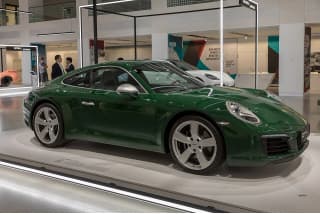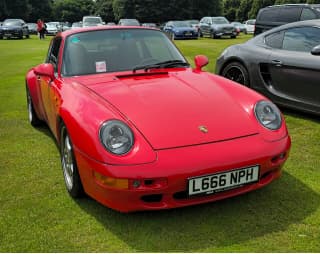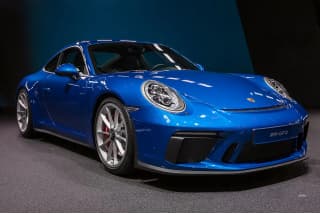
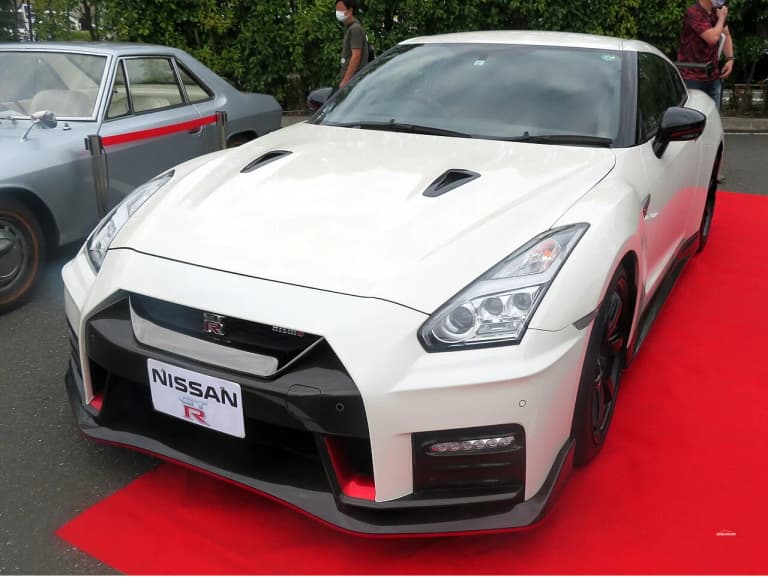
The Porsche 911 is a rear-engine flat-six sports car starting at around $120,000 with 389 to 701 hp. The Nissan GT-R R35 is a front-engine, all-wheel-drive twin-turbo V6 coupe starting at around $121,000 with 565 to 600 hp. The 911 offers more variety and a purer driving feel. The GT-R offers raw speed and all-weather traction at a lower entry price for equivalent performance.
In this article, we’ll compare the Porsche 911 and Nissan GT-R across performance, technology, and ownership. We’ll cover engine specs, handling, daily use, and tuning potential.
Contents
Quick Summary
| Spec | 911 Carrera S (992) | GT-R Premium (R35) |
|---|---|---|
| Engine | 3.0L twin-turbo flat-six | 3.8L twin-turbo V6 |
| Power | 473 hp | 565 hp |
| Torque | 391 lb-ft | 467 lb-ft |
| 0 to 60 mph | 3.3 sec | 2.9 sec |
| Top Speed | 191 mph | 196 mph |
| Weight | 3,340 lbs | 3,930 lbs |
| Drivetrain | RWD | AWD |
| Starting Price | ~$120,000 | ~$121,000 |
What Are These Cars?
The Porsche 911 and Nissan GT-R represent two fundamentally different philosophies of building a fast car. The 911 has been in continuous production since 1964. It grew from a lightweight air-cooled sports car into a hugely versatile performance machine. It prioritizes driver engagement, balance, and refinement.
The GT-R launched in 2007 as the R35 generation, and Nissan has been refining it ever since. Its mission statement was simple: deliver supercar performance at a fraction of the cost. The VR38DETT twin-turbo V6 works with a clever all-wheel-drive system and a dual-clutch transmission. That made the R35 famous for beating cars two and three times its price, in drag races and on track.
The GT-R earned the nickname “Godzilla” in the R32 Skyline GT-R era of the late 1980s. It dominated touring car racing in Australia and Japan. That reputation for punching above its weight class carried over to the R35. At launch, journalists recorded 0 to 60 times under 3.5 seconds, for a price under $70,000.
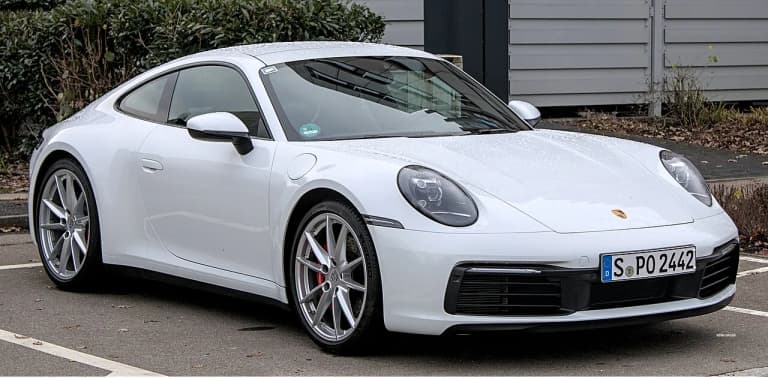
Today, the GT-R’s price has climbed significantly. The base Premium starts at around $121,000, putting it in direct price territory with the 911 Carrera S. That changes the conversation. When the GT-R was $70,000 and the 911 was $100,000+, the value argument was clear. Now they sit side by side on price, and the comparison becomes about what each car does differently with a similar budget.
Engine and Powertrain
Porsche 911 Engine
The 992 Carrera uses a 3.0-liter twin-turbocharged flat-six producing 389 hp in base form and 473 hp in the Carrera S. Porsche’s flat-six sits behind the rear axle, giving the 911 its distinctive weight distribution. The engine is smooth, responsive, and sounds characteristically Porsche: a hard-edged bark at high rpm that no other engine quite replicates.
Higher in the range, the GT3 uses a 4.0-liter naturally aspirated flat-six making 503 hp at 8,400 rpm. The Turbo S in 992.2 form produces 701 hp with its hybrid system. The 911 offers three transmission options depending on variant: 8-speed PDK, 7-speed manual, or 6-speed manual.
Nissan GT-R Engine
Every R35 GT-R uses the VR38DETT: a 3.8-liter twin-turbocharged V6. Each engine is hand-assembled by a single master technician at Nissan’s Yokohama plant. Nissan highlights this detail with the builder’s nameplate on every engine. The Premium model produces 565 hp and 467 lb-ft of torque. The NISMO variant pushes that to 600 hp with larger turbochargers, revised engine mapping, and optimized exhaust flow.
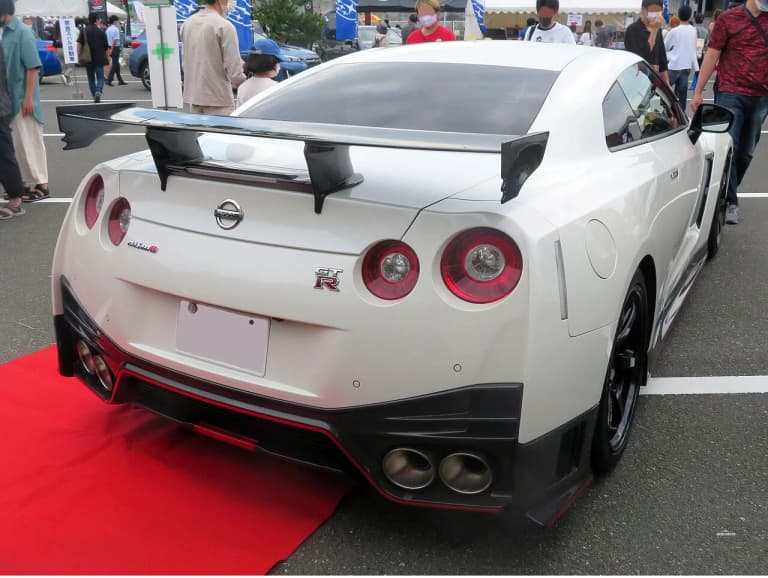
The VR38DETT makes its peak torque from 3,300 rpm and holds it all the way to 5,800 rpm. The powerband is wide and relentless. The GT-R pairs its engine with a 6-speed dual-clutch transmission at the rear axle in a transaxle layout. It connects to Nissan’s ATTESA E-TS all-wheel-drive system. Under normal driving, the system sends most power to the rear wheels. Under hard acceleration or in low-grip conditions, it can send up to 50% of power to the front axle.
How They Compare
The GT-R has more power and torque at the base price point. But the 911 lineup spans a much wider range. If you want naturally aspirated purity, the GT3 has no GT-R equivalent. If you want hybrid technology, the 992.2 GTS and Turbo S have it. The GT-R offers one engine in two states of tune. The 911 offers half a dozen powertrains across its range.
Performance and Specs
The GT-R was built to be fast in a straight line, and it delivers. The Premium model hits 60 mph in about 2.9 seconds using launch control. The system coordinates all-wheel drive, transmission, and engine management for a perfectly executed standing start. The 911 Carrera S reaches 60 mph in 3.3 seconds with the Sport Chrono package.
Top speed is close. The GT-R Premium is electronically limited to 196 mph. The 911 Carrera S reaches 191 mph. The NISMO variant can hit 205 mph, though Nissan restricts the limiter to authorized service events.
On track, the picture shifts. The GT-R’s 3,930-pound curb weight works against it in technical sections. The 911 Carrera S weighs 3,340 pounds and carries its mass lower. In longer lap times and high-speed corners, the 911’s lighter weight and lower center of gravity give it an advantage. The GT3 RS operates in a completely different tier, posting a 6:44 Nurburgring lap that no GT-R variant can match.
| Model | Power | 0 to 60 | Top Speed | Weight |
|---|---|---|---|---|
| 911 Carrera S | 473 hp | 3.3 sec | 191 mph | 3,340 lbs |
| GT-R Premium | 565 hp | 2.9 sec | 196 mph | 3,930 lbs |
| 911 Turbo S | 641 hp | 2.6 sec | 205 mph | 3,636 lbs |
| GT-R NISMO | 600 hp | 2.5 sec | 205 mph | 3,886 lbs |
| 911 GT3 | 503 hp | 3.2 sec | 198 mph | 3,164 lbs |
Handling and Driving Feel
This is where these two cars diverge most sharply.
The 911’s rear-engine layout creates a driving experience unlike anything else. Weight over the rear axle gives exceptional traction out of corners. The car pivots around its center mass, rewarding precise inputs. The steering is direct and communicative. Brake feel is progressive. Even in the base Carrera, a mechanical connection between driver and road defines the 911 experience.
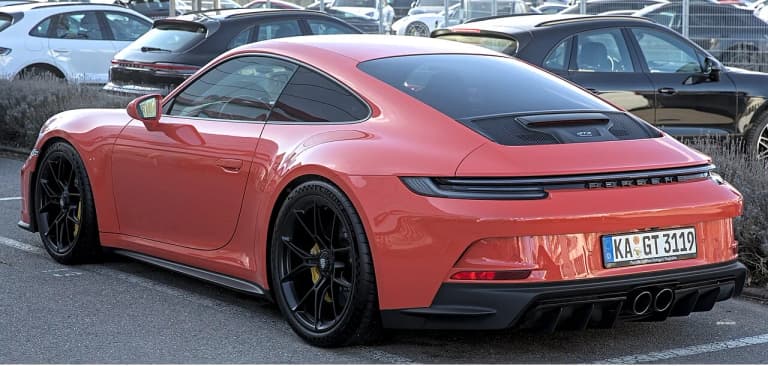
The GT-R takes a technology-first approach. Its chassis is not about feel. It is about grip. The ATTESA E-TS system reads the road, throttle position, steering angle, and yaw rate. It then distributes torque to the wheels that can use it best. The Bilstein DampTronic dampers adjust in real time. The result is a car that generates huge cornering forces. It goes around a track faster than its weight and dimensions suggest.
But the GT-R filters information. Where the 911 tells you what the front tires are doing through the steering wheel, the GT-R manages the situation. Some drivers prefer that. Others find it clinical. If you want road surface feedback through your fingertips, the 911 is the better choice. If speed through a corner is your priority in any condition, the GT-R makes a strong case.
In wet weather, the GT-R’s all-wheel-drive system is transformative. The 911 Carrera S sends power to the rear wheels only. In heavy rain, that requires more caution. The 911 Carrera 4S adds all-wheel drive for about $10,000 more, closing the gap in bad weather. But the GT-R’s system distributes torque more sophisticatedly.
Technology and Electronics
The GT-R was a technology showcase when it launched in 2007, and its core systems remain impressive. The multi-plate transfer case, independent rear transaxle, and real-time torque vectoring were ahead of their time. The dashboard has a multifunction display for boost pressure, G-forces, turbo temperature, and transmission oil temperature. This information appeals to buyers who want to monitor every system in real time.
The 911 has more modern technology on the surface. The 10.9-inch PCM infotainment system, digital gauge cluster, and available head-up display are all more current than the GT-R’s aging interior screens. Apple CarPlay and Android Auto are standard. The driver assistance features (adaptive cruise, lane keep, night vision on some trims) are more comprehensive than what Nissan offers.
Under the skin, the 911’s electronics are equally advanced but work more quietly. Porsche’s rear-axle steering, active engine mounts, and PASM dampers all operate without drawing attention to themselves. The GT-R wants you to know what its computers are doing. The 911 prefers you not notice.
Interior and Practicality
The 911 wins here. Porsche builds an interior that feels worthy of the price. The leather is thick, the fit and finish is tight, and the driving position is excellent. The rear seats are small but exist, and the front trunk adds usable cargo space. The cabin is quiet at highway speeds, making the 911 a legitimate grand tourer.
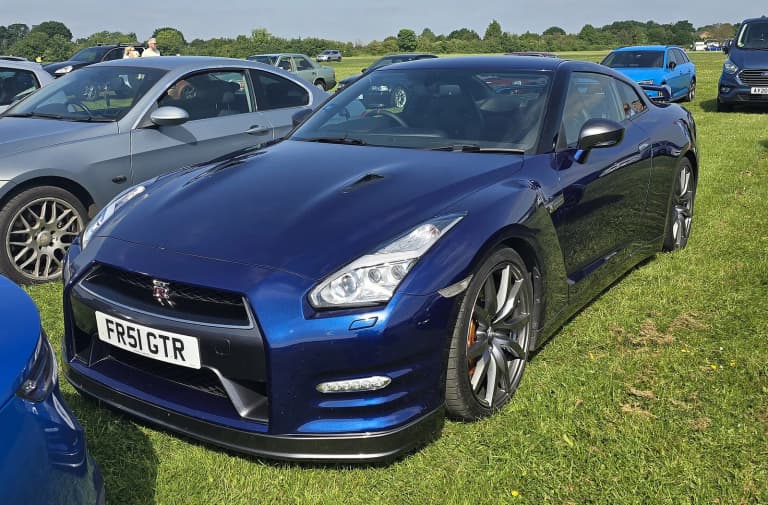
The GT-R’s interior has improved over its production run, but it still reflects a car designed in the mid-2000s. The ergonomics are fine. The seats are supportive. The materials are decent. But placed next to the 911, the GT-R cabin feels a generation behind. The infotainment screen is smaller and less responsive. Some of the switchgear feels plastic. Nissan has refreshed the cabin multiple times, but the basic architecture dates to 2007.
Both cars are 2+2 coupes with minimal rear seat space. Neither will carry adults in the back comfortably. The GT-R’s trunk is slightly larger than the 911’s rear shelf, but neither is generous. For daily practicality, the 911 edges ahead because of its front trunk and better refinement.
Design and Styling
Few car shapes are as recognizable as the 911. The sloping roofline, the round headlights, the wide rear haunches. Porsche has refined this silhouette for 60 years without ever losing the essential character. It is understated in a way that only builds appreciation over time. A 911 parked next to a GT-R looks quieter, more confident, less concerned with making a statement.
The GT-R makes a different kind of statement. It is wide, aggressive, and angular. The quad taillights, the massive rear diffuser, and the muscular fenders all communicate performance intent. The NISMO version adds carbon fiber aero elements that push the design further toward race car. The GT-R is not trying to be elegant. It is trying to be intimidating, and it succeeds.
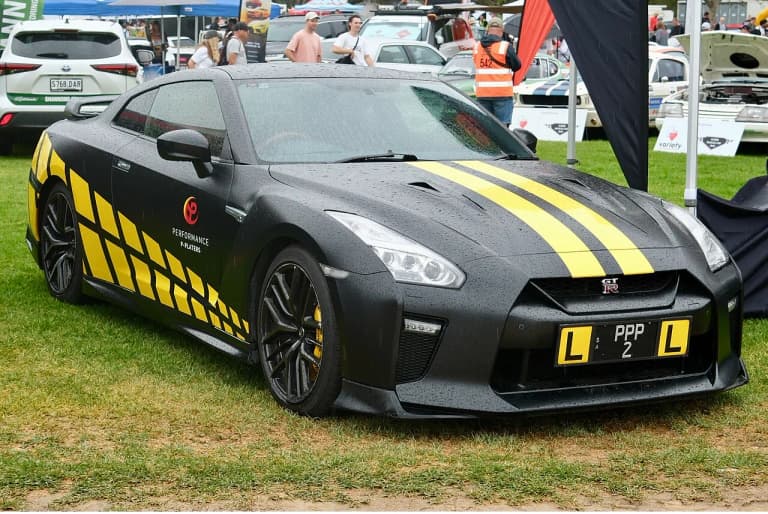
Both cars have aged well visually. The GT-R’s design looked futuristic in 2007 and still does not look dated nearly two decades later. The 911 is timeless by design. Neither car will embarrass you in a parking lot in 2030.
Pricing and Value
The pricing story of the GT-R rose dramatically in the car industry. It launched at $69,850 in 2009. Today, the base Premium starts at around $121,000. The NISMO commands roughly $225,000. That nearly doubles the base price over 17 years. Limited production and increasing equipment drove it higher. As of 2026, Nissan has not announced a successor.
| Model | Starting MSRP (est.) |
|---|---|
| 911 Carrera | ~$120,000 |
| GT-R Premium | ~$121,000 |
| 911 Carrera S | ~$148,000 |
| GT-R T-Spec | ~$140,000 |
| 911 GT3 | ~$195,000 |
| GT-R NISMO | ~$225,000 |
| 911 Turbo S | ~$250,000+ |
At the base price, the GT-R offers 92 more horsepower and all-wheel drive for essentially the same money as the Carrera. That is still a lot of performance per dollar. But the GT-R no longer has the overwhelming value advantage it once held.
On the used market, both cars hold value well, but for different reasons. The 911 depreciates gradually and predictably, with special models holding or appreciating. The GT-R holds value because of its cult following and the certainty that no direct replacement is coming. Clean, low-mileage R35 GT-Rs from the early production years have started appreciating.
Ownership and Reliability
The 911 has a strong reliability record. Porsche consistently ranks at or near the top of reliability surveys for performance brands. Service intervals are every 10,000 miles or 12 months, and routine maintenance runs $300 to $500 per visit. Brake jobs cost $1,500 to $3,000. The 992 generation has been mechanically solid so far.
The GT-R is reliable for what it is, but servicing costs more than you might expect from a Nissan. The dual-clutch transmission requires expensive fluid changes (around $3,000 every 30,000 miles at a dealer). The hand-built engine means any major work is costly. Tires are a significant expense: the rear tires are 285/35R20 (NISMO uses 285/35R20 front and 315/30R20 rear), and a set costs $1,500 to $2,000. Insurance is comparable to the 911.
The GT-R’s Achilles heel is its transmission. Early R35 models had documented dual-clutch gearbox issues under repeated hard launches. Nissan revised launch control software multiple times. It improved transmission internals in later model years. Still, the transmission remains the most expensive component to service or replace.
Heritage and Motorsport
The 911 has one of the deepest motorsport pedigrees in automotive history. It has won Le Mans overall, dominated GT racing for decades, competed in rally, hillclimb, and endurance events on every continent. The 911 RSR has been a factory racing program cornerstone. Porsche’s one-make series, the Carrera Cup, runs in over 20 countries.
The GT-R’s heritage is different but equally rich. The Skyline GT-R lineage goes back to 1969. The R32 GT-R dominated Group A touring car racing in Japan and Australia in the early 1990s. It earned the “Godzilla” nickname after Australian racing banned it for being too fast. The R35 has seen extensive use in GT3 and Super GT racing. The GT-R NISMO GT3 remains a competitive customer race car.
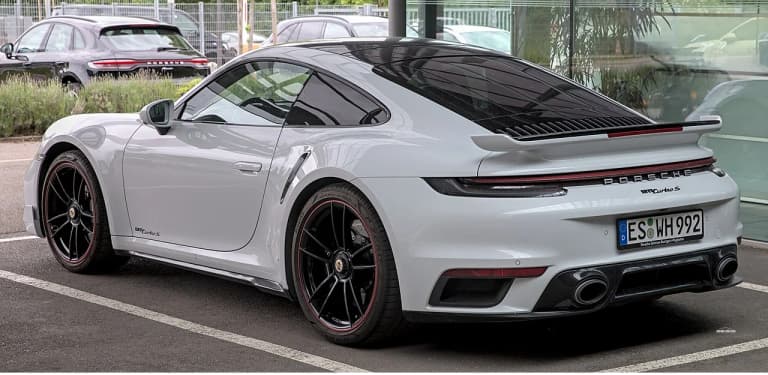
In tuner culture, the GT-R is royalty. The VR38DETT can handle 1,000+ hp with bolt-on modifications. The aftermarket ecosystem for the R35 is massive, and 2,000+ hp builds exist. The 911 Turbo also has a strong tuning scene, but the GT-R is more central to the tuner community identity.
Tuning and Aftermarket
The GT-R is a highly tunable production car. The VR38DETT engine responds dramatically to modifications. A basic intake, downpipe, and tune can push power from 565 hp to over 650 hp. Full bolt-on builds regularly reach 800 to 900 hp on stock internals. With built internals and larger turbochargers, 1,500 to 2,000+ hp is achievable. The all-wheel-drive system can put that power down in ways rear-drive cars cannot.
The 911 Turbo has its own tuning scene. The flat-six responds well to intake, exhaust, and ECU modifications, and 700+ hp is common on tuned 992 Turbo S models. But the 911 tuning culture is smaller and more conservative than the GT-R world. Most 911 owners keep their cars stock. Most GT-R owners at least consider modifications.
If you plan to modify your car significantly, the GT-R has a larger support network of tuners, parts suppliers, and proven build recipes. Companies like Alpha Performance, AMS, and HKS have spent nearly two decades developing GT-R platforms. The aftermarket infrastructure is deep.
Frequently Asked Questions
Is the Nissan GT-R faster than the Porsche 911?
Yes, the Nissan GT-R is faster than the base 911 Carrera and Carrera S in a straight line. It reaches 60 mph in about 2.9 seconds. The Carrera S takes 3.3 seconds. The 911 Turbo S is faster than the GT-R NISMO. The 911 GT3 RS posts faster track times than any GT-R variant. From a standing start, the GT-R’s all-wheel-drive launch control beats rear-drive 911 models.
Why has the Nissan GT-R gotten so expensive?
The Nissan GT-R has gotten expensive through 17 years of price increases. The R35 has been in production since 2007. Nissan raised the price over time through equipment upgrades and emissions work, and the car has no planned successor. Limited production numbers and strong demand from collectors and enthusiasts keep prices high. The GT-R NISMO, once around $150,000, now commands roughly $225,000.
Can you daily drive both the 911 and GT-R?
Yes, the 911 and GT-R both work as daily drivers, but the 911 is more refined for the role. The 911 has better interior quality, lower road noise, a smoother ride, and a front trunk for cargo. The GT-R is louder, stiffer, and less comfortable in stop-and-go traffic. Both have limited rear seat space. The 911 is the better choice if you plan to use it every day.
Is the GT-R better than the 911 in rain and snow?
Yes, the GT-R is better than rear-drive 911 models in rain and snow. Its standard all-wheel-drive system gives it a significant advantage in wet and slippery conditions over rear-drive 911 models. The ATTESA E-TS system actively distributes torque to maintain traction. The 911 Carrera 4 and Carrera 4S add all-wheel drive, closing the gap. The base Carrera and Carrera S are rear-drive only.
Which holds its value better, the 911 or the GT-R?
The Porsche 911 and Nissan GT-R both hold their value well, but for different reasons. The 911 depreciates gradually and special models like the GT3 and GT3 RS often appreciate. The GT-R holds value because of its cult status, strong tuning community, and the certainty that no successor has been announced. Early low-mileage R35 GT-Rs have begun appreciating as collectors recognize them as the end of an era.
Images: Nissan GT-R NISMO (4BA-R35) front by Tokumeigakarinoaoshima, CC BY-SA 4.0. Porsche 992 Carrera S coupe by Alexander Migl, CC BY-SA 4.0. Nissan GT-R NISMO (4BA-R35) rear by Tokumeigakarinoaoshima, CC BY-SA 4.0. Porsche 992 GT3 with touring package by Alexander Migl, CC BY-SA 4.0. 2012 Nissan GT-R Premium Edition 3 by Calreyn88, CC BY-SA 4.0. Nissan GT-R R35 at the 2026 Adelaide Motorsport Festival (DSCF2567) by Yu Chu Chin, CC BY-SA 4.0. Porsche 992 Turbo S by Alexander Migl, CC BY-SA 4.0. Via Wikimedia Commons.