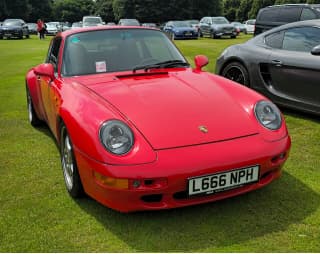
The Porsche 935 was the turbocharged, slant-nosed racing version of the 911 that dominated sports car racing from 1976 onward. It won countless major endurance events, including an overall victory at the 1979 24 Hours of Le Mans in Kremer K3 form, and its wildest version, the long-tail 935/78 “Moby Dick,” hit 228 mph at Le Mans. In 2018 Porsche revived the name with a modern 700-horsepower track car limited to 77 examples.
In this article, we’ll explain the Porsche 935, the turbocharged, slant-nosed 911 that dominated 1970s racing. We’ll cover the slant nose, Moby Dick, the Kremer K3, and the 2018 revival.
Contents
What Is the Porsche 935
The Porsche 935 was the racing version of the turbocharged 911, developed to dominate the silhouette-based Group 5 category of the late 1970s. It started life recognizably as a 911 but evolved into something far wilder, with vast turbo power, radical aerodynamics, and the distinctive flat-fronted nose that became its signature.
Where the road-going 911 Turbo of the era made around 260 to 300 horsepower, the 935 made two to three times that. It was the most successful turbocharged racing car of its day and the last 911-based car to win the 24 Hours of Le Mans outright.
The 935 is also the spiritual link between Porsche’s road turbos and its all-conquering race programme. Its turbocharging lessons fed back into production cars, and its legend was strong enough that Porsche revived the name decades later.
A Turbocharged 911 for Group 5
The 935 was introduced in 1976 as the factory racing development of the 911 Turbo, built to FIA Group 5 rules. These regulations allowed heavily modified “silhouette” cars that kept the basic shape of a road model but permitted extensive aerodynamic and mechanical freedom.
Porsche’s engineers, led by Norbert Singer, exploited those rules brilliantly. The 935 grew wider, lower, and far more aerodynamic than any road 911, while its turbocharged flat-six was tuned for enormous power. It immediately became the car to beat in international sports car racing.
Evolution: Slant-Nose, Moby Dick, and Le Mans
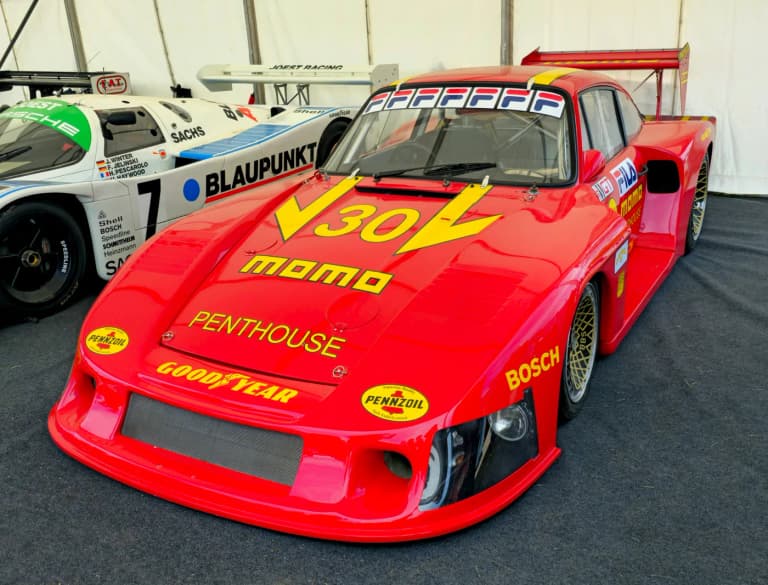
The 935’s most famous feature is its flat, sloping nose. The rules allowed teams to modify the front bodywork, so Porsche removed the 911’s traditional upright headlights and faired the nose into a smooth, low slope, with the headlights relocated into the bumper.
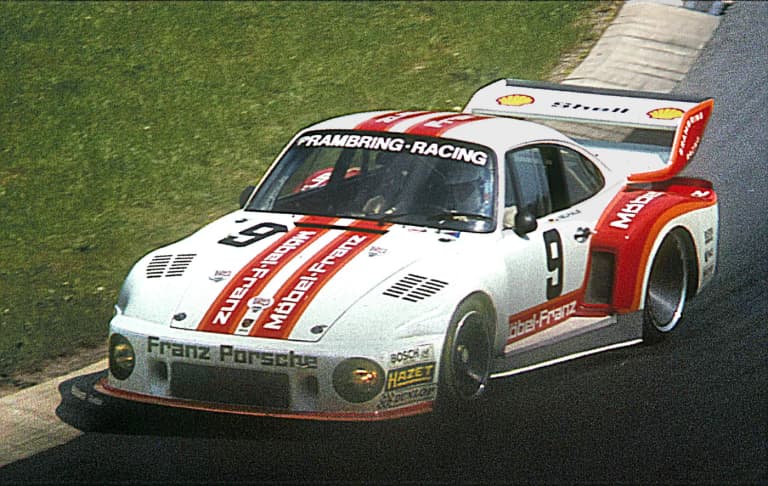
This slant-nose design reduced drag and improved airflow, and it became so iconic that Porsche later offered a slant-nose option on road-going 911 Turbos. The look is now instantly associated with 1970s and 1980s endurance racing, and it remains one of the most recognizable shapes in motorsport.
The 935/78 “Moby Dick”
The most extreme factory 935 was the 935/78, nicknamed “Moby Dick” for its white color and long, whale-like tail. Built specifically for Le Mans, it pushed the Group 5 rules to their limit with a dramatically extended, low-drag body.
Under the bodywork sat a 3.2-liter twin-turbocharged flat-six with water-cooled four-valve cylinder heads, producing up to around 845 horsepower in sprint tune. Moby Dick recorded a top speed of roughly 228 mph on the Mulsanne straight at Le Mans, a staggering figure for the period. It never won the big race, but its sheer audacity secured its place in legend.
The Kremer K3 and 1979 Le Mans Win
The 935’s greatest result came from a privateer. The German team Kremer Racing developed its own version, the 935 K3, which was lighter, more aerodynamic, and more reliable than the factory cars. In 1979 a Kremer K3 won the 24 Hours of Le Mans outright in heavy rain, beating the purpose-built prototypes.
That victory was historic. It remains the last time a 911-based car won Le Mans overall, and it cemented the 935’s reputation as a giant killer in the spirit of the much earlier 550 Spyder. Only a small number of complete K3s were built by Kremer, making them highly prized today.
Total Dominance
Across its career the 935 racked up an extraordinary record. It won at Le Mans, Daytona, Sebring, and the Nurburgring, and it dominated the IMSA and World Championship grids for years. In total the 935 took well over a hundred race wins, an almost unmatched tally for a single model.
Much of that success came in the hands of privateer teams, who could buy 935s and win major races with them. This made the 935 not just a factory weapon but the backbone of an entire era of customer sports car racing, spreading Porsche’s dominance across the world.
The 2018 Reborn 935
In 2018, to mark 70 years of Porsche sports cars, the company unveiled a modern 935. It was a track-only car built on the underpinnings of the 911 GT2 RS Clubsport, wrapped in retro bodywork that paid direct homage to the Moby Dick long-tail.
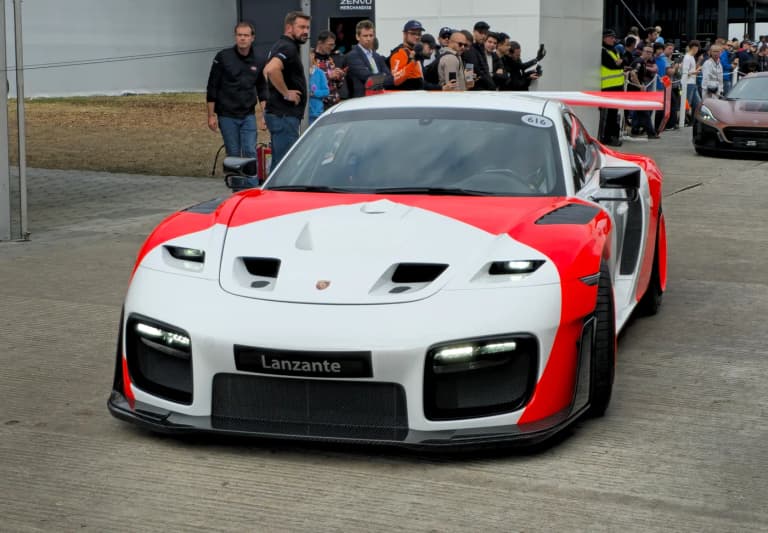
The reborn 935 used a 700-horsepower twin-turbo flat-six and was limited to just 77 examples, a nod to Porsche’s racing heritage. It was never meant for competition in a specific series, but rather as a collectible track toy that celebrated the original car’s legend. It sold out immediately despite a price well into six figures.
Values and Legacy
Genuine period 935s are blue-chip historic racing cars, and their values reflect documented competition history above all else.
| Car | Status | Approx. Value |
|---|---|---|
| Customer 935 (period) | Documented history | $1,500,000 to $3,500,000 |
| Kremer 935 K3 | Documented history | $3,000,000 to $5,000,000+ |
| Works / Le Mans car | Significant history | $4,000,000 to $8,000,000+ |
| 2018 reborn 935 | 1 of 77 | $1,200,000 to $2,000,000 |
The 935’s legacy runs deep. It proved how far turbocharging could be pushed, it gave privateers a winning car, and it produced some of the most spectacular machines in racing history. Few competition cars are as instantly recognizable or as widely loved. Figures are 2026 estimates and depend heavily on history.
Frequently Asked Questions
What is the Porsche 935?
The 935 was the turbocharged racing version of the 911, built from 1976 for the FIA Group 5 category. It featured a distinctive flat, sloping nose and produced far more power than any road 911 of the era. It dominated sports car racing and won the 1979 24 Hours of Le Mans outright.
Why does the Porsche 935 have a flat nose?
Group 5 rules allowed teams to modify the front bodywork, so Porsche removed the 911’s upright headlights and faired the nose into a smooth, low slope to cut drag and improve airflow. The slant-nose look became so iconic that Porsche later offered it on road-going 911 Turbos.
What was the Porsche 935 “Moby Dick”?
Moby Dick was the nickname for the 935/78, an extreme long-tail version built for Le Mans. Named for its white color and whale-like shape, it used a 3.2-liter twin-turbo flat-six producing up to around 845 horsepower and reached roughly 228 mph on the Mulsanne straight.
Did the Porsche 935 win Le Mans?
Yes. A Kremer 935 K3 won the 24 Hours of Le Mans outright in 1979 in heavy rain, beating the purpose-built prototypes. It remains the last time a 911-based car won the race overall.
What is the 2018 Porsche 935?
The 2018 Porsche 935 is a modern, track-only tribute car built on the 911 GT2 RS Clubsport, with retro bodywork inspired by the Moby Dick long-tail. It produces 700 horsepower and was limited to just 77 examples.
How much is a Porsche 935 worth?
Genuine period 935s trade from around $1,500,000 upward, with Kremer K3s and works Le Mans cars worth several million more. The 2018 reborn 935, one of only 77 built, typically trades between $1,200,000 and $2,000,000. Documented history is the biggest factor in value.
Images: Hero slant-nose 935 and 2018 reborn 935 by Calreyn88, CC BY-SA 4.0. Period 935 race car by Lothar Spurzem, CC BY-SA 2.0 DE. Via Wikimedia Commons. Value figures are 2026 market estimates.