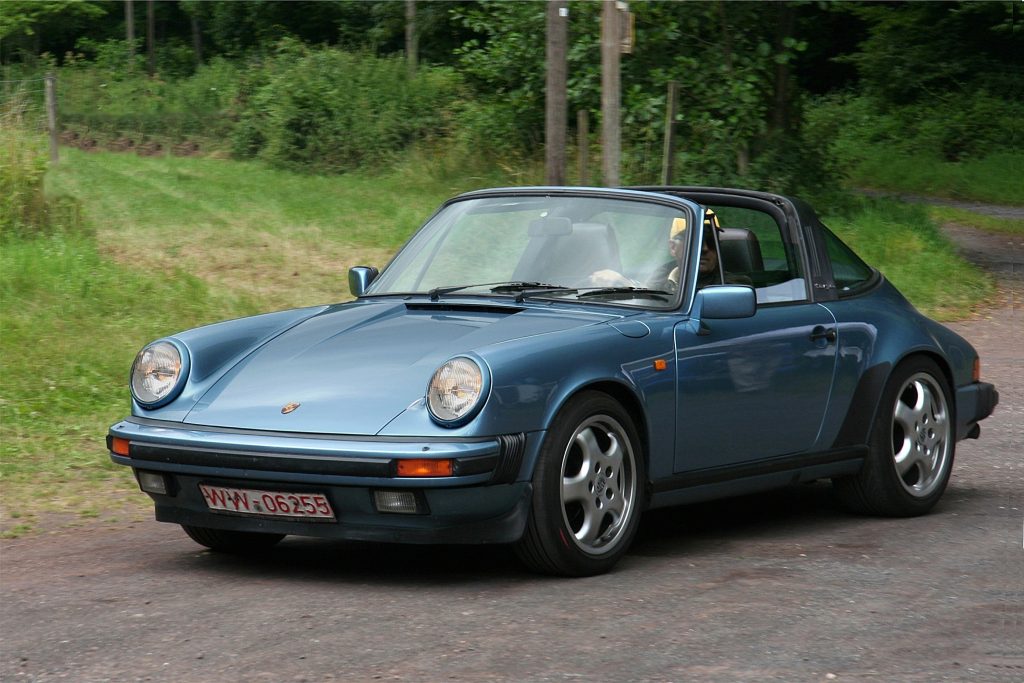
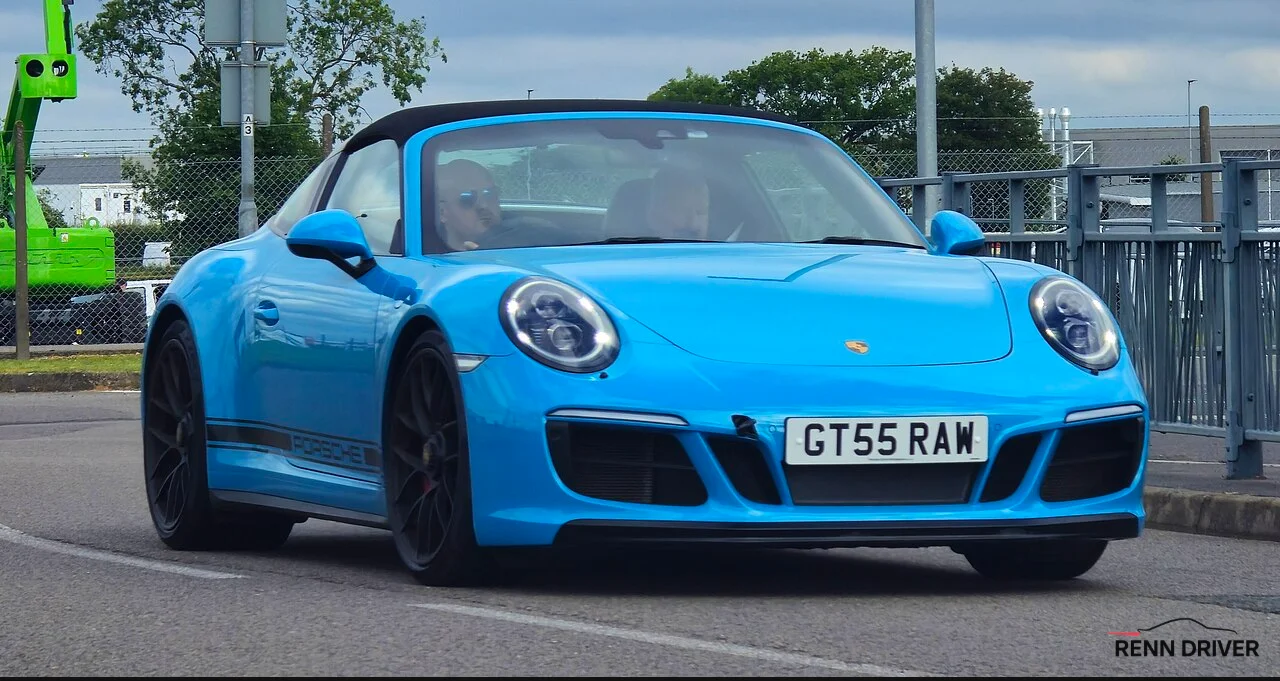
The Porsche 991 Targa (2014 to 2019) brought back the classic Targa bar and wraparound glass rear window after the 996 and 997 generations used a sliding glass roof panel instead. Available as the Targa 4 and Targa 4S with 3.4L and 3.8L flat-six engines (350 to 400 hp), plus a GTS variant with 430 hp. All models are all-wheel drive with the iconic polished aluminum bar.
Contents
- 1 Quick Summary
- 2 The Return of the Classic Design
- 3 991.1 Targa (2014 to 2016)
- 4 991.2 Targa (2016 to 2019)
- 5 991 Targa 4 GTS
- 6 991 Targa Specifications Compared
- 7 The Roof Mechanism
- 8 Driving Experience
- 9 Buying a Used 991 Targa
- 10 Renn Driver's Take
- 11 FAQs
- 12 Final Thoughts
The full guide below covers all the details.
Quick Summary
- Production years: 2014 to 2019 (991.1: 2014 to 2016, 991.2: 2016 to 2019)
- Engine (991.1): 3.4L flat-six (Targa 4, 350 hp) or 3.8L flat-six (Targa 4S, 400 hp)
- Engine (991.2): 3.0L twin-turbo flat-six (Targa 4, 370 hp; Targa 4S, 420 hp)
- GTS: 430 hp (991.1 NA) or 450 hp (991.2 turbo)
- Transmission: 7-speed manual or 7-speed PDK
- Drive: All-wheel drive standard
- Key feature: Return of the classic Targa bar design after two generations of glass-roof Targas
The Return of the Classic Design
When the 991 Targa debuted at the 2014 Detroit Auto Show, the crowd reaction told the story. Porsche had brought back the Targa bar.
For two generations, the 996 and 997 Targas used a large glass roof panel that slid backward under the rear window. It was functional and clever, but it looked nothing like the original 1967 Targa that made the name iconic. The sliding glass roof could have belonged to any car. The Targa bar could only belong to a 911.
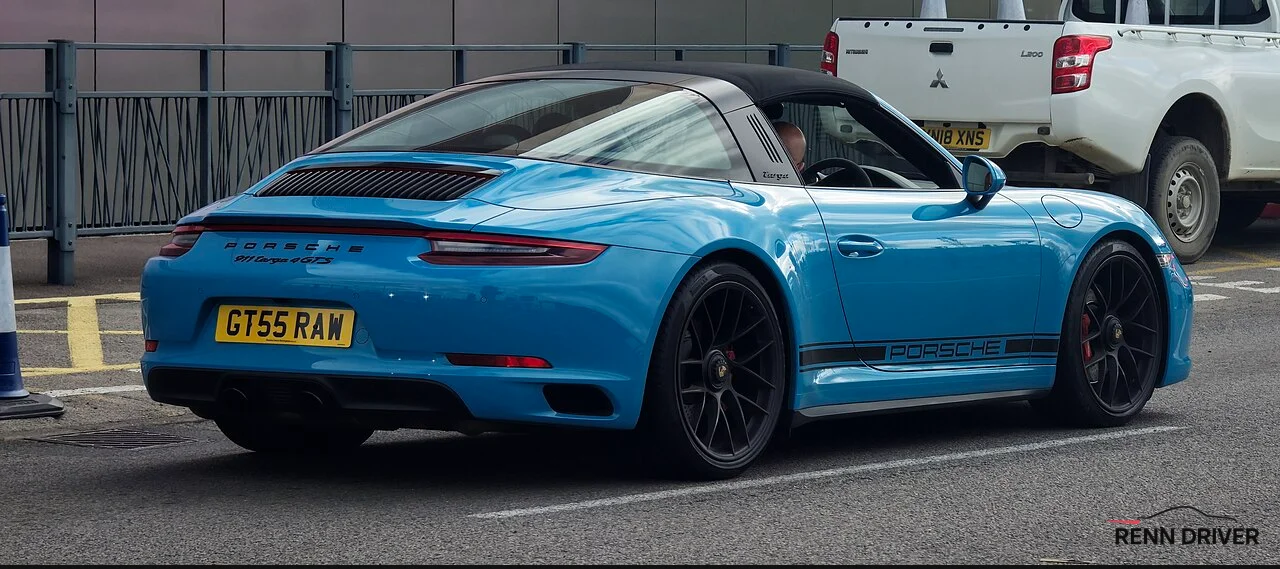
The 991 Targa returned to the classic formula: a polished aluminum bar sweeping over the cabin, a folding fabric roof panel, and a curved glass rear window that wraps around the back of the car. The result was immediately recognized as one of the most beautiful 911 variants in the car's history.
Porsche did not simply recreate the original design. They engineered a fully automated roof mechanism that folds and stows the roof panel in under 20 seconds. The glass rear section lifts, the roof folds, and everything returns to position. It is a piece of engineering theater that never gets old.
991.1 Targa (2014 to 2016)
The first 991 Targa launched with naturally aspirated flat-six engines carried over from the Carrera range.
Targa 4: 3.4L flat-six producing 350 hp and 287 lb-ft of torque. 0 to 60 mph in approximately 4.6 seconds (PDK). Top speed of 174 mph.
Targa 4S: 3.8L flat-six producing 400 hp and 325 lb-ft of torque. 0 to 60 mph in approximately 4.2 seconds (PDK). Top speed of 182 mph.
Both engines are naturally aspirated, which gives them a linear power delivery and a character that many enthusiasts prefer over the turbocharged engines that replaced them. The 3.8L in the 4S is particularly rewarding, with a broad powerband and a willingness to rev that makes every drive engaging.
The 7-speed manual and 7-speed PDK are both available. The manual Targa 4S with the naturally aspirated 3.8L is one of the most sought-after 991 configurations on the used market.
991.2 Targa (2016 to 2019)
The 991.2 facelift brought turbocharged engines to the entire Carrera range, including the Targa.
Targa 4: 3.0L twin-turbo flat-six producing 370 hp and 331 lb-ft of torque. 0 to 60 mph in approximately 4.2 seconds (PDK). Top speed of 179 mph.
Targa 4S: 3.0L twin-turbo flat-six producing 420 hp and 369 lb-ft of torque. 0 to 60 mph in approximately 3.6 seconds (PDK). Top speed of 187 mph.
The turbocharged engines provide more torque and faster acceleration, particularly from low rpm. They are also more efficient. The trade is a different exhaust note and power delivery character compared to the naturally aspirated 991.1 engines. Both are excellent; the choice is a matter of preference.
991 Targa 4 GTS
The GTS is the sweet spot of the 991 Targa lineup.
991.1 Targa 4 GTS: 3.8L naturally aspirated flat-six producing 430 hp. Sport Chrono, PASM sport suspension, sport exhaust, center-lock wheels, and Alcantara interior all standard.
991.2 Targa 4 GTS: 3.0L twin-turbo flat-six producing 450 hp. Same GTS equipment package as the 991.1 GTS.
The GTS takes the Targa 4S and adds everything a driving enthusiast would option anyway, then wraps it in blacked-out trim. The naturally aspirated 991.1 GTS with a manual transmission is a particularly special configuration: 430 hp, the classic Targa bar, three pedals, and that NA flat-six sound. Very few cars combine those elements.
991 Targa Specifications Compared
| Targa 4 (991.1) | Targa 4S (991.1) | Targa 4 (991.2) | Targa 4S (991.2) | |
|---|---|---|---|---|
| Engine | 3.4L NA | 3.8L NA | 3.0L TT | 3.0L TT |
| Power | 350 hp | 400 hp | 370 hp | 420 hp |
| Torque | 287 lb-ft | 325 lb-ft | 331 lb-ft | 369 lb-ft |
| 0 to 60 (PDK) | ~4.6 s | ~4.2 s | ~4.2 s | ~3.6 s |
| Top Speed | 174 mph | 182 mph | 179 mph | 187 mph |
The Roof Mechanism
The 991 Targa introduced the automated Targa roof mechanism that continues in the 992. The sequence is complex and fascinating: the entire glass rear section lifts upward and backward on articulated arms, the fabric roof panel folds and slides into a compartment behind the rear seats, and the glass section lowers back into place.
The operation takes approximately 19 seconds and can be performed at speeds up to approximately 30 mph. It draws attention everywhere. People stop and watch the choreography of glass, aluminum, and fabric moving in precise sequence.
Reliability of the mechanism has been good overall, though some early cars experienced occasional sensor or latch issues. These are typically resolved with software updates or minor adjustments at the dealer. As with any complex mechanism, regular use keeps everything operating smoothly.
Driving Experience
The 991 Targa drives like a slightly heavier, AWD version of the standard 991. The added weight of the roof mechanism and bar structure (approximately 50 to 60 kg over the coupe) is noticeable if you are looking for it, but in normal driving, the Targa feels planted and responsive.
The all-wheel-drive system provides excellent traction in all conditions. In wet weather or cold mornings, the Targa feels more secure and predictable than a rear-drive Carrera. The front axle takes load smoothly and adds confidence on corner entry.
With the roof open, the driving experience transforms. The flat-six exhaust note fills the cabin without being overwhelming, and the airflow through the open panel is well managed at highway speeds. The Targa bar channels air over the cockpit efficiently enough that a normal conversation is possible at most speeds.
The 991 Targa is not a track car. It is a grand touring sports car that happens to open up to the sky. Driven in that spirit, it is one of the most enjoyable 911 variants of its generation.
Buying a Used 991 Targa
The 991 Targa is now fully available on the used market, with prices that have settled into predictable ranges.
- 991.1 Targa 4: $70,000 to $90,000
- 991.1 Targa 4S: $85,000 to $110,000
- 991.2 Targa 4: $90,000 to $110,000
- 991.2 Targa 4S: $100,000 to $130,000
- 991 Targa 4 GTS (either gen): $120,000 to $160,000
Manual transmission cars command a premium of $10,000 to $20,000 over equivalent PDK cars. Special colors and well-optioned interiors add value. Service history and roof mechanism condition are the two most important items to verify during a pre-purchase inspection.
The Turbo variant offers more outright performance, but the Targa offers a driving experience that no other 991 variant can match.
Renn Driver's Take
I have not driven this car yet, but I will update this section once I do.
Frequently Asked Questions
Is the 991 Targa all-wheel drive?
Yes. Every Porsche 991 Targa comes standard with all-wheel drive. There is no rear-wheel-drive Targa option in the 991 generation.
What engine does the 991 Targa have?
The Porsche 991.1 Targa uses a naturally aspirated flat-six (3.4L in the Targa 4, 3.8L in the Targa 4S). The 991.2 Targa uses a 3.0L twin-turbo flat-six in both variants.
Is the 991 Targa available with a manual transmission?
Yes. The Porsche 991 Targa is available with a 7-speed manual transmission across all variants and both generations. A 7-speed PDK dual-clutch transmission is also available.
How much does a used 991 Targa cost?
A used Porsche 991 Targa ranges from approximately $70,000 for an early 991.1 Targa 4 to over $160,000 for a 991 Targa 4 GTS. Manual cars and special colors command premiums.
What is the difference between the 991 Targa and the 997 Targa?
The Porsche 991 Targa has the classic Targa bar and wraparound glass rear window, returning to the original Targa design. The 997 Targa uses a large glass roof panel that slides under the rear window, which looks and functions very differently.
Is the 991 Targa reliable?
Yes, the Porsche 991 Targa is generally reliable. The most common concern specific to the Targa is the roof mechanism, which is complex but well-engineered. Regular use and periodic dealer checks keep it functioning properly. The engines and transmissions share the proven components from the Carrera range.
Final Thoughts
The 991 Targa is the car that reminded everyone what a Targa is supposed to look like. After two generations of glass-roof compromises, Porsche brought back the bar, the wraparound glass, and the entire emotional package that made the original Targa special.
The naturally aspirated 991.1 models offer the purest experience. The turbocharged 991.2 models offer more speed and flexibility. The GTS, in either generation, is the one to have if you want everything in one car.
For the full 991 range, read our full 991 overview.
Images: Wikimedia Commons, licensed under CC BY-SA 4.0