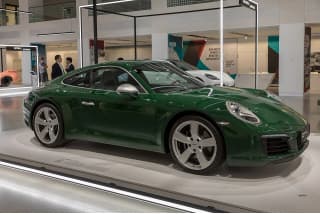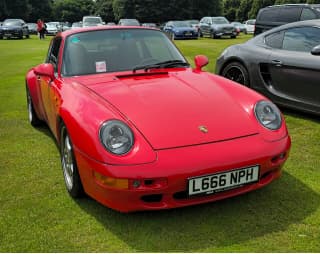
The Porsche Cayenne is a five-seat performance SUV and the first sport utility vehicle Porsche ever built. It launched in 2002, sold far beyond expectations, and the profits funded the development of the modern 911, Boxster, and Cayman. The range runs from a 348 horsepower base V6 up to the 650 horsepower Cayenne Turbo GT, which holds the production SUV lap record at the Nürburgring.
In this article, we’ll explain the Porsche Cayenne, the SUV whose profits funded Porsche’s modern sports cars. We’ll cover its generations, the Turbo GT, the new electric model, and pricing.
Contents
What Is the Porsche Cayenne
The Cayenne is Porsche’s full-size performance SUV. It arrived in 2002 as the brand’s first SUV and its first four-door production car, and it was a gamble. Purists worried that a tall family hauler would dilute the Porsche name. The market disagreed in a big way.
The Cayenne sold around 35,000 units a year against a projection of 25,000, and those profits gave Porsche the cash to keep developing its sports cars through the 2000s. In a real sense the Cayenne paid for the cars that made Porsche famous, including the modern 911. It also opened the door for the smaller Macan, and together the two SUVs now make up the bulk of Porsche sales worldwide.
Every Cayenne uses a front-mounted engine and all-wheel drive, which is the opposite of the rear-engine 911 formula. What makes it a Porsche is the way it drives. For a vehicle of its size and weight, the Cayenne corners and stops with a composure that shames most rivals.
Cayenne Generations
There have been three generations of combustion Cayenne, plus a new electric model that joined the range in late 2025. Each generation shares its platform with other Volkswagen Group SUVs, but the tuning and the engines are pure Porsche.
| Generation | Years | Engines | Power |
|---|---|---|---|
| 955 / 957 | 2002 to 2010 | V6, V8, twin-turbo V8, diesel | 247 to 542 hp |
| 92A | 2010 to 2018 | V6, V8, hybrid, diesel | 296 to 671 hp |
| 9Y0 | 2018 to present | turbo V6, twin-turbo V8, hybrid | 335 to 671 hp |
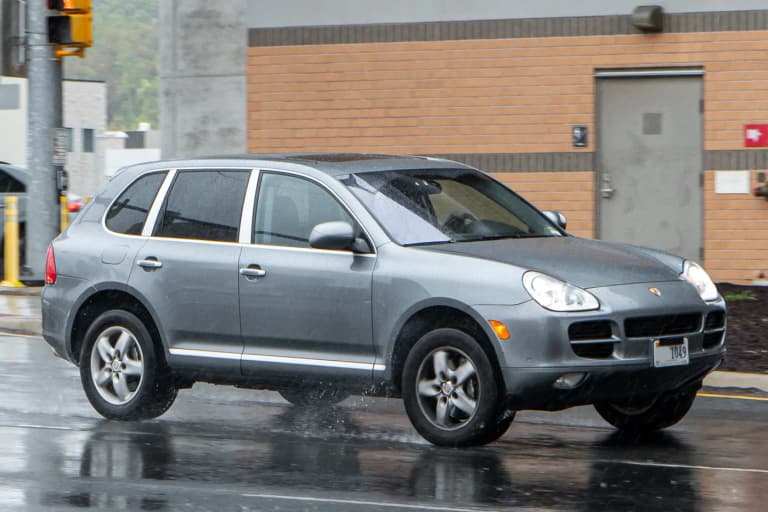
955 and 957 Cayenne (2002 to 2010)
The first Cayenne launched with a choice of a 3.2 liter V6, a 4.5 liter V8 in the Cayenne S, and a 4.5 liter twin-turbo V8 in the Cayenne Turbo making 450 horsepower. A 2006 Turbo S pushed that to 514 horsepower. These were genuinely fast trucks for the era, and they could tow, wade, and climb far better than anyone expected from a Porsche.
The 957 facelift in 2007 brought direct fuel injection and a larger 4.8 liter V8. Power climbed across the board, with the Turbo reaching 500 horsepower and the Turbo S 542 horsepower. Porsche also added its first ever diesel, a 3.0 liter V6 aimed at European buyers who wanted the range and torque.
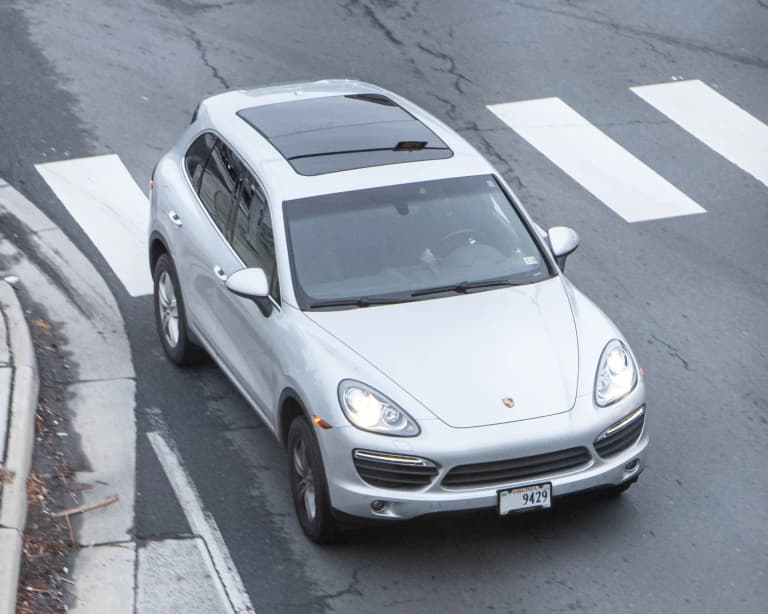
92A Cayenne (2010 to 2018)
The second-generation 92A shed around 250 kilograms through lighter materials and a smarter chassis. It looked sleeker than the slightly awkward first car and felt far more athletic. The lineup grew to include a V6 base model, a V8 S, a GTS, the Turbo, and the Turbo S.
This generation also pushed Porsche into electrification. The 2014 S E-Hybrid was a proper plug-in hybrid, and the S Diesel used a 4.1 liter V8 with enough torque to tow an Airbus A380 for a Guinness record. The Turbo S of this era made 542 horsepower and could embarrass sports cars in a straight line.
9Y0 Cayenne (2018 to present)
The current 9Y0 generation went fully turbocharged and dropped diesel entirely. The base car uses a 3.0 liter turbo V6, the S a 2.9 liter twin-turbo V6, and the GTS and Turbo models a 4.0 liter twin-turbo V8. At the top sat the Turbo S E-Hybrid with a combined 671 horsepower until the Turbo GT arrived.
A major update in 2024 reworked the cabin around a new digital cockpit and, notably, put a V8 back into the Cayenne S. The S now uses a twin-turbo 4.0 liter V8 with 468 horsepower, reversing the earlier move to six cylinders. The interior gained a curved digital cluster and an optional passenger display.
The Cayenne Coupe
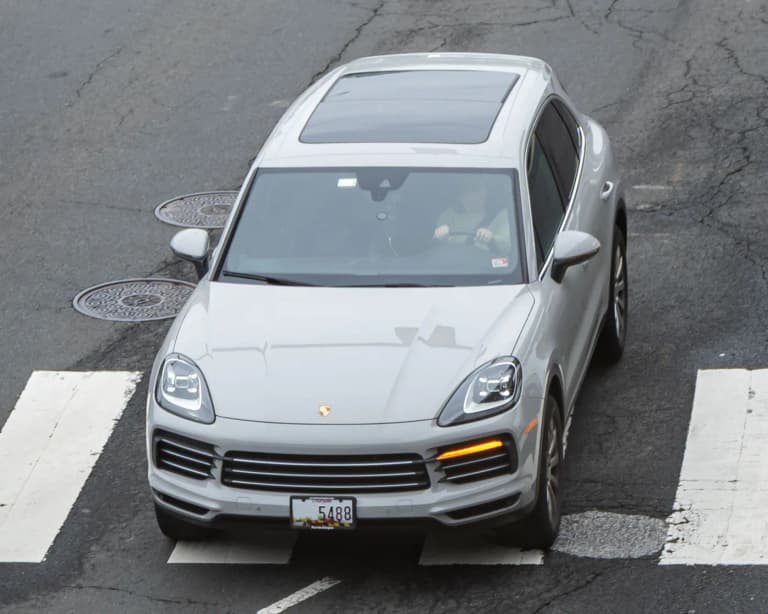
Porsche added a Cayenne Coupe body style in 2019. It is the same vehicle underneath but with a lower, faster roofline that slopes down to the tailgate. The change is about style rather than function, and it costs a little rear headroom and cargo space.
The Coupe carries a slightly lower drag figure and a more aggressive stance. Most of the hottest Cayennes, including the Turbo GT, are sold only in this body. If you want the sportiest look, the Coupe is the one to choose.
Engines and Powertrain
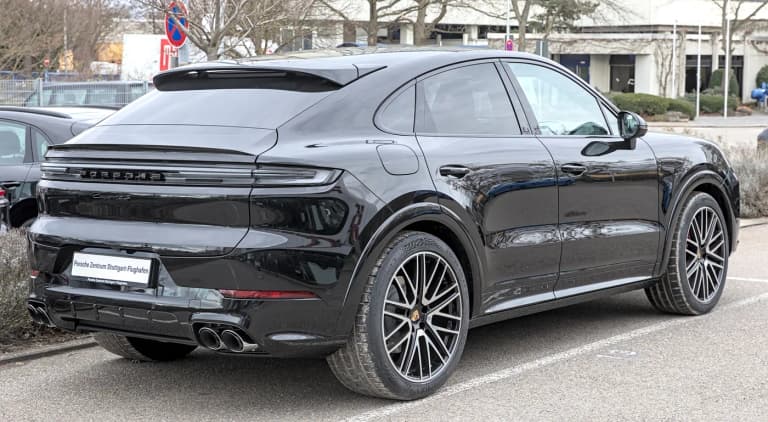
The Cayenne has always been a front-engine, all-wheel-drive vehicle, and that has stayed constant across every generation. What has changed is the move from large naturally aspirated V8s to smaller turbocharged engines, and then the steady addition of hybrid power.
Today the base and S hybrid models use a turbo V6, while the GTS, Turbo, and Turbo GT use a twin-turbo 4.0 liter V8. The plug-in hybrids pair a V6 or V8 with an electric motor for both efficiency and serious combined power. Every modern Cayenne drives through an eight-speed automatic and a permanent all-wheel-drive system that can shuffle torque front to rear.
Optional hardware turns the Cayenne into a genuine back-road weapon. Air suspension, rear-wheel steering, active anti-roll bars, and carbon ceramic brakes are all available, and they let a two-ton SUV change direction like something far smaller.
The Cayenne Turbo GT
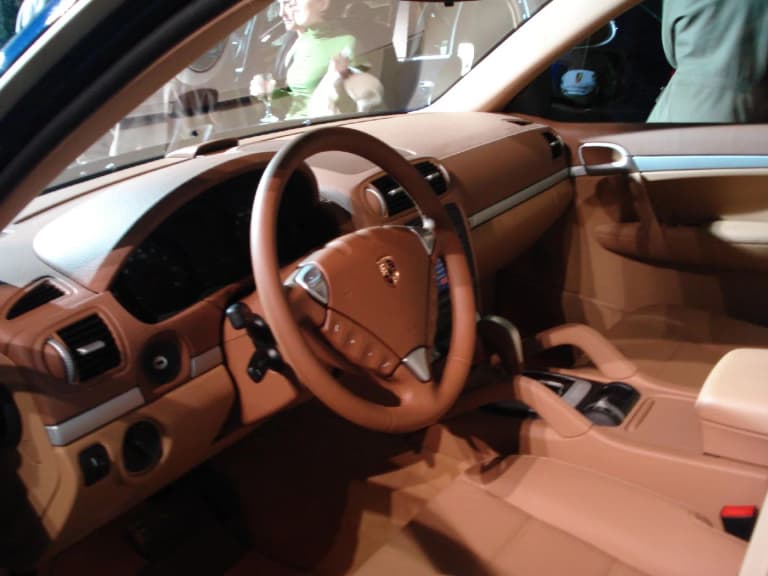
The Cayenne Turbo GT is the most extreme version Porsche builds. It launched in 2021 with a 4.0 liter twin-turbo V8 making 631 horsepower, later raised to 650 horsepower. It reaches 60 mph in 3.1 seconds and tops out near 190 mph, which are sports car numbers from a five-seat SUV.
Its headline achievement came at the Nürburgring Nordschleife, where it lapped in 7 minutes and 38 seconds to claim the production SUV record. The Turbo GT comes only as a Coupe with sharper suspension, wider tires, a titanium exhaust, and carbon trim. It is proof that the Cayenne can be both a family car and a track toy.
The Electric Cayenne
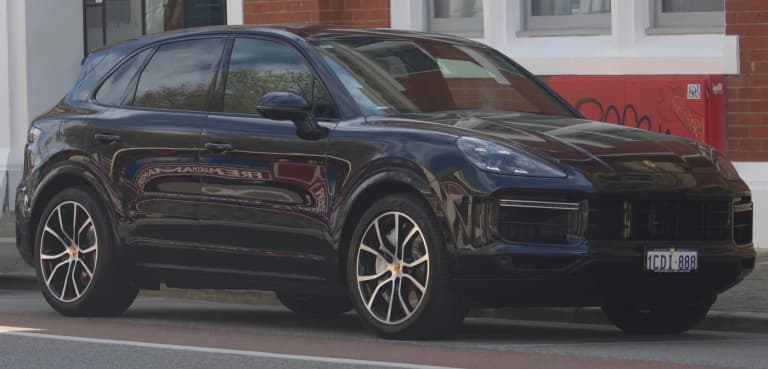
Porsche revealed a fully electric Cayenne in November 2025. It is built on the Premium Platform Electric architecture with a large 113 kWh battery and very fast charging. The most powerful versions are quoted at well over 1,000 horsepower, which would make the electric Cayenne the most powerful model Porsche has ever sold.
For now the electric car sits alongside the petrol and hybrid Cayenne rather than replacing it. Buyers will be able to choose combustion, plug-in hybrid, or full electric, at least for the next few years. US deliveries are expected from late summer 2026.
Pricing
The current Cayenne range starts around 90,000 US dollars for the base SUV. The Cayenne S sits near 108,000 dollars, the GTS around 132,000 dollars, and the flagship Turbo GT lists at roughly 215,000 dollars before options. Porsche options add up quickly, so a loaded car can climb far above its starting price.
The used market is where the Cayenne becomes accessible. Early 955 and 957 models can be found for the price of a modest hatchback, and clean 92A cars offer V8 performance for a fraction of their original cost. Just remember that cheap to buy does not mean cheap to run, which the ownership section covers next.
Ownership and Reliability
A modern Cayenne is a robust vehicle, but it is still a high-performance Porsche SUV, and the running costs reflect that. Tires, brakes, and routine service are expensive, and the air suspension fitted to many cars can be costly to repair as the vehicle ages.
The early 955 and 957 V8s have a few known weak points, including coolant pipes and the propensity for high mileage to surface expensive jobs. None of this is a reason to avoid a Cayenne, but a careful pre-purchase inspection is essential on any older car. Budget for maintenance the way you would for any V8 performance vehicle and the Cayenne rewards you with huge capability.
Frequently Asked Questions
Did the Cayenne really save Porsche?
It is not an exaggeration. The Cayenne sold well above forecast in the 2000s, and the profit funded the development of Porsche’s sports cars during a period when the company needed the money. The 911 and Boxster lines benefited directly from Cayenne revenue.
Which Cayenne generation is the best buy?
For the lowest price and a V8 soundtrack, a well-kept 92A is the value pick. For the best technology and performance, the current 9Y0 is the one to have, especially after the 2024 update. Avoid the cheapest, most neglected early cars unless you have a Porsche specialist lined up.
Is the Cayenne a real Porsche?
Yes. It shares engineering, tuning, and performance hardware with the rest of the range, and it drives like a Porsche despite its size. The Turbo GT even holds the production SUV lap record at the Nürburgring.
What is the difference between the Cayenne and the Macan?
The Cayenne is the larger, more powerful, and more expensive of Porsche’s two SUVs. The Macan is smaller and cheaper and now outsells the Cayenne. Our Porsche Macan guide covers the smaller car in full.
Is there an electric Cayenne?
Yes. Porsche revealed a fully electric Cayenne in late 2025, built on a dedicated electric platform with over 1,000 horsepower in its top form. It is sold alongside the petrol and hybrid models for now, with US deliveries expected from late summer 2026.
Image Credits
Images: 955 Cayenne S, 92A Cayenne, and 9Y0 Cayenne by OWS Photography, CC BY 4.0. Cayenne Turbo by EurovisionNim, CC BY-SA 4.0. Cayenne Coupe S by Alexander-93, CC BY-SA 4.0. Cayenne interior by Adrià García, CC BY-SA 2.0. Via Wikimedia Commons.