The Porsche Macan is a compact luxury SUV that launched in 2014 with petrol engines ranging from 252 to 440 horsepower. The first generation ran until 2023 on a platform shared with the Audi Q5. In 2024 Porsche replaced it entirely with a new electric-only Macan built on the PPE platform, with the top Turbo model producing 639 horsepower and reaching 60 mph in 2.9 seconds.
In this article, we’ll trace the Porsche Macan from its gas-powered debut to today’s electric relaunch. We’ll cover both generations, engines, driving character, and pricing.
Contents
- 1 What Is the Porsche Macan
- 2 First Generation Macan (2014 to 2023)
- 3 Second Generation Macan (2024 Onward)
- 4 Engines and Performance
- 5 Driving Character
- 6 Interior and Technology
- 7 Design
- 8 Used Prices: First Generation
- 9 New Prices: Second Generation
- 10 Ownership and Running Costs
- 11 Frequently Asked Questions
What Is the Porsche Macan
The Macan is Porsche’s compact SUV, positioned below the larger Cayenne and aimed at buyers who want Porsche dynamics in a smaller, more city-friendly body. The name comes from the Indonesian word for tiger, and the car launched in 2014 to fill a gap that rivals like the BMW X3 and Audi Q5 already occupied.
What set the Macan apart from the start was handling. Every version, including the base four-cylinder model, is built around a low center of gravity, rear-biased torque distribution, and an active all-wheel-drive system that behaves more like a sports car than a utility vehicle. The steering is direct, body roll is minimal, and the PDK gearbox responds quickly in Sport mode.
It became Porsche’s best-selling model almost immediately after launch and stayed that way for most of a decade. In 2024 Porsche completely replaced the first generation with a new electric version, making the Macan the brand’s first fully electric SUV.
First Generation Macan (2014 to 2023)
The first-generation Macan carries the internal code 95B and shares its platform with the Audi Q5 of the same era. That shared underpinning gave Porsche an established, proven structure to build on, and the engineering team used the flexibility to tune the suspension and steering toward a sharper character than the Q5 delivered.
Production ran from 2014 to 2023, with a mid-cycle facelift introduced in 2019 that updated the engines, revised the exterior, and added a new infotainment system with a larger touchscreen.
Trims and Variants
Porsche offered five distinct trim levels across the first-generation run, though not all were available in every market or year.
Macan was the entry model, using a turbocharged 2.0-liter four-cylinder. It produced 252 hp at launch, revised to 248 hp for 2019, then raised to 261 hp for the final 2022 model year. Despite the modest numbers it is genuinely quick for an SUV and remains the lightest and most agile of the range.
Macan S used a twin-turbocharged 3.0-liter V6 producing 340 hp in early models, rising to 348 hp with the 2019 engine revision. It closed the gap to the Turbo considerably for a modest price premium and is the sweet spot of the first-generation range for most buyers.
Macan GTS sat between the S and Turbo. Early cars used the same 3.0-liter V6 as the S but tuned to 360 hp, and came with Sport Chrono, the sportiest suspension settings, and black exterior details as standard. After 2019 the GTS switched to the same 2.9-liter V6 biturbo used in the Turbo, producing 375 hp.
Macan Turbo was the performance flagship. The original 3.6-liter twin-turbo V6 produced 400 hp with 440 hp available via the optional Performance Package. After 2019 this engine gave way to a new 2.9-liter V6 biturbo making 434 hp, which was lighter and responded faster across the rev range.
Macan T appeared for 2022 as a mid-tier model with off-road-inspired styling, the same 261 hp 2.0-liter engine as the base car, and a small price reduction compared to the S. It was aimed at buyers who wanted the visual package more than outright performance.
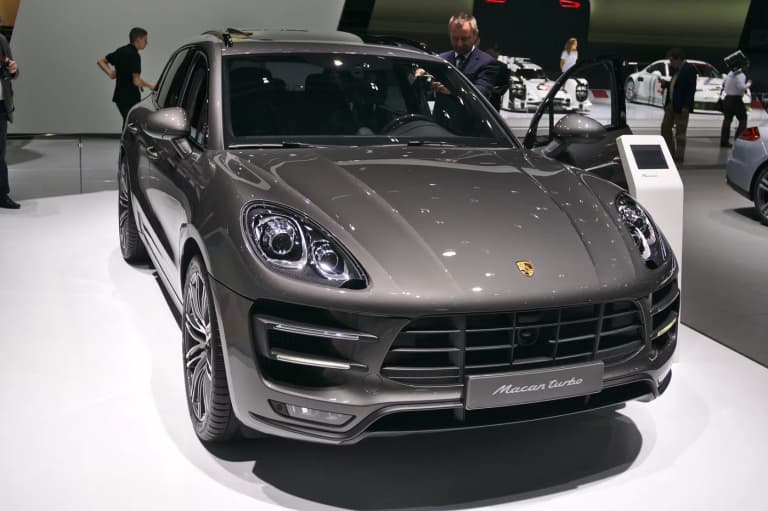
First Generation Specs at a Glance
| Model | Engine | Power | 0-60 |
|---|---|---|---|
| Macan (2014) | 2.0L turbo 4-cyl | 252 hp | 6.5 sec |
| Macan S (2014) | 3.0L TT V6 | 340 hp | 5.0 sec |
| Macan GTS (2016) | 3.0L TT V6 | 360 hp | 4.8 sec |
| Macan Turbo (2014) | 3.6L TT V6 | 400 hp | 4.6 sec |
| Macan Turbo + PP | 3.6L TT V6 | 440 hp | 4.4 sec |
| Macan Turbo (2019) | 2.9L V6 biturbo | 434 hp | 4.3 sec |
All first-generation models use a seven-speed PDK dual-clutch gearbox and a Porsche Traction Management all-wheel-drive system. No manual gearbox was offered at any point.
Second Generation Macan (2024 Onward)
Porsche launched the second-generation Macan in 2024 as a pure electric vehicle, ending the first-generation gas lineup entirely. The new car carries the internal code J1 and is built on the PPE platform, which Porsche developed jointly with Audi and also uses for the Audi Q6 e-tron.
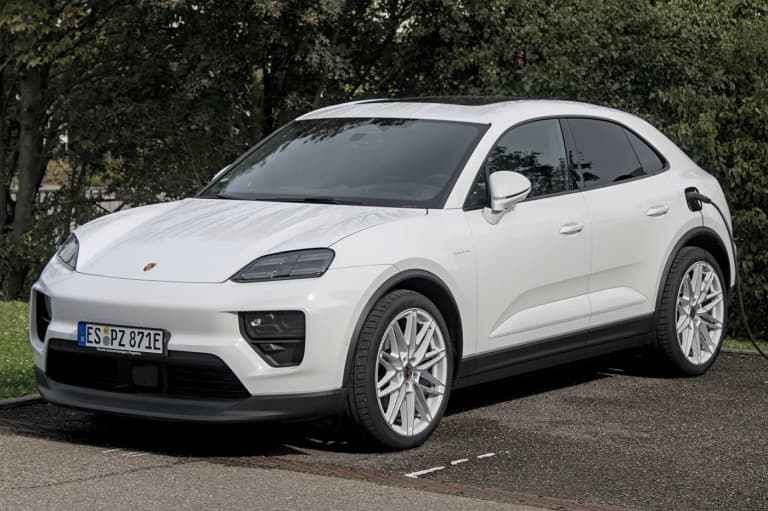
The platform uses an 800-volt electrical architecture, the same as the Taycan, which allows much faster charging than standard 400-volt systems. Peak DC charging speed reaches up to 270 kW on certain models, meaning a 10 to 80 percent charge can take under 22 minutes at a capable charger. The battery capacity is around 100 kWh gross, with approximately 95 kWh available to the driver.
Electric Trims
Macan is the rear-wheel-drive entry model with a single motor producing around 300 hp. It has a claimed range of approximately 308 miles on the WLTP cycle and reaches 60 mph in around 5.7 seconds.
Macan 4 adds a second motor at the front axle for all-wheel drive and 402 hp total. The extra power drops the 0-60 time to around 5.2 seconds. It is the volume seller in the second-generation range.
Macan 4S pushes output to 516 hp through more powerful motors on both axles. The 0-60 time drops to around 4.0 seconds, and top speed is rated at 152 mph.
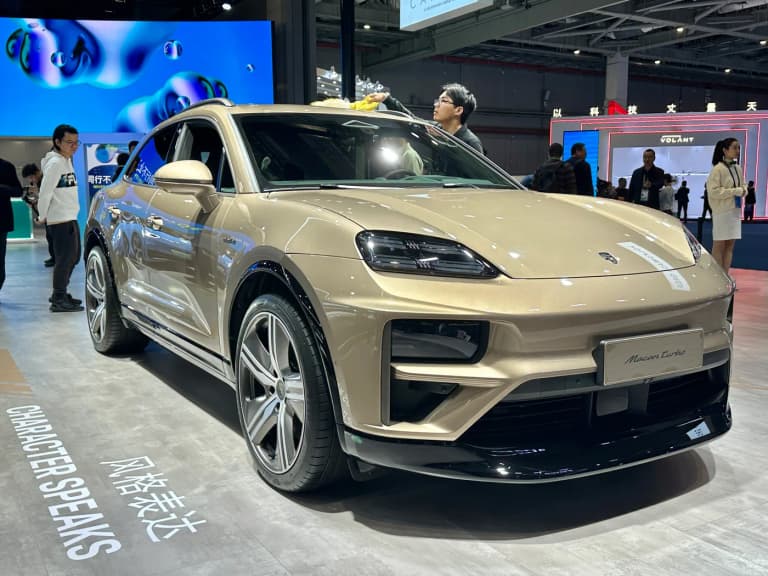
Macan Turbo is the electric flagship. Output is 630 hp in standard use and rises to 639 hp when Launch Control is active. The 0-60 time is 2.9 seconds, making it faster than most sports cars on that single metric. Top speed is 162 mph.
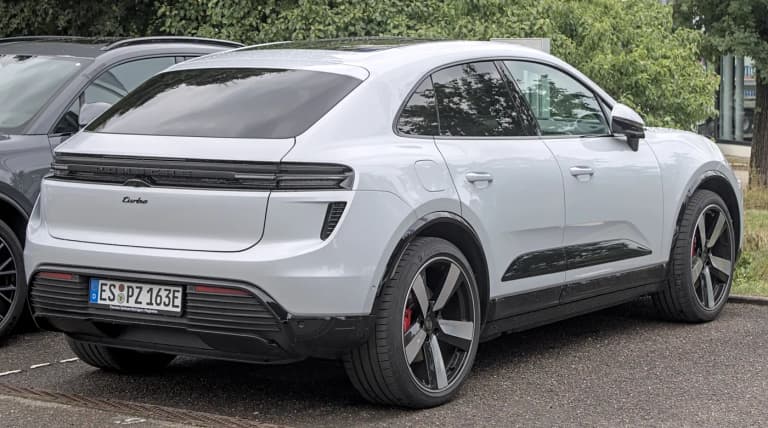
Second Generation Specs at a Glance
| Model | Drive | Power | 0-60 |
|---|---|---|---|
| Macan (2024) | RWD | 300 hp | 5.7 sec |
| Macan 4 | AWD | 402 hp | 5.2 sec |
| Macan 4S | AWD | 516 hp | 4.0 sec |
| Macan Turbo | AWD | 639 hp | 2.9 sec |
Engines and Performance
The first-generation Macan’s engine story runs across two distinct families. The early 3.0-liter and 3.6-liter V6 units came from Volkswagen Group’s modular engine family and were shared with various Audi and Volkswagen applications. They deliver a broad power band and a V6 note that suits the character of the car.
The 2019 facelift introduced the 2.9-liter EA839 V6 biturbo in the GTS and Turbo. This is the same engine family used across Porsche’s Cayenne and Panamera GTS models and in the Audi S and RS lineup. It produces power more cleanly across the rev range than the older 3.6-liter unit and is lighter, which helps the handling balance.
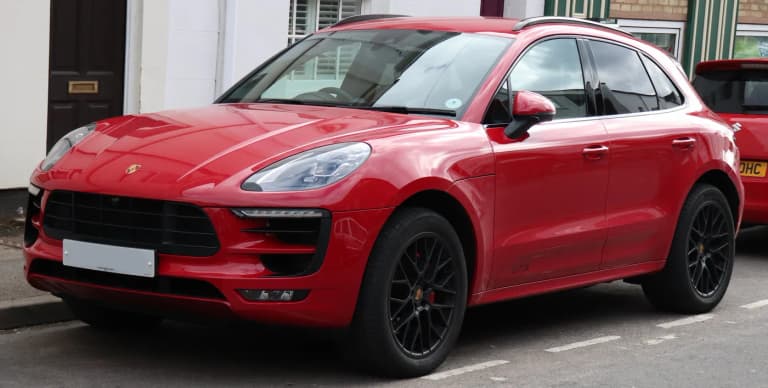
The four-cylinder 2.0-liter is a capable unit in the base car and has proven reliable over time. Buyers focused on running costs who still want the Macan driving experience often find the base engine sufficient for daily use, particularly in urban environments.
In the second-generation electric Macan, the performance leap from the 4S to the Turbo is significant. The Turbo’s 2.9-second 0-60 puts it into supercar territory for straight-line speed. The handling balance at the limit still differs from a sports car, thanks to the weight penalty of a large battery pack.
Driving Character
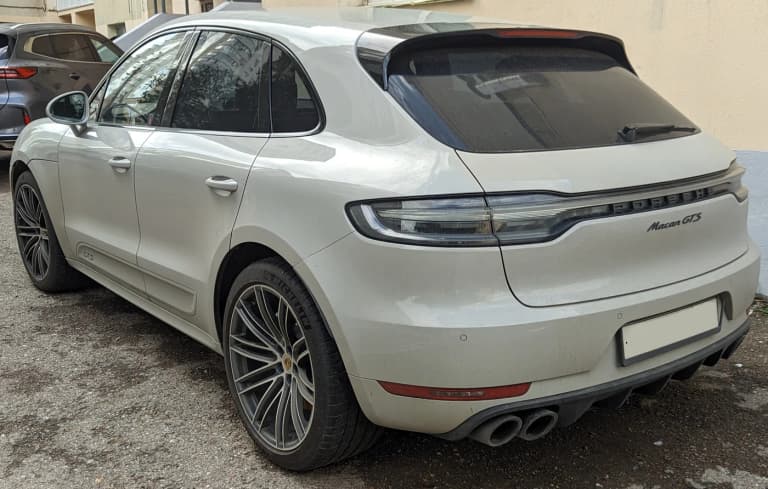
The Macan’s reputation rests on how it drives rather than what it carries. Porsche tuned the first-generation car with a lower ride height than rivals, stiffer springs, and a rear-biased torque split that gives the tail a willingness to rotate that you rarely find in a compact SUV. In normal driving this manifests as neutrality and precision. Press harder and the car rewards a driver who steers with the throttle.
The Porsche Active Suspension Management (PASM) air suspension fitted to higher models improves the range between comfort and sharpness considerably, though the standard steel springs on base cars are already well-judged. Sport Chrono adds a mode dial and a map button that sharpens throttle response and PDK shift speed.
The second-generation electric Macan retains the sharp steering and low-slung feel, which is notable because the car is heavier than the first generation by a meaningful margin due to its battery pack. Porsche’s chassis engineers tuned the suspension to compensate for the added weight. The result drives with similar intent to the gas version, even if the ultimate feel at the limit is different.
Interior and Technology
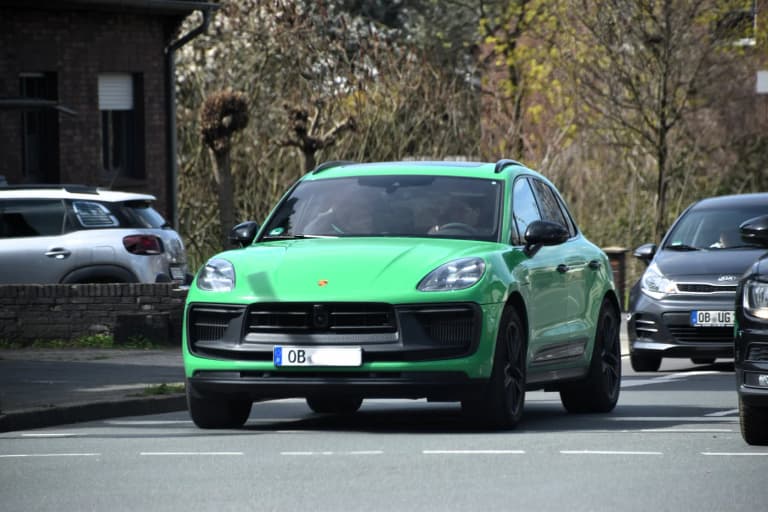
The first-generation Macan interior was praised at launch for feeling more like a sports car cabin than an SUV. The driving position is low, the center console sits high between the occupants, and the sightlines feel more enclosed and sporty than the Cayenne. Early cars used physical buttons and a relatively small screen, which many drivers found intuitive. The 2019 facelift replaced this with a 10.9-inch touchscreen running Porsche Communication Management 6.0.
Rear legroom is the honest compromise of the first-generation Macan. The car is 4,681 mm long, which is shorter than a BMW X3, and the sloping roofline cuts into headroom for taller rear passengers. It seats four adults comfortably for short journeys and four adults with some discomfort on longer ones. Boot capacity is 488 liters, which expands to 1,503 liters with the rear seats folded.
The second-generation electric Macan takes a very different interior approach. The curved display dominates the dashboard, with an 12.6-inch driver display and a 10.9-inch passenger screen alongside the main 10.9-inch center touchscreen. The layout echoes the Taycan and moves almost all functions onto touchscreen controls. Physical buttons are limited to a handful of shortcuts. The rear passenger space improves slightly over the first generation, and the front-axle motor frees up storage space under the front hood.
Design
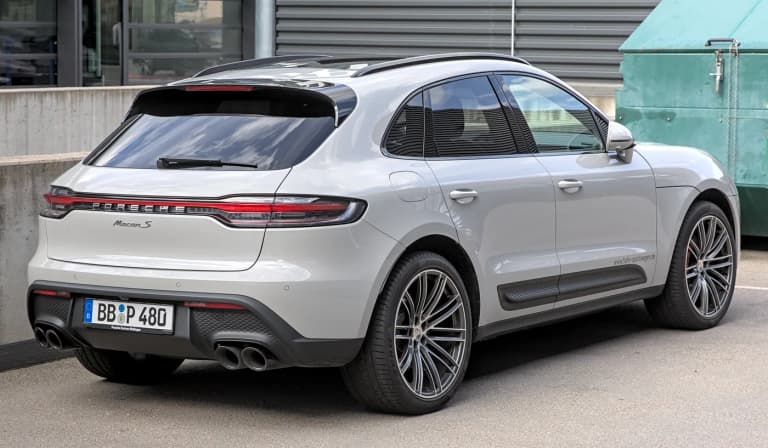
The first-generation Macan established a design that reads clearly as a Porsche at a distance. The front end uses four-point LED daytime running lights that reference the 911, and the rear has a broad light bar spanning the full width. The body is notably muscular in the wheel arches, particularly in GTS and Turbo specification with their wider body panels.
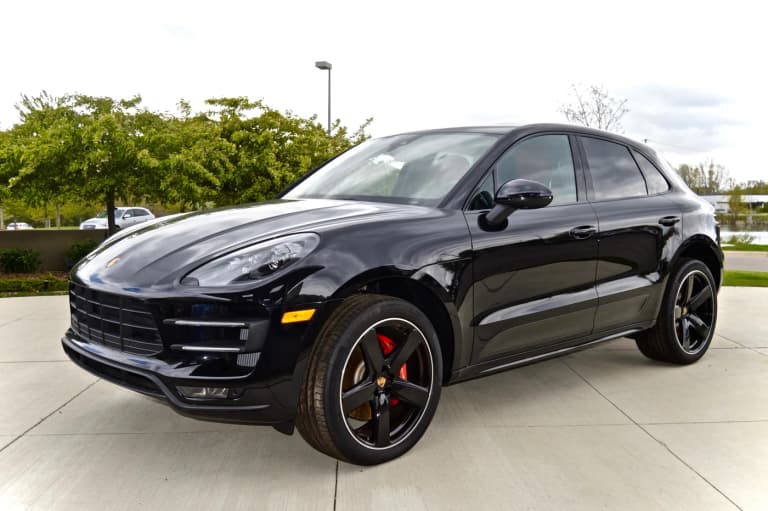
The second-generation electric Macan is longer and slightly taller than the first generation, though it retains a visually similar silhouette. The headlights adopt Porsche’s matrix LED technology. The air intakes are largely blanked off, since an electric motor needs no engine cooling. The rear lights use a connected strip design that differs from the classic quad-light look of the outgoing car.
Used Prices: First Generation
First-generation Macans offer some of the sharpest depreciation of any Porsche. A 2014 to 2016 base Macan in good condition typically trades between $22,000 and $32,000 in the United States as of 2026. A Macan S from the same era sits between $28,000 and $38,000, and a Turbo from those years ranges from $35,000 to $50,000 depending on mileage and specification.
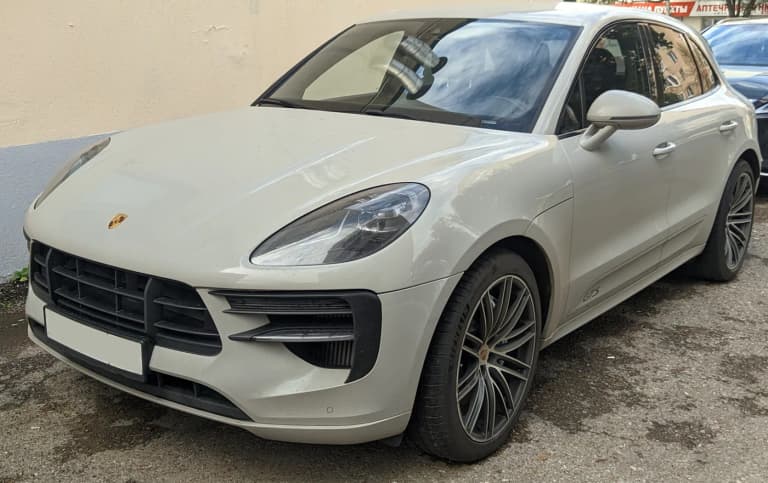
The post-facelift (2019 onward) cars command a premium. A 2019 to 2021 Macan Turbo with the 434-hp engine typically sells between $48,000 and $65,000 for clean examples. Late first-generation GTS models (2020-2022) run $45,000 to $60,000.
The introduction of the electric second generation accelerated first-generation depreciation, which is good news for buyers considering the petrol car. A 2021 or 2022 Macan S with low mileage can be found around $45,000 to $55,000, which represents strong value for a Porsche SUV with this level of performance and build quality.
New Prices: Second Generation
Second-generation Macan pricing in the United States starts around $74,000 for the base rear-wheel-drive model. The Macan 4 is approximately $84,000, the Macan 4S around $95,000, and the Turbo at around $110,000 before options. Typical Porsche option packages add $10,000 to $25,000 on top of the base price for buyers who want Sport Chrono, premium audio, or the full Driver’s Package.
Ownership and Running Costs
The first-generation Macan has a solid reliability record relative to other Porsche models of the same era. The most commonly reported issues involve the PDK gearbox (oil service intervals at high mileage), coolant system leaks on the older V6 engines, and the air suspension on PASM-equipped cars. Independent Porsche specialists can service the Macan at significantly lower cost than the main dealer network, and parts availability is good due to the shared Volkswagen Group platform.
For model-year risks, inspection priorities, and the safest used-buying starting point, read our Porsche Macan reliability guide.
Major maintenance items include the PDK fluid service every 40,000 to 50,000 miles, brake fluid replacement every two years, and coolant changes at approximately 60,000 miles. The transfer case and differentials should be inspected on any used example with over 60,000 miles, particularly if the car has spent time towing or in off-road use.
The electric second generation eliminates most of those mechanical maintenance concerns but introduces different ownership considerations. Charging infrastructure matters for daily use, and public DC fast-charging compatibility in markets outside Europe varies. Battery warranty terms cover eight years or 100,000 miles on most markets, which is the main ownership risk to understand before buying.
Frequently Asked Questions
What years did the first-generation Macan run?
The first-generation Macan (internal code 95B) ran from 2014 to 2023, with a facelift introduced for the 2019 model year that updated the engines, exterior, and infotainment system.
Is the Porsche Macan fully electric now?
Yes. From 2024 onward the Macan is sold only in electric form. Porsche replaced the petrol first generation entirely with a new model built on the PPE platform, making the Macan the brand’s first fully electric SUV.
What is the fastest Porsche Macan?
The second-generation Macan Turbo is the quickest version, producing 639 hp with Launch Control and reaching 60 mph in 2.9 seconds. Among first-generation petrol models, the Macan Turbo with Performance Package produced 440 hp and ran 0-60 in around 4.4 seconds.
How does the Macan compare to the Cayenne?
The Macan is shorter, lighter, and focused on driving dynamics over practicality. The Cayenne offers more passenger space, a larger boot, and more powertrain options including hybrids and plug-in hybrids. The Macan drives sharper; the Cayenne carries more.
Which first-generation Macan should I buy used?
The 2019 to 2021 Macan S gives the best balance of performance, reliability, and value. The revised 3.0-liter V6 is smoother than the older unit, the updated infotainment is a genuine improvement, and prices have depreciated to the point where a clean example represents good value against the broader compact SUV market. The Turbo from the same era is the performance choice if budget allows.
How long does the electric Macan take to charge?
The second-generation Macan uses 800-volt architecture and accepts DC fast charging at up to 270 kW on equipped models. At that rate, charging from 10 to 80 percent takes under 22 minutes. On a standard Level 2 AC home charger at 11 kW, a full charge takes approximately nine hours.
Images: Hero — 2022 Macan S and 2024 Macan 4 by Alexander-93, CC BY-SA 4.0. 2024 Macan Turbo by Alexander Migl, CC BY-SA 4.0. 2020 Macan GTS rear by Throwawayacc222, CC0. 2016 Macan GTS by Vauxford, CC BY-SA 4.0. 2020 Macan GTS front by Throwawayacc222, CC0. 2020 Macan S by Charles, CC BY 2.0. Electric Macan Turbo by JustAnotherCarDesigner, CC0. Macan Turbo (black) by Yahya S., CC BY 2.0. Macan S (Geneva 2014) by Clément Bucco-Lechat, CC BY-SA 3.0. Via Wikimedia Commons.