
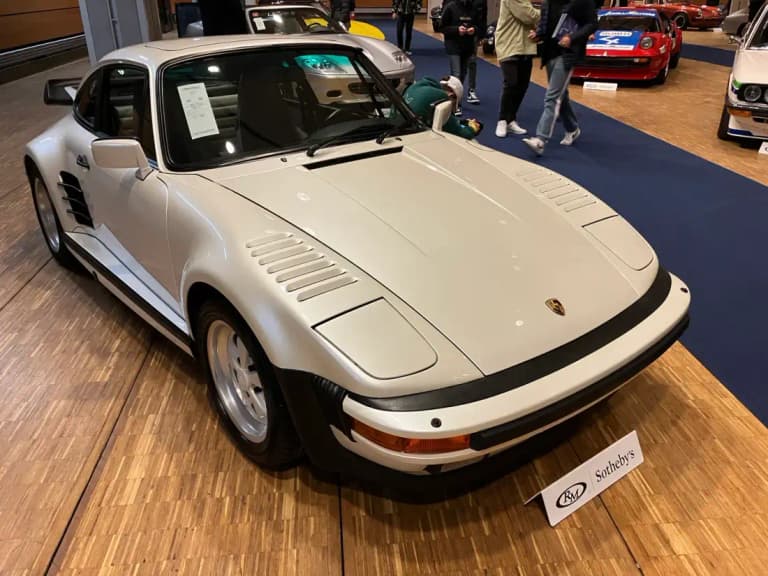
Flachbau (German for slantnose) is Porsche’s name for the pop-up-headlight nose it factory-built onto the 911 Turbo (Type 930) from 1982 to 1989, styled after the racing Porsche 935. Porsche’s 2026 “Flachbau RS” is not a revived production model. It is a single customer-commissioned Sonderwunsch one-off built from a 2018 911 GT2 RS.
In this article, we’ll separate the original Porsche Flachbau from the 2026 one-off. We’ll cover factory history, key specifications, and 2026 return.
Contents
- 1 Quick Summary
- 2 What “Flachbau” Means
- 3 The Original Factory Flachbau, 1982 to 1989
- 4 Where the Design Came From: the Porsche 935 and “Moby Dick”
- 5 Porsche’s 2026 Flachbau RS: A One-Off, Not a New Model
- 5.1 The Donor Car and the Patent Filing
- 5.2 Nearly Three Years of Development and Testing
- 6 Original Flachbau vs. 2026 Flachbau RS
- 7 Frequently Asked Questions
Quick Summary
- Name: Flachbau translates to slantnose and describes a flat, sloping nose that hides pop-up headlights.
- Original run: Porsche factory-built the Flachbau nose onto the 911 Turbo (Type 930) from 1982 to 1989 and sold 948 examples.
- Design source: The look traces to Porsche’s Group 5 race cars, including the 935/78 “Moby Dick” long-tail.
- 2026 return: Porsche built one Flachbau RS in 2026, a Sonderwunsch one-off from a 2018 911 GT2 RS with the Weissach Package, not a production car.
- Not for sale: The 2026 Flachbau RS was commissioned by a single customer, and Porsche has not opened an order book for more.
What “Flachbau” Means
Flachbau is a German word that translates to “slantnose” in English, and Porsche uses the two names for the same thing. It describes a front end where the standard 911’s upright, fixed headlights are replaced by a smooth, sloping nose with headlights that pop up from the bodywork.
The name applies to a specific factory-built car, not to every 911 with a slanted front end. Aftermarket slant-nose conversion kits have existed for decades, and plenty of 911s wear one without ever being an authentic factory Flachbau. If you are checking a particular car, the factory record counts for more than the bodywork.
The Original Factory Flachbau, 1982 to 1989
Porsche’s factory Flachbau was a modified version of the 911 Turbo (Type 930). Porsche’s own account describes it as a “spectacular modified version of the 911 Turbo (Type 930) with redesigned front wings and pop-up headlights.” Porsche offered it as a special-order option through the 1980s, according to Porsche Newsroom.
Porsche states it sold 948 examples of the modified 911 Turbo between 1982 and 1989. That is Porsche’s own combined figure for the run. The company’s public statement does not break it down by coupe versus cabriolet body style, or define the exact factory option codes buyers used to order it.
No primary Porsche record confirms a coupe-cabriolet split, so treat 948 as the whole-run total. Verify any individual car’s exact configuration against its own Porsche Certificate of Authenticity.
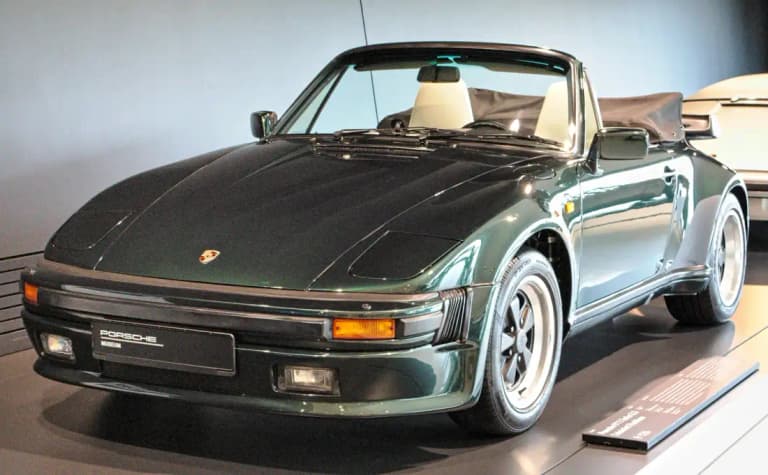
This cabriolet, on display in the Porsche Museum, shows the same nose treatment carried onto the open-top Turbo. Whether coupe or cabriolet, every genuine factory car shares the redesigned wings and headlight mechanism rather than a bolt-on kit.
Where the Design Came From: the Porsche 935 and “Moby Dick”
Porsche did not invent the slantnose look for a road car. It came from the track. Porsche’s own history states the design “was based on the legendary Porsche 935, which dominated endurance races for years,” as recorded in the same Porsche Newsroom account.
Porsche traces the look back further still, to the 1976 935 built for Group 5 racing. The company singles out the 935/78, nicknamed “Moby Dick,” as its most famous form, according to Porsche’s own account of the Flachbau RS.
The full story of the 935’s racing career, including Moby Dick’s Le Mans run and the 2018 tribute car Porsche built in its honor, lives on Renn Driver’s Porsche 935 guide. This article covers only how that racing shape found its way onto a road-going Turbo, and later onto the 2026 one-off below.
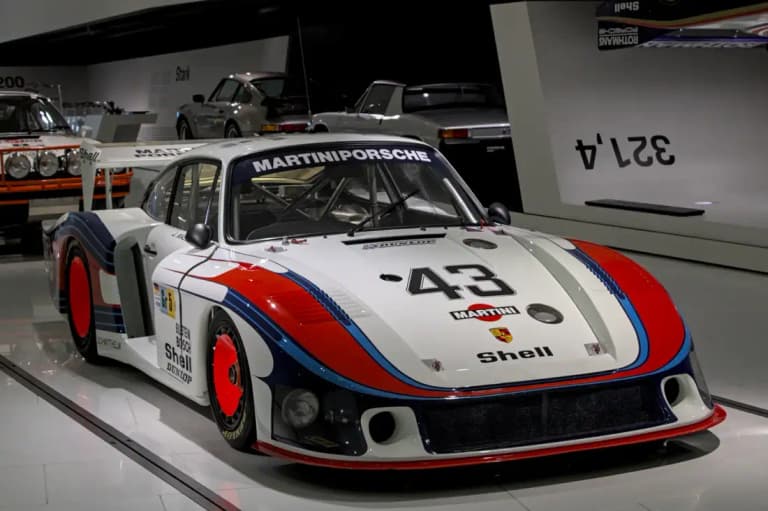
Moby Dick’s long, low tail and flat nose were built for outright speed on the Mulsanne Straight, not for a road car’s daily use. Porsche’s road-going Flachbau translated the visual idea, not the race engineering underneath it, onto a car you could actually drive to dinner.
Porsche’s 2026 Flachbau RS: A One-Off, Not a New Model
In August 2026, Porsche revealed a car it called the Flachbau RS, and headlines briefly treated it as a production comeback. It is not. Porsche’s own announcement is explicit that this is a single, customer-commissioned Sonderwunsch project, not a new model line, and Porsche has not stated plans to build a series-production Flachbau.
The Donor Car and the Patent Filing
The 2026 Flachbau RS started life as a “like-new 911 GT2 RS (Type 991.2) with Weissach Package from 2018,” transformed at the request of “a Porsche enthusiast,” according to Porsche Newsroom. That donor car’s 3.8-liter twin-turbo flat-six, producing 700 PS, carried over unchanged, according to Porsche’s own account. Renn Driver’s Porsche 911 GT2 RS guide covers that base car’s full spec sheet and Weissach Package contents.
Months before the reveal, Porsche had registered “Flachbau” and “Flachbau RS” as model designations with the European Patent Office in May 2025, which fueled speculation about a new production model. Porsche’s own account clarifies that the filing existed only to protect the name for this one transformation, not to signal an upcoming series.
Nearly Three Years of Development and Testing
Porsche says a multidisciplinary team, drawn from the Sonderwunsch department, Style Porsche, Weissach development engineers, Porsche Motorsport, and Manthey, worked on the project for almost three years, per the same Porsche Newsroom account. That is a serious engineering effort for a single car, not a styling exercise bolted onto an existing shell.
Porsche reports the finished car is 31.6 kg lighter than before the transformation. The team built three test vehicles, ran 50 laps of the Nürburgring-Nordschleife, and ran endurance tests at Weissach that simulated roughly 150,000 kilometers of rear-wing loading before signing the car off. That level of validation is closer to how Porsche tests a limited-run GT car than how it might finish a one-off show piece.
Original Flachbau vs. 2026 Flachbau RS
The two cars share a name and a silhouette, but almost nothing else. This table separates the two so a search for “Flachbau” does not accidentally conflate them.
| Detail | Original Flachbau | 2026 Flachbau RS |
|---|---|---|
| Years | 1982-1989 | 2026 |
| Basis car | 911 Turbo (930) | 2018 991.2 GT2 RS |
| Design link | Porsche 935 | 935/78 Moby Dick |
| Units built | 948 | 1 |
| Built by | Porsche factory option | Sonderwunsch and Manthey |
If you see “Flachbau” in a listing or a headline, check which row it belongs in before assuming anything about rarity, price, or availability.
Frequently Asked Questions
What does Flachbau mean, and is it the same as slantnose?
Flachbau is German for slantnose, and Porsche uses the two terms interchangeably. Both describe the flat, sloping front end that replaces the 911’s upright headlights with pop-up units.
How many factory Porsche Flachbau cars did Porsche build?
Porsche states it sold 948 examples of the Flachbau version of the 911 Turbo (Type 930) between 1982 and 1989. Porsche’s public figure does not break that total down by coupe or cabriolet body style.
Is the 2026 Porsche Flachbau RS a new production model?
No. It is a single customer-commissioned Sonderwunsch one-off, not a production car you can order. Porsche built exactly one and has not announced a production run.
What car is the 2026 Flachbau RS based on?
Porsche started with a like-new 2018 911 GT2 RS (Type 991.2) with the Weissach Package and kept its 3.8-liter, 700 PS twin-turbo flat-six. The Sonderwunsch department and Style Porsche then reworked the body with Manthey.
How is the Flachbau related to the Porsche 935 “Moby Dick”?
Porsche based the Flachbau’s sloping nose on its Group 5 race cars, and the 2026 Flachbau RS specifically draws on the long-tail 935/78, nicknamed Moby Dick. The 935 itself has its own full history on Renn Driver.
Can you order a Porsche Flachbau RS today?
No. Porsche built the 2026 Flachbau RS for one customer through its Sonderwunsch personalization program, and the brand has not opened an order book for additional cars.
Images: 1989 Porsche 911 Turbo Flachbau by Pelicanactor, CC BY-SA 4.0. Porsche 911 Turbo 3.3 Cabriolet Flachbau and Porsche 935-78 “Moby Dick” by Alexander Migl, CC BY-SA 4.0. Via Wikimedia Commons. Local copies resized and converted to WebP; no other modifications.