Porsche has won the 24 Hours of Le Mans 19 times, more than any other manufacturer in history. The run started in 1970 with the 917 and reached its most recent peak with the 919 Hybrid in 2017. Along the way the 956 and 962 won seven years straight, and a road-derived 962 even won in 1994. No other name is so tied to this race.
In this article, we’ll recount Porsche’s 19 overall Le Mans wins. We’ll cover the winning cars, each era, the 963, and why Porsche wins.
Contents
Quick Summary
- Overall Wins: 19 outright Le Mans victories, the most of any manufacturer in history.
- First Win: 1970, with the Porsche 917K driven by Hans Herrmann and Richard Attwood.
- Dominant Streak: The 956 and 962 won seven years in a row, from 1981 through 1987.
- Road-Car Win: A road-derived Dauer 962 Le Mans won outright again in 1994, a decade after the car’s debut.
- Most Recent Win: 2017, with the 919 Hybrid completing a three-peat from 2015 to 2017.
- Current Program: The 963 Hypercar has raced since 2023 under Porsche Penske Motorsport, chasing a 20th overall win.
- Closest Rival: Audi sits second all-time with 13 overall wins, far behind Porsche’s 19.
Why Le Mans Matters to Porsche
Le Mans is not just another race on the Porsche trophy shelf. It is the race that built the company’s reputation as the best in the world at making cars that go fast and keep going. The Porsche Le Mans story runs through almost every road car the brand has sold since the 1970s.
The Hardest Test in Motorsport
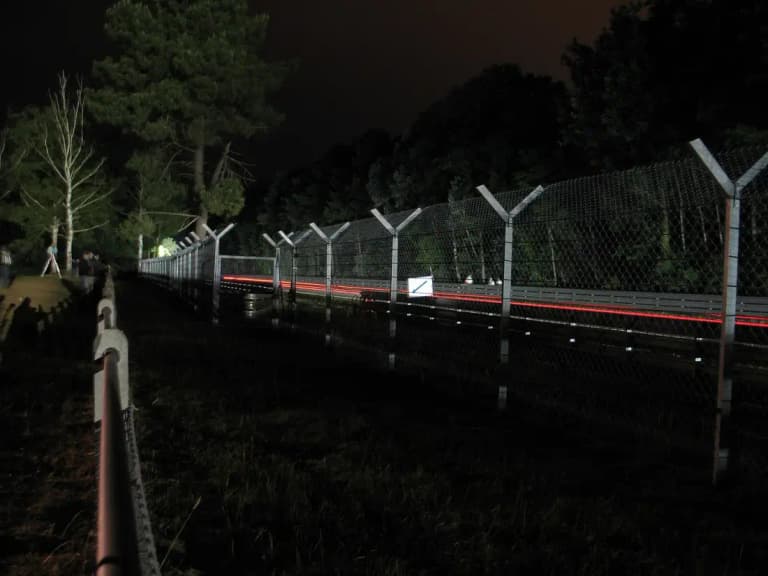
The 24 Hours of Le Mans is the hardest test in motorsport. Cars run flat out for a full day and night around the Circuit de la Sarthe in France, and only the fast and the reliable survive. A car can lead for 23 hours and still lose in the final lap to a broken gearbox.
That is what makes the race so brutal. Outright pace gets you nothing if a part fails at 3am. Winning Le Mans once makes a car a legend. Porsche has done it 19 times, which is why the brand owns this race in a way no rival does.
The Record That Defines the Brand
That record of 19 overall wins is the single biggest reason Porsche is regarded as the greatest endurance racing brand. You can read the full count on Porsche’s own company history, but the short version is simple. No rival comes close. Audi sits second with 13 wins, and Ferrari, which won the modern Hypercar era races, still trails far behind on the all-time list.
The wins also shaped the road cars. The turbocharging, the aerodynamics, and the obsession with efficiency that define a modern 911 were all sharpened at Le Mans first. The race is not a side project for Porsche. It is part of the company’s DNA, and it feeds straight back into the cars you can buy.
Porsche’s Le Mans Wins, Era by Era
Porsche had raced at Le Mans since the 1950s, taking class wins with small, light cars while bigger rivals chased the overall prize. The famous 19 wins fall into five clear eras, each built around a defining car. Walk through them in order and the whole Porsche Le Mans story makes sense.
1970 and 1971: The 917 Breakthrough
The overall prize stayed out of reach for years until the 917 arrived. After a difficult and dangerous debut season in 1969, the car was reworked into the short-tail 917K, which finally tamed its frightening high-speed handling.
In 1970 the 917K gave Porsche its first overall victory, with Hans Herrmann and Richard Attwood driving. The car won again in 1971. The 917 is now one of the most famous racing cars ever built, helped by its starring role in the Steve McQueen film. You can dive deeper in our 917 guide.
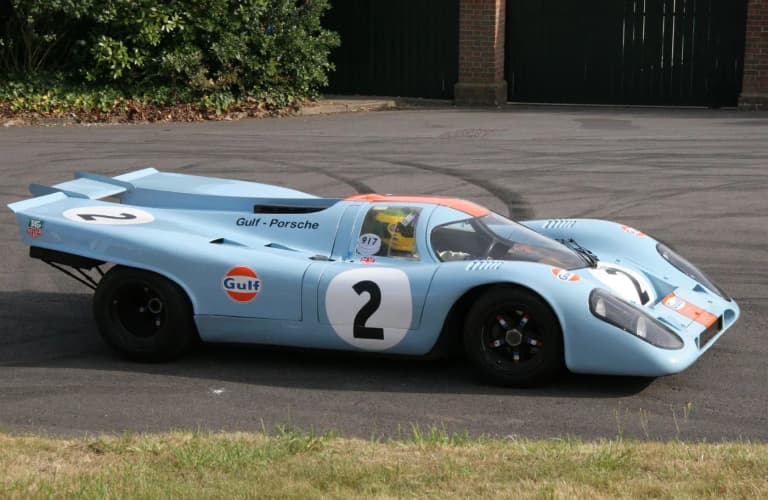
The 917 ran a huge air-cooled flat-twelve engine, a layout unlike anything Porsche sells today. It produced well over 500 horsepower and could top 240 mph on the Mulsanne straight, according to the model’s documented history. After two wins, a rules change pushed the big five-liter prototypes out, and Porsche had to find a new path back to the front.
1976 to 1981: The 936 Turbo Era
When the rules opened up again in the mid 1970s, Porsche returned with the 936. It was an open-top prototype powered by a turbocharged version of the flat-six, the start of the turbo era that would define the next decade of Porsche racing.
The 936 won Le Mans in 1976 and 1977, then took a third win in 1981. Jacky Ickx, who became one of the greatest Le Mans drivers of all time, won twice in the 936. The car proved that a smaller, turbocharged engine could beat the big naturally aspirated machines over 24 hours by sipping less fuel and stopping less often.
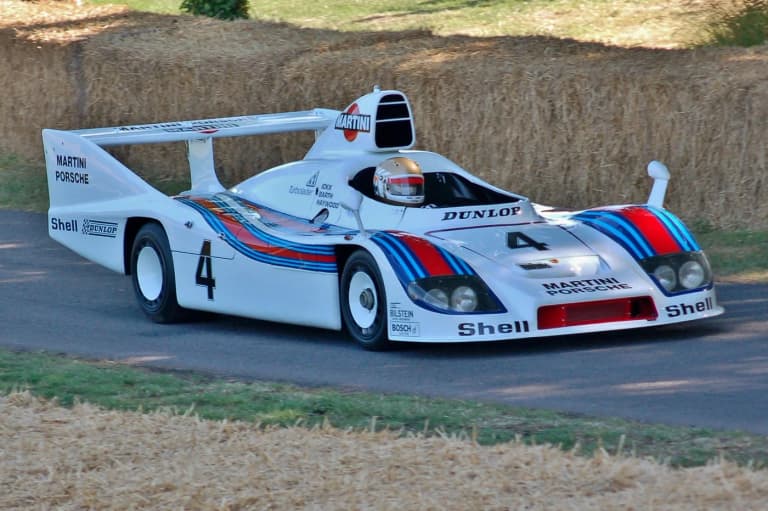
That 1981 win mattered for another reason. Its engine previewed the unit Porsche would use in its next car, and that car would rewrite the record books. The 936 was the bridge between the 917 and the dynasty that followed.
1981 to 1987: The 956 and 962 Dynasty
The 956 arrived in 1982 and changed everything. It was the first Porsche to use ground-effect aerodynamics to generate huge downforce, paired with a turbocharged flat-six and an aluminum monocoque chassis, per its factory record. It was fast, efficient, and tough, the perfect endurance car.
Counting the 936’s 1981 win, Porsche then won Le Mans seven years in a row, from 1981 to 1987. The 956 took 1982 through 1985, and its successor the 962 carried on through 1986 and 1987. Porsche even sold the cars to privateer teams, so the grid was packed with 956s and 962s fighting each other for the overall win.
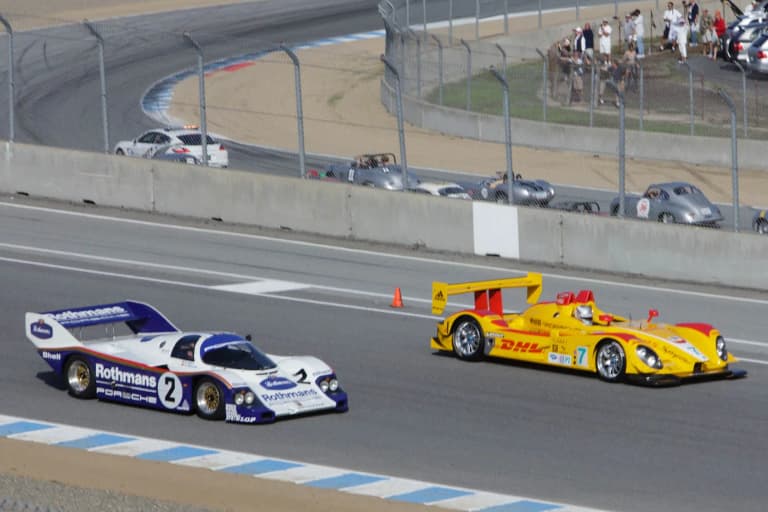
This is the heart of the Porsche Le Mans record. No other car family has dominated the race for so long. The 962C below shows how widely the design spread, this one in privateer Leyton House colors rather than the works Rothmans livery.
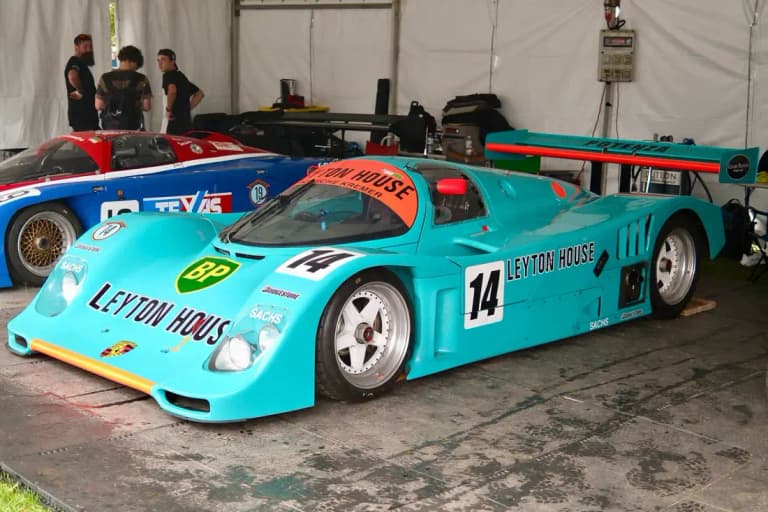
The engine behind this dynasty traces straight to the road-going Mezger engine found in later GT3 and Turbo models, which is part of why those cars are so revered by collectors and drivers alike.
1994 and 1998: The Dauer and GT1 Wins
By the 1990s the prototype rules had changed again, but Porsche found clever ways back to the top step. In 1994 a road-legal Dauer 962, built to exploit a loophole in the GT category, won the race outright. It was a 1984 design beating purpose-built rivals a full decade later.
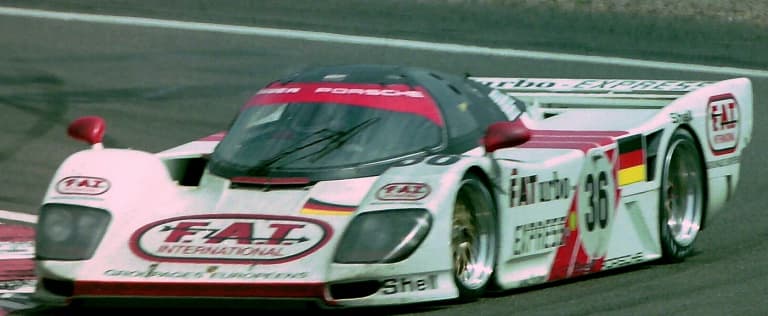
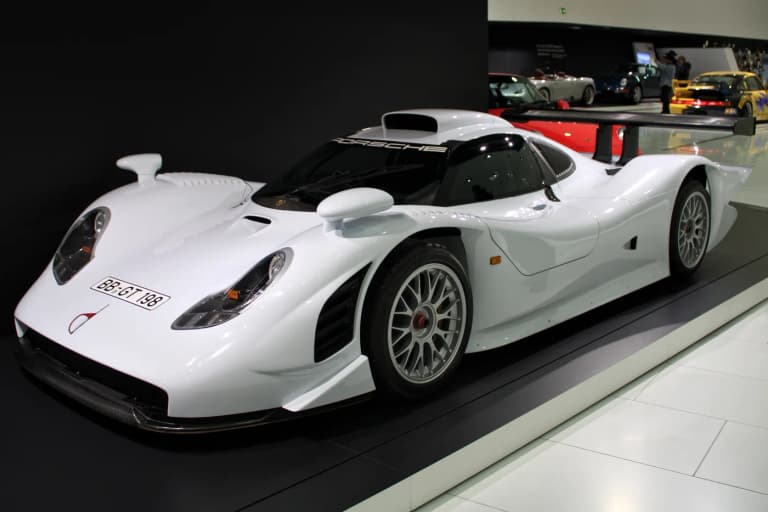
Then came the 911 GT1. Built to the new GT1 class rules, it was a mid-engined racer that wore 911 headlights to keep the road-car link. After near misses in 1996 and 1997, the 1998 GT1-98 version won outright, giving Porsche its 16th victory. It was the last win before a long break from the top class. The full story is in our 911 GT1 guide.
2015 to 2017: The 919 Hybrid Three-Peat
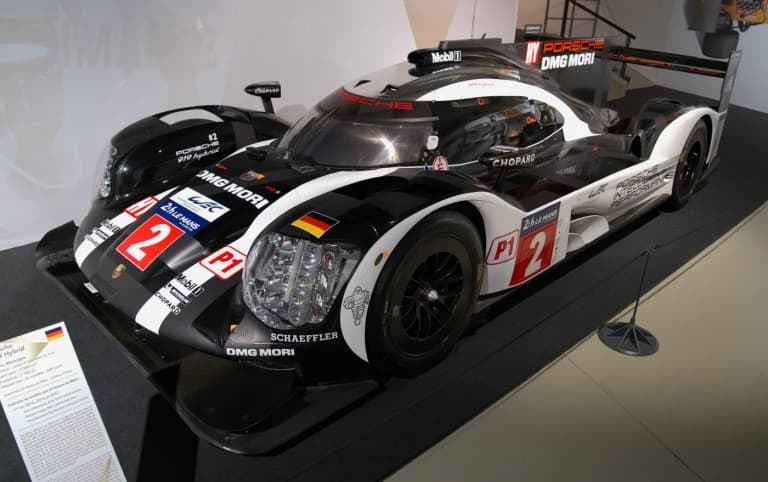
Porsche returned to the top class in 2014 with the 919 Hybrid, a technological marvel. It paired a small 2.0-liter turbocharged V4 engine with a powerful hybrid system that recovered energy under braking and from the exhaust gases. Combined output reached around 900 horsepower, per the car’s technical record. It was the most complex racing car Porsche had ever built.
After a tough first year, the 919 won three times in a row, in 2015, 2016, and 2017. The 2015 win went to Nico Hülkenberg, Earl Bamber, and Nick Tandy. The 2017 victory, the marque’s 19th and most recent, went to Timo Bernhard, Earl Bamber, and Brendon Hartley.
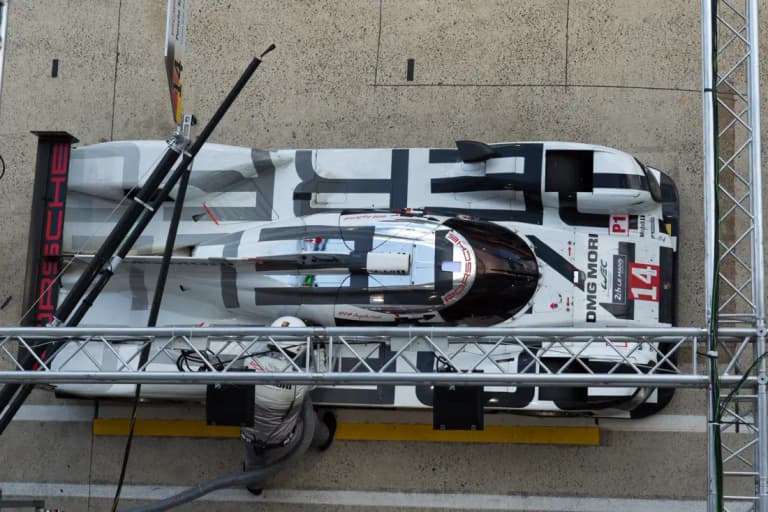
Those wins showed that Porsche could win Le Mans with hybrid technology, just as the 936 had once proven the turbo. After 2017 Porsche retired the 919 and stepped back from the top class to focus on Formula E. It has since returned with the 963, chasing win number 20.
The Porsche 919 Hybrid Evo guide explains how Porsche removed WEC restrictions from the retired prototype and used it for the 2018 Spa and Nürburgring record runs.
Every Porsche Le Mans Win at a Glance
Nineteen wins is a lot to hold in your head. Here is the full list of every overall Porsche Le Mans victory, the winning car, and the era it belongs to.
| Year | Car | Engine |
|---|---|---|
| 1970 | 917 KH | Flat-12 |
| 1971 | 917 KH | Flat-12 |
| 1976 | 936 | Turbo flat-6 |
| 1977 | 936 | Turbo flat-6 |
| 1979 | 935 K3 | Turbo flat-6 |
| 1981 | 936 | Turbo flat-6 |
| 1982 | 956 | Turbo flat-6 |
| 1983 | 956 | Turbo flat-6 |
| 1984 | 956 B | Turbo flat-6 |
| 1985 | 956 B | Turbo flat-6 |
| 1986 | 962 C | Turbo flat-6 |
| 1987 | 962 C | Turbo flat-6 |
| 1994 | Dauer 962 LM | Turbo flat-6 |
| 1996 | TWR WSC-95 | Turbo flat-6 |
| 1997 | TWR WSC-95 | Turbo flat-6 |
| 1998 | 911 GT1-98 | Turbo flat-6 |
| 2015 | 919 Hybrid | Turbo V4 hybrid |
| 2016 | 919 Hybrid | Turbo V4 hybrid |
| 2017 | 919 Hybrid | Turbo V4 hybrid |
The 1979 win with the 935 K3 was a privateer entry, and the 1996 and 1997 wins came in the Joest-run WSC-95, which used a 962-derived engine. The thread through almost the entire list is the turbocharged flat-six, the engine family Porsche refined for decades.
The 963 and the Hunt for Win Number 20
The Porsche Le Mans story did not end in 2017. After six years away from the top class, Porsche came back in 2023 with a brand-new Hypercar, the 963. The goal is simple. Make it 20.
What the 963 Is
The 963 is an LMDh prototype built to the rules that now unite Le Mans and the American IMSA series. It uses a twin-turbo V8 derived from the RS Spyder racer of the late 2000s, fed through a spec hybrid system shared across the class. It is run by Porsche Penske Motorsport, the works team, alongside several customer entries.
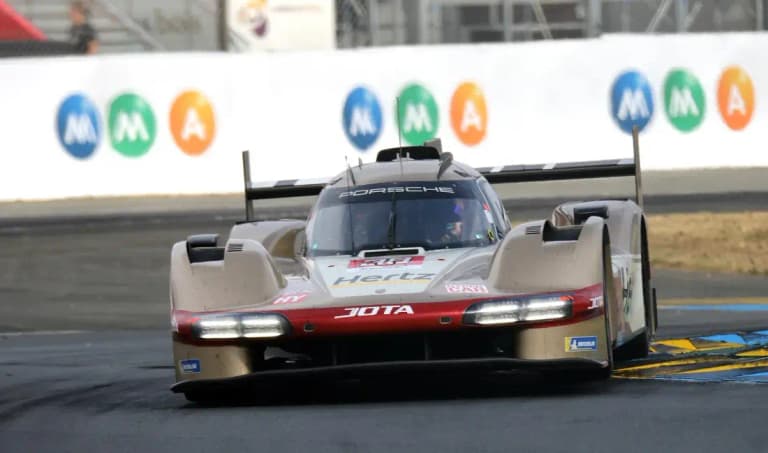
What makes the 963 different from the 919 is the rulebook. Where the 919 was a no-expense-spared LMP1 weapon, the 963 races to a tighter, cost-capped formula against a packed field of Ferrari, Toyota, Cadillac, and BMW. The racing is far closer, and a 20th win has to be earned the hard way.
The Comeback So Far
The 963 has not yet added to the tally at Le Mans, where Ferrari took the 2023 and 2024 overall wins on the race’s return to a stacked top class. But Porsche has racked up wins elsewhere in the championship and in IMSA, and the customer cars keep the grid full of 963s, exactly the privateer strategy that built the original record.
For Porsche, the chase is the point. A 20th overall win would stretch a lead that already looks untouchable, and the brand has made clear it is in the Hypercar era for the long haul. The 963 also races in the United States in IMSA, so the program earns its keep on two continents rather than living or dying on one race a year.
That dual-series approach is new. The old LMP1 919 was built for a single championship, while the 963 has to win across two rulebooks and two calendars. It is a harder job, but it keeps Porsche sharp and the customer cars busy, which is exactly how the brand stayed dominant in the 956 and 962 years.
Why Porsche Keeps Winning
Nineteen wins is not luck. A few clear principles explain why Porsche keeps winning at Le Mans across completely different eras and rulebooks.
Reliability and Efficiency Over Raw Speed
Le Mans rewards cars that last 24 hours, not cars that are fastest for one lap. Porsche has always built to finish, then built to win. Time and again a Porsche has inherited the lead late because a faster rival broke.
- Reliability over raw speed. The car that is running at hour 24 beats the car that led at hour two. Porsche engineers for the finish line first.
- Fuel efficiency as a weapon. Fewer fuel stops win races. The 936 turbo, the 956, and the 919 Hybrid all turned efficiency into lap-time advantage.
- Refining proven designs. The 962 grew from the 956, the GT1 used a proven engine, and each step built on the last instead of starting from scratch.
Selling Race Cars to Privateers
The other half of the formula is the customer program. By selling the 956 and 962 to private teams, Porsche filled the grid with its own cars and multiplied the odds that a Porsche would be standing at the end.
That strategy is alive again with the 963. From the 917 to the 963, Porsche turned the world’s toughest race into its own backyard. Many of these winners also rank among the most valuable Porsche models today, and the engineering behind them lives on in the flat-six engine at the heart of the road cars.
Frequently Asked Questions
How many times has Porsche won Le Mans?
Porsche has won the 24 Hours of Le Mans 19 times overall, more than any other manufacturer. The wins span from 1970 to 2017, across the 917, 936, 956, 962, 911 GT1, and 919 Hybrid.
When did Porsche first win Le Mans?
Porsche took its first overall win in 1970 with the Porsche 917K, driven by Hans Herrmann and Richard Attwood. It was the start of the most successful run in the history of the race.
Which Porsche won Le Mans the most?
The 956 and its successor the 962 were the most dominant, winning every year from 1981 through 1987. The 956/962 platform is the backbone of Porsche’s Le Mans record.
What was Porsche’s last Le Mans win?
Porsche’s most recent overall win came in 2017 with the 919 Hybrid, completing a three-peat from 2015 to 2017. Porsche then retired the LMP1 program. The 963 now races in the top class.
Why is Porsche so successful at Le Mans?
Endurance racing rewards reliability, efficiency, and clever engineering as much as outright speed. Porsche built cars that lasted 24 hours, sold them to privateers, and kept refining proven designs, which is how it stacked up 19 wins.
Is Porsche still racing at Le Mans?
Yes. Porsche returned to the top class in 2023 with the 963 Hypercar, run by Porsche Penske Motorsport and several customer teams. The 963 is chasing Porsche’s 20th overall Le Mans victory.
Images: Hero (919 Hybrid) by MrWalkr, CC BY-SA 4.0; Le Mans at night by Mike Roberts, CC BY-SA 2.0; 917K Gulf by Brian Snelson, CC BY 2.0; 936 Martini by Bahnfrend, CC BY-SA 4.0; 956 Rothmans by Curt Smith, CC BY 2.0; 962C Leyton House by Yu Chu Chin, CC BY-SA 4.0; Dauer 962 by Martin Lee, CC BY-SA 2.0; 919 pit stop by Curt Smith, CC BY 2.0; 963 at Le Mans by Martin Lee, CC BY-SA 2.0. Via Wikimedia Commons.