The Porsche 963 is Porsche’s LMDh hybrid prototype, built to fight for overall wins in endurance racing. It pairs a 4.6 liter twin-turbo V8 with a spec hybrid system for about 680 PS. The car races in both the IMSA series and the FIA World Endurance Championship. Porsche Penske Motorsport runs the factory cars, and the 963 has already won championships in the United States and Europe.
In this article, we’ll explain the Porsche 963, Porsche’s LMDh hybrid prototype built to win Le Mans. We’ll cover its hybrid powertrain, the Penske team, its race record, and the 963 RSP.
Contents
- 1 Quick Summary
- 2 What the Porsche 963 Is
- 3 LMDh Regulations and the New Era
- 4 The Hybrid Powertrain
- 5 Chassis, Suspension and Aerodynamics
- 6 Porsche Penske Motorsport and the Race Program
- 7 The Race Record in IMSA and WEC
- 8 Customer Teams and Privateers
- 9 The 963 RSP and the Car’s Legacy
- 10 Frequently Asked Questions
Quick Summary
- Type: Porsche’s LMDh hybrid prototype, built on a Multimatic carbon monocoque chassis.
- Power: About 680 PS (671 hp) combined from a 4.6 liter twin-turbo V8 and a spec electric motor adding up to 50 kW.
- Engine: The 9RD twin-turbo V8, descended from the 918 Spyder’s engine, which grew from the RS Spyder racing V8.
- Team: Porsche Penske Motorsport, led by Roger Penske, races the factory cars in both IMSA and the FIA World Endurance Championship.
- Titles: Won the 2024 IMSA GTP drivers’ and manufacturers’ titles, the 2024 WEC drivers’ title, the Daytona 24 Hours, and a repeat IMSA GTP title in 2025.
- Le Mans: Best result is second overall, taken by the No. 6 car in 2025, just over 14 seconds behind the winning Ferrari; no outright win yet.
- Price: A customer 963 was announced at around 2.9 million US dollars with factory support; the one-off road-legal 963 RSP reportedly cost near 5 million euros.
- Future: Porsche is ending its factory WEC program after the 2025 season, while the Penske IMSA program continues into 2026.
What the Porsche 963 Is
The Porsche 963 is a modern sports prototype racing car. Porsche built it to chase overall victory in the world’s biggest endurance races. It races in the top class of two championships at once, and it does so with a hybrid powertrain.
This is a factory effort from a major German manufacturer. Porsche returned to the sharp end of prototype racing with the 963 after a break of several years. The car marks the brand’s most serious top-level program since the 919 Hybrid won Le Mans three times in the 2010s. Our 919 Hybrid Evo guide covers the unrestricted record car created after that championship program ended.
A Modern Le Mans Prototype
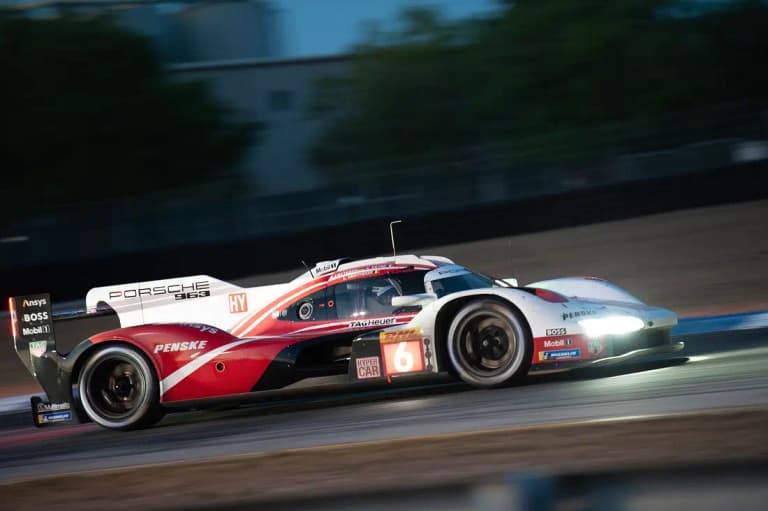
The 963 belongs to a class of car built for 24 hour races. It is low, wide, and covered in aggressive aerodynamics. Every panel exists to make speed or manage heat, not to look pretty in a showroom.
At its core sits a twin-turbo V8 paired with an electric motor. The combination is capped at about 680 PS by the rules. Porsche wraps that hardware in a carbon body designed to slice through the air and glue the car to the track at speed.
Why It Carries the 963 Name
The name is a deliberate nod to history. The original 962 was the twin-turbo prototype that dominated endurance racing in the 1980s. It won Le Mans three times and filled grids around the world in private hands.
Porsche chose 963 to link the new car to that legacy. The message is simple. This is the spiritual heir to the most successful endurance racing car the company ever built. The bloodline runs from the 917 through the 962 to this hybrid.
LMDh Regulations and the New Era
The Porsche 963 exists because of a new rulebook that reshaped prototype racing. Understanding the LMDh regulations explains why the car looks and races the way it does.
How LMDh Works
LMDh is a shared formula built to cut costs and keep the field close. A manufacturer picks one of four approved chassis builders, then adds its own engine and bodywork. Porsche chose Multimatic as its chassis partner for the 963.
The clever part is the hybrid system. Every LMDh car uses the same spec parts from Bosch, Williams and Xtrac. That standard hybrid unit keeps performance level across brands and stops a spending war. Total system power is fixed near 680 PS regardless of who built the engine.
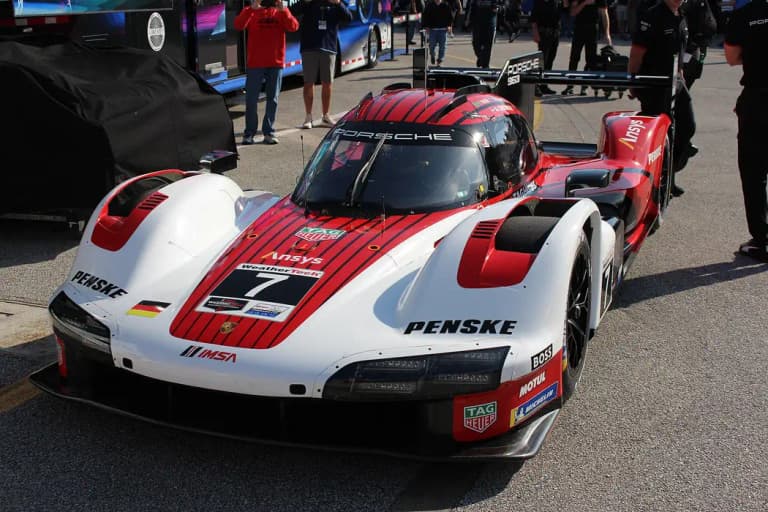
Balance of Performance rules then fine-tune each car’s weight and power at every race. The goal is a grid where a Porsche, a Cadillac, a Ferrari and a BMW can all fight for the lead. It has largely worked, and the racing has been close.
Racing IMSA and the FIA World Endurance Championship
The biggest benefit of LMDh is that one car races everywhere. The Porsche 963 is eligible for the top class in both major championships. That was impossible under the old rules, which split the two series apart.
In the United States, the 963 races in the IMSA WeatherTech SportsCar Championship, in the Grand Touring Prototype class. Globally, it competes in the FIA World Endurance Championship against Hypercar rivals. The same basic car contests Daytona, Sebring, Le Mans and Bahrain in a single year.
This convergence is a big deal for endurance racing. A manufacturer now builds one prototype and races it on both sides of the Atlantic. For fans, it means the best cars meet at the 24 Hours of Le Mans each June.
The Hybrid Powertrain
The heart of the Porsche 963 is a hybrid powertrain that blends a race V8 with electric assistance. Porsche went to its own back catalog to build the engine.
The Twin-Turbo V8 Engine
The engine is a 4.6 liter twin-turbo V8 known internally as the 9RD. It sits low and longitudinally behind the driver, forming part of the car’s structure. Porsche quotes the full system at roughly 680 PS, or 671 horsepower, in its own 963 technical briefing.
This engine has real lineage. It descends from the V8 in the 918 Spyder hybrid hypercar. That unit in turn grew from the RS Spyder prototype engine that raced in the 2000s.
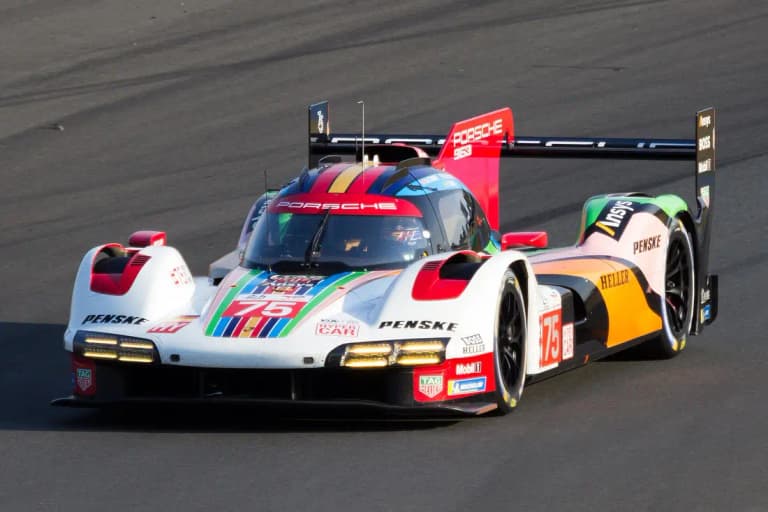
Using a proven road-car engine block saved development time and money. It also ties the race car to the fastest street Porsches. The 918 was the brand’s hybrid halo car, and its DNA now races for overall wins.
The Spec Hybrid System
The electric side of the hybrid powertrain is standard equipment. A motor generator sits between the engine and the gearbox. It adds up to 50 kW of extra push and recovers energy under braking.
Bosch supplies the motor, Williams Advanced Engineering supplies the battery, and Xtrac supplies the gearbox. That gearbox is a 7 speed sequential unit shared across the class. Because the parts are fixed, teams cannot outspend each other on hybrid technology.
The total output stays near 680 PS whether the engine or the motor is doing the work. The car’s software blends the two power sources for the driver. The result feels like one seamless surge rather than two separate systems.
Chassis, Suspension and Aerodynamics
Under the bodywork, the Porsche 963 is a carbon tub wrapped in carefully shaped aero. Multimatic built the base, and Porsche developed the parts that set it apart.
The Multimatic Carbon Chassis
The chassis is a carbon fiber monocoque based on an LMP2 design. It uses an aluminum honeycomb core in key areas for stiffness and crash protection. The finished car weighs about 1,030 kg, which is heavy for its size because of the hybrid hardware.
Buying a proven LMP2 tub kept costs down and reliability high. Multimatic is one of four constructors allowed under the rules. Porsche then bolted its own engine, suspension and body onto that foundation.
Double Wishbones and Advanced Aerodynamics
The suspension uses double wishbones at both ends, operated by pushrods. That layout gives engineers precise control over how the car behaves through a corner. It is the standard choice for a serious race car, and the 963 executes it cleanly.
The bodywork is where Porsche spent its design effort. Grant Larson, a director at Style Porsche, led the look of the car. The advanced aerodynamics produce huge downforce while keeping drag low enough for the long straights at Le Mans.
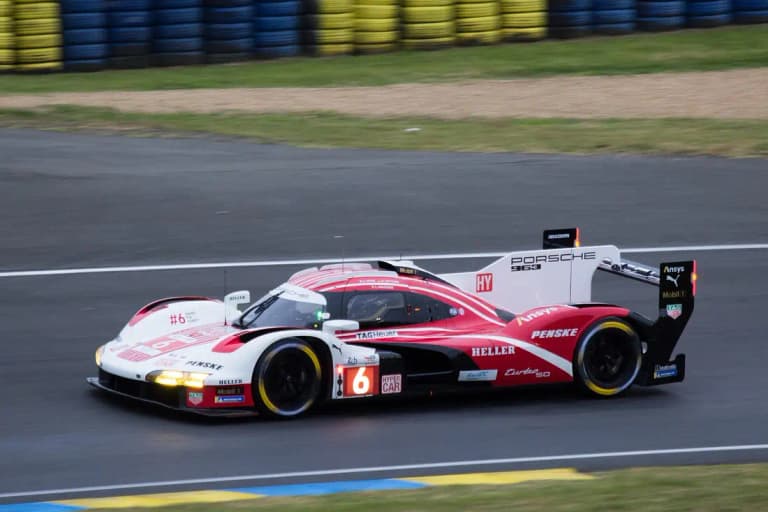
Look closely and you can see hints of past Porsche prototypes in the shape. The headlights and the profile echo the brand’s Le Mans history. Function came first, but the team clearly wanted the car to read as a Porsche.
Porsche Penske Motorsport and the Race Program
The Porsche 963 does not race alone. It is the tool of a single, well-funded factory team that runs cars in both championships.
Roger Penske’s Factory Team
Porsche runs its works program through Porsche Penske Motorsport. This is a partnership with Team Penske, the American racing giant led by Roger Penske. Porsche announced the tie-up in 2021, well before the car first turned a wheel.
The arrangement gives Porsche one factory team on two continents. Penske runs the IMSA cars from the United States and the WEC cars from Germany. It is a huge operation, and it shows the scale of Porsche’s commitment to endurance racing.
The 2023 Race Debut
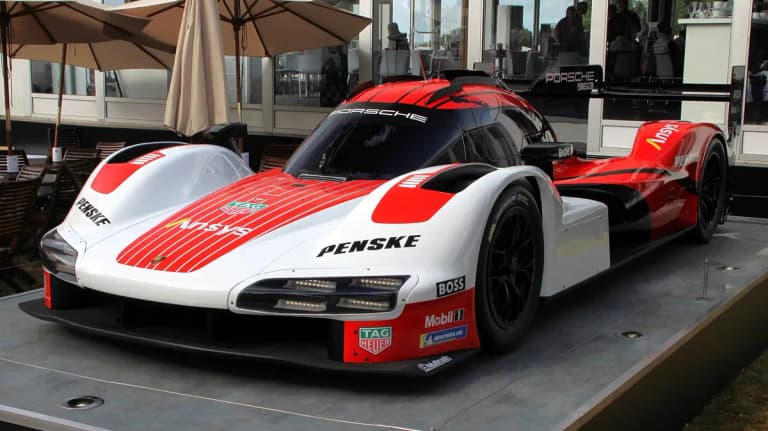
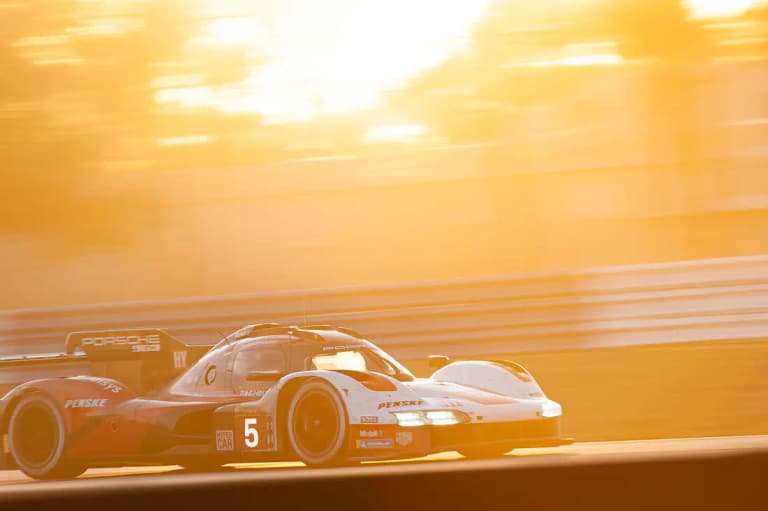
The 963 first appeared in public at the Goodwood Festival of Speed in 2022. Porsche ran the car up the famous hill in its red, white and black livery before it had ever raced. That Goodwood reveal built anticipation for the season ahead.
The race debut came in January 2023 at the Rolex 24 at Daytona. It was a tough start, with reliability gremlins to solve. The maiden win followed in April 2023 on the streets of Long Beach, a proper breakthrough for Porsche Motorsport.
The Race Record in IMSA and WEC
After a bumpy first season, the Porsche 963 grew into a winner. The results now stretch across both series and include major titles.
Championship Titles on Two Continents
2024 was the breakthrough year. Porsche Penske Motorsport won the IMSA GTP drivers’ and manufacturers’ titles with the 963. The team also took the FIA World Endurance Championship drivers’ crown and won the Daytona 24 Hours outright.
The momentum carried into 2025. The 963 won the first four IMSA races of the year, including Daytona and Sebring. Porsche then wrapped up another IMSA GTP title, sealing back-to-back championships in the American series.
Winning on both sides of the Atlantic is exactly what LMDh promised. The 963 has delivered overall victory at classics like Daytona and taken drivers to championship glory. Only the biggest prize still eludes it.
Watkins Glen and the Early Heartbreak
Not every strong drive turned into a trophy. The 2023 six hour race at Watkins Glen is the clearest example. Mathieu Jaminet passed for the lead in the closing minutes and took the checkered flag first.
Then the stewards intervened. In post-race inspection, the No. 6 car’s skid block measured under the minimum thickness. Officials moved the Porsche to the back of the class, and the win went to a BMW instead.
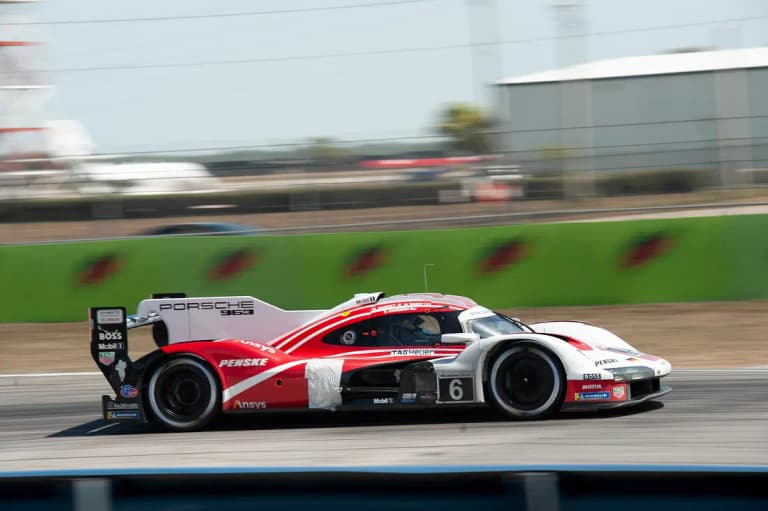
Watkins Glen has stayed a key venue for the program ever since. The team has returned to fight for podiums there in later seasons. That 2023 loss stung, but it showed how quickly the young car had found real pace.
The 963 at Le Mans
Le Mans is the race Porsche wants most, and it remains unfinished business. The 24 Hours of Le Mans is the crown jewel of the sport. Porsche has won it a record number of times with earlier cars.
The 963 has come agonizingly close. In 2025, the No. 6 car of Matt Campbell, Kevin Estre and Laurens Vanthoor finished second overall. It crossed the line just over 14 seconds behind the winning Ferrari after a full day of racing.
An outright Le Mans win with the 963 has not yet come. A second place by a whisker is both a triumph and a tease. Porsche keeps returning to the Circuit de la Sarthe to chase that elusive overall result.
Customer Teams and Privateers
Like the 962 before it, the Porsche 963 is not only a factory car. Porsche sells the prototype to private customer teams, which fills grids and spreads the brand. Its customer racing ladder runs from the one-make Cup car up through the GT3-class 911 GT3 R to this prototype.
Proton Competition, Jota and JDC-Miller
A customer 963 was announced at around 2.9 million US dollars with factory support. Several teams took up the offer. Proton Competition has run the car in both IMSA and the WEC, often in eye-catching liveries.
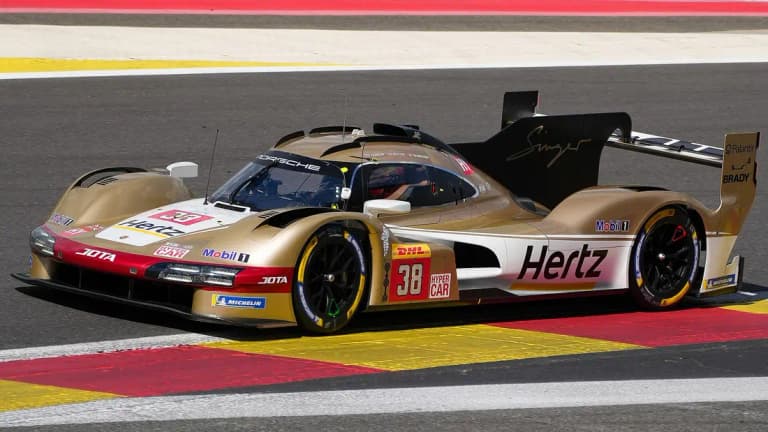
In the World Endurance Championship, Hertz Team Jota fielded the striking gold 963 you see above. In America, JDC-Miller MotorSports ran a customer car in IMSA. These private entries echo the old model that made the 962 famous.
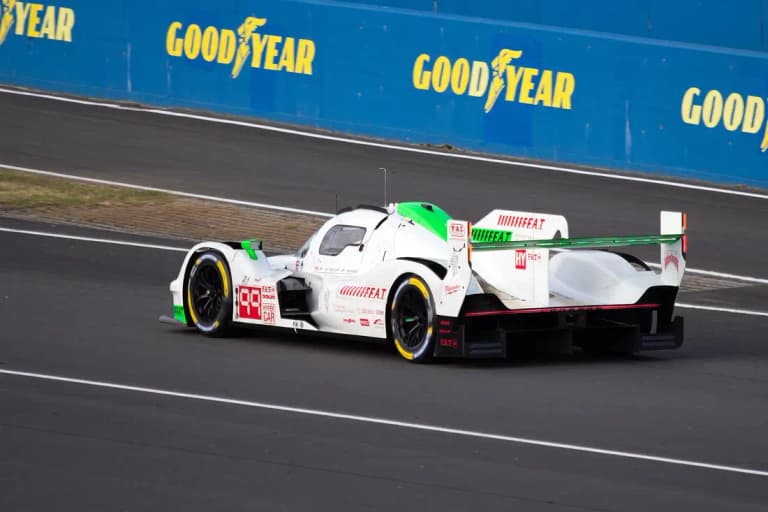
Selling a front-running prototype to customers is rare at this level. It gives Porsche extra data, extra revenue and extra cars on the grid. It also keeps the brand’s endurance racing tradition of the customer racer alive.
The 963 RSP and the Car’s Legacy
The Porsche 963 story took an unusual turn in 2025. Porsche built a road-legal version of the race car as a one-off, and it points to how the program is remembered.
A Road-Legal 963
The 963 RSP is a single road-legal 963, built for Roger S. Penske, whose initials give the car its name. Porsche revealed it at the 2025 24 Hours of Le Mans in a silver finish. That color echoes the road-legal 917 that Porsche built for Count Rossi 50 years earlier.
Making a race engine run on regular pump fuel was the hard part. The finished car even has a horn, though it still needs a laptop to start rather than a key. It reportedly cost near 5 million euros to create.
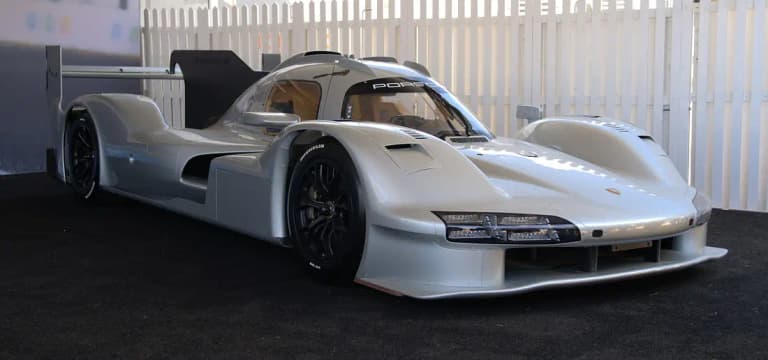
The RSP is a marketing exercise and a love letter to the race program. It will not be sold in numbers, and it seats just one. Still, it proves how close a modern Le Mans car can get to the road.
What Comes Next
The Porsche 963 program is winding down at the top of its game. In late 2025, Porsche announced it would end its factory WEC effort after that season, citing costs. The IMSA program with Penske continues into 2026.
Even from Thailand, following the 963 is easy through WEC and IMSA streams and highlights. The car has already secured its place as a modern classic of prototype racing. It won titles, won Daytona, and pushed Ferrari to the wire at Le Mans.
Whatever comes after it, the 963 revived Porsche at the highest level of endurance racing. It proved the LMDh formula could deliver close, global competition. For the road-going side of the family, start with our 911 guide, or explore Porsche’s wider Le Mans history.
Frequently Asked Questions
How much horsepower does the Porsche 963 have?
The Porsche 963 makes about 680 PS, or 671 horsepower, from its combined engine and hybrid system. That figure is capped by the LMDh rules, so every car in the class targets the same peak output. A rear-mounted electric motor adds up to 50 kW on top of the twin-turbo V8.
Has the Porsche 963 won Le Mans?
No. The best result for the Porsche 963 at the 24 Hours of Le Mans is second place, taken by the No. 6 car in 2025, just over 14 seconds behind the winning Ferrari. The 963 has won the Daytona 24 Hours and multiple IMSA and WEC titles, but the outright Le Mans win has not come yet.
What engine is in the Porsche 963?
The Porsche 963 uses a 4.6 liter twin-turbo V8 called the 9RD. It descends from the engine in the 918 Spyder hypercar, which itself grew from Porsche’s RS Spyder racing V8. Bosch, Williams and Xtrac supply the standard hybrid parts that every LMDh car shares.
How much does a Porsche 963 cost?
A customer Porsche 963 was announced at around 2.9 million US dollars, with full factory support included. That price buys a turn-key LMDh prototype ready to race in IMSA or the World Endurance Championship. The one-off road-legal 963 RSP was built at a reported cost near 5 million euros.
Who races the Porsche 963?
Porsche Penske Motorsport runs the factory 963 program in both IMSA and the FIA World Endurance Championship. Customer teams including Proton Competition, Hertz Team Jota and JDC-Miller Motorsports field their own cars. Roger Penske’s organization leads the works effort.
Is the Porsche 963 a hybrid?
Yes. The Porsche 963 is a hybrid, and the rules require it. A twin-turbo V8 drives the rear wheels, and a spec electric motor between the engine and gearbox adds power under acceleration. The hybrid parts are standardized across the class to keep costs and performance in check.
Images: Hero (Goodwood reveal) by MrWalkr, CC BY-SA 4.0; Daytona debut by 350z33, CC BY-SA 4.0; No. 75 at Le Mans by Kevin Decherf, CC BY-SA 2.0; No. 6 at Le Mans by Kevin Decherf, CC BY-SA 2.0; Hertz Team Jota 963 by MarcelX42, CC BY-SA 4.0; 963 RSP by MrWalkr, CC BY-SA 4.0; No. 6 at dusk by Rick Flores, CC BY 2.0; No. 5 at sunset by Rick Flores, CC BY 2.0; No. 6 at Sebring by Rick Flores, CC BY 2.0; Proton Competition 963 by Kevin Decherf, CC BY-SA 2.0. Via Wikimedia Commons.