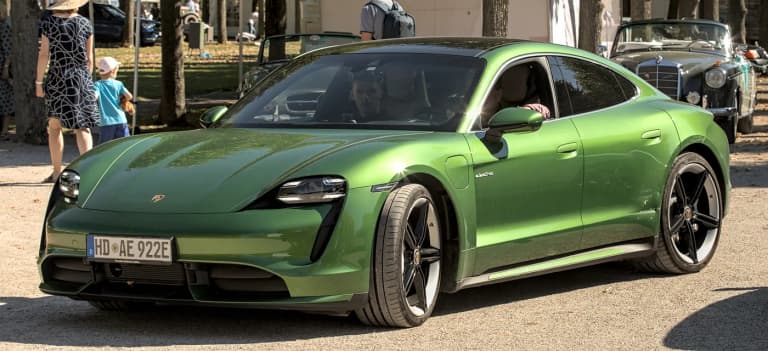
The Porsche Taycan is Porsche’s first all-electric car, a four-door sports sedan launched in 2019. It runs on an 800-volt system that allows very fast charging, and the range climbs from a rear-wheel-drive base car up to the Taycan Turbo GT, which makes over 1,000 horsepower and is the most powerful production Porsche ever built. A 2024 update brought big gains in power, range, and charging speed across the line.
Here is everything you need to know about the Porsche Taycan.
Contents
What Is the Porsche Taycan
The Taycan is Porsche’s first series production electric car. It arrived in 2019 as a low, four-door sports sedan built to prove that an electric Porsche could still drive like a Porsche. It shares its J1 platform with the Audi e-tron GT, but the tuning and the character are pure Porsche.
The headline technology is the 800-volt electrical system. Most electric cars use around 400 volts. Running at 800 volts means lower current for the same power, which produces less heat, allows thinner and lighter wiring, and unlocks much faster charging. It is the foundation for everything the Taycan does well.
Porsche placed the Taycan below the Panamera in size and above nothing else in ambition. It is sold alongside the petrol cars rather than replacing them, and it gave Porsche a head start on electric performance that the upcoming electric versions of the Cayenne and Macan now build on.
Body Styles
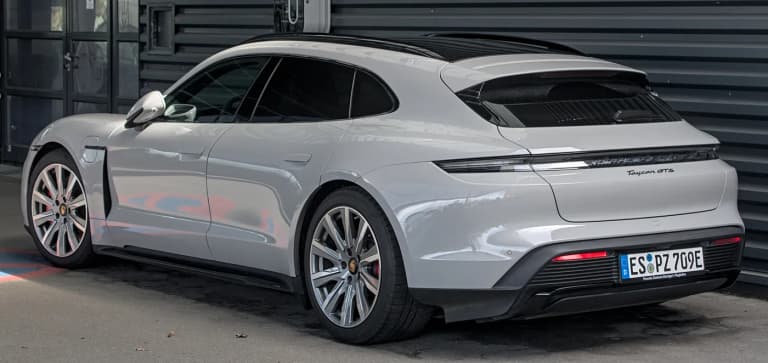
The Taycan comes in three body styles that share the same running gear. The original is the low four-door sedan. In 2021 Porsche added the Cross Turismo, a raised estate with light body cladding and a more rugged look. A year later came the Sport Turismo, which is the same wagon shape without the crossover ride height.
The sedan is the sleekest and the choice for most buyers. The Cross Turismo and Sport Turismo add real boot space and rear headroom, so they suit anyone who wants the Taycan as a daily car. All three drive almost identically.
Trim Lineup
The Taycan range is broad. Power figures below are the peak output available with launch control after the 2024 update, which is how Porsche quotes the headline numbers. The base car is rear-wheel drive, and everything above it is all-wheel drive.
| Trim | Power | 0 to 60 mph | EPA Range |
|---|---|---|---|
| Taycan | around 400 hp | 4.5 sec | up to 318 mi |
| Taycan 4S | 590 hp | 3.3 sec | up to 315 mi |
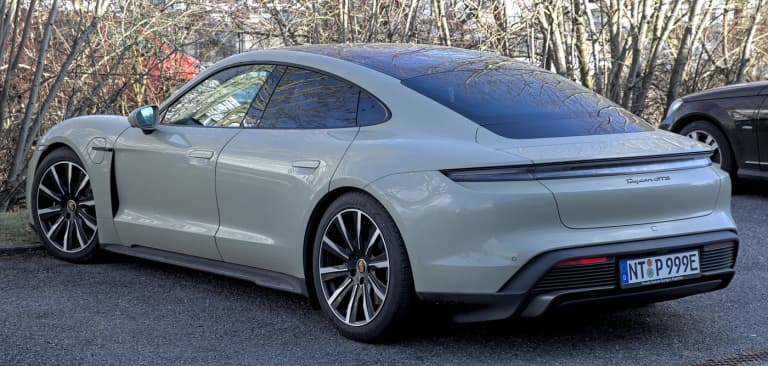
| Taycan GTS | 690 hp | 3.1 sec | up to 330 mi |
| Taycan Turbo | 871 hp | 2.5 sec | 292 mi |
| Taycan Turbo S | 938 hp | 2.3 sec | 266 mi |
Note that Porsche kept the Turbo and Turbo S names even though there is no turbocharger on an electric car. The names simply mark the top of the range, the same way they do on the petrol models. The GTS is the value sweet spot, since it pairs near-Turbo pace with the longest range in the lineup.
The Taycan Turbo GT
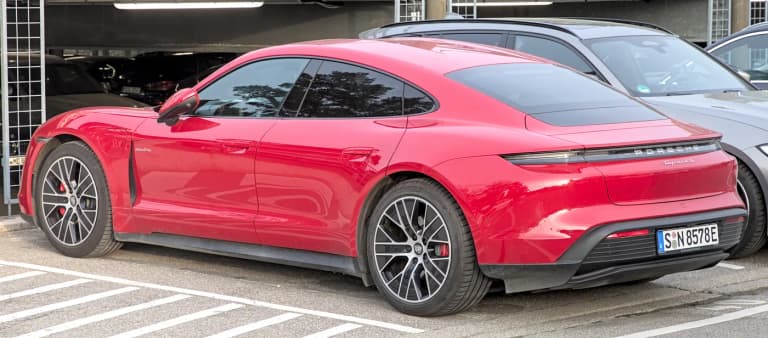
The Taycan Turbo GT is the flagship, and it is the most powerful production Porsche ever made. It produces around 1,019 horsepower with launch control and can briefly peak near 1,100 horsepower in overboost. That is enough to reach 60 mph in roughly 2.1 seconds.
It is not just a straight-line car. In 2024 the Turbo GT set a production electric car lap record at the Nurburgring Nordschleife of 7 minutes and 7 seconds, and a record at Laguna Seca of 1 minute 27 seconds. A Weissach package strips weight and removes the rear seats for buyers who want the sharpest possible version. This is the Taycan as a track weapon.
The 2024 Update
Porsche gave the Taycan a major mid-life update in early 2024, and it improved nearly every figure that matters. Power went up across the line, and a new rear motor and revised battery chemistry pushed range up by as much as 35 percent over the original car.
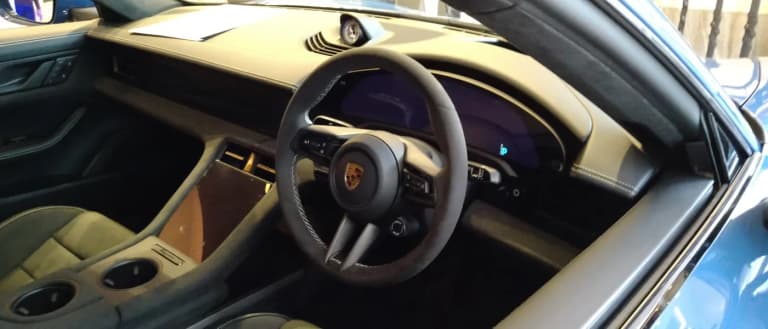
Charging improved just as much. Peak charging rose to 320 kilowatts, and the car can now add 10 to 80 percent in about 18 minutes in good conditions, roughly half the time the first Taycan needed. The cabin also gained a new digital cockpit and an optional passenger display. If you are shopping used, a post-2024 car is a meaningful step up.
Charging and Range
Charging is where the 800-volt system pays off. On a powerful enough public charger, the updated Taycan peaks at 320 kilowatts and holds a high rate long enough to add most of its range in under 20 minutes. That is among the fastest charging of any electric car on sale.
Range depends heavily on the trim and the battery. The longest-range cars use the larger Performance Battery Plus and the GTS leads the lineup at up to 330 miles on the EPA cycle. The high-power Turbo and Turbo S trade some range for speed. Real-world range, as with any electric car, drops in cold weather and at sustained high speed.
Driving and the 800-Volt Advantage
The Taycan drives like a Porsche first and an electric car second. The battery sits low in the floor, which gives the car a very low center of gravity and the kind of body control you expect from the brand. Steering is precise and the car feels far smaller than its weight suggests.
A two-speed gearbox on the rear axle, which is unusual for an electric car, helps both acceleration and high-speed efficiency. Combined with the instant torque of the electric motors, the result is a car that is brutally fast yet calm and easy to drive slowly. It is the clearest proof that electric power and the Porsche feel are not in conflict.
Pricing
The Taycan spans a wide price range. The 4S sits around 120,000 US dollars, the Turbo near 174,000 dollars, and the Turbo S around 209,000 dollars. The flagship Turbo GT lists near 230,000 dollars. The base rear-wheel-drive car starts lower, in the region of 100,000 dollars, and the GTS sits between the 4S and the Turbo.
These figures move with the model year and the options, and Porsche’s options list is long. The used market has also softened for early cars, so a pre-2024 Taycan can be a lot of performance for the money if you can live with the older car’s slower charging and shorter range.
Ownership
The Taycan has proven reasonably reliable, and an electric drivetrain removes a lot of the routine maintenance a petrol Porsche needs. There are no oil changes, and brake wear is low thanks to regenerative braking. Tires and the usual consumables still cost what you would expect from a heavy, fast Porsche.
The main ownership questions are the same as for any electric car. Battery health holds up well so far, but a used buyer should check the car’s charging history and confirm the battery and high-voltage components are covered or sound. Home charging makes living with a Taycan far easier, since the car is happiest topped up overnight.
Renn Driver’s Take
I have not driven this car yet. When I do, this section will have my honest take on what it is actually like to live with and drive.
Frequently Asked Questions
Is the Porsche Taycan a good car?
Yes. It is widely rated as one of the best-driving electric cars on sale, and it keeps the precise, planted feel Porsche is known for. The 800-volt system also gives it some of the fastest charging in the class.
Why is it called Turbo if it is electric?
There is no turbocharger. Porsche uses Turbo and Turbo S simply as names for the top trims, the same way it does on the petrol cars. They mark the most powerful versions, not the type of engine.
How far can a Taycan go on a charge?
It depends on the trim. After the 2024 update the longest-range cars, led by the GTS, reach up to about 330 miles on the EPA cycle. The high-power Turbo and Turbo S models cover a bit less. Cold weather and high speed reduce real-world range.
How fast does the Taycan charge?
An updated Taycan peaks at 320 kilowatts on a fast enough charger and can go from 10 to 80 percent in about 18 minutes in good conditions. That is among the quickest charging of any production electric car.
Which Taycan should I buy?
The GTS is the sweet spot for most buyers, with near-Turbo performance and the longest range. The 4S is the value pick, and the Turbo GT is for anyone who wants the most extreme version. Aim for a post-2024 car for the better range and charging.
Image Credits
Images: Taycan Turbo, Taycan 4S, Taycan GTS, and Cross Turismo GTS by Alexander-93, CC BY-SA 4.0. Taycan interior by Aos.1905, CC BY 4.0. Via Wikimedia Commons.