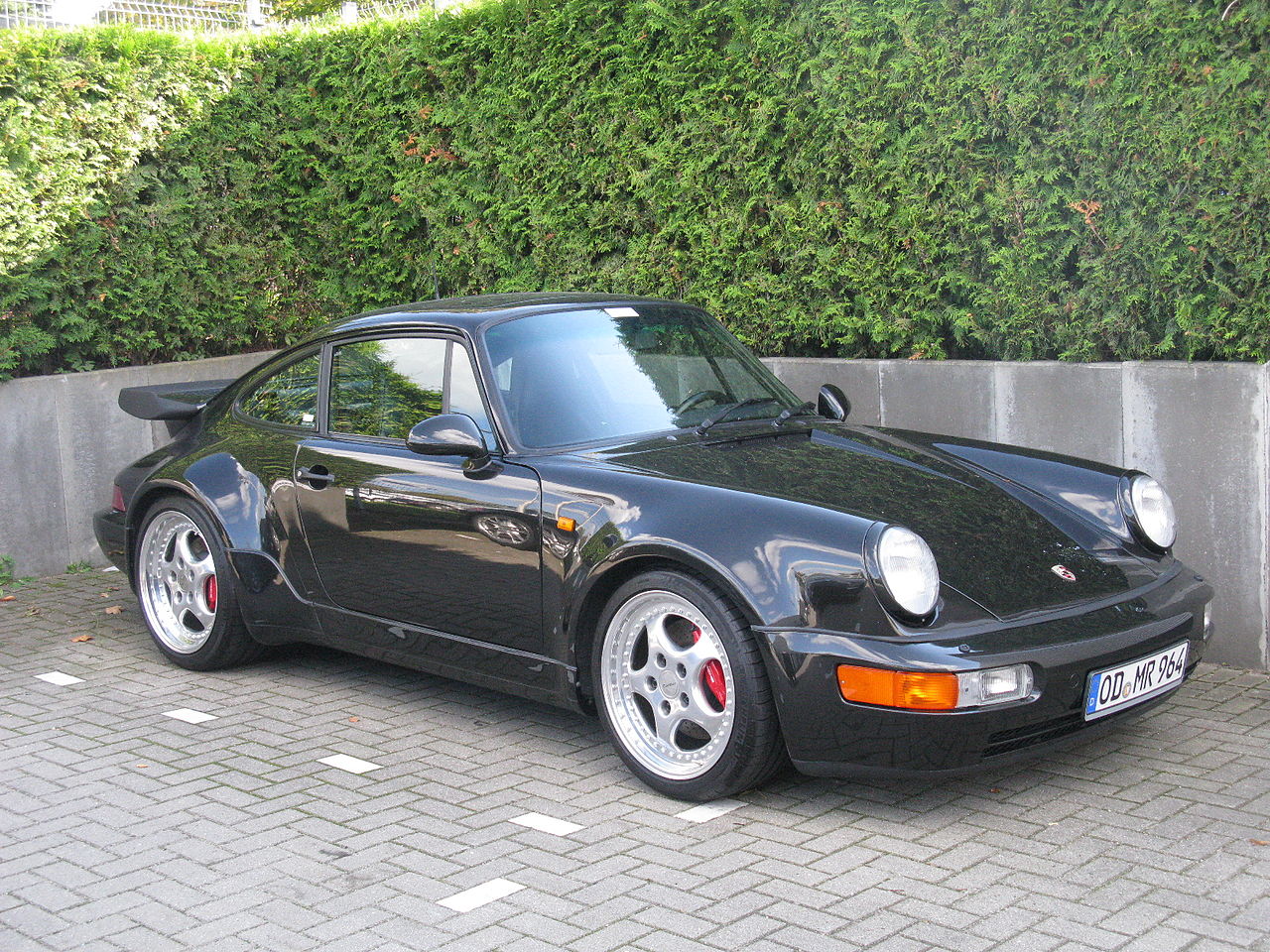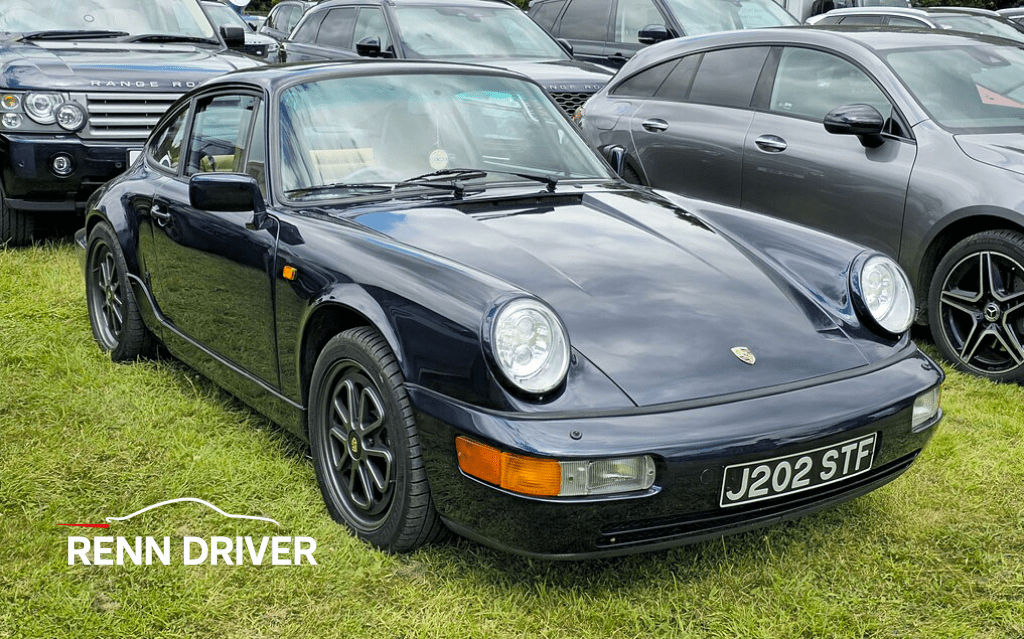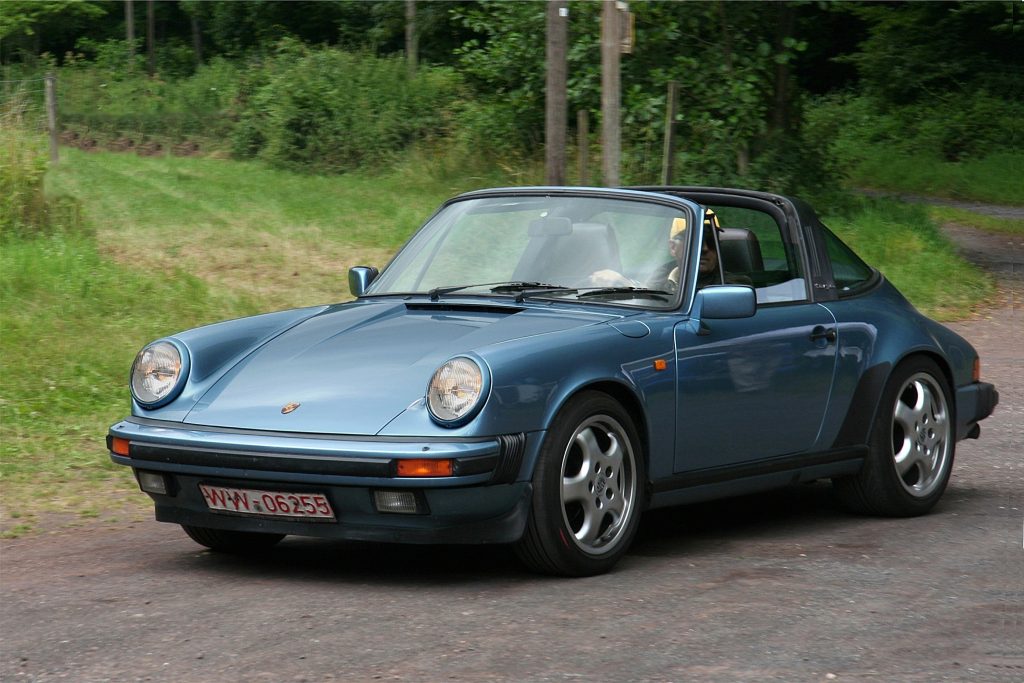
RUF Automobile is a German car manufacturer, not a tuner, that builds vehicles using Porsche platforms. RUF cars carry their own VINs and are recognized as a separate marque by the German government. The company was founded in 1939 and is best known for the CTR Yellowbird (1987), which hit 213 mph and became one of the fastest cars in the world. The modern RUF CTR (2017) uses a carbon fiber monocoque and a twin-turbo flat-six producing 710 hp.
Contents
- 1 Quick Summary
- 2 RUF History
- 3 The CTR Yellowbird
- 4 Key RUF Models
- 5 The Modern CTR (2017)
- 6 Why RUF Is a Manufacturer, Not a Tuner
- 7 RUF vs Singer vs Gunther Werks
- 8 Buying a RUF
- 9 Renn Driver's Take
- 10 FAQs
- 11 Final Thoughts
The full guide below covers all the details.
Quick Summary
- Founded: 1939 (as a service garage), car manufacturing from the 1970s
- Location: Pfaffenhausen, Bavaria, Germany
- Status: Recognized car manufacturer with own VINs
- Founder: Alois Ruf Sr. (current leader: Alois Ruf Jr.)
- Most famous model: CTR Yellowbird (1987, 213 mph)
- Modern flagship: CTR (2017, 710 hp, carbon monocoque)
- Platform: Porsche 911 based (all generations)
RUF History
The RUF story starts in 1939 when Alois Ruf Sr. opened a service garage in Pfaffenhausen, a small town in Bavaria. The garage initially serviced Volkswagens and other everyday cars. By the 1960s, Ruf had shifted focus to Porsche service and repair.
In 1974, Alois Ruf Jr. took over the family business and changed its direction entirely. He began modifying Porsches beyond simple service work, installing larger engines, upgraded turbos, and improved suspension systems. By the early 1980s, RUF was building complete cars from new Porsche bodyshells purchased directly from the Zuffenhausen factory.
In 1981, RUF received official recognition from the German Federal Motor Transport Authority (KBA) as an automobile manufacturer. This distinction matters. RUF does not modify Porsches. RUF builds RUF cars. Each vehicle carries a RUF VIN, not a Porsche VIN, and is registered as a RUF, not a Porsche.
That manufacturer status puts RUF in a completely different category from tuners like TechArt, Gemballa, or 9ff. Those companies modify existing Porsches. RUF builds new cars from the ground up.
The CTR Yellowbird
The 1987 RUF CTR, nicknamed the "Yellowbird" for its Speed Yellow paint, is one of the most important performance cars ever built. At the time of its release, it was the fastest production car in the world.
The specs were extraordinary for 1987:
- Engine: 3.4L twin-turbo flat-six (based on the 911 3.2 Carrera)
- Power: 469 hp
- Top speed: 213 mph (342 km/h)
- 0 to 60 mph: 3.7 seconds
- Weight: 1,150 kg (2,535 lbs)
- Transmission: 5-speed manual
For context, the fastest Ferrari of 1987 topped out around 180 mph. The Yellowbird was in a different league.
The car became a legend partly because of a single video: Stefan Roser's lap of the Nurburgring Nordschleife in the Yellowbird. Shot by the German magazine Sport Auto, the footage shows Roser wrestling the tail-happy 911 through every corner on the Nordschleife at impossible speeds. The rear end slides, corrects, and slides again. It became one of the most famous automotive videos ever filmed, and it is still watched by millions today.
Only 29 CTR Yellowbirds were built. Surviving examples are worth well over $1 million, with exceptional cars reaching $2 million or more at auction.
Key RUF Models
Over five decades, RUF has produced a wide range of vehicles. These are the most significant:
RUF BTR (1983 to 1989)
Based on the Porsche 911 Turbo (930), the BTR added a larger turbo, intercooler, and engine management upgrades. It produced 374 hp, a huge number for the early 1980s. The BTR was RUF's first production car and established the company's reputation for building seriously fast machines.
RUF CTR (1987)
The Yellowbird. 469 hp, 213 mph. The car that made RUF famous. Based on the classic G-body 911 platform but so heavily modified that almost nothing was shared with the stock car.
RUF CTR2 (1996 to 1997)
Based on the twin-turbo 993 platform, the CTR2 took the twin-turbo flat-six to 520 hp (later 580 hp in Sport form). Top speed exceeded 217 mph. It was rear-wheel drive in a world where Porsche had moved the 993 Turbo to all-wheel drive, which made the CTR2 a genuinely dangerous car in the wrong hands.
RUF Rt 12 (2004)
Built on the 997-generation chassis, the Rt 12 produced up to 650 hp from a twin-turbo 3.8L flat-six. It offered both rear-wheel drive and all-wheel drive configurations. Top speed was 219 mph.
RUF CTR3 (2007)
The CTR3 was RUF's most radical departure. Instead of building on a Porsche bodyshell, RUF designed a completely new mid-engine chassis. A 3.8L twin-turbo flat-six sat behind the driver, producing 700 hp in Clubsport form. The CTR3 reached 236 mph and used a carbon fiber and aluminum tubular space frame. Only about 30 were built.
RUF SCR (2018)
The naturally aspirated counterpart to the modern CTR. The SCR uses a 4.0L naturally aspirated flat-six producing 510 hp, mounted in the same carbon monocoque as the CTR. It is RUF's answer for drivers who prefer throttle response and sound over outright power.

The Modern CTR (2017)
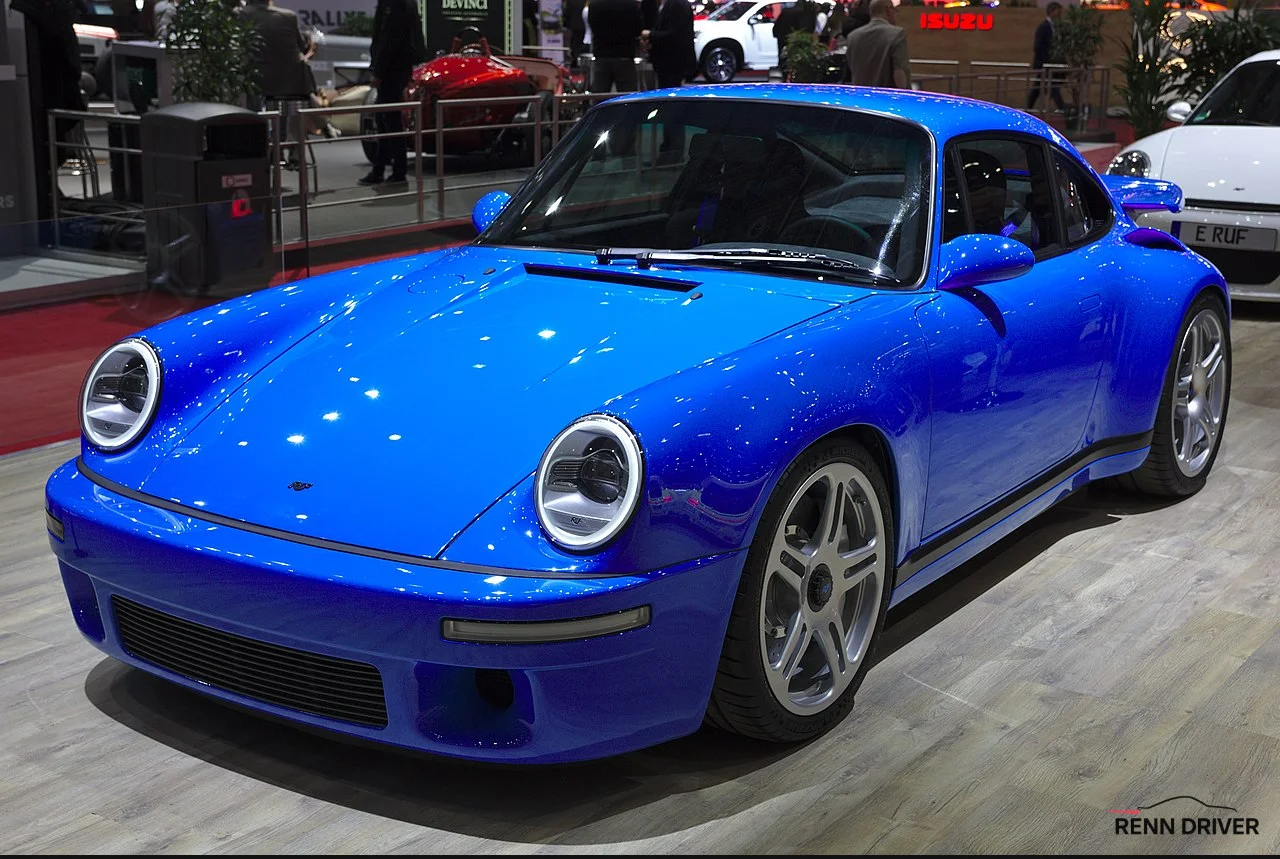
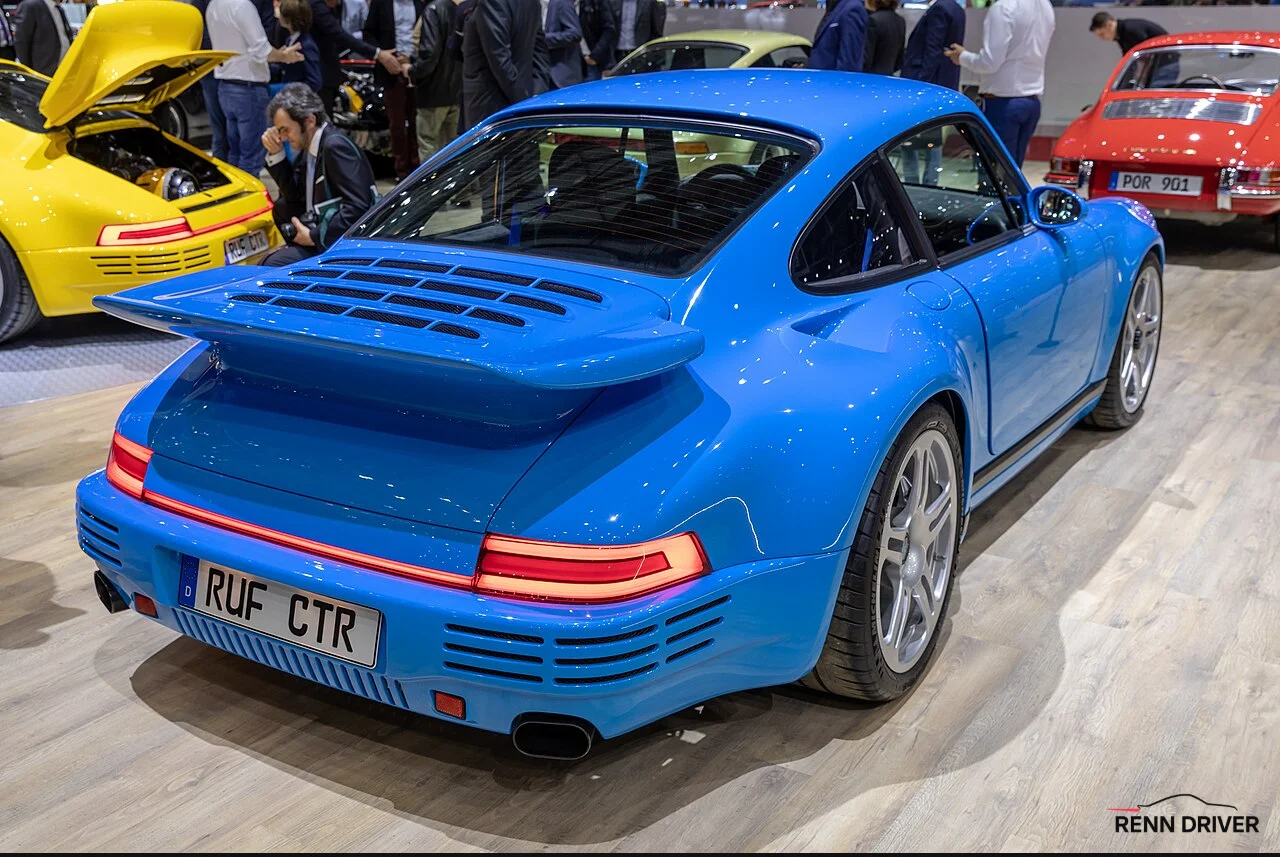
In 2017, RUF revealed the new CTR at the Geneva Motor Show and stunned the automotive world. This was not another modified Porsche. It was a completely new car built from scratch.
The modern CTR uses a carbon fiber monocoque chassis, designed entirely by RUF. There is no Porsche bodyshell underneath. The only shared components with Porsche are the basic engine architecture and some suspension geometry DNA. Everything else is RUF.
Specifications:
- Engine: 3.6L twin-turbo flat-six
- Power: 710 hp
- Torque: 649 lb-ft
- Weight: 1,200 kg (2,645 lbs)
- Top speed: 225 mph (362 km/h)
- Transmission: 7-speed manual (developed by RUF)
- Chassis: Carbon fiber monocoque
The modern CTR looks like a classic 911. The silhouette, the proportions, the round headlights, the simple tail. But underneath, it is the most advanced car RUF has ever built. The carbon monocoque weighs just 88 kg. The entire car weighs 1,200 kg with 710 hp, giving it a power-to-weight ratio that rivals modern hypercars.
Production is extremely limited. RUF builds each modern CTR by hand in Pfaffenhausen, and total production is believed to be fewer than 75 units.
Why RUF Is a Manufacturer, Not a Tuner
This distinction is important and often misunderstood. RUF is classified as an automobile manufacturer by the German government. This means:
- Own VINs: Every RUF car gets a RUF vehicle identification number, not a Porsche VIN.
- Type approval: RUF models have their own type approval for road registration.
- Insurance classification: RUF cars are insured as RUF vehicles, not modified Porsches.
- Warranty: RUF provides its own manufacturer warranty.
Companies like Singer and Gunther Werks are not manufacturers. They modify existing Porsche vehicles and those cars retain their original Porsche VINs. RUF starts with a bare bodyshell (or in the case of the modern CTR, their own chassis) and builds a new car that is legally and technically a different vehicle.
This makes RUF the only independent manufacturer in the world that builds production cars based on 911 architecture.
RUF vs Singer vs Gunther Werks
| Aspect | RUF | Singer | Gunther Werks |
|---|---|---|---|
| Status | Manufacturer (own VINs) | Restorer/modifier | Restorer/modifier |
| Base platform | Multiple (964, 993, 997, custom) | 964 | 993 |
| Location | Pfaffenhausen, Germany | Los Angeles, USA | Huntington Beach, USA |
| Max power | 710 hp (CTR 2017) | 500+ hp (DLS) | ~430 hp |
| Philosophy | Engineering and speed | Refinement and beauty | Track performance |
| Founded | 1939 | 2009 | 2014 |
| Price range | $300K to $1M+ | $600K to $1M+ | $575K to $700K |
RUF is about engineering and pushing boundaries. Singer is about beauty and refinement. Gunther Werks is about track performance and aggression. All three are building some of the most desirable 911-based cars in the world, but from very different starting points and with very different goals.
Buying a RUF
New RUF cars are available directly from the factory in Pfaffenhausen. RUF also has authorized representatives in several countries. Ordering a new RUF CTR or SCR requires working with the factory to specify the car, and build times vary from 12 to 18 months.
On the used market, RUF cars appear occasionally at specialist dealers and major auctions (Gooding, RM Sotheby's, Bonhams). Prices vary enormously by model and era:
- Original CTR Yellowbird: $1.5M to $3M+
- CTR2: $800K to $1.5M
- CTR3: $600K to $1M
- Rt 12: $250K to $400K
- Modern CTR (2017+): Rarely traded; likely $1M+
RUF also converts existing Porsches. If you own a 993 or 964, you can send it to Pfaffenhausen for a RUF conversion. The car retains its Porsche VIN in this case (since it started life as a Porsche), but receives RUF engine, suspension, and body upgrades.

Renn Driver's Take
I have not driven this car yet, but I will update this section once I do.
Frequently Asked Questions
Is RUF a car manufacturer or a tuner?
RUF is a recognized car manufacturer, not a tuner. The German Federal Motor Transport Authority granted RUF manufacturer status in 1981. RUF cars carry their own RUF VINs and are legally classified as RUF vehicles, not modified Porsches.
What is the RUF Yellowbird?
The RUF Yellowbird is the nickname for the 1987 RUF CTR, a twin-turbo flat-six powered car based on the Porsche 911 platform. It produced 469 hp and reached a top speed of 213 mph, making it the fastest production car in the world at the time. Only 29 were built.
How much does a RUF CTR cost?
An original 1987 RUF CTR Yellowbird costs between $1.5 million and $3 million on the collector market. The modern RUF CTR (2017 onward) is believed to cost approximately $850,000 to $1 million new from the factory, though few have traded on the open market.
What is the fastest RUF car?
The fastest RUF car by top speed is the CTR3 Clubsport, which reached 236 mph (380 km/h) with its 700 hp twin-turbo flat-six. The modern CTR (2017) reaches 225 mph with 710 hp.
Does RUF still make cars?
Yes, RUF Automobile continues to build cars at its factory in Pfaffenhausen, Germany. Current models include the CTR (710 hp, carbon monocoque) and the SCR (510 hp, naturally aspirated). RUF also performs conversions and restorations of older Porsche vehicles.
Can I send my Porsche to RUF for modifications?
Yes, RUF accepts existing Porsches for conversion and upgrade work at their Pfaffenhausen factory. When converting an existing Porsche, the car retains its original Porsche VIN but receives RUF engine, suspension, and body upgrades. Contact RUF directly to discuss options for your specific vehicle.
Final Thoughts
RUF Automobile stands alone in the automotive world. No other independent company has spent over 80 years building cars on the 911 platform, and no other has earned the right to stamp its own VINs on the result.
From the 469 hp Yellowbird that rewrote the definition of speed in 1987 to the 710 hp carbon monocoque CTR of today, RUF has consistently pushed the flat-six further than Porsche themselves. The fact that a family business in a small Bavarian town has been doing this since before most supercar brands existed says everything about the depth of their commitment.
For more on the world of reimagined 911s, read our guides on Singer Porsche and Gunther Werks.
Photo credits: Alexander Migl, CC BY-SA 4.0, via Wikimedia Commons. Edvvc, CC BY 2.0, via Wikimedia Commons.